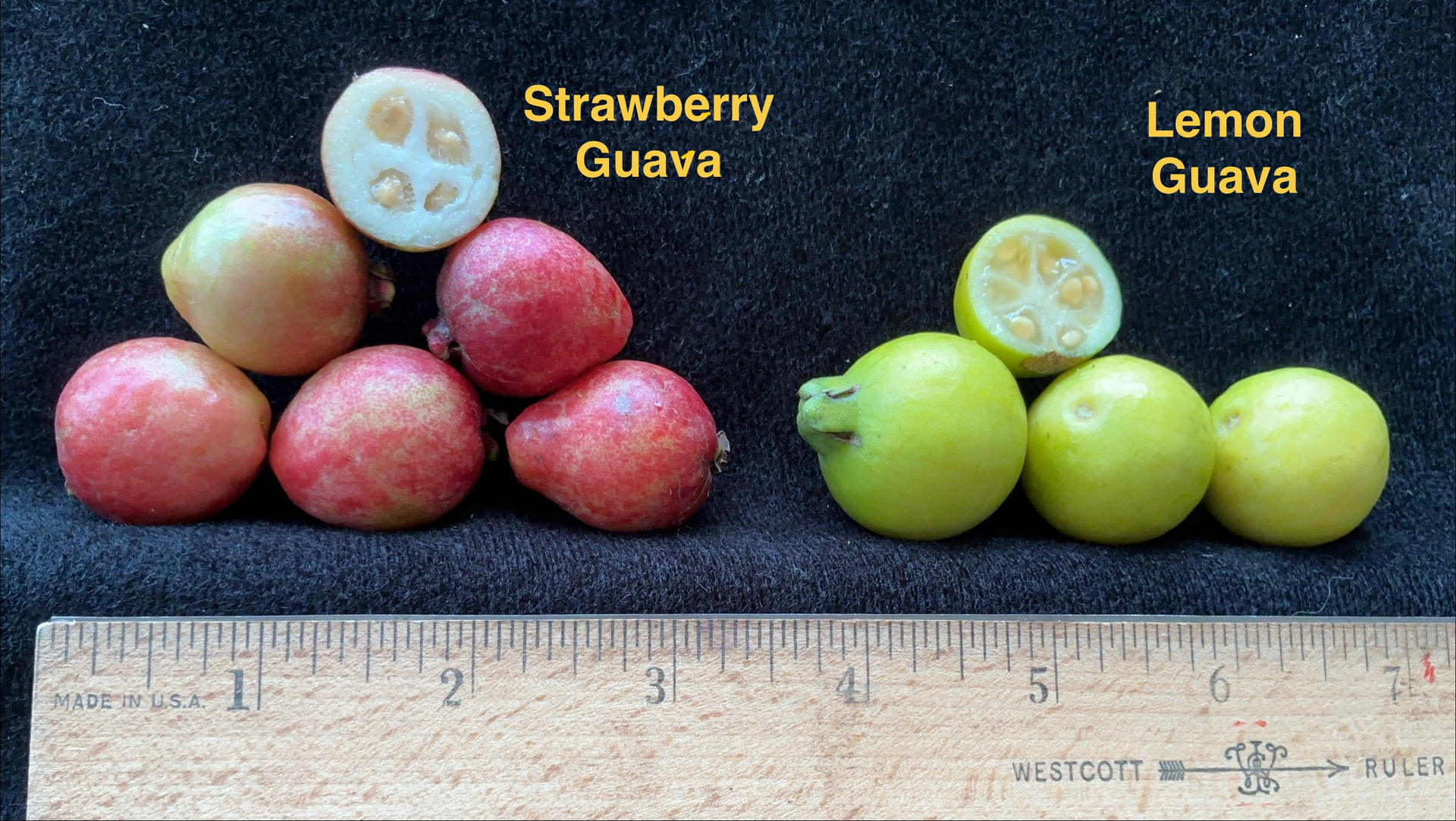
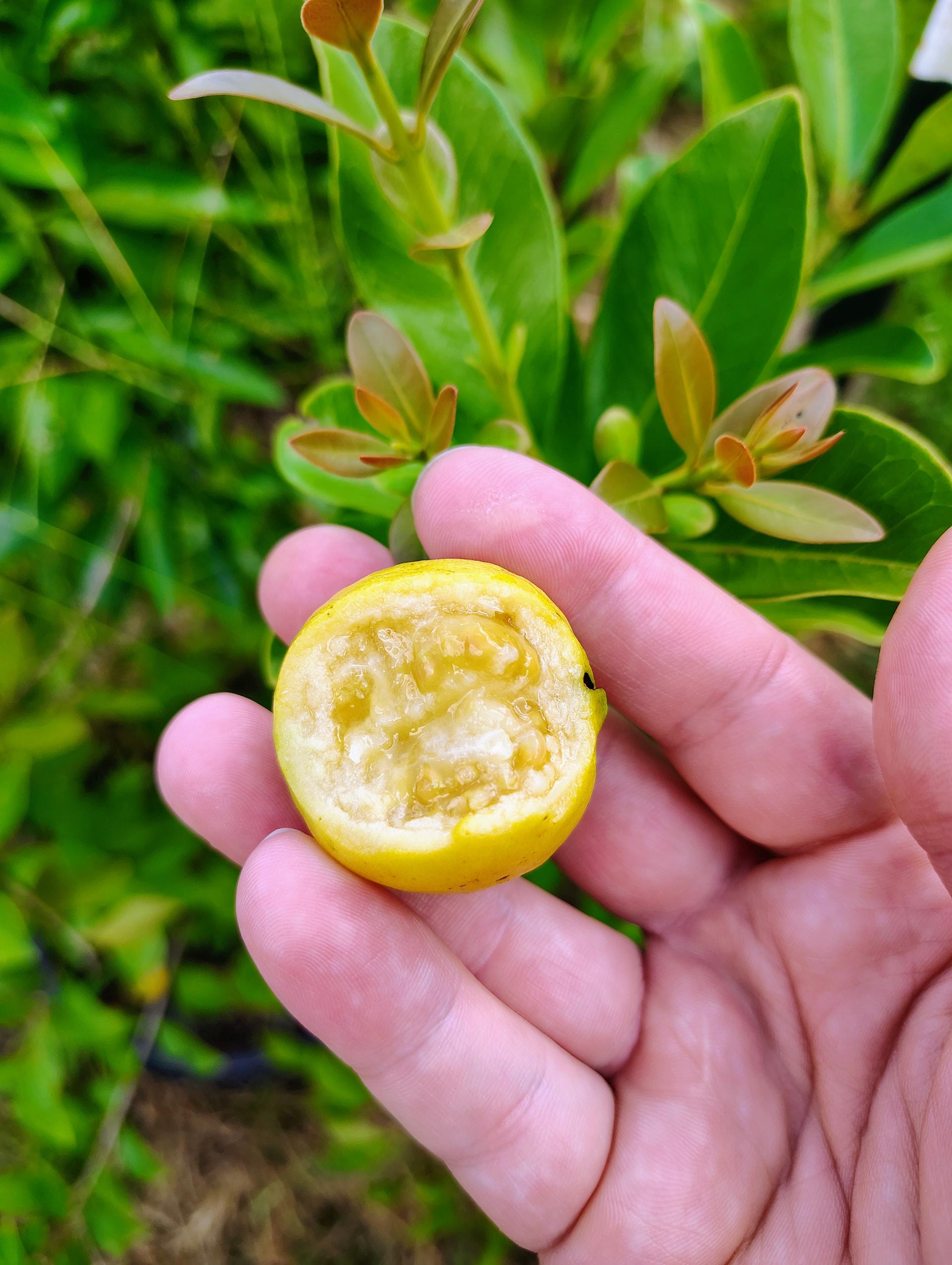
We grow 3 different types of guavas (not counting our Pineapple “Guavas”, aka Feijoa) near Houston Texas: Tropical Guava (Psidium guajava), Strawberry Guava (Psidium littorale or Psidium cattleianum), and Lemon Guava (Psidium littorale longipes). We grow all three types in-ground on their own roots, but they are subject to pretty bad freeze-back if leafy unprotected during hard winter freezes, so we also grow “back-up” plants in large containers that I can move into the garage for hard freezes and to assure we get a few fruits from each ever year. All three are summer-ripening fruits here, and we are in peak guava season now, with our strawberry guavas just finishing up, lemon and tropical guavas just getting started. There are no named selections of either strawberry and lemon guavas so all of ours were grown from seeds. Here are a few I harvested yesterday:
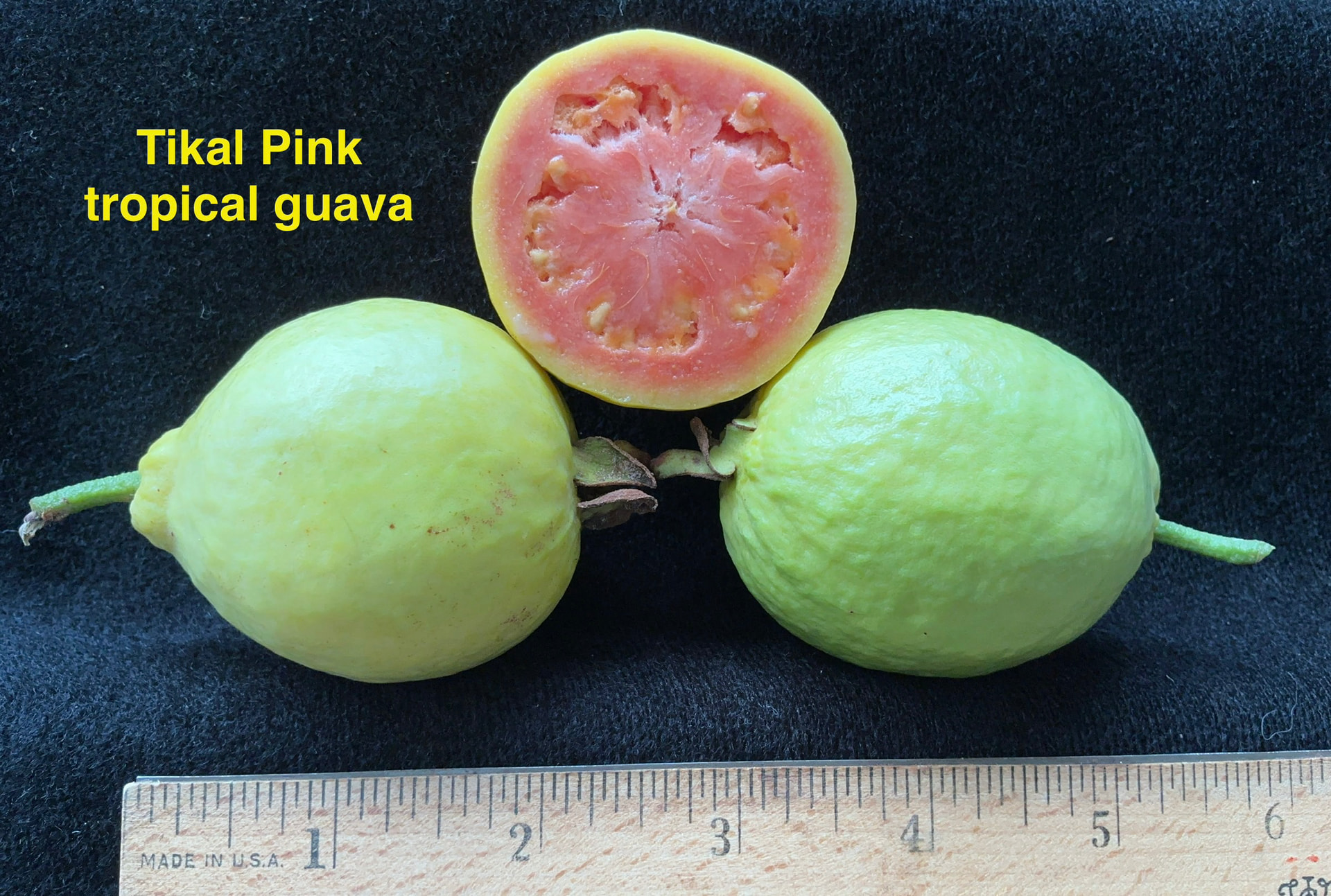
We grow several different cultivar of Tropical Guavas. Here are a couple of ripe Tikal Pink yesterday:
A single ripe tropical guava sitting in the counter can perfume an entire room (or house) with its musky, flowery smell. Great if you like the smell, not so much if you don’t.

6 Likes
Lemon guava for me is more of an early fall fruit, I’m quite jealous that you’re already harvesting ripe fruit while mine are all small and green still.
As best I remember, lemon guava seeds are clonal, so they probably aren’t any real varieties since everyone is growing clonal copies of the same plant even when grown from seed.
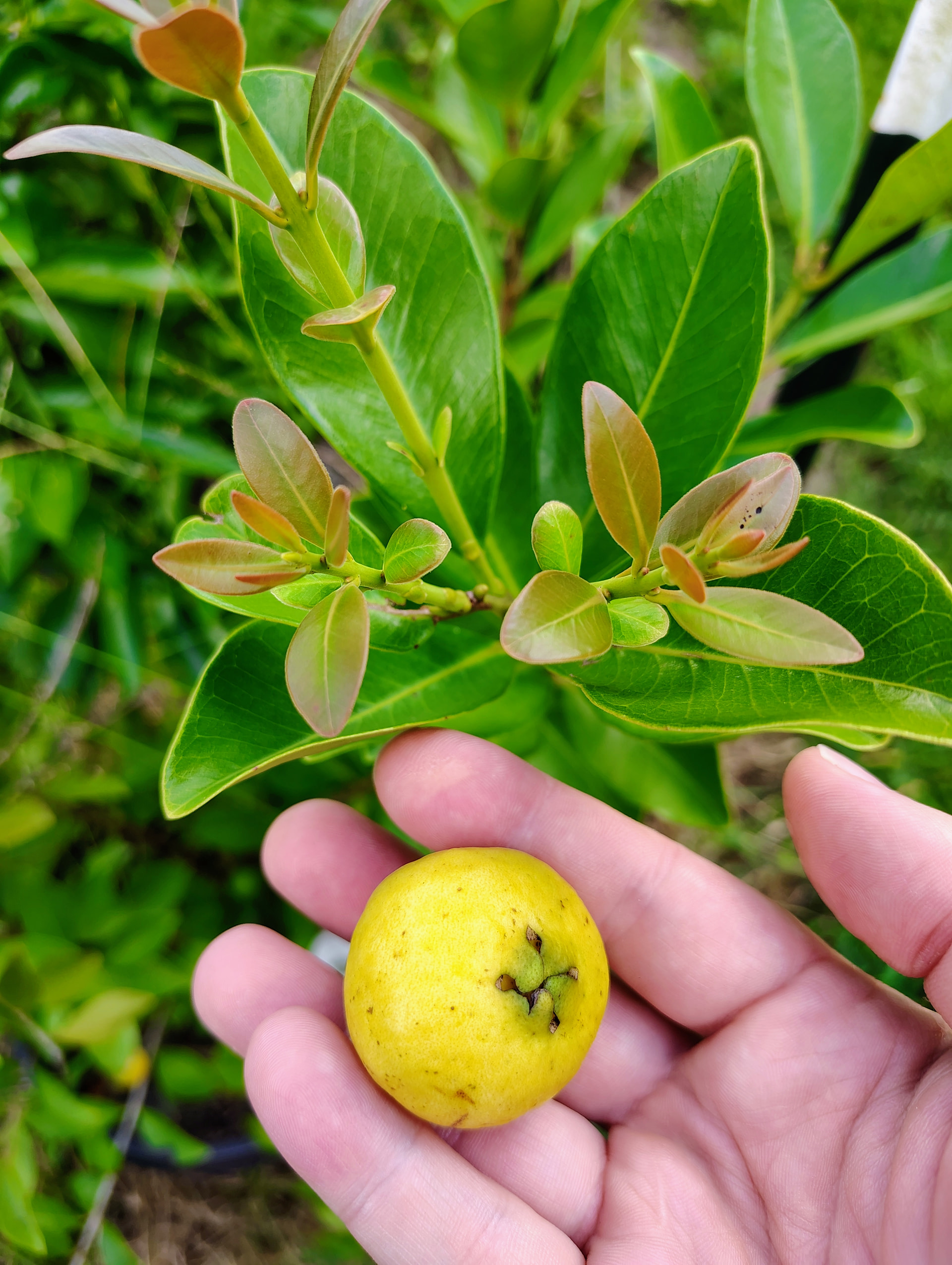
This year will be the first I get to harvest Psidium robustum. It is fairly similar looking to lemon guava but a bit larger and with, well, more robust leaves. In expecting the fruit to be a good bit larger and to probably have a different flavor. Hardiness is about the same as lemon guava, not great.
3 Likes
Please update us on the flavor of P. robustum once you get to taste it. I am rather fond of guavas, and planted about 30 lemon guava seedlings in a hedge, and bout 20 strawberry guava plants as a border planting about 8 years ago. Sadly, the devastating 2021 freeze knocked them all (recently-planted!) to the ground and many never recovered. We have also lost all but 3 of our in-ground tropical guavas (planted about 10 years ago) over the past few years. They will be growing fine, then suddenly wilt and die (root rot presumably). Note sure what the secret for success with growing tropical guavas in-ground is, but I haven’t discovered it yet. Container-grown have all done fine, but quickly outgrow even 20 gallons pots, even with substantial pruning each winter.
5 Likes
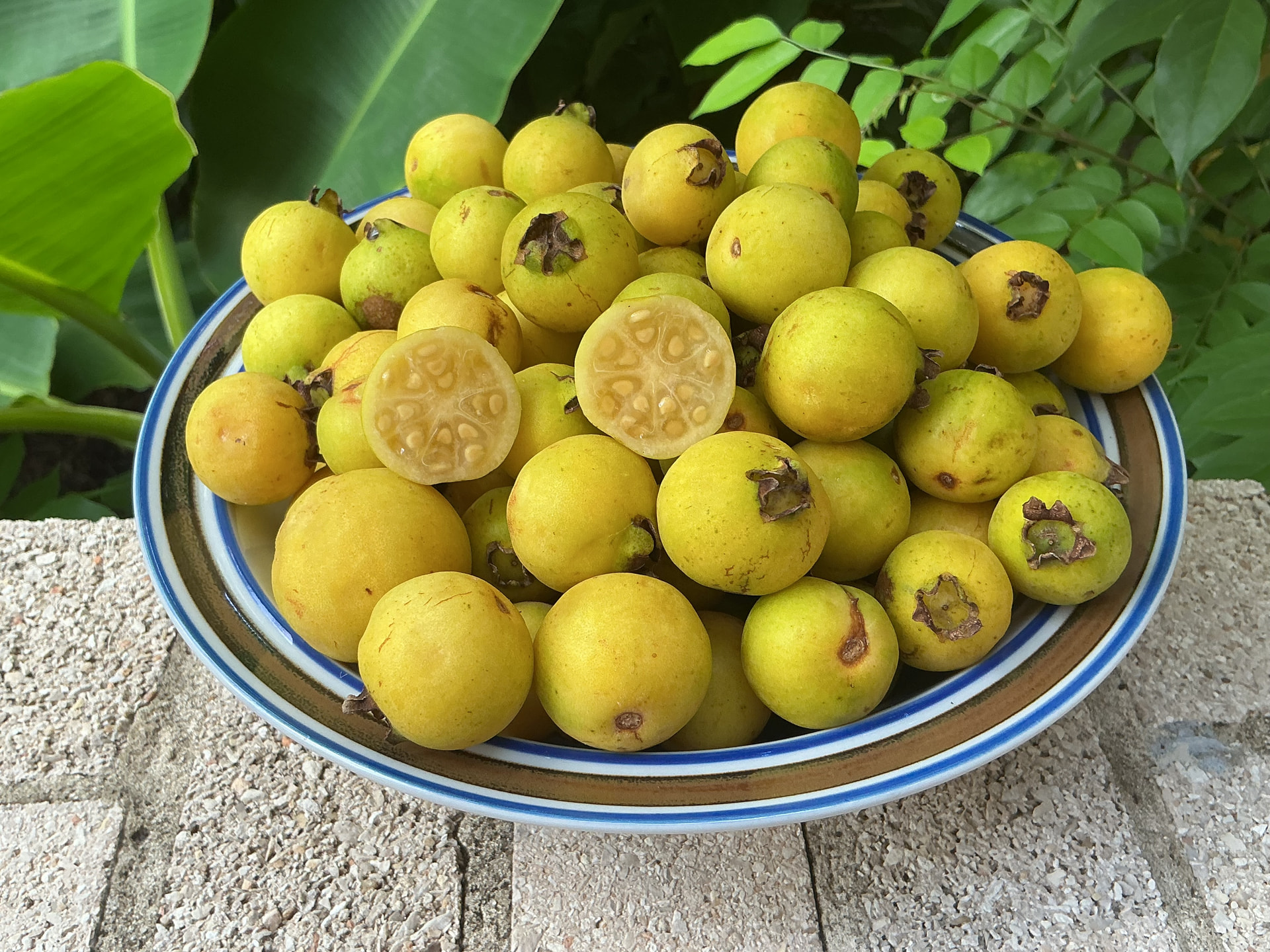
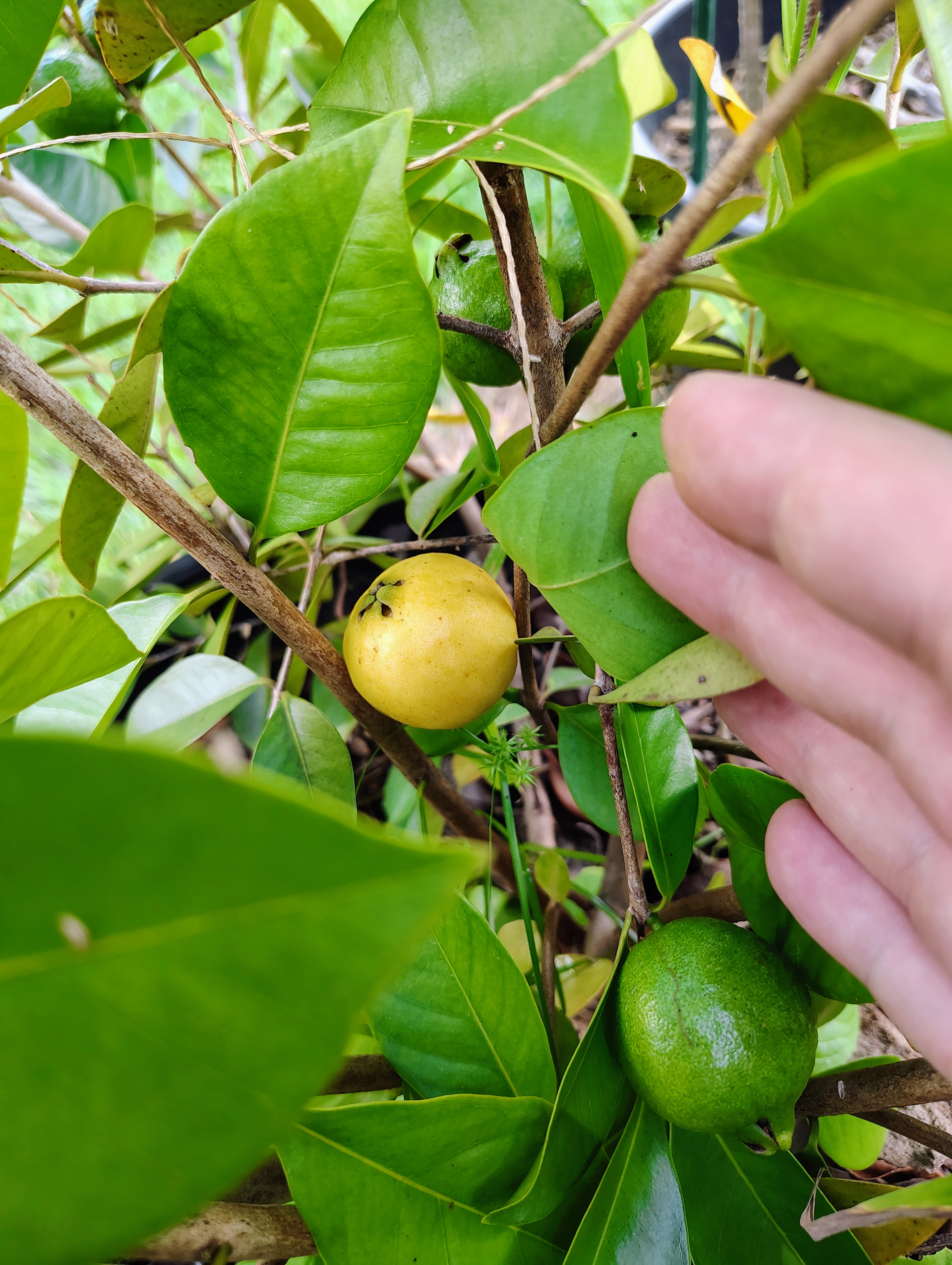
I picked quite a few ripe lemon guavas this past week:
The largest of these is golf ball sized. Although it is possible to make preserves from lemon guava, we just eat them out-of-hand. The seeds are smaller and less noticeable than the seeds in strawberry guavas, which seem to approach the edibility of small gravel. Our strawberry guavas are completely done bearing fruit for the year. Our lemon guavas will continue bearing for several more weeks.
4 Likes
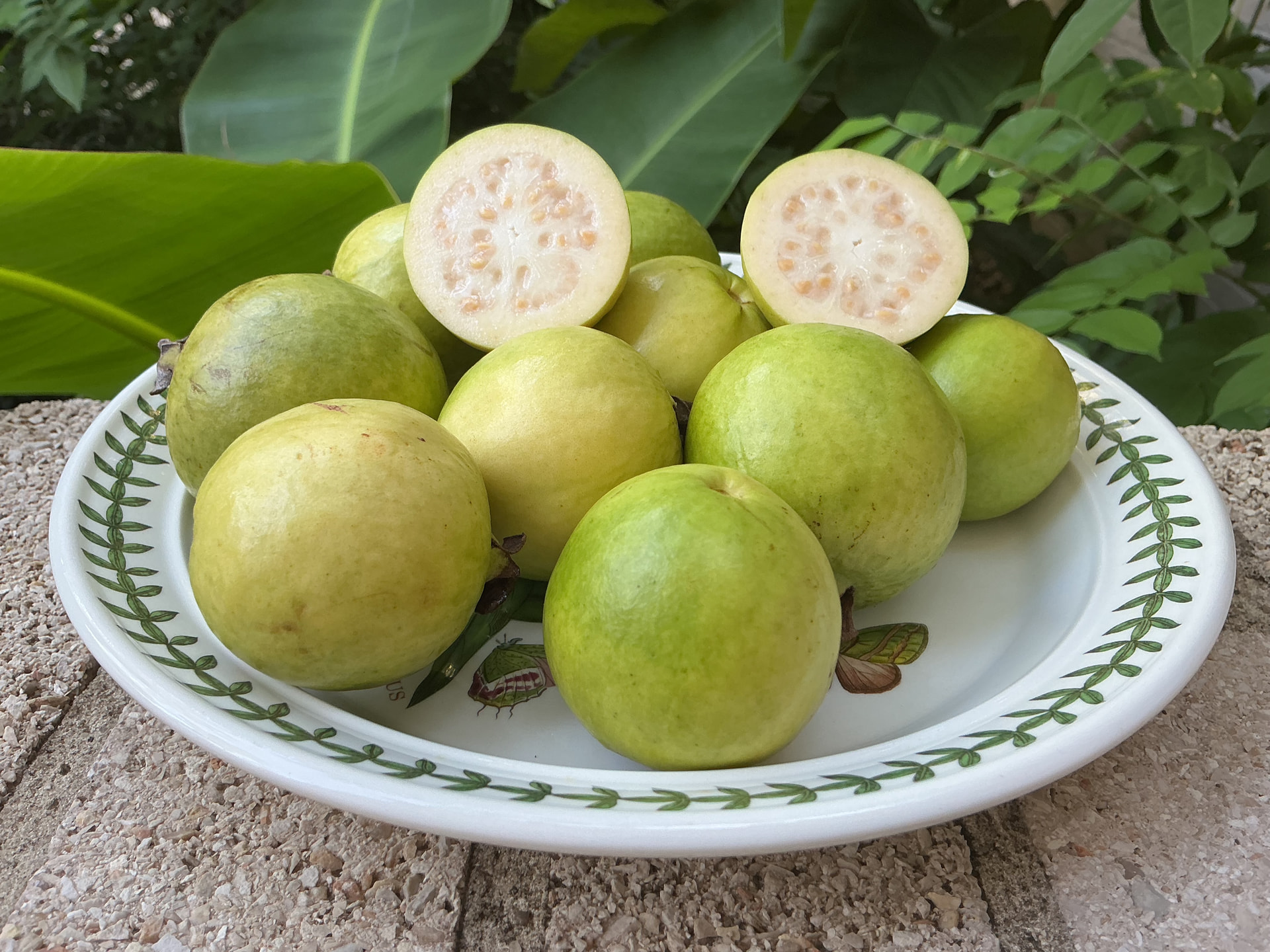
I started harvesting our white tropical guavas a couple weeks ago, and yesterday I picked a plate-full of ripe fruits:
This plant was simply labeled “White Guava” at the nursery, so I don’t have a cultivar name. These are best eaten while still quite firm and “crunchy.” This plant is now in a 20 gallon container, and in spite of heaving pruning back to a few feet tall each winter (so it will fit into our garage for freezes), it easily grows to about 8-10’ height each summer.
2 Likes
Nice, mine are still a way from ripening.
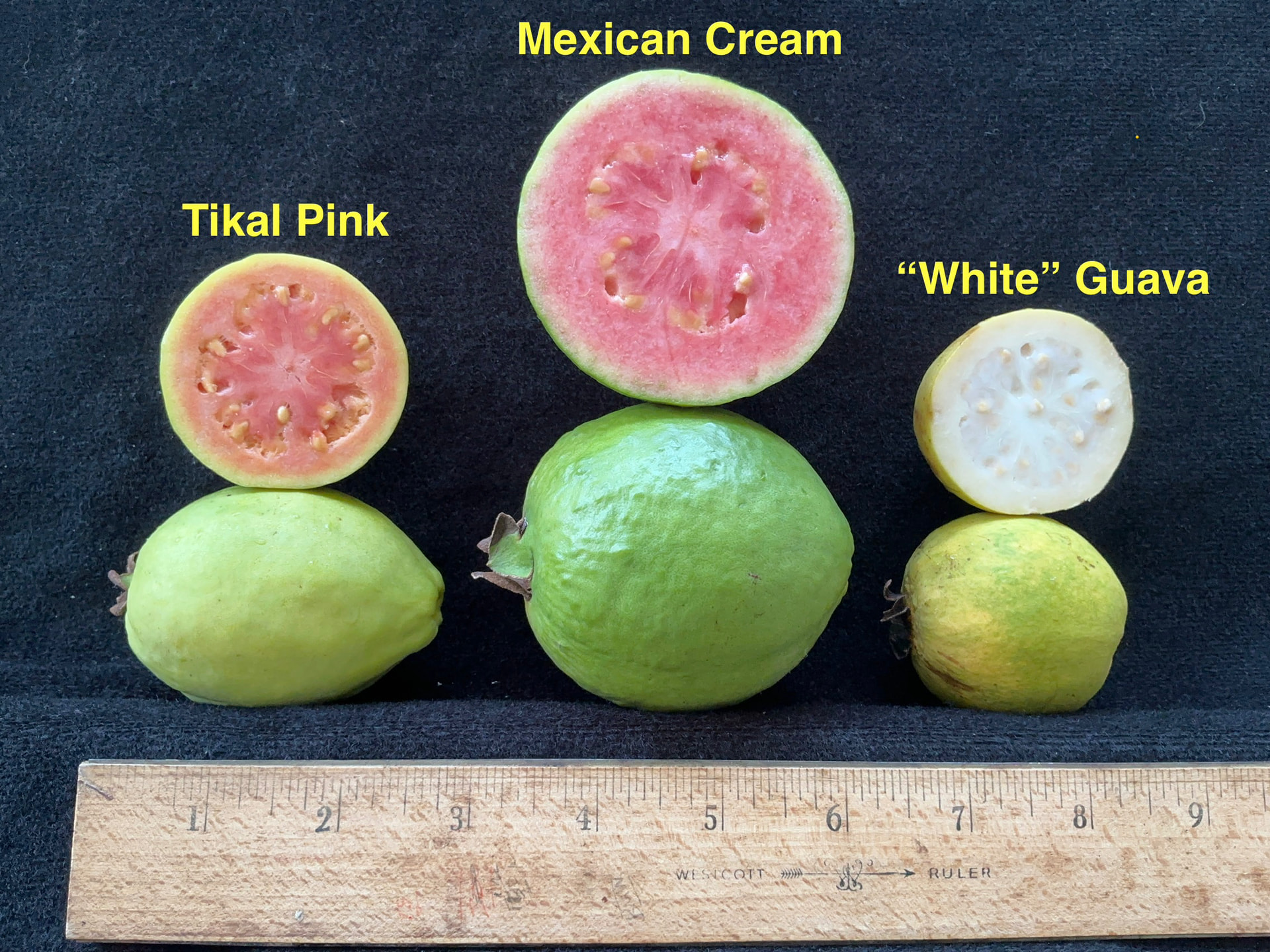
Here is a photo I took a couple days ago of 3 different Tropical Guavas we are growing in containers here in SE Texas:
I have a couple other varieties growing in-ground, but they haven’t fruited since 2020 due to repeated hard freezes each winter freezing them back to ground level unprotected.
3 Likes
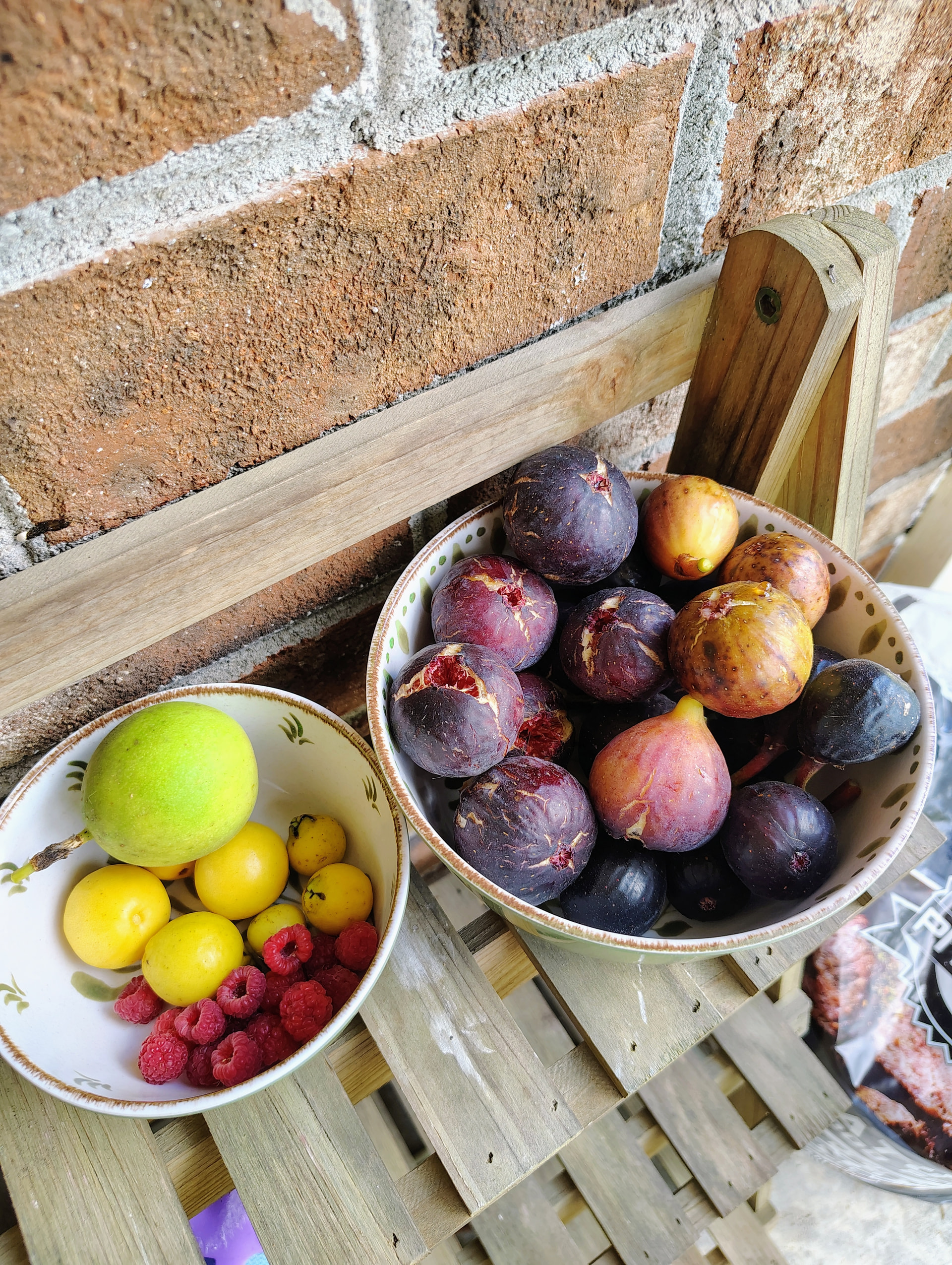
The first few started trickling in the other week, now I’m getting decent numbers. Pictured next to the raspberries. The one tree I have in ground is ripening first, probably because it gets more consistent water.
I like this one. It needs to be a little bigger and older than yellow strawberry guava to fruit, but not much more. Psidium longipetiolatim for example is taking way longer. The fruit are larger but look to ripen right around the same time. Other than size, these are very similar. I’m not noticing much flavor difference between the two, though it’s hard to tell after just one fruit. With the larger size, it also has more pulp which is nice.
3 Likes