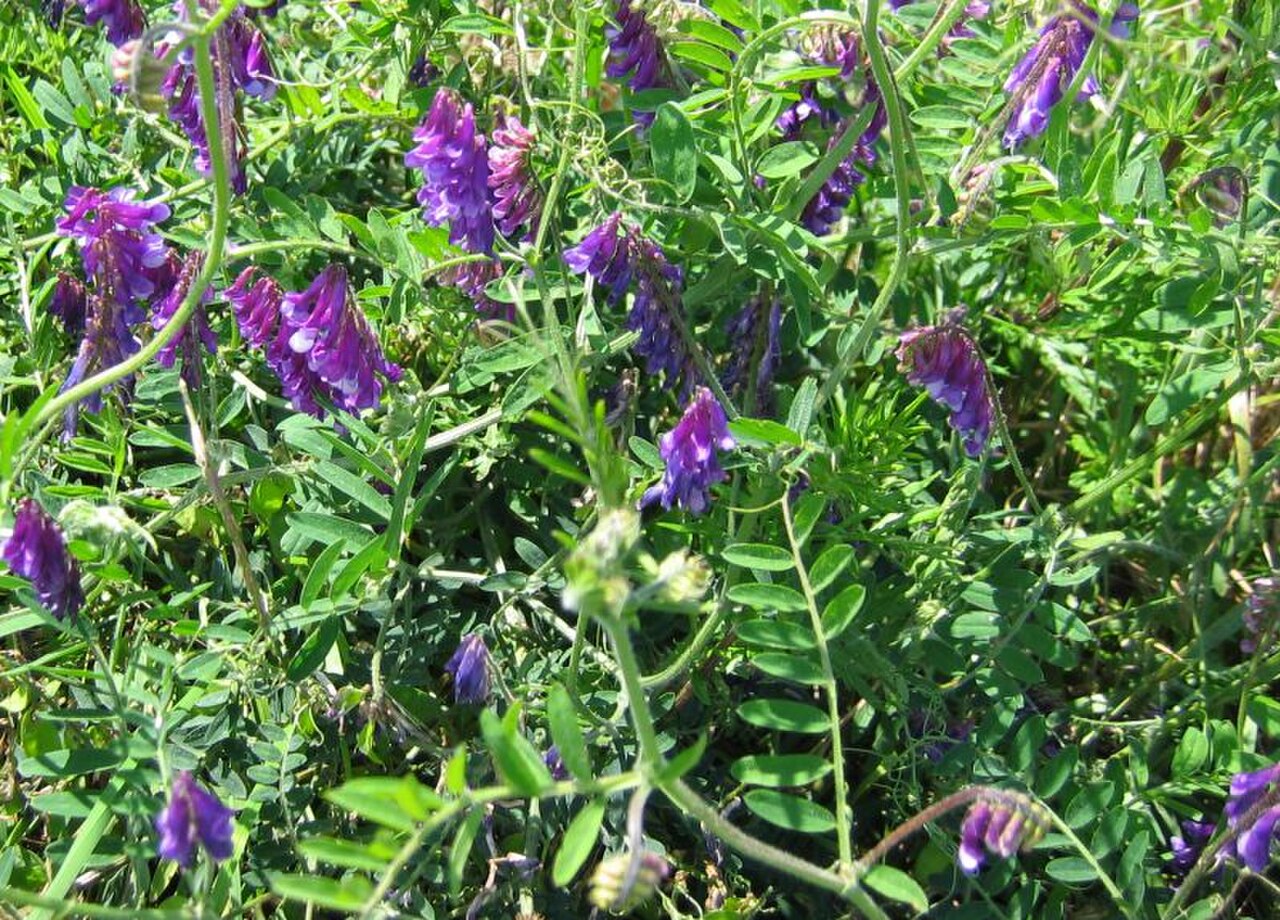
“Hairy vetch is widely used by organic growers in the United States as a winter cover crop and in no-till farming, as it is both winter hardy and can fix as much as 200 lb/acre of atmospheric nitrogen.[11] Disadvantages of hairy vetch in production agriculture are related to the crop having a portion of hard seed and its tendency to shatter seed early in the season, leading to it remaining in the field as a weed later in the season. This can be a particular problem in wheat production.”
Here in Kansas it is considered invasive
“Although non-native, it occurs in all US states and is considered invasive by some states,[2][3] such as Alaska,[4] Florida, Georgia,[5][6] Kansas, Michigan, Minnesota,[7] Nebraska,[8] Oregon,[9] and Washington state — as well as in Japan[10] and some parts of Europe where it is not native. It is also found in most Canadian provinces.”
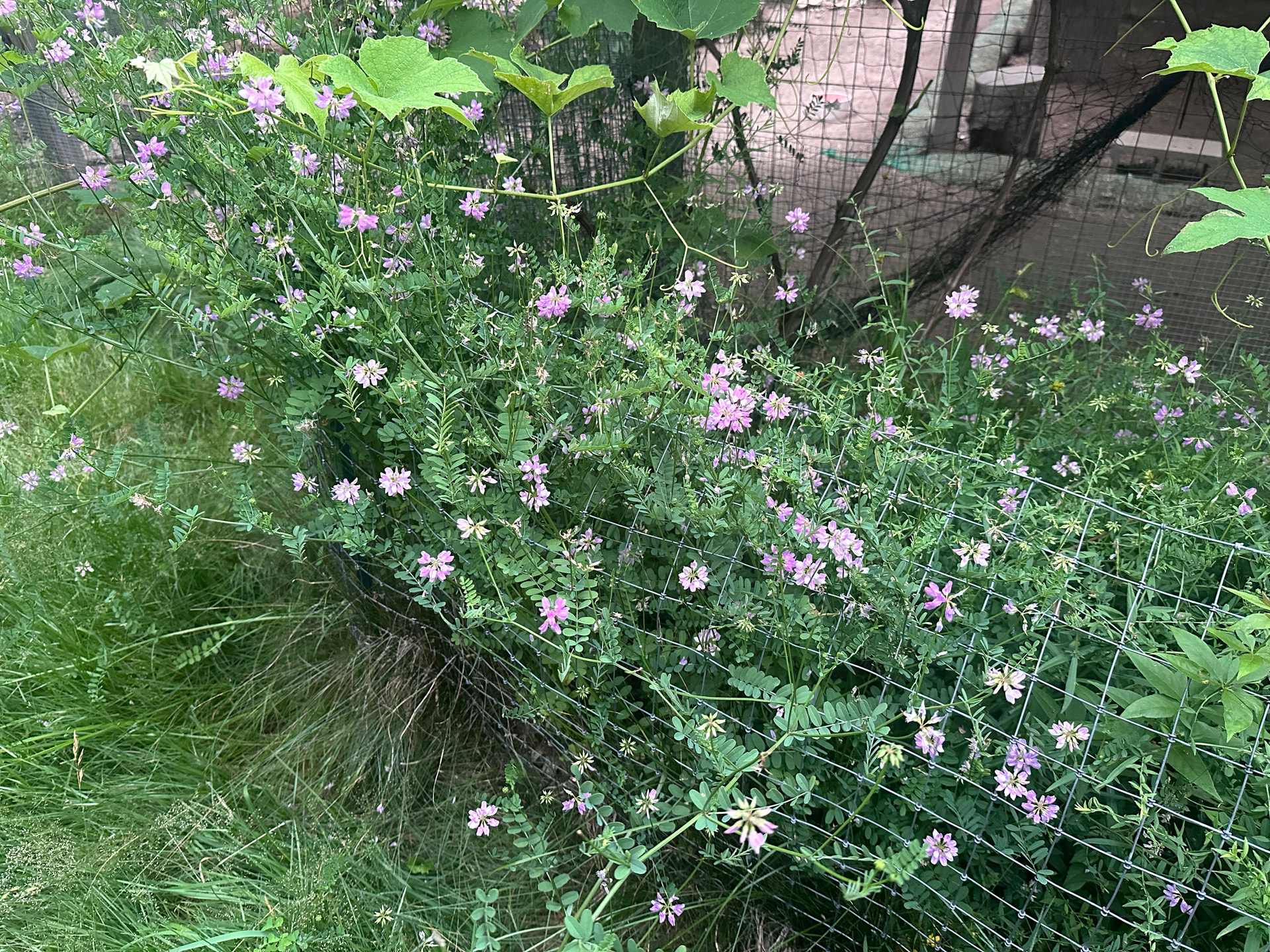
I’ve got crown vetch growing here. Funny thing is it seems to dieback where it grew the previous year and regrow around that area. So even though it has rhizomes that are supposedly perennial it functions as a reseeding annual here like hairy vetch. Or at least that’s how it has behaved so far.
I’ve been using crimson clover between my fruit trees rather than hairy vetch for exactly the invasiveness reason. Less nitrogen fixation per acre but it doesn’t take over permanently. Mow it once in late spring and it feeds the trees through summer as it breaks down. Cowpeas in summer if you want more N in the warm months.
We implement hairy vetch, alongside a number of other legumes, from time to time in fields that are intended for cattle silage or grazing.
It can be a nuisance in non-perennial stands with how the seeds stick around with remaining viability to germinate at a later date. A great addition for applicable circumstances.
Hairy vetch is a common weed here. usually your typical hay field is about 30% vetch. it reseeds aggressively. i have crown vetch in my ditches. it out competes just about everything but the lupines and mints. i usually get lots of hairy vetch coming up around my trees when i put down the spring fertilizer.
I used to use a mix of hairy vetch and winter rye to build organic matter in sandy soil in central WI. It worked very well as a fall-spring crop along with a summer buckwheat crop.
Thankfully, soil here is much better than it was there.
I have some ‘Cow Vetch’ going that i found by the roadside and got going here. I like it but it like other vetches does best on fences that you do not plan on tending. I have added fences in my gazing areas for the sole purpose of supporting things such as this.. also birds tend to sit on the fences and poop out seeds from their travels.. so adding a fence can be beneficial if you are into that kind of thing.
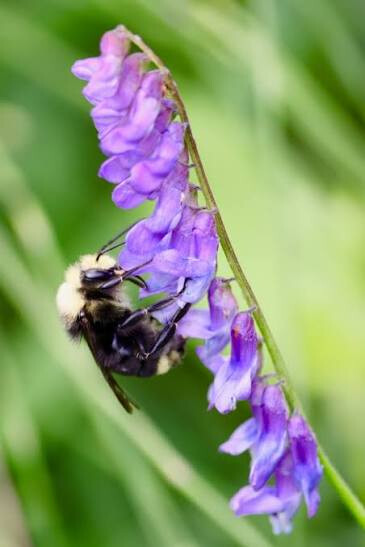
It was invited here as forage for cattle, but the attractive plant serves more than one purpose. It provides a feeding spot with its prolific flowers for many beneficial and attractive insects like honey bees, mason bees and bumble bees. It also attracts a large number of native butterflies, including Baltimore checkerspots, clouded skippers, gray hairstreak, crossline skippers, orange sulfurs, Delaware skippers, eastern tailed-blues and wild indigo duskywings.
Cow vetch belongs to the legume family, which means its roots have nitrogen-fixing properties. The white taproot can be well over 1 foot in length.
Interesting timing. Just read a USDA Facebook update that researchers cracked the code to turn off the latent dormancy gene that makes Hairy Vetch so invasive. Breeders should be able to make new lines with no lingering problems from old seeds.
I have 2 acres of sand in the Calif central valley. I’ve been planning on planting Hairy Vetch along with yellow mustard and other things to try to get some organic matter in the soil. Is there something I should use other then hairy vetch?
Just plan on Hairy Vetch to stay on after you convert it to some other crop.There are a lot of nitrogen fixers. Black Indian Mustard (Brassica nigra) is a superb fumigant for nematodes.
A friend of mine used to use fava beans. Not invasive but more work and take longer to decompose. -They get really big and have a lot of mass. I’d think any bean or legume would work.
For building soils I would suggest looking into Diploid Italian rye grass. It has a lot of biomass returned to the soil. It’s root system is amazing and the main source of its biomass. I believe when I was doing a lot of ground covers it provided the most.
It’s a biannual so you can plant it in the fall. If we had a field that was sitting fallow for more than a year, we would let it reseed itself which it did very well. We even came up with a special planting strategy for hilly sandy ground. Glacial moriane highly erodable ground. We would have issues with heavy erosion in the winter on fall planted evergreens. We would grow a crop of diploid rye and let it fully seed itself. We would mow it then plow and rotovate it in. We would plant the evergreens in September and follow it with irrigation. 2 weeks later we would have a sea of green all around the trees that would protect the soil and new plants. We would use Cletodim to burn the grass down in a bands around the plants.
It’s easy to grow, germinates fast, provides lots of biomass and it’s deep root system creates structure in the soil. Roots will grow beyond 3’ deep. It can get into tiles if left over 2 years. I learned that the hard way.
There are low mow varieties but what I tried wasn’t hardy for me.
We would plant it at 25# to the acre and would companion plant it with crimson clover at 10#/acre. A good mix.
You can keep it mowed if you want. It can become a weed if you let it go to seed, but is pretty easy to control chemically or physically.
I’ve grown a lot of ground cover usually in 30+ acres plots. Sudan grass, oats, crimson clover, grain rye, diacom radishes, and buckwheat and Italian diploid rye grass is the best item I found.
DO NOT confuse it with annual rye grass you find in turf mixes. Italian Diploid Rye grass is what you need.
Our ideal shade tree program was to plant diploid rye the previous fall or spring. Terminate it in August before it goes to seed, and plant Tapmaster Diacom radishes in early September going into the winter. Radishes would smother all the winter annual weeds, they become carpet of leaves. Temps below 25 would kill the radishes, they would start to rot and stink. By April the radishes would be gone and we would have a nice clean field to plant in.
Another vote for fava beans. Field peas are good too, though you will want to include something sturdy for them to climb up in the mix. Favas and peas will die-off by themselves once warm weather arrives, unlike vetch which will keep setting seed and growing up, into, and over your crops for as long as there is residual soil moisture. Pulling vetch off a hundred acres of grapevines isn’t very fun.
I prefer oats to ryegrass for most situations, since ryegrass, like vetch, doesn’t self terminate and needs to be tilled in to kill it. Since we don’t usually get summer rain in California, any ryegrass left can compete for water with your fruit trees.
Unless you’re planning on irrigating through the summer, warm-season cover crops are pretty useless here.