My seedling and Marjorie both were from passiflorista also. No fruit from any of mine either, but the pink pop is on year 2 and the others just planted this spring.
2 Likes
Marjorie Sherwin’s first bloom this year
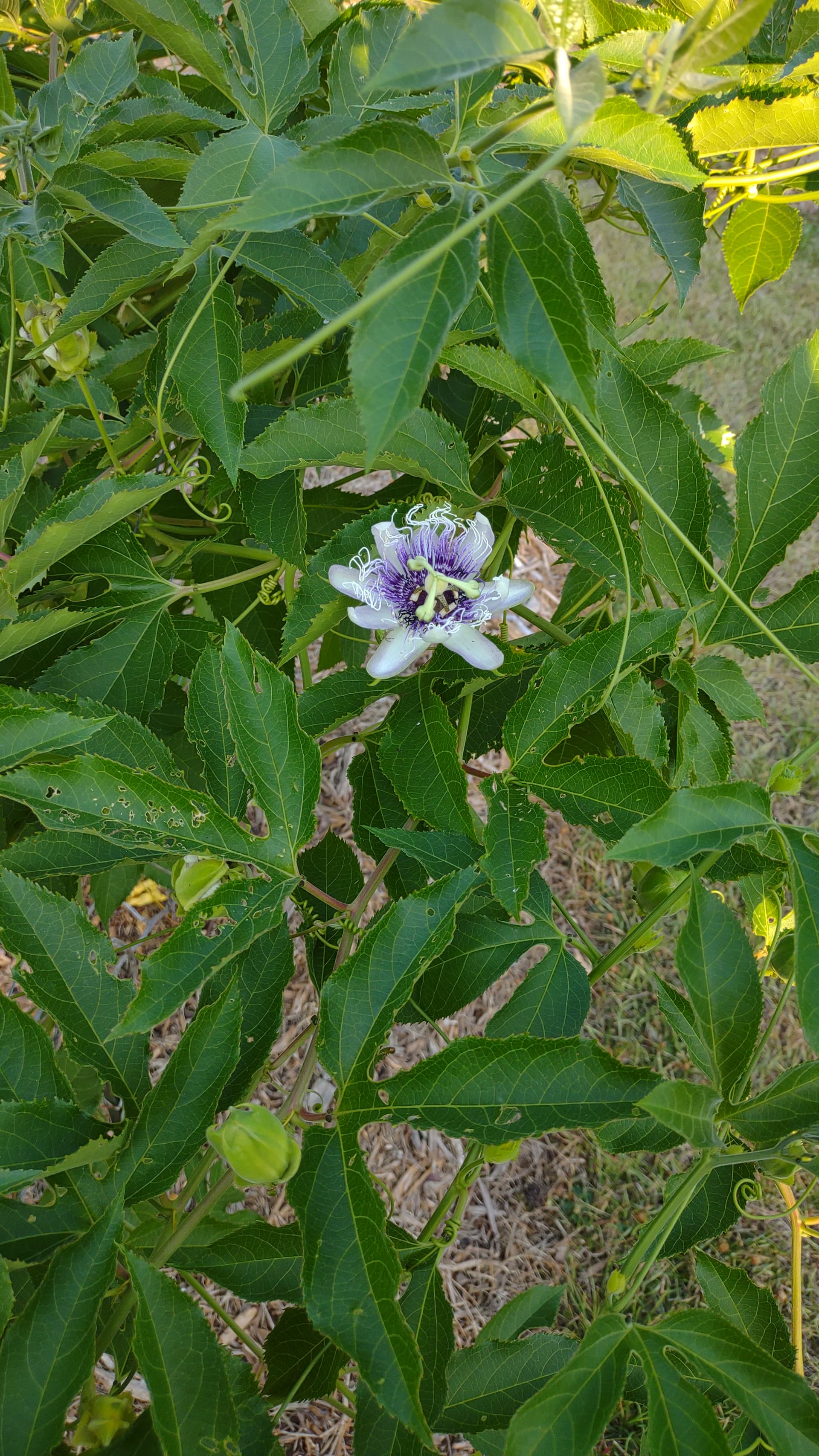
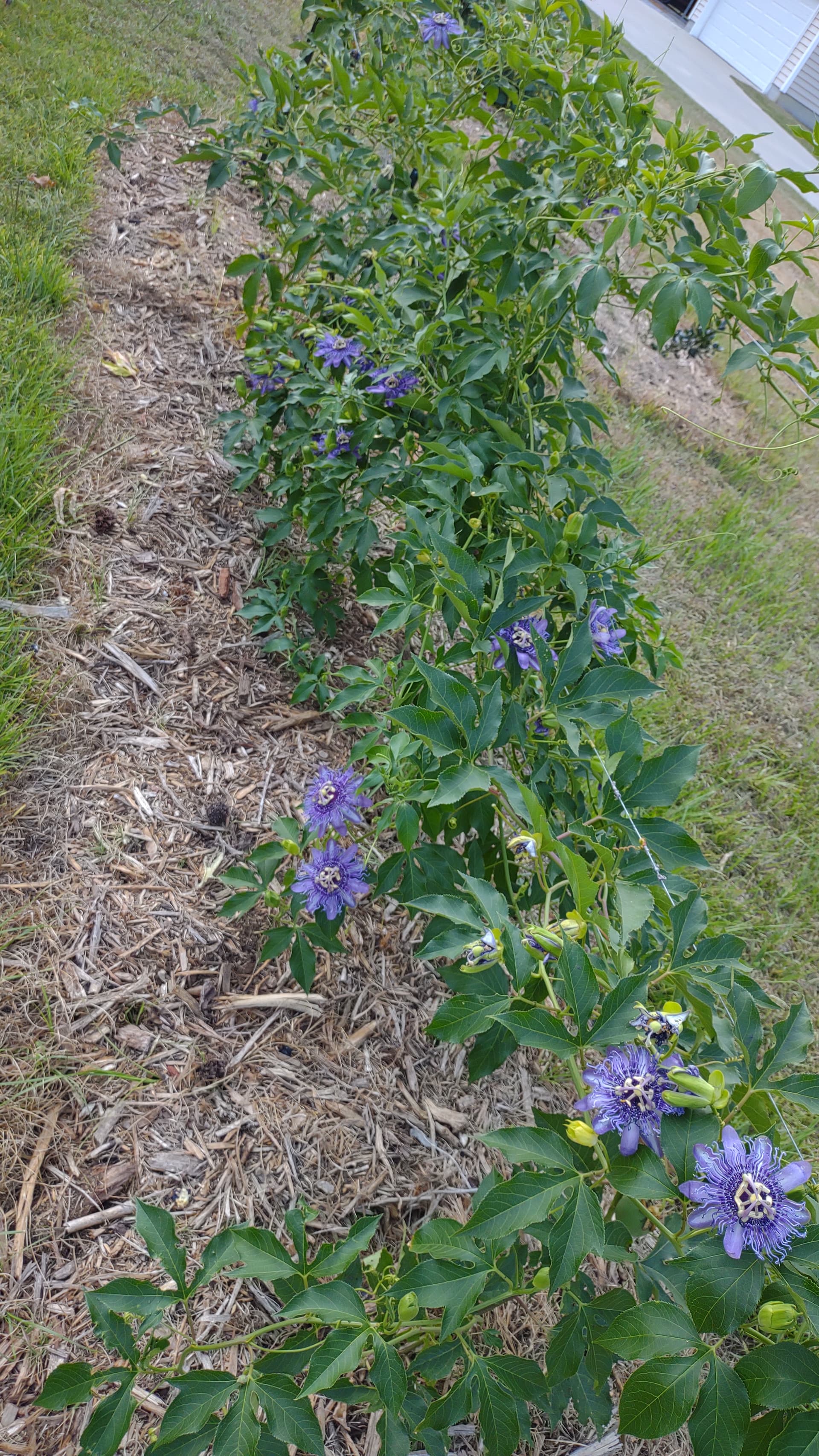
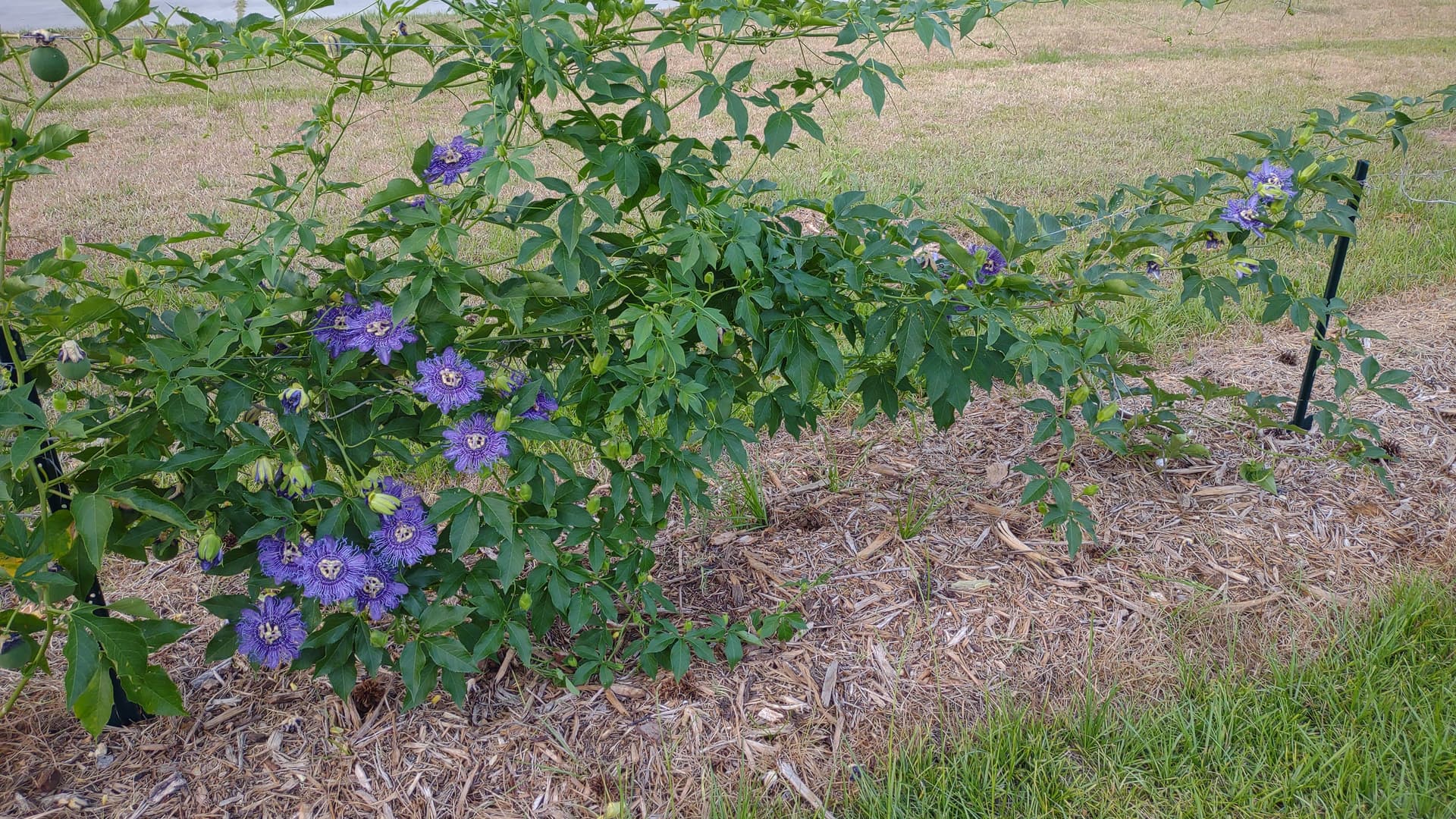
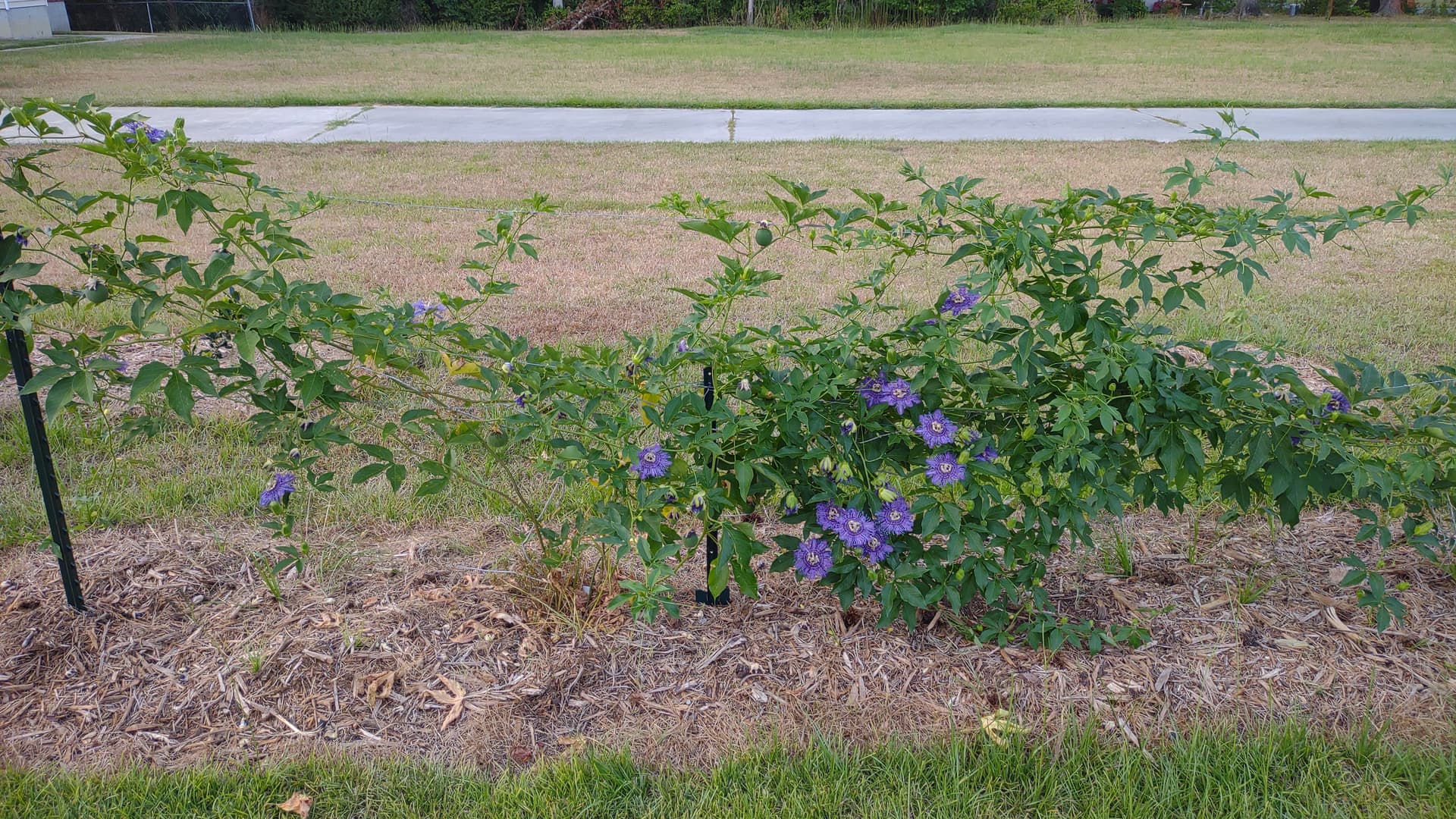
She’s way behind the others, all unnamed, which have not only flowered, but set a good dozen or two fruit. One vine in particular is doing really well and was really early.
9 Likes
Have others observed that P. incarnata seems to flower/fruit more if running along the ground?
I have a trellis that’s my “intentional” location but as most know, incarnata has no concept of boundaries 
In prior years I’ve diligently removed runners outside this area but not this year.
I have several spots where vines are thickly covering the ground and it seems like they have way more flowers and fruit than those on the trellis…
2 Likes
It’s remarkable to see how maypops are only just now waking up here in the PNW when they are already covering trellises and setting fruit in their native range. It’s a shame they are so heat-motivated, I really would love to find a tasty Passiflora that would fruit here, but I’m doubtful it’s possible.
2 Likes
My guess is the genetics are really working against you. Passiflora seems to be a really dyed in the wool tropical genus, with it’s temperature members just pretending not to be tropical by being will adapted to growing back from the roots.
I’m impressed by how drought tolerant it is too. I’ve only watered those vines once during this past month of no rain and low humidity.
3 Likes
What’s that?
5 Likes
Definitely quite drought tolerant. Same here - it’s been extremely hot and dry for about 2 weeks but the incarnatas are going strong. Even seedlings only planted a couple months ago and essentially neglected.
Yeah, I blame la nina. We had daytime relative humidity around 40-50%, dipping to the 30s in the afternoons, for almost the entire month of June. And no rain, absolutely no rain since May.
I looks like we’re finally going to get rain later today. The humidity has felt a lot more like normal the last few days too, so I guess that big high pressure ridge has finally moved on and we’re getting gulf air (and moisture) like we’re supposed to.
My figs had amazingly little fig rust on them right up until a few days ago. It was also funny how, before the humidity returned, it was stinking hot during the day, but as soon as direct sun left, the temperature dropped like a leaded weight. Now we’re back to normal–hot day, hot night.
1 Like
Thats how it was for us all spring, but the most drastic in May. Upper 90s, some 100 days, but as soon as that sun dipped behind the trees, 20 degree temp change. Night time might be sticky now, but I perfer low 90s 24 hrs a day to 100+ days 80 something nights.
I wonder if the high elevation passionfruits would do better in the area, like Passiflora pinnatistipula and the other banana passionfruit subsection (supersect. Tacsonia). They’re from the cloud forests, which can stay decently cool year round, so they might not be as heat driven. Just a thought, since they aren’t as cold hardy as maypop, but they are supposed to be able to handle frost, and are from a more similar environment (wet, lots of cloud cover, cool to cold nights).
2 Likes
I haven’t tried pinnatistipula, but I did grow maliformis in my first year having a greenhouse, which some sources call a tropical high-elevation species. It was indeed very tolerant of cooler overnight summer lows even in late spring to early fall, and grew 30+ feet in one season, filling the rafters of my greenhouse. Didn’t flower, though. However, in winter (even in my greenhouse) it was killed completely by a few months of minimal sunlight, cold (non-freezing) lows and cool highs (40s to low 50s most days).
I think the problem with the high elevation tropical species is they are used to a stable year-round climate, even though they can grow ok when that stable climate includes cooler temperatures. But unlike maypop, they don’t seem at all equipped for a true winter, even a relatively mild one in a greenhouse.
5 Likes
The banana passion fruits that I would try first in the greenhouse are the domesticated ones p. Tarminiana and p. Tripartita. They are present in the southern end of passionfruit native range (the highlands of Bolivia) and invasive in New Zealand and Tasmania which is a major vote for their suitability.
4 Likes
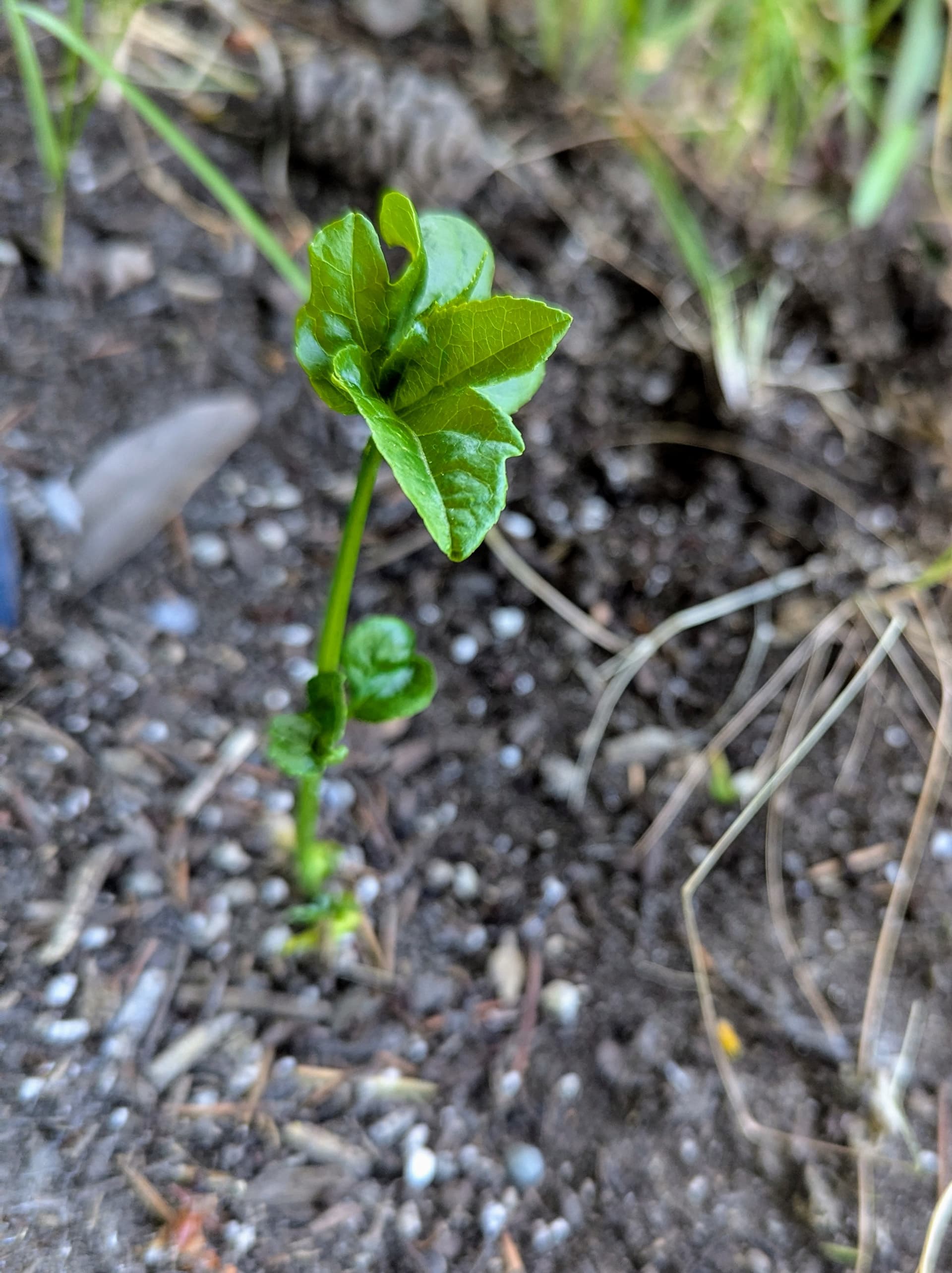
Looks like at least two of my third-year maypop seedlings survived the winter outside. Seems unlikely it’ll get large enough to flower before fall, but at least it’s alive.
5 Likes
My first incarnata fruit of the season dropped today.
Love that smell!!
3 Likes
This was the problem for me too in suburban Toronto, it came back weaker on the second year, so I decided in-ground wasn’t worth it. Now I grow them in pots that I bring indoors. Last winter I brought them to a sunny window, and it continued growing (slowly) through the winter, even flowered a bit in late March. I brought the container outside in mid-May, it began flowering on June 20, and now it already has fruits growing on it. If you’re growing passifloras just as an ornamental, passiflora caerulea is even better, since it tolerates cooler temperatures and should be able to overwinter without dying back to the roots in much of the PNW. Here in the Great Lakes, winters are a bit too cold, so I grow them in containers that I bring into my unheated garage where it gets down to about 25F in the coldest parts of winter.
1 Like
My p. tripartita died on June 12. I’m not sure why. It did well on its first year though, when it got up to 86F on the hottest days. Fortunately I had cuttings I was in the process of rooting and it seems like some of them will take.
1 Like
Have you tasted the p. Tarminiana and p. Tripartita?
I’m planning to order from Peaceful Heritage for spring planting. Seems like everyone who has tried them has been happy with them.
I’m in the NC Piedmont here. I have a round shaped, green when ripe, from the wild maypop, that I’m encouraging to grow along the my chicken coop fence.
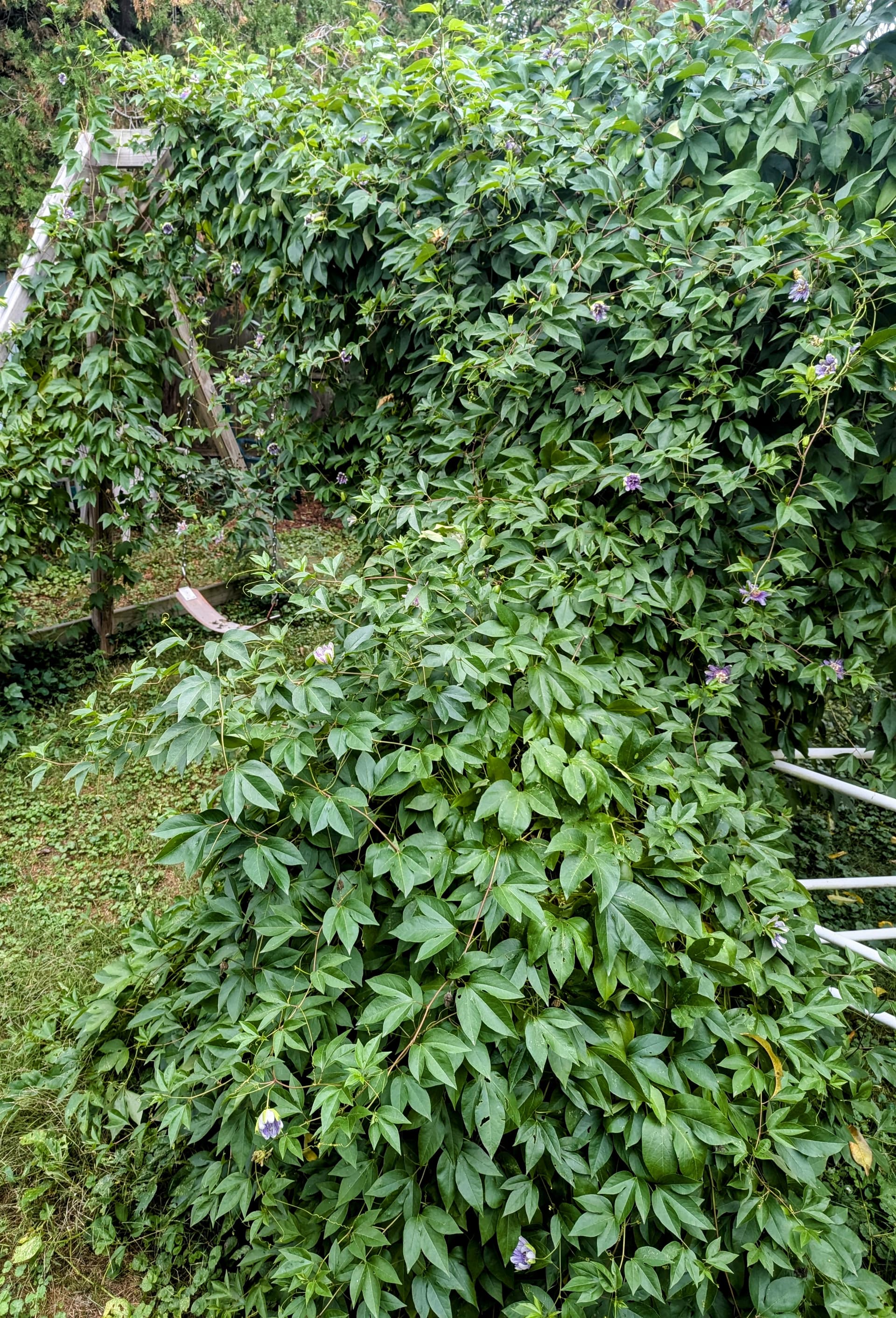
I am ready to despair of my maypops ever ripening in New Jersey. I finally got some happy vines after several tries and several years, and they set hundreds of flowers and dozens of fruit but it never seems to ripen before frost. I think I have a pinkpop and a bluepop and all of the seedlings died. But almost everything here is the same plant so it’s possible I’m just not getting any of the needed cross-pollination.
2 Likes
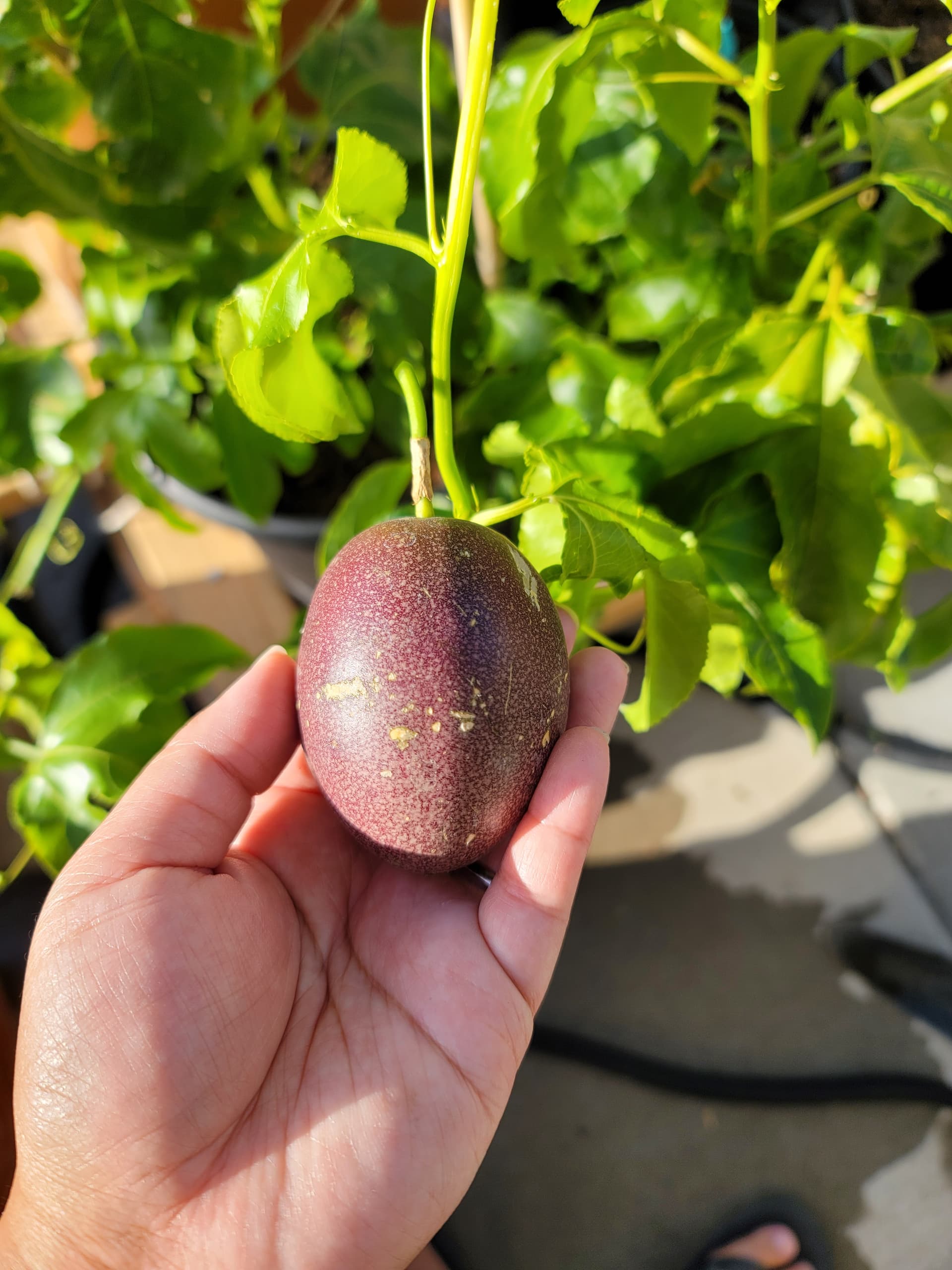
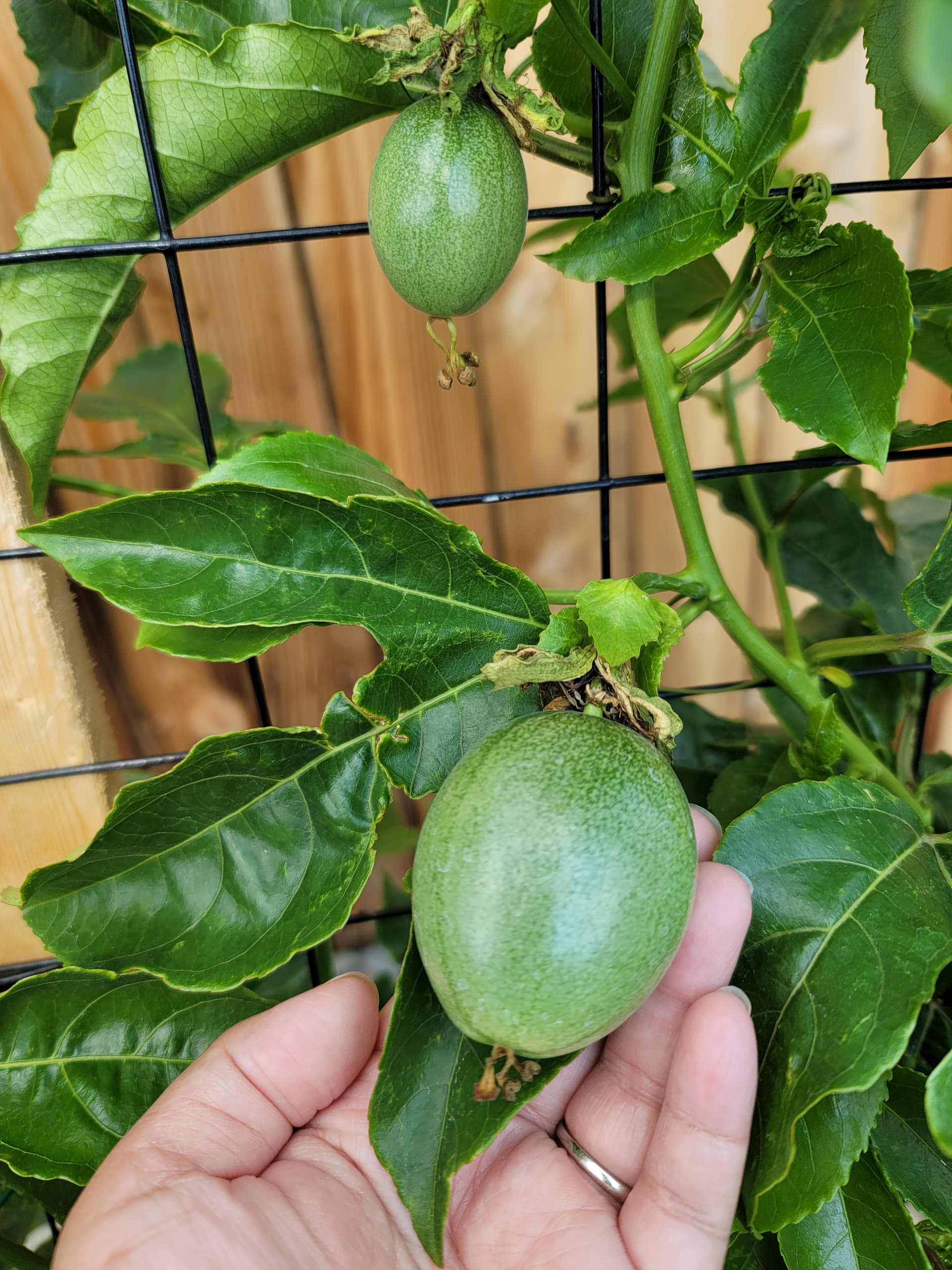
Not the same variety but purple possum and red rover takes 3-4 months to ripen in Colorado/6b for me in the past.
With that experience, i would assume that if we were to fully get a good amount of fruit, we would need to start having it bloom in/around May-June. From my zone pushing attempts, the most I’ve been able to get from 3 plants were about 45 fruit, 5 on the red rover and 40 between 2 purple possum plants.
If your weather is anywhere like Colorado in terms of last frost dates, to get a decent crop, it needs to be flowering profusely around our last frost date 
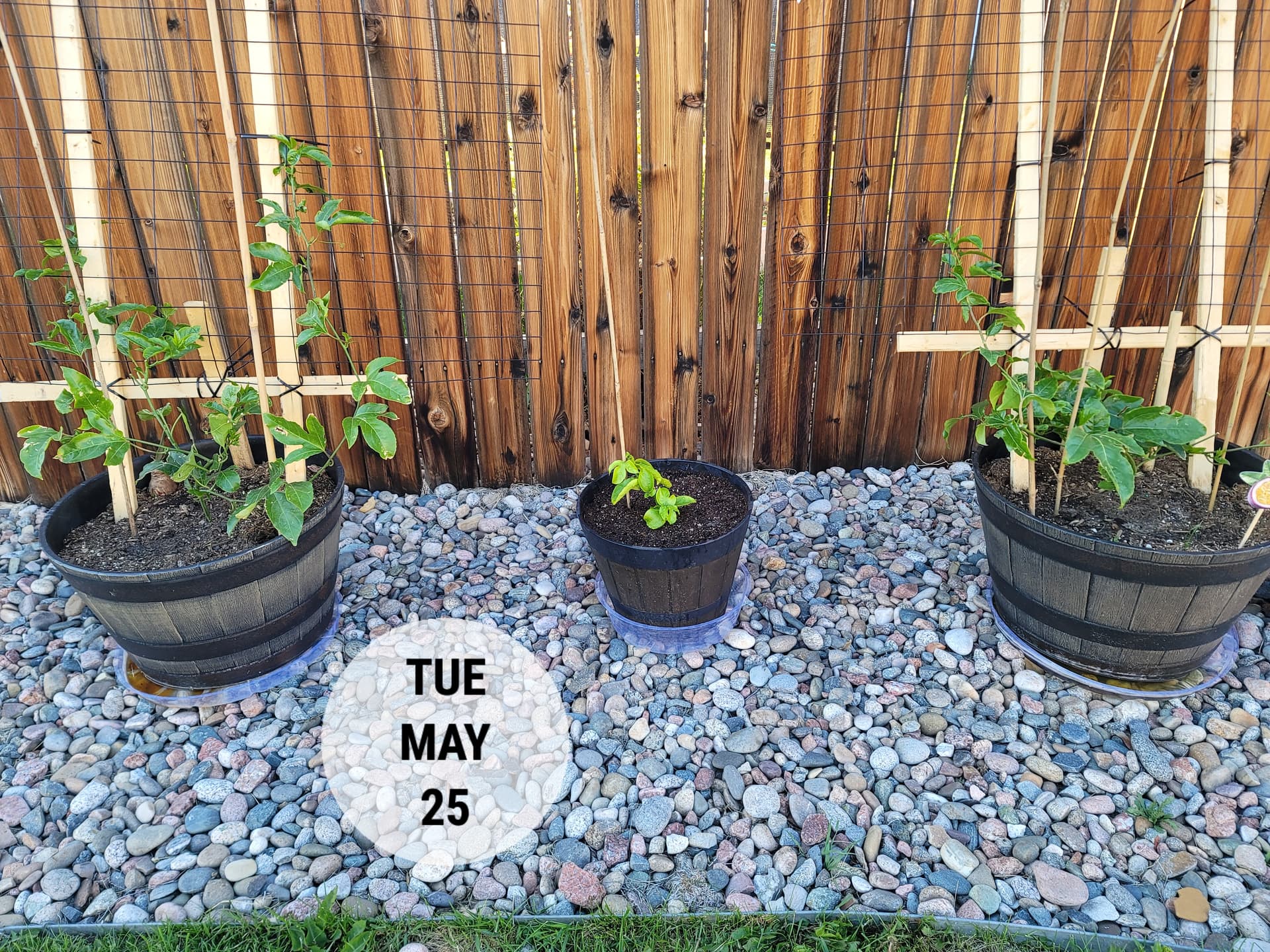
Pictures of how big they were when i got them vs before it started to get cold along with some ripening ones and a ripe one the year after.
After this, i grew from seed the years after and had to restart earlier this year as well. Mine are currently finally trying to flower after a stressful spring and summer…


5 Likes