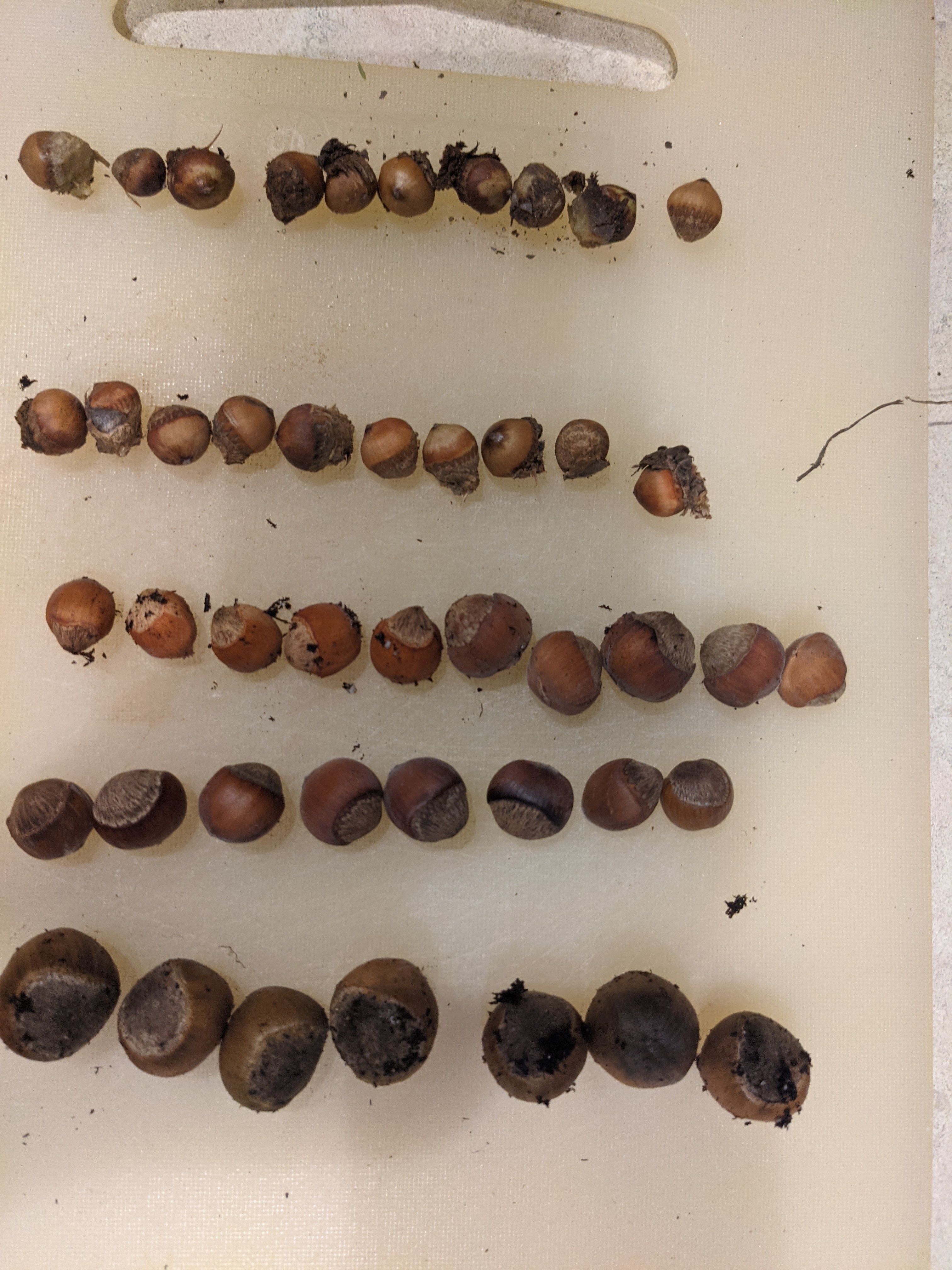
I’ve been collecting/buying/trading hazlenut seeds. If you have any to trade let me know! I found the difference in size quite interesting. I didn’t taste any, most I don’t have many of and am wary of wasting any.
From top to bottom:
European Filbert (from nearby arboretum)
Chinese Filbert (from nearby arboretum)
American Hazelnut (from forum member)
Hybrid hazlenut (from Perfect Circle Farm)
Hybrid hazlenut (from forum member)
which ones are the ones i sent you? its not all about outside size but nut meat size. many american hazels have thick shells with little meat but breeders are working hard to correct that in the future.
Which disease resistant varieties are the best flavored? I’ve started planting them and have virtually no experience. Sacajawea is the only one that has started producing. It is decent sized and tasty, but I have no idea how it compares to other varieties.
Beautiful nuts. A little disappointing about the flavor being the same. I had a friend give me some raw filberts they purchased from an Oregon farm. The flavor dazzled the tongue. I’ve never tasted a hazelnut like it again. The dream is to find that cultivar or one as amazingly delicious. I have Jefferson and Yamhill. I’ll skip the others you have listed since their flavor profile is virtually identical.
Need to keep in mind the rules for hazelnut pollination. It’s a pretty confusing read… but more trees obviously means more chances for pollination (spoken like a tree addict!).
Forty years ago I started with Barcelona, DuChilly, and Ennis. When DuChilly died I was left with Barcelona and Ennis and for the next decade got no nuts. When you check the chart you can see why…they both expressed the same underlined allele!
I planted Dorris, Jefferson, Polly O, Sacajawea, Theta, and Yamhill filberts a couple years back. Nuts are relatively new to me. I am planning to expand into walnuts and pecans this year. But that is a decade investment before I know if the varieties I’ve chosen are to my taste preference. The lovely thing about filberts is they produce relatively quickly which allows one to experiment with many different varieties. With filberts, more is better . With 40 years of growing filberts, you must have spectacular trees. Thanks so much for sharing!
ive found no difference in the euro compared to native hazels taste wise. just the bigger cultivars have more of it because of size. eat a handful of natives and euros. of same volume and the taste is similar. roasting does increase flavor of both.
thats when you know what cultivars you are growing. taking a hybrid thats a mix of genes from 2 different continents, sometimes 3 like Grimos nuts, and it makes it a crapshoot to get proper pollination. i got lucky that my 4 older bushes were different enough to cross pollinate. last year i added 2 ecos and a winkler from Oikios. they should, in theory, all cross pollinate. diversity is the key when you have unknown hybrid crosses. next year i want to add some of Grimos Quebec / Asian crosses. they are the only ones that i know that have added cold hardy eastern Asian nut genes to their hybrids.
Interesting! None of the Wa and OR european trees are hardy enough for cold climates and the new hybrids are not available for purchase in WA and OR. We really are pursuing parallel and separate trials. Good for you for figuring all this out!
even if we wanted to grow the ones from the west coast ,we cant because EFB would kill them here. i guess EFB has also found its way recently into your neck of the woods so now there is a interest of crossing the euro./western strains with the EFB immune Amer./eastern hybrids. before that there was no incentive to cross the 2 on the west coast. these new crosses being developed between the euro and Americans should help the whole country to be able to grow them. its interesting times for hazel/ filbert growers.

 . With 40 years of growing filberts, you must have spectacular trees. Thanks so much for sharing!