Sadly doctors may or may not know as much about nutrition as you would hope, the amount they get at med school is pretty abysmal, more often than not a single course of the basics. It is up to them to do what the rest of us do, google a lot of stuff up. One would hope that they would be trained to be better researchers but based on what most say I’m not holding my breath on that one.
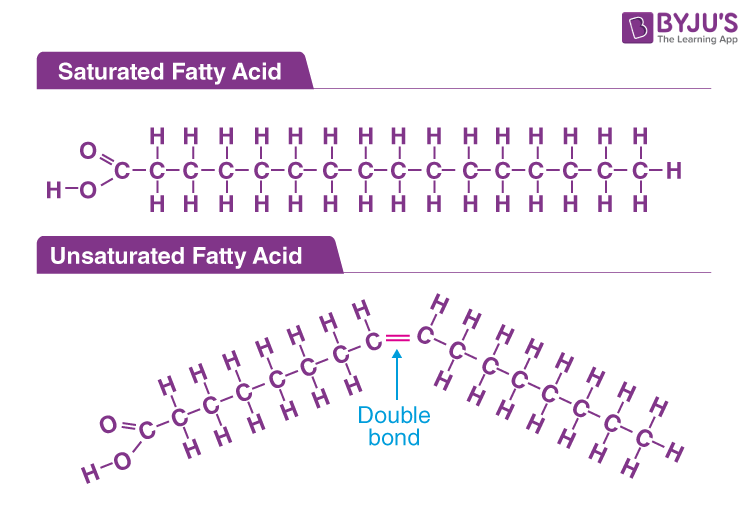
Case in point: Excess carbs are fat, fat are excess carbs. Many doctors, to this day, will tell you to cut back on dietary fat because it is bad for you. It isn’t, putting up fat in your body is bad for you and the easiest way to do that is with carbs, as it is trivially easy for your body to link them into fatty acid chains.
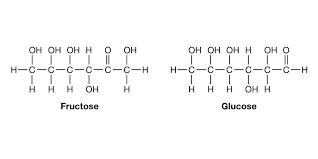
Without getting deep into the magic of how enzymes break down molecules and then get reshuffled into different molecules, I will just say that your body is incredibly efficient at taking those simple sugars and reshuffling them into long chains of fat that then it stashes around your body. This is why with doctor’s approval we dumped fats from our diets, replaced them with tons of sugars, and then wondered why our fat-light culture just kept getting fatter and fatter.
I got myself out of high blood pressure, pre diabetic, and halved my bad cholesterol while eating butter and replacing canola and corn oil with lard (canola and corn oil can be horribly inflammatory, lard isn’t).
On the other hand fruits are not junk carbs. If you don’t consume junk carbohydrates, you should be able to eat as many apples as you like, just make sure your diet is balanced otherwise. You need more than just carbs.
The Health Issues that are most often reported as being healed or seriously improved are Autoimmune disease issues. I do not know all of those, but found the list below online.
I had… 6. Inflammatory bowel disease (Specifically Crohn’s disease)
Ken Berry’s wife had 10. Hashimoto’s thyroiditis
Notice I said “Had”.
If you watch that Top 10, and their personal stories… you will hear several others mentioned.
==
There are more than 80 autoimmune diseases. Here are 14 of the most common ones.
Type 1 diabetes
Rheumatoid arthritis (RA)
Psoriasis/psoriatic arthritis
Multiple sclerosis
Systemic lupus erythematosus (SLE)
Inflammatory bowel disease
Addison’s disease
Graves’ disease
Sjögren’s syndrome
Hashimoto’s thyroiditis
Myasthenia gravis
Autoimmune vasculitis
Pernicious anemia
Celiac disease
===
I ate different for 20 days and experienced healing (the constant pain stopped)… continued it for 31 days. Had a colonoscopy scheduled (just a normal 5 year thing) and happened to have that on day 25 of carnivore diet. My GI Doc said I had no sign of Crohn’s disease.
Alan - thanks for your ever present opposite opinion
Do you see a huge risk in someone eating differently for 20-30 days to see if a disease they have had for years goes completely away, or improves drastically ?
I expect you will find something wrong with that.
I stopped eating carbs, my pain went away, my Dr confirmed my colon was in perfect health via colonoscopy.
I can add carbs back, in excessive amounts, my pain comes right back, and so does my other issue (arthritis). I can cut the carbs back, and both of those go away again.
I’m glad you found a cure for your condition @TNHunter.
But if my husband and I eat too much meat, we get keto rashes. So we eat little meat, not a vegetarian, but lots of vegetables, they have tons of carbs. Like this week we already consumed 3 lbs of Brussel Sprouts, 3lbs of oyster mushrooms, that’s on top of everything else. What I’m trying to say we have to eat according to our body type.
But I agree doctors don’t know about nutrition, my family has 4-5 doctors, they can’t cover everything. It took my niece 10 years to become a doctor since the age of 17. She’s now 34 and only just been working in the last few years as real doctor. So I do some research myself.
It’s impossible for one way to work for everyone, there appears to be evidence that eating meat of any kind could cause autoimmune disease, that autoimmune diseases could go away if the person stops eating meat. I personally think that it’s true, yet also that it’s very rare, that meat could cause such a thing. If only every person’s system acted the same, then everyone could do the same thing and be fine. Yet that is not realistic.
Proof enough for me too and if I had a condition that conventional medicine couldn’t solve I’d do exactly as you did and search for info outside that box because commercial medicine is all about focusing on the vast majority and developing therapies for them, but many of us do not fall into the majority when it comes to responses to any given food, drug or poison.
But I still say that the vast majority of people can very probably eat as much whole fresh fruit as they feel like without negative health consequences- in fact experience positive consequences as a result of a fruit heavy diet.
Found a good article on that… they say it is very rare…
Check this vid… he does not mention keto rash… but does mention something else that could be the root cause of the rash and provides a list of fruits and veggies to avoid.
It is possible that when you tried keto… you ate more of or just continued to eat lots of fruits and veggies high in that substance.
Glad i am not salicylate intollerant. I have never had any serious skin rashes. All my fav fruits are on that list.
I doubt you are intollerant either… cherries are high in salicylate. I remember you said you eat lots of those.
You may just be one of the very few that are sensitive to ketones… you and your hubby. Best you may be able to do is low carb… but not low enough to bring on ketosis.
@PaulInMaplewood I’ll share my experience since we’ve drifted pretty far from the topic of consuming large amounts of fruit.
I’ve been primarily vegan, with occasional fish or seafood, for close to a decade at this point. When I first went vegan, I was extra health-conscious in my food choices overall and was careful not to eat a lot of processed carbs, reduced my sugar intake and ate lots of raw fruit and vegetables, nuts, etc. I dropped 25 lbs over 6 months and all the health metrics improved. My blood pressure and cholesterol were the lowest they had been in many years, etc. At the time I was probably eating 5-7 pieces of fruit a day, mostly bananas, apples and oranges, but grapes, peaches, etc. as well. Before anyone gets excited, I’m not suggesting this proves a vegan diet is the best diet, etc. but am just reporting what I ate and how my body responded. I can’t say exactly what about my diet improved all the health metrics, but I was eating a lot of fruit and things went in what most doctors would say is the right direction.
The only significant issue for me from that amount of fruit consumption was that I was getting some gum irritation and was worried about possible decay or gingivitis, etc. Food gets caught easily between my teeth and since I grazed all day, I’d get little bits of apple skin or orange membranes caught in between my teeth, etc. Since then, I cut back to probably 3 pieces of fruit a day and try to eat them before I’ll be brushing my teeth, etc. or at least make sure to drink water and swish it around my mouth to wash away any residue, particularly with oranges due to the acidity. There are certainly still plenty of days I eat 5 or more pieces of fruit. After dropping down to a little less fruit and being careful with the timing, brushing and rinsing more, the gum irritation went away.
I haven’t had any extensive blood work done in a while, so no follow-up to provide, plus I’ll admit to eating more processed carbs, etc.
But I did go to an acupuncture to treat this problem, but after 10 sessions it didn’t go away. Then the acupuncturist went on vacation for a week during Thanksgiving and I ate more carbs, surprisingly the problem went away. It saved me a lot of money, I was going nuts with the itching.
Now we have a cream for the itchiness.
Yes, let me add that if I had not spent my youth in a very competitive field, eating for years one pound of pasta a day, then my insulin making capabilities at a later age would be better. It is very possible that we have finite hormone producing potential, and what you burn when young you don’t burn later. So a little protection in the early years will extend everyone’s ability to tolerate carbs. Of course you still need more nutrients, specially vitamin D and minerals, due to depletion and reduced absorption.
I will agree with commercially produced beef but disagree with the general idea. Specifically, I now raise Angus in the North, and they only eat grass I did not plant, or hay made from such grass. Granted hay still costs diesel, and the barbed wire also costs energy, as does pumping water to water them. But no fertilizer energy costs, very little water costs, and very little transport diesel, since the cows walk to the hay. So the energy inputs are quite low compared to grains.
The research based idea that methane produced by cattle contributes considerably to global warming?
I am not a vegan and enjoy some meat in my diet, but to some extent I view it as a guilty pleasure. My “placebo” to keep my joints relatively lubed is the bone broth that is an essential part of my usual work lunch of mostly vegetable stew, but with a decent portion of both fresh and smoked meat- maybe 2oz combined- that’s usually all the red meat I will consume in a day. I do like the idea of meat not fattened up in a feed lot. I also think a small farm model that includes some livestock for meat and dairy can help create a nice closed system, but it’s a tough way to survive.
As far as TH’s crusade here, it seems a bit silly because this forum if all about growing fruit, and we don’t grow it to feed to our livestock- most of us are lovers of eating lots of fruit. He seems to want us to believe that eating lots of it is bad for us- it seems he’s an apostle for a low-fruit diet preaching on the wrong forum.
not close to as much as rice, in case you are wondering. but it seems to me that methane is way overrated. It has a short life span in the atmosphere, you see. I have also looked at quite a bit of papers (through my still current university access) and I don’t fear GW as much as some do. On one hand there are feedback mechanisms such a disproportionate amount of land in the northern latitudes, on the other I can see that all evidence points to a warm period in a glacial era. What I do fear is the impact on the life of many of the current (and future) decline in energy supplies. It will have a much larger impact on the life of virtually every reader here, than GW.
I have watched most all these videos and in my opinion following Dr Berries/Fungs guidelines has been a great help in extending my quality of life as a senior. With that said , sometimes I overdo eating fruit. One of my goals is to prevent moving from a Type 2 to Type 1. I think most of the newer methods of improving one’s health will be adopted slowly and some might not pass the test of time. I’m thinking it will take another 10-20 years before these methods will become mainstream.
You mean the people who write those papers and spend their entire working life interpreting them.
It is true that wealthier nations will not suffer to the degree of poorer ones, but even today there are famines in those poorer ones. The level of human suffering created by even a 10% reduction in world food crops staggers my empathy zone.
But rice farming isn’t perfect. In fact, global rice production accounts for at least 10 percent of agricultural emissions. It’s responsible for producing large quantities of methane—a greenhouse gas that’s 24 times more potent than carbon dioxide. But, as it turns out, that’s more a factor of quantity than it is about growing method. Rice provides one fifth of the world’s calories, and research shows that, per calorie, it actually has one of the lowest emissions footprints compared to meat, fruit, vegetables, wheat, and corn from Could Changing the Way We Farm Rice Be a Climate Solution? | Civil Eats
The experts take methane very seriously because it only lasts in the atmosphere for 10-15 years (the reason you said you don’t take it seriously). This means that reducing it would create much faster reduction in heat trapping gasses than reducing carbon dioxide.
I’m always leery of people who believe they have such a strong power of common sense that they reject any research that counters their opinions.
I don’t think it’s very hard to decipher research that has likely been tweaked at the behest of of the financers of said research, but none of the research I’ve posted here would seem to have that kind of incentive to drive the research in one way or another.
I also believe that the rejection of research because it contradicts what we want to believe can become a dangerous trend when embraced by many.
My husband has a PhD in engineering, he’s heavily into research. I’m not discount scientific evidence. But for me, I have to dig in deeper. A couple years ago they said take a baby aspirin everyday, it could help thwart off heart attack, after some research, now it’s not helpful, could be harmful. What I’m saying I’m tired of these researchers. I’m not going to take them as 100% anything. I tune them out.
But I don’t subscribe to any YouTube either.