Can anyone unlock this article- I don’t have a full subscriptioin and they teased me with this article to try to lure me into a more expensive subscription. I think it may have been a targeted strategy, but I sitll won’t pay to extend the range of my subscription. It annoys me that they don’t have a single price for a subscription to the entire newspaper. Of course I don’t know if it is locked to those without a basic subscription or not but the paper allows you to share a certain number of articles per month without a paywall, but the offer wasn’t included for me in this article.
3 Likes
I’d be happy to, but as a newbie I can’t post the link - if you message me I’ll gladly share it
1 Like
Probably nothing you’re not already aware of Alan, but a nice read. Here’s a sample:
"Heirloom apples, on the other hand, remain open source — and thanks to the work of a network of fruit detectives and pomologists, many once-forgotten varieties have begun making their way back into fields, markets and the public consciousness.
For more than 50 years, pioneers like Tom Burford of Virginia, John Bunker in Maine and, more recently, David Benscoter in Washington State, have surveyed old property maps, aerial photos, deserted farms, vintage nursery catalogs, county fair records and more to ferret out and identify antique apples, and prevent them from disappearing.
James Wargo, founder of Hidden Gem Orchard in Southbury, Conn., considers himself the beneficiary of that community’s efforts. “Because of the way apple trees are propagated, the connection to history with this fruit isn’t just a metaphor, it’s actually tangible,” he said. “You have to take a twig or bud and graft it onto a rootstock — so, in a real physical way, the trees we’re growing today trace back to the originals.”
2 Likes
The PDF I saved is a lot more attractive with the native photographs and formatting but the file is too large to post here.
The Next ‘It’ Apple Might Be 300 Years Old
Esopus Spitzenburg, Cornish Gilliflower, Hubbardston Nonesuch: Antique varieties, with names recalling Dickensian villains, are packed with fresh flavor and texture.
By Sarah Karnasiewicz
Published Oct. 13, 2026Updated Oct. 13, 2026
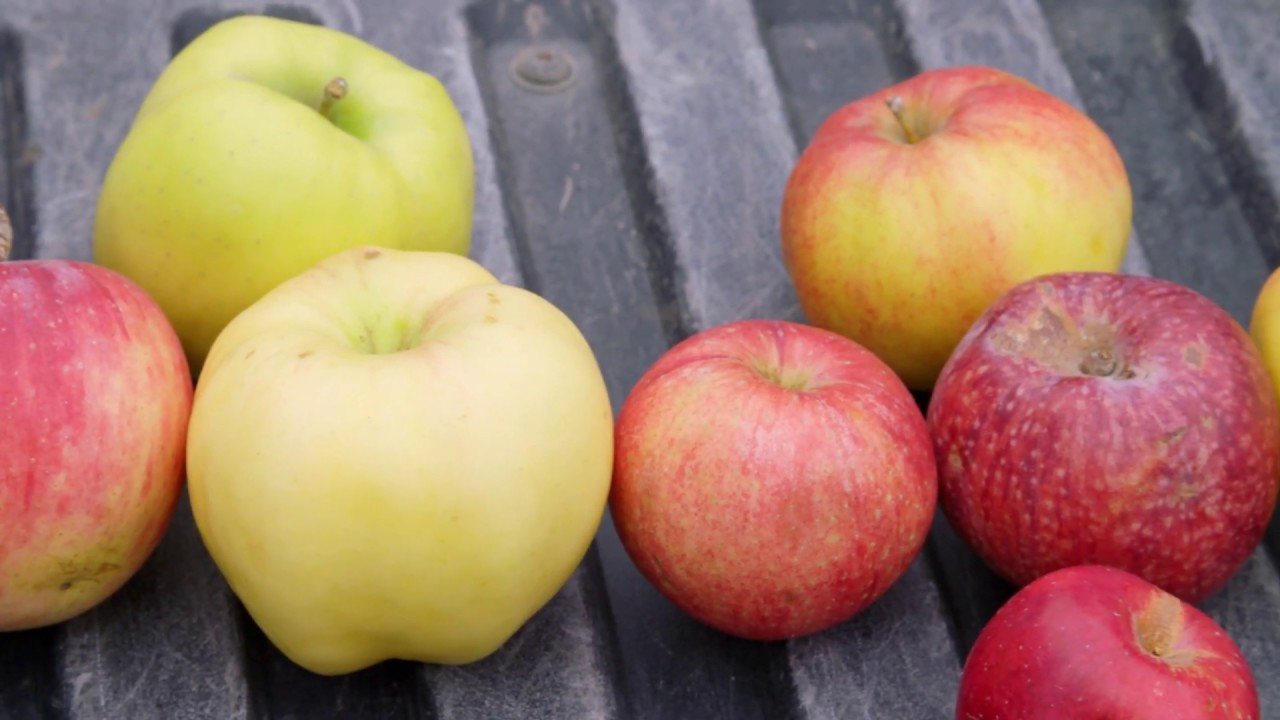
Honeycrisps get a lot of hype. But have you ever sunk your teeth into a coconutty Roxbury Russet? Or a champagne-tart Ashmead’s Kernel?
Snow White’s apple may have been crimson and comely, but these days some of the most exciting varieties in American orchards are old, odd and decidedly unpolished. Their names have the ring of Dickensian villains — Esopus Spitzenburg, Cornish Gilliflower, Fearns Pippin, Hubbardston Nonesuch — and their flavors vary from honeyed sweetness to dark clove spice.
For history buffs, heirloom apples represent a link to centuries of human lore. For curious cooks, they’re worth seeking out during their fleeting seasons for textures, subtle flavors and creative uses that far outmatch the usual options you encounter at the grocery store.
At the turn of the 20th century, the United States Department of Agriculture cataloged an estimated 14,000 apple varieties grown domestically in the previous 100 years. Nowadays, according to the industry group USApple, just five — Gala, Red Delicious, Honeycrisp, Granny Smith and Fuji — typically account for more than 60 percent of U.S. production. Buzzy “brand name” apples, like Cosmic Crisp and Pink Lady, are strictly licensed, patented and trademarked, making them inaccessible to many growers.
Many once-forgotten apple varieties have begun making their way back into fields, markets and the public consciousness.Credit…Kelly Burgess for The New York Times
Apples for sale at Scott Farm Orchard in Dummerston, Vt.Credit…Kelly Burgess for The New York Times
Heirloom apples, on the other hand, remain open source — and thanks to the work of a network of fruit detectives and pomologists, many once-forgotten varieties have begun making their way back into fields, markets and the public consciousness.
For more than 50 years, pioneers like Tom Burford of Virginia, John Bunker in Maine and, more recently, David Benscoter in Washington State, have surveyed old property maps, aerial photos, deserted farms, vintage nursery catalogs, county fair records and more to ferret out and identify antique apples, and prevent them from disappearing.
James Wargo, founder of Hidden Gem Orchard in Southbury, Conn., considers himself the beneficiary of that community’s efforts. “Because of the way apple trees are propagated, the connection to history with this fruit isn’t just a metaphor, it’s actually tangible,” he said. “You have to take a twig or bud and graft it onto a rootstock — so, in a real physical way, the trees we’re growing today trace back to the originals.”
Founded in 2017 on a once-abandoned plot in western Connecticut, Hidden Gem opened for its first pick-your-own season in 2023. Among the antique apples currently on offer in its seven-acre orchard and farm stand are the Ashmead’s Kernel, a firm, golden 18th-century English variety with an outsize crunch and electric fizzy flavor, and the juicy Ribston Pippin, which does appear in a Dickens work (“The Pickwick Papers”) and was reputedly the foundation of one of the author’s favorite desserts, a Victorian baked confection of apples, marmalade and cream sherry called Apples à la Princesse.
The Black Oxford, a 1700s specimen from Maine, is nicknamed “the rock” because it stores well. Its deep purple skin lends homemade applesauce a striking tint.Credit…Kelly Burgess for The New York Times
Next year, Mr. Wargo plans to have more heirlooms ready for harvest, including the Kandil Sinap, a petite, egg-shaped variety discovered near the Black Sea around 1800, and the Black Oxford, a 1700s specimen from Maine that stores well and whose deep purple skin lends homemade applesauce a striking tint.
Customer enthusiasm has been strong, Mr. Wargo said: “Opening weekend, we did double the business as last year. I can’t tell you how many people come back and say, ‘I can’t eat grocery store apples anymore.’”
For those who can’t make it to the farm stand before it closes in late November, he also offers limited-edition shipments of Hidden Gem’s heirlooms in partnership with White Flower Farm, a mail-order nursery.
Genevieve Weston’s ancestors started growing apples in Waukesha County, Wis., nearly a century ago, when her great-grandfather planted his first 200 trees with the help of the Civilian Conservation Corps. Convinced that older varieties were generally of higher quality and had more taste and aroma than modern hybrids, the family decided early on to establish themselves as specialists in antique and heirloom fruit instead. She says that she and her brother, Bill Weston, now fourth-generation growers, see themselves largely as apple educators.
Under the banner of Weston’s Antique Apples, Ms. Weston brings their fruit to farmers’ markets around the Milwaukee area each weekend in fall, starting with around 30 varieties in September and climbing to as many as 75 in October, with late-season stalwarts like Calville Blanc d’Hiver (the classic apple for tarte Tatin) closing out the harvest in November. To simplify shopping, they offer samples and arrange crates according to profiles like “sweet,” “tart for eating” and “tart for baking.” Still, Ms. Weston is quick to add, even within those categories, people are shocked by the diversity.
“If there’s one thing I hear over and over,” she said, “it’s, ‘I didn’t realize apples had so many flavors to them.’”
Erin Robinson, the orchard manager of Scott Farm Orchard, which grows more than 130 varieties.Credit…Kelly Burgess for The New York Times
Unfortunately, though many antique apples ace the taste test, getting customers who’ve been reared on pristine red orbs past their homely looks sometimes takes more convincing. To the uninitiated, naturally mottled skin and russeted textures can be mistaken for blemish or blight, said Erin Robinson, orchard manager of Scott Farm Orchard, which grows more than 130 varieties of heirloom apples outside Brattleboro, Vt., and ships gift boxes throughout the country. Consider the Knobbed Russet, a rare British heirloom. “My son says it tastes like banana bread,” Ms. Robinson noted. “But it looks like a shrunken head.”
“My son says it tastes like banana bread,” Ms. Robinson said, of the Knobbed Russet. “But it looks like a shrunken head.”Credit…Kelly Burgess for The New York Times
Ms. Robinson with a Redfield apple (red skin) and a Mountain Rose (green skin).Credit…Kelly Burgess for The New York Times
Events like Heirloom Apple Day, which brings together hundreds of amateur and professional apple lovers at the farm for talks and tastings each October, are one way to widen perspectives, Ms. Robinson said. But, she added, the quirks of the fruit are also what makes them so beautiful.
She’s currently smitten with the Blue Pearmain, a crisp eating variety whose “blooming cheek” Henry David Thoreau immortalized in his 1862 essay “Wild Apples.”
“That’s the thing about apples — they’re both totally ubiquitous and really personal,” she said. “When you see a variety that has been around since the 1500s, you have to remember that it’s because someone cared enough to keep it going.”
3 Likes
I’m curious about apples that have been around for hundreds of years. With the rate of mix-ups we see from nurseries and people sharing scion wood, environmental changes in growing conditions, not to mention epigenetic changes over time, would a time traveler from the 1500’s even recognize these apples?
3 Likes
Not sure if its been talked about on here but the Lost Apple Project is going on in the PNW.. im not sure how many they have found so far but its interesting.
6 Likes
I emailed the Lost Apple Project a couple months ago regarding a old apple orchard (150+ years old) that I found on National Forest land. Never heard back from them.
4 Likes
I’d email them again probably just got lost in the matrix of emails
3 Likes
The Esopus Spitzenburg section is worth reading out. Supposedly Jefferson’s favourite and it does have that almost spiced quality others don’t. Still trying to track down a tree myself.
4 Likes
You are the true detective in this case.. i think they like the fame and prestige more than anything.
If there is something outstanding- you can CSI them yourself.
Or pay it forward to a local college or university where it would make a student or class a good learning experience.

4 Likes
Spitz never fell completely out of commercial favor as Dave Wilson still offers it in its commercial catalogue and there are certainly growers of it near Watsonville in CA. It would be more popular commercially if not for its tendency towards biennial production. It is not only delicious (to many palates) and long keeping, it can also be extradinarily beautiful when grown on open trees in full sun.
At my site, it, and another personal favorite, King David, are tough to coax into annual production- I’m still working on the appropriate crop load to obtain this. It’s not exactly a direct process because thinning makes apples bigger which draws more energy per apple. What looks like a properly thinned tree early may change as the season progresses. It can be hard to bite the essential bullet and strip off everything required to assure fruit the following season.
5 Likes
Are you thinking along the lines of a foot between King David apples?
Maybe less for king david- it’s small. I think I will make it 10" next season when flower set will likely be very heavy.
1 Like
Someone with a subscription to NYT cooking send me a share link which may open for everyone. They sent me the article devoid of the share feature- tricky bstds. I could read it but not share it. Go to the top if you want to see the article and let me know if it opens for you.
1 Like
1 Like
This Spitz does did not do so well for me in NE NC. If it weren’t so blight prone, it certainly would be more popular.
2 Likes
Jefferson succesfully grew them at Monticello along with his other favorite eating apple, Newtown (Arbermarle) Pippin. I work a lot on huge apple trees on seedling rootstocks and they never have suffered serious injury from fire blight- it strikes the growing tips but has never spread deeply into the wood. Maybe you could grow it if you started with seedling rootstocks. If you aren’t by the coast and up in the hills your climate may be fairly similar to Monticello.
2 Likes
I have noticed some interesting FB results from UK and other universities. Some trees are rated from R to S implying that some varieties demonstrate inconsistent resistance to blight from tree to tree. The Freedom falls into this category on the UK spreadsheet. My father’s Freedom apple died after being neglected for one year due to health issues. It was an adult tree. For some, it may do fine. I don’t understand how some trees rated highly susceptible are being grown by members here in the south with few issues. The Ginger Gold comes mind. Perhaps I just had an unlucky Spitz tree.
When I lived in Franklin Cnty, the Cortland and Summer Rambo were very strong growers, and the fruit wasn’t wrapped up with scab, rots and other issues with little intervention. The Cortland is reportedly quite susceptible to blight. The Starkspur Earliblaze is another I grew that is reportedly highly susceptible to FB. It did see some blight on bad years, but it was one the primary producers in my father’s orchard and I grew them as well.
2 Likes
I have been to Hidden Gem Orchard several times, and I know Jim the owner. Nice orchard with a good selection of uncommon and common apples.
2 Likes
Are you sure they were not referring to the same variety behaving diffierently in varied environments, why do you assme it was tree to tree? Even a tree adjacent to another is not in an identical environment.