Help Select Best Fruit for Community Garden

Help me pick fruit for future 2 acre community garden, Z. 8A, E. Shore Maryland. Purpose: feed the needy through an NGO, churches.

Goal: Long harvest of cold-hardy, easy for volunteers to grow, NO-SPRAY fruits that appeal to consumer.

SWD is present in the county, so should we assume SWD will eventually find the garden?

DRAFT: Which of these crops are doomed by squirrels, SWD, PC, CM, no-spray rule? What other varieties do you like better? Which are too foreign, ugly or squishy for average picky American consumer? Assume bird netting or scare tape where needed.

Mulberry: Early to late: Shangri-La (late frost problem?); Pakistan; Silk Hope; Illinois Everbearing (Popcorn disease: no idea if present at garden site.) Kokuso? (concentrated harvest); Oscar (SWD?). I have no MB experience.

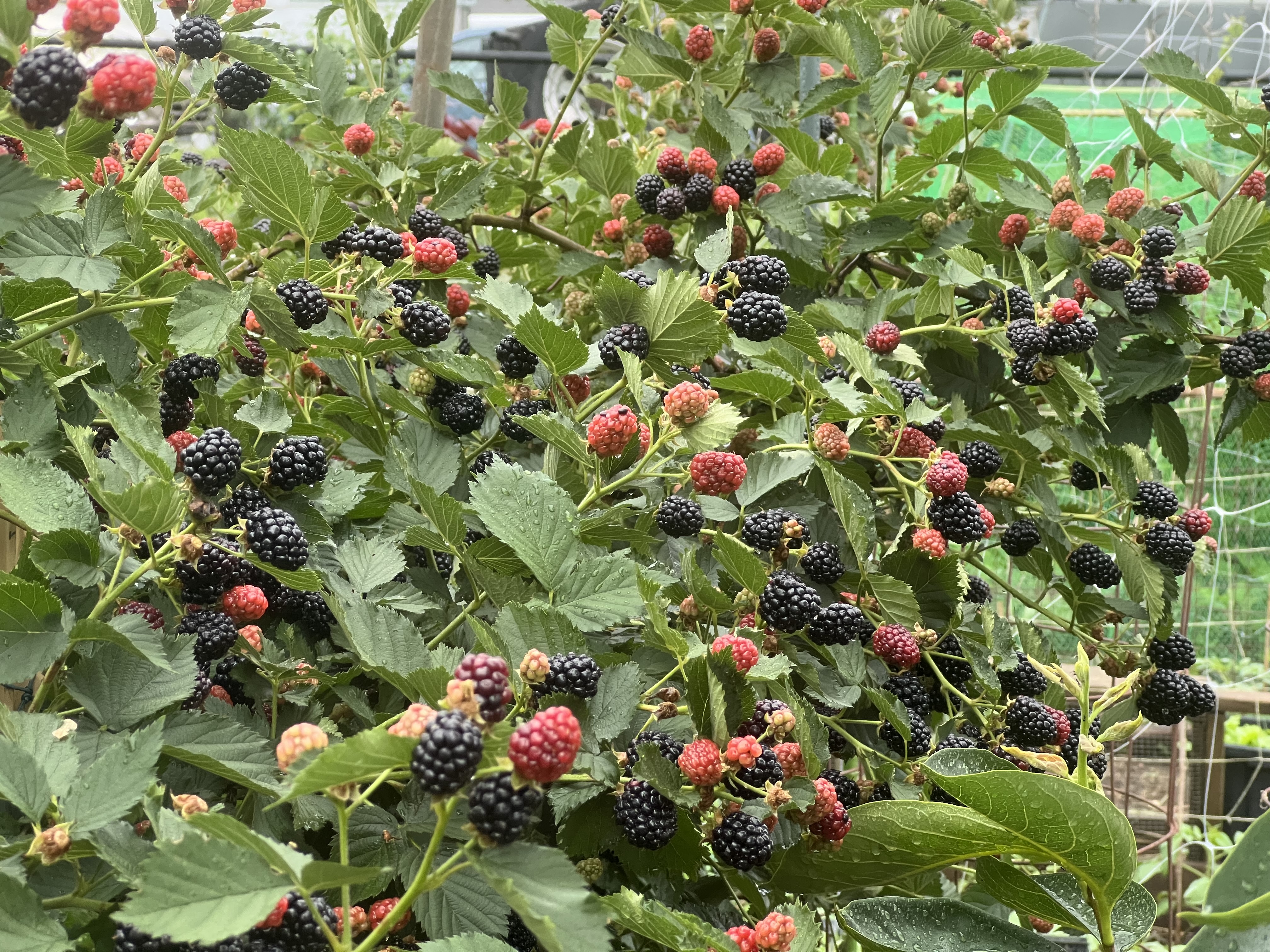
Blackberries : SWD? Early to late: Prime Ark Freedom, Osage, Ponca, Triple Crown?

Strawberries : Do June bearing miss SWD? U of MD: Annapolis; Earliglow; Allstar. I see raves for Flavorfest? Everbearing, If no SWD, U of MD: Seascape; Tribute; Tristar. I have no SB experience.

Jujube : Honey Jar; Sugar Cane; Bok Jo per Scott. “Crunch-A-Date.” I have no JJ experience.

Figs : Improved Celeste; Chicago Hardy; Green Ischia (30-year old trees near here). More: Olympian? LSU Tiger (striped, eye appeal, chef here says it’s a star on the plate)?

Raspberry : Caroline; Joan J. Avoid Fall-bearing (e.g. Fall Gold) if SWD.

Asian Persimmon : non-astringent Fuyugaki (Wase Fuyu-Matsumoto); astringent Giboshi or Giombo. Skip Asians to avoid Sudden Kaki Death Syndrome?

American Persimmon : Lehman’s Delight!; Paradise. Others to expand harvest season? I have no D.v. experience except LD is on my all-fruit taste Mt Rushmore.

Hybrid Asian/American Persimmon : Mikkusu, Nikita’s Gift (fruit drop?); Kassandra; Chuchupaka. Which combo gives longest harvest? Which are available in quantity? Should we interplant hybrids and American with Asians to limit spread of SKDS-- or avoid Asian persimmons entirely?

Pears: Possible long season lineup: Ayers; Honeysweet; Magness; Potomac; Korean Giant; Bell. Are training, pruning, blight scouting too hard for volunteers? PC will riddle, so forget? One county North of the project I grow clean PC-free unsprayed, unbagged pears that surprises Scott so it’s risky to generalize from my luck. Best Pear Rootstock: OH x F87? Scott likes Quince for early bearing (root sprouts?, blight prone?).

Pawpaws : Early- Shenandoah (best seller at Peterson’s farm mkt); Mid- KSU Atwood; mid-late KSU Chappelle; late- Jerry’s Big Girl (huge, eye appeal). Susquehanna fab but here is v. slow grower, takes forever to bear and then shy bearer. Add Overleese, Sunflower for pollination?

Rabbiteye : The latest and greatest per @fusionpower: Vernon; Titan; Brightwell; Krewer; add Ochlockonee to extend harvest unless SWD trouble. Easier to grow than highbush and far more productive.

Cherry : Montmorency. Plant on mound and net. PC? SWD?

Elderberry : For jelly, wine. Best varieties?

Plum : Native Beach Plum for jelly. Any special cultivars available in the trade?

Apples: Consumers reject ugly no-spray fruit so apples won’t work, right? Scott reports fairly clean fruit from Hubbardston Nonesuch and Rambour d’ Hiver. Baltimore Orchard Project (no spray?) grows Goldrush, Enterprise (mediocre taste here), Querina. Ruby Rush- possible new no-spray savior? How does RR fare with PC? Liberty PC magnet. Freedom possible. Other PC/CM/blight resisters worth eating? Best apple rootstock: G 890? G 935? M 111?

Peaches: Forget?

2 Likes

In regards to elderberry, I can only comment on growth habit (this will be my first year getting berries) but “John” suckers like crazy and spreads. So if you end up with that variety, it’s gonna spread suckers. Adam doesn’t seem to sucker or at least hasn’t yet. I planted them both last spring. Both are quite vigorous.

I’d also suggest some gooseberries, as long as you get some of the more heat tolerant ones, mine have been 0 maintenance and growing great.

2 Likes

Gooseberries, interesting. For some reason I always connected them with Northern states. Would like some variety recommendations please from any growers.

1 Like

Glendale and black velvet have both done well for me and are more upright growth. Poorman is another that does well, but wakes up about a month after other GBs so it looks dead until like April, so that could freak some people out.

You might also want to try giving clove currants a go, my Crandall is planted in full sun and does fine.

My tip for the GB/currant is plant in the fall or early early spring to allow the roots to establish before they get hit with summer swampy Maryland weather :slightly_smiling_face:

2 Likes

Would haskaps, serviceberries, and cornelian cherries work in the shadier areas? Haskaps would need to have mid-afternoon shade to work. Serviceberries and cornelian cherries are often overlooked but should be able to produce without sprays

2 Likes

No experience with them- how well would first-time tasters like them? Instant love vs acquired taste?

Haskaps/honeyberries: unlikely to love out of hand first time. Makes a better jam. Good for sour lovers. Aurora is a popular variety and you’d need two. If you find a shady spot for gooseberries, it may be worth to put these in especially if acidifying the soil is too difficult for the blueberries, this would make for a “soil care free” almost as good option.

Serviceberry: already a very popular landscaping tree. Out of hand they taste like apple juice to me. I’ve seen them sold in Europe but never the US. Likely to be liked by first timers. It’s like a seedy blueberry that tastes like apple juice and a hint of almond extract. They’re a little seedy which can be a turn off. Autumn brilliance is supposed to be both pretty and edible, but double check me on that. They fruit in May/June around the same time as mulberries (hence their name June berries). There may be a few on trees near you if you can find one to try. There’s one at a library near me.

Cornelian cherry: depends on the variety. Many can be too sour out of hand or astringent. If a good variety is selected, potentially could be good out of hand. I haven’t had many of the improved varieties and am a self reported sour lover, so unsure on this one. Little John could help you pick a variety that would work in your climate. It’s also a popular landscaping tree, so if nothing else it’ll have pretty flowers. This fruit may be popular with any immigrants from Poland/Russia/Caspian sea region where it is more well known.

3 Likes

Thanks. Is anyone growing “clean” or attractive apples or pears no spray? If yes, are they consistently clean year to year or only on occasion? Do PC leave your pears alone?

So I have 3 honeyberry bushes about 80 miles west of his area, and mine get absolutely baked/fried in our hot swampy summers. Had I known what I know now, I wouldn’t have planted them. Not sure if you’re in MD as well and have better luck than I am tho.

2 Likes

Nope I’m more north in PA. Are they still getting zapped even in partial shade? If so I’d update my suggestion to not plant them; they are not heat tolerant

Mine aren’t in shade, but they end up getting mildew and defoliate by mid July usually. We have had a cold and wet June so they haven’t started to look bad yet. But we get very hot wet summers usually and they can’t handle it. One week we had 90-105 for 1.5 weeks, which was largely due to about 60-70% humidity. Mine are also the Russian varieties, but my experience is that they don’t do well at least in my part of Maryland. They survive (mine are 3 years old) but they don’t flourish.

Sad to say you would be better off placing a table with store bought fruit on it. There are so many restrictions on community gardens now. Our nearest garden was not interested in free fruit trees whatsoever.

No spraying and land ownership restrictions at play of course. Oh too messy!

Did they think tree fruit took too much skill? Some trees don’t need any or much pruning: mulberry, persimmon, pawpaw…
The Baltimore Orchard Project grows several tree fruits, am guessing no-spray.

I do not know what they were thinking. You think free fruit trees would be an easy yes.

2 Likes

Mulberry growers: how feasible is it to net multiple trees? Or just plant short season varieties and try to beat the birds to them? Does scare tape work on mulberries?

FWIW the mulberries near me are still covered in berries despite the birds. There may be varieties prolific enough that netting isn’t needed

1 Like

Thanks. I feel a lot more pressure recommending fruits for a community garden than experimenting in my own orchard.

Strawberry growers: what are your best tasting June bearers for zone 8A Maryland? U of Md says Annapolis, Earliglow, Allstar. Are there better ones for disease resistance, taste, production?

Sorry, long answer coming…

For strawberries Earliglow is great tasting and a good choice. For pure production, bigger berries and still having great taste, I’d go with Chandler. Chandler is popular with commercial growers and market gardeners, so you know it is reliable and productive. If you have the chance to plant by October or so, you could buy plugs from Isons (I’m sure there are others) and have your first crop in the Spring. Otherwise most people growing in volume plant bareroot in the spring, but then you really should remove flowers and wait a full year until the following spring to harvest. You’ve also got to manage runners, etc. So plugs get you into production faster and get you into your first round of fruit without the challenges of a lot of weeds, etc. Really, the simple way would to be to use plugs and plant into plastic or weed barrier for easy management.

Many commercial growers actually grow June bearing varieties as annuals, planting plugs in fall and tearing them out after they’ve fruited in the Spring, then replanting new plugs in the fall. It seems wasteful, but it is just easier to manage than have someone manage runners, etc.

I wouldn’t bother with anything that is overbearing or day neutral, etc., since I’ve never found the additional harvests to be large enough to bother with. Birds get them, etc. So I like June bearing to just get the full harvest all at once.

Ison’s doesn’t have the plugs listed yet, but it is usually Chandler and one other variety. https://www.isons.com/product-category/berry-plants/strawberry/

For blackberries, I’d suggest Ponca and Caddo, both of which should mostly ripen before SWD is a major issue. Both are sweet enough to enjoy eating fresh, which I think would be important for a food bank. I find Prime Ark Freedom to only be useful for floracane crops, which are very early, but they’re not as tasty as Ponca and Caddo. The promise of primocanes didn’t work out for me - ripening is erratic and not all at once, plus sometimes they didn’t fruit early enough and got zapped by frosts. Here is Ponca today in dire need of picking and Caddo has a few ripe and will be in peak in a week or so.

For mulberry, I’d say Gerardi and only Gerardi. It is easy to keep small with minimal pruning, even no pruning so nobody needs a ladder to pick. It is super precocious and productive and tastes good. Birds get into mine, but now that it is full size (10 feet) there are plenty for the birds and still plenty for me. To be honest, I’m so busy with blackberries, raspberries and blueberries that I don’t much bother with picking the mulberries, just eat a few when I walk by. Mulberries are such a high value food for birds, that I think having some just as a distraction crop is a good idea to keep them out of your other berries.

For raspberries I’d add Prelude to your list for consideration. It is very early, primarily a spring crop although I get later season primocane berries as well. It isn’t as sweet as the ones you mention, but still sweet enough that anyone I’ve given some to has said Yum and it is the earliest.

I’d also add muscadines to the list for consideration, although they do require a sturdy trellis. They come into production pretty quickly and can be good without sprays, plus they produce a lot of easy to pick fruit. They have thick skins and I haven’t seen any SWD issues with them … raccoons are another issue though.

If I didn’t at least spray surround any cherries, apples, pears, plums, peaches, etc. would have PC and other bugs, so I’d be wary of trying any of them without some plan to at least spray surround. Also, if volunteer run and drops aren’t all picked up, etc. the populations of pests could really build up.

I’d probably plant a good number of non-astringent persimmons and some Leman’s Delight DV persimmons if you want some of those, but mostly kaki. I expect you’d have a lot of interest in the Asian persimmons, but not as sure about the DV types without some education and convincing people to try them. Also non-astringent persimmons are very easy to keep for a long time, so you aren’t worried about managing ripeness like you would be with anything astringent. I’d just be prepared to remove and kaki trees that get KSDS, or simply graft them over to more LD.

Finally, I’d see what you can learn about the populations you might be serving and what the food banks and churches think might be in demand. I’ve found everyone loves berries, but I’m not sure it is worth the effort and space for things like jujubes unless you know there are many in the area who would know what they are and appreciate them.

10 Likes

@zendog Fabulous detailed recommendations; so helpful as I have no experience with mulberry, strawberry. Many thanks. Have you had success with a couple muscadine varieties you might suggest? I think @Fusion_power likes early ripening Hall and Lane for Maryland. Problem: how to control squirrels at this community garden in the middle of town? Squirrels could sabotage this entire garden/orchard project. Need to address this before one plant goes in ground.