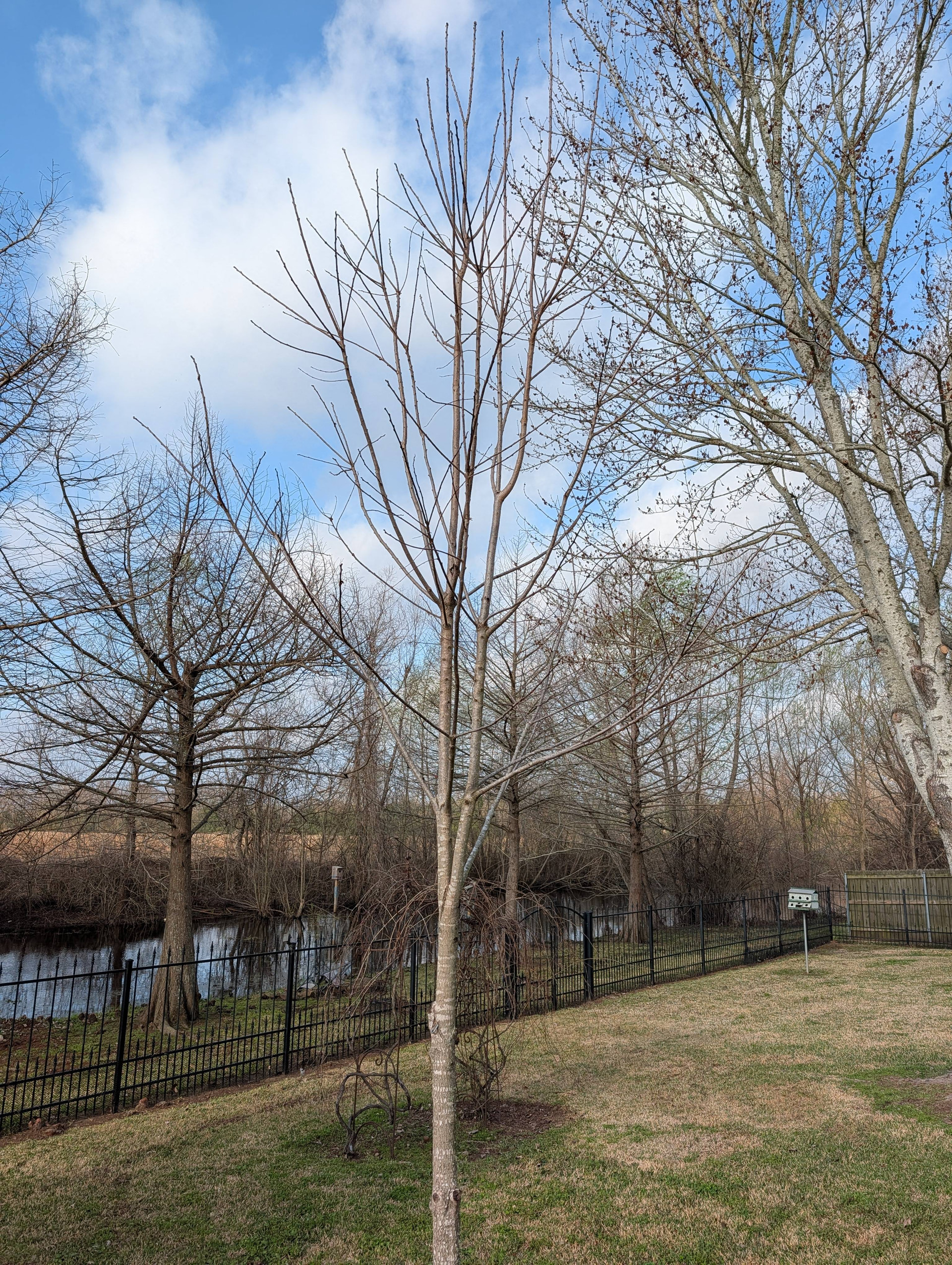
Background-Moved here(Central La.) about 5 or so years ago and the yard came with a young persimmon tree. It was obviously planted on purpose so I assumed one of the Asian varieties. After never seeing fruit, I checked the flowers last Spring and I am almost positive it’s a native male. There are no females within sight. So, I began asking questions to decide what to do about it. Looks like grafting may be my best option. I have never done this before, so looking for advice on how to attack this tree. I have ordered scions and did so before I knew this forum existed. As this is my first post, not sure if a picture will show up. here goes:
3 Likes
Not sure if this will answer what you’re asking, but this guy’s videos may be of help.
3 Likes
Yes, I have been watching those for ideas on technique. I am wondering about an overall plan for this tree in particular. I often see the whole tree lopped off and was hoping that wasn’t the best way to do it.
curious what others think.
cut at 4-5ft graft (below where it splits into 3 trunks) and graft the 1 trunk.
or
graft above where its it splits into 3 smaller trunks (lets say thats 5-7ft) and graft with possibly a little ladder if needed?
Note: if any grafts fail, you might be able to graft the thick green shoots in mid summer which i think might be successful based on what I and @speedengineer saw last year. or graft those shoots next year. So save some scion maybe for mid-summer grafting.
Yes, I was hoping to keep those main two forks. And, maybe graft to those lower limbs as well?
i see 2 main forks, with a minor 3rd fork in the back.
Where are the lower limbs? i dont think i see anything below the 3 main fork branches.
What height do those 3 main branches start?
Sorry, wasn’t clear. I meant the limbs above the fork. I think that fork is about 5’ up, but not at home right now. So, I guess what I am picturing in my mind is, lopping off those two mains about 2-3” up thereby leaving a few smaller branches to also graft to?
I’d wait till someone else answers. I am not sure about that angle of the 2 main forks if grafting onto those … like will the weight of fruit cause stress to break in half eventually or if angle the growth outwards then will be fine.
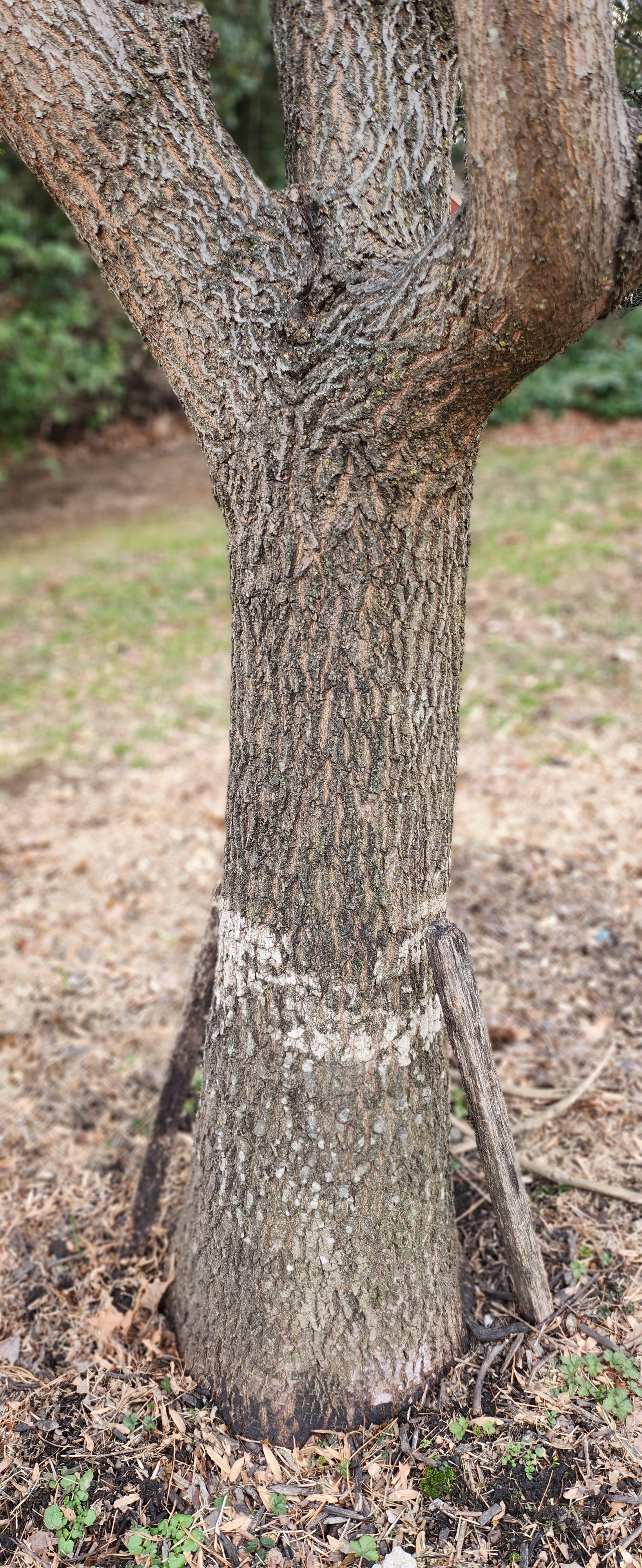
i am thinking of heavily pruning this year and grafting many varieties 4ft off the ground on these 3 main trunks as well. on this tree below (uploading in a sec…)
2 Likes
If it was mine I would probably cut the tree and do some bark grafts. It will work to graft it up higher but then all of your fruit will be up higher. If you order a couple different varieties you can graft them onto the tree so you will have different ripening times.
5 Likes
^^^ this. Love the cypress.
In your particular case the crotch angle of the two main trunks appears very steep and not ideal. Long term such steep angles can lead to tearing and may eventually split the tree in half (especially if you have female grafts with heavy fruitload).
So long term you would want to remove one anyways.
Sawing off the top and doing bark grafts is a really beginner friendly technique, especially when you do it late enough so the bark is really slipping (wait till you get green leaf tips and its warm for persimmon). There are some great vids out there and Jsacadura is excellent.
However, with a tree of this size such radical topworking will probably negatively impact long term tree health as it will take some years to callus up. On the other hand, persimmon can throw out root suckers as others have said and this would be an excellent opportunity to graft and then eventually replace the older tree.
You could also barkgraft only one of the main trunks close to above where it splits and for the other trunk, cut it just above the first side branch (it is often good to leave one smaller limb when doing heavy topworking so the tree has some nutrient flow).
Like armyofda12mnkeys suggested, If your grafts take after a year, cut the other trunk completely. You can even keep some scions stored in the fridge so if the first attempt fails just try it again on the second trunk.
In any case good luck and take care not to cut yourself!
Edit - here is a basic video how to do the bark graft. This is for pecan but the principle is the same https://youtu.be/IlB-UCVJ3ng
2 Likes
Tree does not appear to a large diameter 1 1/2 - 2 inch maybe. I would top it and cleft graft.
1 Like
If you look at the fence in the background its hard to imagine the tree to be below 10cm/4 inches.
I would not do a cleft graft in this case. The cambium contact on a bark graft is much better and especially for a novice much easier to get right. (At that size you need two scions left and right with a cleft and you want to be precise with cambium alignment. With a bark graft you have a huge exposed surface to make contact with the scion’s cambium.
2 Likes
Thanks for all the replies. I’ll get trunk measurements later. I may just lop both mains at different heights and do some bark grafts on both. That way I can choose later based on success or failure? If the weaker of the two is short would that reduce the chance of splitting?
I’m late to this party, but I agree with the above consensus (?) to cut the trunk at 3-4’ and then bark graft. I’ve done this many times to apples and I plan to try it on a pear in a couple months; I assume it’d work fine on a persimmon.
No. The crotch is inherently unstable. Look up “codominant leaders” for a more in depth explanation, but it’s absolutely best to cut and graft below it
3 Likes
Thanks so much.
Diameters:
Baes = 3.82”
Just under fork = 2.7”
Larger leader = 2.1”
Smaller leader = 1.6”
Just something you may not have considsred… if you cut it off at ground level… it will most likely send up root shoots near the stump within a year.
Those root shoots often grow very strong and are easy to graft to.
If you cut it off at 4 ft high… and bark graft to it.. if that is successful.. great… you do have to continue to provide support for the growth for some time. They break off quite easily off not supported well.
If you try that and it fails… that will also likely cause it to start sending up root shoots.. excellent for grafting.
TNHunter
1 Like
Not much experience here, but those are codominant leaders. Per the gardening books and Master Gardener courses, you are supposed to remove one (usually the smaller) due to too narrow an angle being prone to breakage later.
Insufficient experience to comment on anything else other than bark grafts and bud grafts appear to be easy enough they are on my “next skills” list.
1 Like
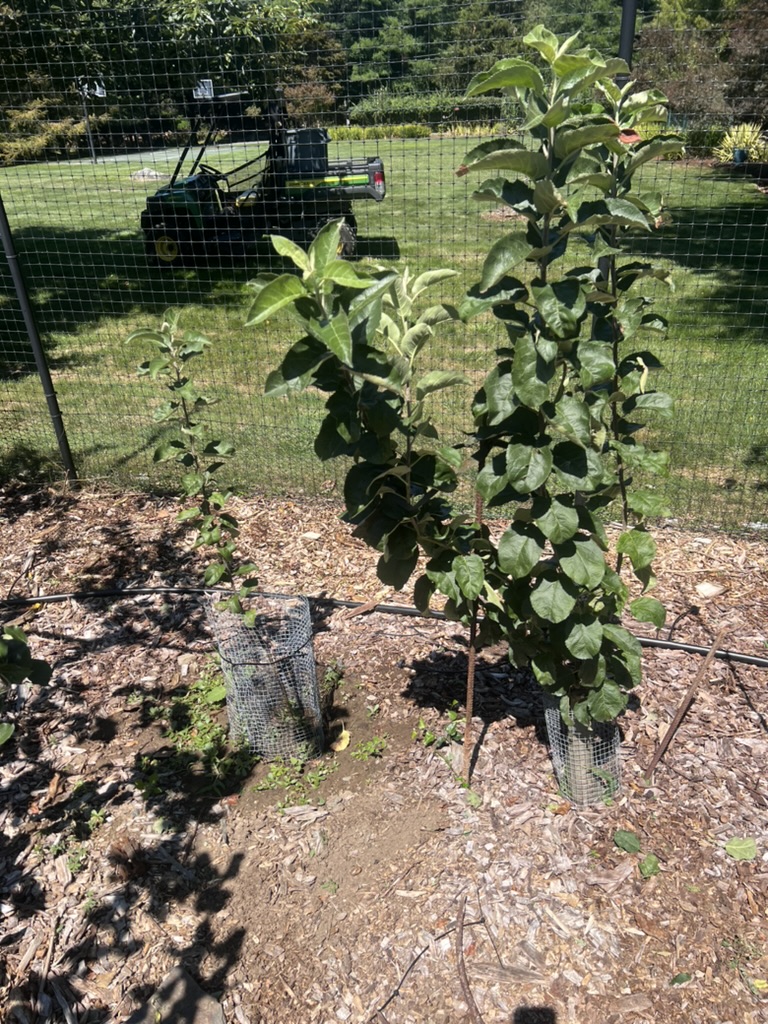
Here’s an example. Picture taken 8/22/25. On the right is a stump with 3-4 bark grafts executed in Spring '25. So that’s 4-5 months of growth. For comparison, on the left is a young tree with 1 W&T graft on what was a bare root tree; also executed and planted Spring '25. the obvious lesson is that the established trunk produces phenomenal growth.
Established rootstock is G.41; new rootstock is G.214.
1 Like