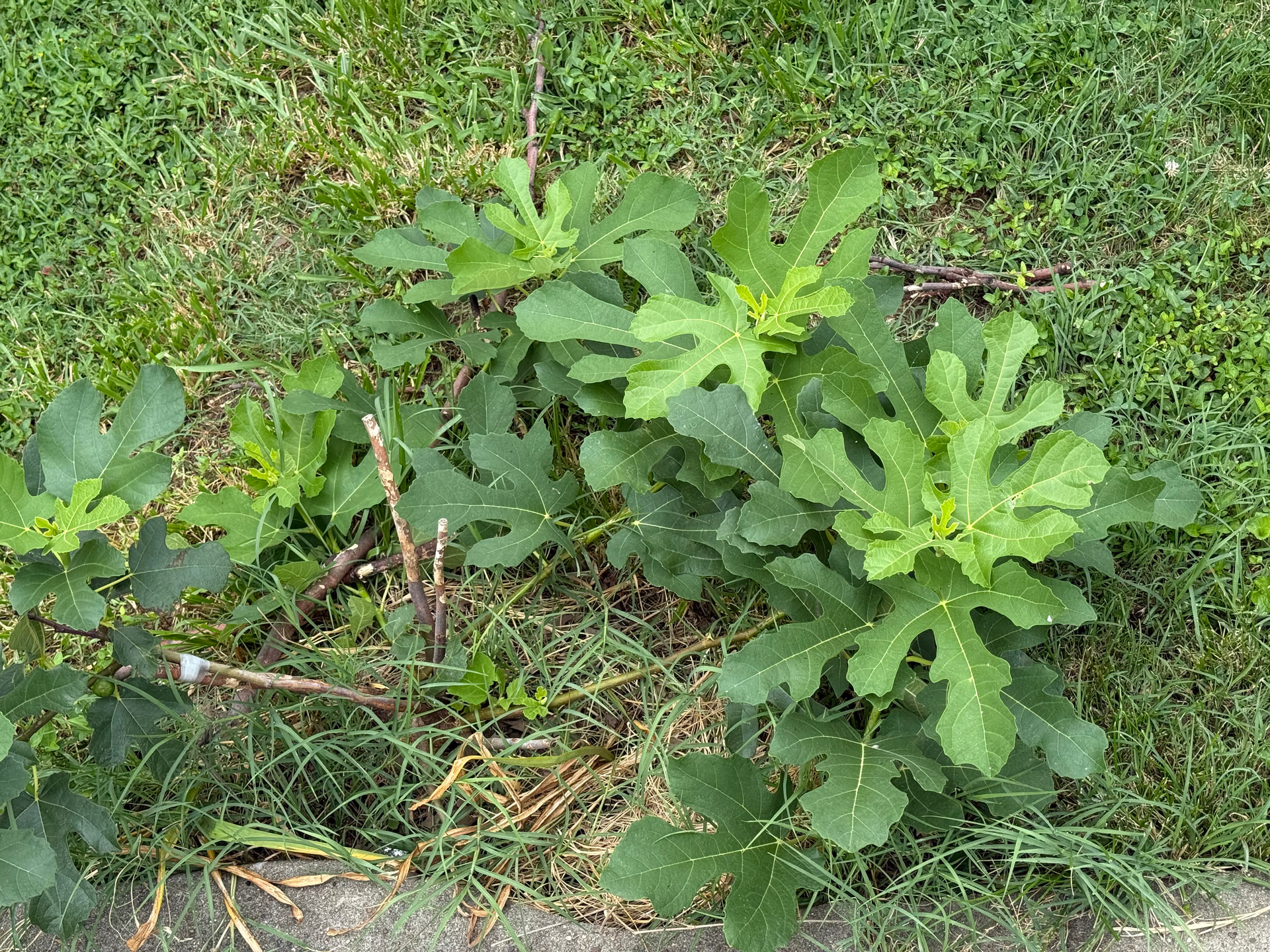
It only seems to work in warmer zones. He is in Z8b. He had a big freeze and lots the tops on his mature fig trees, but they grew back and fruited in the same season. My in-ground figs in Z6 had a low of -8F and died to the ground, even with protection. They grew back, but as of this writing on 6.14.26 they are only 8 inches tall.
Do you remove a number of shoots, leaving only the strongest ones? How high do you pile the mulch and what do you use for mulch? Would pine needles provide enough protection or do you use something denser? To get that good growth do you fertilize early in the season as well? With successive years of growth does the maturing of the plant overall contribute to better recovery each year?
I gave up on wrapping last year after three years of fails. I typically had issues from uncovering too soon and then the growth would get clipped by frost in its tender state. Or, I had the figs begin producing leaves inside the wrapped area which then was killed by excessive heat build up as the early spring sun excessively warmed the wrapped figs.
This year, I let them go to see what would happen. Here at my home in SW NC (zone 7b) we got to 0 this winter once and many nights in the low teens and upper single digits. My Chicago Hardy, Celeste, and Salem White all survived and sent a lot of shoots up from the bases with all previous year’s growth killed. I am hopeful they will mature enough before our first late October freeze arrives…
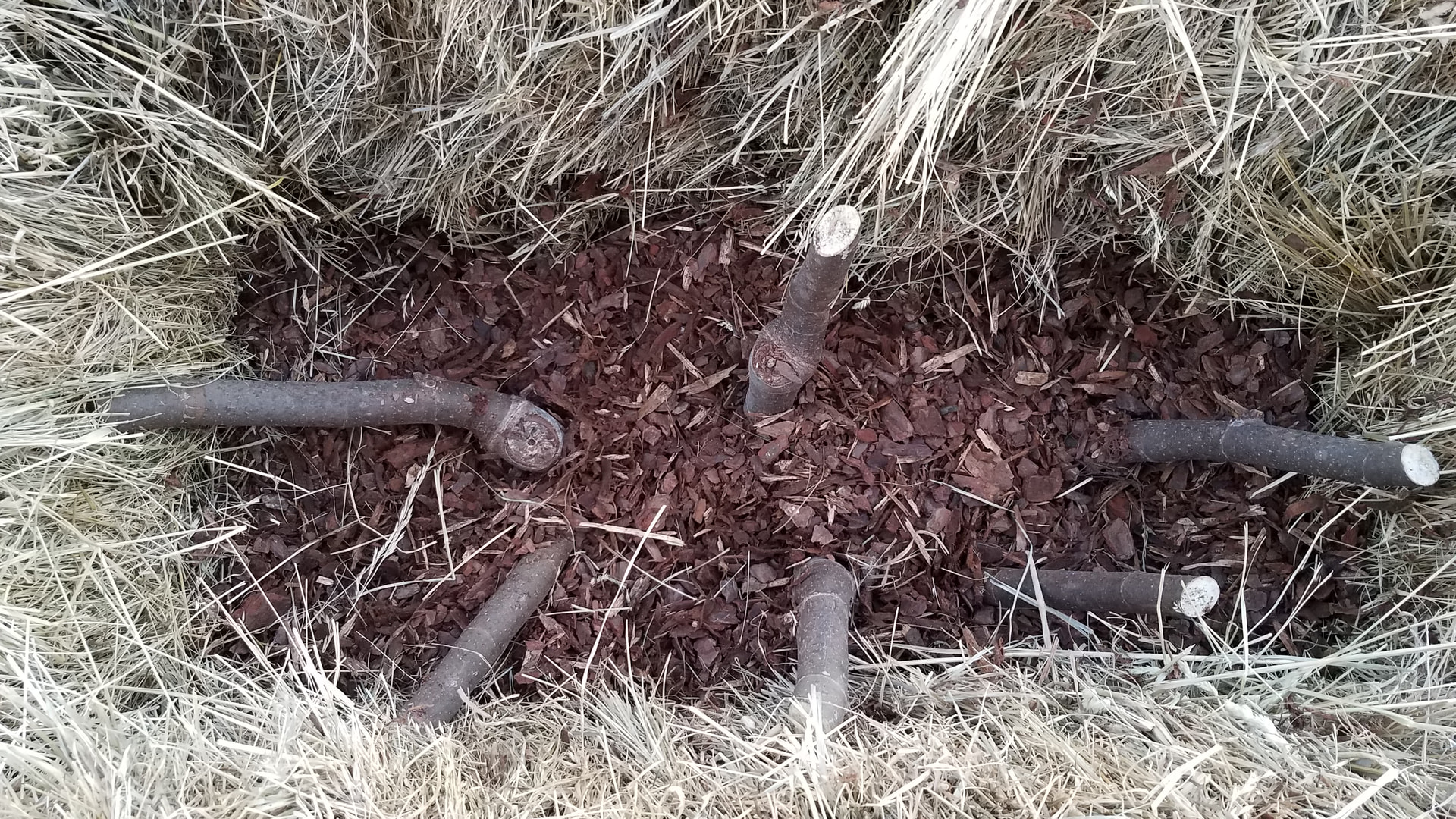
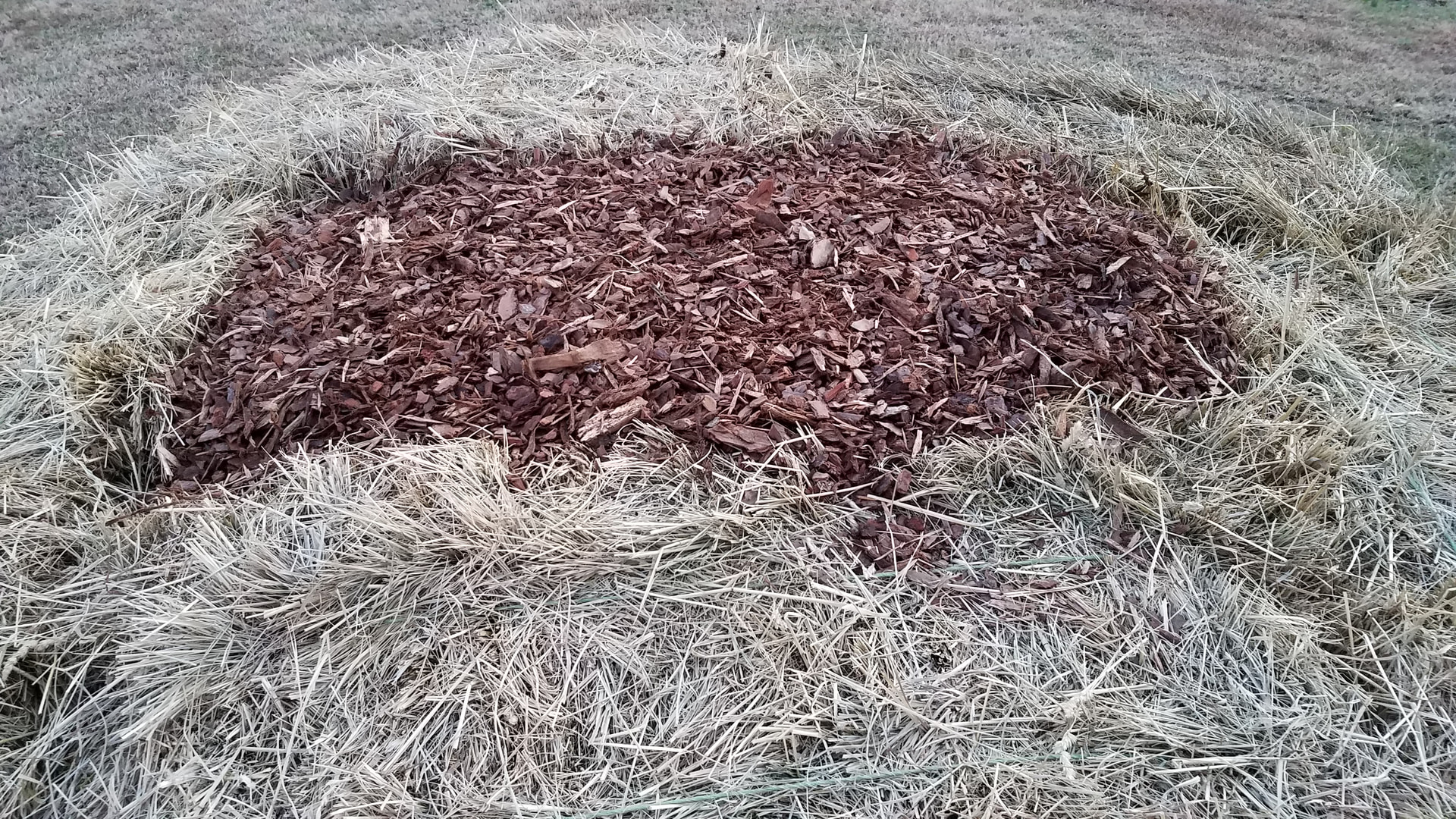
This is how I protect those short stumps over winter. Hay or straw bales have an R factor of 30+. It has a wide base in contact with the ground (the heat source). The tarp keeps it all dry.
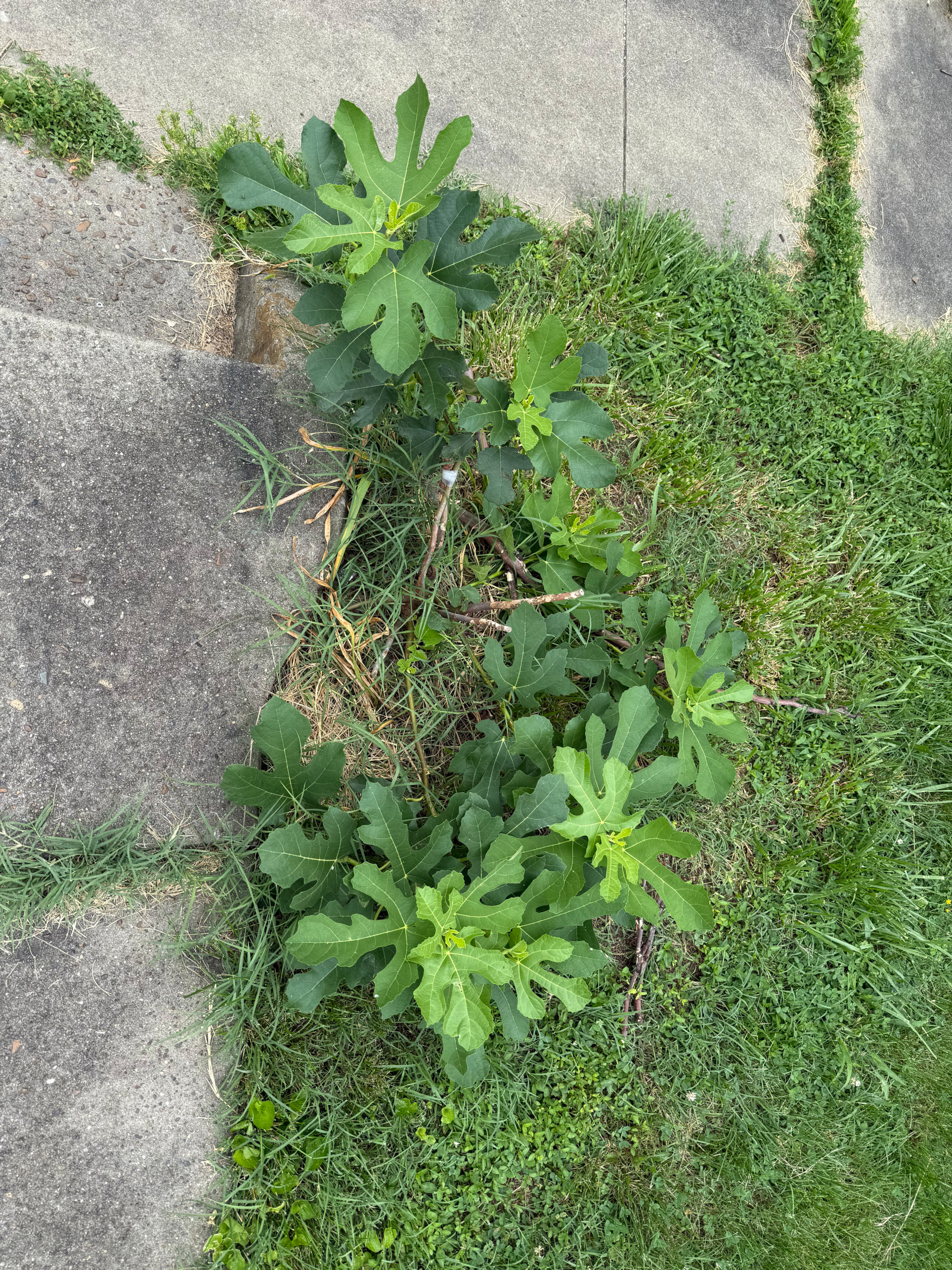
Last year I just bent the stems to the ground, and two of mine wedged next to my sidewalk. Seems like that was just enough protection to save some wood from last year. So this year I am picking out the strongest shoots and bending them over, that way theyll be easier to bend in the fall. Over time I am sure they will root where the stems touch the ground. Last years wood already has several figs and more buds on the way. My hope is that by bending the stems it will encourage fruit production and less stem. Cultivar is Florea
That is a solid solution and surely provides good insulation coupled with ground warmth for the base of the stems over winter. How do you decide when to uncover? Before the last freeze? Have you had issues with excessive growth occurring during early spring before uncovering?
I’m a big fan of tying growth down as opposed to pruning and this seems ideal. Especially for figs which put down roots easily, it would be interesting to bend them down and bury them in a line, and eventually have an entire wall, or hedge of figs.
Glad you’re picking up what I am bending down. Thats exactly why they are by the sidewalk. One that I wedged by the sidewalk has already rooted in. Not sure if its this cultivar, this plant, or just its location, but it does not have excessive growth like my Chicago hardy figs.
@Ospreyjp.. in the spring.. about mid March.. I take off the top bales and the tarp and open up the bottom bales and let that mulch pour out.
I open it up just enough that the stumps will start getting some sun on those buds…but leave the bottom bales close enough that .. if I have to.. I can push them back together and put the tarp.. or a old blanket back on for a cold spell.
I may have to cover them a few times as we continue to have the occasional late frost.
Once the cold spell is over I open it up again so those buds can get more sun.
I normally keep 4-5 stumps.. and let each stump send up 2 shoots.
By mid April I have some pretty good shoot growth happening.
I got similar results this year with a 3’ ring of fencing filled with free wood chips and leaving more wood. There’s plenty of vigorous new growth that only started 2 or 3 weeks ago but shoots are now over 12" and are starting to form figs.
I left 2 of my fig trees outside and put one where it is cool but never freezes- I waited until DEC to assure full dormancy. The stored tree had a lot more wood including small wood and will provide the first figs in Aug. The outside figs will grow more vigorously because they didn’t lose root and will likely bear more fruit starting in Sept and probably through Oct.
One tree I covered in wet leaves the other in wood chips and a clients I covered with a sand and compost mix. The wood chips worked the best but I will need more seasons and spots to evaluate the best method with assurance. This is in southern NY, but not in its “banana belt”. Not close enough to the Hudson or the Atlantic.
That straw bale protection method is smart. The insulation from ground heat rather than trying to keep the air above freezing makes a lot more sense for those short stumps. The R-value of straw is genuinely underrated.
@Joao… after those straw bales have been out all winter and early spring.. I use them to make border walls for compost pile.
And all that next summer I mix the straw into my compost pile.
The bales that were on top got rained on all winter.. and I use them to mulch my tomatoes. Very little seed will germinate from a straw bale that has been weathered 4 or 5 months. Makes excellent mulch.
@resonanteye.. when I got it from OGW.. it was about 3 ft long… single stem whip.
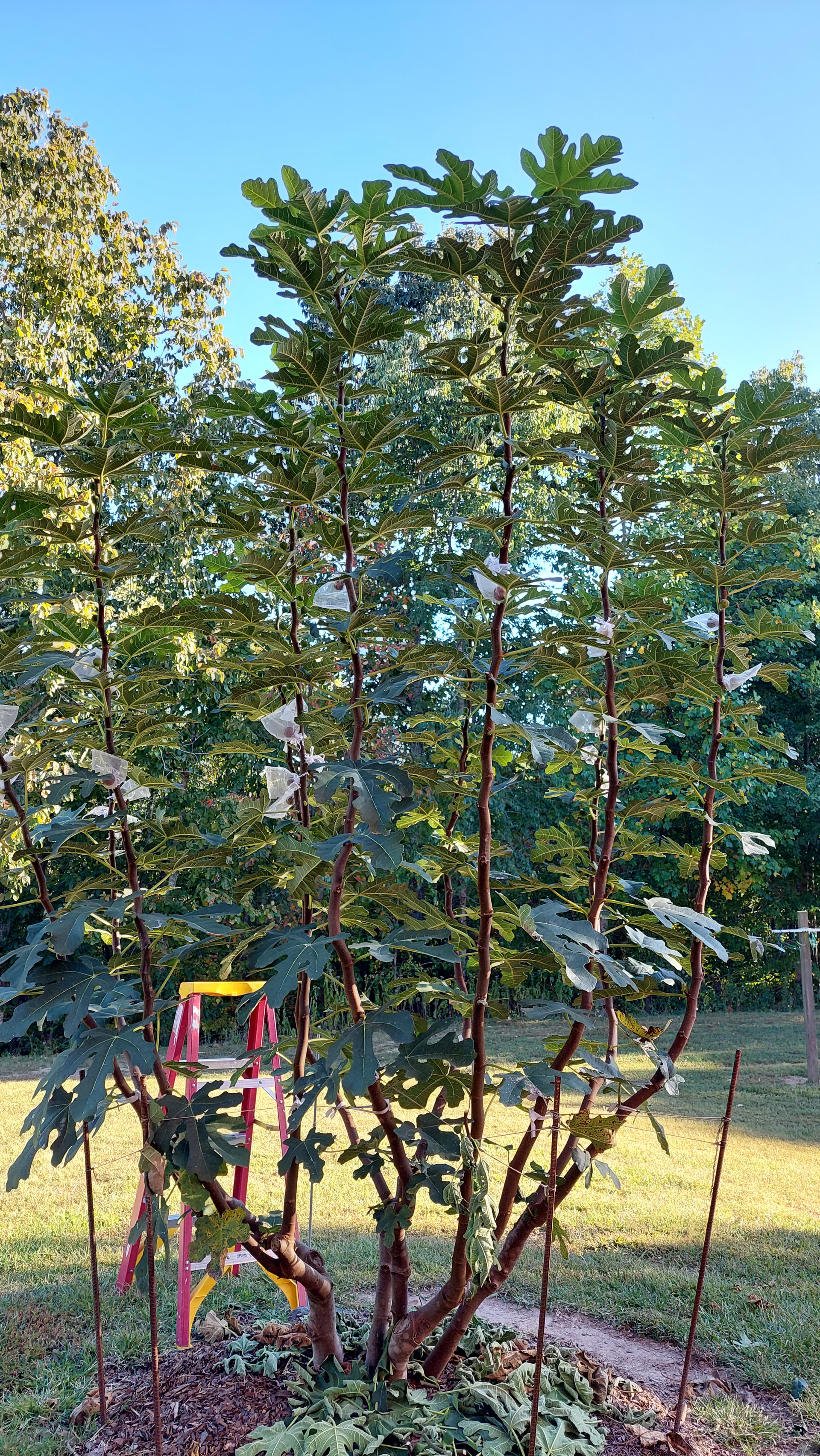
After I planted it 2 more shoots came up from the roots… so that first season I had 3 shoots to grow and they got up to about 7 ft.. produced 25 figs the first year.
I did not know much about figs and did not protect it that first winter… the next spring… early April I discovered that all 3 shoots were dead to the ground. Scratch test all brown.
I thought it was a goner.. but early May some shoots started coming up from the ground. It grew well in year 2 despite having to come back from the roots. Several shoots and we got 75 figs in year 2.
At the end of year 2… I started protecting it over winter. It really thrived and produced well.
In year 3 or 4 .. we got over 400 figs.
I have picked as many as 25 in one evening.
If I dont protect it… It will come back from the roots and shoot growth starts early May.
If I do protect it that shoot growth starts about a month earlier.. and we start getting ripe figs earlier too.
I do fertilize it with compost and organic fertilizer (tree tone, garden tone, etc).
It gets mulched good with wood chips and weathered straw each year.
I’ve been giving treetone and the “big bloom” during summer, in the fall i put down pine straw and some chip around mine. I’ll do again this year with some N too, might help them jump start in the spring maybe. how old are yours now?
I do the same thing, but with the cheapest hay bales I can buy- forget the pricey straw they sell around here. It only takes about a month of wet spring weather to get seeds to germinate or rot, it seems. Hay becomes better than straw once the seeds and tiny seedlings have been killed- at least that’s how it’s worked out for me the last few years. My weed problem is bindweed, and the hay has nothing to do with that. The seedlings die in the bales and not very many even sprout, the seeds just drown.
Straw was half the price of hay when I was growing up. But if you drive around and ask farmers for old rotten hay bales you can get them for free, sometimes they’ll even use their tractors to load rotten round bales into your pickup for you for free.
Yeah, I used to get hay for free when I had time to scavenge. Horse “farms” also tend to have a lot of rotting loose hay on the ground near their stored bales they are happy to give you.