Hot peppers only. Which varieties do you grow?

I created my own “no-heat” peppers like Habanada this year if you or others are interested in trialing some. I was trying to create a no-heat pepper in a small form like Aji Charapita with mixed success.
I did get a few small ones I’d like to grow out next year F3 generation which might be ‘not hot’, but I got some nice medium-large “not-hot” peppers (and i guess a few small-medium sized peppers).
I grew out about 128 peppers and had 150 others growing for me (unfortunately out of which 10-20 people were decent gardeners capable of growing a veggie plant to adulthood :slight_smile: ) ).

https://growingfruit.org/t/developing-a-hybrid-pepper-free-seeds/52388
I had a bit of a grow log below (although I prob need to update it with 30 more varieties pictures):

For anyone who has grown Highlander F1, Charger F1, or Spitfire F1… i would love to hear your thoughts. Are they really 65 DTM? Are they too mild? How is productivity? How do they do in cooler climates?

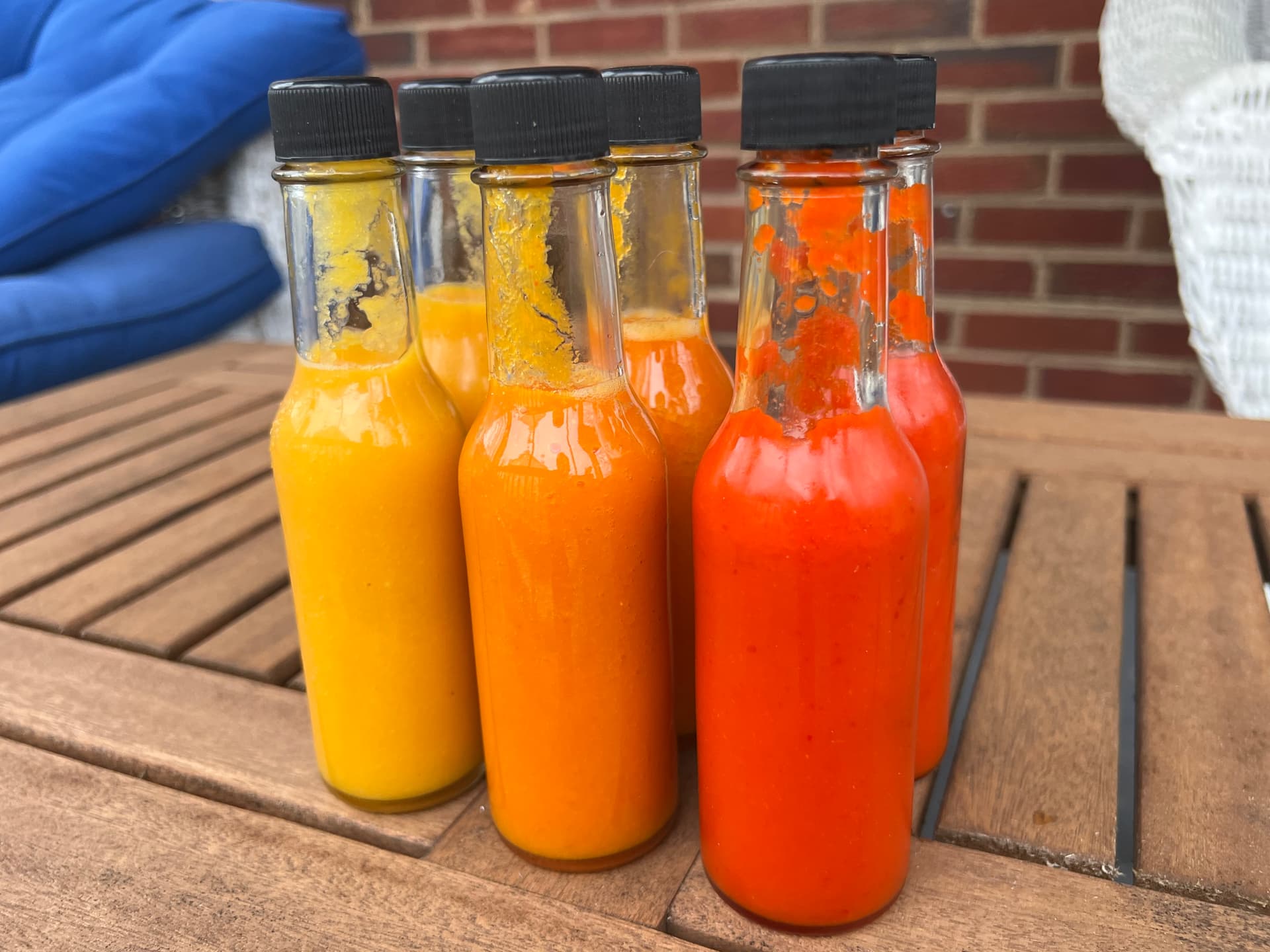
After at least a month-long ferment (I don’t remember exactly when we processed the peppers), our three hot sauces are ready for bottling, labelling and, besides personal use, gift-giving. Just a warning that if you make your own hot sauce with lots of delicious fermented peppers, many people will say it is the best they ever had and you are sort of stuck making it every year once it becomes an expected gift. But that is okay, we enjoy it.

This year’s varieties are:

Aji Fire (red): A mixture of Aji Crystal and Aji Colorado, with a few Big Red Mommas added to give it a little authority. I also halved 2 large Prairie Fire peppers to use on top under the glass weight since the larger size holds the peppers down below it. 4 big cloves or hard neck garlic added to the 2-quart jar full of peppers and brine to ferment. We strained all the brine before blending, added about 1/2 cup of unfiltered apple cider vinegar and a tablespoon of honey to blend it all. Thick, tangy and all that good funky fermented flavor with what most people would consider a low to medium heat.

Fatal Peach (yellow): A repeat from last year after a lot of rave reviews. This is about 80% Sugar Rush Peach and 20% Fatale. Besides the garlic, we added a large peach to the ferment, cut into slices and skinned. Same additions at blending as above. Thick, tangy, with a hint of fruit, slightly sweeter and a little less of the funky flavor with medium heat.

Orange You In Pain (orange): We had tons of production on the Fatale plant and a lot of very large, thick-skinned orange Roger’s Giant Habaneros from one of those plants, so we mixed those together and added a couple of nice red Prairie Fire peppers at the top. Same additions at blending as above. This is another great-tasting sauce (at least to my palate), but the heat is up there closer to the top of my range. For me, when a hot sauce gets too hot I use so little that I never get any of the actual sauce flavor.

Sorry I don’t have any of the pictures of the jars from fermenting. I’ll try to do that next year. To process them, we cut all peppers in half, take out the membrane and seeds and pack them in about as tight as they can go into the jars. We use a glass weight to keep them under the brine and a fermenting cap. We ferment in either 1-quart or 2-quart ball jars, depending on how many peppers we have for a given mix.

Here are a few of the bottles. We wound up with 8-10 of each type.

7 Likes

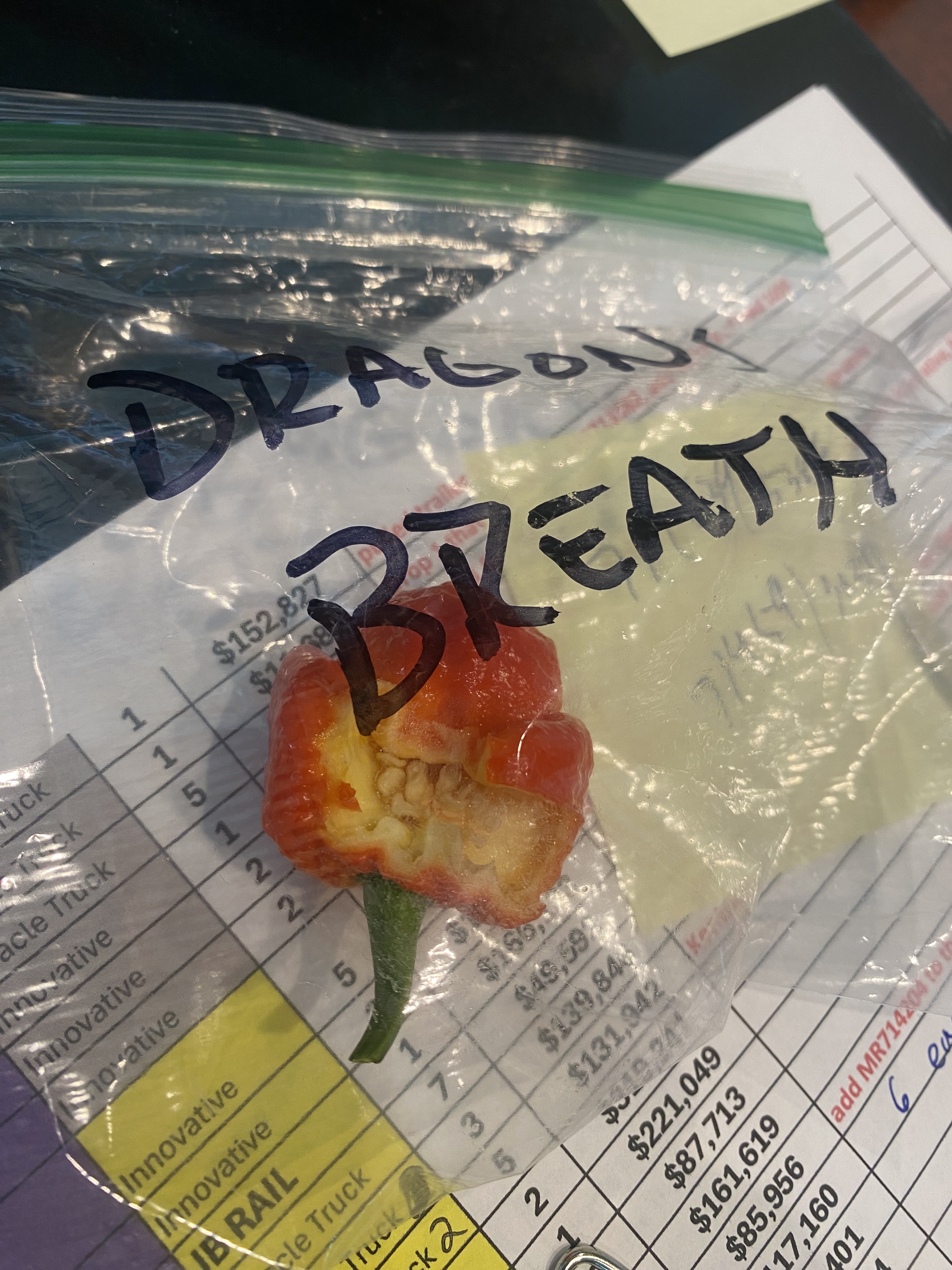
A coworker brought in this dragon’s breath pepper for me to try, I ate several pieces, it’s pretty hot :hot_face:

We have santaka plants but no fruit yet. Haven’t tried them before either.

We have some jalapeños fruiting right now and I love to make cowboy candy or put one in my refried beans.

1 Like

I’ve only started growing peppers this year. “Jaluv an Attitude” is obviously a joke name. Is there an alias? thanks.

1 Like

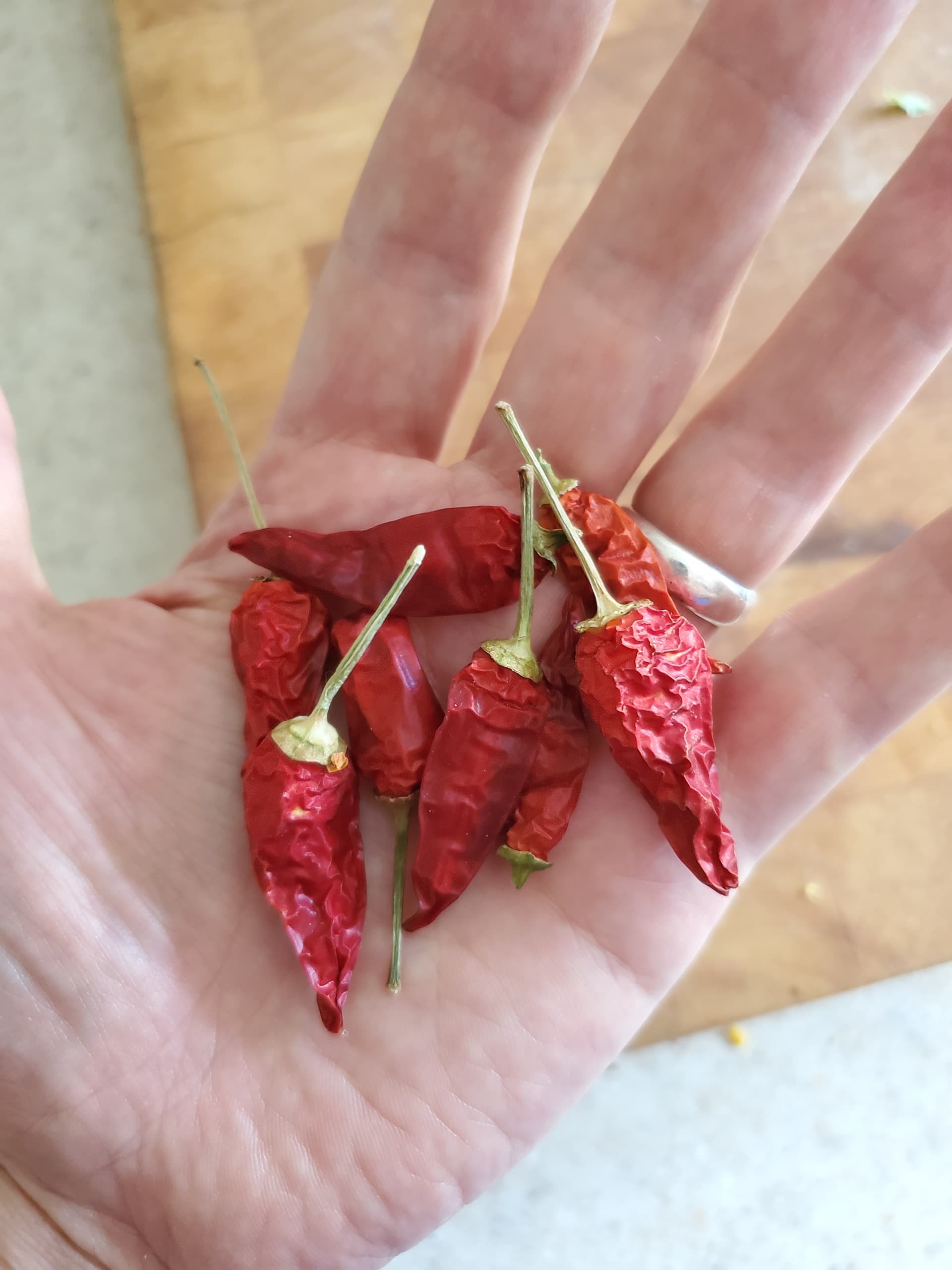
I should have known better. We order “Thai chili pepper” seeds from two online sources. They were supposed to be the same kind of Thai hot chili peppers.

Not only there are not the same kind of peppers, they don’t look like any Thai chili peppers I am familiar with.

I grew sugar rush peach peppers this year. Pretty impressed with them; they grew well here in NW Ohio and have lots of pods. The flavor surprised me; fairly sweet and fruity, as advertised. I’m drying most of them out to make chili flakes, which I will use to make a chili oil.

2 Likes

No jokes. That’s actually what the breeder named it. It’s from a backyard enthusiast breeder who has only released a couple varieties and has better sense of humor than marketing sense.

This one was a cross between jalapeño and their earlier variety 45° N Attitude, hence the name.

2 Likes

@jrd51 here are some other Fedco introductions I’ve grown the last few years that I highly recommend.

These are Matchbox from last year. A Fedco staffer took it upon themselves to stabilize the F1 hybrid Super Chile. Has paprika peppers in its lineage. I would describe the flavor as “extra hot paprika.” Dries well, and makes phenomenal chile flakes and hot sauce.

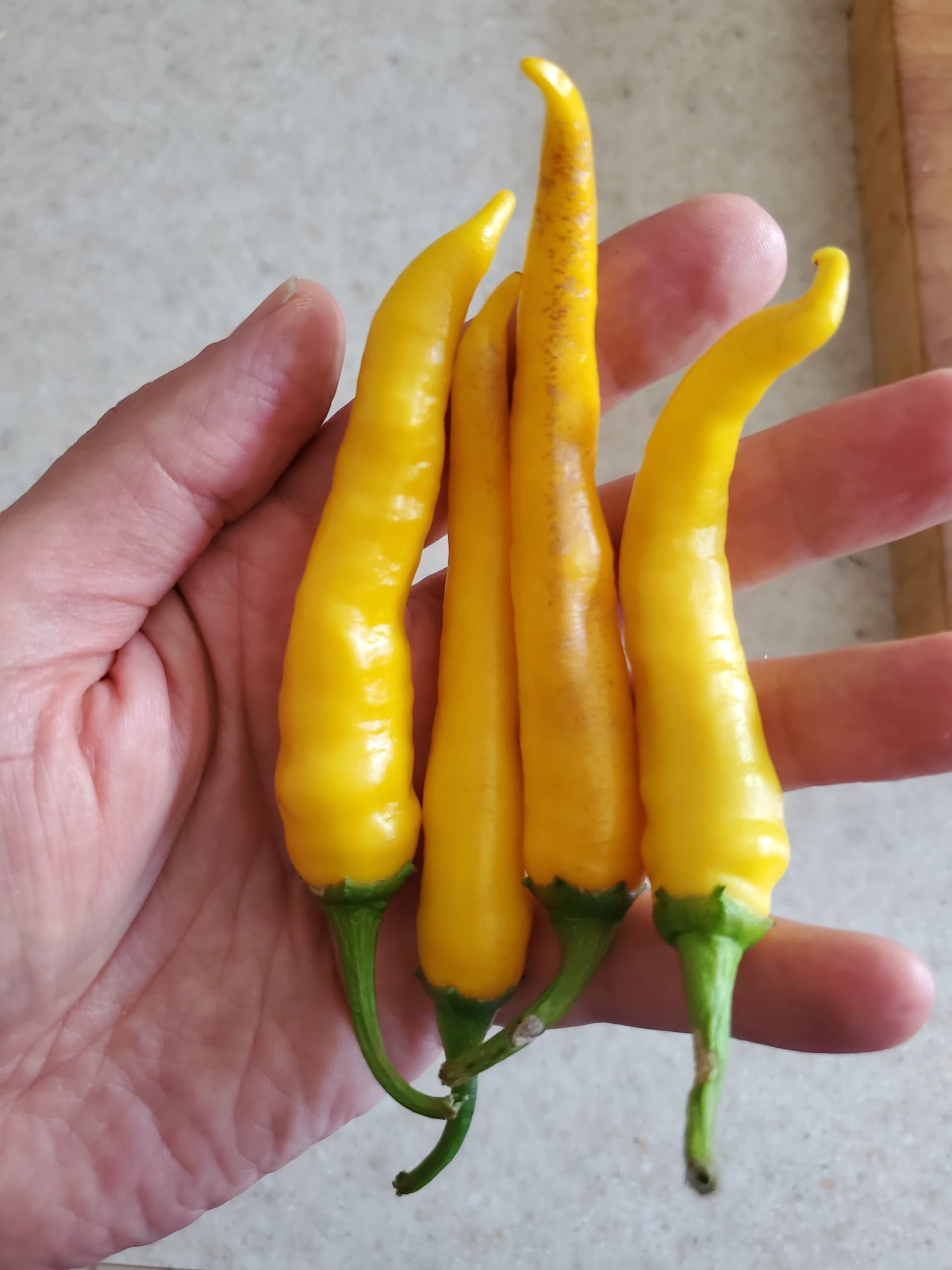
And thes are Ho Chi Minh yellow cayenne type peppers. They have a nice heat and kind of a “yellow stone fruit” flavor. Makes a great salsa or chopped as a spicy garnish. I plan to make hot sauce, and I’ll see how they dry if I have enough left over.

2 Likes

Thanks, I’ll check them out. But to be clear, I’m not a fan of serious heat unless maybe it’s spread across a big meal. I’m experimenting by growing one variety each of the jalapeño, ancho, and aji types. So far, I’m mostly drying the crop. I might try to ferment a hot sauce. Suggestions for how to use hundreds of hot peppers would be welcome. )

1 Like

The ones I suggest here aren’t too crazy with the heat, certainly less than aji amirillo. Hot sauce is definitely a great way to use them. Try mixing some dry with fresh for more depth of flavor.

I also like fire roasting/grilling poblanos. Peeled and cut into strips, they freeze well.

1 Like

Thanks. Are grilled poblanos much better when fully (red) ripe? I’ve got lots of green ones.

1 Like

They’re great at both stages. Just different. The reds are sweeter and fruitier.