I looked, but apparently there hasn’t been a thread on this topic. We are having a rainy, windy year in Northern Illinois and I need to tether two apple trees. I know how in a general way. Would some of you like to post some suggestions and advice? Thank you.
1 Like
It is sometimes recommended that you use metal electric conduit posts driven into the ground with a heavy stake driver or light, short handled sledge hammer. You can flatten the tip of the side you drive into the ground to make it penetrate the soil more easily. Of course this is more easily done proactively before you plant a whip next to it. It also can be annoying if you accidentally dull your pruning saw by inadvertently cutting into it.
These stakes are often left in the ground long after the tree becomes stably anchored by its roots and about the only way to remove them is with a hack saw or a power saw with a metal cutting blade.
I anchor my fairly large bare root transplants with a single 2"X2" 8’ tall piece of pressure treated wood from a yard that specializes in such wood. The big box stores tend to sell junk that is too knotty and light to use for staking, so I pay a bit more to purchase stronger stuff from a specialty lumber yard where pros go to get deck wood.
I merely drive the stake into the ground (with a stake driver) near a strong enough branch and use electric tape to secure the stake to the branch. That may well be all the support your trees need. Other staking material can work as well- such as a sturdy metal fence post. I’ve never had a tree staked in this manner blown over- even when we’ve had hurricane winds. Landscapers around here usually waste two more takes to make a triage of support that is overkill and interferes with mowing. They still tend to use heavy wire with a slit open piece of hose to keep the wire from directly contacting the tree. If left on the tree it will still girdle it after a few years. I would recommend eyescrews into the trunk instead, if anchoring a tree with multiple wires. However, my single stake method works perfectly well for trees under maybe 3" diameter. Bigger trees you might need to use two stakes.
When big trees blow over I pull them back up immediately and usually simply find a strong sapling with a crotch to hold them up. By the time the sapling rots the trees are usually stable. If it does blow over again I use a cedar post with lots of heartwood that can last over 20 years. I nail it into the tree- but this is for big trees.
Occasionally I use the commercial duck-billed anchors that you screw into the ground.
1 Like
I had a mulberry… gerardi bark grafted to a 3 inch stump… that grew like crazy… 8 shoots grew over 6 ft in first season.
In year 2… it got hit with a straight line wind storm and 3 of the 4 grafts broke off at the stump… one remained but it was bent over and needed to be pulled back up and supported.
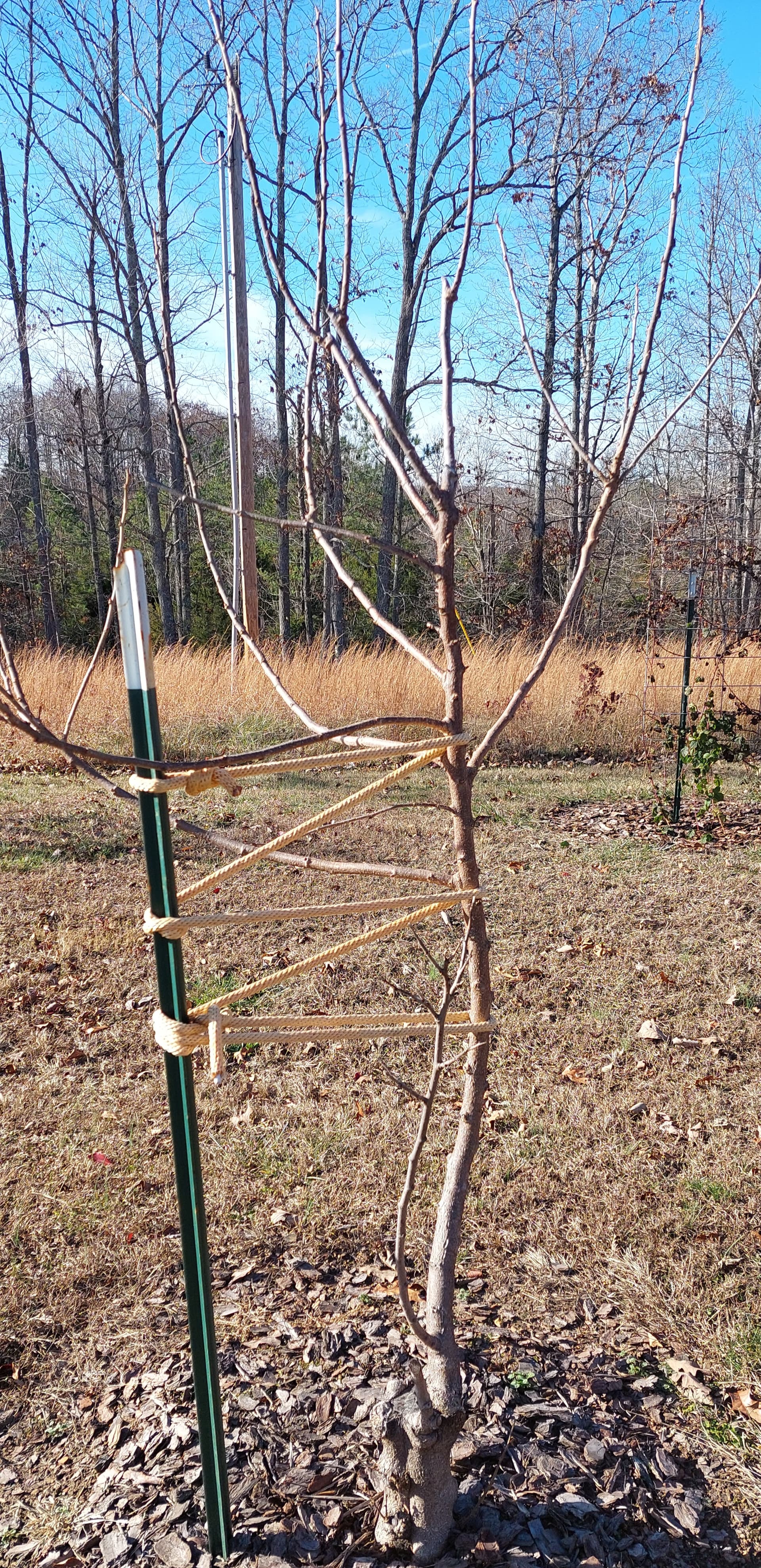
I used a tpost and a soft nylon rope… i slowly tightened that rope over a few months until I got the tree back upright.
It has been a couple years now… and I still have that support on it. Waiting on the graft union area at the top of that stump to fully heal over.
TNHunter
2 Likes
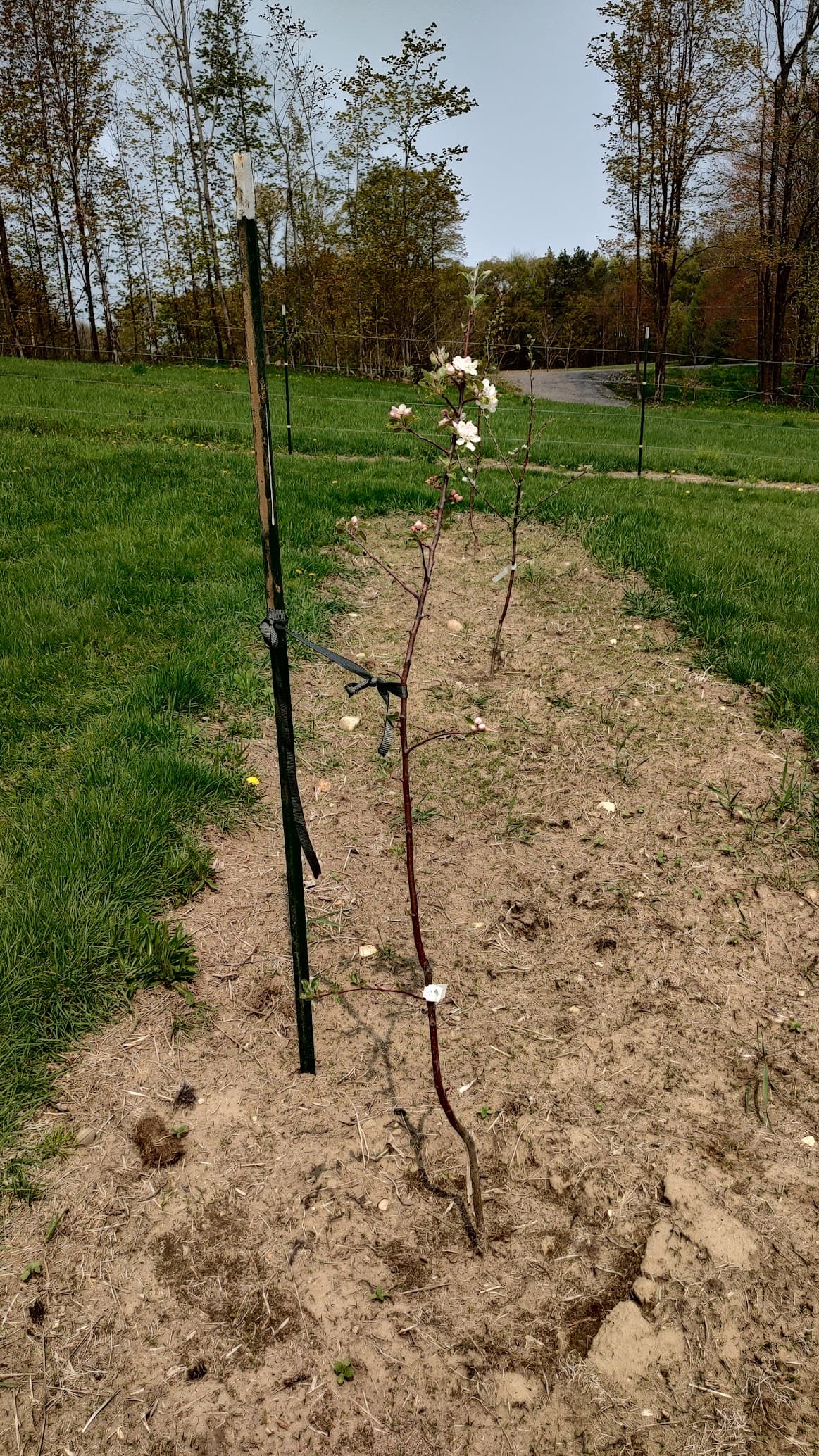
I’ve been using ArborTie at the orchard. I use the tying method shown by Deeproots on this video: How to tie ArborTie (youtube.com)
I use T-Stakes since I have them on hand at the orchard. I also keep a butane torch or charcoal lighter on hand to singe the cuts to prevent unraveling. I’ve found OESCO has the best price on rolls of ArborTie. Usually a year is sufficient to retrain a tree to a new position, but I use this same method for dwarf trees that will be permanently staked.
1 Like
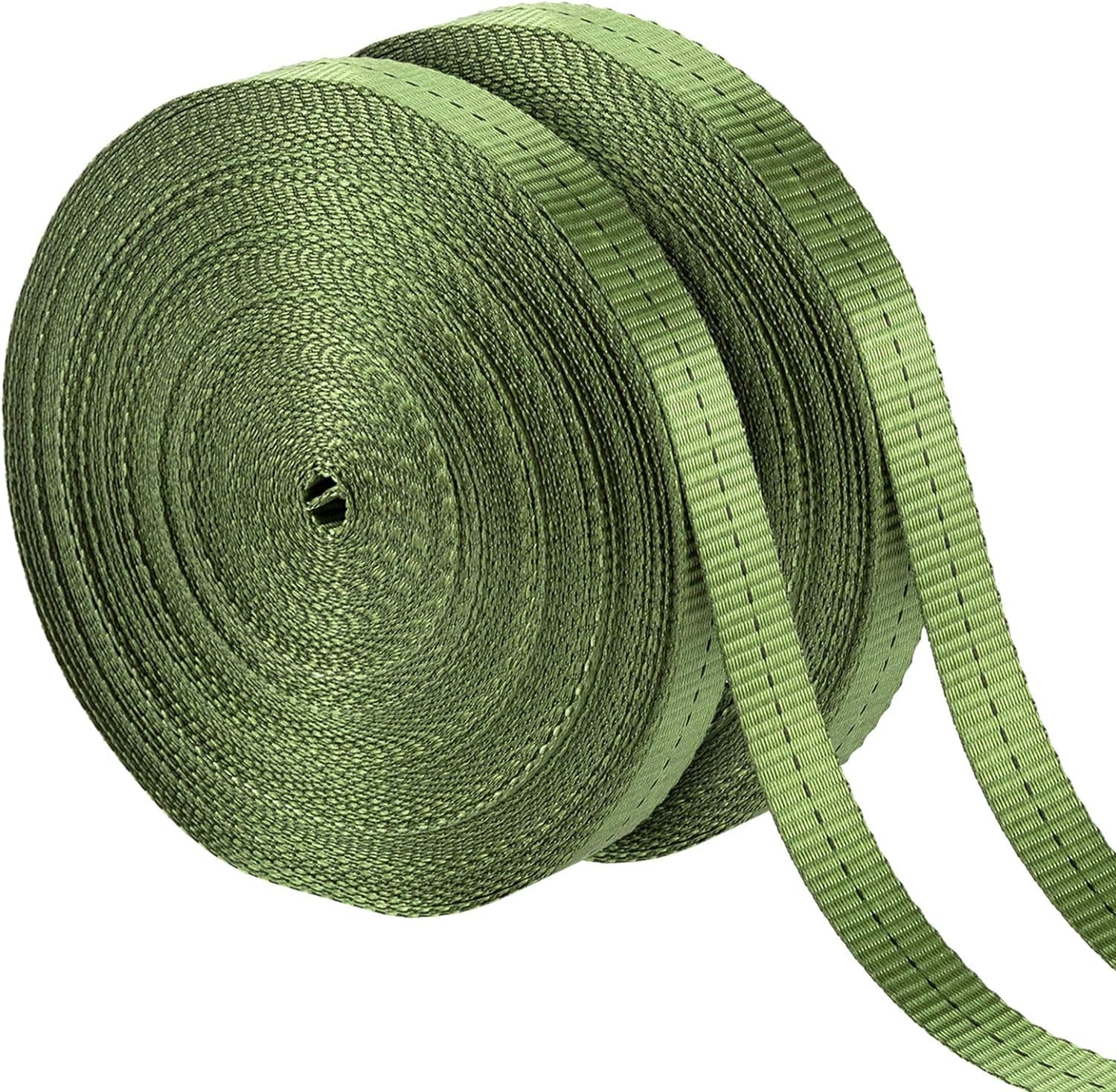
I ran out of ArborTie yesterday so was trying to order more from OESCO, Inc. Their website is down (their old site crashed, and their new site won’t be ready until Oct., you can place phone orders). In the meantime, I went looking for other sources of ArborTie. A.M. Leonard has their own version, but it was more expensive. Finally, I just searched for 3/4" polyester webbed line and discovered it’s the same stuff as electrical pull tape (pull webbing, mule tape). I found essentially the same stuff for a lot less $.
2 Likes
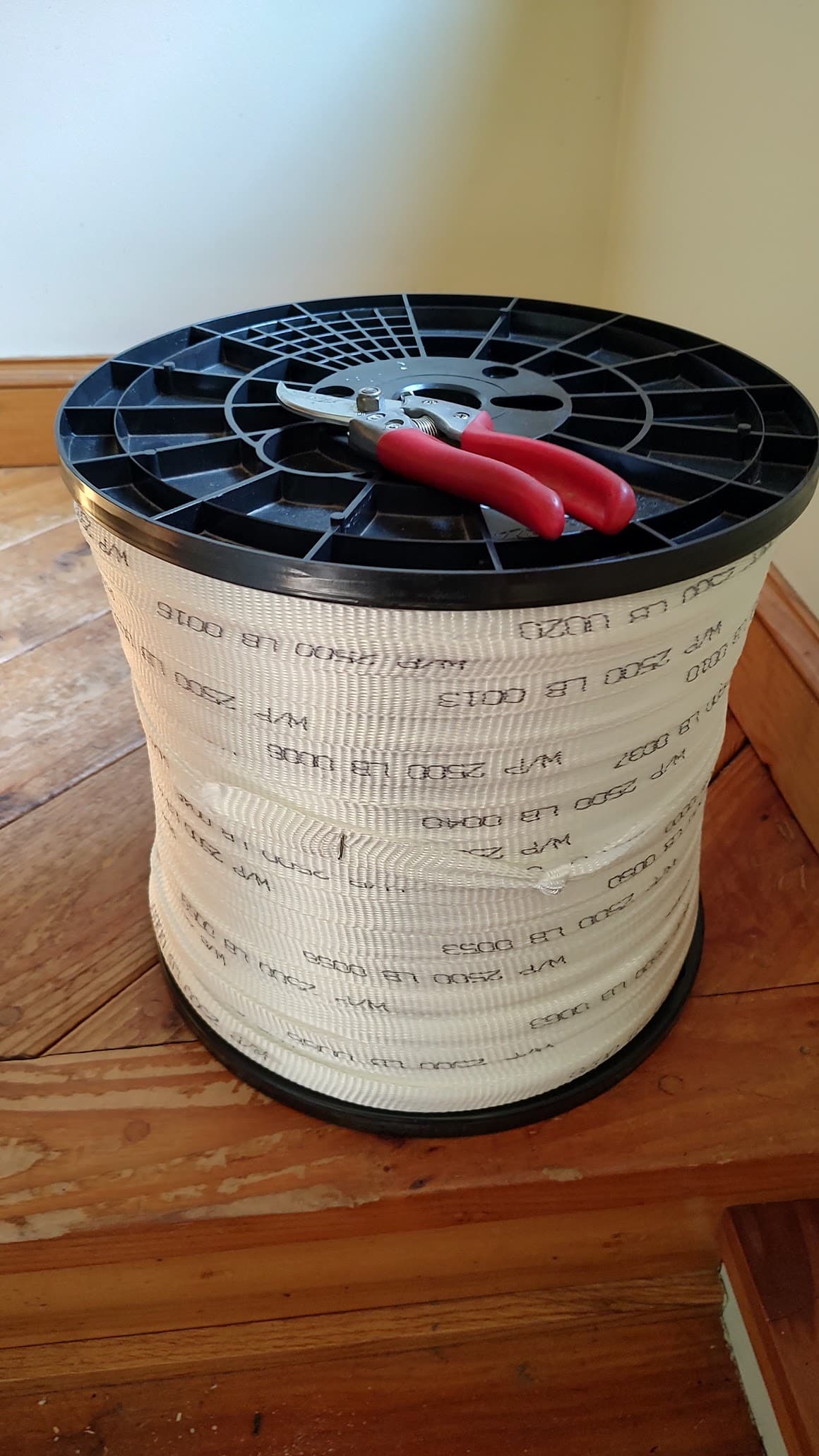
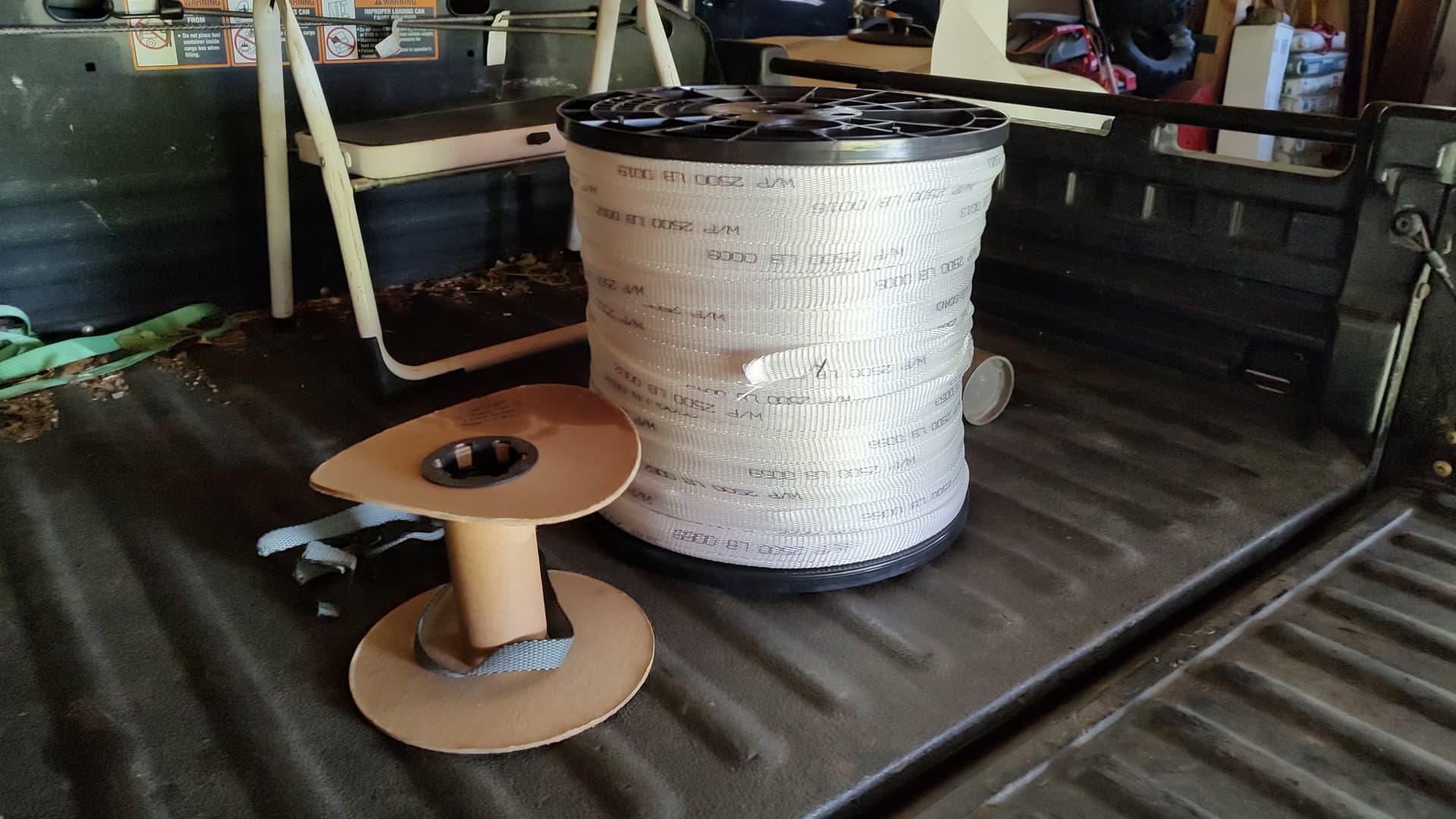
Received my order of polyester web tape for supporting trees at the orchard. This is 3000’, 14" x 13.5" spool, for $152 tax and shipping included. This spool is “slightly irregular” (it may have a splice/knot somewhere in the line and it may not have consistent printing). This is sold as electrical fishing tape, pull tape, mule tape, etc. The ArborTie I was using I was ordering in 500’ rolls for $70-80. 3000’ of ArborTie was available for around $430. I’m pretty pleased so far, we’ll see how it holds up.
Andy, does it have an UV rating?
Unfortunately, it doesn’t have a UV rating. I got it from The Ribbon Factory, listed as polyester pull tape. I tied a bunch of trees with it a couple days ago and I noticed when I singe the ends with a butane lighter it smells different from the ArborTie, and it doesn’t blacken like the ArborTie, it’s more prone to melting. I like to melt the ends after cutting so it doesn’t unravel. I had the same thought in my head, wondering how it will hold up in the sun. I will say the ArborTie definitely degrades in the sun, it gets an almost chalky feel to it, and it becomes difficult to untie as the fabric rubs against itself.
Here’s a photo of the 500’ roll I was paying $75 or so for, and the 3000’ pull tape I paid $152 for:
1 Like