I’ve never verified the species, but I do have some very large mature native vaccinium plants which load down with fruit every year. One has several suckers growing from the main clump. If you are interested, I can dig one up for you. Where I lived on Sand Mountain near Rainsville was a bit more favored with very good flavored and much larger huckleberries. I need to revisit some of the ones I used to pick from. They can literally live 10,000 years in a good location.
3 Likes
I would sure try growing them but only if they produce good tasting decent size fruit (no spray, low maintenance).
My deerberry mostly grow in part sun locations (edge of my woods/fields… or road side).
But some of them grow and do well 30-40 ft back into heavy timber.
What type of location does this southern huckleberry prefer ? full sun ? Part shade?
I have a good morning sun only location.
I might want to try growing a couple next spring.
Deerberry grow well here and look very similar. Perhaps this southern huckleberry will to.
For those of you growing it… what is your favorite nursery available variety. Are they self pollinating or do you need more than one variety ?
Thanks
TNHunter
I called Almost Eden and asked if their Sweetie Pie variety is self pollinating or if another variety had to be planted near by for pollination.
The older fellow I got on the phone was very nice but he did not know the answer. He said there would be another there by 10am… named Jeff that could answer that question.
TNHunter
I bought some from Woodlanders two years ago. They’ve set their first fruit this year so I’ll know here soon if they’re any good.
When I bought them I didn’t know I also have a lot of wild ones planted by the birds, as best I can tell they’re Vaccinium elliottii as well. If you like, in the winter I can dig you some of the seedling plants, or if I find an older one with suckers I’ll dig those.
I don’t know if they’re self-fertile, but I kind of doubt it.
Funny enough, we had some deerberry plants right behind my parent’s house when I was a kid. In all my life, I never once got to taste one… But the surrounding woods have three or four different Vaccinium species, so we and the ticks always ate good once blueberry season started.
1 Like
I have several huckleberries that grow in the understory under big oaks. For what it’s worth, I have alot of those deerberries growing with the huckleberries but I’m in zone 9a
1 Like
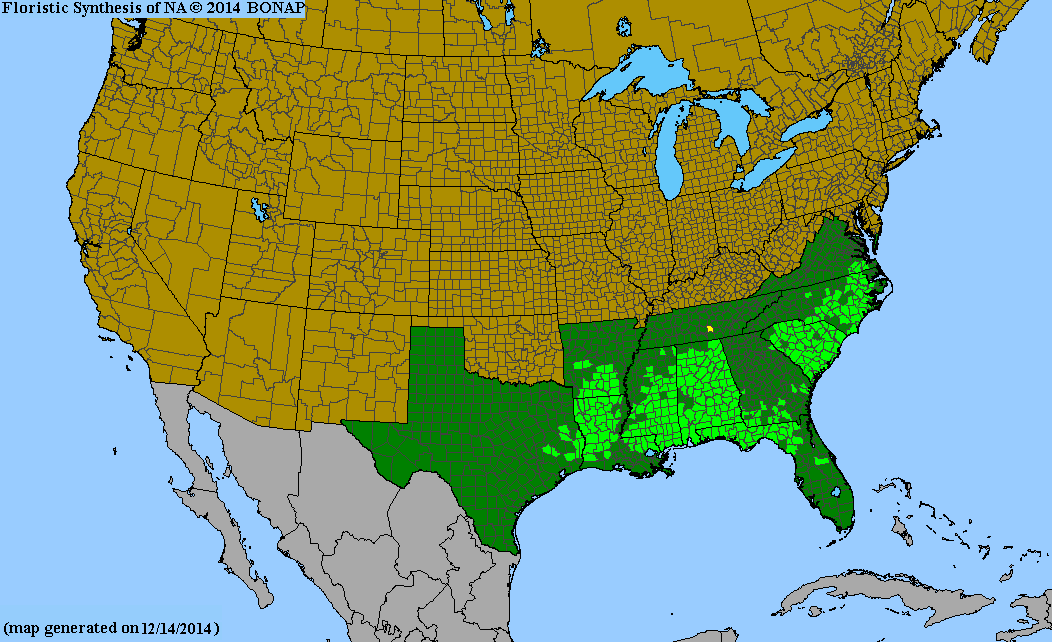
V. elliottii may make a good rootstock if it has a deep main root and broad soil tolerance. Hardiness would probably be an issue further north (Sweetie Pie was found in Louisiana), but graft could be buried. In TN they are known from just one location in southeast middle TN in rare wetland areas called barrens, but are classified as an endangered species and protected.
2 Likes
That’s a suspiciously Georgia-shaped hole in the distribution.
2 Likes
I’m in West Central Georgia, and we definitely have a lot of huckleberries here. I can’t vouch for the species. They have tiny, glossier than blueberry leaves, and small, very tasty berries. They are much more common in the wild than blueberries, though we’ve got those too.
1 Like
Yeah my guess is whomever was responsible for cataloguing Vaccinium in central and northern Georgia just forgot to do this species.
I struggle to tell all the huckleberry and blueberry species apart, but the wild plants in my backyard look just like the V. elliottii I bought, and PictureThis also says that’s what they are, so I’m reasonably confident.
1 Like
It has been a long time since I went there, but the last time I hiked the Little Grand Canyon in Lumpkin, GA. There were lots of huckleberries in the bottom. They were a welcome sight after walking around the area and being thirsty.
1 Like
I live in one of those counties that border Florida that isn’t colored and we have them everywhere
Okay, y’all’s conversation got me to dig in deeper and discover that the huckleberry is also known as a sparkleberry, which is the name with which I was familiar.
I can confirm that these grow in Georgia, ranging from at least the western border with Alabama and near to @haldog up to Canton here in Georgia. I only became familiar with the species a little over two years ago and haven’t spent enough of the intervening time in the areas of Georgia to my north or to the east to be able to confirm their presence.
Sparkleberry, aka Farkleberry is Vaccinium arboreum. Not very good to eat and definitely not Mayberry.
2 Likes
I see the arboreum in the North Carolina Extension Service page now that you mention it. I’ll need to spend more time studying these plants. Thank you for drawing my attention to this.
Huckleberries in general are just any wild fruit that is blueberry-shaped and colored. It doesn’t even have to be a Vaccinium.
1 Like
V. elliottii are both common in SE Georgia and they superficially look alike in summer with V. arborum having glossier, more or less evergreen leaves and more tree like in growth habbit. They are absolutely not the same. I’ve never heard V. arborium called huckleberry, but a huckleberry is whatever the local people in a given area calls a huckleberry. Thanks
Marcus Toole
1 Like
Yes they have adapted to various soil conditions in the wild. I picked from a wild very bussy blueberry growing in a partially shaded sandy area and a tall lanky one growing in a swampy area.
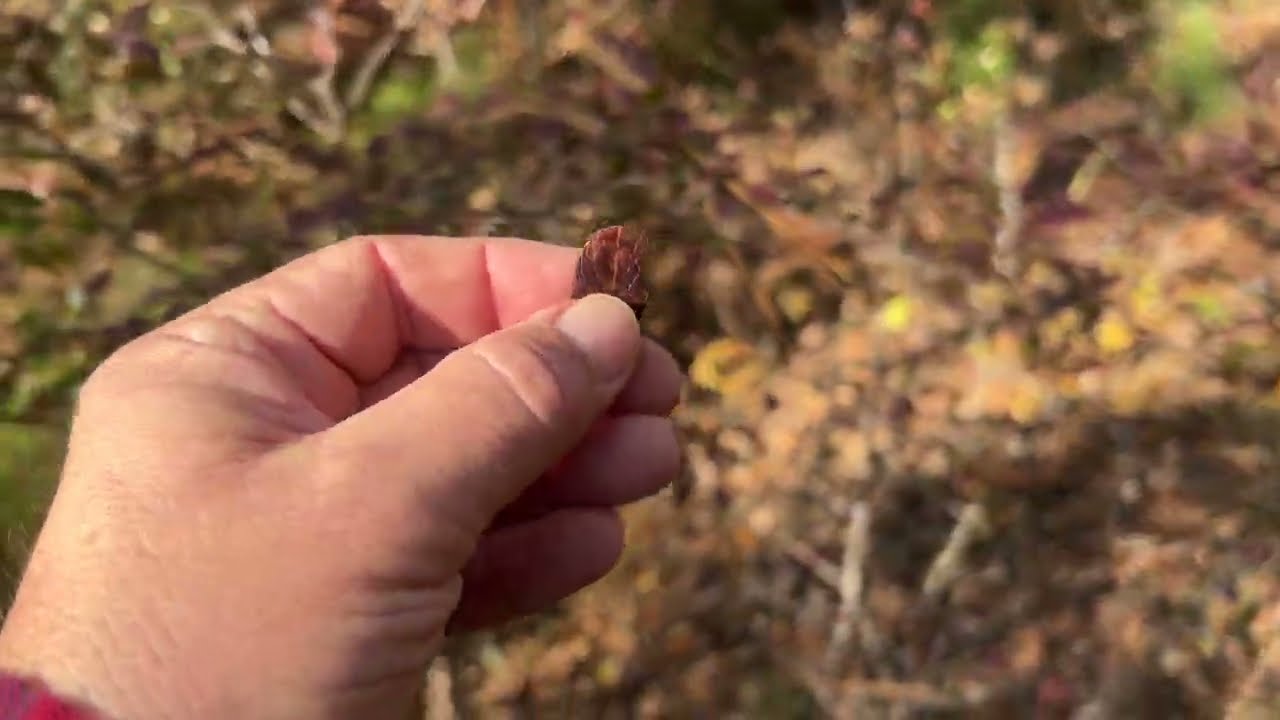
This past December I made a three part YouTube video series on how to find, identify and transplant huckleberries (Vaccinium elliottii). The first video where I focus on finding and identifying V. elliottii, I contrast it with similar looking species growing in the same invironment including farkleberry (Vaccinium arborium). The two species can superficially look similar, but they are not hard to tell apart if you know what to look for. The only time they are really hard to tell apart is with young plants in spring where there’s lots of similar looking new growth if there are no berries present.
3 Likes
It’s important to do some research and to know a few things about the wild plant you plan to relocate. Also don’t try to relocate plants that are on public or private land that’s not yours without permission. Don’t move threatened, endangered or rare species unless you are rescuing them from land about to be developed.
In addition to being an experienced orchardist, I have an MS which focused on plant ecology and taxonomy. Before I attempted to move my first V. elliottii, I already knew a lot about the species, had paid close attention to the soil and growing conditions where I see them. I also read several scientific papers from breeders at the University of Georgia who were growing them for breeding purposes to see if they discovered any special needs that they may have that I haven’t thought of.
Generally everything that works for rabbit eye blueberries works for huckleberries. But huckleberries are much more tolerant of marginal conditions. It has a much bigger root system, so it handles dry conditions better.
I’ve also transplanted Vaccinium tenelum into my yard. It also transplants super easily and does very well. But the berries just aren’t all that flavorful. I tried transplanting a Vaccinium staminium (sandhill gooseberry), but that did not like the new conditions. It’s a sandhill species, and my soil is just too black and rich for it.
There are plenty of blueberry species that have super special needs. That’s especially true of some of the West Coast species found mainly in old growth forests. So, correct, don’t assume that a blueberry will take to cultivations. Do a little research on the species you want to transplant first. No Vaccinium is going to do well in an alkaline soil, so know something about your soil before you try to stick of blueberry into it.
2 Likes
Love the video Toolman. You do seem to struggle to walk, talk, and catch your breath. 
