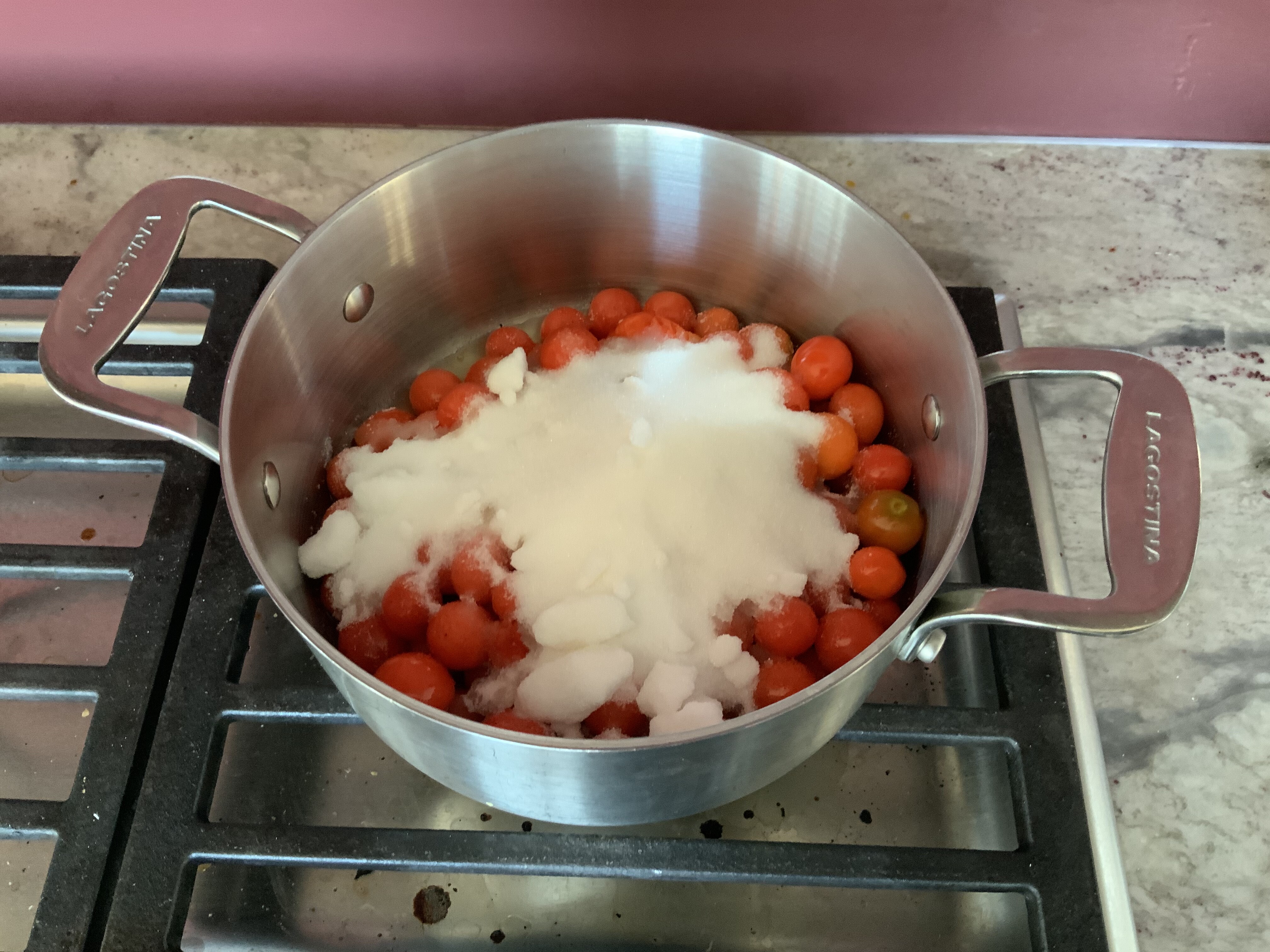
Some papers I read said to wait for 3 light frosts. I did that. I began with 3 cups of physalis and 1 cup of sugar. The taste was horrible, put a second, the taste was still horrible, added half a cup more and the taste was still horrible:
@Luisport : I did not mentioned it in the previous message but I ate one physalis straight from the pod. The taste was mediocre but I did not choke on it and even thought that cooked with sugar added they could be OK. Noooooooo
Sounds sort of like my experience with the infamous ‘Garden Huckleberry’ (Solanum melanocerasum)… even after following instructions to boil in water with baking soda to leach out solanine and other alkaloids, and addition of lemon juice and grape juice for flavor, and lots and lots of sugar… the finished jam still had this really unsettling metallic aftertaste…
That’s odd. The version I grew had a distinct lack of flavor! Well, it had a decent base flavor, but it was hard to tell due to the lack of any acid or sugar to speak of. Certainly nothing metallic, though.
The ‘Chinese Lantern’ flower pod and fruit is different from the ‘Ground Cherry’ which is edible and tastes bland but fine. I would never eat the Chinese lantern fruit. It is related to the Ground Cherry.
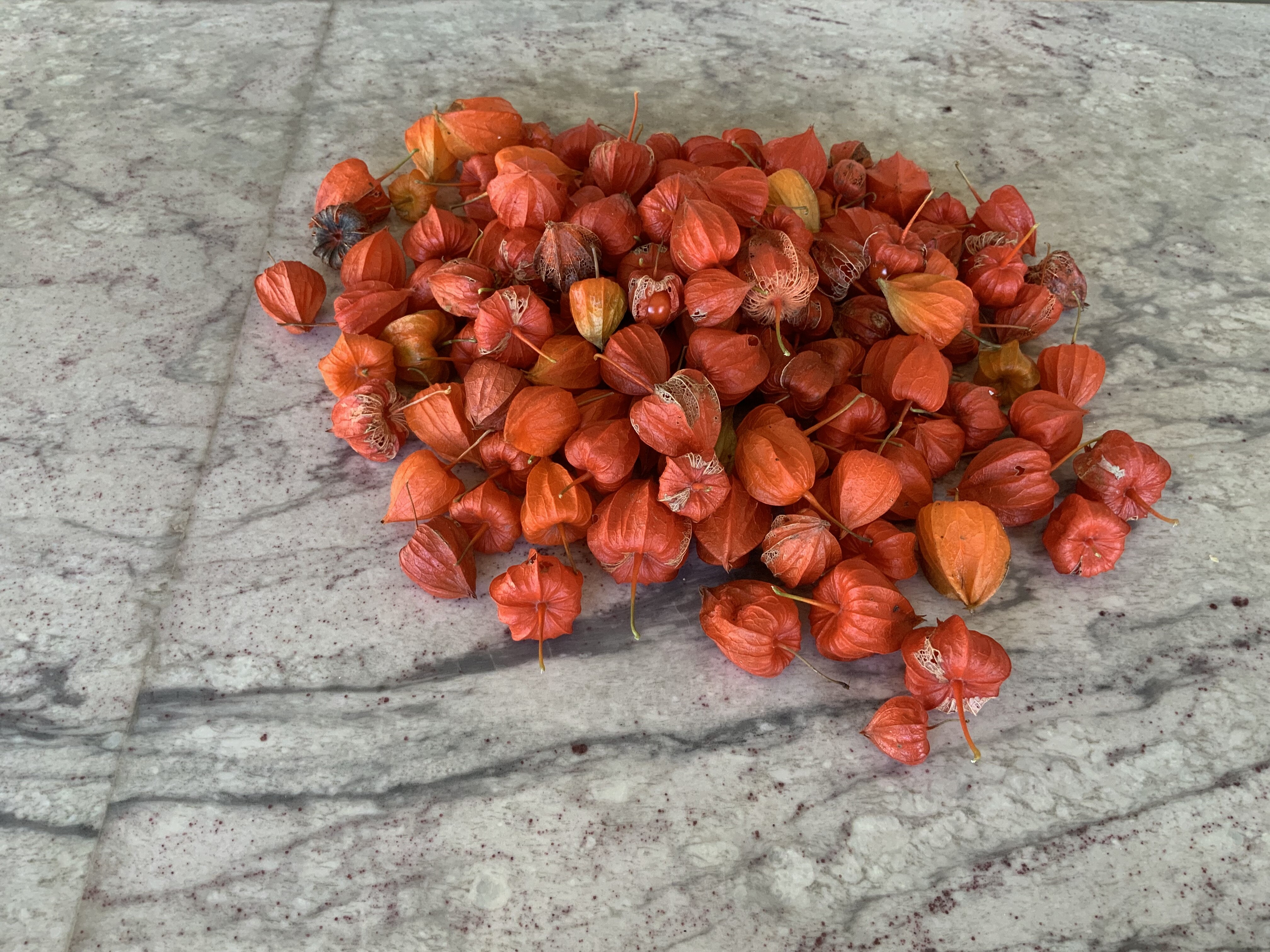
Thank you for doing such experiments, Hmm… is it just me or the fruits look bigger than normal?
But dang that’s a lot of sugar. I’ve other people who’ve tried them describe the flavor as very sour, acidic & tangy with a subtle/faint sweetness. Perhaps different varieties taste very different?
By horrible do you mean tasting bitter? or too sour?
I haven’t & it’s something I do want to try eventually, making wide hybrids with Alkekengi officinarum. However this would be a very wide hybrid, not impossible but I would try grafting them first & making hybrids among true Physalis spp. in the Subgenus Rydbergis first (These include Goldenberries & all other true Groundcherries + Tomatillos).
Physalis alkekengi is the old scientific name, it’s been moved to a different genus due to phylogenetic distnace. You can see the distance in these 2 Phylogenetic trees!
What’s interesting is Calliphysalis carpenteri (Carpenter’s Groundcherry) is Phylogenetically directly sister to Alkekengi officinarum, it would be interesting to make a hybrid between both species. Both species are perennial & also share the olive green markings. I’m thinking a hybrid between both make possible crosses with all other Ture Physalis spp, especially if mentor grafting & mentor pollination are involved.
The hybrid might also make decent fruit, both species have edible fruit but that doesn’t mean it would taste good, especially if you using bad tasting Alkekengi officinarum genetics. I haven’t tried them myself so I can’t say but this Forum posts doesn’t give me hope that the berries taste any good.
I read that chart totally different
Alkekegii is 96% similar to the rest of the physalis. With the same chromosome count of 2n =24 they likely cross easily. Edible physalis come in green, purple, near black and yellow. Someone has to cross and get edible reds. Might as well be you and the growing fruit family.
Indeed! Both share the same chromosome number and this only aids the case for cross compatibility! If they are proven to be cross-compatible than this would require reworking the current taxonomic classification . Reguardless I’m still motivated to make the cross myself & encourage others to try as well!
Oddly enough Quincula lobata has 2n = 22 Chromosome numbers but is more closer phylogenetically to the main Physalis species in the subgenus Rydbergis than it is to Alkekengi officinarum. Quincula lobata is the odd one out, most other species have 2n = 22 chromosome numbers, this might be a real hybridization barrier.
To make Physalis spp. x Alkekengi officinarum crosses, I think it would make sense to first make hybrids within Physalis spp. then use the new hybrid offspring to cross with Alkekengi officinarum. + I also want to try grafting both via scion swaping and letting them cross that way. I also want to try pollen mixing, maybe a little Alkekengi pollen mixed with 5 other Physalis spp. pollen, that way I can trick the ovary into accepting the other genus pollen.