I read strawberries are one of the worst for pesticides

Are the pesticides just on the surface? Can they be washed off or is it more invasive?

The store-bought strawberries are not very good for flavor, but they are still somewhat edible. It is a double whammy…poor flavor and poisonous chemicals.

I tried them back in ‘08. Weeds took over right away and I didn’t get many. That was it, gave up on them. I wish I had a greenhouse to try and grow some strawberries.

i grow them in holes in a heavy ground cover. easy to control weeds and runners that way. i put some straw around the plants in spring to help keep moisture and for something for the berries to rest on. i just rake it off in fall once the plants go dormant. knock on wood, i havent had to spray them yet. if you pick disease resistant varieties its half the battle.

4 Likes

I agree w/ Steve. Pick disease resistant ones, if you can.

Strawberries here do require spray (KS/MO). Mostly because they ripen during one of the most rainy parts of the year. So they want to rot.

The info that strawberries are one of the worst for pesticides probably originated from the Environmental Working Group (EWG) which is an alarmist environmental group and not science based (although they pose as scientific).

Every year they use USDA info reporting and come up with their “Dirty Dozen” fruits when it comes to pesticides. They report only info which suits their purpose, trying to scare consumers into organic choices.

The truth is that conventionally grown fruits in the U.S. are just as safe and good for you as organic fruits (strawberries included). Imo, they scare unknowing consumers away from fruits in general, which consumers by default, from fear, eat more processed foods as an alternative, which are significantly less healthy than eating conventionally grown fruits.

That some purchased fruits have no flavor is a valid objection. In that regard, I would always recommend growing one’s own fruit, if the individual has the space, and desire. But those fruits grown by individuals will still likely require synthetic pesticide spays in most parts of the U.S. Need for synthetic pesticide sprays vary widely by location.

11 Likes

I highly doubt that fruits and vegetables with pesticides are “just as good for you” as fruits and vegetables without (or with less) pesticides. How harmful pesticides exactly are for you is debatable, but stating that they are neutral/not harmful at all is too fast a conclusion.

I’ve grown strawberries for years without pesticides and had a good crop every year. No idea about the variety, I wasn’t paying attention to that back then, so probably it was some very common variety.

2 Likes

The problem with the statement is “without (or without less pesticides). That can be extremely subjective. The idea from the Environmental Working Group is that organic foodstuffs are healthier because they have less synthetic pesticides.

There have been multiple studies shown that conventional fruits are as healthy as organic fruits for humans. You switched the argument to some pesticides (or less pesticides) vs. no pesticides, which is mostly impossible, for most people purchasing fruits. Even organic produced fruits have pesticides.

Granted, if you grow your own fruits, you can control what pesticides you spray. But this is not my original point.

I’m all down for people growing their own fruits, if they have the area, desire and means. But the EWG defining what fruits are good for you, based on a pseudo-scientific methodology is where I draw the line. The idea that pesticides at any level is harmful, is baloney and not based on science. Everything has an LD 50, even table salt. Everything is poison (even water) it’s the dose makes the difference.

“highly doubt” is not a good measure of science. It reflects an emotional panacea that food can be produced in a sort of “Garden of Eden”. Simply not true. Mass produced food requires some pesticide (in almost all locations) in all reports but the most “out there” examples.

Again, I’m not talking about some individual making food in their pasture or backyard, without the benefit of pesticides, or some individual on the internet making money on Youtube videos growing fruit organically.

I’m talking about commercial growers growing fruit. If anyone wants to grow their own fruit without pesticides, I welcome that. And I’ll help them, as much as I have time to connect to this forum.

But the idea that any synthetic pesticide is harmful for you is not science based. Is one and a million parts of chlorothalonil bad for you? How about one in a billion parts? Never mind this fungicide is included in paints and caulks to prevent mold in your kitchen and bathroom thereby preventing you or your family members from developing potential respiratory issues.

I know I’m coming on strong here in my response, but I’ve seen these arguments for years. And they just don’t hold water.

Granted, if you can grow fruits for years without any pesticides that’s great. But that doesn’t affirm that a small dose of pesticides on commercial fruit is less healthy than organically grown fruit, which also contains pesticides.

8 Likes

I didn’t change the subject to “pesticides vs. no pesticides”, I just summarized what you said in your previous post: “just as good for you” (so pesticides have a net zero effect on your health).

I choose my words carefully. My words “I highly doubt” are opposed to your “Truth is (…)”. Something that complicated - the effects of many different pesticides and combinations thereof on human health - can’t be simply stated as “truth is”. Religious people are sure about things, scientists are not.

Pesticides are made to kill something, whether it is plants, insects or fungi. So they are harmful by nature. Residue levels are generally low for consumers, but regulatory limits are based on incomplete science (or science funded by the producer of the pesticide in question, see how Monsanto spent millions (or billions?) to make us believe glyphosate is completely safe and ghost-writing fake scientific papers).

Safety assessments typically evaluate pesticides individually, not the mixture of residues people actually consume. Long-term epidemiological studies show weak associations between dietary exposure and certain diseases, though causation is hard to prove or disprove. Vulnerable groups like pregnant women and children may metabolize pesticides differently.

Regarding occupational exposure the science is much clearer: meta-analyses consistently show elevated rates of neurological effects (Parkinson’s disease), reproductive and developmental effects, non-Hodgkin’s lymphoma, prostate cancer, and lung cancer.

Between 2005 and 2007, a blind study in The Netherlands tested whether chickens fed organic feed were healthier than those fed conventional feed. The research, led by Dr. Machteld Huber at the Louis Bolk Institute and conducted in collaboration with TNO, RIKILT, and Wageningen University, found promising initial results: chickens fed organic feed showed stronger immune responses and recovered faster from viral infections than conventionally fed chickens.

The study’s conclusions were suppressed and weakened under pressure from TNO. According to Huber’s later testimony, TNO threatened to withdraw from the research and publicly declare it worthless if she presented positive conclusions about organic feed. Forced into silence, Huber was required to state at the December 2007 presentation to the Minister of Agriculture that “no conclusions could be drawn”, despite the data suggesting otherwise.

The promising findings were essentially buried, and the question of whether organic food is healthier remained unstudied for years.

In 2020, the Dutch TV program Zembla exposed the controversy, revealing how institutional interests had suppressed scientific findings. Following the scandal, Wageningen University acknowledged the need for new research and recommended conducting similar studies with other animals to properly investigate organic food’s health effects.

Pesticides have made agriculture much more efficient, I will not deny that. So I will certainly not state that pesticides are bad. I never talked about a “Garden of Eden” where everything is grown without use of pesticides either like you implied. You are reading things that I didn’t write.

There are, however, more reasons than health alone to opt for minimizing pesticide use: declines in pollinator populations, soil degradation, loss of biodiversity, etc. It’s a balance between efficiency and health/environment. Both are important.

I think it’s very useful to know which foods typically contain the most pesticides (e.g. the Dirty Dozen) so people can choose themselves to avoid them or not.

2 Likes

Hmm,

Well there is a lot to unpack there. These discussions come up every so often on the forum. I’ve read a hundred of them.

First, maybe I didn’t write clearly enough, but you did make the case that pesticides are harmful. To wit:

How do I provide science against that. You could always find some fruit over the mrl (maximum residue level) and say, see, these fruits are over the level of scientific testing, so they have to be dangerous. The whole premise implies that fruits without pesticides are safer than fruits with unknown pesticide residues. It basically turns into an either/or argument for someone trying to demonstrate legal commercial foodstuffs are as safe as no pesticide foodstuffs. Because you can always find an example which some abuse proves your point. Hence it becomes no pesticides are safer than some (abuse circumstance) pesticide. It’s a nuanced point, but an important one.

Once we throw out abuse examples, which as a percentage are minuscule. The point becomes much clearer.

Conventionally grown produce is just as safe and healthy as organic produce. Which if you re-read my posts you’ll see that was my point. I was trying to convey to the OP that there should be no worry purchasing conventionally grown strawberries from a health standpoint (although I agree with him flavor can be lacking, which would encourage “home grown” which I absolutely support.

OK. This has nothing to do with religion on my part. Not even sure why you brought it up. It’s all about science. I’ve noticed the religion part is more on the Mother Earth News crowd, But enough said about that. Lets move on to some science.

OK, I don’t like parsing every sentence you write (much too laborious) but this is meaningless. Just because something is harmful to nature has no correlation to human beings. I occasionally have had to set traps out for wildlife, which have zero effects on human beings. Products can be targeted for the target pest. That is an important concept that is key.

This is a fair example. Monsanto did step over the line in peer reviewed norms and authenticity. But that is an example of abuse, and they have paid heavily for it. As an aside, I think glyphosate is much safer than alternative herbicides of the same class, but that is another discussion. The point is, this is an abuse example, which is great fodder for any group dumping on any use of pesticides. Groups bolstering their views get a sort of checkmate from the public, if they can find an abuse. It’s a wild card of huge value.

That text is true, but it misses the mark and can be misleading. Granted studies of pesticides don’t generally test mixtures of various pesticides on test subjects. But this is a bar so high and pretty much only applied to pesticides, which face much more scrutiny than other compounds.

From a personal level, I have a young grandson, who when he visits, crawls around on the floor. We try to keep the floor clean of germs, but the boy crawls around on the carpet (picking up carpet fibers on his hands, crawls on the linoleum, sucks on some rubberized nipple, when Mama isn’t doing the “nature feeding”, eats food off a plastic high chair tray, sleeping in a crib made mostly of plastic, wears some kind of plastic diapers, all the while sticking his thumb in his mouth, sucking down these chemicals, at the most developmental stage. You can’t tell me all these compounds have been tested to determine how pregnant mothers and infants metabolize and react to these compounds. Yet, this impossibly high bar is expected of all pesticides, regardless of the incredibly minuscule dose?

Ok, this needs some unpacking. First, a lot of this stuff is the result of specific glyphosate research. Much of that was not legit peer reviewed research, but published in pay to play journals (which for those unfamiliar are mostly foreign “researchers” paying money to get published somewhere, so they can enter mainstream science despite coming from universities which are not rigorous institutions of learning). Doesn’t matter if it’s “pay to play” the un-objective will pick it up and report it. The other part of that “fact” is that it mostly concerns organochlorines (i.e. chlorinated hyrdrocarbons) or organophosphates. Organochlorines are pretty much outlawed in the U.S (DDT, Chlorodane, etc.) I don’t believe I’ve every sprayed one. Likewise organophosphates are pretty much gone. Azinphos methyl is gone for good. I’ve never sprayed phosmet (Imidan). I have sprayed some Malathion, but it was years ago. I don’t know any other commercial growers who spray this stuff anymore. So the research you are reading is not current with commercial practices in the USA.

Ok, I didn’t think this measured the level of legitimacy to this discussion to look it up. I do apologize for my harsh assessment, but I’m just so used to all the tangential arguments, I try not to chase every rabbit trail. I recognize this may be valid info for you. But from my perspective, there are a million rabbit trails on this topic. Maybe if you think this is the smoking gun, I’ll look into this study. This has to do with some chicken study in the Netherlands. That’s the problem, people scan the research and cherry pick what supports their beliefs. I recognize I am susceptible to the same sort of self imposed mind control, but I think I have more history to stand on (as outlined further in the discussion).

OK, if we are talking conspiracies. Here is one for you. The 2012 Stanford meta analysis study concluded conventionally grown fruits are as safe as organically grown fruits.

I remember when this study came out (you can look it up). The folks on the other side (I’ll say the religious folks, since you brought up the topic) went bananas. I remember. They were doing everything possible to harass the Stanford scientists. It was in all the trade magazines. The researchers at Stanford were beside themselves and couldn’t understand why they were being attacked and their careers destroyed for doing science. I can’t readily provide documentation, but I’m an old guy and remember it all.

No, you never did say the Garden of Eden. But your data point that you never use pesticides on strawberries and your unbridled attack on pesticides suggested to me you fell in the camp of the “Garden of Eden” crowd, which uses much of the same arguments I read from your responses. Perhaps I was forward in assuming you are in the same bunch, but nothing in your responses led me to think otherwise. But if I mischaracterized, my apologies.

OK, this is again an expansion of your argument. It really becomes a diversion. Sort of a “Wack A Mole” game. It really loses anyone’s attention to the focus, and so I choose not to respond to it (although I could).

Let me leave you with some research of this tiring discussion (from my perspective) which you may or may not be aware of.

There was an extensive study conducted in the 1990s of licensed pesticide applicators (mostly farmers like me) and their longevity and cancer rates. This was a very comprehensive study conducted of 10s of thousands of applicators. This is significant, because many applicators at that time used open cab tractors with airblast sprayers. The PPE at the time consisted mostly leather gloves and a ball cap.

Despite the pesticides at the time of study were much more dangerous and the PPE used was mostly non-existent. The applicators had longer life spans and less overall cancer rates than the general population. This is significant to the discussion at hand because it is well recognized applicators absorb many times the amount of pesticides compared to the general population. No, it doesn’t account for kids responses, but it should offer some perspective on the long term lethality of pesticides to humans. Keep in mind this was in an era where applicators(farmers) were using much more dangerous/risky pesticides than available today.

The link is laborious, cause it was published in the 90s, but here it is. The complete study followed farmers over many decades.

Again for perspective, here is a NYT article on organic food. This link is not from the NYT, but it was published originally in the NYT. This link is not behind a paywall:

Finally, here is a history of pesticides, again for perspective. Human beings have constantly been in competition with pests for calories and food staples. It’s been a struggle against starvation throughout history, although admittedly not the current state. However, for interest, here is some of the history of the developments in crop protectants. Even though you and I are obviously on different sides of this discussion. I found history interesting. I hope you do as well. Continued on next post.

6 Likes

Fighting Our Insect Enemies

Achievements of Professional Entomology (1854-1954)

Achievements in Insect Control

(A series of USDA black and white photographs featuring 100 years of entomology in the United States from 1854-1954. (Contains pictures on 15 separate subjects.)

Chronological History of the Development of Insecticides and Control Equipment from 1854 through 1954

(Published by the USDA Agricultural Research Service in 1954 in observance of the centennial of professional entomology in the United States)

YEAR EVENT
1854
  • Sulfur-tobacco dip used for control of sheep scab.
1860
  • Bucket spray pump first appeared.

  • light trap development started for insect control; chiefly for cotton leafworm.

1861
  • Hellebore first recommended as insecticide–for control of imported cabbage worm.
1867
  • First use of arsenical insecticide noted; use of Paris green as insecticide for Colorado potato beetle control. However, a Wisconsin farmer is said to have written Galena Gazette in 1860 that he had used Paris green and flour to kill potato beetles.
1870
  • Pyrethrum production started in California about this time.

  • First experiments conducted with crude carbolic acid emulsion as insecticide.

  • Garden engine force pump appeared on U.S. market.

  • Potash solution recommended for control of scale insects on shade trees.

  • Moist heat first demonstrated as m.eans of insect control.

1872
  • Paris green recommended for control of cankerworms and cotton leafworm.

  • Petroleum first recommended in U. S. for insect bites and stings.

1873
  • Kerosene, applied by paint brush to tree limbs, advocated for control of woolly apple aphid.
1874
  • Knapsack sprayers appear on the American market. light trap inventions for insect control purposes arrived at U.S. Patent Office by the dozens.
1875
  • Kerosene emulsion spray developed.

  • Whale oil, soap, and kerosene advocated as insecticidal spray for numerous insect pests.

1876
  • A hopper dozer invented for control of grasshoppers.
1877
  • Carbon bisulfide first recommended in U. S. as fumigant for insect control.
1878
  • Paris green discovered effective for control of codling moth.

  • London purple introduced.Used for control of Colorado potato beetle.

1879
  • Paris green spray reported effective for use in codling moth control.

  • light traps, based on incandescent lamps, started to be developed.

1880
  • Barrel spray pump first appeared on American market.

  • London purple first reported effective in codling moth control in first official experiments with arsenical insecticides. Question of poisonous residues on sprayed fruit considered at this time: concluded that quantity of poison carried over to harvest as result of spraying was insignificant–a correct reasoning at the time when few applications were required to keep pest under control.

  • lime-sulfur first used in U. S. Used for control of San Jose scale.

1881
  • Coal oil emulsion, first practical contact insecticide, recommended for control of insects affecting fruits.

  • Kerosene proved harmful to trees when applied as summer spray for control of San Jose scale.

  • Pyrethrum first advocated for control of grape leafhopper.

1882
  • White arsenic first used to control codling moth.

  • Napthalene first used for insect control purposes. used in cone form.

1885
  • Baits containing poisons (bran-arsenic) developed for insect control purposes.

  • First insecticide (arsenic) recommended for use in soil to control insects damaging plant roots.

  • Pyrethrum imports, 622,114 pounds.

1886
  • First notice of tobacco-soapsuds mixture: advocated for aphid control.

  • Pyrethrum imports, 542,987 pounds.

  • lime-sulphur-salt spray first noted: used against scale insects.

  • Hydrocyanic acid gas (HCN), one of most deadly gases known, discovered as fumigant for insect control purposes.

  • Rosin fish-oil soap first used as insecticide; for scale control in California.

1887
  • Pyrethrum imports, 597,000 pounds.

  • Cyclone spray nozzle for insecticide spraying invented.

  • Pot generation of HCN gas developed for fumigation purposes.

  • Bordeaux mixture first used in U. S.

1888
  • Pyrethrum production in California reached 52 tons.
1889
  • Fungicides for first time added to insecticides in a single spray to control insects and plant diseases in fruit production.

  • Sandblaster designed and patented for control of scale insects.

1890
  • Hydrated lime added to arsenicals to prevent burning of foliage.
1891
  • Lead arsenate insecticide first used as an insecticide. It was developed for control of gypsy moth.

  • Carbon bisulfide first tested for control of wireworms.

  • Creosote oil discovered as an ovicide for gypsy moth.

1892
  • Lead arsenate first proposed as insecticidal spray for codling moth control.

  • First published results of use of kerosene as means of mosquito control; result of accidental discovery made in 1867 following spilling of coal oil into a mosquito-infested watering trough while filling lantern.

  • First record of dinitrophenols as insecticides in Germany.

1893
  • First dusting machine used for applying insecticides.
1894
  • First “spray calendar” invented.

  • Honey bees proved killed by arsenical sprays applied to fruit trees.

  • First power sprayer (steam) invented.

  • Hydrocyanic acid gas (HCN) first used for control of insects in greenhouses.

1894
  • First gas engine powered spray pump invented. Arsenite of copper discovered as an insecticide.
1895
  • First gas engine powered spray pump invented. Arsenite of copper discovered as an insecticide.
1896
  • Sodium fluoride first used as insecticide.

  • Crude petroleum emulsions tested as insecticides.

  • Value of early-season control discovered for boll-weevil. Arsenicals were recommended for purpose.

  • First power sprayer (steam) invented.

  • Acetylene lamps started to be developed as an attractant in light traps.

1897
  • Oil of citronella used as insect repellent.
1898
  • Hydrocyanic acid gas first used for control of insects in homes.
1902
  • Grasselli Chemicals Company began manufacturing lime-sulphur insecticides.
1903
  • First insecticidal residue tolerance established. Used by British for arsenicals.
1904
  • Potassium cyanide powder advocated for control of ants.
1905
  • Hydrocyanic acid gas advocated for control of cigarette beetle.

  • Pyrethrum production in U.S. came to an end in early part of 1900’s when Japanese product could be imported more cheaply.

1906
  • Commercial preparations of lime-sulphur appeared for first time.

  • Lubricating oil emulsion applied to citrus trees.

1907
  • Calcium arsenate first used as an insecticide, burned foliage severely.

  • First use of arsenate in dust form. Lead arsenate dust tested against boll weevil.

  • USDA’s Pure Food and Drug Act became effective.

  • Grasselli Chemical Company started manufacturing lead arsenate insecticides.

1908
  • Bill introduced into Congress concerning insecticides and fungicides, their manufacture, labeling, and sale. It was written by USDA’s Bureau of Chemistry, Division of Food and Drug.

  • Lead arsenate paste first discussed in Oil, Paint, and Drug Reporter.

  • Concentrated nicotine extracts containing 40 percent of nicotine as sulfate were patented.

1909
  • Lead arsenate powder on American market.

  • First tests with 40 percent nicotine sulfate.

  • Brooklyn light trap first described for survey purposes.

1910
  • Federal Insecticide Act became effective and Insecticide and Fungicide Board established and organized. No regulatory law passed by Congress said to more nearly affect welfare of every individual in nation.
1911
  • Carbon tetrachloride recommended as substitute for carbon disulfide in fumigation of grain. From this first use of carbon tetrachloride as an insecticide came its later use as a control of hookworm. the latter discovery was acclaimed one of world’s most outstanding accomplishments.
1912
  • Oil barriers recommended for control of chinch bugs.

  • Paradichlorobenzene first used in U. S. as insecticide: used for clothes moth control.

  • Hydrocyanic acid gas used for ship fumigation.

  • Eugenol derivatives first noted as entomological attractants.

  • Adhesives first used as spray “stickers”.

  • First commercial production of calcium arsenate.

  • Nicotine insecticides developed for control of onion thrips.

  • Hydrocyanic acid gas adopted by U. S. Public Health Service as standard fumigant.

1914
  • Spray “gun” developed.

  • Heat developed as means for control of stored grain insects in flour mills.

  • Creosote used for chinch bug barriers.

  • Compatibility of insecticides and fungicides first presented.

  • Pyrethrum-kerosene sprays began to be produced commercially for control of household insect pests.

  • Malaria control by fluctuating water levels first observed.

1915
  • Immunity developed by insects to insecticide. It was first noted in California red scale.

  • Paradichlorobenzene first recommended in U. S. for control of clothes moth and carpet beetles.

  • Dust and chemical barriers developed for prevention of migration of chinch bugs.

  • Calcium arsenate formulated that was non-toxic to plant life.

  • liquid hydrogen cyanide first tested for insect control purposes.

1916
  • First record of carbolineum being used for control of poultry parasites.

  • Baits developed for control of Argentine ant.

  • Calcium arsenate discovered effective for control of boll weevil.

  • June beetle light trap developed.

  • Sodium fluoride discovered effective for control of lice on poultry.

  • Roentgen rays first used for insect control purposes.

  • USDA fly trap designed, methods of operating developed, and first recommended for use in fly control.

1917
  • Hydrocyanic acid gas fumigation methods developed for control of insects affecting greenhouse ornamental plants.

  • First railway car fumigation houses erected at Brownsville, Laredo, Eagle Pass, and El Paso, TX.

  • liquid hydrocyanic acid gas introduced commercially.

  • Hand bait spreader for grasshopper control invented in Kansas by T. H. Parks.

  • First use of nicotine sulfate in dry carrier for dusting purposes.

1918
  • Magnesium arsenate first used as insecticide.

  • Paradichlorobenzene discovered effective for control of peach tree borer.

  • Wettable sulphur introduced as spray.

  • Insecticidal value of derris pointed out.

  • Spray equipment perfected to develop up to 1000 pounds pressure.

  • First horse-drawn insecticide duster developed.

  • First use of airplane as means of distributing insecticidal dusts.

  • Baits containing poisons developed for control of European earwig and strawberry weevil.

  • Commercial use of calcium arsenate for boll weevil control started; 35;000 acres treated.

1919
  • Airplane used to control forest insect outbreak in Ohio with insecticidal dusts.

  • Bordeaux mixture demonstrated effective for control of potato leafhopper.

  • About 3 million pounds of calcium arsenate dust applied by farmers for control of boll weevil.

  • Grasselli Chemical Company started manufacturing calcium arsenate insecticides.

1920
  • Oil-soaked sawdust first recommended for mosquito control.

  • Ground equipment designed and developed for application of dusts for control of boll weevil.

  • Paris green first rated as mosquito larvicide.

  • About 10 million pounds of calcium arsenate dust applied by farmers for control of boll weevil.

1921
  • Lead arsenate spray developed and recommended for control of apple maggot.

  • Value of arsenic as mosquito larvicide first noted.

1922
  • Airplane first used in cotton insect control. First aircraft equipment developed for applying dust insecticides for insect control.

  • Nicotine became available commercially as an insecticide for control of cotton aphids.

  • Bordeaux mixture first suggested as control for leafhoppers.

  • Lubricating oil emulsion saved midwestern apple orchards.

  • Wettable sulfur first recommended.

  • Insecticidal sprays developed for use in protecting green logs from. insect injury.

  • Rotenone-bearing insecticides reported effective for control of cattle grub and cattle louse. No better insecticide exists today (1953) for use in the control of the cattle grub.

  • Creosote-oil barriers started to appear in Kansas for chinch bug control.

  • Mexican bean beetle control by use of calcium arsenate reported.

  • Casein tested as spray “sticker.”

  • Magnesium arsenate developed for control of Mexican bean beetle.

  • Calcium cyanide dust first suggested as insecticidal fumigant.

1923
  • Carbon tetrachloride and ethylene dichloride tested as flour mill insecticidal fumigants.

  • Screwworm control by use of benzol and pine tar oil recommended.

  • Geraniol discovered an attractant for Japanese beetles.

1924
  • Airplane first used in control of disease-bearing insects. Paris green dust applied to swamps in Louisiana for control of malaria-carrying Anopheles mosquitoes.

  • First commercial use of airplanes for applying insecticides.

  • Airship (blimp) used experimentally for applying insecticidal dusts.

  • Japanese beetle trap devised and bait developed for survey purposes.

  • Stationary spray plants first constructed.

  • Aster yellows disease demonstrated spread by aster leafhopper.

  • Colloidal sulfur first recommended.

  • First tests with cryolite on Mexican bean beetle.

  • Fluorine compounds suggested as insecticides.

1925
  • First liquid duster equipment appeared.

  • First airplane dusting of orchards for insect control purposes.

  • Insecticidal dusts used for first time in field crops for control of alfalfa weevil.

  • Selenium tested as insecticide.

  • First basic lead arsenate of definite composition made. Ethylene dibromide fumigant discovered. Electrical charging of arsenical dust particles made known.

  • Western Cooperative Spray Project effected.

  • Baits containing poisons first used extensively for tobacco budworm control.

  • Colloidal clays suggested as emulsifiers for miscible oils.

  • British health authorities rejected shipments of American apples because of arsenical residue hazards. USDA’s Food and Drug Act responsibilities were carried out, washing machinery and methods for removing residues developed, and alternate insecticides developed.

1926
  • Fish oil investigated as spray “sticker.”

  • Lead arsenate sprays devised for control of clover leaf weevil.

  • Creosote-calcium cyanide chinch bug barriers invented.

  • Lead arsenate found effective for control of Japanese beetle grubs in soil.

  • Barium fluosilicate tested for insecticidal activity.

  • Airplane first tested for grasshopper control purposes.

  • Hot water and vapor heat treatments developed for control of flies, mites, and nematodes infesting narcissus bulbs.

  • Nicotine dusts developed for melon aphid control.

  • Value of highly refined petroleum oils discovered as means of safe and effective insect control.

  • thallium sulfate first suggested as an insecticide.

  • Sweetening, or citrus fruits, proved unnecessary in poison baits used for cutworm control.

  • Chloropicrin first used as fumigant in flour mills.

  • Du Pont began research on insecticidal chemicals.

  • Food and Drug Administration fixed first tolerances of chemicals remaining on market fruits and vegetables.

1927
  • Chemically-treated tree bands developed for codling moth control.

  • Sodium arsenite sprays and dusts first used for grasshopper and Mormon cricket control.

  • Calcium arsenate dusts developed as control for blueberry maggot.

  • Sulfur dusts found effective against citrus thrips.

  • Ethylene dichloride-carbon tetrachloride mixture developed as fumigant for control of insects in stored grains.

1928
  • Ethylene oxide and alkyl formates introduced to American public as fumigants.

  • Clear Lake gnat trap invented; a light-suction fan device.

  • Cryolite found effective in codling moth control in Northwest.

  • New Jersey mosquito light trap invented.

  • Hercules Powder Company started investigations on terpenes as insecticides.

  • Peet-Grady spray test described.

  • USDA reorganized Food, Drug, and Insecticide work. Federal Insecticide Board, operative since Act of 1910, ceased to function.

  • Du Pont acquired assets and business of Grasselli Chemical Company.

1929
  • Carbon dioxide added to ethylene oxide and found to increase fumigation effectiveness of latter gas.

  • Vapor heat treatment developed to eliminate Mediterranean fruit fly from Florida citrus fruit.

  • U.S. industry manufactured insecticides valued at $23,505,000. Of this amount, household insecticides (Flit-type) were worth $13,350,000; calcium arsenate 31,314,000 pounds, worth $1,733,000; arsenate of lead 29,903,000 pounds worth $3,304,000; carbon bisulfide $2,860,000; carbon tetrachloride $1,728,000; various arsenical compounds, $500,000.

  • Resistance to insecticides by codling moth pointed out.

  • Anabasine isolated from plants and synthesized.

  • Alkyl phthalates patented as insect repellents.

  • Procedure developed for sampling apples for arsenical spray residues by statistical analysis.

  • thiocyanate produced commercially as synthetic contact insecticide spray.

1930
  • Airplane first used for distribution of insecticides in spray form.

  • First fixed nicotine compound successfully developed.

  • Asiatic garden beetle trap invented.

  • Du Pont started production of barium fluosilicate.

1931
  • Rotenone importation, 5,000 pounds.

  • First recommendations made concerning yellow electric light bulbs as non-attractive to many insects.

  • First seizures of shipments of fresh vegetables made by the Food and Drug Adm.inistration because of excessive insecticidal residues. Research started to find how to reduce excessive residues on fruits and vegetables.

1932
  • Nicotine-oil mixture developed for the control of pecan casebearer in Southeast.

  • Early spring sprays developed for control of pecan phylloxera.

  • First experimentation with “black light” in light traps for insect control purposes.

  • Hemlock looper controlled by insecticidal dusts applied by airplanes.

  • Chemical structure of rotenone determined.

  • Pyrethrum dust treatments developed for control of celery leaf tier.

  • Celery growth studies demonstrated that insecticides can be applied to crop until six weeks before harvest without incurring residue hazard.

  • Airplane first used experimentally for distributing wet poison baits in grasshopper control efforts.

  • Sodium fluosilicate bait developed for control of European earwig.

  • Rotenone dust treatments developed for control of turnip aphid.

1933
  • Lead arsenate found to control pecan nut casebearer in semi-arid regions.

  • Analytical methods established for rotenone.

  • Agricultural Insecticide and Fungicide Association formed.

  • Rotenone dusts and sprays developed for control of Mexican bean beetle.

1934
  • Insecticidal chemical used this year; Arsenicals, 80-90 million pounds, sulfur 73 million pounds, kerosene 10 million gallons, mineral oil emulsion 40 million pounds, creosote oil for wood protection, 106 million pounds, petroleum oil for wood preserving 20 million gallons, napthalene and paradichlorobenzene 21 million pounds, pyrethrum 10 million pounds, nicotine sulphate 2 million pounds, rotenone 1.5 million pounds.

  • Chinch bug outbreak; more than 25,000 Missouri farmers used 1 1/4 million gallons of creosote barrier oil to save their crops.

  • Harmful residues of insecticides demonstrated avoidable on market cabbage by not applying chemicals after heads begin to form.

  • Rotenone-bearing insecticides developed for control of flea beetles on cigar wrapper tobacco, raspberry fruit worm, and pea weevil.

  • Pyrethrum-bearing insecticides developed for control of cabbage looper on lettuce.

  • Phenothiazine first noted as insecticidal.

  • Nicotine bentonite developed for codling moth control.

  • Du Pont started production of “Lorol” thiocyanate.

1935
  • Cigarette beetle light trap invented.

  • Anabasine discovered in tree tobacco.

  • Autogiro first used to dust and spray cranberry bogs.

  • Rotenone- and pyrethrum-bearing dusts developed for control of cabbage caterpillars, without incurring harmful residue hazard.

  • Rotenone-bearing dusts proved effective in control of pea aphid.

  • Phenothiazine introduced as an insect pest control chemical. Du Pont started producing it. this chemical later found especially effective as antihelminthic in livestock.

  • Pyrethrum extract in kerosene spray recommended for disinsectization purposes in aircraft.

1936
  • Ethylene dichloride found to control peach tree borer.

  • Autogiro used to apply concentrated sprays in cankerworm control.

  • Pure pyrethrum extract first prepared.

  • Concentrated sprays developed to control forest insect pests.

1937
  • First insecticidal control methods developed and recommended for European corn borer in sweet corn.

  • Tank-mix nicotine bentonite spray developed for codling moth control in Midwest. Method developed for impregnating trees with chemicals before felling to protect posts, poles, and rustic construction from insect damage.

  • Paradichlorobenzene fumigation treatments developed for control of sweet potato weevil in seed sweet potatoes.

1938
  • Methyl bromide fumigation schedules developed to control oriental fruit moth on nursery stock.

  • Bark penetrating sprays developed for control of bark beetles.

  • Kerosene and carbon disulphide emulsions, and lead arsenate, recommended for control of white grubs in lawns and golf courses.

  • Du Pont started producing IN-930 fly spray.

  • Peanut yields increase

  • Colorimetric analytical method for determination of DDT developed.

  • First use of airplane for applying sprays in forest insect control.

  • BHC found effective for control of boll weevil, and BHC-DDT mixtures found effective for control of boll weevil, bollworm, and cotton aphid.

  • Multi-engine aircraft carrying 1,000 gallons of insecticide first used for insect control.

  • First constant-flow gravity-type tank installations in cargo-carrying aircraft developed for spraying of insecticides.

  • Paradichlorobenzene demonstrated an effective chemical for use in dry deep pit latrines in controlling certain noxious flies breeding in human excrement.

  • DDT insecticides found effective for control of potato psyllid, lygus bugs in sugar beet seed crops, pepper weevil, wireworms in soil, potato leafhopper, pea weevil, beet leafhopper, and tobacco budworm.

1945
  • From 60 to 70 million pounds of calcium arsenate dust being used each year by farmers for control of boll weevil. Experiments conducted each year in Louisiana and South Carolina show use of this insecticide increased yield by an average of 283 to 300 pounds per acre over untreated fields. USDA spent $3.5 million for research on boll weevil control during 50-year period 1895-1944. Average annual loss to weevil about 17th of crop. Total cotton loss due to weevil during 50-year period estimated at $ 9 billion, not including labor, equipment, and insecticide costs.

  • Spraying and dusting equipment production in U. S., $15 million; hand sprayers, 4.5 million units; hand dusters, 775,000 units; traction dusters, 360,000 units; power sprayers, 10,000 units (orchard and tree sprayers 7,500 units, field or row crop sprayers 2,500 units); power dusters, 7,500 units.

  • DDT recommended to federal agencies and industry for use in control of clothes moths and carpet beetles in warehouses to prevent losses of large quantities of stored raw wool.

  • Toxaphene produced in experimental quantities.

  • Chlordane discovered by Julius Hyman of the Velsicol Corporation.

  • Residual toxicity of pyrethrins to the malaria mosquito, Anopheles quadrimaculatus, demonstrated.

  • DDT first used on impounded water for control of Anopheles quadrimaculatus.

  • Methods developed for control of chiggers with BHC, chlordane, or toxaphene.

  • DDT found less destructive to honey bees than arsenicals.

  • Magnesium oxide, or DDT dusts, found effective for protection of seed in storage from insect infestation.

  • DDT found to control pecan nut casebearer, grape berry moth, grape leafhopper, sweet potato weevil in storage, aphid vectors of leafroll in Maine, corn earworm on beans, Colorado potato beetle, tomato fruitworm, and was used to bring hairy vetch weevil under control in Oregon.

  • BHC found effective for control of seven major cotton insect pests.

  • Propylene dichloride found effective for control of peach tree borer.

  • Composition of technical DDT determined, and purchase specifications developed.

1946
  • Design and performance of airplane exhaust generators analyzed for production of DDT aerosols for control of Anopheles quadrimaculatus.

  • Methods developed for controlling ticks attacking man by treating infested fields and woodlands with chlordane, DDT, or toxaphene.

  • First concentrate mist sprayer and duster equipment developed.

  • Combinations of new organic insecticides provides control of all major cotton insects for first time.

  • DDT found to provide control of thrips on prunes, pecan weevil, and chestnut weevil.

  • Pyrethrum-oil spray developed for control of tobacco moth in tobacco warehouses.

  • Du Pont started to produce BHC “Lexone” insecticides.

1947
  • Toxaphene first produced commercially by Hercules Powder Company, after 19 years of research and development. Found to be less toxic to bees than arsenical insecticides.

  • Resistance to DDT and other new insecticides discovered in flies and substitute materials recommended.

  • Federal Insecticide, Fungicide, and Rodenticide Act superseded Federal Insecticide Act of 1910.

  • Lygus bugs, alfalfa weevil, and other insects affecting alfalfa seed crop controlled by DDT, thus materially increasing seed production.

  • Synergistic effect demonstrated of piperonyl compounds on rotenone.

  • BHC, DDT, and toxaphene found effective for control of plant bugs on cotton.

  • Chlordane found effective for control of Japanese beetle grubs in soil.

  • Bark beetles controlled by spraying infested standing trees with bark penetrating sprays.

  • Aerial spray methods developed for control of forest insect pests.

  • Insecticidal methods using DDT, rotenone, or ryania developed for control of European corn borer in sweet corn.

  • Piperonyl butoxide announced as synergist for pyrethrum, making possible use of more economical amounts in insecticide formulations.

  • Pyrethrum spray applications at weekly intervals recommended for control of stored tobacco insects in open-type tobacco warehouses.

  • DDT sprays recommended for prevention of insect damage to rugs, clothing, and fabrics.

  • Aerosol sprays containing DDT recommended for treatment of airplane interiors to prevent accidental dissemination of Japanese beetles.

1948
  • Du Pont introduced methoxychlor. this insecticide proved safe and effective for control of flies and lice on cattle.

  • DDT in mineral oil found to protect seed and sweet corn against damage of corn earworm and armyworm.

  • DDT-sulfur mixture recommended for potato leafhopper control on peanuts.

  • Aldrin and dieldrin discovered by Julius Hyman, and associates.

  • Residual-type spray applications to woodwork of empty storage places recommended as means of preventing damage to stored grain.

  • Automatic aerosol dispensing equipment designed and constructed for use in aircraft.

  • Tank fumigation of cottonseed with methyl bromide found to control pink bollworm.

  • Discovered that schraden is absorbed by cotton plants in sufficient quantity to kill spider mites.

  • Insecticides found to control pear psylla.

  • Control of little fire ant in citrus orchards developed using chlordane, DDT, or toxaphene.

  • Effect of DDT aerial spraying on insect life in forests worked out.

  • Chemical constituents of pyrethrum established.

  • National Agricultural Chemical Association established; change of name from Agricultural Insecticide and Fungicide Association.

  • Low pressure liquefied gas propelled aerosols developed.

  • First commercial production of TEPP.

  • Parathion found effective in control of pea aphids, and of aphids on tobacco.

  • Multi-walled paper bags treated commercially with pyrethrins and piperonyl butoxide as means of protecting stored products from insect damage.

  • First sprays applied by aircraft for grasshopper control.

  • Chlordane in setting water shown to be effective remedy for wireworms attacking tobacco transplants.

  • Onion thrips control by means of chlordane, DDT, or toxaphene recommended.

1949
  • Mosquitoes resistant to DDT and other new insecticides found in nature. Substitute materials recommended for their control.

  • Toxaphene demonstrated not to be deposited as residue in fat of beef animals.

  • Safe practices recommended for using chlordane, DDT, lindane, methoxychlor, tdE, or toxaphene on livestock without endangering health of man.

  • Grasshopper control by individual farmers possible for first time by use of chlordane or toxaphene in sprays, dusts, or baits.

  • Found that control of sweet potato weevil infestations in storage can be attained by dusting with DDT.

  • Mixed insecticides found to control pink bollworm–as well as other cotton insects.

  • Strawberry crown borer control developed using chlordane, parathion, or toxaphene.

  • tdE found to control red-banded leaf roller in eastern orchards.

  • DDT detected in milk of cows sprayed with DDT, or receiving DDT as a residue on feed. Safe alternate substitute insecticides recommended for control of flies and lice on cattle, forage crop insect control recommendations modified, and milk producers warned not to use DDT insecticides on dairy cattle.

  • Heptachlor first produced commercially by Velsicol Corporation.

  • Allethrin synthesized.

  • First commercial production of parathion.

  • Equipment designed for distributing dry grasshopper and Mormon cricket bait from 2-engined cargo-carrying aircraft.

  • Automatic aerosol-dispensing equipment designed for use in aircraft.

  • Aerosols containing organic phosphorus compounds found effective against many greenhouse pests.

  • light-weight mist blower designed for vegetable crop use.

1950
  • DDT found to control clover seed weevil in Pacific Northwest.

  • Cryolite and ryania recommended for control of sugarcane borer.

  • Toxaphene recommended for control of insects on blooming alfalfa.

  • Green-bug control in small grains possible for first time by use of parathion applied by aircraft or ground equipment.

  • Aldrin at 2 ounces per acre found to practically eliminate grasshopper infestations.

  • Community-wide use of insecticides demonstrated to increase quantity and improve quality of cotton.

  • Parathion shown to control scale insects on both deciduous and citrus fruits, and San Jose scale on apple, thereby replacing oil which had been in use for more than half a century.

  • Meadow spittlebug control with insecticides on 50,000 acres of legumes in Ohio increased hay yield up to 55 percent.

  • Value of ethylene dibromide discovered as fumigant for control of fruit fly infestations in fresh fruits.

  • Du Pont introduced EPN insecticide.

  • Dual spray apparatus designed and developed for use in airplane spray research.

  • DDT accumulation reported in orchard soils.

  • Gas masks and respirators designed and developed for protection of workers applying parathion and similar insecticides.

  • DDT spray residues found difficult to remove from apples.

  • Spraying and dusting equipment production in U.S.: $32.5 million. Hand sprayers, 14.8 million units; hand dusters, 570,000 units; traction dusters, 550,000 units; power sprayers, 76,000 units (orchard and tree sprayers, 2,500 units, field or row crop sprayers 73, 000 units); power dusters, 25,000 units.

  • Pea plants made toxic to pea aphid by systemic insecticides.

1951
  • Farmers change from dusts to low-pressure, low-gallonage sprays for control of certain insects.

  • Systemic insecticides found for use against aphids and spider mites on greenhouse ornamental plants.

  • Aldrin-treated bags found to protect sorghum seed heads from attack by corn earworm and corn leaf aphid.

  • Red harvester ant control developed, using chlordane or dieldrin.

  • Soil treatment with insecticides for control of wireworms and other soil insects, and early planting, materially increased yields of sugarcane.

  • Developed alfalfa weevil control using chlordane.

  • Insecticides developed for controlling larvae of salt marsh sandflies.

  • Screw-worm remedy EQ-335 developed. this controlled screw-worms in wounds of livestock, and offered public for first time a material that prevented reinfestation of such wounds.

  • Method of bark beetle control developed through use of ethylene dibromide emulsions.

  • Spray distributing equipment for use on helicopters designed and developed.

  • Effect determined on beneficial insects of DDT sprays applied by aircraft.

  • New insecticide, scabrin, found in American weed Heliopsis.

  • Five insecticidal alkaloids found in thunder god vine.

  • Methods developed for analysis of organic insecticides.

  • About 24 million acres treated with insecticides by airplane; requiring about 1/2 million flying hours.

  • DDT impregnation of stocks of woolen cloth stored by QMC recommended.

  • Phytotoxic effects determined of BHC, DDT, and toxaphene on tobacco, cotton, and cowpeas.

  • Parathion found effective for control of pea aphid and pea weevil, and leaf miners and other pests on cantaloupes.

  • Important losses from soil of BHC, DDT, and toxaphene demonstrated.

  • Systemic insecticide schradan found to break down rapidly within treated plant.

  • treatment of seed with aldrin found to provide cheap and effective control of sugar beet maggot on sugar beets.

  • Addition of parathion and sulfur found to increase effectiveness of DDT in retarding spread of leafroll in potatoes.

  • First control of pickleworm on cucumbers made possible by use of lindane.

  • Control of pea aphid in alfalfa found to increase per acre seed yield by nearly 50 percent; control of corn leaf aphid in corn by nearly 25 percent.

1952
  • Pre-soaking treatments of narcissus bulbs demonstrated as control of narcissus bulb fly.

  • EQ-53, DDT formula, announced to insecticide trade.

  • Chlordane soil treatments developed to permit certification of nursery plants under white-fringed beetle quarantine.

  • Colorimetric method developed for analysis of BHC.

  • Two new repellents developed for application to skin of military personnel to prevent attack by mosquitoes and other biting insects.

  • Methoxychlor and parathion recommended for control of alfalfa weevil larvae on alfalfa being harvested for hay.

  • Control of cereal thrips on barley with parathion sprays reported to increase per acre yields by nearly 10 percent.

  • Peanut yields increased by use of aldrin or toxaphene in control of southern corn rootworm.

  • Methoxychlor recommended for control of potato leafhopper on alfalfa, and alfalfa caterpillar, and meadow spittlebug on alfalfa and red clover.

  • Mormon cricket outbreaks averted by application of chlordane or toxaphene baits to infested range lands, and aldrin sprays to protect growing crops.

  • Dieldrin found effective in early spring control of alfalfa weevil adults.

  • Demonstrated that cattle grubs, screw-worms, and some of bloodsucking insect parasites of livestock, killed by injections of certain chemicals into blood stream without affecting health of treated animals.

  • Especially formulated pyrethrum powders and lindane developed as substitutes for DDT powder for controlling DDT-resistant typhus-bearing lice.

  • EPN developed for controlling mosquito larvae resistant to DDT and other chlorinated hydrocarbons.

  • Heptachlor found effective for control of western harvester ant.

1953
  • Value of bait attractants containing new insecticidal ingredients demonstrated for control of insecticide-resistant flies.

  • All-purpose insect repellent treatment for clothing developed for military use.

  • tdE recommended for control of hornworms on tobacco.

  • Heptachlor, for use on range land only, added to recommended insecticides for grasshopper control.

  • Baits containing aldrin at rate of 1/10th ounce per acre and applied by aircraft eradicated Mormon cricket outbreak on 1/2 million acres.

  • Aerosol dispenser now basis for $100 million industry. Not only used as container for insecticides, but also for deodorants, shaving cream, whipped cream, paints, waxes, and many other commodities.

  • One-half billion pounds of insecticidal chemicals now produced annually, with a value of $250 million plus.

  • Formula EQ-53 released to public after four years of experimentation. It is a nonionic emulsifiable DDT concentrate for use in homes and commercial laundries to mothproof washable woolens.

3 Likes

I suspect they only look at total applied amounts instead of which pesticides are actually applied, since grapes are always on the “Dirty Dozen” list, and sulfur still accounts for a large amount of the fungicides used for grapes.

2 Likes

EWG actually changed their methodology a little bit in 2025 because they came under so much criticism from scientists.

Their methodology is still fatally flawed in many ways, but the main issue is that their methodology doesn’t give any accurate assessment (or even impression of risk).

Risk and how it can be manipulated can be hard for people to grasp, so I’ll offer an example.

Every year a very small amount of people die from vending machines (mostly from crushing deaths of people trying to tip the machines to steal products out of the machines). If you rule out tipping deaths, and service personal working on the machines, the related deaths are from accidental electrocution.

As one can imagine, mortality from this type of death is extremely rare. Risk assessment from death by vending machine is somewhere a little over 1 chance in a billion per year (i.e. less than a one in a billionth chance of dying every year).

Someone using science could point out that if I ate from a vending machine every day I might increase my risk of death from a vending machine electrocution by 300%.

I could see the headline now, “3X Many People Die From Vending Machine Accidents Last Year Due To Increase In Vending Machine Patronage”

The headline might make me anxious or worried. But does the 3X risk really matter? No, of course not. It’s still much less risk than dying from from an elevator accident, or any number of extremely rare events.

The real risk, ignored in this type of methodology, is that eating from the vending machine is much more risky from the processed garbage food sold from most of them. People avoiding vending machines from fear (this is a bona fide fear called zidongshophobia) will likely just simply switch their patronage of the highly processed foods to other sources (i.e. convenience stores) without any change in their diet, thereby increasing their risk of heart disease.

I’m not trying to compare risk of pesticides to risk of death from vending machines. Rather, I’m trying to concretely show this type of same methodology (used by EWG) is flawed. It’s not that they are falsifying data, but it’s deceptive because of what’s not reported.

There are some pretty in depth resources which discredit the EWG as anything but a science based organization. I pasted one below which is based on scholarship and science professionals. One can check the resources for further reading on the topic, if interested.

It was put together by entomologist Abi Saeed. Here is the meat and potatoes of her bio: “Abi Saeed

Abiya (Abi) Saeed is the Extension Horticulture Specialist at Montana State University, located at the beautiful campus in Bozeman. She has a background in entomology, pollinator conservation, and integrated pest management. She received her Master’s degree in entomology at the University of Kentucky and is currently working on her PhD in Plant Sciences at Montana State University where she is doing research on urban pollinator conservation.”

Here is the link to her article. Written in 2025, so should be fairly up to date.

https://gardenprofessors.com/the-dirty-truth-behind-the-dirty-dozen/

2 Likes

“Even though you and I are obviously on different sides of this discussion.”

I notice you are taking a very polarized stance in this. You are either for pesticides or against pesticides, placing me firmly in the against-camp. I am not. And neither am I trying to win a discussion.

The only reason I started posting in this thread, is your remark that pesticides are for sure not harmful at all - a conclusion that is simply not justified.

Not that long ago people said with the same confidence that glyphosate was completely safe. Science was very clear about it, why would you deny it? A little longer ago science even told as that smoking and lung cancer had nothing to do with each other and that smoking was even good for you. Science is an amazing tool, but it can also be used to make lies credible.

I am not saying that research on present day pesticides are fraudulent. But in the best case, it is incomplete.

“The link is laborious, cause it was published in the 90s, but here it is. The complete study followed farmers over many decades.”

The problem with this research setup is that you cannot rule out other factors that might have contributed to this outcome. You cannot have two groups of people living in exactly the same circumstances, eating exactly the same diet, the only factor different is that one group is exposed to a pesticide and the other is not. Very plausible is that the farmers taking part in this research had a lot of physical excersize, more than the average population had. Another one might be that farmers are generally breathing in much cleaner air than people living in cities. They might also have had a healthier diet. Factors like these might have had a stronger positive effect on those farmers than the negative effects the pesticides might have had.

The limitations of this kind of research is why the Dutch chicken experiment I mentioned is interesting: with chickens it is possible to administer different foods and keep all other factors identical. This research did find a meaningful difference in health outcomes between chickens fed organic feed vs. chickens fed conventional feed.

I agree with you that plastics also contain a lot of harmful substances, and maybe you are right that there is not enough awareness about that. I don’t know about the situation in the US, but in the EU there are laws setting upper limits for harmful substances in plastics. But still, for me it is definitely something to be cautious of.

Anyway, this discussion has been conducted over and over again on the internet. I don’t feel like putting more energy into it, so I will not react on every quote in your post. I read it with interest, however.

I prefer to work on the land, creating my own Garden of Eden :wink: , instead of discussing what groceries other people should buy.

1 Like

Ummm…that was his point.

MASSIVE (by today’s standards) exposure to more dangerous pesticides (by today’s standards) is offset by a healthy lifestyle. So live a healthy lifestyle and don’t worry about things that aren’t as significant

I don’t think anyone, especially the people who conducted the study, thinks it was the pesticide exposure that caused them to be healthier, which is the alternative

1 Like

I suggest you re-read this thread. Let’s quickly recap. The OP read that strawberries are one of the worst for pesticides (that’s the title of the topic).

I responded that “info that strawberries are one of the worst of pesticides probably originated from the Environmental Working Group (EWG) which is an alarmist environmental group and not science based (although they pose as scientific).”

Then, in the same post, I had a very short paragraph, of general info regarding the EWG. Next (same post) I brought up the point,”The truth is that conventionally grown fruits in the U.S. are just as safe and good for you as organic fruits (strawberries included).”

Finally, I mentioned basically that if you can’t find good tasting fruits, then grow your own.

That was the whole essence of my first post.

It was you who started the debate with the very next post. You wrote, “I highly doubt that fruits and vegetables with pesticides are “just as good for you” as fruits and vegetables without (or with less) pesticides. How harmful pesticides exactly are for you is debatable, but stating that they are neutral/not harmful at all is too fast a conclusion.”

You automatically challenged me and misrepresented my statement by saying “that [pesticides] are neutral/not harmful at all is too fast a conclusion.”

How you can read that I said pesticides “are not harmful at all” is completely made up. It’s the oldest trick in the book. Misstate the opposing argument as something obviously bogus, then shoot it down. Again, go back and read my original post to this thread (post #3).

Then in your latest post, you misrepresent what I said again. Here’s what you wrote, “The only reason I started posting in this thread, is your remark that pesticides are for sure not harmful at all - a conclusion that is simply not justified.” (emphasis in your original sentence).

Again, when have I ever said pesticides are not harmful “at all”. And the term “for sure”? I don’t think I’ve ever said that in my life regarding pesticides. You are simply making it up. Indeed, I would strongly assert, if someone chugs a restricted use pesticide with a “Danger” signal word on the container, they are probably going to die, or suffer serious harm.

So, in light of all this, I ask you who is the one who is the more polarizing in this topic.

Conversely, I did mention that one of your responses reflected an emotional panacea that food can be grown in a sort of Garden of Eden, but I never misrepresented what you wrote. And I corrected it my in the very next post. I wrote, “Perhaps I was forward in assuming you are in the [Garden of Eden crowd], but nothing in your responses led me to think otherwise. But if I mischaracterized, my apologies.”

Your doing it again. I never said, people claimed glyphosate was completely safe. This is what I did say, go back and read it, “As an aside, I think glyphosate is much safer than alternative herbicides of the same class, but that is another discussion.”

That statement is untrue. Yes, the public was told smoking was safe in tobacco marketing, but not by science, as there was never any scientific consensus smoking was safe . Not any studies suggesting it was safe either, that I’m aware of (there were some individual doctors paid in marketing campaigns to claim it was safe).

The problem for this type of “proof”, is that it sets the bar so high, the target can never be met. People will always be able to say, “[research on pesticides] is incomplete.” With the multitudes of pesticides available, how could research ever be complete? It’s an argument that is non-falsifiable (meaning it’s impossible to ever counter.) Akin to saying something like research on the potential for alien life is incomplete. Whether you believe in aliens or not, the research can never be complete.

I think we can acknowledge pesticides have gotten safer and more specific to the targeted pest in question. We no longer use arsenates, black leaf 40 (40% nicotine-which is natural btw). No chlorinated hyrdrocarbons available for use in the U.S. Registrations of many organohosphates have been cancelled in the U.S. But again, if we try to say we won’t be safe until the research on pesticides is complete, we won’t ever feel safe.

OK, you’ve mentioned this Dutch experiment twice. So evidently, it’s pretty important to you. I actually took the time to read it, Honestly, did you actually read the study before now, or just read about it somewhere, or watch it on a show? I’m not trying to be snarky, but as mentioned before I’ve chased a lot of rabbit trails in this organic vs. conventional debate. And this turned out to be another one. Here is the study, if anyone wants to read it.

First, about the reaction of the researcher Dr. Huber. There’s not much available I could find on that part other than the Dutch show you mentioned. But, apparently the big “conspiracy” seems to be she did not like the way TNO (a Dutch research organization created by Dutch law) presented the conclusions of the study to Dutch policy makers. She stands by the study itself. Full disclosure here, I did get that part from A.I. because I just couldn’t find much on it.

Now about the study. Don’t quite know where to start. First, I could never find where the researchers actually tested the conventional feed for pesticides. Not a test for a single pesticide.

Next, the chickens were not identical. They had 3 groups of three different genetics (actually 6 groups, if the second generation was counted).

There was no mortality records I could find in the study, unless I missed it. Mortality is one of the basic observations in animal heath studies.

But, the huge problem with this study, was the number of chickens involved. It was a ridiculously small sample size. The first generation had 72 total chickens involved. 72 divided into 3 groups. The next generation had 145 chickens involved.

That may seem like a big number to someone unfamiliar with animal farming, but it is an insanely smalI sample size for the subtle differences in results they were trying to tease out. They basically used farm animals for the study, not sterile rats in more controlled studies, which actually attempt to control a reasonable amount of variables.

The chickens were not raised in any kind of a controlled environment, in a lab sense. They were raised by a caretaker on what they acknowledged could be contaminated with coccida. By all appearances, the study was conducted on farm facilities. The health of the chickens was determined by testing only 10 chickens for some common poultry diseases.:man_facepalming: :man_facepalming: :man_facepalming:

Why is all this important? Because in a farm setting, with livestock there are exorbitant amounts of variables which can’t be controlled. Any statistician who would sign off on a study like this, has little or no experience in the commercial raising of animals for food.

How do I know this? Because I worked for a large hog company as a field manager. It was in Arkansas. I had under my responsibility feeding floors which had over 1000 head of hogs per building. The feed was unchanged, the facilities were unchanged and climate controlled. Genetics were the same. Still one batch of hogs out of the buildings would perform significantly better, or worst, than another. And this wasn’t based on 75 number sample size, or even 145 sample size. This was based on 1000 hogs per batch.

I was also friends with many a chicken farmer in AR. The broiler houses held 30,000 birds. Same genetics, same feed, climate controlled buildings. Again, one batch would perform better or worse than another. 30,000 bird sample size.

As managers, we would see all kinds of studies in trade magazines with these kinds of pathetically small sample sizes, generally research from doctoral students trying to work on a thesis, and we would shake our heads.

Lastly, on occupational exposure of pesticides (the study I referenced involved about 70,000 applicators, as I recall) it is true farmers tend to be more active than the general population. I completely agree with Phlogopite, that living healthy lifestyle is vastly more important than occupational hazards of pesticide exposure.

Some of your assumptions about the lifestyle of farmers however, I probably wouldn’t concur. First, that farmers during the study breathed cleaner air. When the study took place, most farmers had open cab tractors breathing all the diesel fumes from the tractor all day long, thereby increasing their risk of cancer. They were out in the sun all day, thereby increasing their risk of cancer. They greased equipment, oiled machinery, worked on machinery frequently,with their arms covered in grease/oil up to their elbows, used solvents to wash parts with bare hands (I know because I’ve done all these things for most of my life). All increasing their risk of cancers.

One could make an argument the extra benefits of activity might be offset by the extra risky behaviors associated with farming (I don’t know because, I’ve not read any science on those specifics.) But I’m hypothesizing, with this specific comment, just as you were.

Either way, we should be able to agree that farmers/licensed applicators, are the canaries in the coal mine. With the extremely high exposure rates, we should have seen a decrease in longevity, and an increase in overall cancers, based on the fear disseminated by groups like the EWG. But the study showed the opposite.

In my own family, my little brother, who drove and delivered food for Sysco for his career. Never farmed, never grew any fruit, never sprayed pesticides (he might have sprayed them on his wife’s plants or something, but for all practical purposes, his pesticide exposure was essentially zero). He died of colon cancer at 54. Me, my occupational pesticide exposure has been substantial for about 25 years of my life, and so far, sadly, I’ve outlived my little brother by 6 years in longevity (he died way too young). I’ve also outlived my father who died at 57. He was a business man who had no association with farming at all.

I know my experience is anecdotal, and may die tomorrow, but my experience matches the context of the science I have read.

6 Likes

Wow Mark the complete history of pesticides. I wanted to thank you for helping me,a decade of just first rate advice. I tasted some fantastic peaches and nectarines thanks a lot to the help I asked you for when I had problems. Thank you so much Mark!!

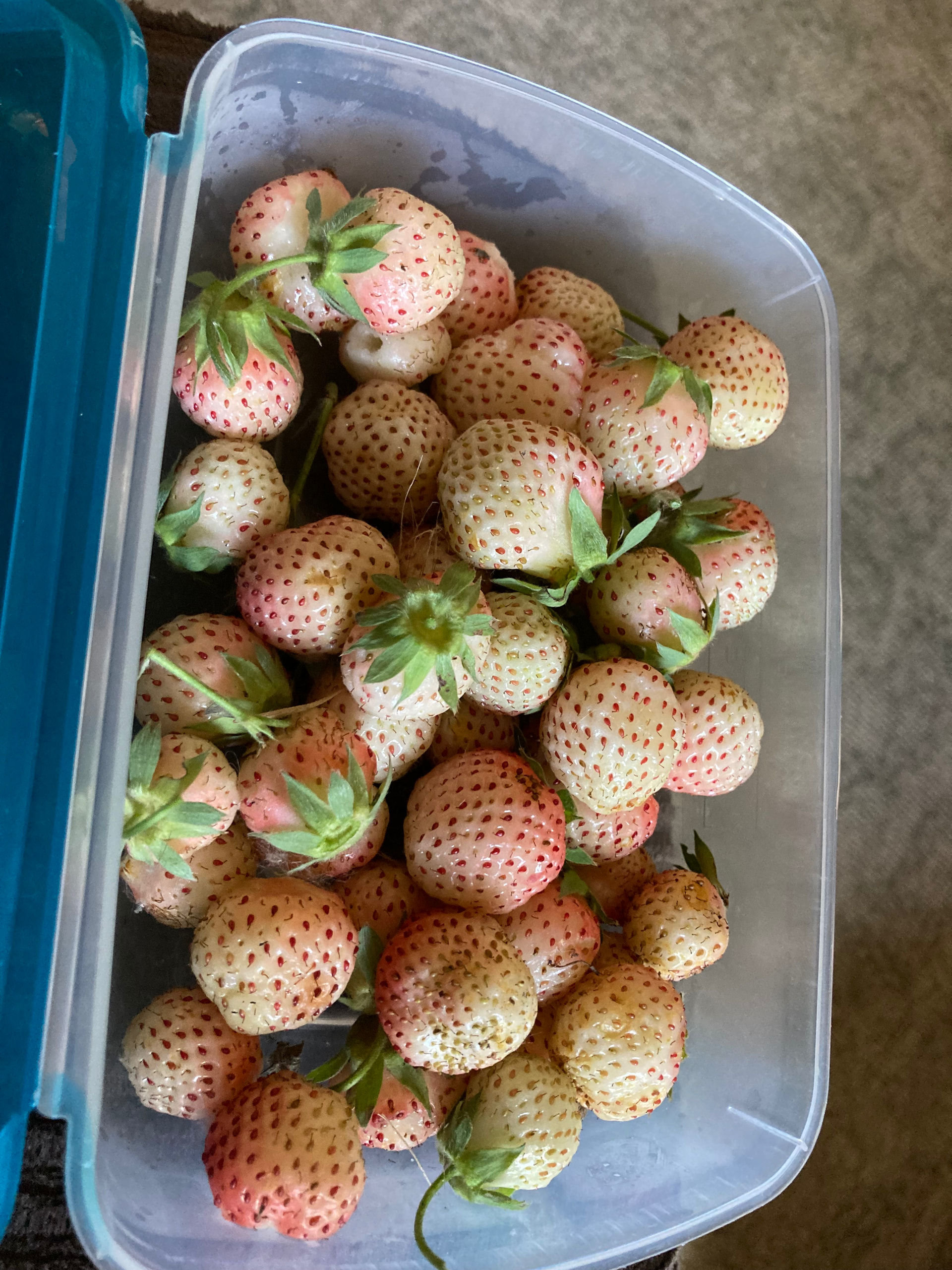
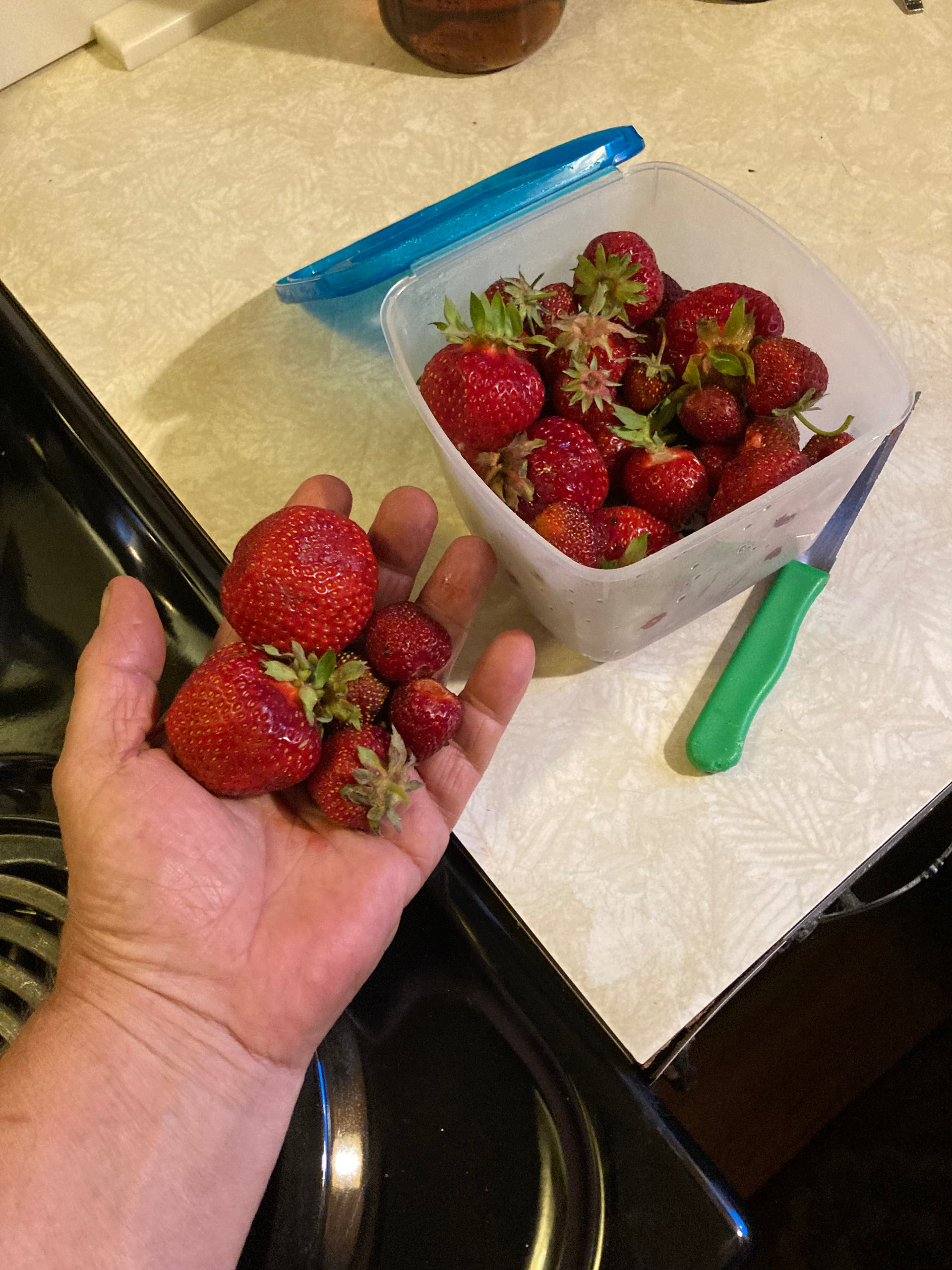
On strawberries I found I don’t need many if any pesticides. Some of the heirlooms are resistant to fungi. The main problem I have is gray mold. It’s been gone for ten years now. It just stopped or the strawberries I grow now are resistant.
White D pineberry

Archer strawberries

3 Likes

Thank you Drew for the kind words! I remember when you were getting started. It didn’t take very long for you to start posting pictures of the wonderful looking fruits you grew. (like the ones you posted above). You caught onto fruit growing super quick.

I remember the pics from your bounty. Probably like a dozen years ago (we were all on the other forum then). Hard to believe time the time has flown by. I bet those strawberries in the photos above taste heavenly!

2 Likes

unfortunitely gray mold is so bad here i have no choice but to spray to get a crop even though i grow the most disease.resistant varieties. im going to try putting freshly sawn cedar shavings around them just before the fruit ripens. cedars anti fungal.

1 Like

That might be true, but regardless you’re ruling out eating both organic and conventional produce. Organic farmers use pesticides, often in very concerning quantities given the toxicity of many of them.

  • Spinosad is much more broad spectrum than its marketing suggests. The concerns about how synthetic insecticides are damaging to pollinators are equally valid for spinosad, if not more so since spinosad isn’t systemic and requires much higher application rates and frequencies.

  • Pyrethrum is a neurotoxin. It affects all animals, humans included. And it can cause significant off-target damage just like any other pesticide.

    Nicotine is far more toxic to humans than nicotinoids and poses the same environmental issues as neonicotinoid insecticides.

  • Copper sulfate is by far the most common organic fungicide and it is toxic. It causes acute kidney and liver damage and is associated with elevated rates of kidney cancer. The EU, which typically is far more ideologically aligned with the organic side of the isle, has recently imposed massive restrictions on copper sulfate after determining that vineyards in particular were causing substantial soil, water, and ecosystem damage with how much of this fungicide they were dumping on their farms every year.

  • And of course we can’t forget rotenone. An organic insecticide so poisonous to humans that has been banned in the US and the EU. That one really strikes at the heart of most organic-superiority arguments, that natural alternatives must be safer. No, toxic poisons are toxic poisons regardless of if the label says “natural, nature-friendly” or not.

I’m all for people being careful about what they eat and avoiding potentially dangerous foods, and I’ve no automatic approval for conventional practices either. Despite being an ardent defender of glyphosate and its safe use, I oppose its use as a desiccant for example. But the idea that organic food isn’t drenched in just as much if not more pesticides as conventional simply isn’t true, and it’s really not the case that organic pesticides are automatically safer either, especially when compared against modern synthetic pesticides.

I’m all for people growing their own fruits and veggies as well, to whichever extent they can and want. For one, that’s the only way to know exactly what went into growing that food, but what’s more, because if done right it means they’ll have more and higher quality food at less cost which to me is a much more important benefit. Min-maxing trace quantities of pesticides in the food you buy seems like a very nearly completely hopeless and useless waste of time IMHO, you’ll be healthier if you put that time and effort into working out or playing sports or even just learning an instrument or a language.

Traces of organic or conventional pesticides on food isn’t something most people should waste much time thinking about, let alone worrying about or spending extra money to worry about and virtue signal over. Heck, even just the packaging is almost certainly more toxic than any pesticide residue, yet no one gives a flip.

4 Likes

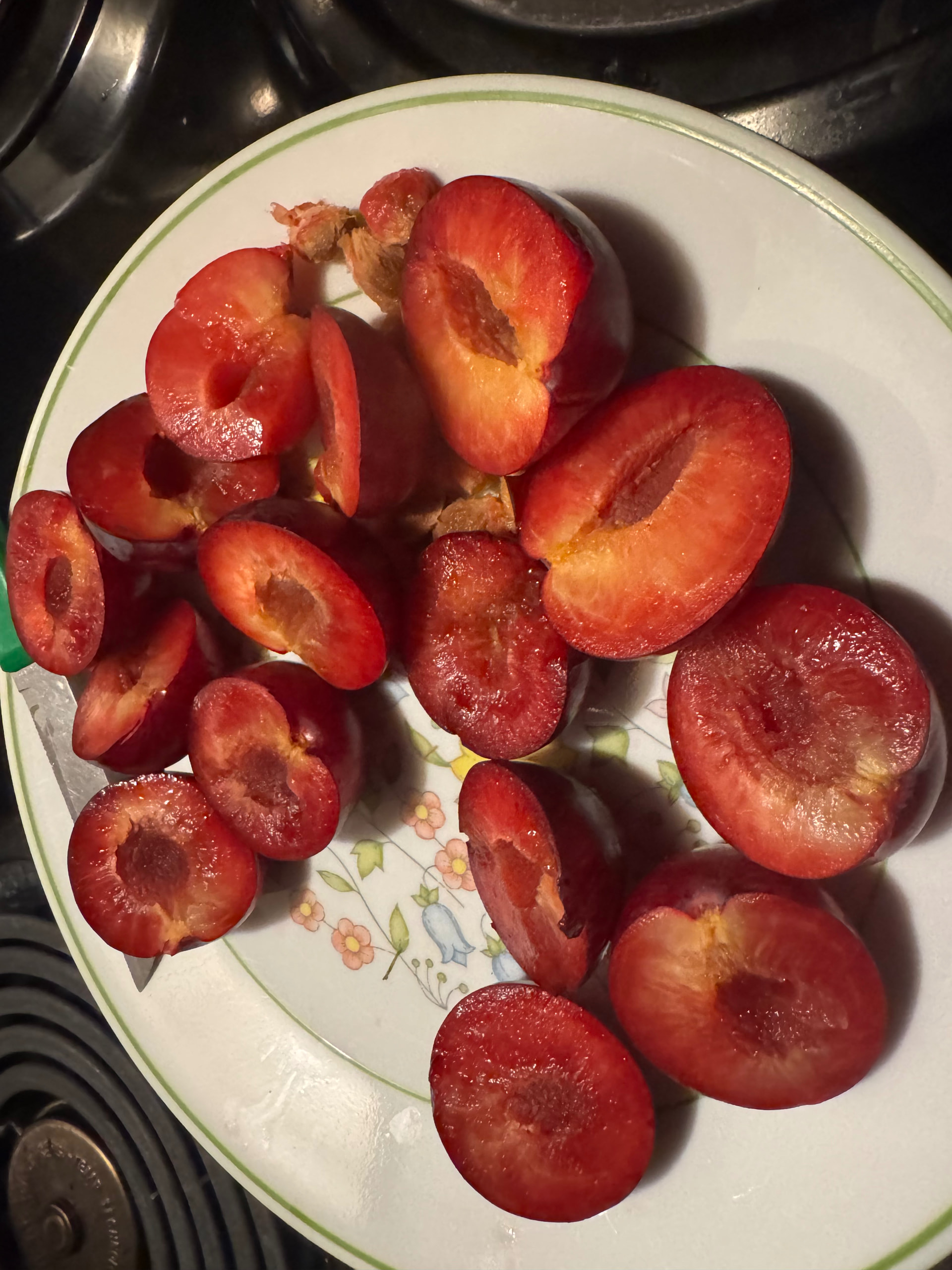
I was using a strong captan but I think in my area it’s more about conditions. It has been dry in the spring. I understand though as I have brown rot bad in this area and I lose some of my stone crop no matter how much I spray. I need better products. Luckily some stone fruit is resistant.

Dapple Dandy and Flavor King pluots from 2025 season.

As far as pesticides if it takes 30 years to kill me I’ll eat it all day. I probably have another ten years maybe fifteen so I’m not going to worry about it at all.

4 Likes

i get blossom end blight and brown rot in my cherries if i dont spray. i rotate between captan and immunox.

1 Like

I have had good luck with not spraying strawberries here in AL by growing them on black plastic in elevated rows. I do get a lot of rot if I grow them on the ground over organic ground cover like leaves or straw. The black plastic really dries them out quickly once the sun comes up.

2 Likes