May help someone along the way with a tree that they no longer want and turning into something that they do want.
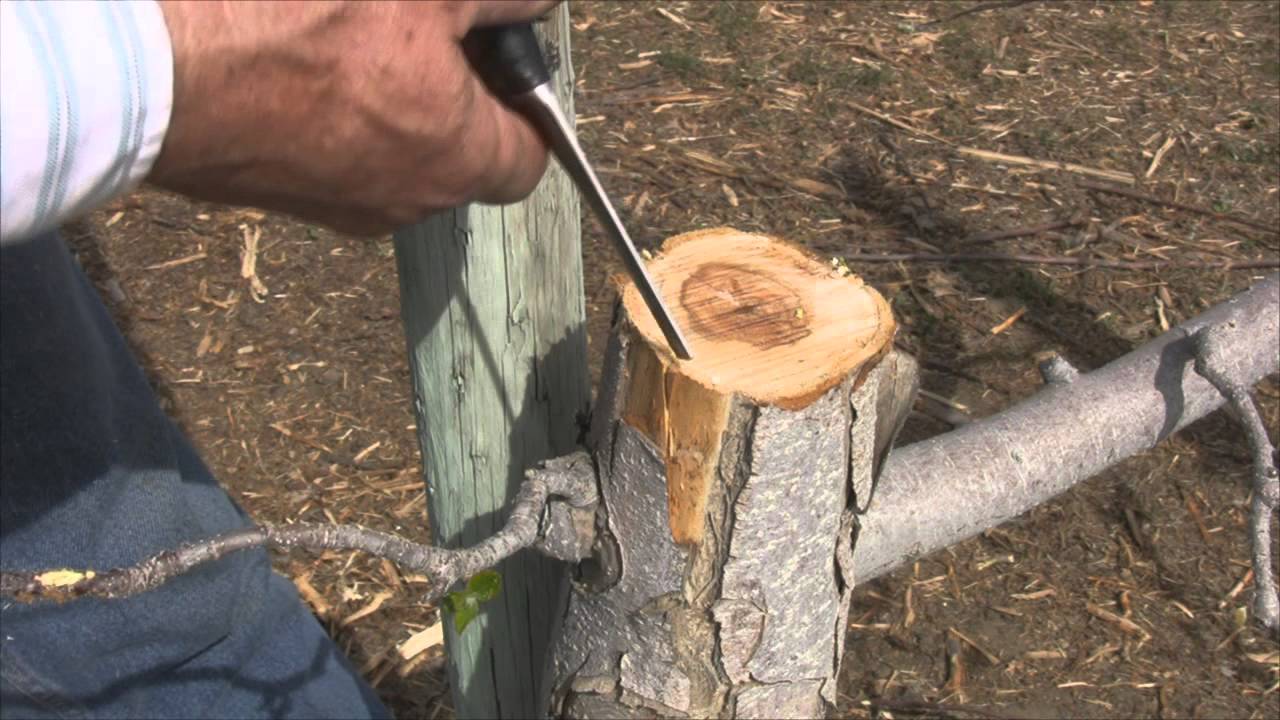
May help someone along the way with a tree that they no longer want and turning into something that they do want.
The goal would be to extensively test my ability to graft and not necessarily to make a franken tree or get a lot of viable fruit.
This tree is in an odd corner of my property and any fruit will likely be neglected anyway.
This would essentially be my training tree.
The fact that it is Apple, and apple seems to be fairly easy to graft, and it has a lot of top growth where I could attempt grafts to laterals and water spouts, makes this what I would think would be an ideal practice tree.
That is cool. You could graft apple{or crab apples} varieties with showy and colorful blooms then.
Prairie Rose almost looks like a rose. There are many others though.
Sounds like a great idea,I have used that type of grafting tool for years. Haven’t replaced the blades yet(I have them on hand).
Pawpaws mostly, very soft wood, and that blade doesn’t have to work hard at all.
Mulberries can be good too, but go for newer softer growth.
I have used that tool on pecans/hickories as well.
I would think if there was some pruning done so the tree pushes more growth, and to the scion as well. I think if you graft onto water sprouts youll get takes. Great idea to practice on.
You can always prune later and get more tries.
On the Chinese grafting tool; the omni cutting blade delivered the best takes for me. It makes taping up far, far easier. The v cut is hard to keep together while taping. especially out working on a tree in a yard.
Suggest find a grafter near you to put on one or two bark grafts (on waist-high stump) and you put on 2 or 3 other bark grafts. Assured of success.
Technically you’re the closest experienced grafter I know LOL
I don’t think you should assume you’ll be terrible. I thought I’d have low success rates but I was pleasantly surprised.
On one of my practice trees I did what you’re talking about and grafted to watershoots. I then tied or used a spreader to bend them down in their second and third year. Since it went well, I am trying to make a frankentree!
Of my practice trees (there were 3) the crabapple was my lowest success tree - I don’t know why. Maybe it is a weird type and not fully compatible or something. Even scions that seemed initially successful just kind of stopped growing. I heavily thinned the tree and I’m planning to try again this year. Who knows…
You haven’t seen me change a light bulb… and those have threads.
Don’t get me wrong, I’ll give it my best go, and I’m excited to try now that I know I have a practice tree, but given the neurological disorder I have, I give myself a 50/50 chance I’ll destroy the graft union before I get the grafts secured.
You’re near Annapolis right?
Do we have any grafting members here who live in Southern Maryland or near Annapolis? I’m not driving long distances recently due to eyesight.
I’m not asking you to make the drive, I was just kidding.
Yep, just south of Annapolis.
According to the member locations map, the closest active members are you, Scott and Zendog. there are others closer who haven’t been active in a while.
I’m sure if I reached out to the local extension office, or my old contacts in the Master Gardener’s group, I could track someone down for when I topwork the mulberry
Make sure to let it bleed appropriately so the graft takes. Mulberries are slightly more challenging for that reason from what I’ve read.
I might be able to do it, nice sunny day first week of April. Serious. Check with me in March. I love showing people bark graft. Neal Peterson makes his scion cuts against a wooden board on the ground using an Exacto knife, might help.
@hambone thank you so much for the offer. If I can get my hands on some girardi scion wood I’ll let you know.
Believe it or not I planted a whole prairie fire crabapple tree on the opposite side of my property as an ornamental so once that is a bit bigger I might have another tree to practice on. I was walking my property the other day and think I may have found another full size crabapple that has the trunk growing into a black cherry too, so that would give me a 3rd practice tree.
I already have an order in with 39th parallel for some custom bench grafted pears so I just ordered apple scion wood to add. going off the more bulletproof lists I have seen from you and Scott, and some correspondence with the owner of century farm orchards, I added Yates, Arkansas black (spur), and black limbertwig. Randomly I also added butterball, as it sounds interesting. I will also try to get my hands on some of the apple crabs from blue hill wildlife, particularly candy crab, and cobbler crab, as they sounded interesting and pest/disease resistant (although that remains to be seen).
These are really just practice grafts so I’m just hoping they survive. If I get fruit that would be nice, but that’s not the overall goal here.
I’m looking forward to giving this a try.
I always thought the apple name Butterball was an interesting one to have in an orchard, just for the name itself. Good luck with doing your grafting here in the future.
Hi Mike
I can suggest you try a method to protect
your left hand from knife cuts(assuming you grasp the knife in the right hand).
If you take a flat piece of plastic that covers your hand while you hold the wood you are cutting, then drill a 1” diameter or smaller hole large enough for the rootstock and scion to pass through, you can use that as a shield while you perform cutting the graft union. Once both rootstock and scion are cut you are ready to put the knife away while you give full attention to securing the graft.
After reading Trev’s experience above I suggest cutting the crabapple back enough so you can sit on a chair or stool to steady your cutting operations. The more you prune back the crab, the more energy you reserve to push your grafts. I have a number of great apple varieties for scions if you want them. Best wishes
Dennis
Kent Wa
A friend in MIssissippi puts the hand-held scion through the middle of an old CD then whittles.
Good idea. 
Try the fish cleaning gloves to protect your left hand. The material is kevlar I think.
I agree in principle but a glove may not be necessary. The most vulnerable surfaces would seem to be the tips of the left index finger and thumb. I wrap those fingertips with adhesive tape.
I do mostly bark grafts, whip-and-tongue grafts, and cleft grafts. The riskiest cuts are cuts into the rootstock when it is held in the hand (e.g., bench grafting apples) for either W&T or cleft grafts. A key fine-point of technique is to push gently with the left while the right (knife) hand is stationary. Never apply increasing pressure with the right hand because that increases the risk that the knife will suddenly slip through the scion into the hand.