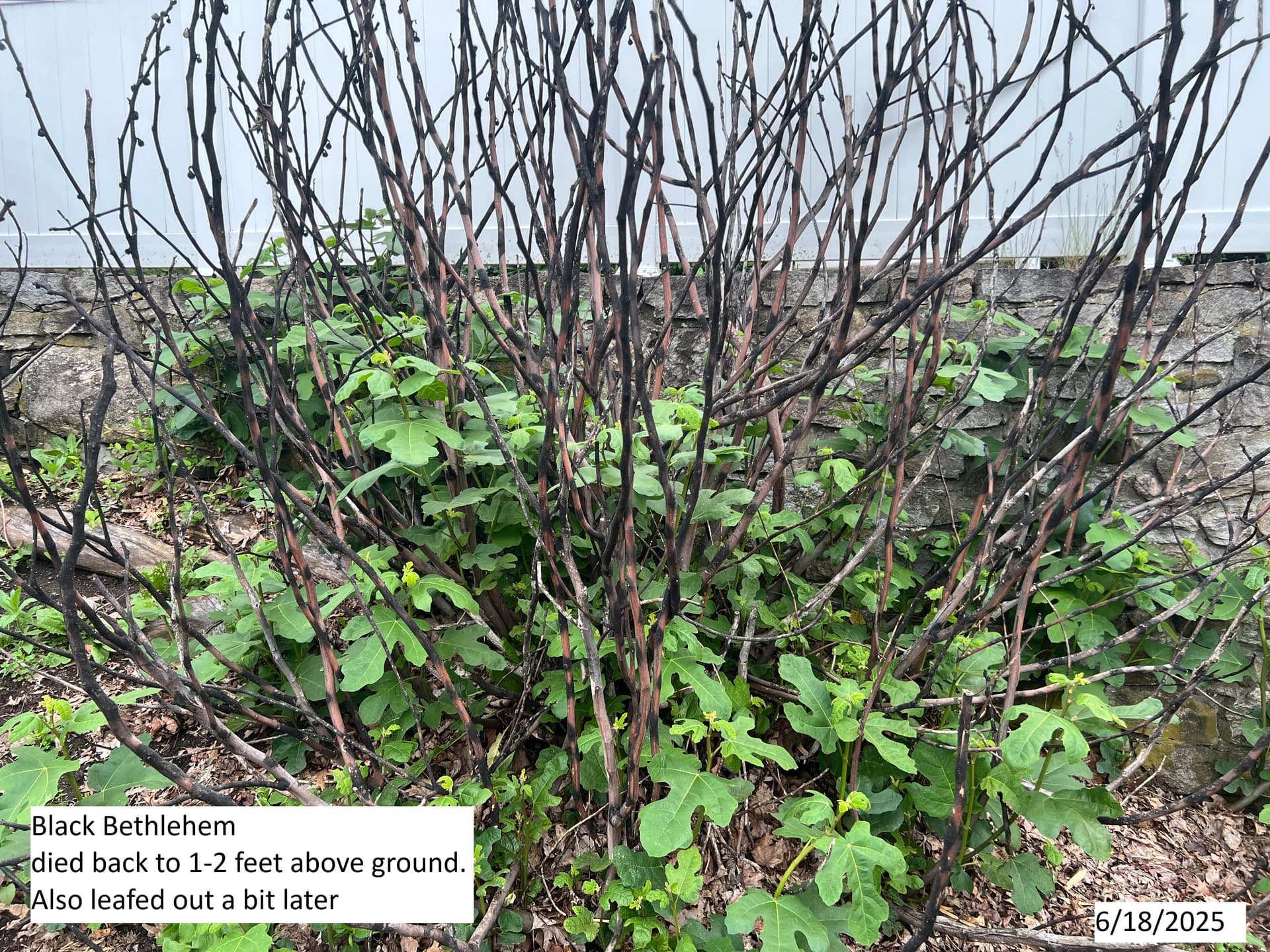
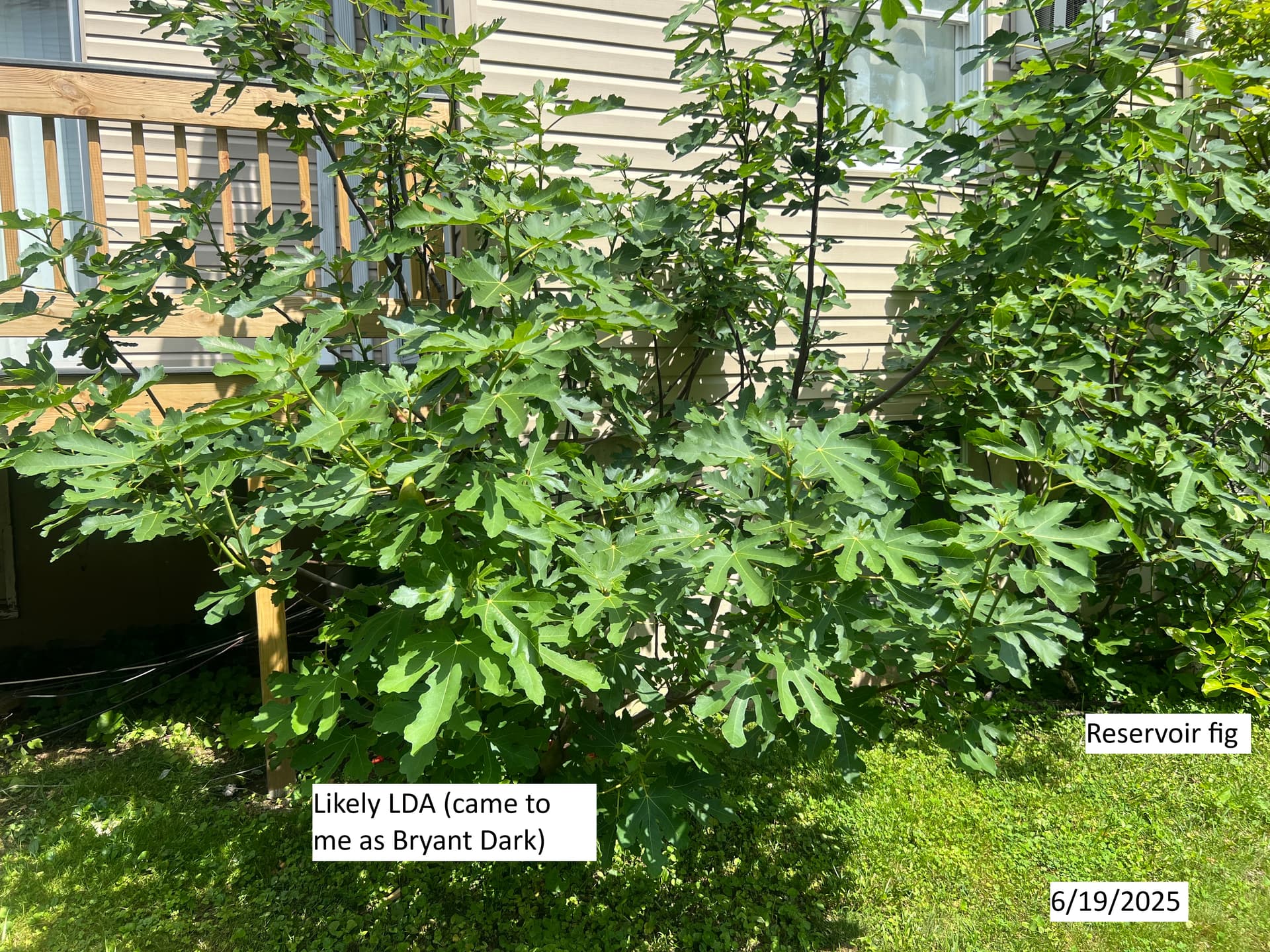
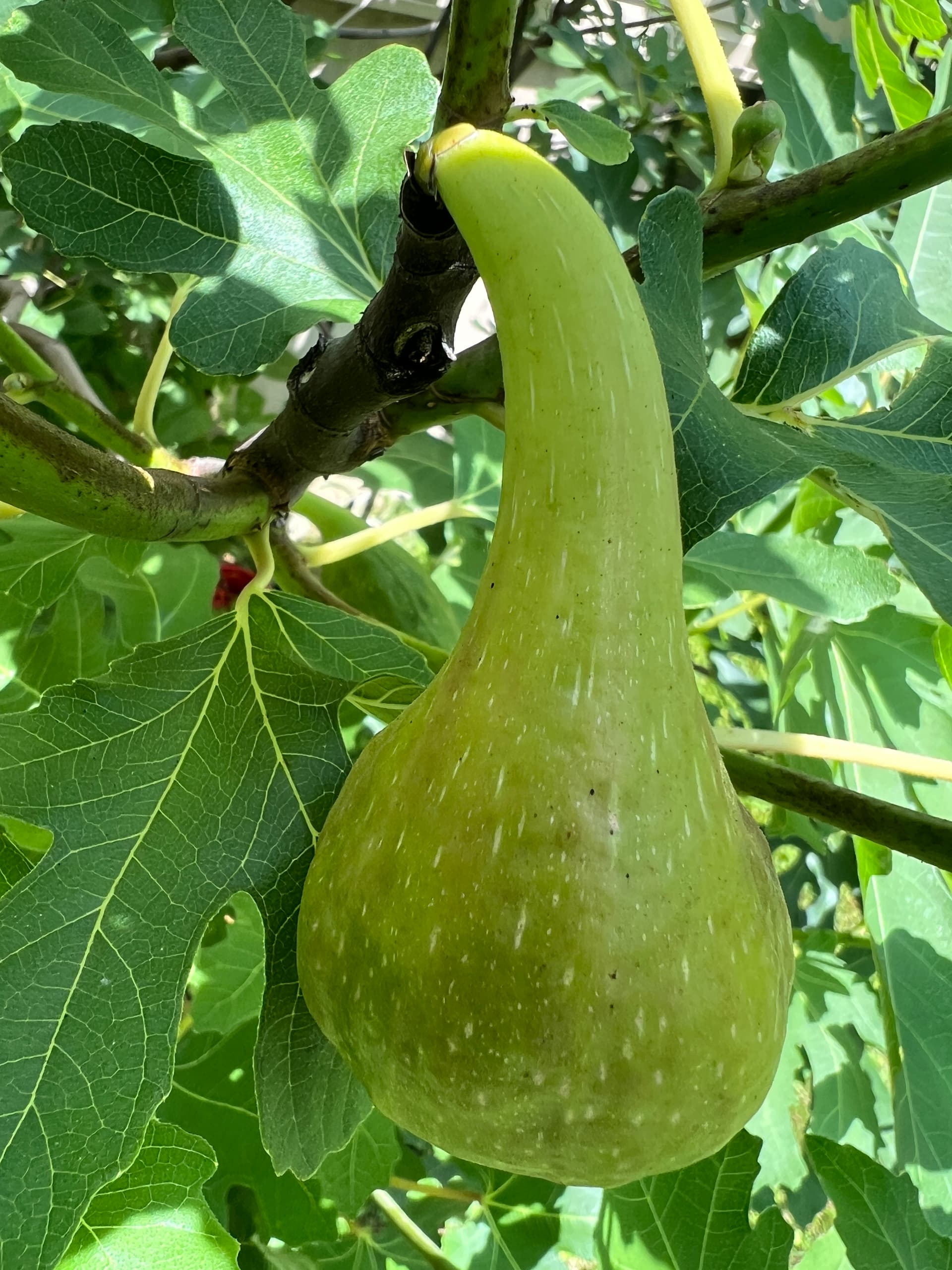
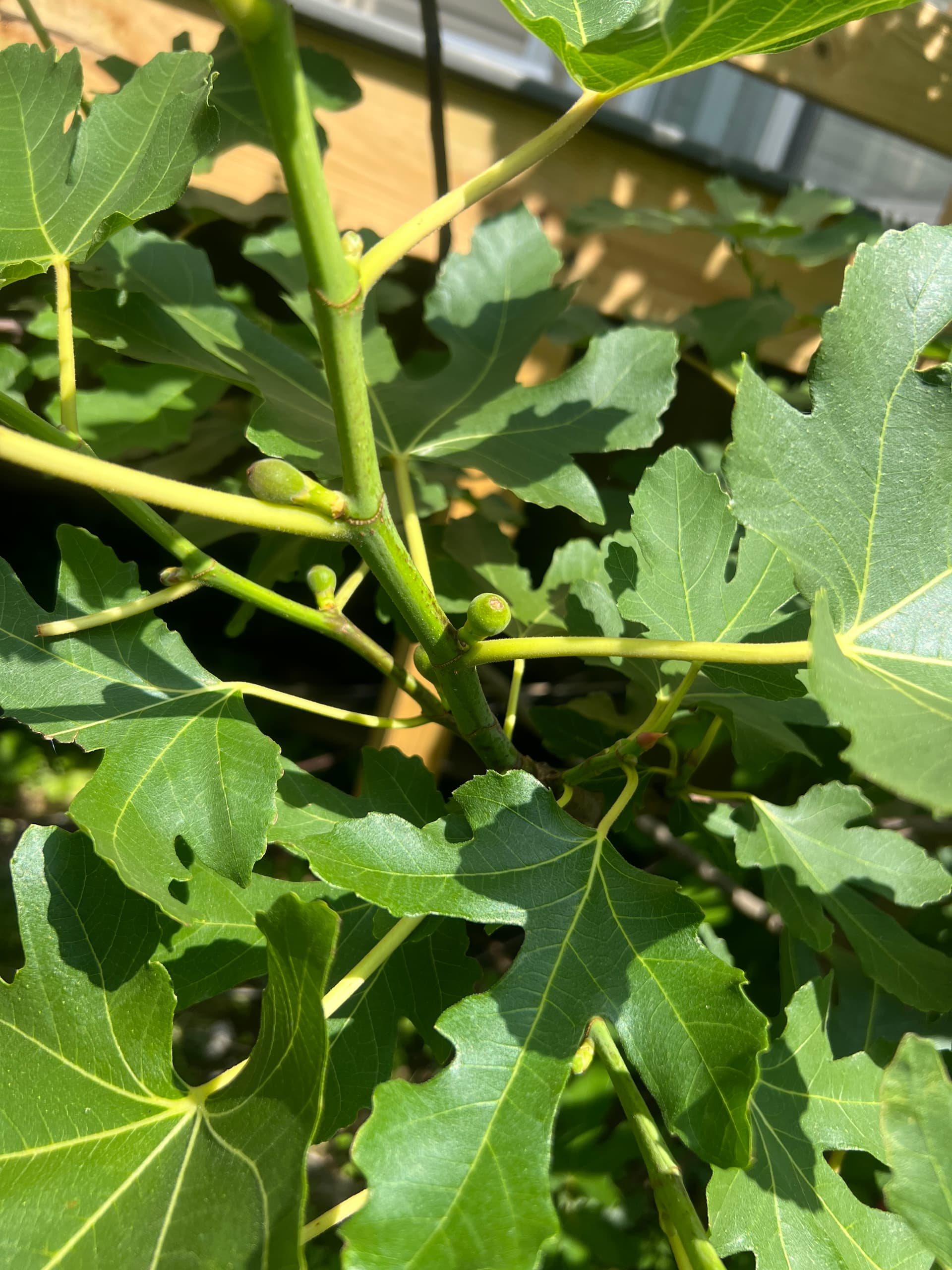
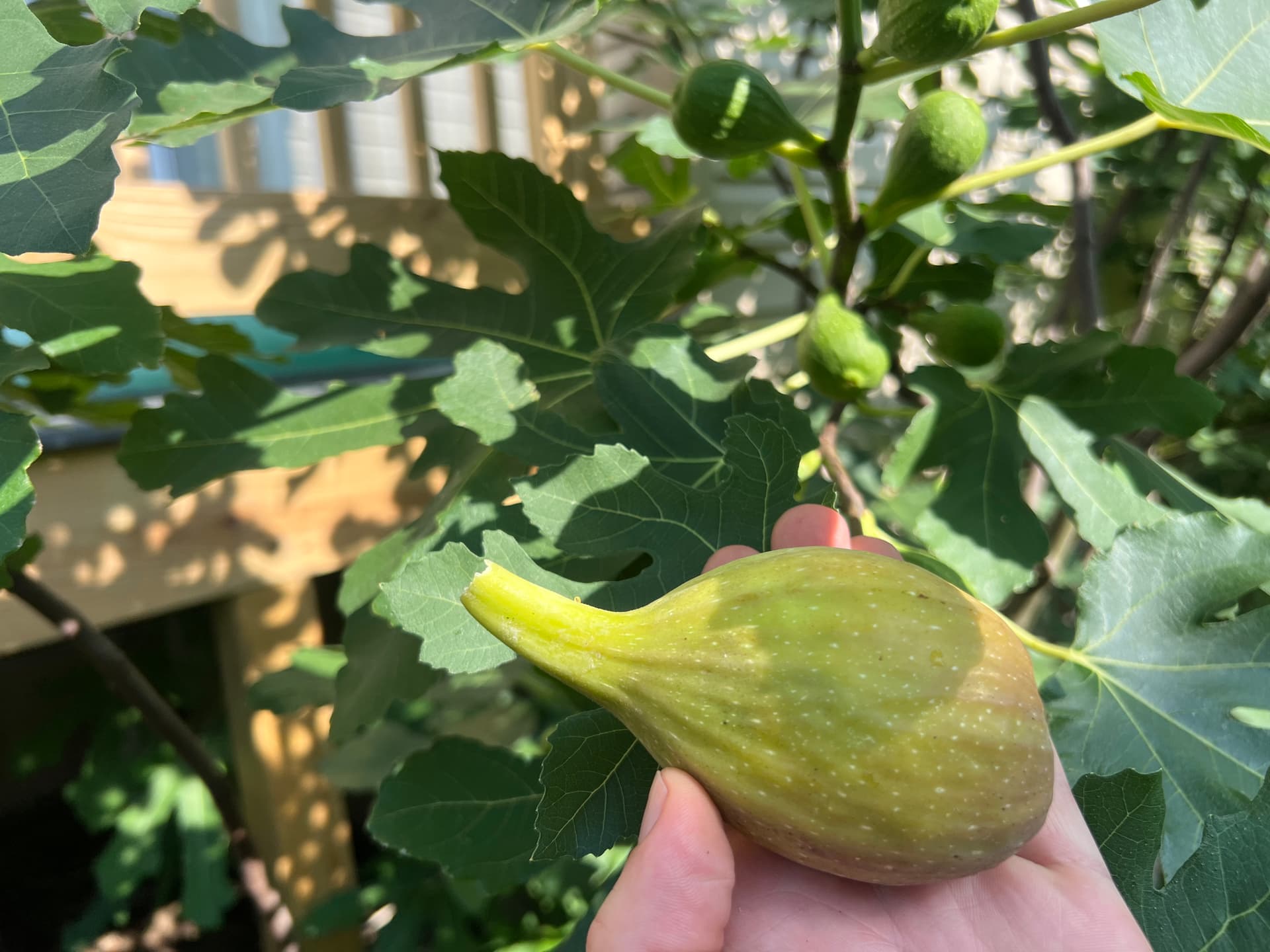
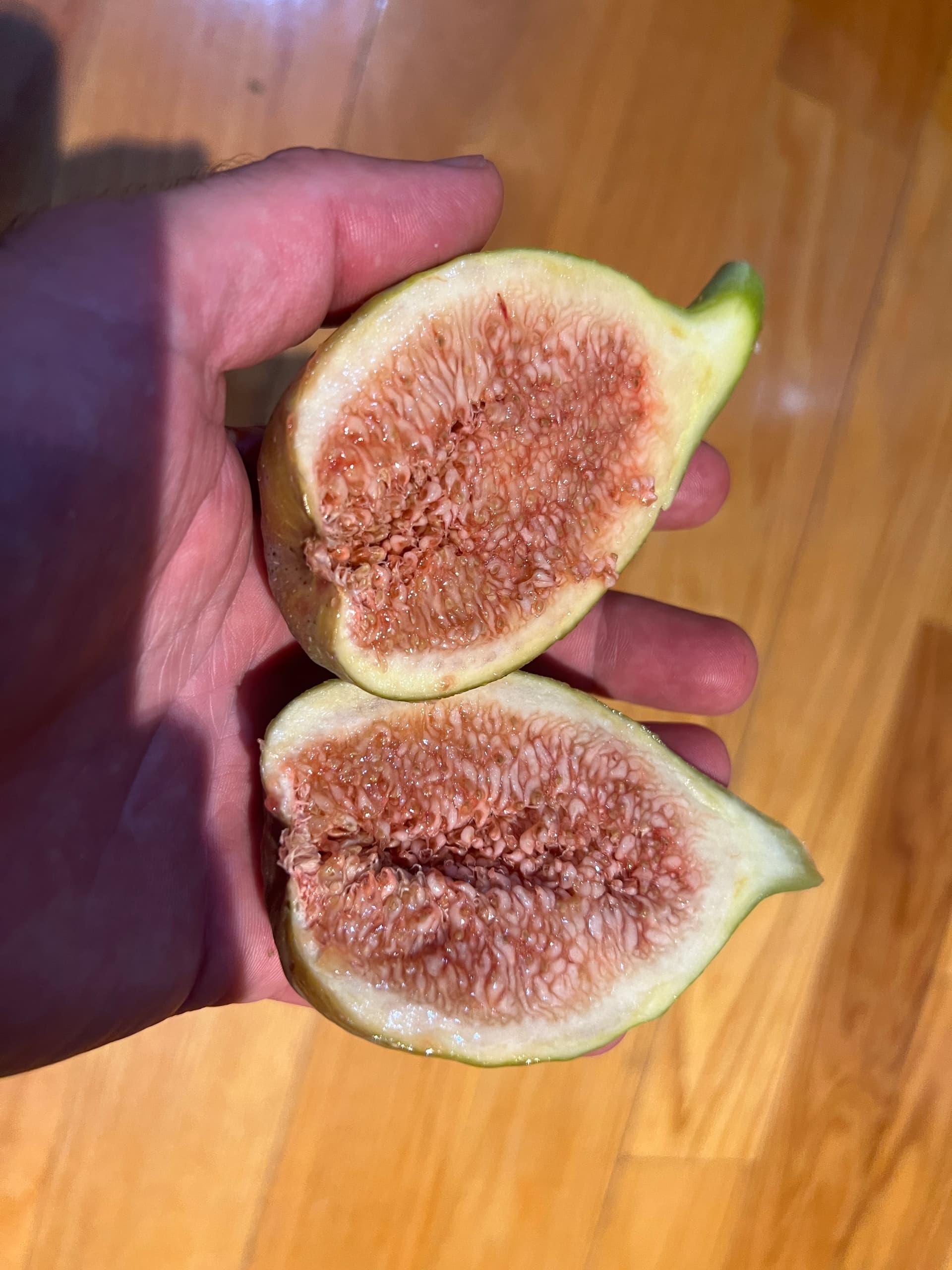
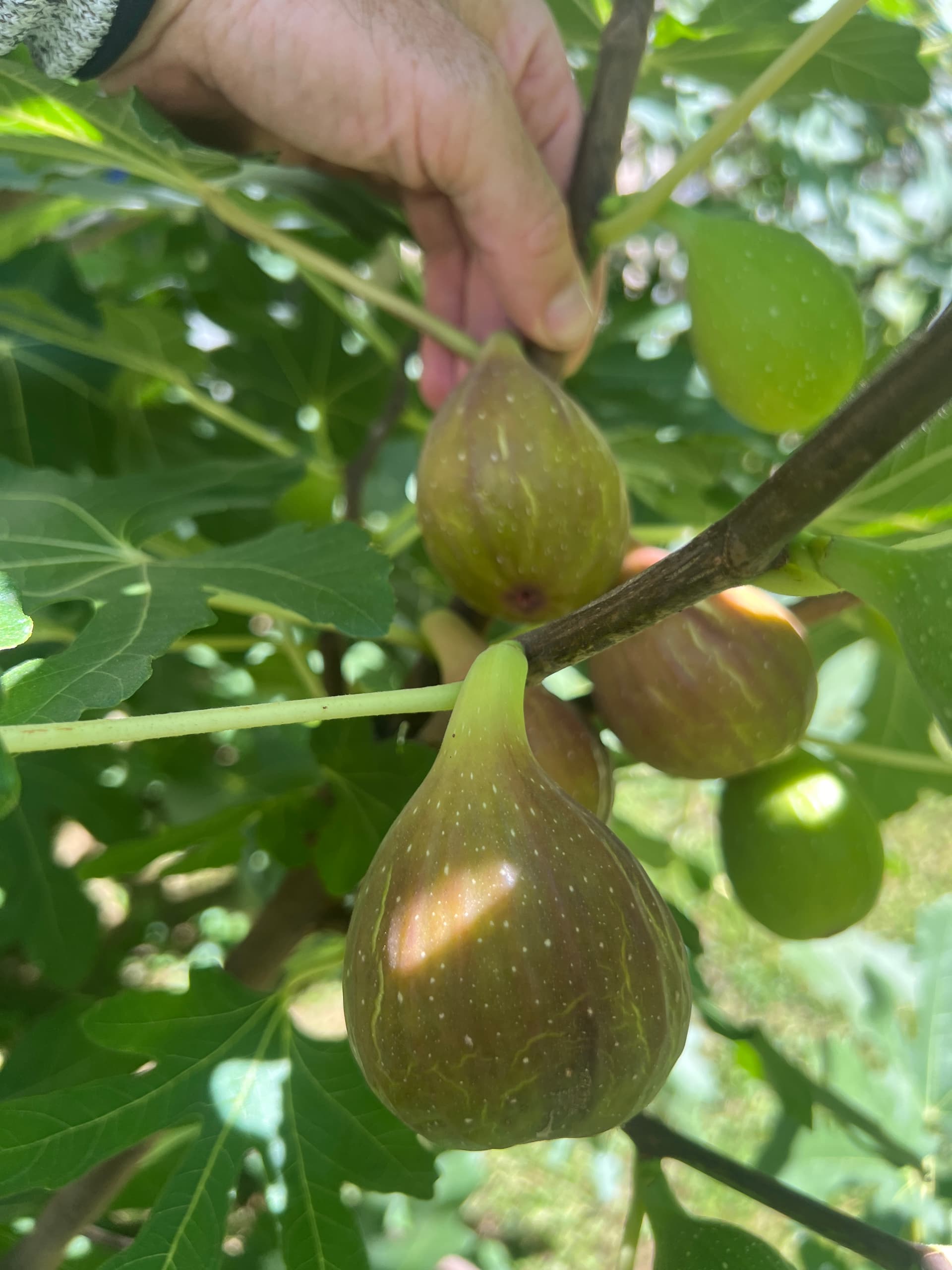
I think the 3rd ones (the really big one and the one with a bite) were OK, but the other two were early. For the brebas, there aren’t many and a bit more animal pressure, so I’ve sometimes pulled the trigger a bit early. But I agree- ripeness makes a massive difference in quality.
I checked and the only year I got any was 2020. Maybe the lack of human activity from covid resulted in less particulate pollution, and AJH getting just enough sun to ripen here Or maybe I had more time at home to prune and pinch buds…
They did crack badly and were fairly ugly, still tasted good.
That kind of cracking is environmental, probably related to cool, damp conditions typical of autumn in New England. In warmer, drier conditions, a ripe AJH would look like a smaller, greener version of your original Bryant Darks.
I’ve been tempted to try better winter protection, but I’ve also been working toward lower maintenance. i used to cart the figs into the garage for the winter, but there was little or no reward.That is why i stuck two scion in the ground on a south wall and let them go. i got rid of the potted figs.
I hear you on that. Covering plants can be a hassle. It also occupies my mind to an unhealthy degree, especially when I’m on vacation and obsessively checking up on the reports from my weather station. So the only steps that you take are cutting them to the ground and then mulching above the roots? That’s pretty dang low maintenance. If you are getting enough figs to be pleased I can totally understand not upping your game. I suppose another option is to just grow more and maintain them the same way. At least figs pretty much take care of themselves the rest of the time. Particularly in a place like Michigan where nature takes care of most the watering needs.
I think that even when the “slow to leaf out” ones do grow back from above ground level, the cold must have killed the breba figs (or whatever tiny bud they come from). The only type of figs I see with any brebas are the “Bryant Dark” (likely LDA). Those brebas look close to ripe, probably sometime in the next month.
All of the “close to building” figs ended up leafing out, but some took longer. I don’t see any figs on those yet either, even though the LDAs have small main season ones forming.
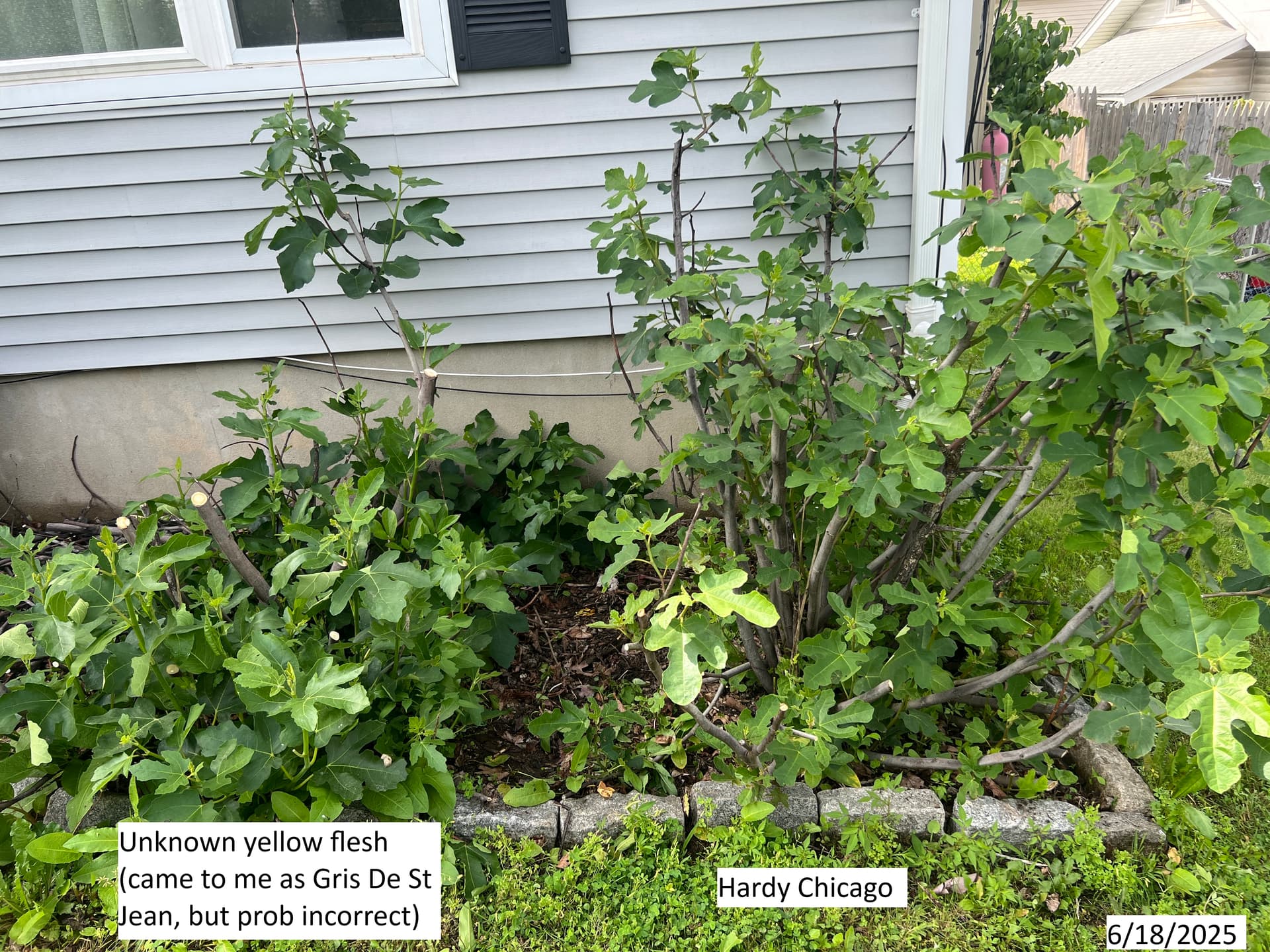
Does it help much to prune off the dead tops? I haven’t done it yet in the 1st pic (the Black Bethlehem), but did do it for these figs:
Here’s updated pics on the BD/LDA (probably LDA) from my last post. I’ve been eating the Brebas for over a week, but there aren’t that many of them on the bush. Maybe 1 ripens every few days. But they are tasty, even when they don’t color up. I pick them once they get soft.
well i planted out a Chicago hardy and a black Bethlehem i propagated last year, by the sunny west side of the house pretty near the foundation. they’ll get minimal protection over winter (I’ll probably bend branches down and cover with a little agribon and some pine needles), maybe they will make it through winter from the warmth of the house nearby.
How sweet are those figs? Longue d’Août are supposed to be honey sweet, one of the most sweet figs there is, and yes they are supposed to be very cold hardy
I think the brebas were sweet, but the recent main season figs have been even better. They can be eaten as soon as it softens and still be tasty even when pretty pale, though they are better when they darken a bit.
In the last week I’ve picked 4-5 lbs of main season figs from this one bush. I have a few other LDA at other properties which are close to ripe, but not there yet. Among other fig varieties, almost none (2 small reservoir figs on the bush next to the productive LDA) have ripened yet,
Sure, thanks. I’d be happy to try it someday and hopefully confirm the variety.
We just went under contract on a new house (about 10 minutes South of my current one) which has a nice long stretch of open ground in front of South facing wall. I’ll probably keep some for a potential greenhouse site, but there is plenty of space for some figs in an ideal location. One will definitely be another LDA, but I need to figure out what others to put there. Maybe a Strawberry Verte or Adriatic JH (I’ve heard they are similar/same), as the one time it produced I liked it a lot. Any good recommendations of something particularly tasty which has a chance of surviving in a good microclimate in zone 7A (~3-4 miles from the ocean)?
The following 2 figs sound particularly tasty to me based upon what I read about them, and they are more cold hardy than what you need, and both have Celeste type of fruit
‘Campanière’ it’s wood hardens unusually fast, which makes it so it is unlikely to be out of dormancy during a freeze. I am not 100% sure, yet I think that it’s cold hardy enough for your climate. It sounds particularly tasty. Campaniere – Chesapeake Figs
There is also
‘Ali Pasha (Али Паша)’ is arguably the best ‘strain (mutation)’ of ‘Michurinska 10’ (Мичуринска-10) that there is, and probably the most cold hardy of them all as well. It’s most likely the variety being distributed as ‘Michurinska 10’, it should be cold hardy enough for your climate. It’s definitely said to be tasty in a hot dry climate, not sure how tasty it would be in a climate like yours, see here Michurinska-10 Fig – Kremp Florist
If you keep it low during the growing season and pile compost and mulch steeply around some of the wood, that low wood you save will fruit sooner than new wood from below the soil line. You can use fabric staples to hold small wood close to the ground before covering.
‘Green Michurinska’ is another great alternative to ‘Strawberry Verte’ and to ‘Adriatic JH’.
Both ‘White Madeira #1’ and ‘Green Michurinska’ crop earlier in the season than the other two, and ‘Green Michurinska’ is definitely more cold hardy than the two you had in mind.
 Or maybe I had more time at home to prune and pinch buds…