last spring i forgot to cut mine and they just came back from the roots.
1 Like
If you are set on planting in ground, focus on fig varieties that will grow quickly in the late spring and ripen fruit very early.
There are a multitude of threads on OurFigs on this very topic. There is a wide variety of options discussed in detail on there.
In zone 7A I settled on these 5 options for in ground figs. These 5 have a good variety of flavors and all ripen early in the season. They should probably work up to Z6.
-
Ronde de Bordeaux - early - cold hardy - Flavor: Bordeaux Berry
-
Malta Black - early - cold hardy - Flavor: Dark Berry
-
Florea - early - cold hardy - Flavor: Brown Sugar
-
Green Michurinska - early - cold hardy - Flavor: Adriatic Berry/Strawberry
-
Improved Celeste - early - cold hardy - Flavor: Sugar
“Cold hardy” in this context means that the roots will survive and that the plant will produce fruit on the new shoots that emerge each year after a die back.
That being said, the more you can protect the fig over winter the better. The way @TNHunter does it looks superb.
The video below is an interesting method of growing figs close to the ground so that they’re easier to protect over the winter. I’ll be trying this method this year. The video is made by Peaceful Heritage nursery. The owner @Blake is also on this forum. I’ve purchased all my named fig varieties from there. Great products. You’ll find the majority of the figs on my list available there.

6 Likes
I’d prune just the dead wood off. Leave everything that’s alive unless you’re pruning to a particular shape. Prune in the late late winter or early spring.
2 Likes
Thank you for the plug. We had -6 F on the farm this winter, and 100% survival of all in ground figs in the high tunnel espaliered as shown in my video.
I’d also add to the cold hardy list:
Gino’s Black
Italian Letizia
Black Bethlehem
Smith
Peter’s Honey
Celeste - actually super cold hardy in my experience.
4 Likes
Great video thanks!
Had no idea Peter’s Honey is cold doable. I thought about trying it. Does it have another name it goes by?
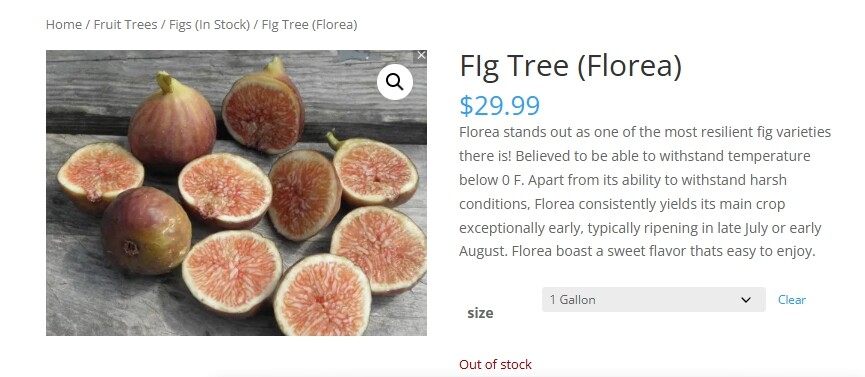
Never heard of it. Looks like it is related to a Brown Turkey. Isn’t it amazing how so many varieties of figs have come about?
This season I’m testing in-ground figs. I’ll be dead before I ever win the lotto and can buy some land and a greenhouse, so I opted for in the ground figs. I also tried potted figs years ago and was no good at it. I also tried in-ground figs back around 2009. But I planted them near the house for warmth, and it was also in the shade. So, it was a bust. I didn’t know they need lots of sun to fruit. I will work on winter protection. I got 6 months to figure it out.
I’ve got…
CH
Brown Turkey
Violette de Bordeaux
Olympian
Still looking for a developed Celeste. I didn’t want to start out with a mail order fig twig.
That’s the score!
2 Likes
Dotatto
Kadota
Banana
Pingo de Mel
Excel
Moscatel Branco
Peter’s Honey
White Texas Everbearing
Gota De Mel
Corynth
Yes, I was told deer don’t eat fig trees. But our deer are like goats and do. I put cages around all my trees until they are deer proof. (For eating.) Deer can still rub the trees and do once in a while.
1 Like
That is stupendous! You must have a forklift
I tried potted figs in decent size pots. I put them in an unheated shed, and they all died over the winter. Do you heat your barn?
Florea originated in Bulgaria, where it is known as Michurinska 10. It was introduced to the U.S. by a grower whose father brought the tree to the U.S. This grower uses the screen name Herman; I believe he may still sell cuttings. His actual name is Vasilie, initials “VS”. Back when provenance was more of a thing, numerous cultivars that he popularized had names with the appendage “VS” – so it was Florea VS, Marseilles Black VS, Vasilika Sika VS, and so on.
In one respect, Florea is the exact opposite of Brown Turkey – Florea is reliably among the earliest ripening varieties. Here it usually ripens a first fruit ~August 15. Only Improved Celeste and sometimes Ronde de Bordeaux rival it for earliness. It is also quite tolerant of cool conditions.
3 Likes
I had read that Smith is slow to harden off in Fall and as a young plant may reliably survive first few winters only in 8B or warmer without special protection. So I have held off planting one; happy to see you report it as cold hardy.
Did you get the VdB locally?
It’s a neighbors tree. I think he uses a tractor with forks to move it. He keeps it in a ~30x40 barn, unsure if he heats it or not.
We got close to 0 this year- 5 days of 10 or less (7 & 8 in Dec and 3, 8, & 10 in Jan). I think most of my figs in the open are toast to the ground, but ones that are located near buildings are showing some growth.
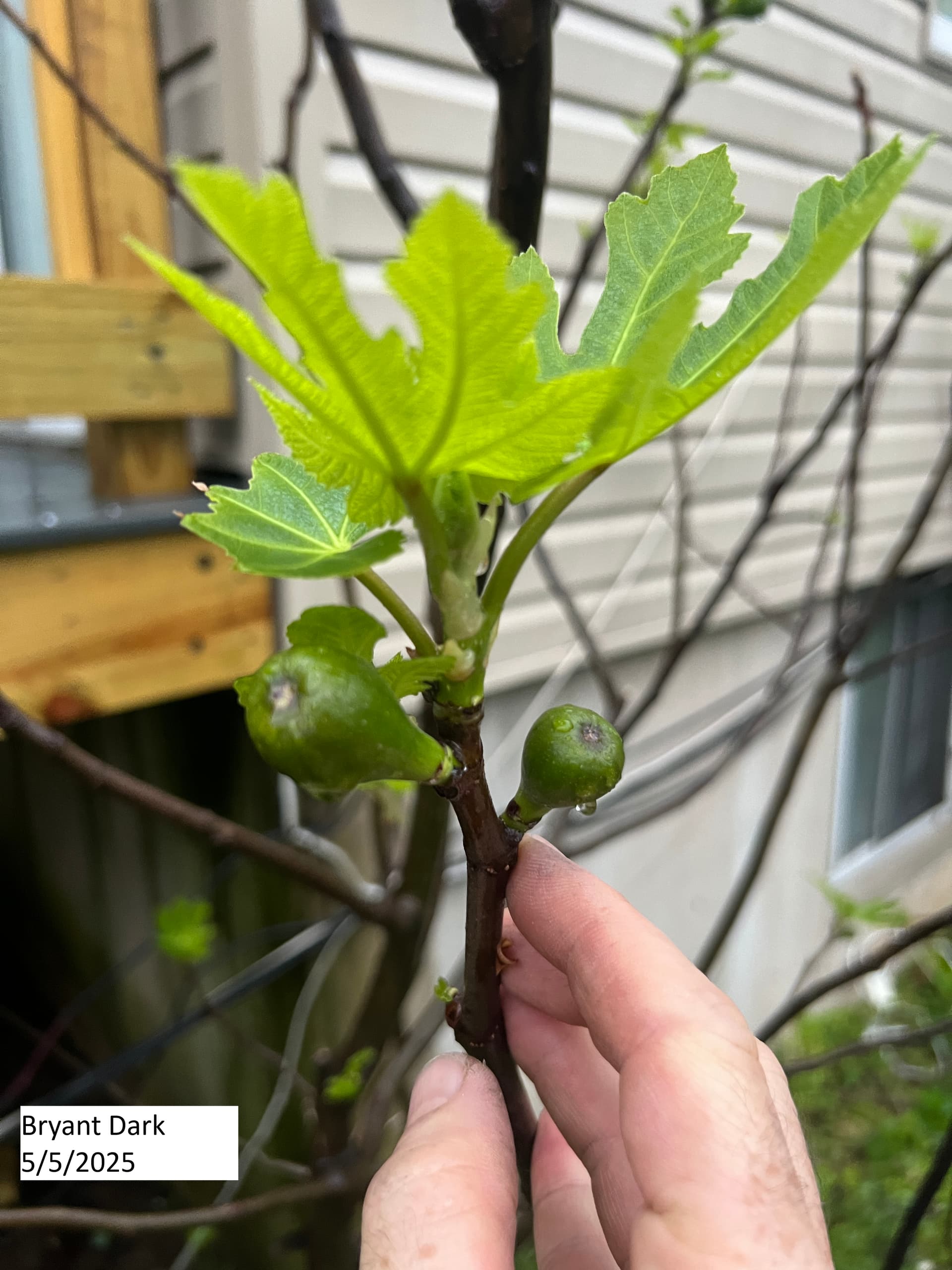
Today I noticed surprisingly large figs on the Bryant Dark:
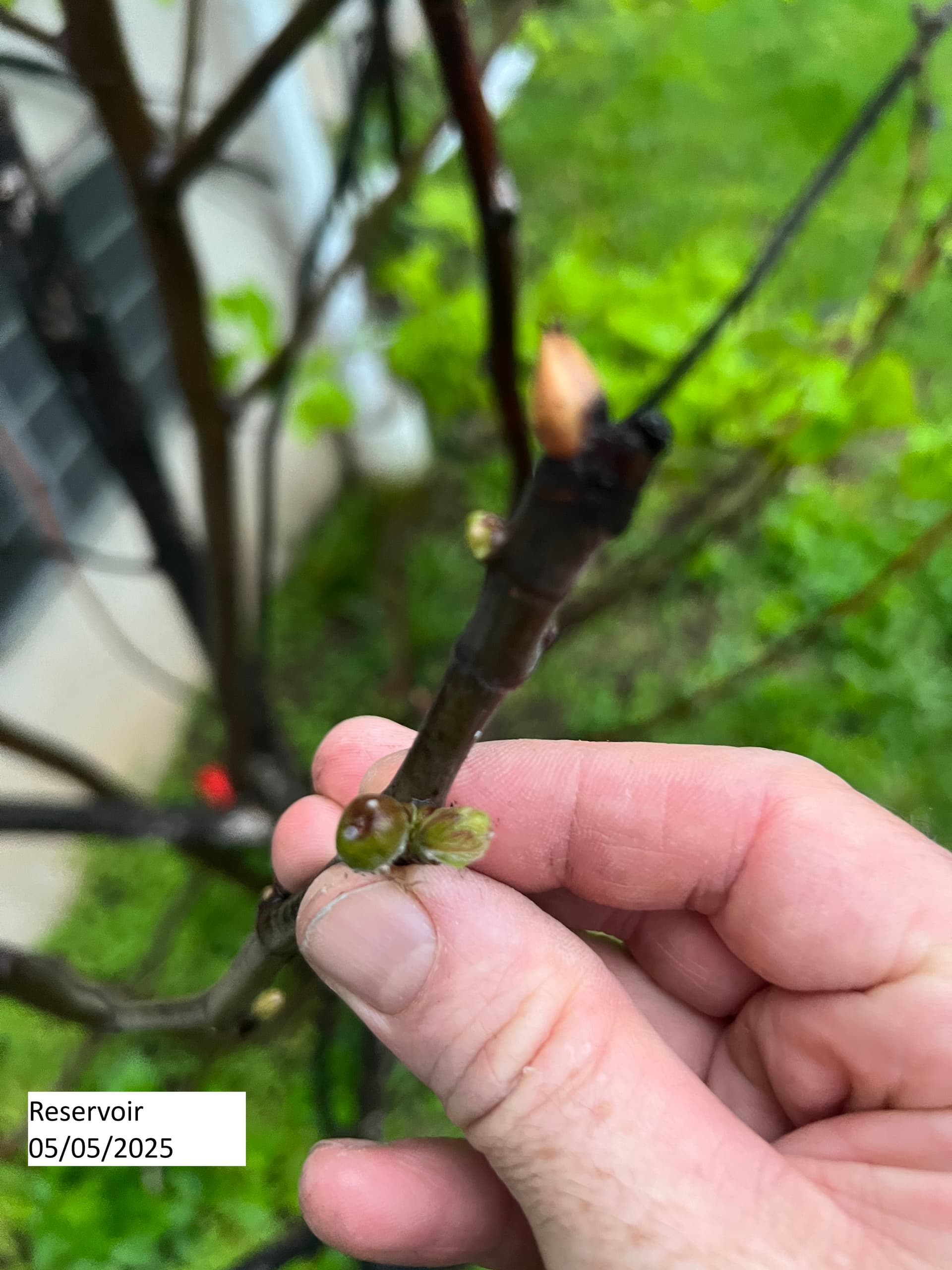
Right next to the Bryant Dark is a Reservoir. If anything, it is even more protected, but has more dieback and seems further behind.
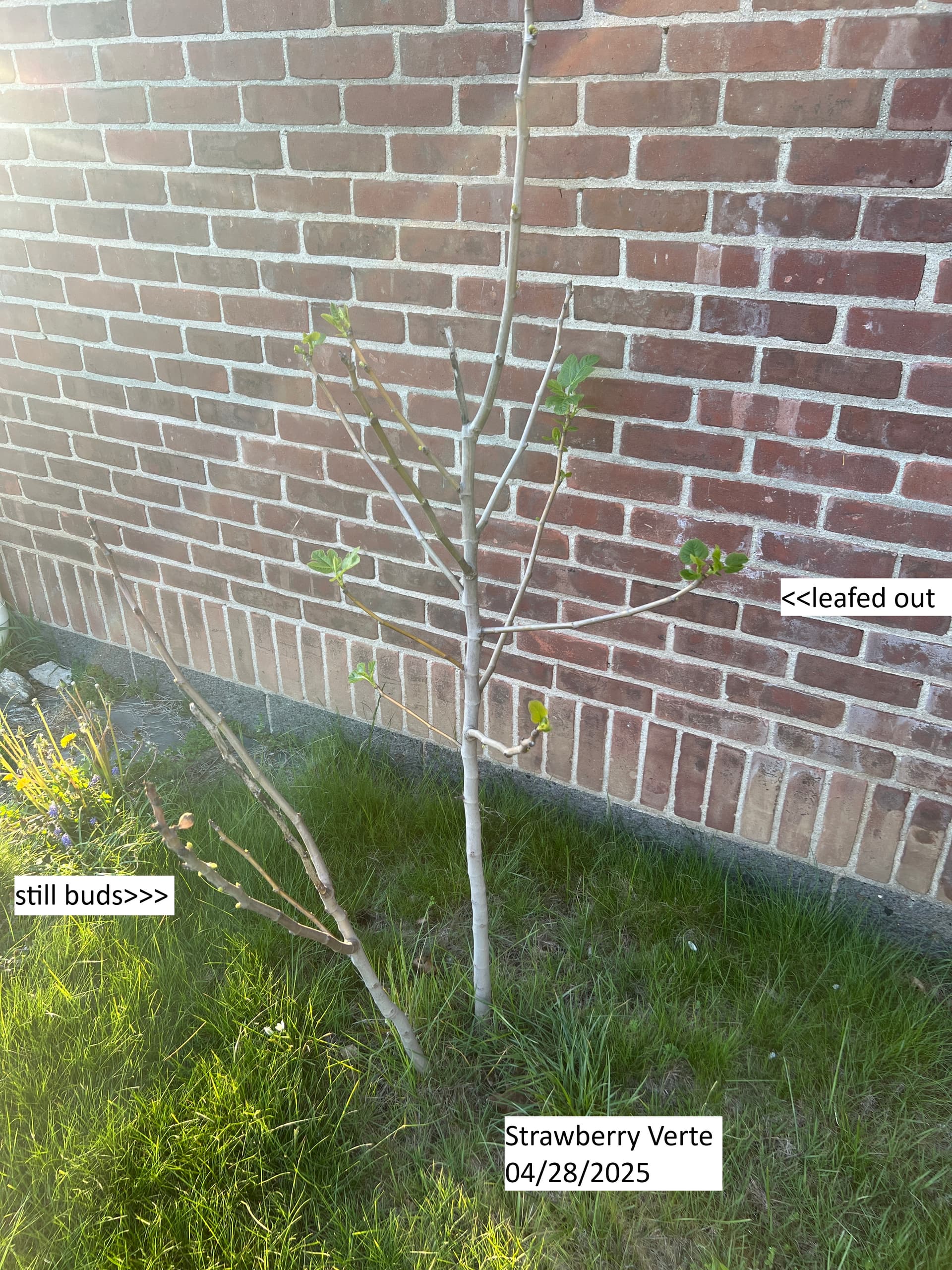
Here’s another property with a South facing brick wall. The part of the fig closest to the wall has already leafed out, while the part further away is just green buds. In this case, while both parts of it lived, it seems like it is the warmer spring temps near the wall which are causing the growth.
I’ve got more than 2 dozen figs (10+ varieties) growing at more than half a dozen properties and there seems to be a lot of variation on year by year basis. I don’t protect them, other than by planting them near buildings, so often they are growing back from the ground. In a hot sunny year, I get can get quite a few figs from the main-crop.
But in years with more clouds or rain, like the last 2, I get much smaller crops and only from some bushes. In these last two years, Bryant Dark has become my favorite. Huge, sweet figs and it produced in both years.
In fact, I think 90% of the figs I got in 2023 were Bryant Darks (from several sites). And they were mostly at the end of October or later.


In contrast, 2024 was a bit earlier, with a very sunny stretch in September which helped ripen things.

One person pointed out that this may not really be Bryant Dark, as its fruit are supposed to be a bit small, not giants. I’m not sure how it performs elsewhere, but Andy Hahn sent it to me in 2016 with this description: “Hardy early dark fig from Brooklyn”
I was in zone 6B about 10 years ago when I started growing figs in ground. After a few years, I gave up on protecting them (pain in the neck, often not successful, voles strip bark, etc) and the climate accolated me by going from 6B to 7A (with a few sites close to 7B). As noted above, production varies a lot by year, from just a few quarts to dozens of pounds in a good year.
Nice pic!
I think my biggest potted figs are in 7 gal pots. I always thought it was big, as it is pretty heavy to carry around. The last few years I’ve been saving space at home by driving all the potted figs over to a basement garage at a property a few miles away. If a 7gal is heavy to move, I can’t imaging a 25 gal. I’d probably need to do them one at a time in the minivan (large enough to carry a washer and dryer at the same time)…
But my potted figs have never been that productive- I always assumed I wasn’t being diligent enough in their care (which could still be true). But you make me want to give a bigger pot a try.
RDB is one of the earliest for me, even in not-great locations. I’d put the quality at just average, but that could be related to the location. I like the berry flavor of the HC (when very ripe), but it hasn’t been overly productive for me, even on the SE side of a building.
5 Likes
Those are brebas, fruit on last year’s growth.
I’m not familiar with Bryant Dark but the fruit looks like Longue d’Aout / Nordland or similar.
FYI. the flavor and texture of RdB are very sensitive to its ripeness. Most people pick it too soon. Make sure that the stem is red.
2 Likes
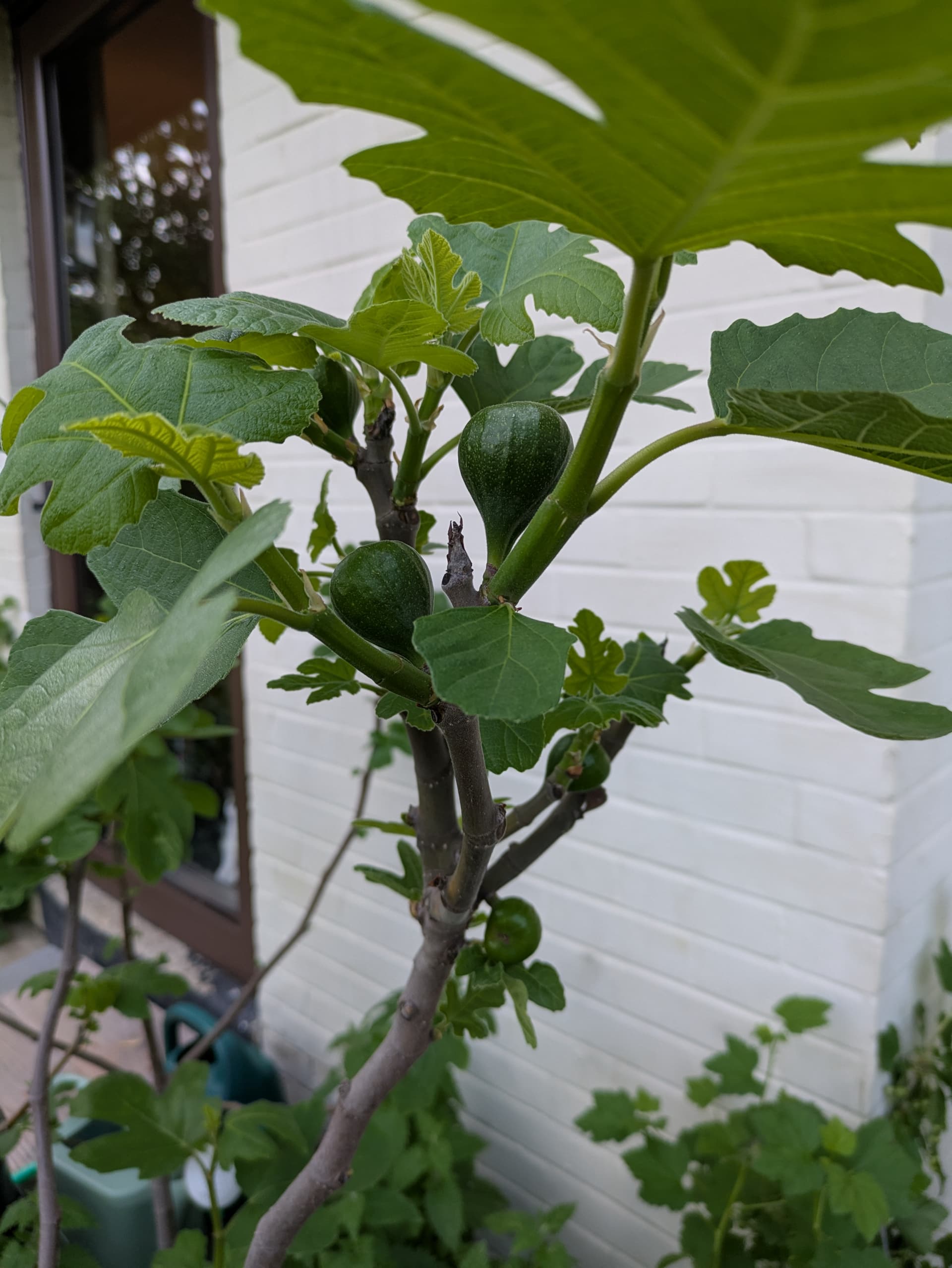
My CH has a bunch of brebas on last year’s growth. I expect they’ll turn yellow and fall off in a few days.


The one I started for my mom’s friend last year only produced a few main crop, but is loaded up with breba, too. A bunch got larger and were still hanging on a few days after the picture.
1 Like
That’s very inspiring you can actually harvest figs in Michigan! Wow… very cool. Have you flirted with the idea of a low hoop? That could maybe protect some of the dieback and get you more figs the following season. They look so perfect beside your house. I don’t think I’ve ever seen a landscape that isn’t made more elegant by planting a couple figs.
Yes, but I was surprised by how large they had gotten already. Most of my other fruit trees are just getting done flowering. And the other fig’s brebas are pretty small too.
I looked up some pics of LDA/Nordland and I think you may have IDed it. The brebas for LDA are supposed to be long and thin and some of the brebas I picked from “Bryant Dark” were that way last July:
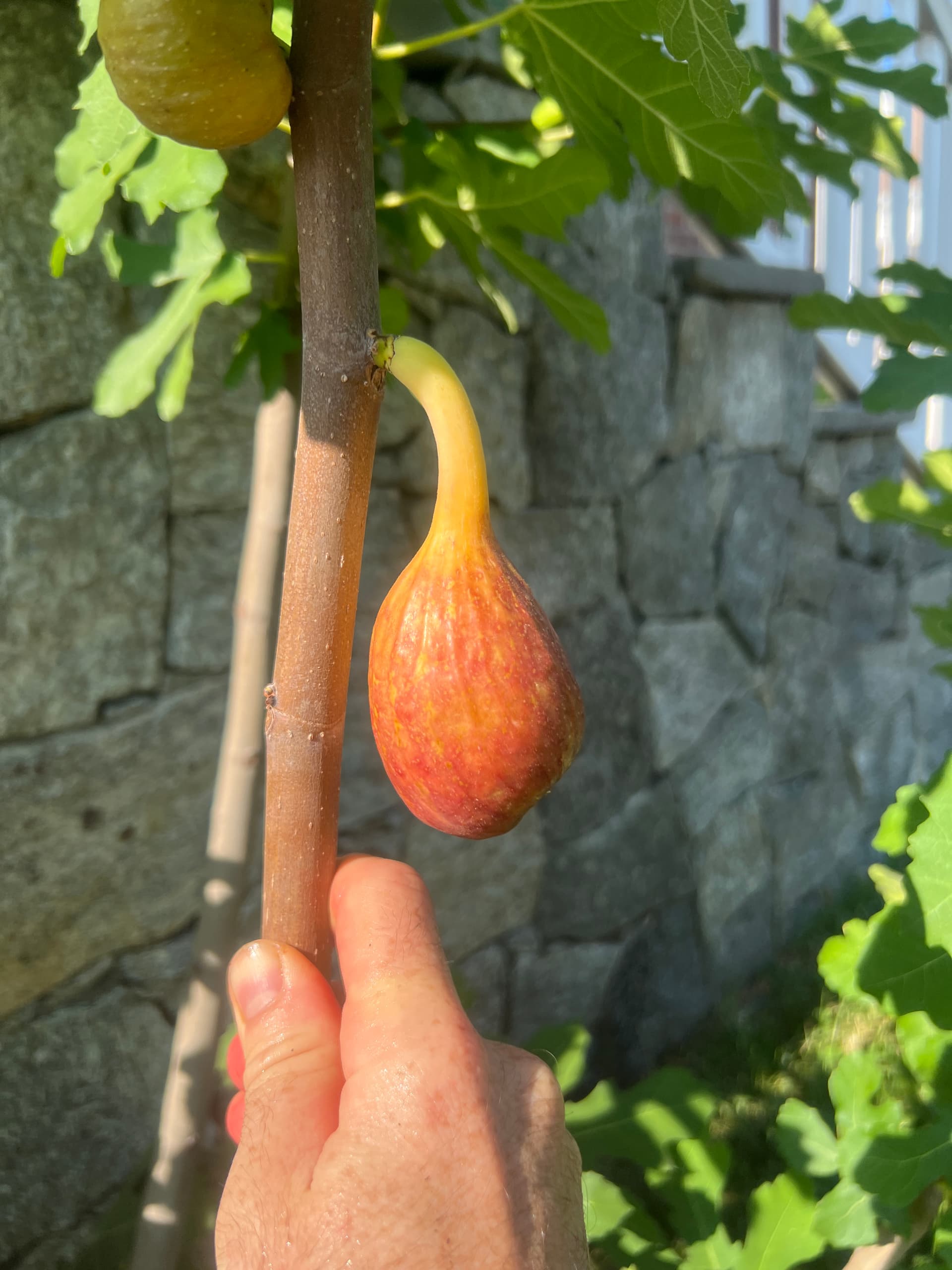
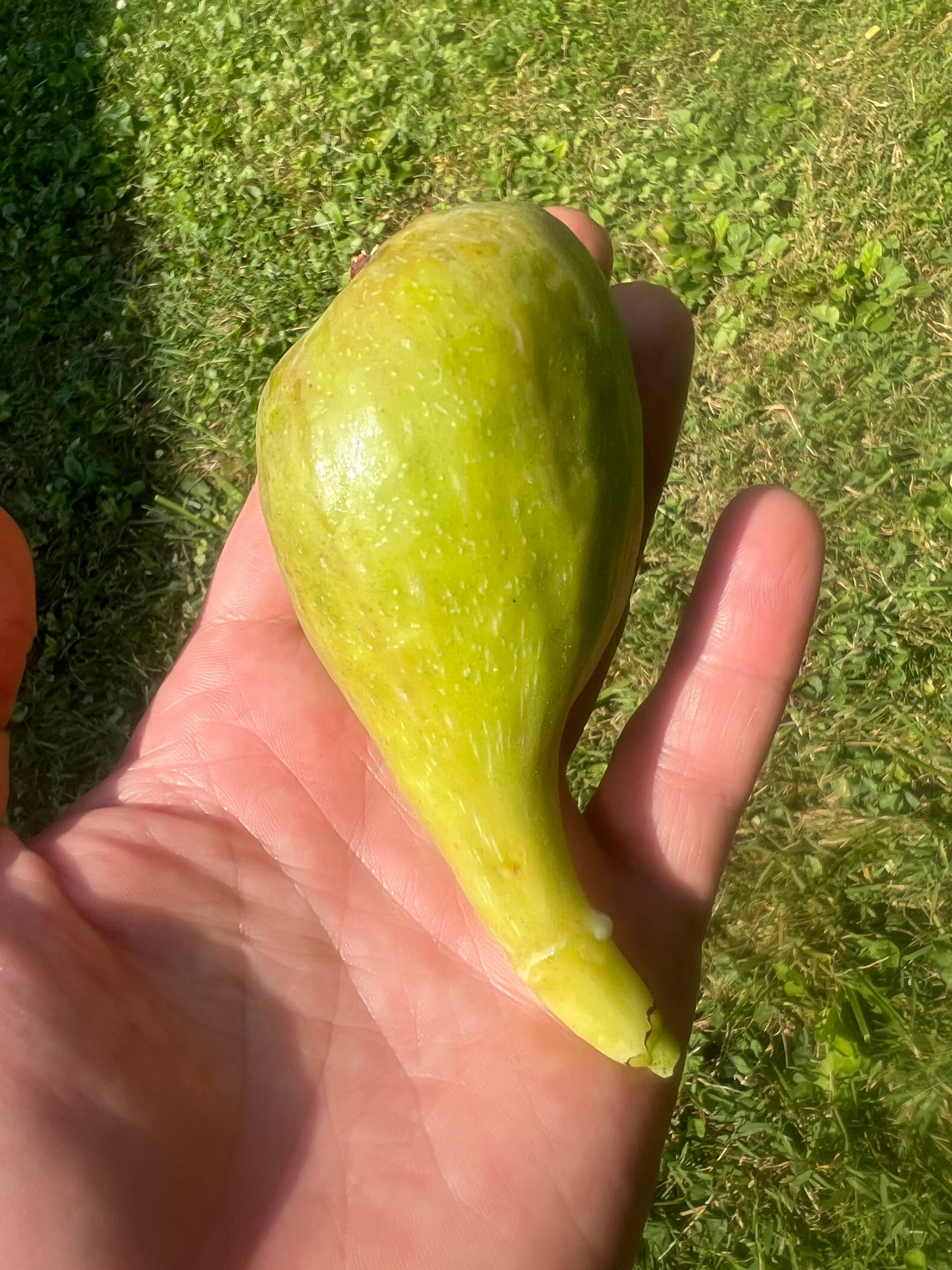
Some were a bit thicker, like this one which was huge. But, I think some variation is expected. Just like some are green and some are blushed a bit.
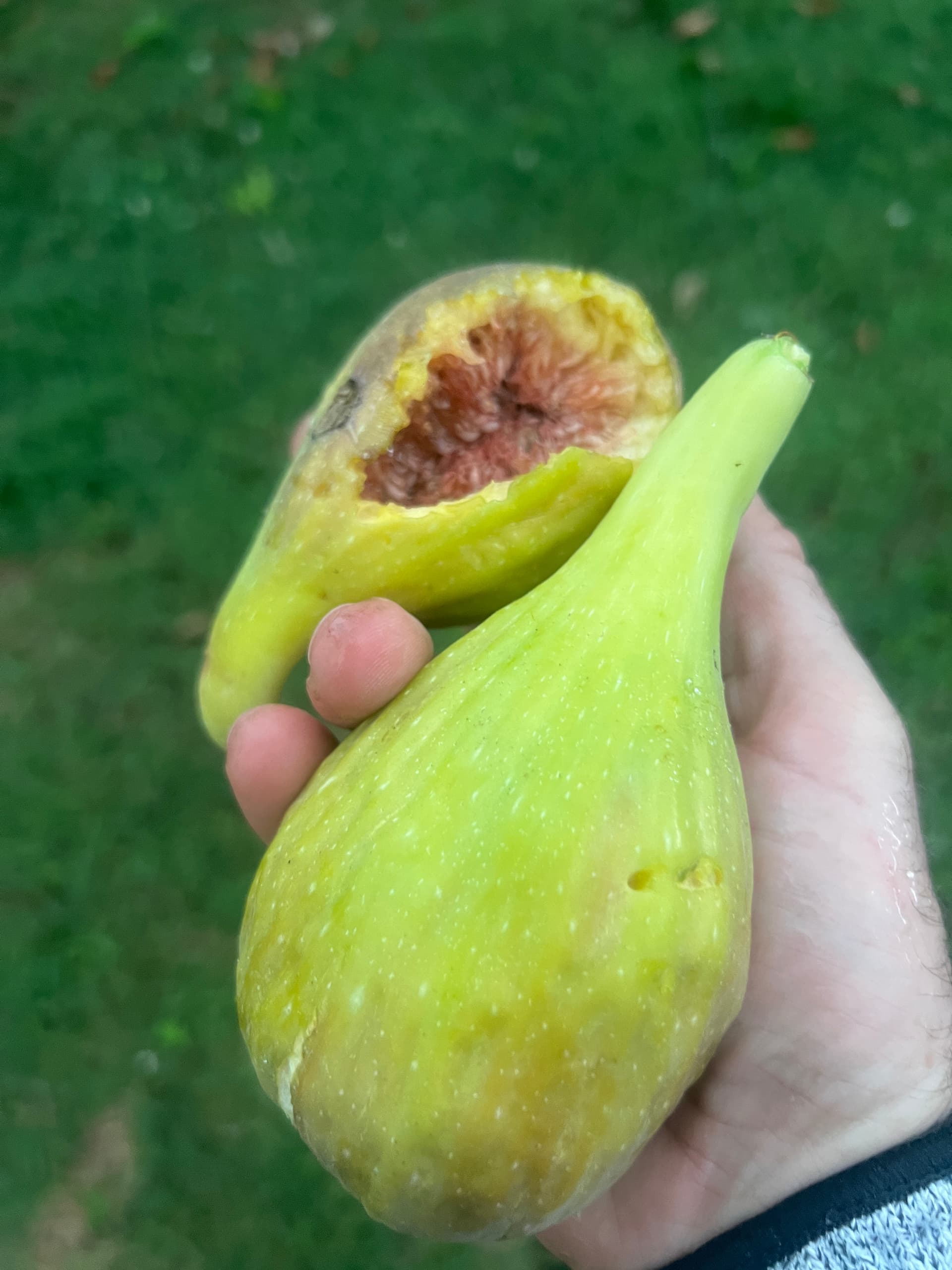
From what I’ve read, LDA is early ripening and good for colder climates. Both of which match the one I’ve been growing. I’m surprised it doesn’t get more attention, as it is a real standout for me both in quality and reliability (in all 3 locations I have it).
Adriatic JH was also great once, but I’ve only gotten that one crop from it in 5 years. If I get a greenhouse setup, I’ll definitely grow it there.
2 Likes
LdA (which has many synonyms) is a mid-season fig for me, but definitely early enough for RI & CT. It does have a large, sweet fruit; and the brebas often have that distinctive long neck.
As with all figs, it needs to be picked when fully ripe. The figs in your earlier picture of Bryant Dark look good; the figs in your more recent photos seem to have been picked too soon. Color depends somewhat on whether the fruit was exposed to the sun – more sun brings out a more brown / purple tone. Ideally the skin should be wrinkled and cracked.
Adriatic JH, like all Adriatics, is a late ripener. It’s a delicious fig but sadly not well suited to short season areas of the north.
2 Likes