Thanks. I hadn’t seen them before. I’ll spray next year.
captian jacks dead bug juice will take care of them. it contains a bacteria that kills them. ive used it for our spring forest catepillar out break weve had for the last 3 springs. works great.
1 Like
My Anjou pear gets this every year. I believe it’s mites. Supposedly the fix is predatory mites but I don’t think they have found my tree yet.

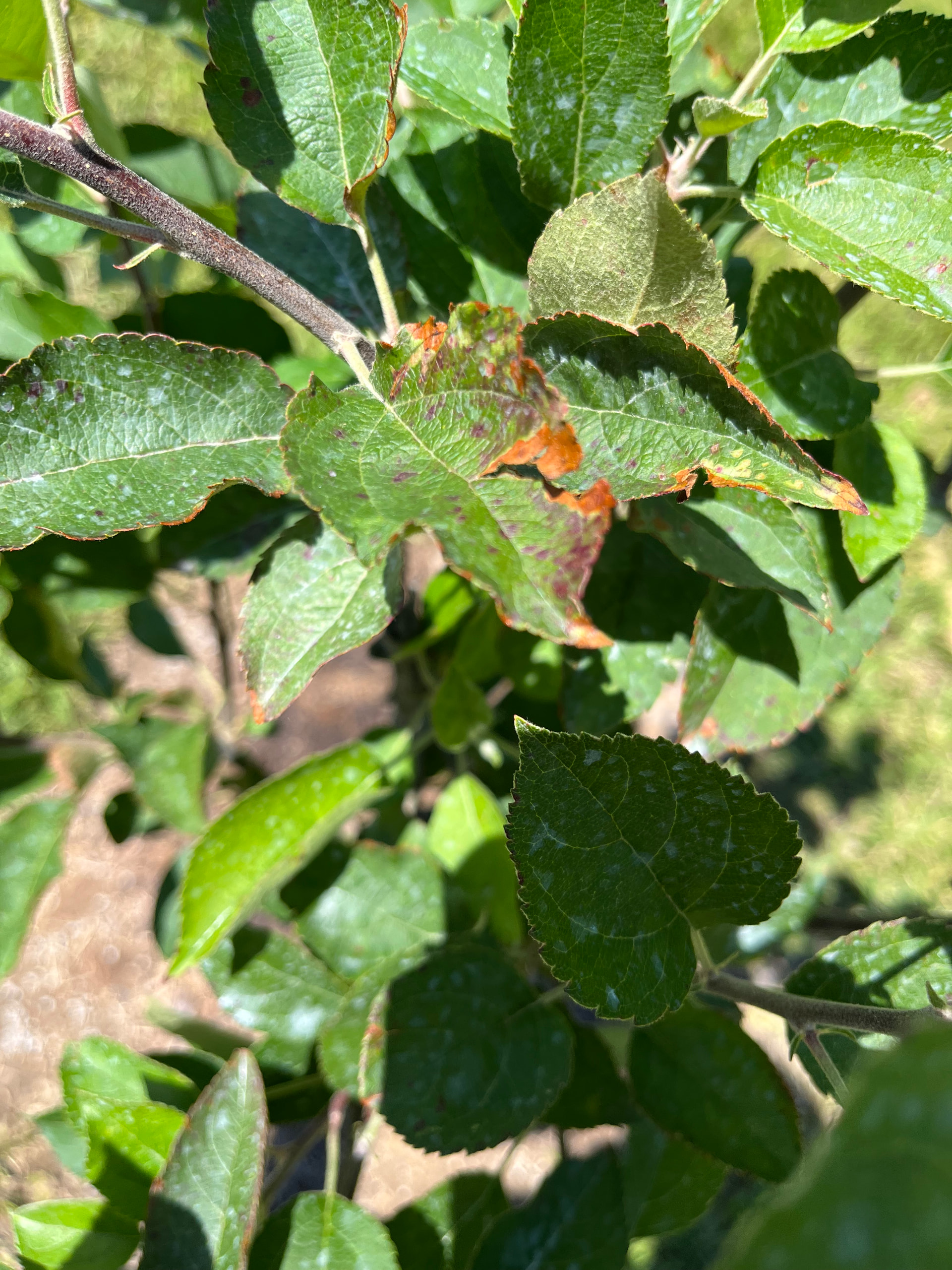
Water stress? Doesn’t seem diseased to me.
1 Like
I had that thought, we have had a lot of rain the last week. Just wasn’t sure if that was it or not.
Your ID of Imported Currantworm is correct.
All three of my attempts to grow gooseberries or currents failed, plantings spaced years apart. Currant plantings in a parking strip 3 blocks away were never affected, although those were untended, never watered or weeded.
1 Like
I used micronized sulfur on an Asian Pear,even when flowering,that had Pear Leaf Blister Mites and it worked.
The thing is,oil shouldn’t be sprayed within a few weeks of sulfur or vice versa,because it can cause phytotoxicity.
gummisis? Any idea cause? Is this the first sign of canker? Just noticed this on my Rainier. It has been healthy. It’s at the branch angle of the branch that 2” above this I grafted WhiteGold this spring and is growing. picture of it and with it removed.
Everything is wet as it’s raining today, but we have been in a serious drought with almost no rain and very low humidity, so this seems strange. But, it has been an abnormally cold spring and I read that’s a risk?

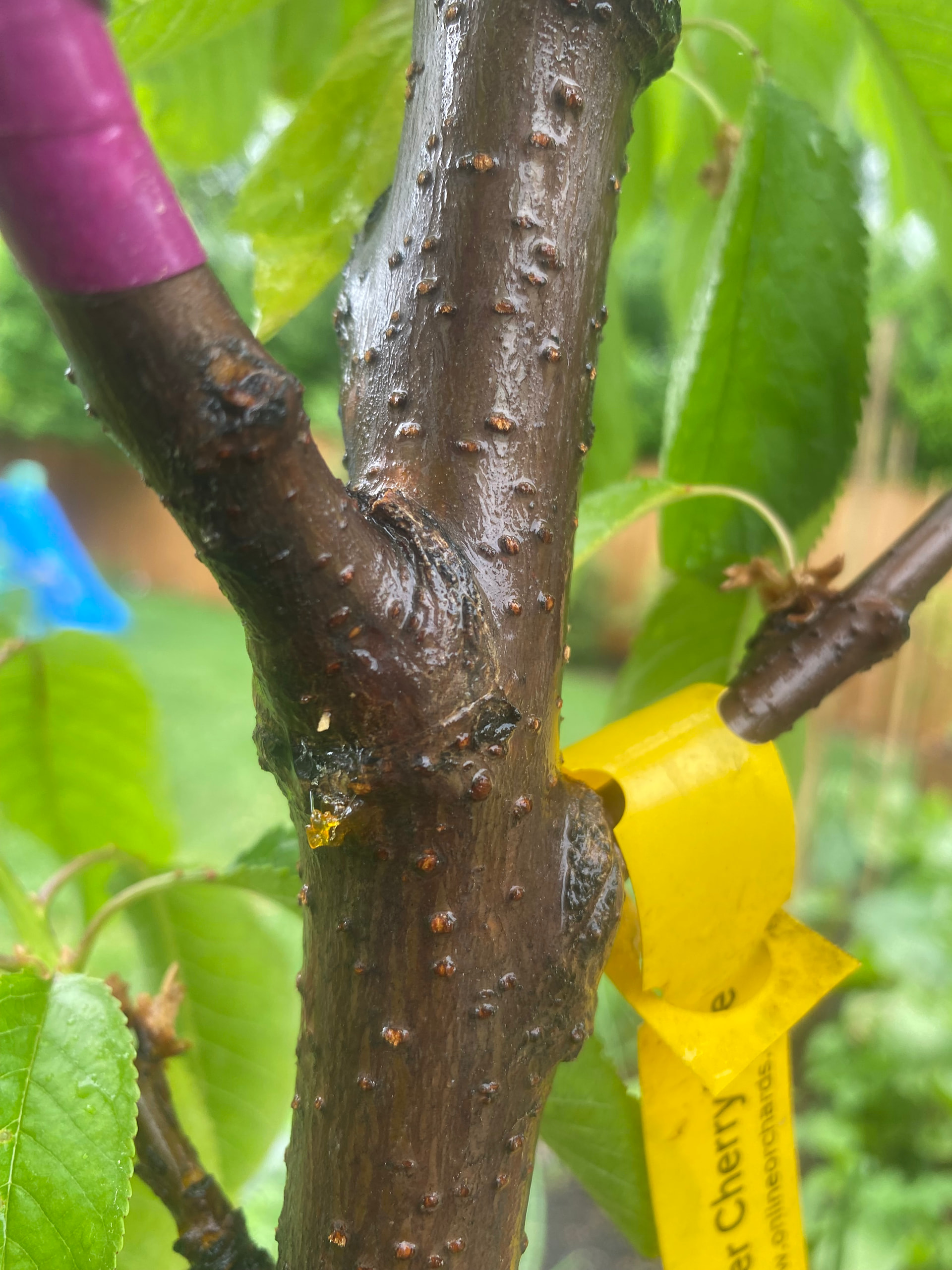
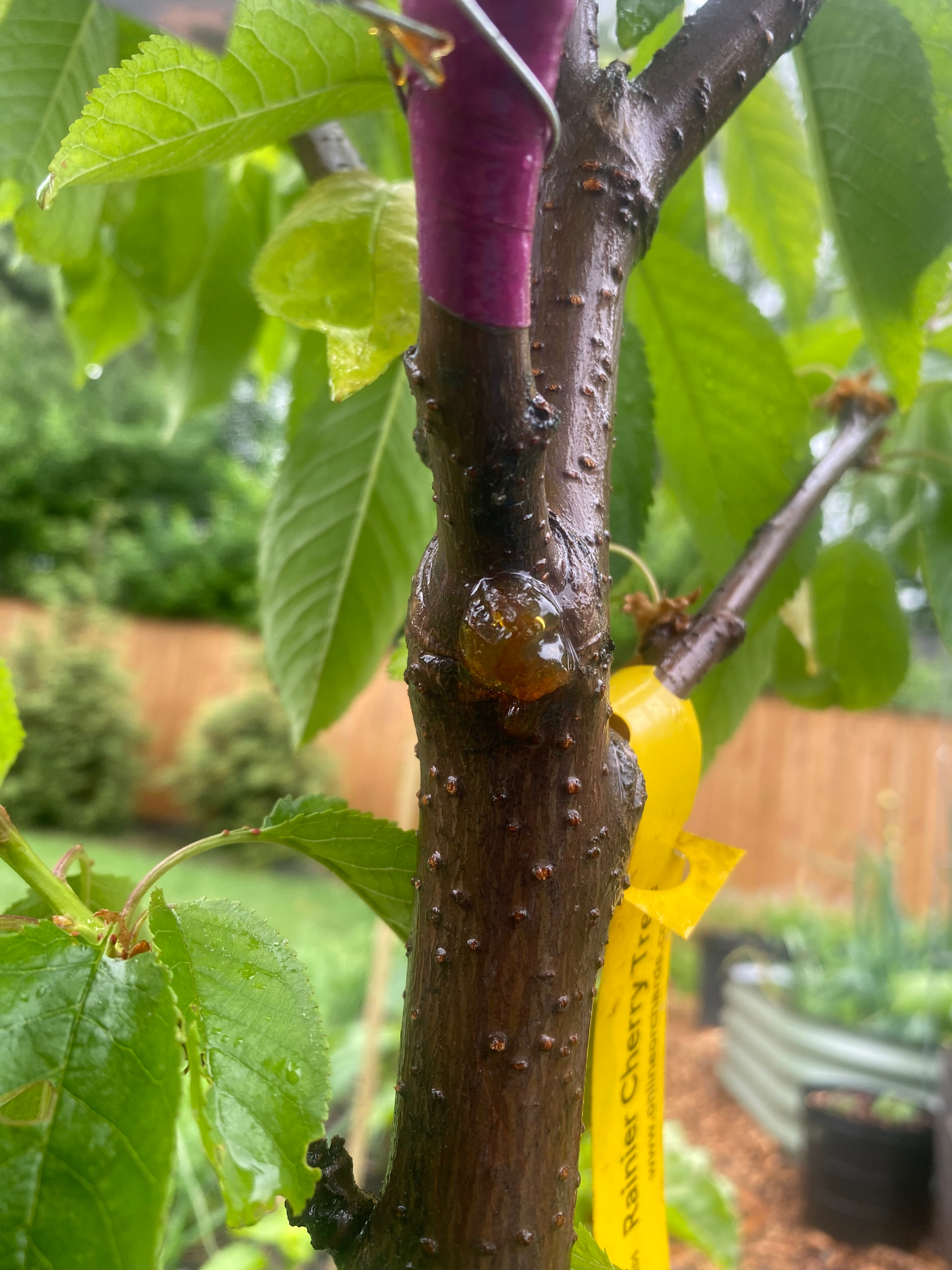
Do you see a cut or puncture or insect under the blob? Or do you see sap running down from
Where you put the scion?
All the storefruit seems to ooze like that when damaged and when sap is flowing.
It could be damage under the blob or it could be that the sap has run down and collected there
1 Like
Thank you for the thoughts. I saw almost nothing under the sap. I checked a few hours after removing it and there was a little dot reforming so there must be a barely perceptible hole. It’s below where I attached the scion- the gunk on the tag is because it was hanging here at the branch angle. It’s biofungicide spray day and I plan to just bring this one inside for the next week since it’s in a bag, keep it dry and watch it. Getting some manure from a farm friend tomorrow to pack on it.
This morning drop and wiping it off I just can’t see even a small puncture.
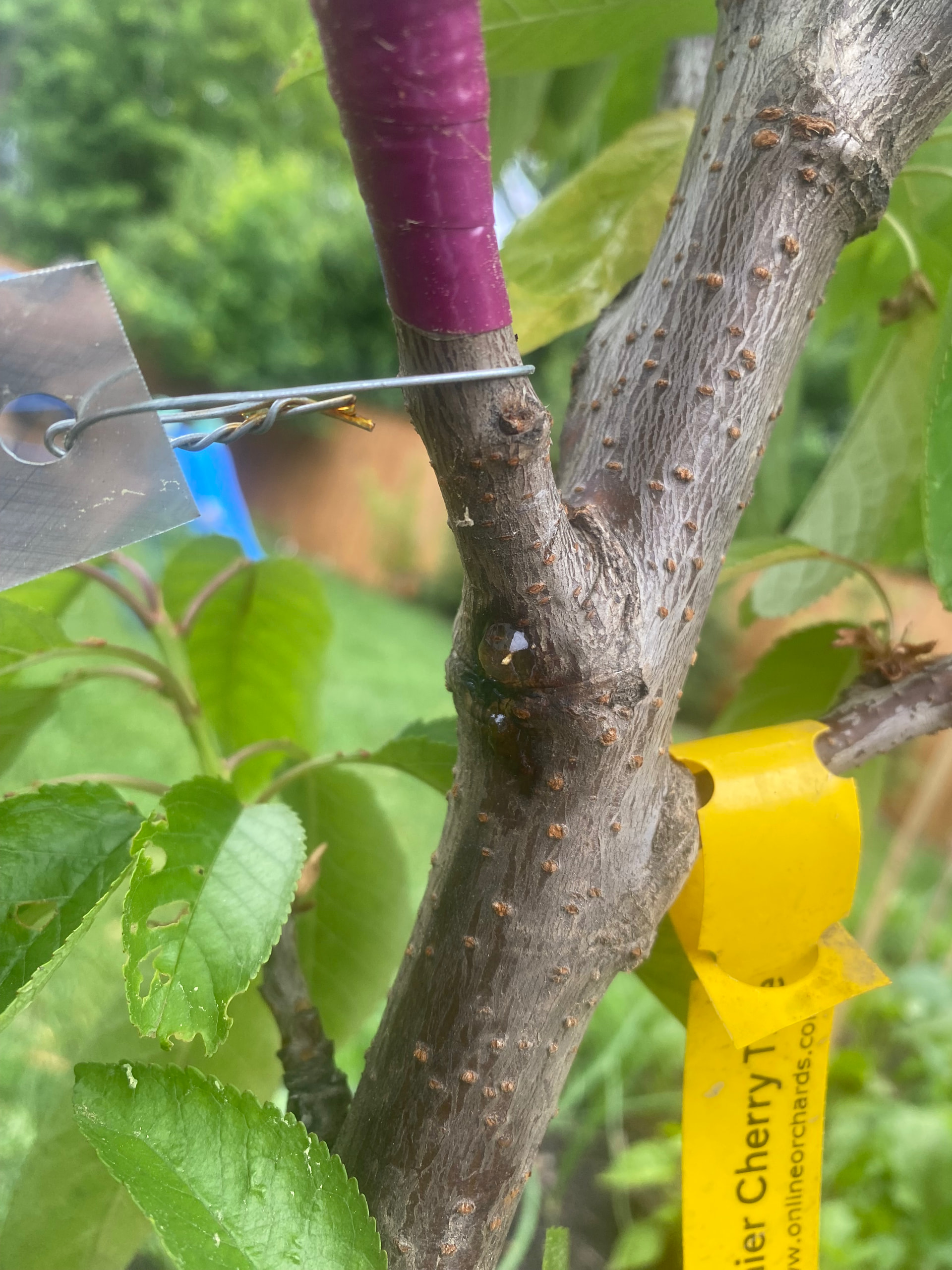
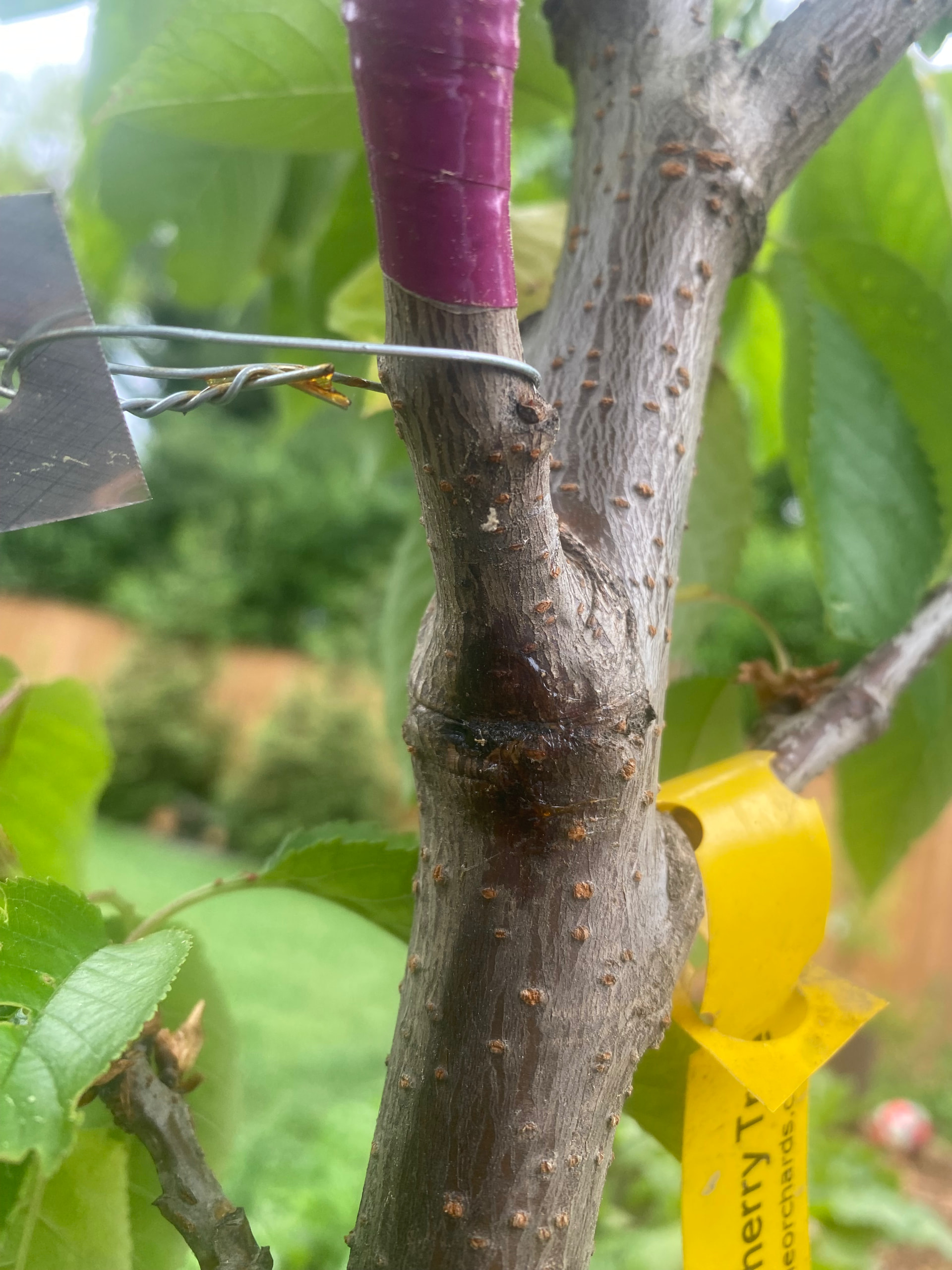
It seems to be forming along that line in the bark so there must be a hole in the bark there. I wouldn’t even worry about it since there’s not some sort of insect under the sap blob boring into the wood. And it looks like it’s from mechanical damage. However, if you can baby the plant until it heals, go for it!
Cherries in our humidity seem prone to getting fungal things.
2 Likes
It’s odd, it starts right above the crease but not actually in it. So bizarre. Thank you for the advice.
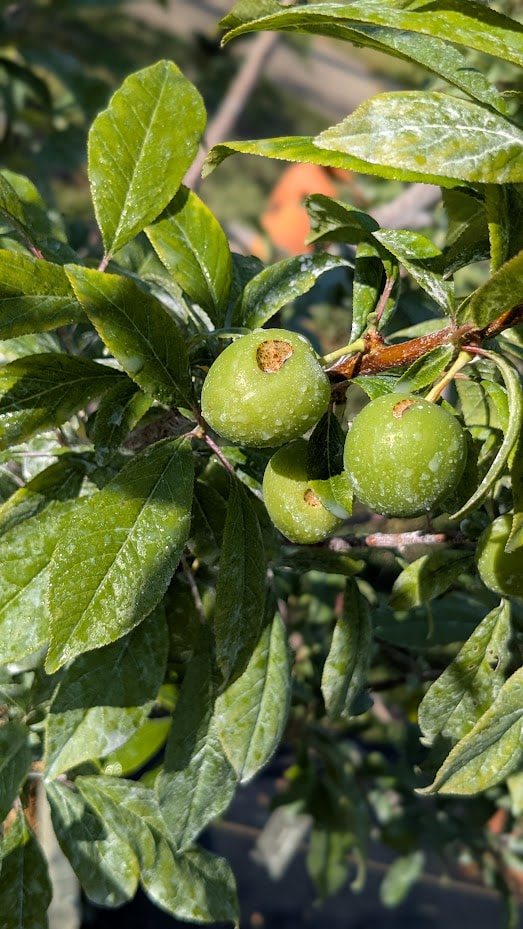
How does surround typically do for you? I’ve been bagging apples for a couple years to combat curculio. I’m considering ordering some surround for next season.
Overall it seems to work if the timing of the application is right, it needs to be applied regularly to keep a decent coat on. A heavy rain can wash it off and the curculio can get to some before I can reapply. I notice that it sticks better to some fruits better than others, I can get a good coat on Asian pears but not plums/pluots with their slicker skins.
1 Like
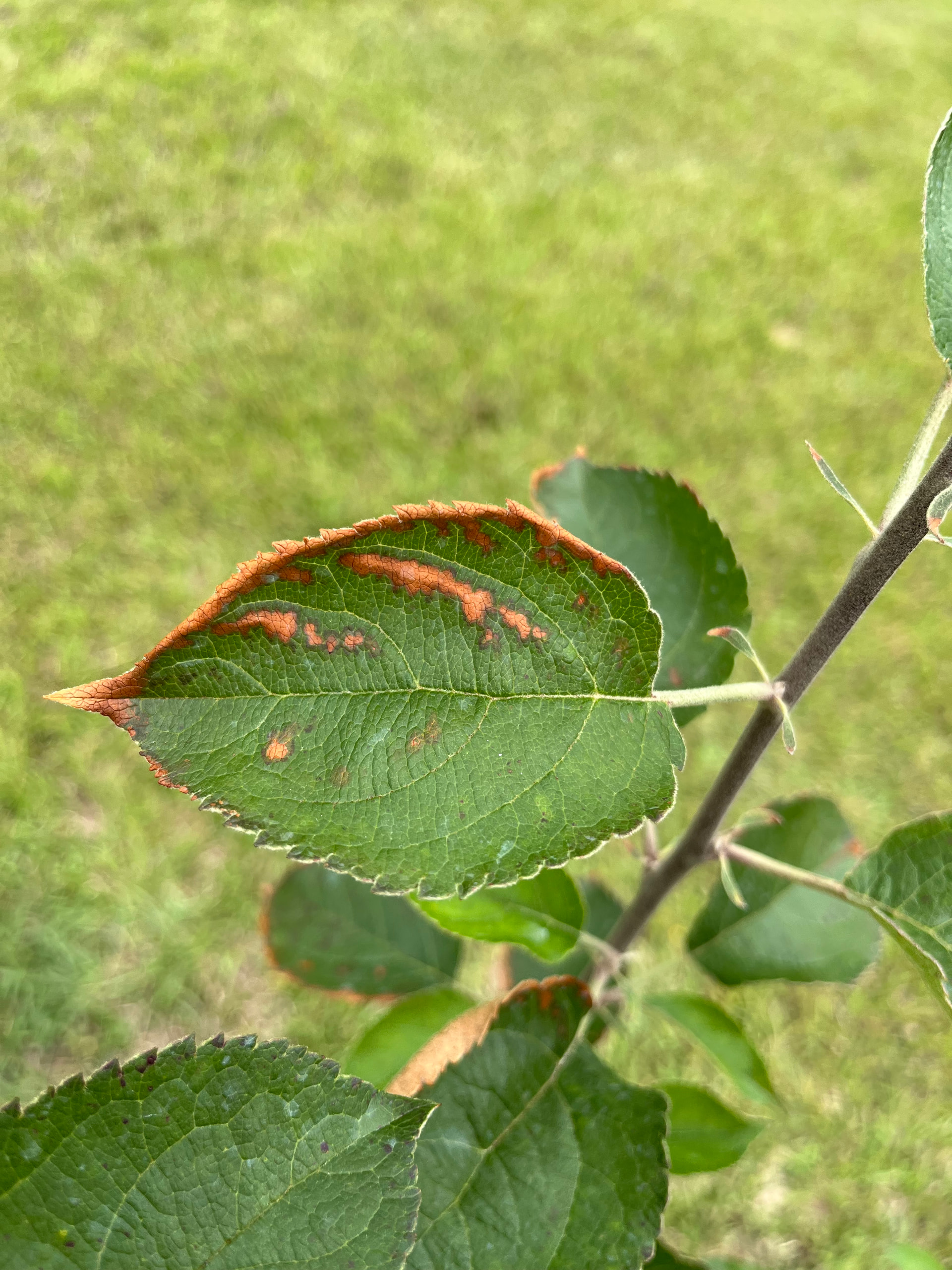
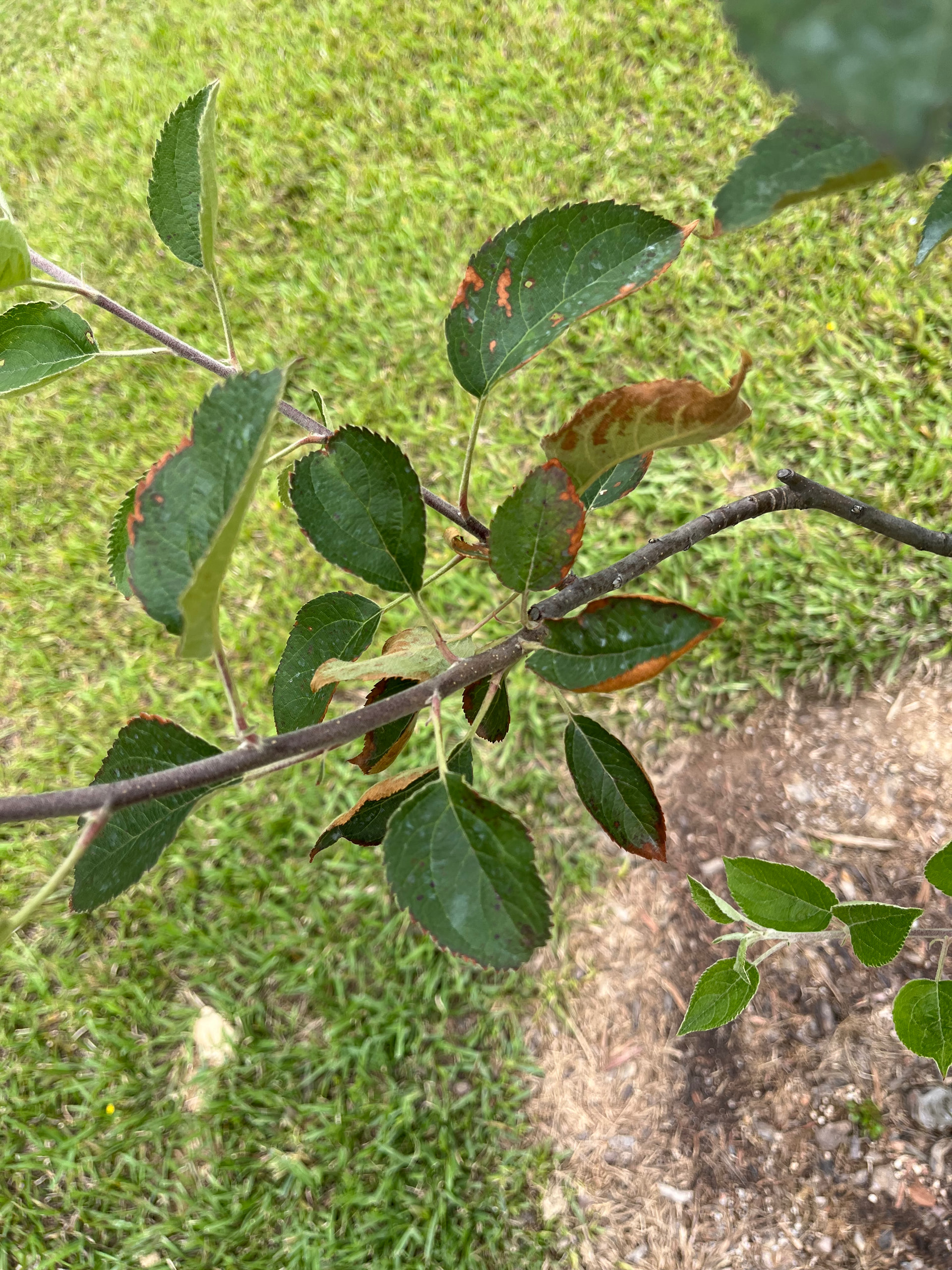
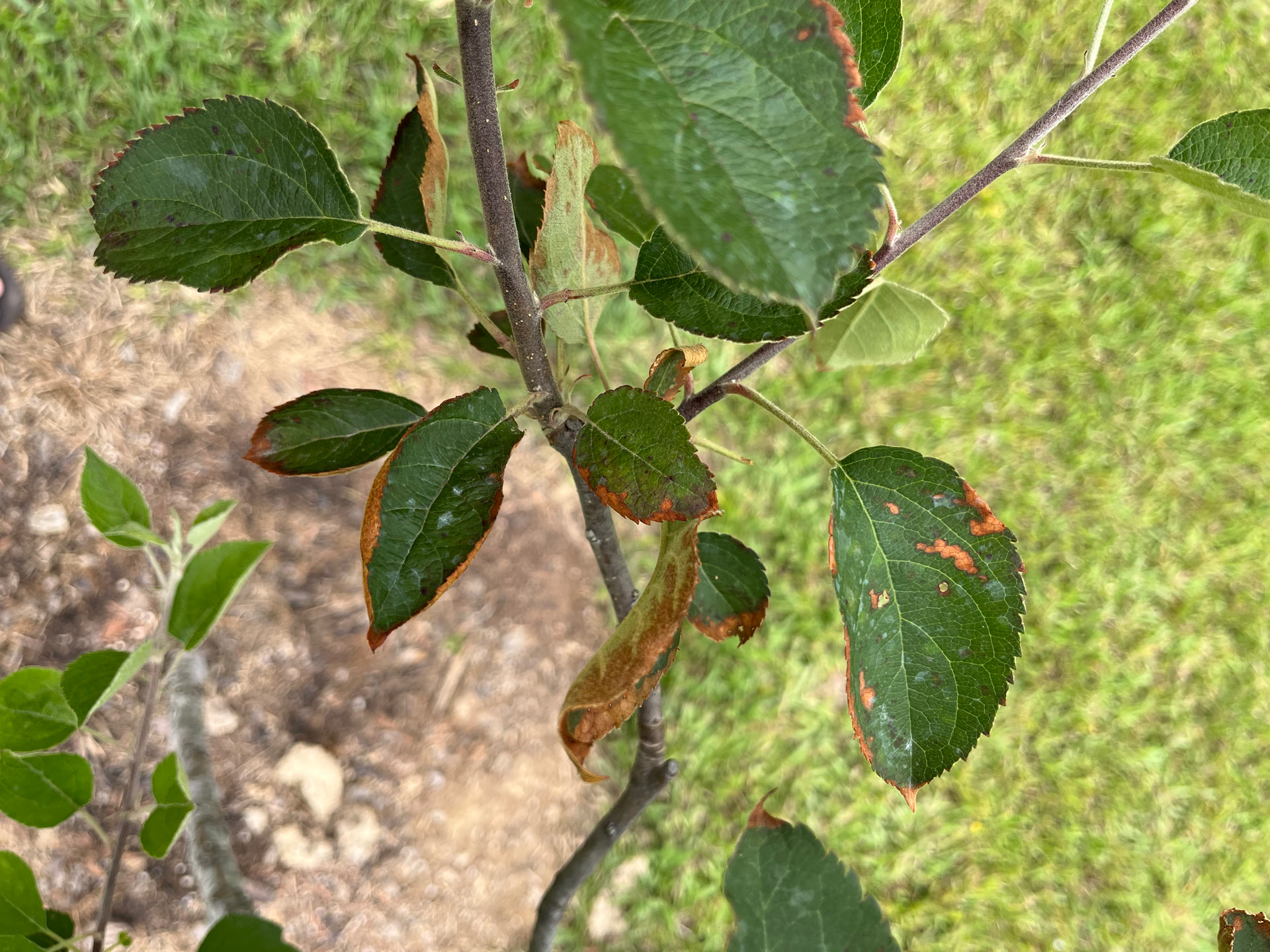
Not sure about the margins but black rot (Botryosphaeria obtusa) can cause those red splotches on the top central leaf in your bottom photo. Some trees outgrow the disease, others are just genetically susceptible even at full size (I have a 20’ tall crab that defoliates from it each year. Can cause hard-feeling fruit rots).
1 Like
I planted this Napoleon sweet cherry (Royal Ann) last fall. This has been all the growth so far. Also the leaves don’t have a healthy green color. Could it be a virus? Or something else?
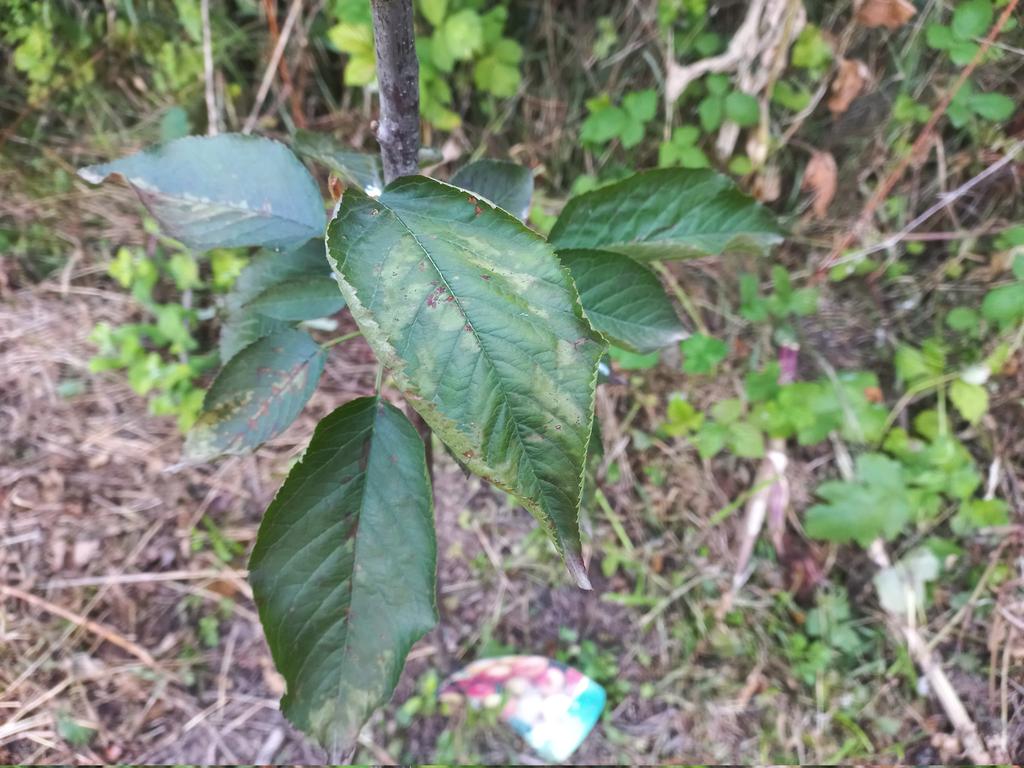
I get pearleaf blister mites to varying degrees in different years. Some trees/varieties seem much more susceptible than others. My Asian pears don’t get it much.