Does anyone with nursery experience know what rootstock is used for jane magnolia? I bought this tree from a fast growing trees subsidiary a few years ago (I know better now) and just noticed it is grafted and has 5 vigorous shoots coming from the rootstock. The leaves on the shoots are substantially larger than the established branches. The tree has been struggling to grow, and if the rootstock is something relatively desirable, I might let it go. I’ve tried contacting the company.
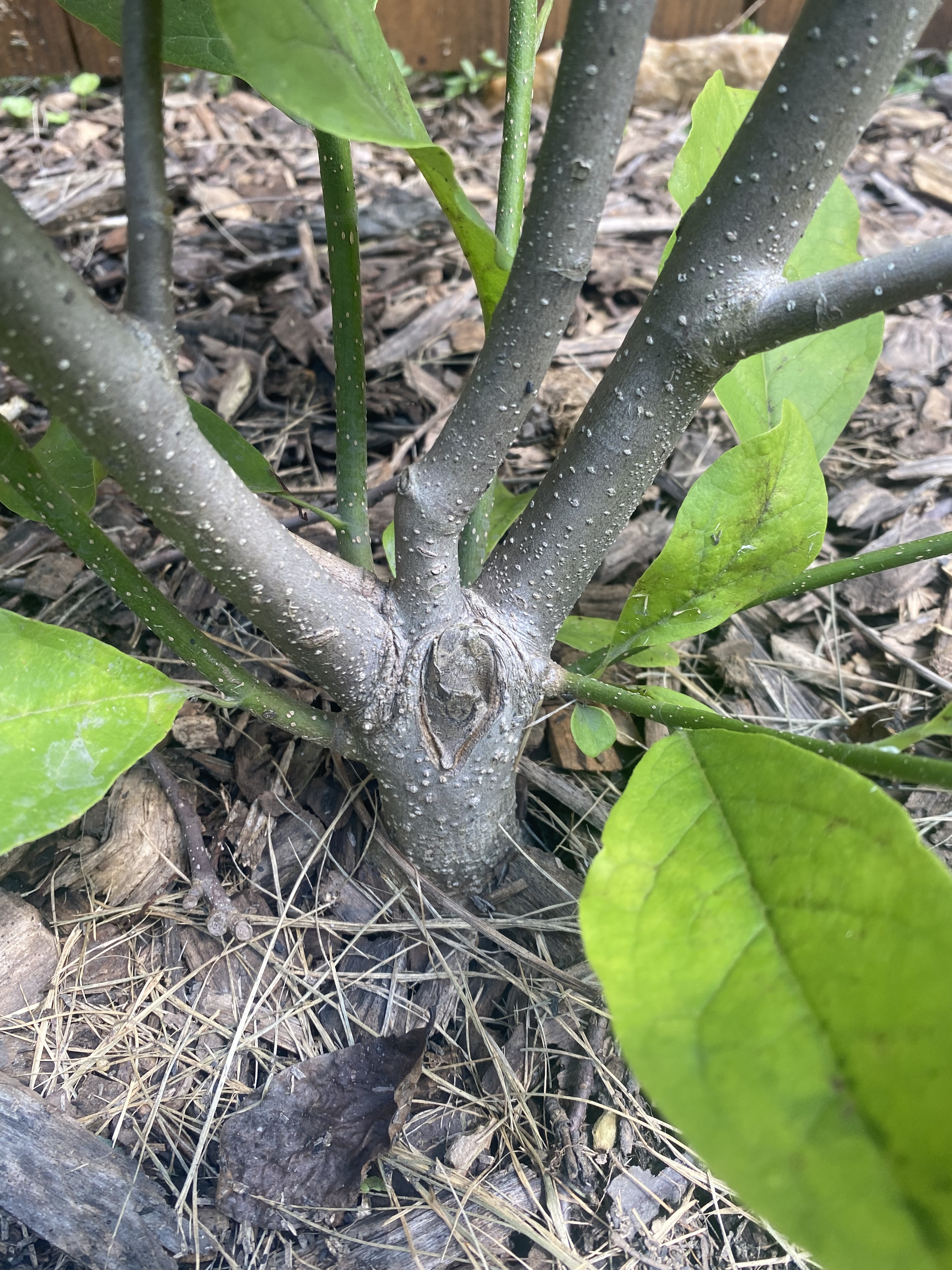
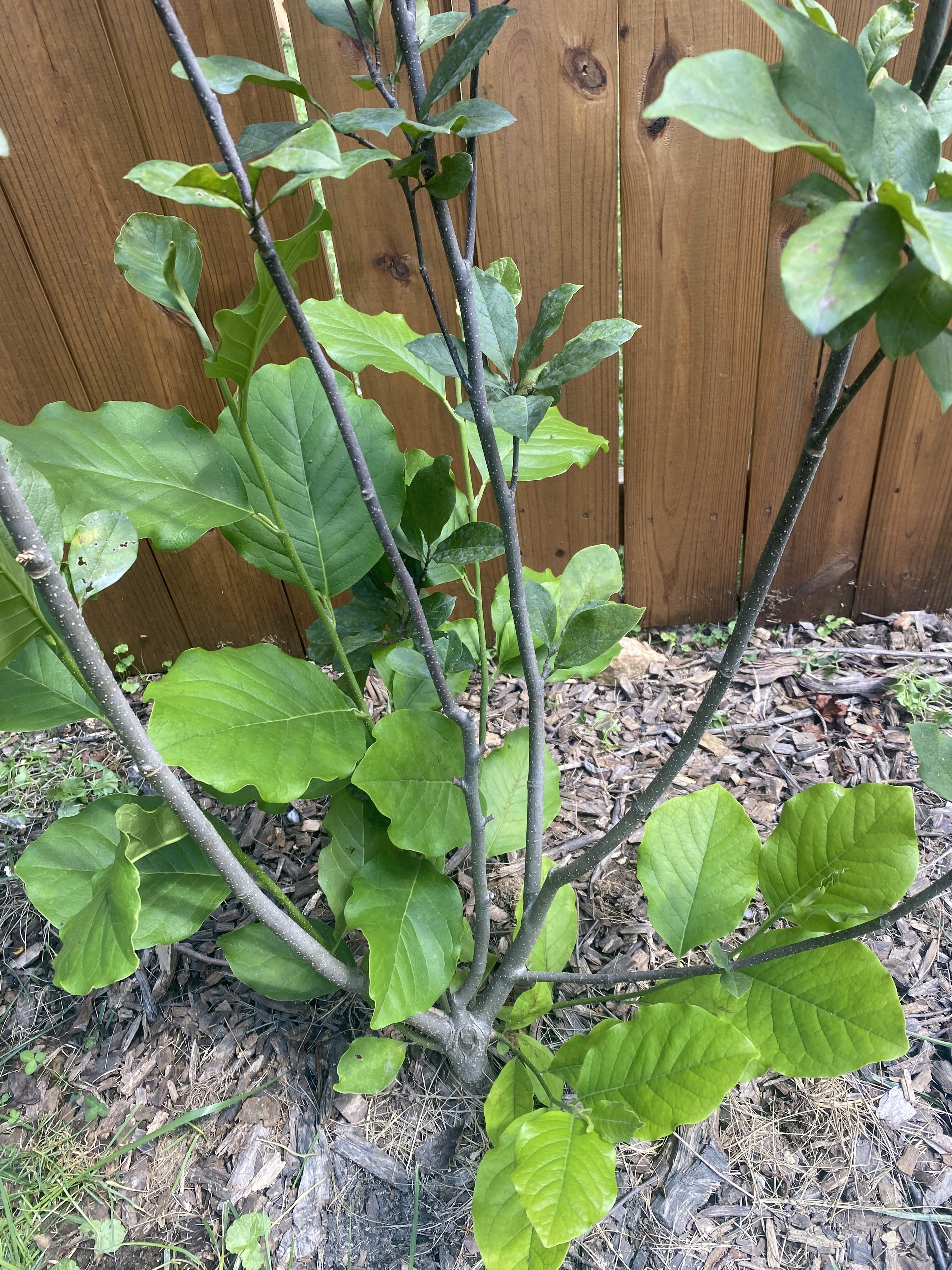
I would expect a Jane magnolia to be on its own roots, as it should be easy to root, but the leaves on those suckers do look different. As far as I know, most grafted deciduous magnolias in the trade are on M. kobus (medium sized tree with white flowers), M. acuminata (potentially large tree with small yellow flowers), or M. x soulangeana (small to medium tree with pink flowers). I can’t tell what your rootstock is from the leaves, but chances are that it’s a seedling, and you will be waiting many years for flowers regardless of what it actually is.
3 Likes
Thank you for the information. Maybe I’ll make a decision on chopping them or not this winter.
1 Like
Like Grapenut said. Most magnolias are easily rooted. Rooting cuttings are a lot cheaper to produce than grafts.
Not sure why some one would graft it and not sure what you have. Sorry
2 Likes
I had a ‘Jane’ struggle at a customer’s place, some root suckers popped up like on yours. I left several as it looked like ‘Jane’ wouldn’t make it. It recovered in several years alongside the rootstock. Bloom’s on the rootstock were common saucer magnolia. This was when ‘Jane’ was new so I’m not surprised it has been budded on common saucer.
1 Like
Well, if it’s saucer or something that big, it won’t be allowed to grow. This is a cramped spot and I really wanted jane there. We had a big, beautiful saucer years ago that that to be removed for construction. This was meant to be a little remembrance of it.
Thank you for all the inputs. Does jane sucker? Is there any possibility that my premise is wrong and it’s not grafted and the broader, larger leaves of the suckers are just because they’ve grown in healthy while the rest has been flailing?
That’s also possible, funny you said that. I’ve had the same experience with a halesia, mountain silverbell. Non grafted, 6’ tall and started to fail from our hot, windy, summers with high nighttime temps. Main tree dying, healthy suckers came up. Go figure… 
1 Like
Juvenile leaves can sometimes be vastly different from mature leaves in both size and shape. Might be worthwhile to seek out another plant for comparison before chopping.
1 Like