Has anybody had actual success with jujube (Ziziphus jujuba) propagation BESIDES through grafting or digging suckers? Anybody successful with air layers or cuttings? Please share your process and how it went!
5 Likes
Had better success rates with airlayering than with cuttings, but thats basing on negligible sample sizes and at hostile conditions-- las vegas…
We posted a step-by-step video link below
7 Likes
I always curious to see how viable the jujube plants are on own roots, not grafted. Do they thrive?
1 Like
Very informative video! Have you ever utilized an intermittent mist system instead of plastic bags for humidity? Also, when grafting to roots, what type of cut are you making on the scion and root (whip and tongue, cleft etc?) When planting the grafted root, do you leave a bit of it exposed above soil so it becomes more like a small trunk for the scion?
3 Likes
not sure how old the cultivar clone sihong is, but it seems quite able exhibiting vigorous growth when strategically deflowered(as a self-rooted lateral)
honey jar was a totally different story for me. Runty for two or three years, then died.
one of our seed-grown jujus(vegas booty) has exhibited vigor as suckers, and am optimistic would be the same for its stem cuttings/airlayers since the clones are relative juveniles.
maybe honey jar is a really old cultivar clone that may no longer live healthily on its own roots.
Thanks @Blake ! Btw, we never tried intermittent misting, but quite sure it would result in higher batting averages than what we have experienced here.
we used simple cleft-grafts as shown below, and almost certain whip and tongue would be just as good yields, if not better.The hj stem has greenish-white sapwood, whereas the rootcutting is pink

and below is the toy story analogy. While auto-grafting obviously increases chances of producing a viable self-rooted specimen, we find it too cumbersome to do, basing on success rates. Failure is probably more of a root-failure and not total absence of viable adventitious buds…
if had a microscope at my disposal i would perform sagittal cuts of juju root cuttings to gauge preponderance(or lack of) adventitious buds in jujube roots. The bossy/pushy me is tempted to volun-tell @Livinginawe to do just that, if he hasn’t craigslisted his microscope 
hoping that univ of alabama or nmsu will find it a worthy study/endeavor…

yes, i orient it at a diagonal, with the bud-side up and exposed. I also wrap it with plastic film (over the parafilm) to minimize microbial access.
i see you’re in kentucky-- almost certain you’ll have better success rates there than here. Keep us posted 
Our growing season here is too hot and too dry for cuttings/airlayers of any fruit species… The fact that we managed to do it here(albeit just ~30% success rate)-- it bodes so well for everybody else outside our growing conditions
7 Likes
Just love this! Autografts to increase chances of survival . I agree self rooted apples are likely to be doomed. Jujubes are so intriguing
2 Likes
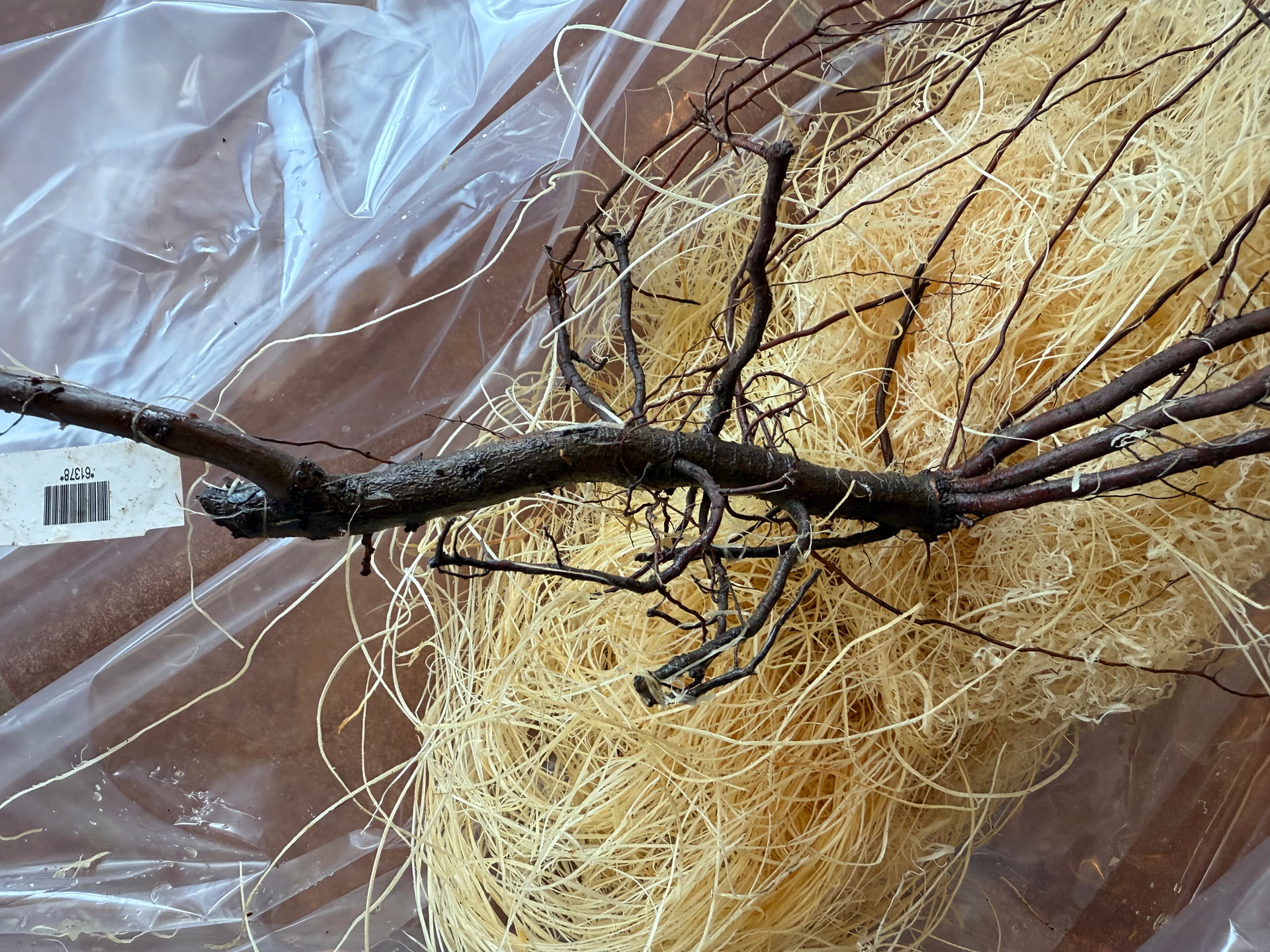
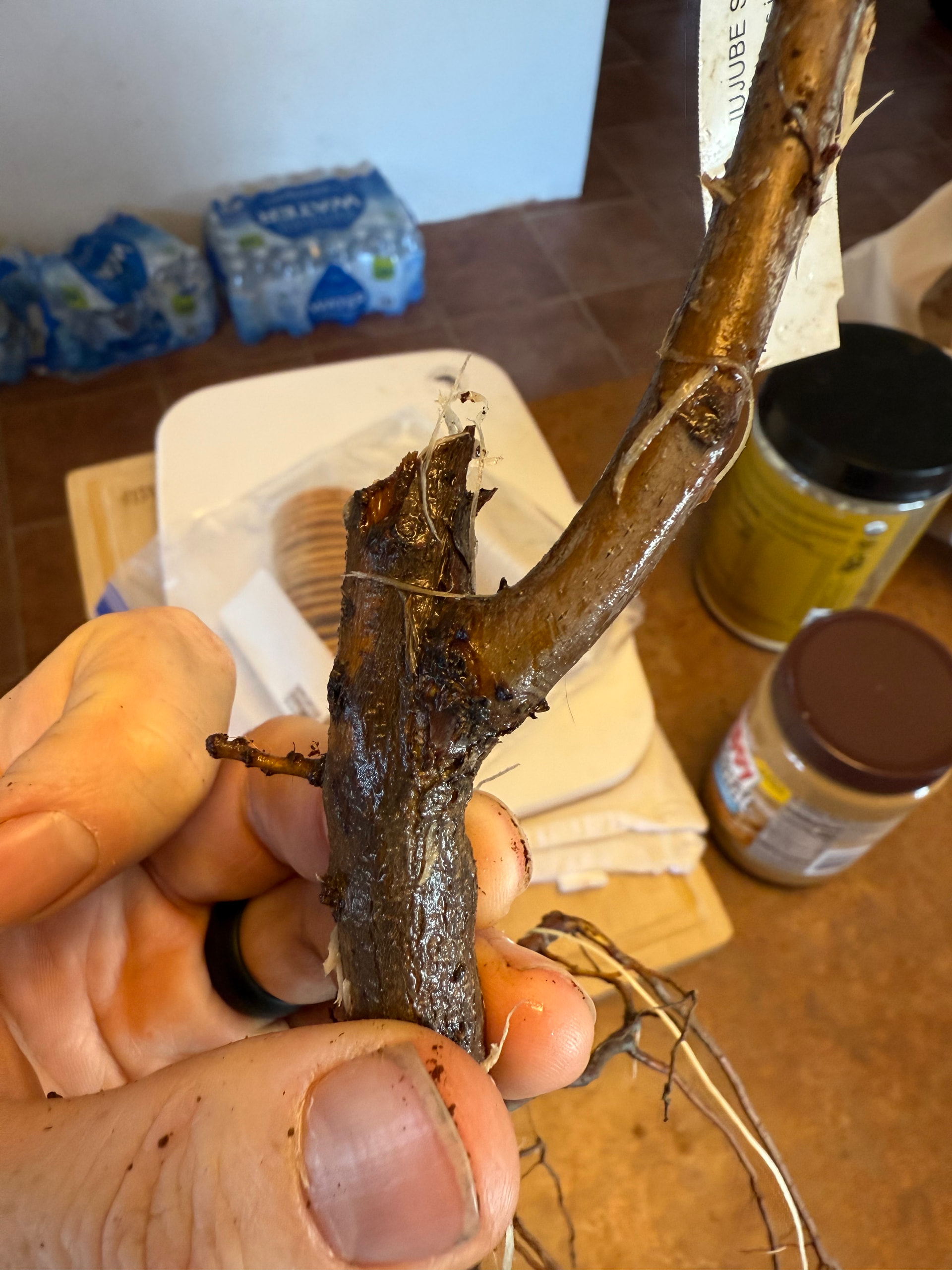
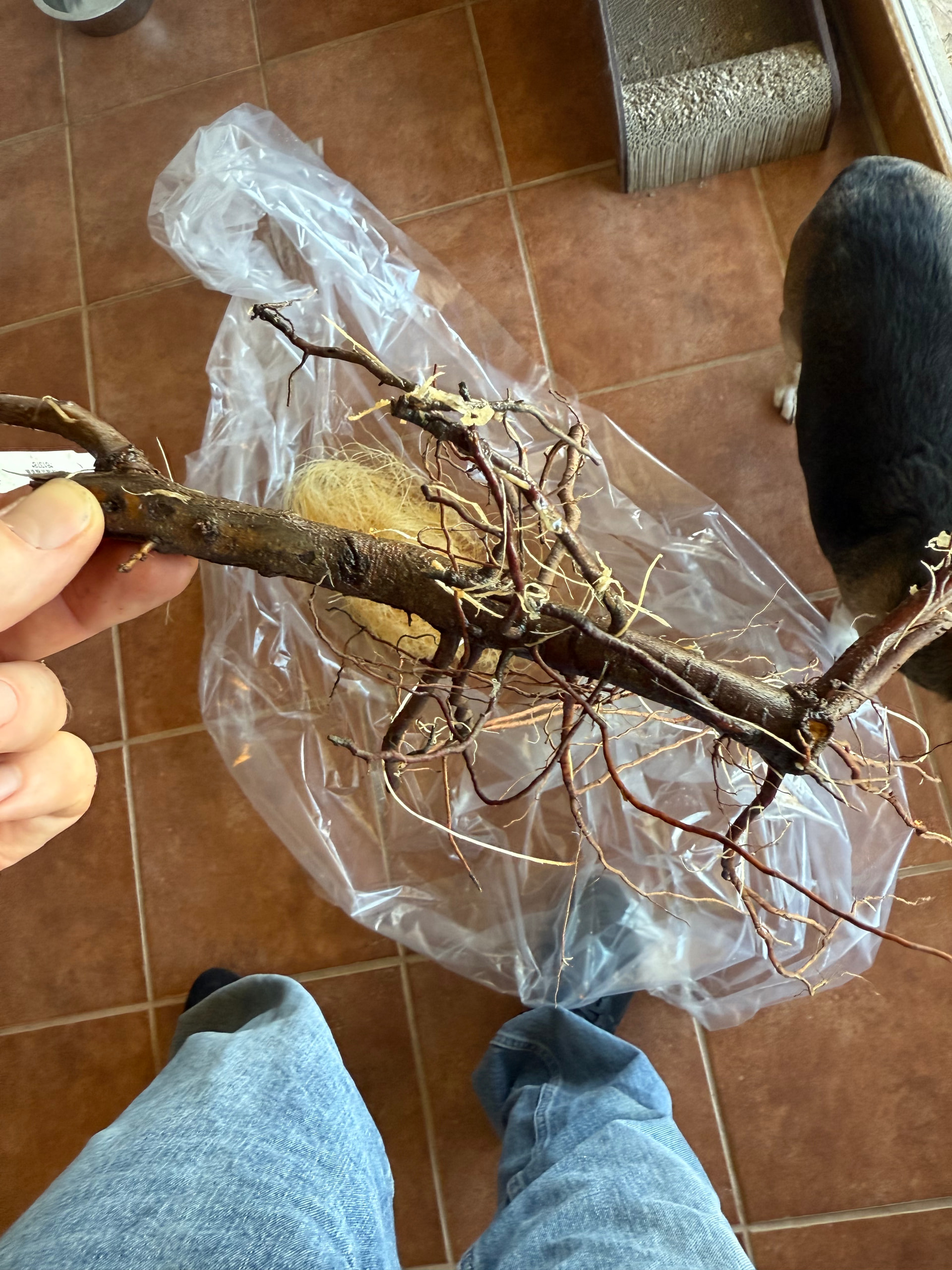
Just got 2 Shanxi Li that either look like they were grafted to a root cutting or they were a root cutting of a Shanxi Li that had adventitious buds?
Those look like chip buds? It’s hard to say but it looks like there are some faint outlines of a chip at the base of the shoot. The way the main stem is cut off there is also a sign of chip budding.
If it’s not a chip bud you probably have a rootstock and not the variety. I have had several supposed jujubes ordered from nurseries turn out to be rootstocks.
1 Like
Thank you for your insights,
It is strange though the top and bottom both appear to have been straight cut. The bottoms (two trees) have a callus like root growth from the thumb size rootstock.It just seems like a strange practice to prune a section of root from a poor or unknown fruiting variety when you could just do the same from the desired variety directly.
Rootstocks often are made in stooling beds and have the bottoms cut. All clonal rootstocks are made like this so nearly any apple rootstock has a cut at the bottom. My guess is they made your rootstocks by stooling. The original variety was probably grafted like nearly all jujubes are so a root sprout of it would not be the original variety.
2 Likes
Good eye!
I think that’s possible, but I haven’t heard of anyone in the US nurseries propagating jujube rootstocks that way. One of the complaints I’ve heard is that jujubes are all different based on the somewhat random rootstock source, not something like apples which are grown in stool beds. More commonly, suckers and seedlings are used. In this case, I could see it being a root from a sucker that was cut and dug up.
It could be that they budded to the part that was already above the ground. I’m not sure if this is done commercially, but you can graft directly to the root. I had success with this several years ago when transplanting trees. I dug up and grafted to the broken roots that were left in the ground. Here’s one example:
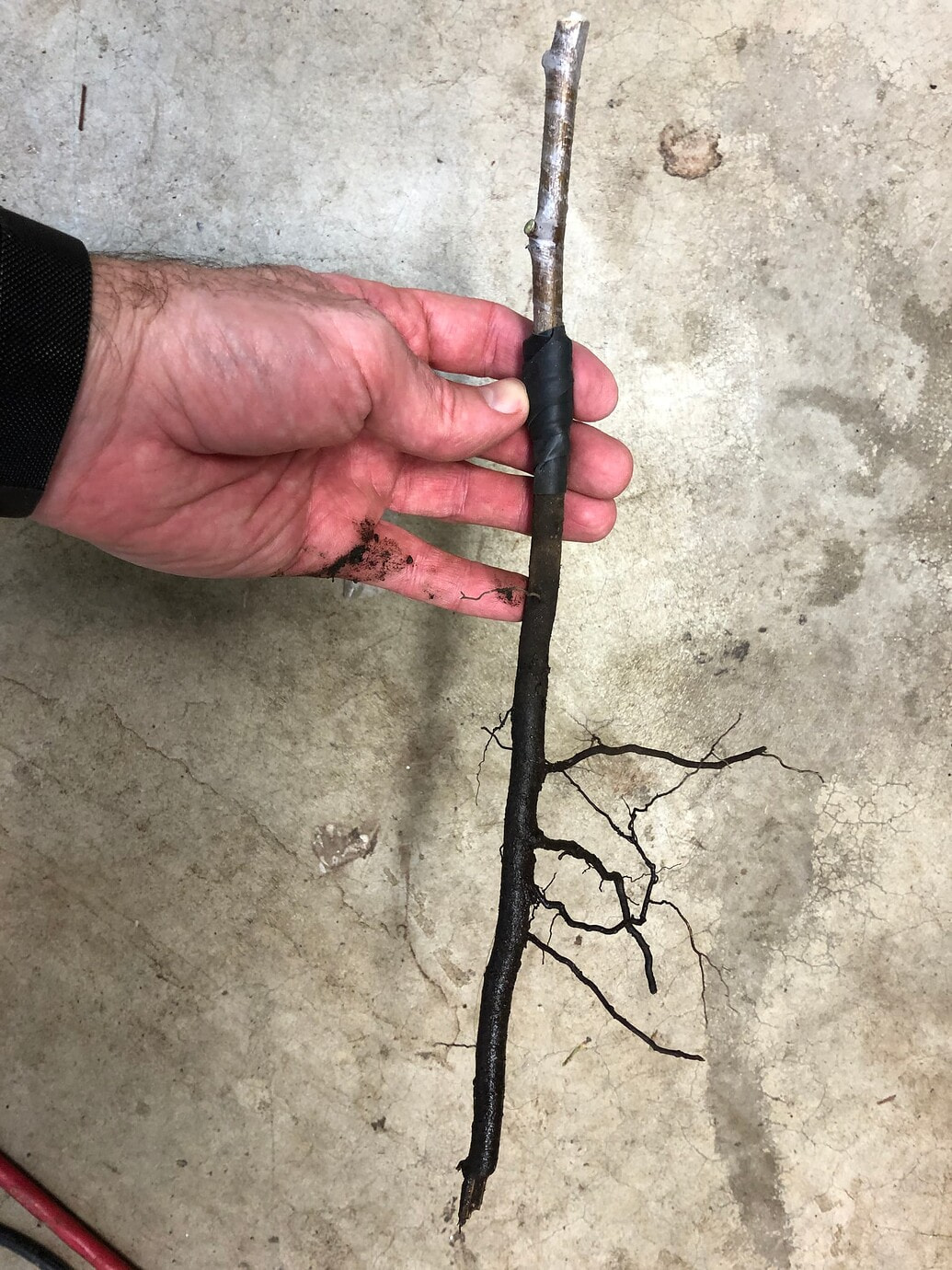
I was able to buy a few trees from JF&E that were grown from cuttings. I spoke to the nursery and asked how they did it and they took green wood during the summer and rooted them in a misting machine.
You would think that suckers from these trees would be pretty useful. But, even though I have 3 (Honey Jar, Sugar Cane, and Autumn Beauty. edit: also So and possibly Tigertooth from an earlier JF&E order) that were planted in 2019, I don’t think any of them have suckered.
I am planning to move many of my trees to a new property in the next few months (double the land, half the cost in a cheaper neighboring town). When I do that, I assume I will lose some roots from these self-rooted jujubes. I was thinking about what to do with the broken roots left in the ground. I could just pot them up and see if they grow. I may do that with some, but I will likely dig them up and graft a scion of themselves onto it, since I’m not sure how likely the roots are to send out a strong shoot.
5 Likes
Anyone know where to find jujube rootstock?
I sell excellent jujube rootstock, shipping this season: Jujube Seedlings - Jujube Rootstock- Zizyphus spinosa