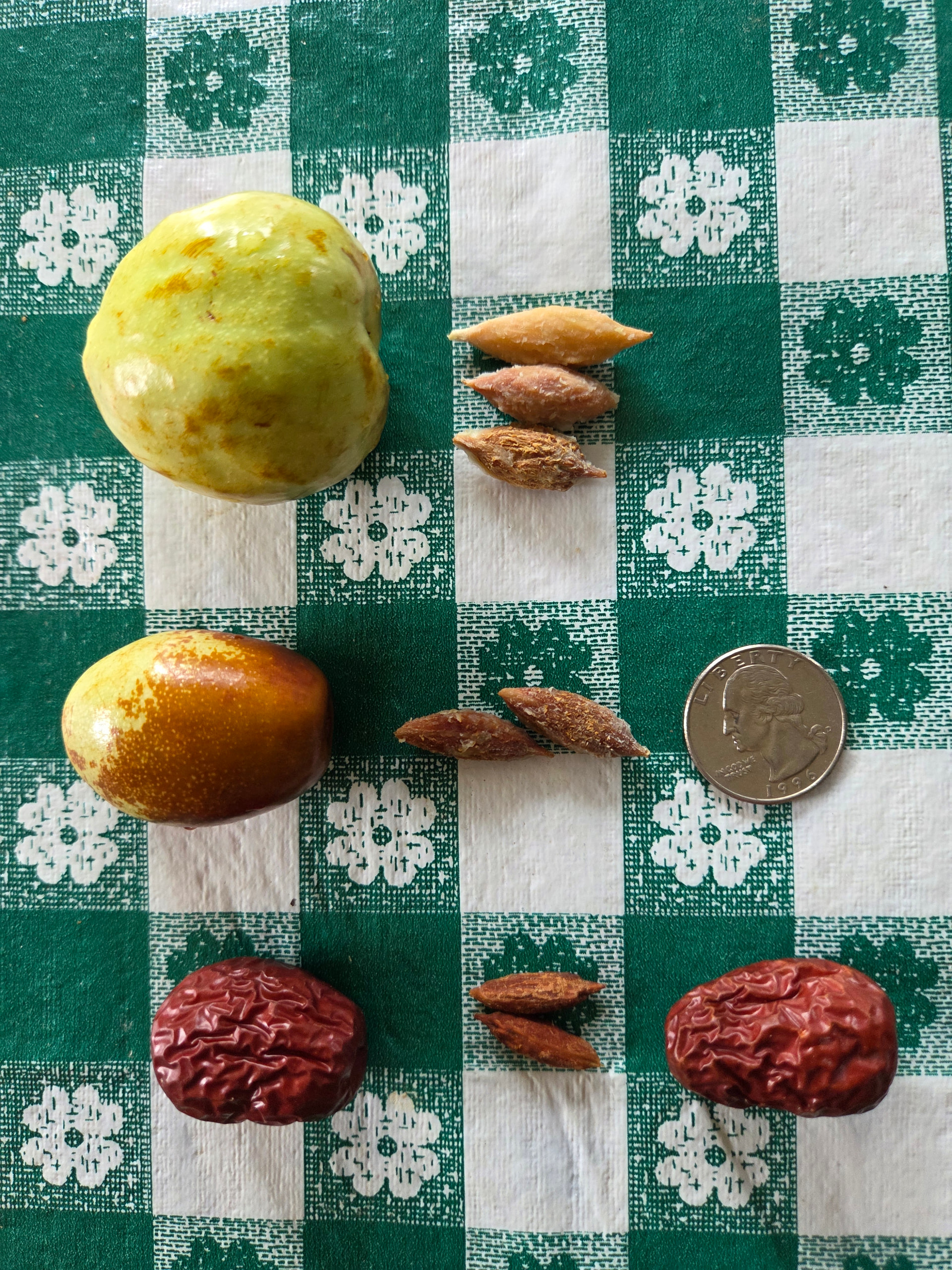
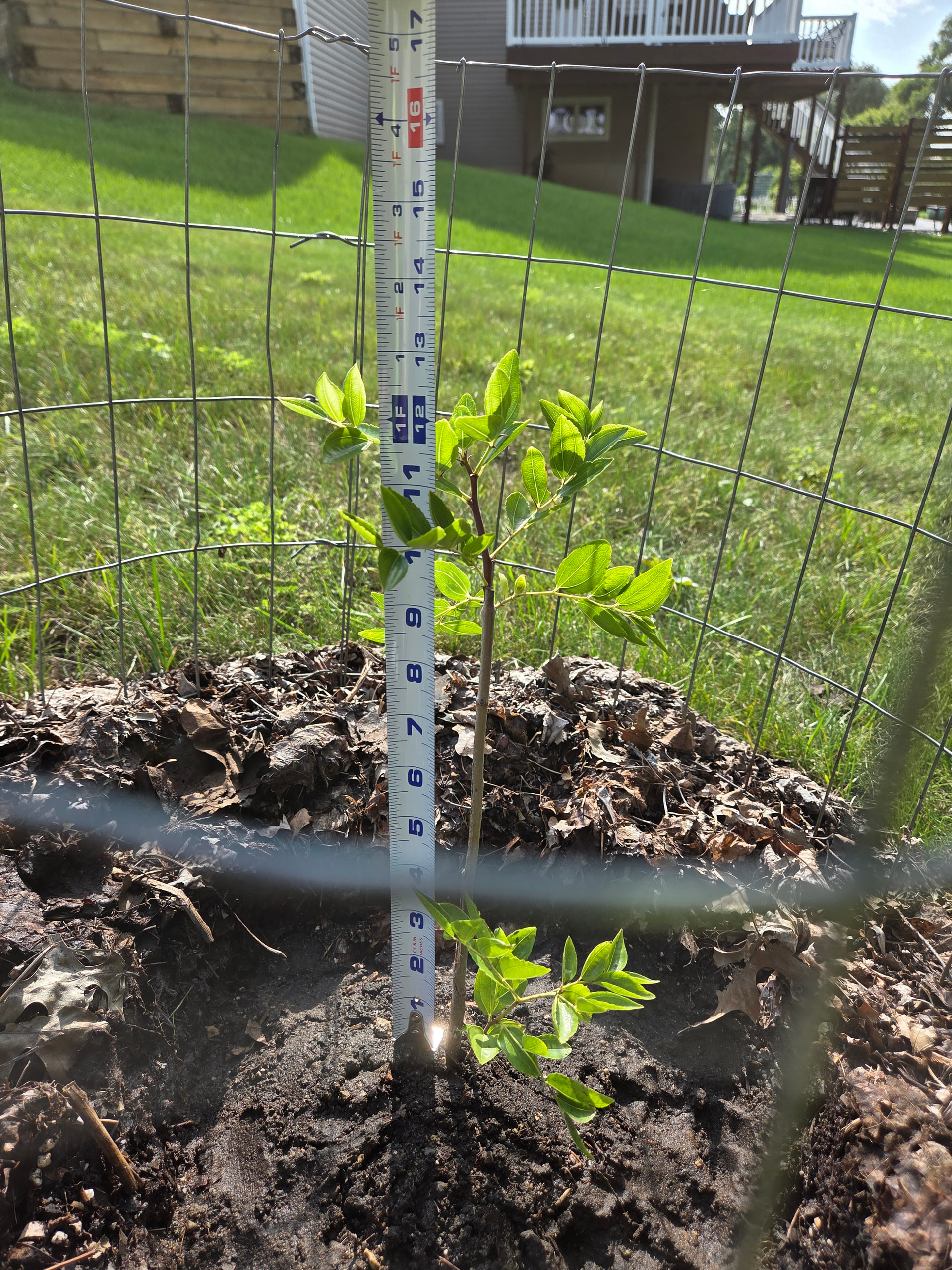
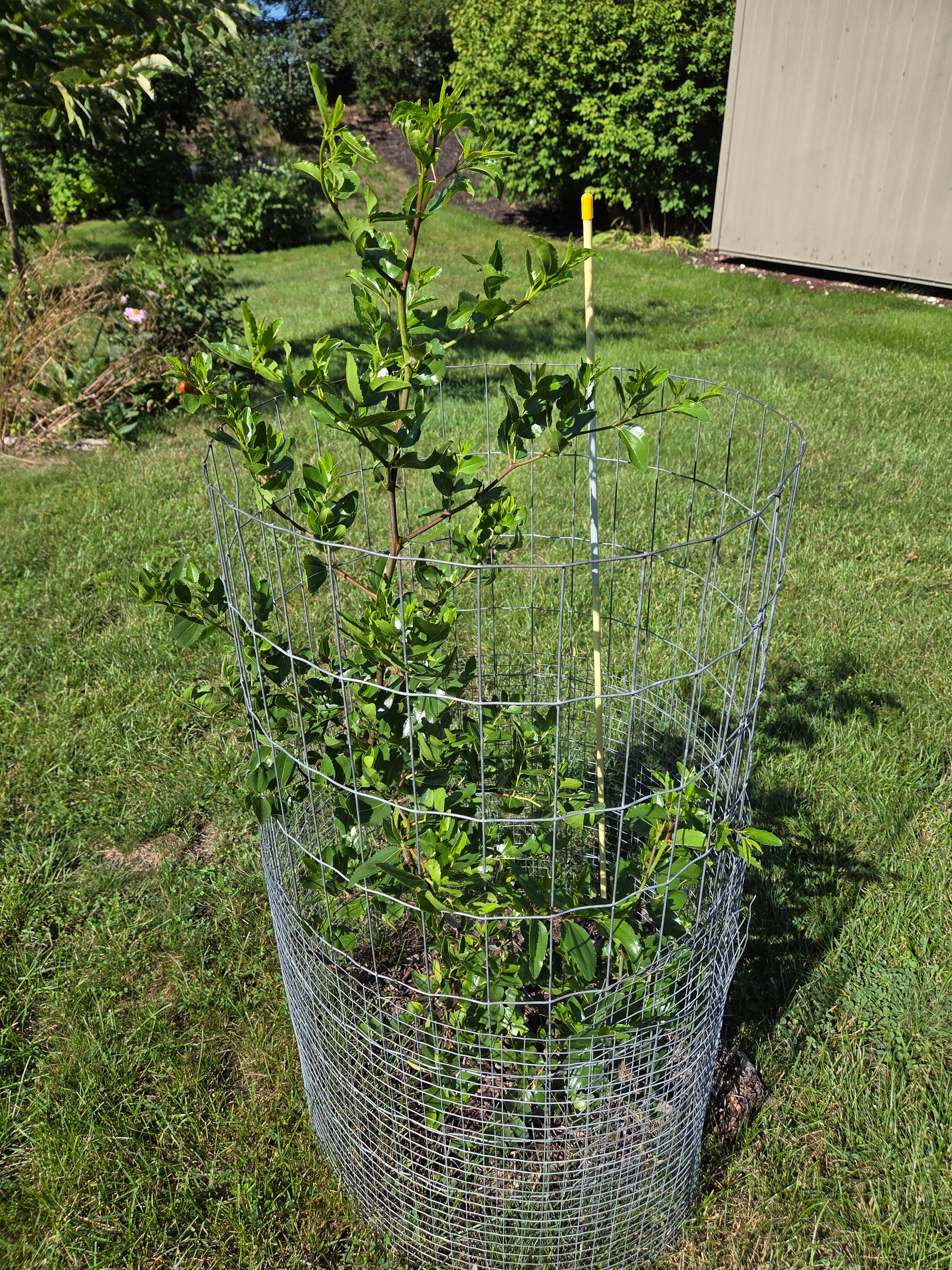
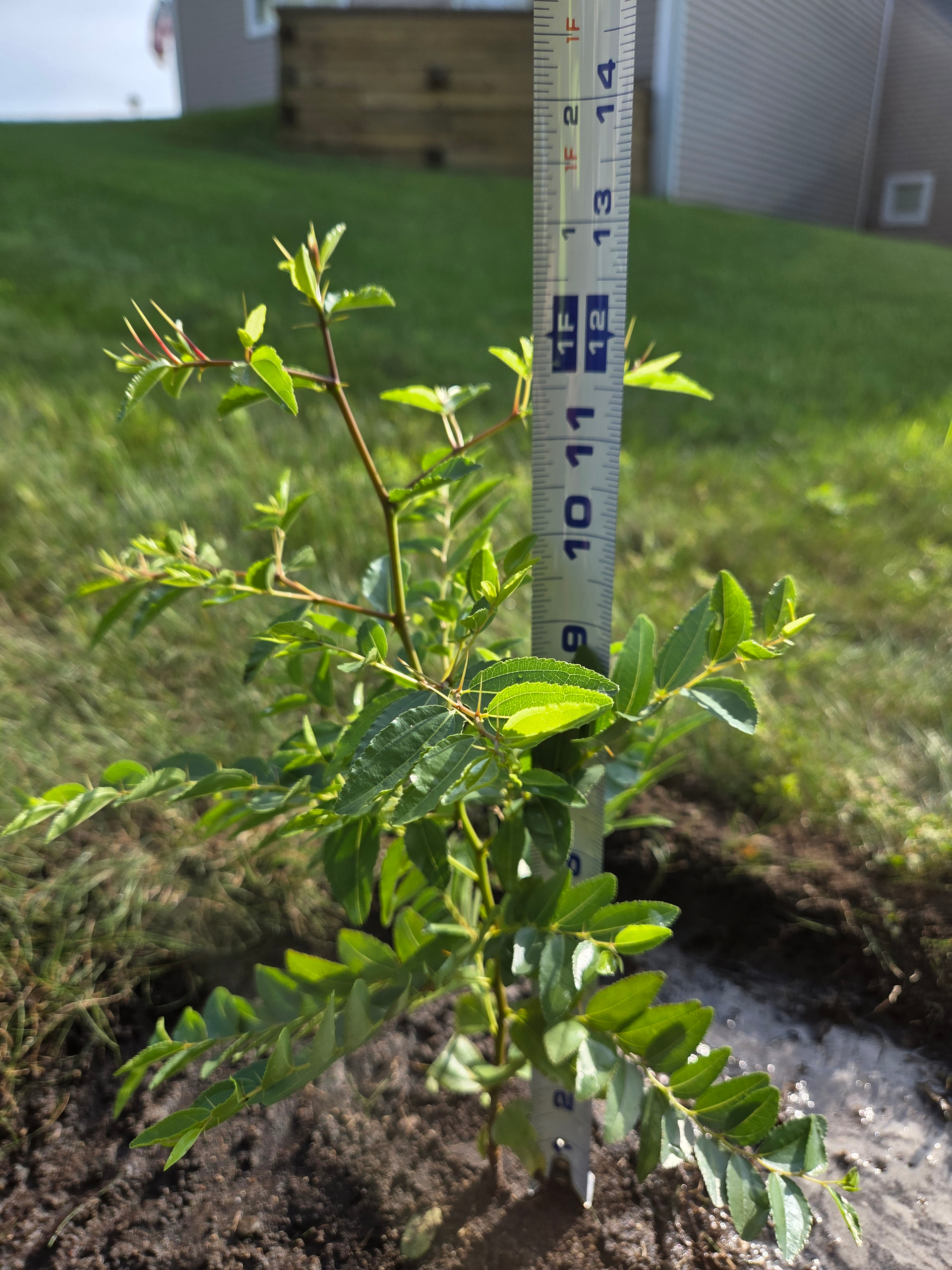
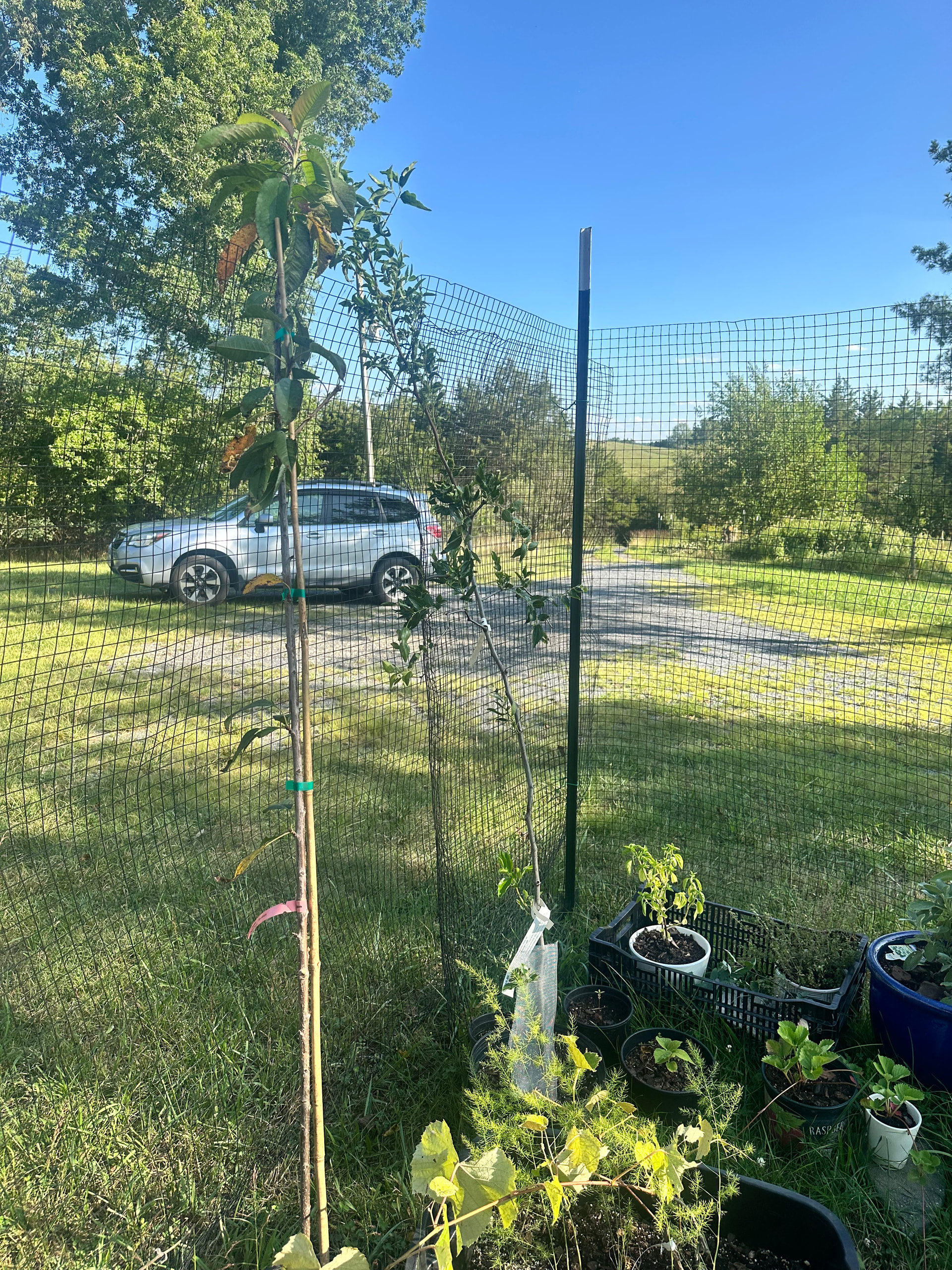
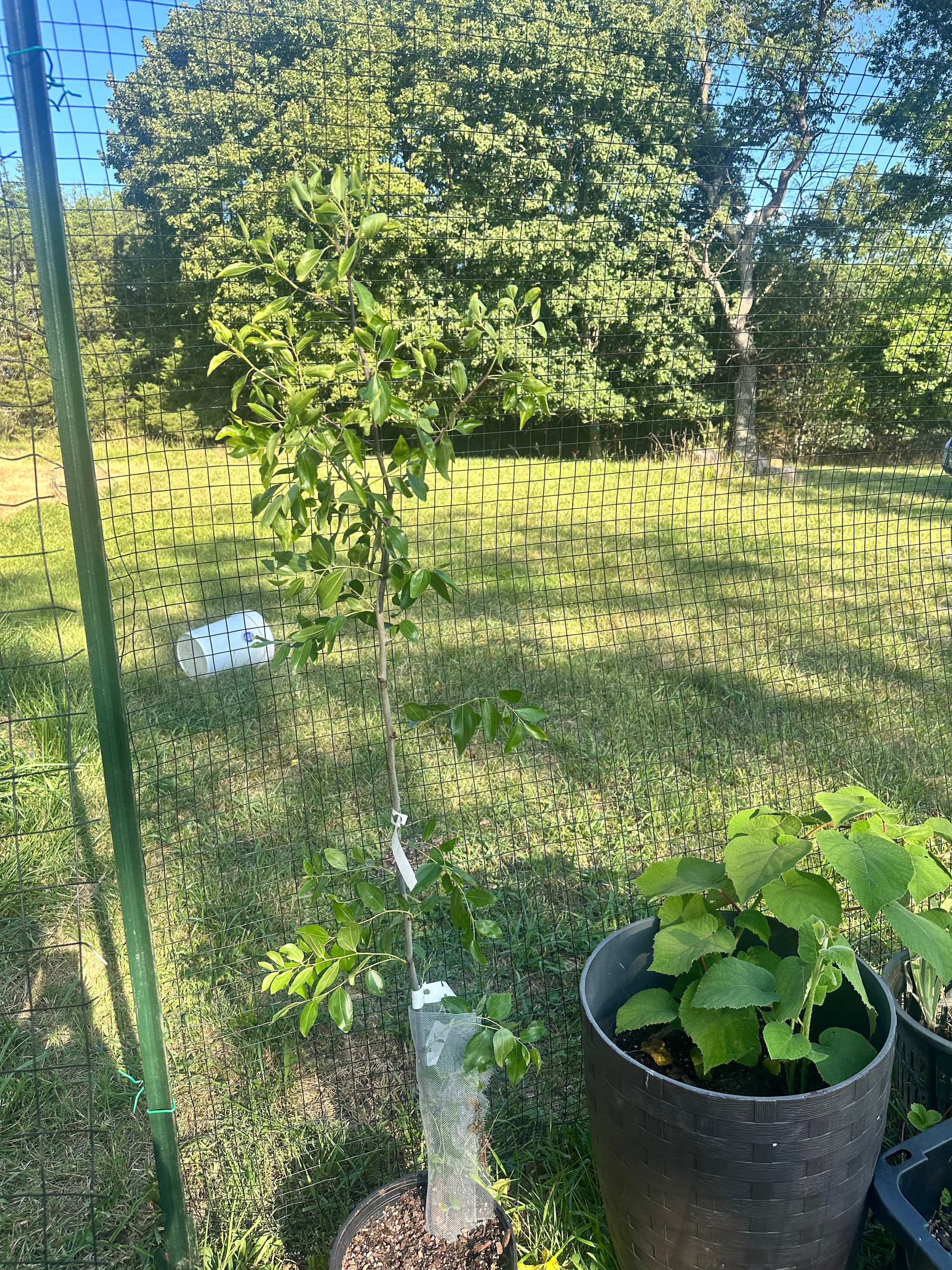
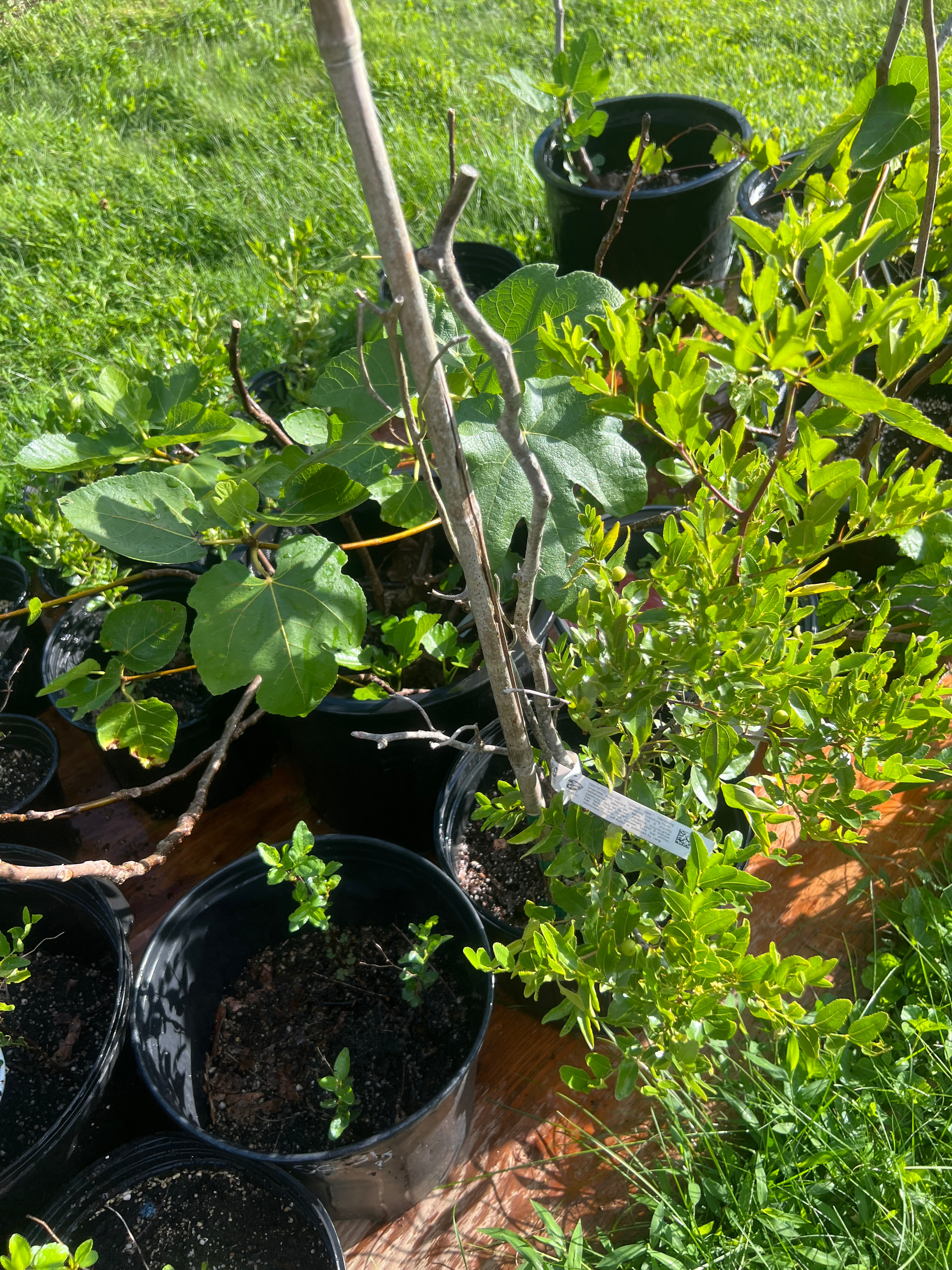
I tried that once as well on a tree I really wanted to size up (Early Golden Crisp). It survived the winter, but wasn’t that happy indoors, even under the lights. I thought it was dead for most of a year. Then another year recovering, but not growing much. I finally planted it outside this past spring and it is doing better.
I think indoors during the winter is a good time to get a start on seedlings, both jujube and tomatoes. But it isn’t good, at least in my limited experience, to size up a bigger plant.
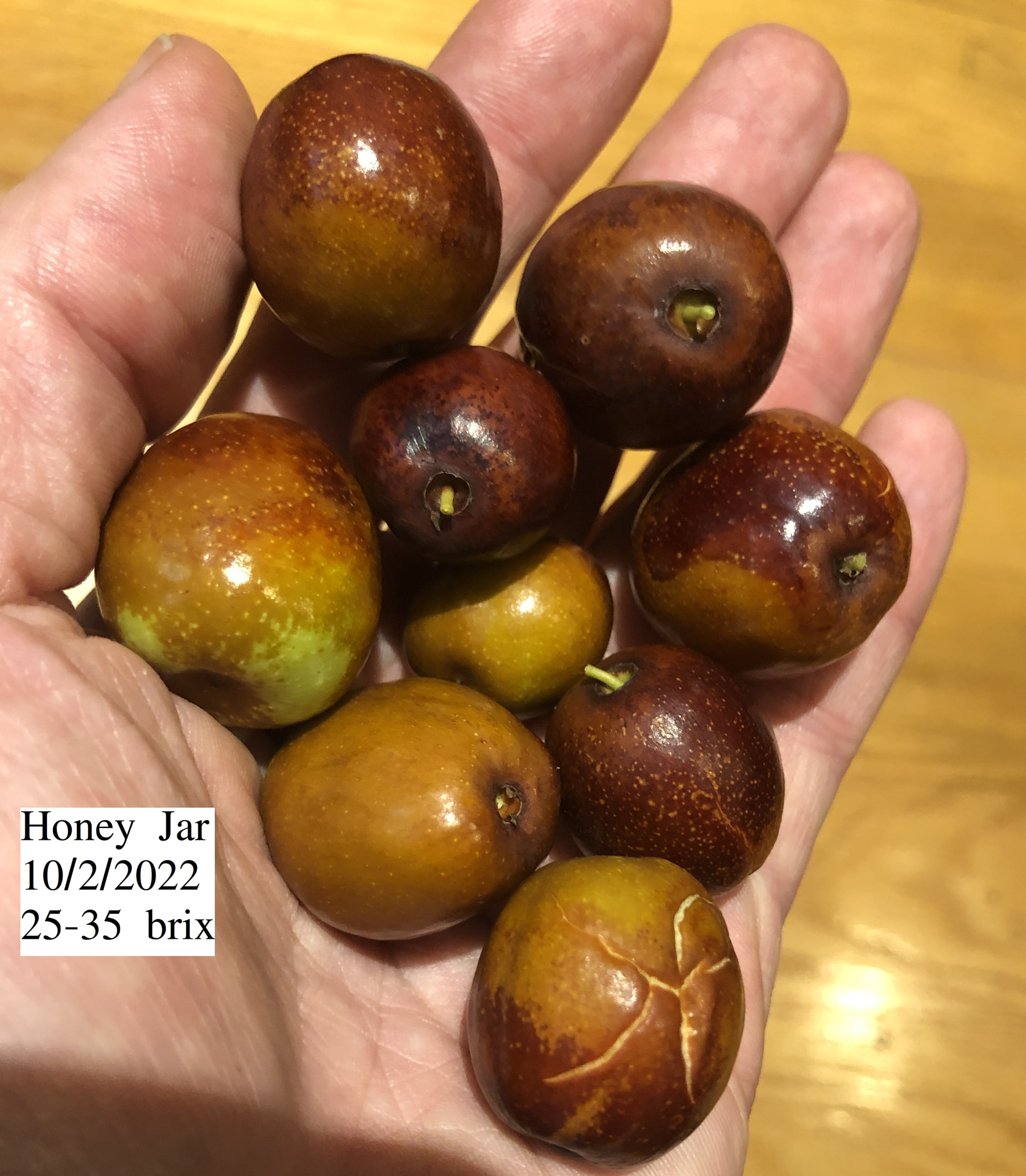
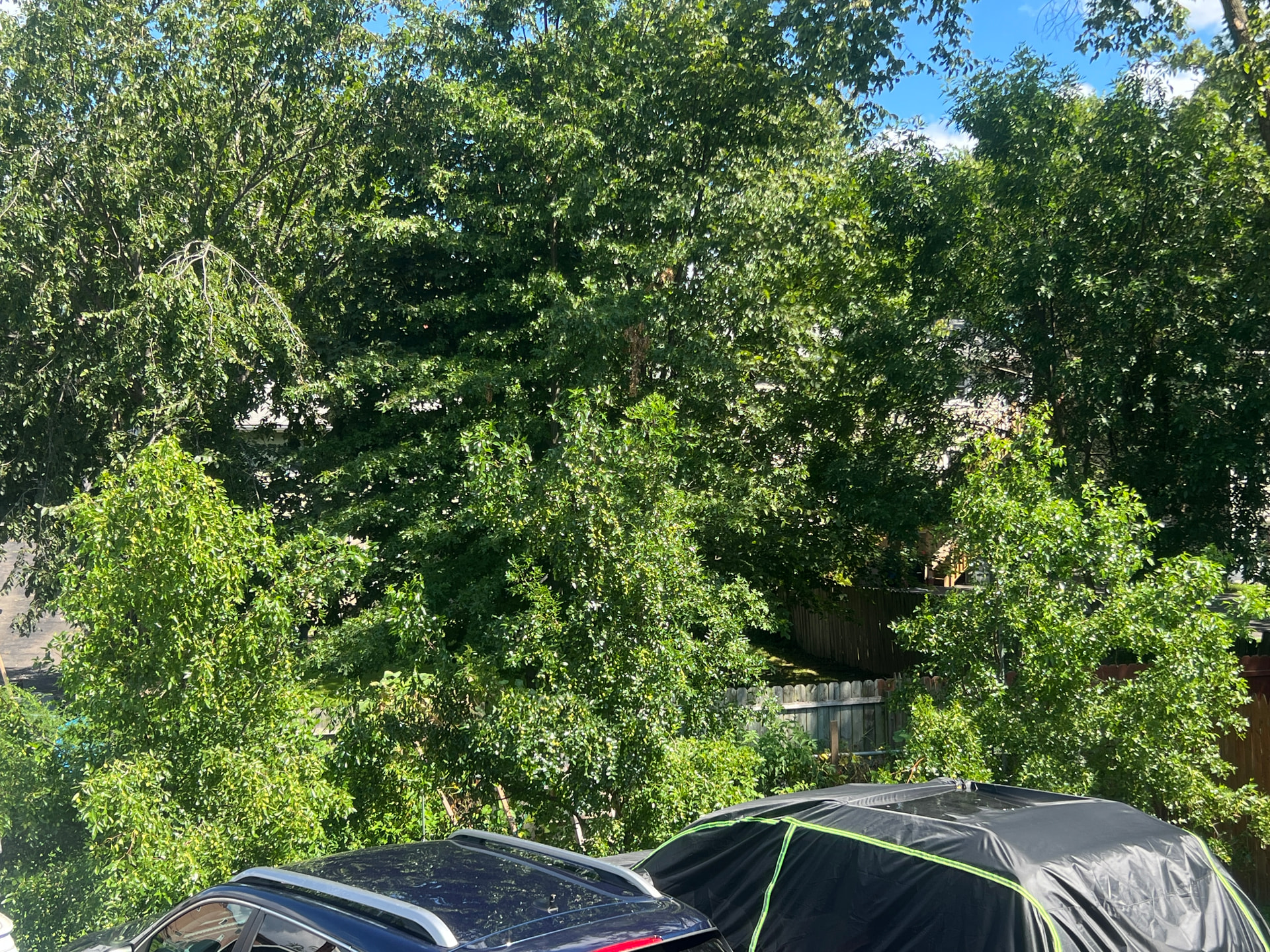
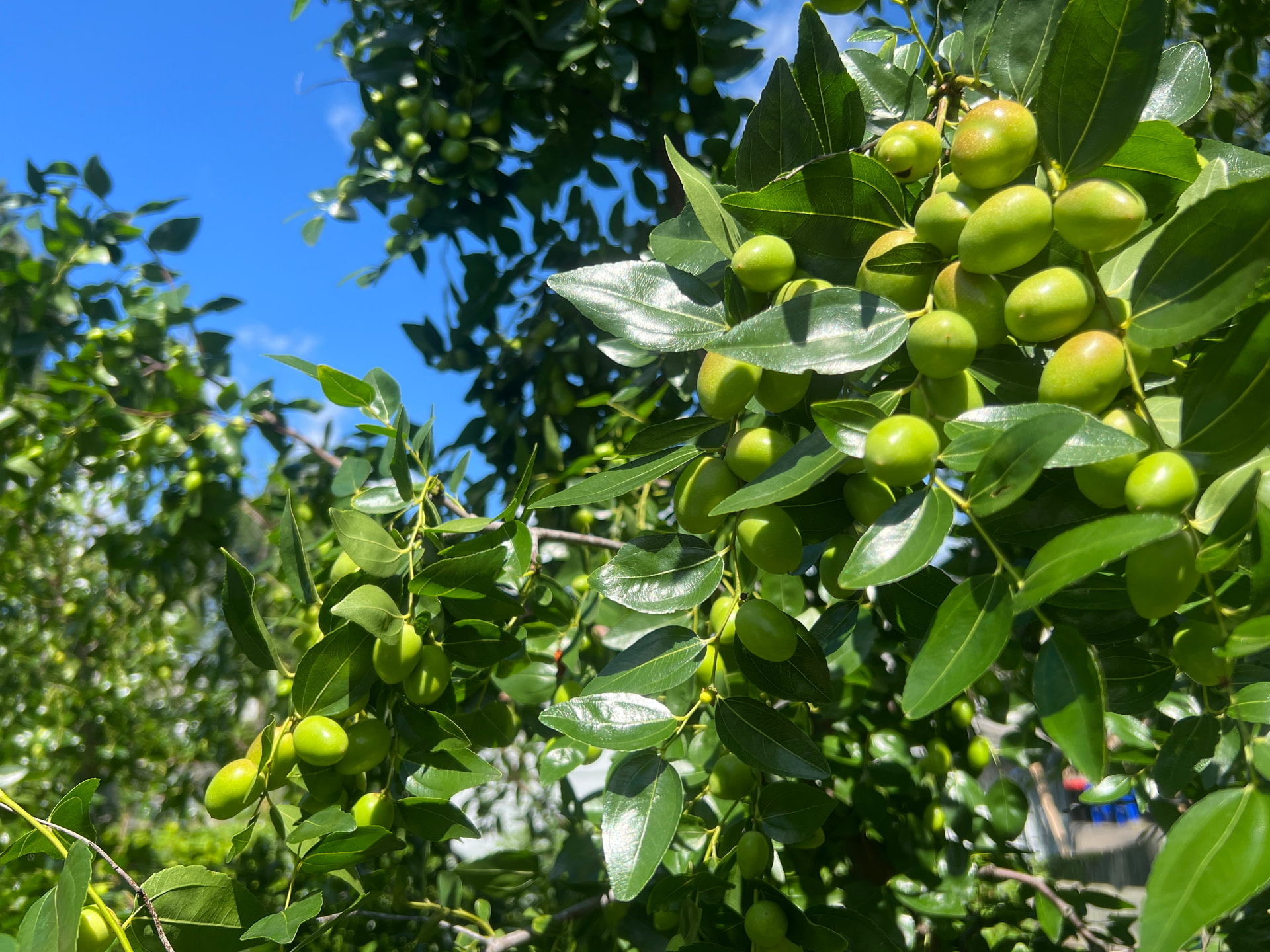
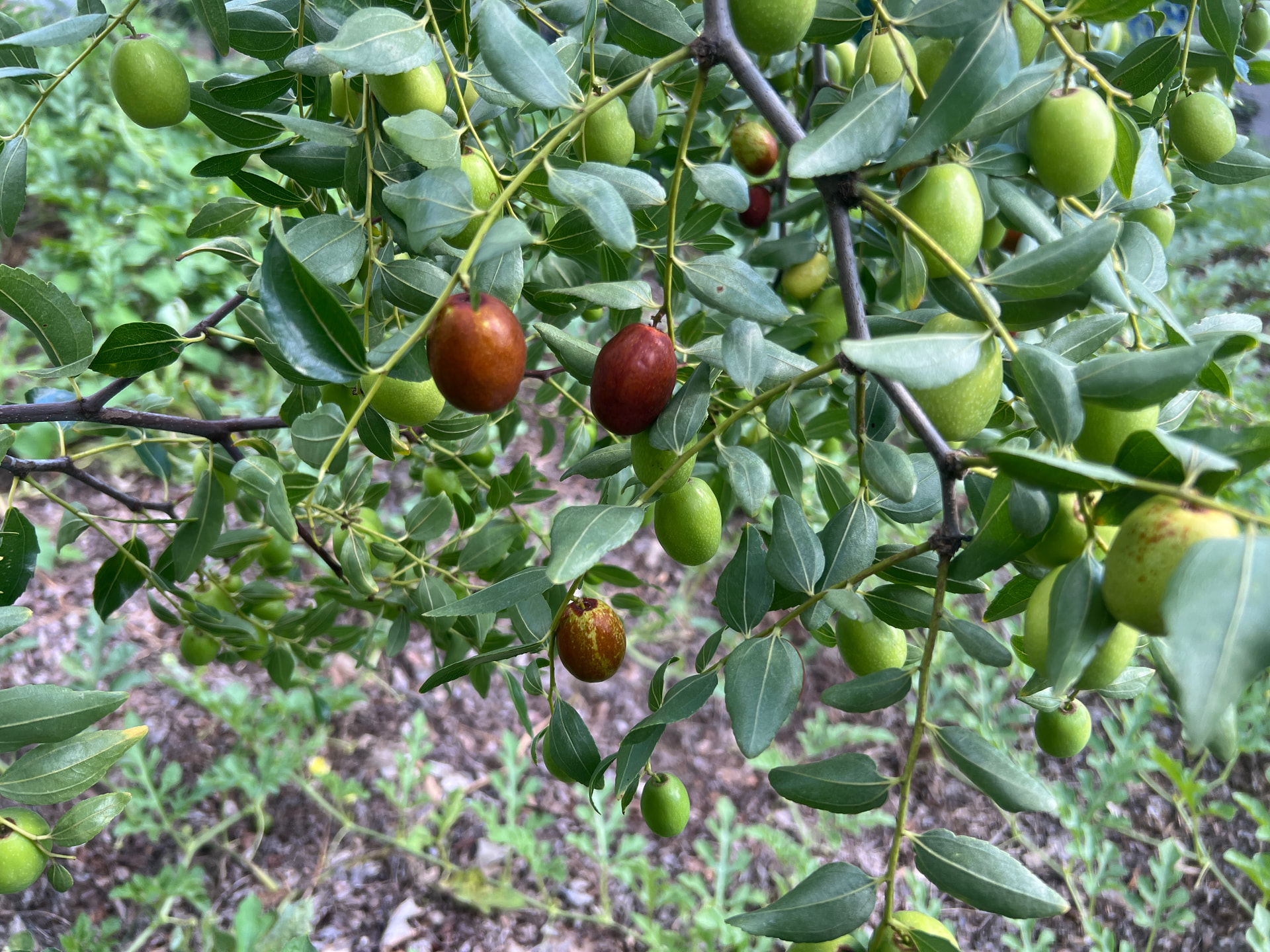
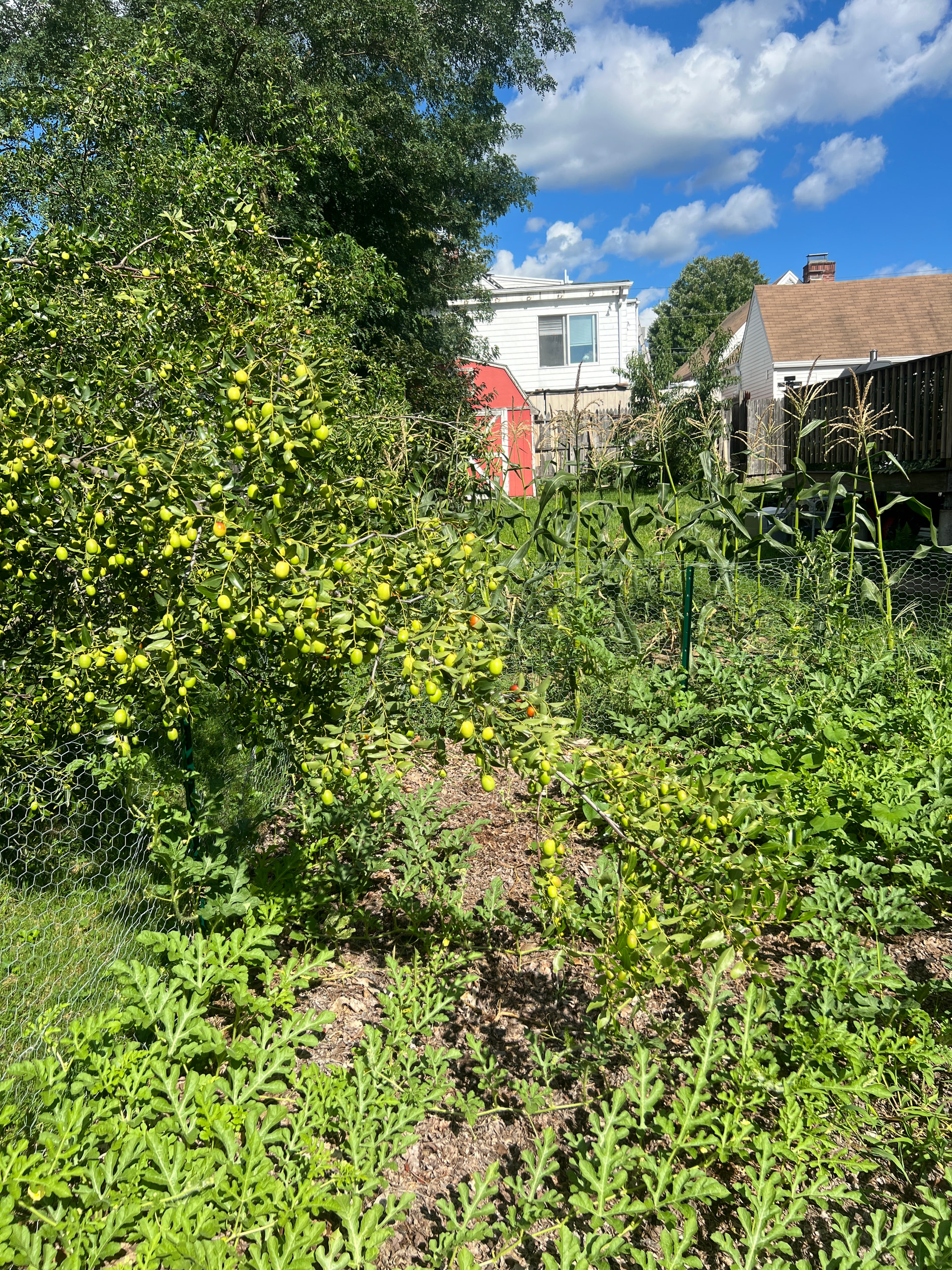
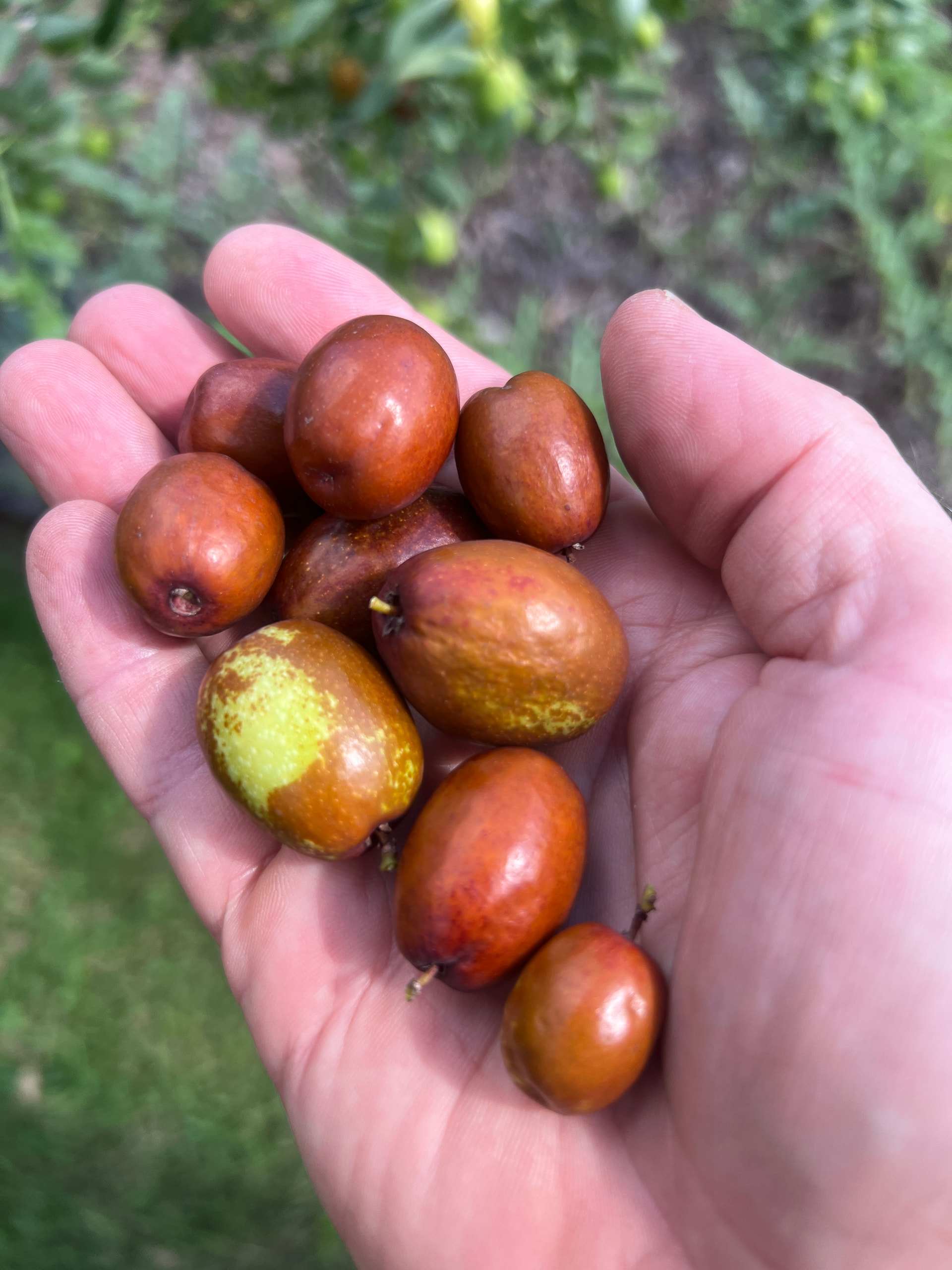
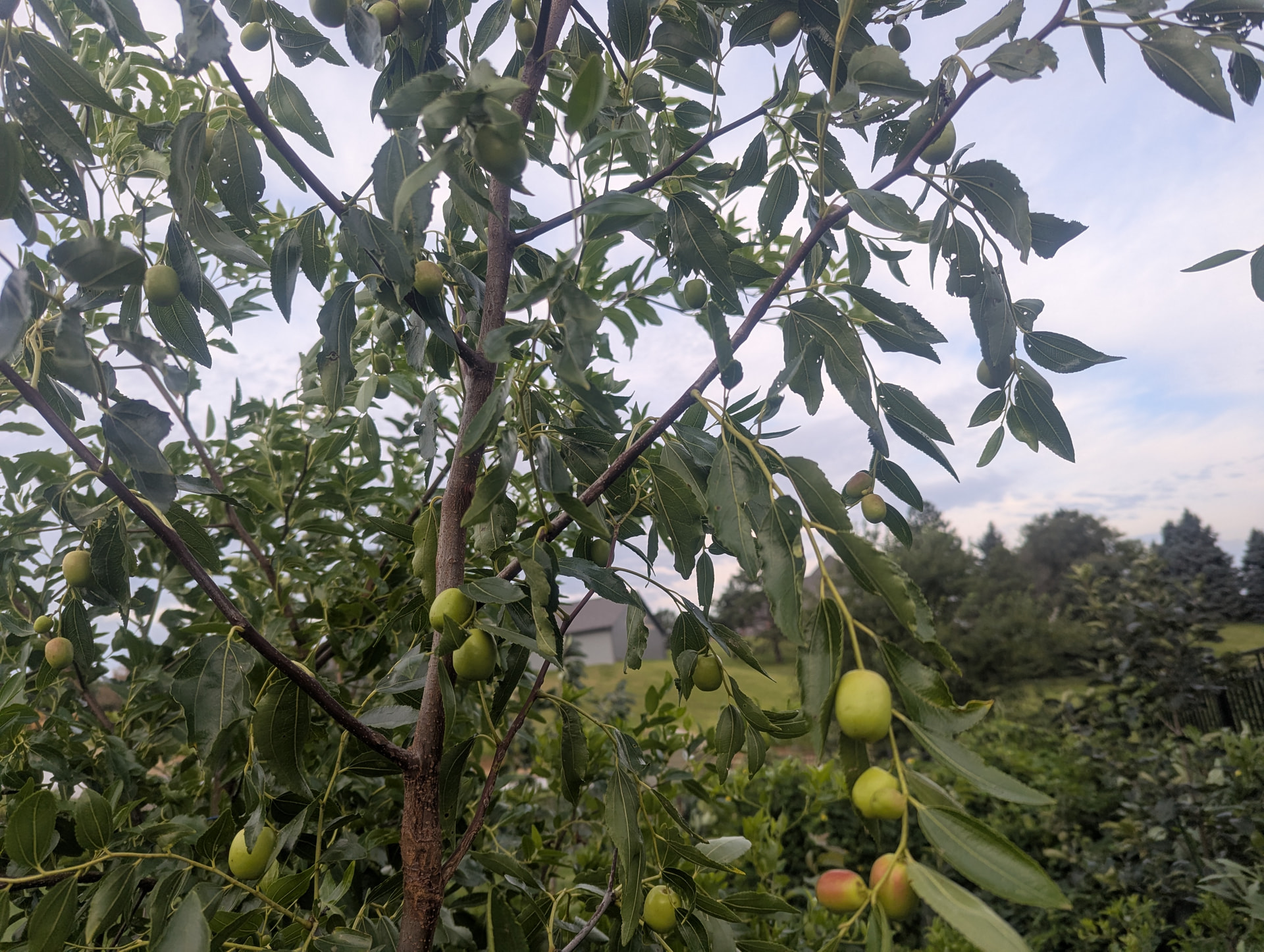
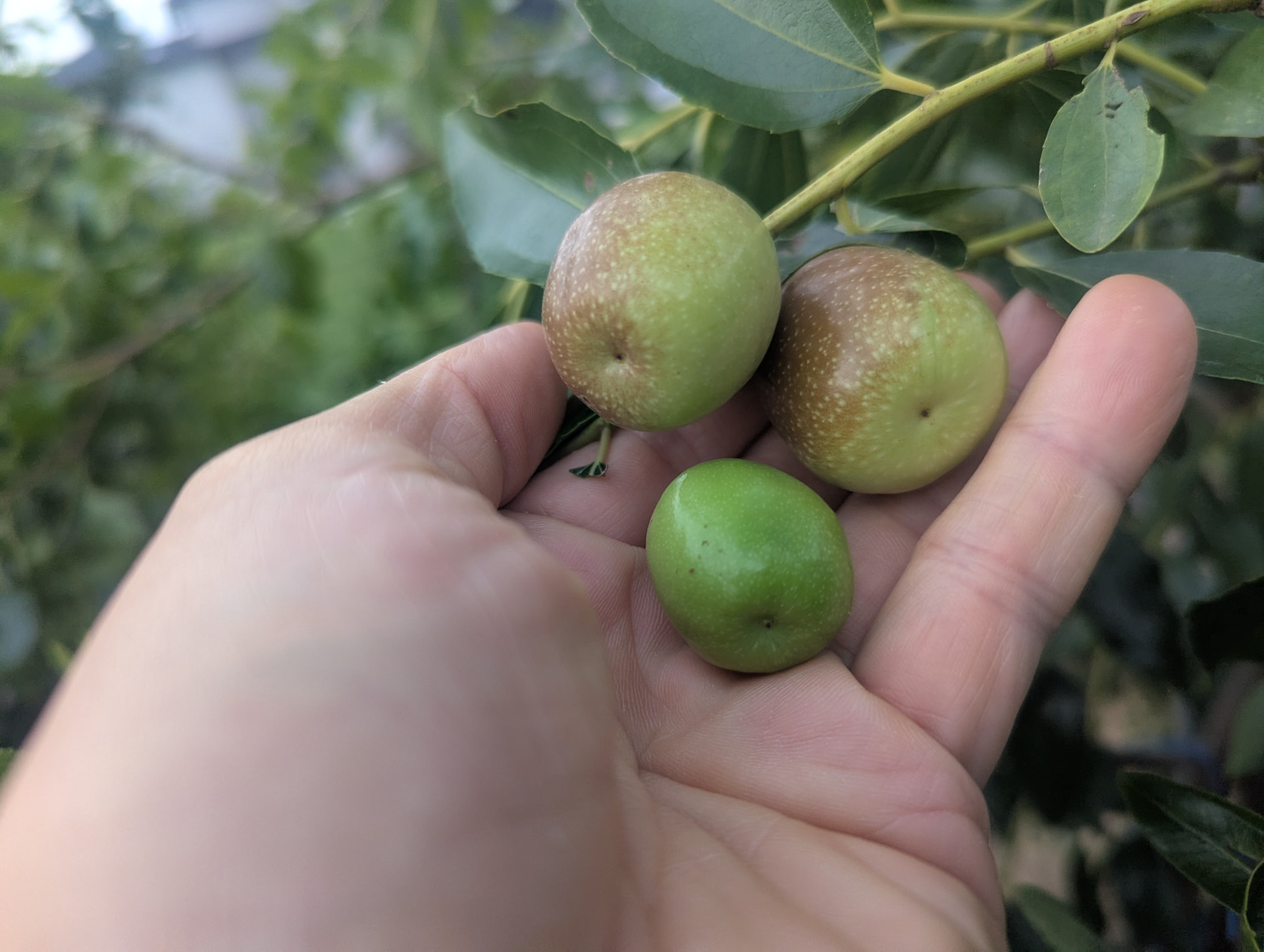
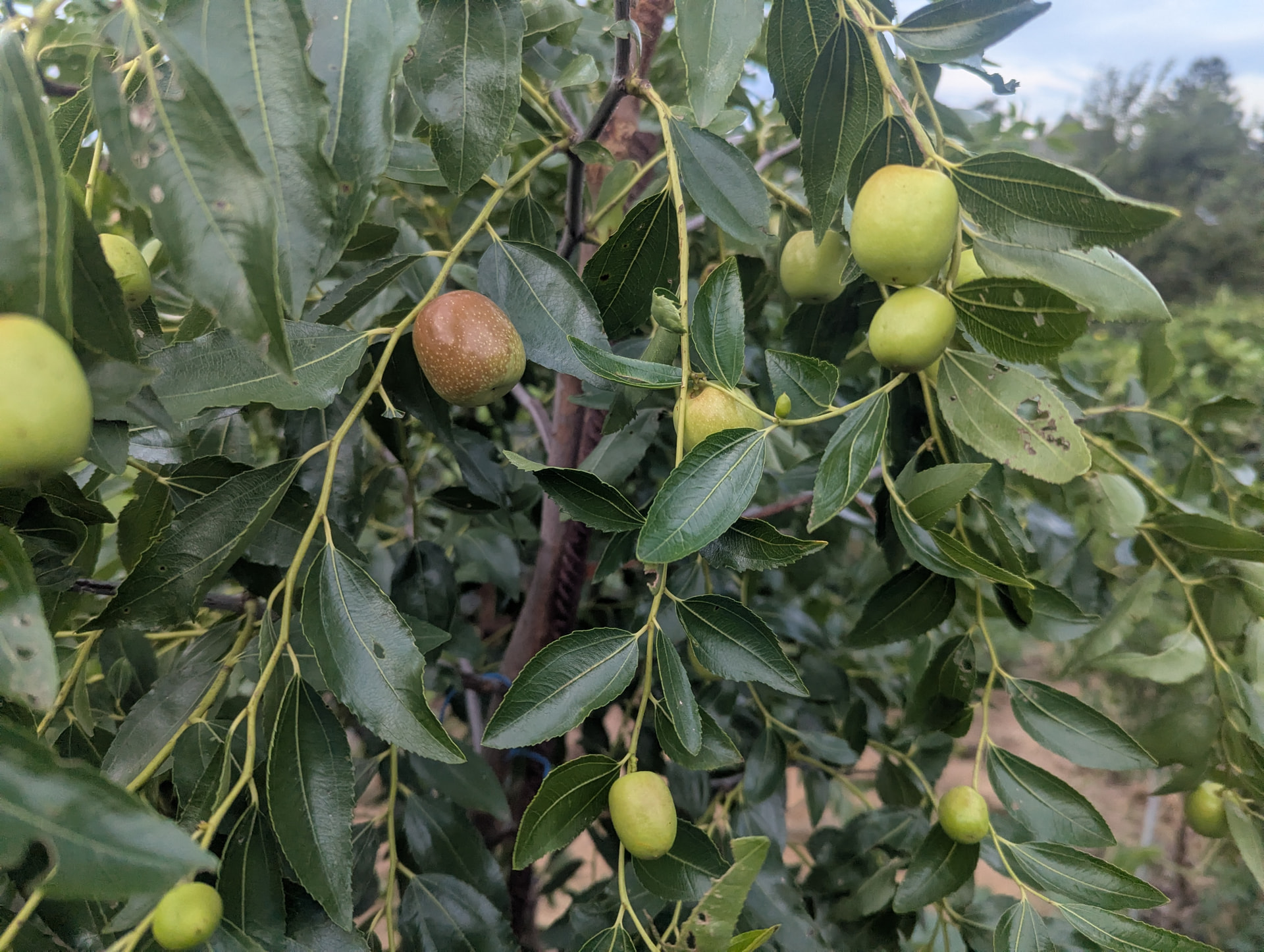
Was your Grand Honey Jar bigger the whole growing season, or did it size up near the end? I have it grafted on top of a normal Honey Jar. So far, there are only about half a dozen fruit on a several foot long branch, while most of the rest of the tree has a heavy set. That isn’t so bad, as I expected that the larger fruit size would produce numerically fewer fruit. But, so far, they are the same size or smaller than the standard Honey Jar. The graft is about 9’ up in the tree, so it should be getting good sun exposure.
Similar to your pic, they do look slightly rounder than the standard Honey Jar, which has a bit boxier of a shape.
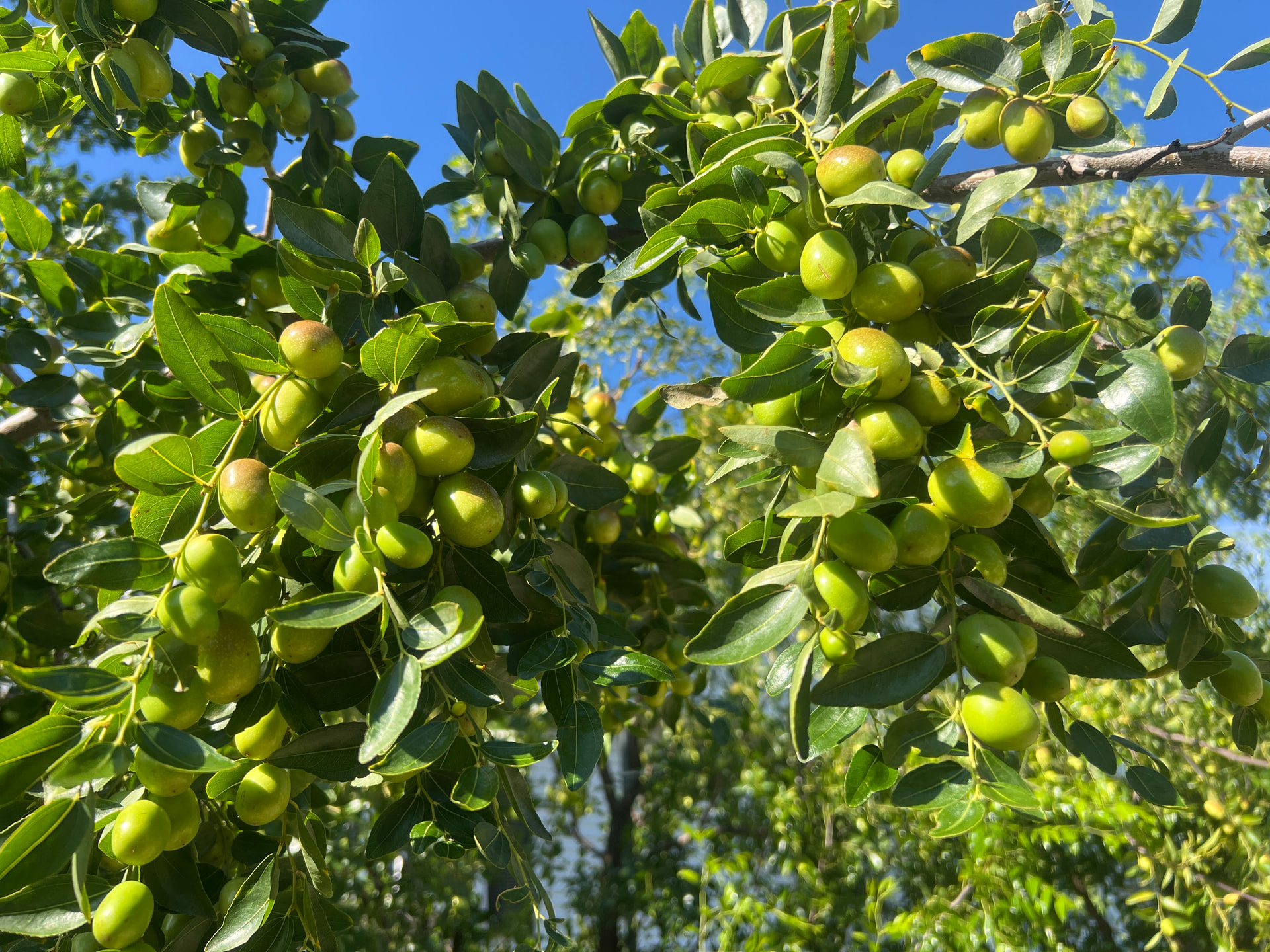
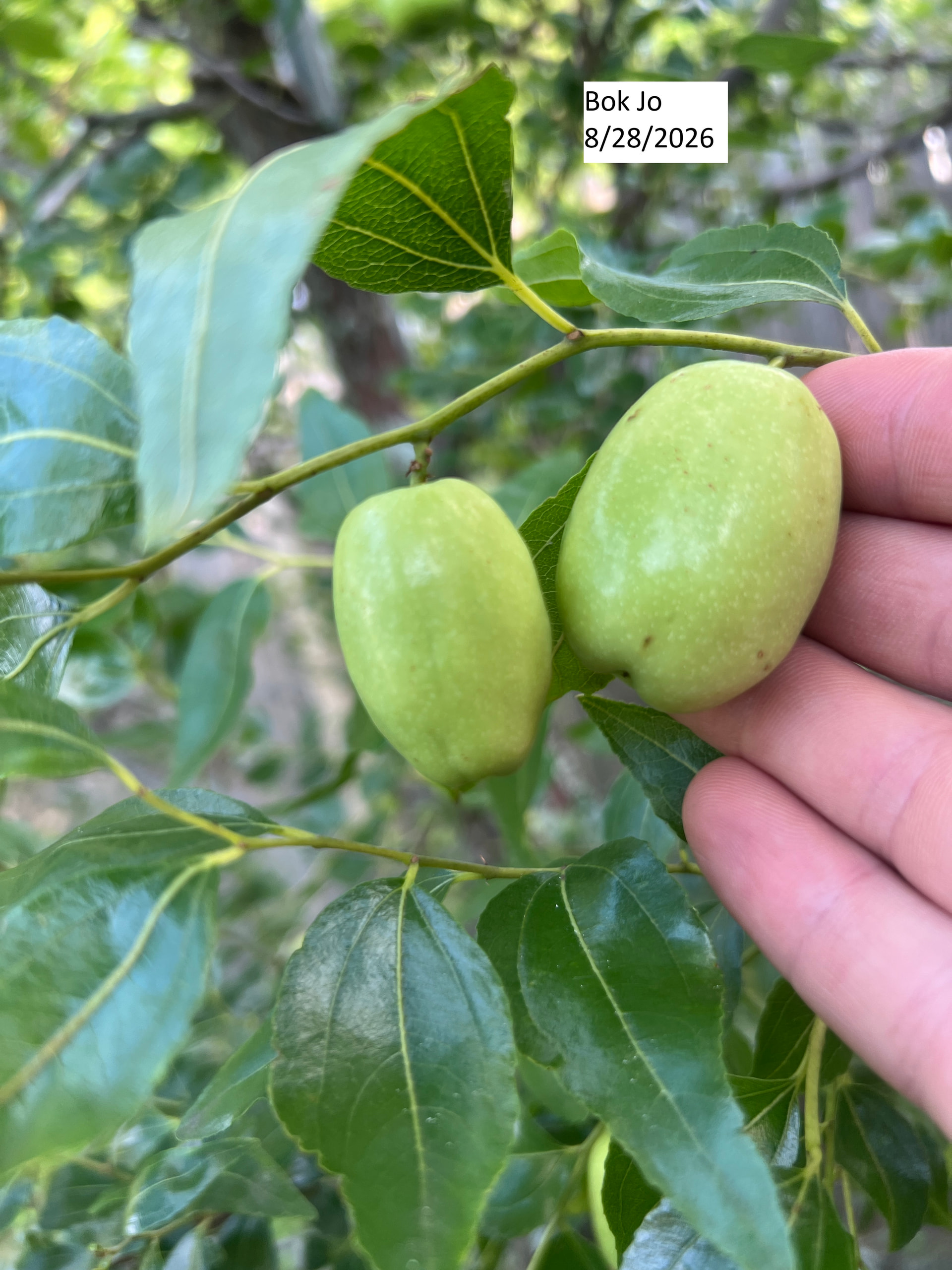
I was walking past a Chico tree and noticed some very large elongated oval shaped fruit. At first I thought it must be a graft of a new large-fruited variety. But when I dug through my spreadsheet, I found it was actually Bok Jo. This branch didn’t have a massive fruit load (like most Bok Jo), so it looks like the fruit instead got quite large. I guess this is an argument for fruit thinning , as this fruit is larger than the Bok Jo on other heavily laden grafts on other trees.
Speaking of the Chico, it’s normally a shy producer, but this year it has the largest crop I can remember. Still not super heavy, but a lot for a Chico.
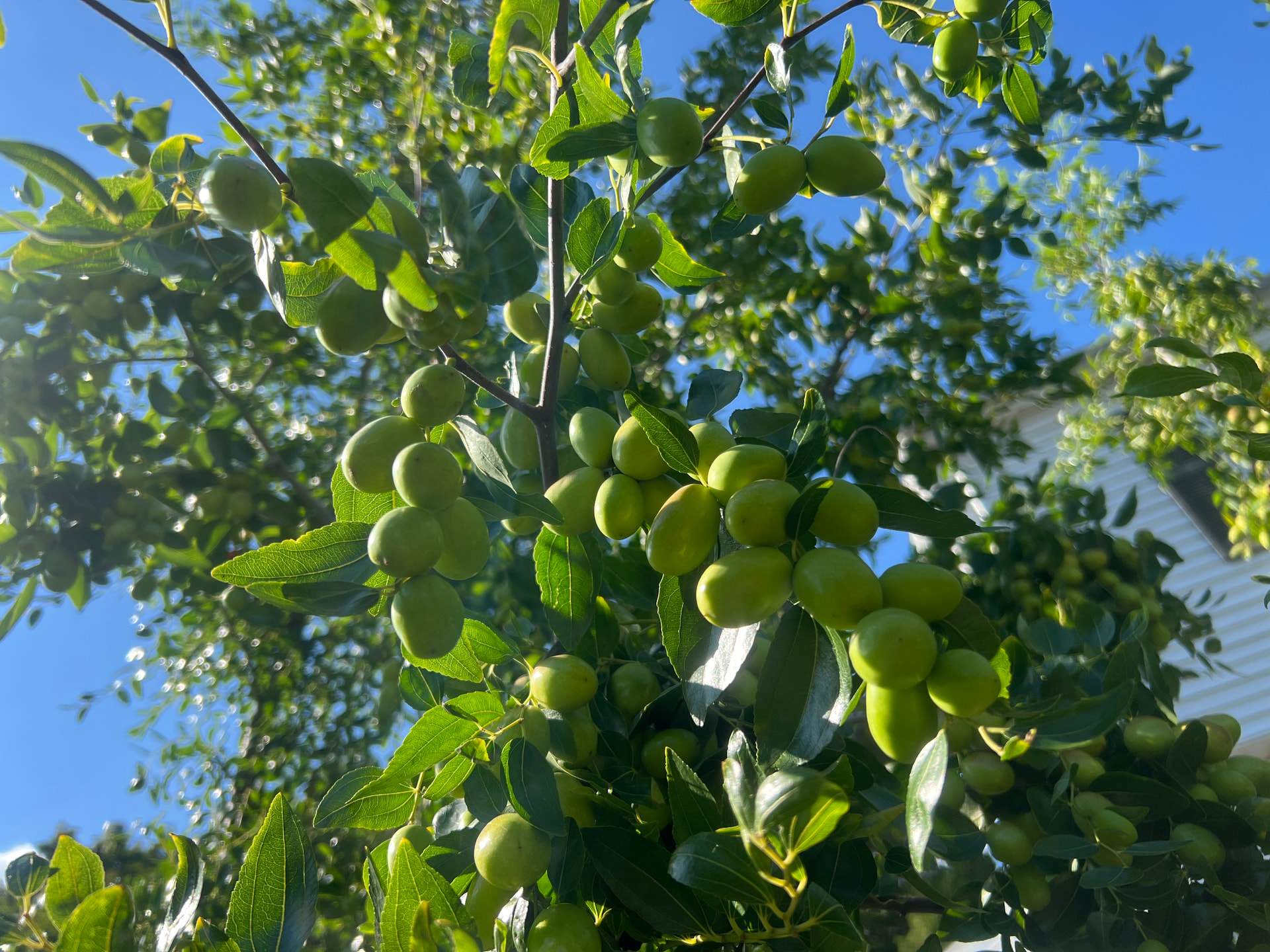
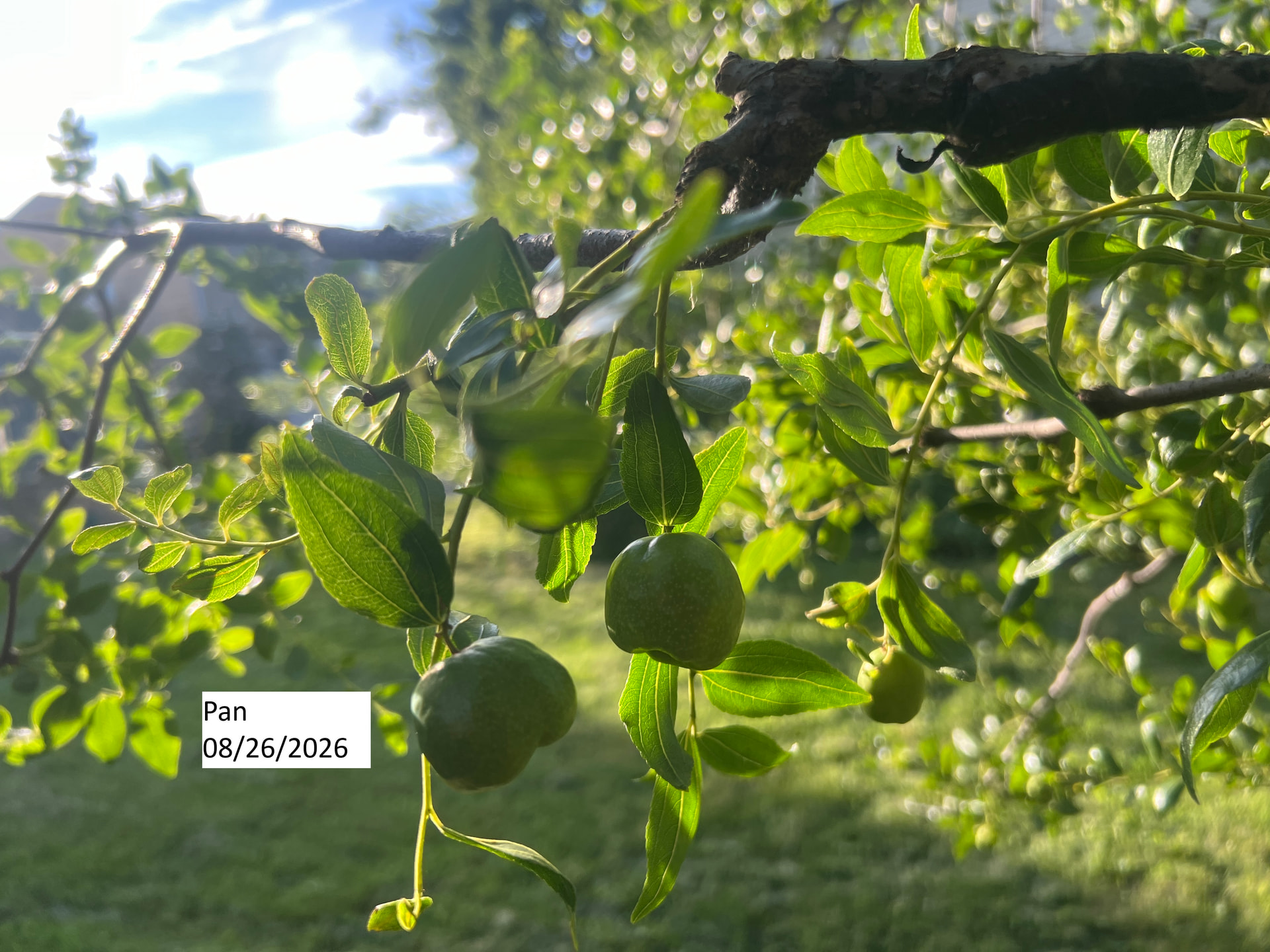
And moving on to similar shaped fruit, here’s a Pan graft which hasn’t produced before. Looks to be the right shape! And pretty large. It’s grafted onto a Li, which I think is what is in the background for reference.
 .
.