On the side of the road in the oak forest next to our land there are large piles of oak leaves. I’ve started a taking wheelbarrows full for mulching. However, when I’ve removed the top layer in the pile, I get to more compact material which is more difficult to rake up. I assume this is leaf mold. This is good stuff, right? But how should I use it?
1 Like
Oak leaves acidify your soil, which is to say “ Oak leaves are made up of lignin and cellulose” Do Oak Leaves Make Soil Acidic – A Gardeners Guide To Age-Old Planting Hacks and Tips . Some Oak leaves can be very good particularly if the soil is clay. Here is a link to explain that relationship https://www.sciencedirect.com/science/article/abs/pii/S0981942824002705 . What you are doing can be very good. Have you considered animals https://m.youtube.com/watch?v=0YFoqYZyL60&list=PLyTGJFH-WMcxbdm3hIi80iNT3u-tg66XU&pp=iAQBmAUB . I highly recommend not overdoing organic materials. Oak trees are similar but not all are the same 58 Common Types of Oak Trees (Pictures and Identification) . I won’t explain soil science and going into cation and anions. If you would like an indepth explanation please let us know.
2 Likes
You can use it as a top layer in decent soils or incorporate it into poor ones. Or use it like the oaks and top the leaf mold with less composted mulch. I believe the evolutionary purpose of the mold formation is to form a matt that is difficult for potential challengers to penetrate as seeds, particularly from above.
I learned my gardening skills in very sandy soil that was sometimes sandstone that I broke up to create basins of soil. Live oaks were the dominant trees in the coastal canyon where my first 3 acres were. Oak leaf mold and the compost beneath it was how I turned sand into productive soil… often topping it with loose alfalfa I picked up for free at the Malibu Feed Bin.
No, oak leaves do not acidify soil below 6 and neither does leaf mold. If I had too much clay in a soil I could think of no better way to fix it than with ample leaf mold- foamy stuff. I also disagree with Clark that one must be careful about using too much organic matter when establishing plants. I do believe that with fruit trees, too much organic matter may reduce brix in the humid region for some species of fruit trees… peaches and apples. You can’t stop the rain and high organic matter increases the amount of available water a great deal in almost any soil.
A vegetable garden can have very high organic matter without any negative side affects that I know of for most vegies. On wet seasons it may be a problem for peppers and tomatoes. However, deep mulch slows the warming of soil, which might be what Clark is thinking about. It may slow growth of plants in spring but help them in hot weather.
4 Likes
Thanks Clark, eventually I hope to dwelve into soil science too, but for now I’m just trying things out. I have very poor granite soil that drains extremely well. I hope the leaf mold could improve fertility and slow down the water a bit.
2 Likes
Thanks Alan, sounds like we share some ideas. I’d much rather work with the material I have than to buy soil from elsewhere. I save money and I like the challenge. Also, you learn much more about the interaction between soil and plants. I mixed the soil almost 50/50 with old oak leaves last year. It worked well for everything growing above ground (less so for turnips and carrots). This year, hopefully, I can grow some tubers.
3 Likes
Yes, composted oak leaves are excellent for the garden. Despite myths about high acidity, oak leaves decompose into a near-neutral pH (\(6.8\)) and provide valuable nutrients. While they decompose slowly, shredding them accelerates the process, making them an ideal, nutrient-rich addition to compost piles or as mulch for plants.
Per Google..
Compost them first.
They break down much faster if you shred or chop them up some. I have a push mower that bags and I mow and collect lots of oak leaves mixed with grass in the fall.. it compost well.
I use that around all my fruit trees.
I have 3 maple trees in my yard and use those leaves around my fruit trees too.
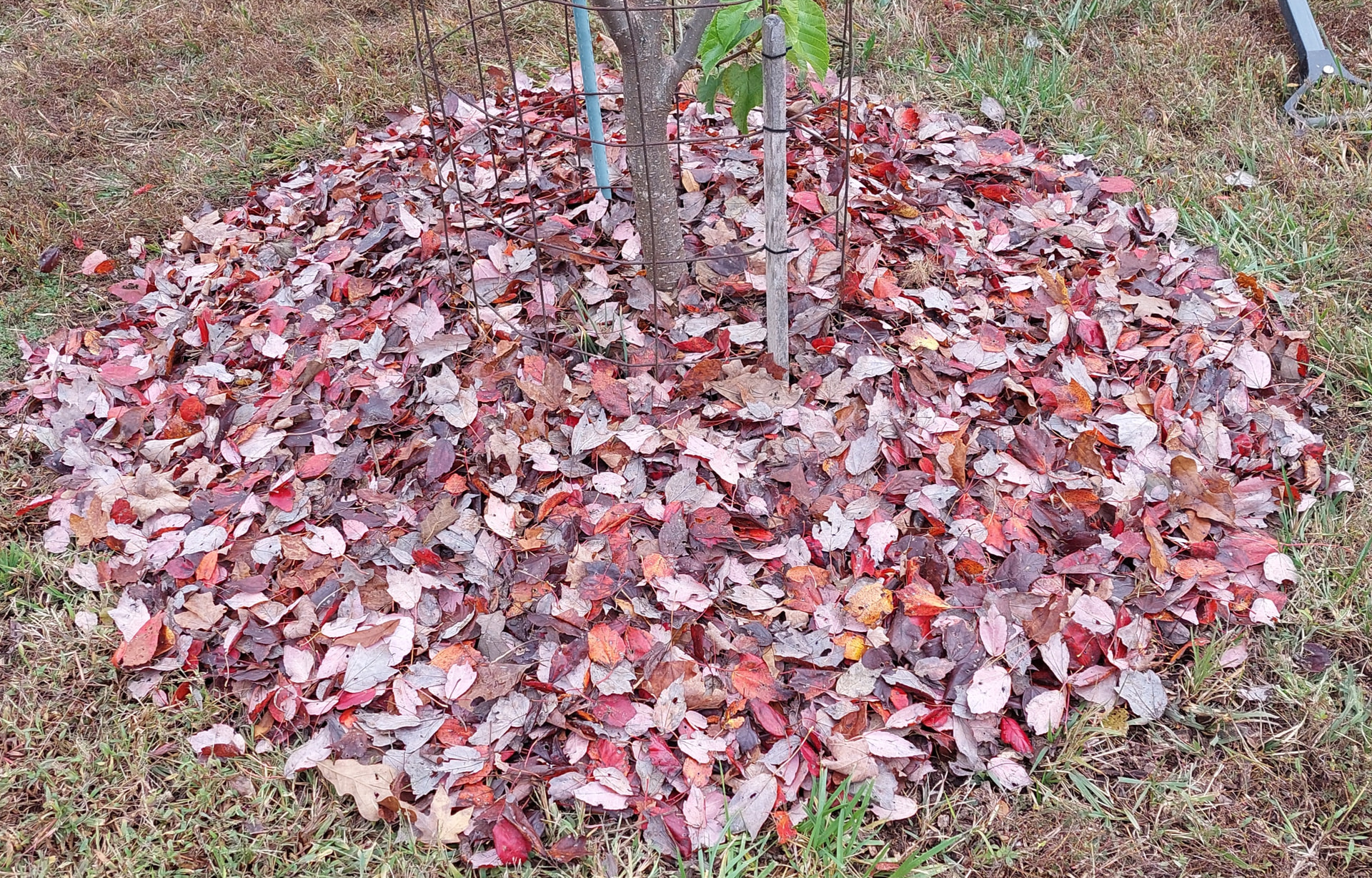
Maple leaves break down much faster than oak, and they have a higher Calcium content than most tree leaves.
TNHunter
2 Likes
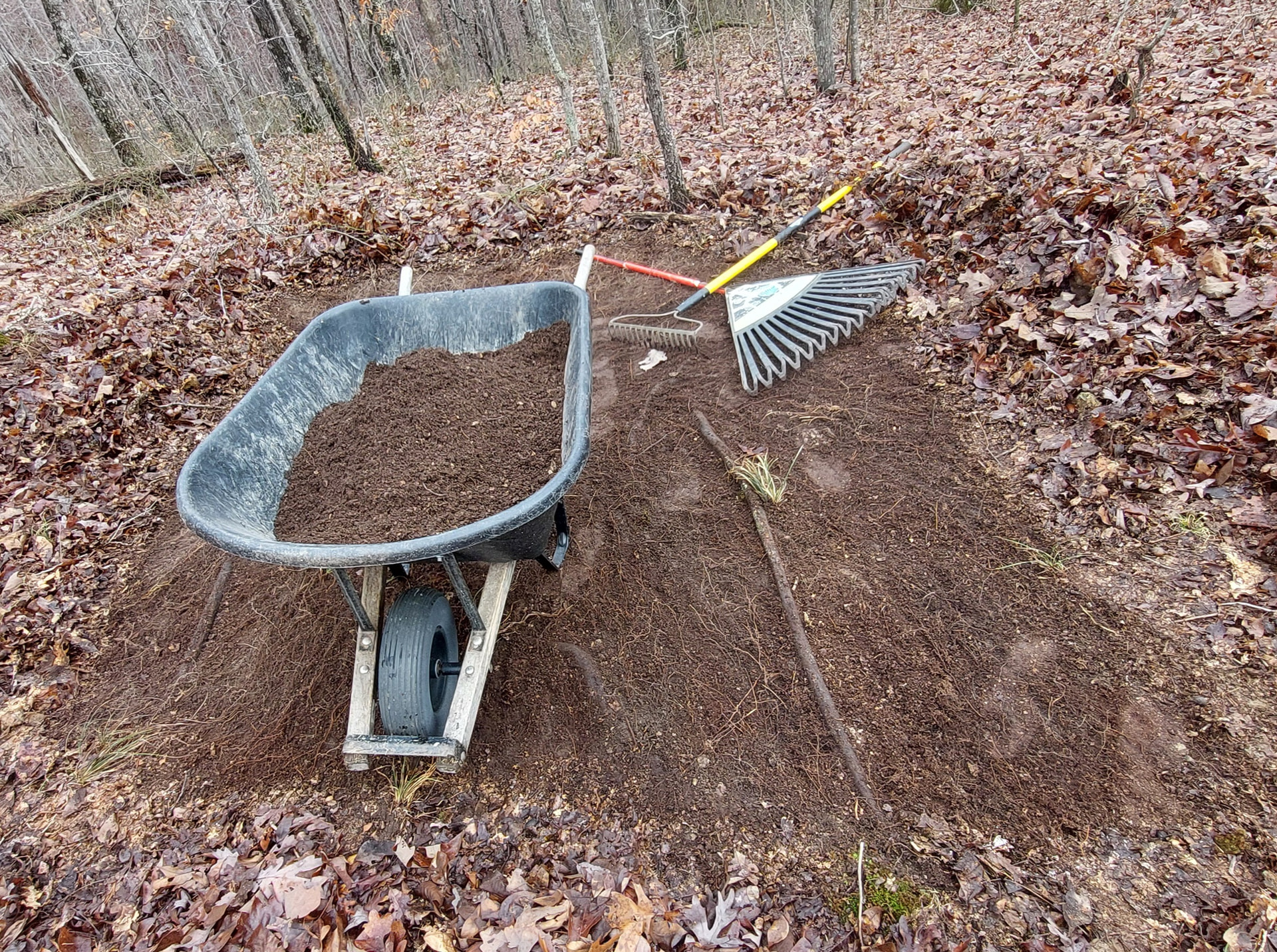
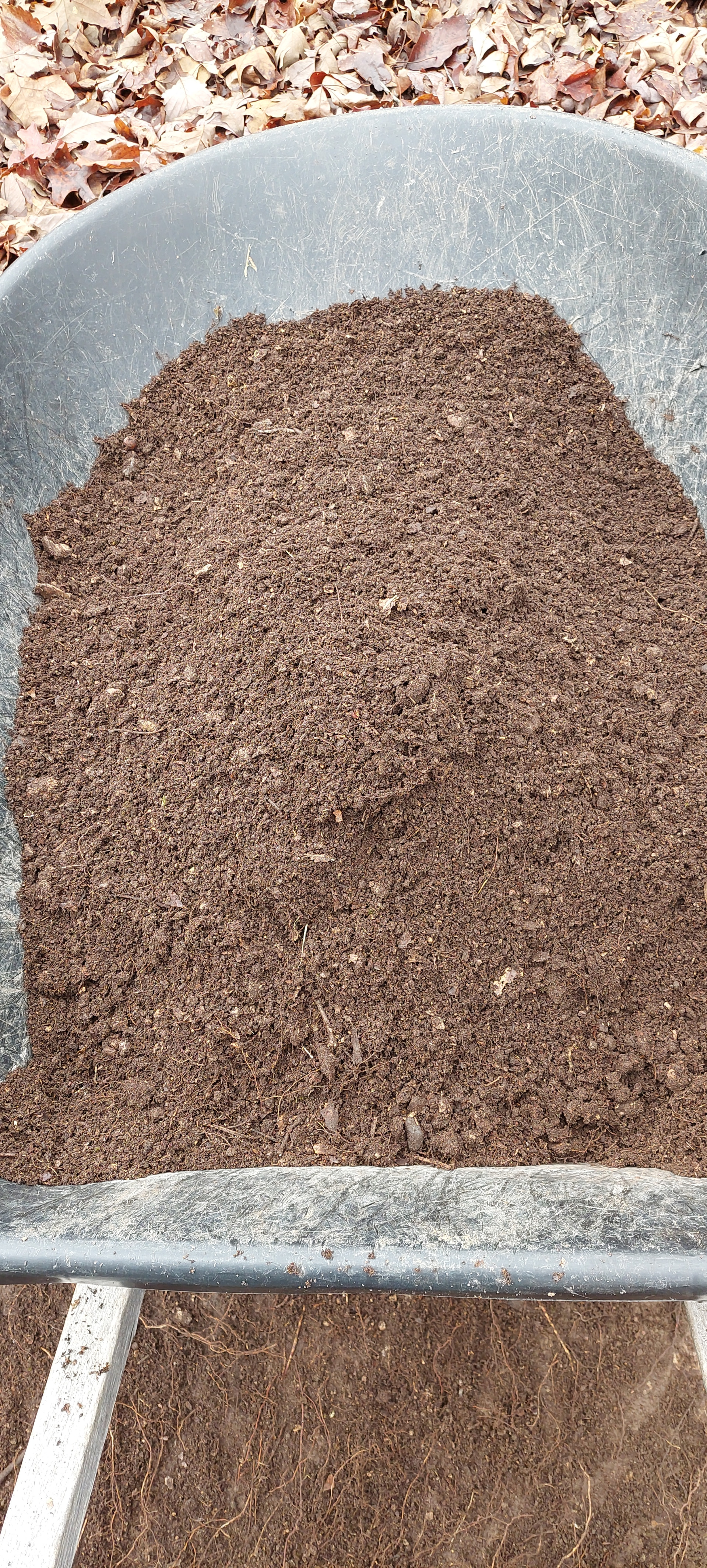
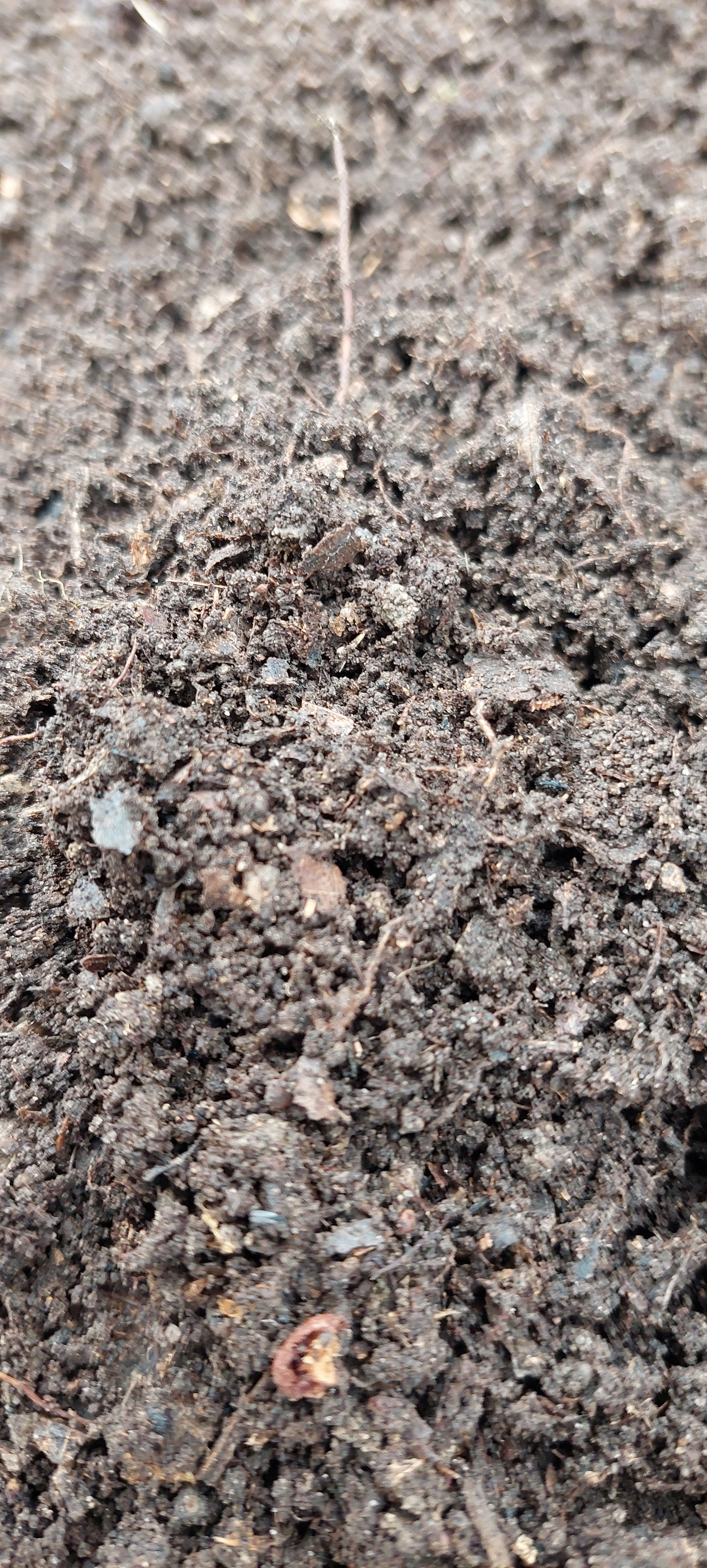
Under the leaves in the woods… you will find some fine material… I call it leaf or woods compost.
You simply rake aside the leaf layer that has not composted fully yet.. and then rake up that composted leaf litter and collect it.
This works best when that layer of leaf compost is soft and expanded.
For example is you have a snow and some ground freeze… and then it warms up some and rains.
That nice layer of woods compost will be soft and easy to simply rake up.
TNHunter
3 Likes
Though I agree with you both on applying Leaf Mold I’m pointing out I would consider the quantity. There can be to much of a great thing. It all depends on what you are trying to grow. There is soil like mine that is very high in ph and the more organic material the better including Oak leaves but not exclusively oak leaves. You definately can get into trouble with too much of any good thing. I’m going to go ahead and go into some details to clear some things up on why humus is a good thing as others are thinking but only to an extint. It is better to not use all oak leaves. Plants roots exchange nutrients for what they need. https://www.ctahr.hawaii.edu/mauisoil/c_relationship.aspx
“Soil-Nutrient Relationships
Cation exchange
The ‘soil cations’ essential for plant growth include ammonium, calcium, magnesium, and potassium. There are three additional ‘soil cations,’ which are not essential plant elements but affect soil pH. The additional ‘soil cations’ include sodium, aluminum and hydrogen.
Soil cations that are essential to plant growth
-
Ammonium
-
Calcium
-
Magnesium
-
Potassium
Soil cations that affect soil pH
-
Sodium
-
Aluminum
-
Hydrogen
The major distinguishing characteristic of cations is their positive charge. Just like a magnet, a positive charge is strongly attracted to a negative charge. When soil particles have a negative charge, the particles attract and retain cations. These soils are said the have a cation exchange capacity. Although most soils are negatively charged and attract cations, some Hawaii soils are exceptions as we will see.
The ‘soil cations’ are further divided into two categories. Ammonium, calcium, magnesium, potassium, and sodium are known as the ‘base cations,’ while aluminum and hydrogen are known ‘acid cations.’
Base Cations
-
Ammonium
-
Calcium
-
Magnesium
-
Potassium
-
Sodium*
* Unlike the other base cations, sodium is not an essential element for all plants. Soils that contain high levels of sodium can develop salinity and sodicity problems.
Acid Cations
-
Aluminum
-
Hydrogen
The words ‘base’ and ‘acid’ refer to the particular cation’s influence on soil pH. As you might suspect, a soil with a lot of acid cations held by soil particles will have a low pH. In contrast, a highly alkaline soil predominately consists of base cations.
Cations in the soil compete with one another for a spot on the cation exchange capacity. However, some cations are attracted and held more strongly than other cations. In decreasing holding strength, the order with which cations are held by the soil particles follows: aluminum, hydrogen, calcium, potassium and nitrate, and sodium.
Figure 2. CEC values of various soil type, media, and minerals. Soils which have high amounts of organic matter and moderately weathered clays tend to have high CECs. As soils become highly weathered, the CEC of the soil decreases. Sandy soils, too, generally have lower CEC values. This is due to the lesser surface of sandy particles in comparison with clay minerals, which decreases the ability of sand particles to hold and retain nutrients.
Source: Brady and Weil. 2002. Elements of the Nature and Properties of Soil. Prentice Hall, New Jersey.
Anion exchange
In the tropics, many highly weathered soils can have an anion exchange capacity. This means that the soil will attract and retain anions, rather than cations. In contrast to cations, anions are negatively charged. The anions held and retained by soil particles include phosphate, sulfate, nitrate and chlorine (in order of decreasing strength). In comparison to soils with cation exchange capacity, soils with an anion capacity have net positive charge. Soils that have an anion exchange capacity typically contain weathered kaolin minerals, iron and aluminum oxides, and amorphous materials. Anion exchange capacity is dependent upon the pH of the soil and increases as the pH of the soil decreases.
Base Saturation
Base saturation is a measurement that indicates the relative amounts of base cations in the soil. By definition, it is the percentage of calcium, magnesium, potassium and sodium cations that make up the total cation exchange capacity. For example, a base saturation of 25 % means that 25 % of the cation exchange capacity is occupied by the base cations. If the soil does not exhibit an anion exchange capacity, the remainder 75 % of the CEC will be occupied by acid cations, such as hydrogen and aluminum. Generally, the base saturation is relatively high in moderately weathered soils that formed from basic igneous rocks, such as the basalts of Hawaii. The pH of soil increases as base saturation increases.
In contrast, highly weathered and/or acidic soils tend to have low base saturation.
Movement of nutrient from soil to root
There are three basic methods in which nutrients make contact with the root surface for plant uptake. They are root interception, mass flow, and diffusion.
-
Root interception: Root interception occurs when a nutrient comes into physical contact with the root surface. As a general rule, the occurrence of root interception increases as the root surface area and mass increases, thus enabling the plant to explore a greater amount of soil. Root interception may be enhanced by mycorrhizal fungi, which colonize roots and increases root exploration into the soil. Root interception is responsible for an appreciable amount of calcium uptake, and some amounts of magnesium, zinc and manganese.
-
Mass flow: Mass flow occurs when nutrients are transported to the surface of roots by the movement of water in the soil (i.e. percolation, transpiration, or evaporation). The rate of water flow governs the amount of nutrients that are transported to the root surface. Therefore, mass flow decreases are soil water decreases. Most of the nitrogen, calcium, magnesium, sulfur, copper, boron, manganese and molybdenum move to the root by mass flow.
-
Diffusion: Diffusion is the movement of a particular nutrient along a concentration gradient. When there is a difference in concentration of a particular nutrient within the soil solution, the nutrient will move from an area of higher concentration to an area of lower concentration. You may have observed the phenomenon of diffusion when adding sugar to water. As the sugar dissolves, it moves through parts of the water with lower sugar concentration until it is evenly distributed, or uniformly concentrated. Diffusion delivers appreciable amounts of phosphorus, potassium, zinc, and iron to the root surface. Diffusion is a relatively slow process compared to the mass flow of nutrients with water movement toward the root.
Nutrient Uptake into the root and plant cells
Before both water and nutrients are incorporated into plants, both must first be absorbed by plant roots.
Uptake of water and nutrients by roots
-
Root hairs, along with the rest of the root surface, are the major sites of water and nutrient uptake.
-
Water moves into the root through osmosis and capillary action.
-
Soil water contains dissolved particles, such as plant nutrients. These dissolved particles within soil water are referred to as solute. Osmosis is the movement of soil water from areas of low solute concentration to areas of high solute concentration. Osmosis is essentially the diffusion of soil water.
-
Capillary action results from water’s adhesive (attraction to solid surfaces) and cohesion (attraction to other water molecules). Capillary action enables water to move upwards, against the force of gravity, into the plant water from the surrounding soil.
-
Nutrient ions move into the plant root by diffusion and cation exchange.
-
Diffusion is the movement of ions along a high to low concentration gradient.
-
Cation ion exchange occurs when nutrient cations are attracted to charged surface of cells within the root, called cortex cells. When cation exchange occurs, the plant root releases a hydrogen ion. Thus, cation exchange in the root causes the pH of the immediately surrounding soil to decrease.
-
Once water and nutrient ions enter the plant root, they move though spaces that exist within the root tissue between neighboring cells.
-
Water and nutrients are then transported into the xylem, which conducts water and nutrients to all parts of the plant.
Once water and nutrients enter the xylem, both can be transported to other parts in the plant where the water and nutrients are needed. The basic outline of how nutrient ions are absorbed by plant cells follows.
Absorption of nutrients into plant cells
-
Plant cells contain barriers (plasma membrane and tonoplast) that selectively regulate the movement of water and nutrients into and out of the cell. These cell barriers are:
-
permeable to oxygen, carbon dioxide, as well as certain compounds.
-
semi-permeable to water.
-
selectively permeable to inorganic ions and organic compounds, such as amino acids and sugars.
-
Nutrient ions may move across these barriers actively or passively
-
Passive transport is the diffusion of an ion along a concentration gradient. When the interior of the cell has a lower concentration of a specific nutrient than the outside of the cell, the nutrient can diffuse into the cell. This type of transport requires no energy.
-
Active transport is the movement of a nutrient ion into the cell that occurs against a concentration gradient. Unlike passive transport, this type of movement requires energy.
Nutrient Mobility
Within plant
An important characteristic of some nutrients is the ability to move within the plant tissue. In general, when certain nutrients are deficient in the plant tissue, that nutrient is able translocate from older leaves to younger leaves where that nutrient is needed for growth. Nutrients with this ability are said to be mobile nutrients, and include nitrogen, phosphorus, potassium, magnesium, and molybdenum. In contrast, immobile nutrients do not have the ability to translocate from old to new growth. Immobile nutrients include calcium, sulfur, boron, copper, iron, manganese, and zinc.
Nutrient mobility, or immobility, provides us with special clues when diagnosing deficiency symptoms. If the deficiency symptom appears first in the old growth, we know that the deficient nutrient is mobile. On the other hand, if the symptom appears in new growth, the deficient nutrient is immobile.
Within the soil
Mobility of a nutrient within the soil is closely related to the chemical properties of the soil, such as CEC and AEC, as well as the soil conditions, such as moisture. When there is sufficient moisture in the soil for leaching to occur, the percolating water can carry dissolved nutrients which will be subsequently lost from the soil profile. The nutrients which are easily leached are usually those nutrients that are less strongly held by soil particles. For instance, in a soil with a high CEC and low AEC, nitrate (an anion) will leach much more readily than calcium (a cation). Additionally, in such a soil, potassium (a monovalent cation) will leach more readily than calcium (divalent cation) since calcium is more strongly held to the soil particles than potassium.
Silica from minerals also dissolves and leaches from the soil profile during the processes of weathering. It is this dissolution and leaching that transforms primary minerals to the more weathered, secondary minerals that make up the finely-textured soils of Maui.” there are additional articles that may be interesting.
Plants’ Cation Exchange: Soil Secrets Uncovered
-
Last updated
Jan 09, 2025
-
Difficulty
Beginner
-
Posted by
-
Category
 James Turner
The cation exchange capacity (CEC) of a soil is a measure of its ability to hold and release positively charged ions (cations) that are essential for plant nutrition. Clay and organic matter particles in the soil have a negative charge, which attracts and holds cations through electrostatic forces, preventing them from being washed away by heavy rains. The most common cations found in soil include calcium, magnesium, potassium, ammonium, hydrogen, and sodium. The CEC of a soil is influenced by factors such as clay content, soil pH, and the amount of organic matter present. Sandy soils, for example, tend to have lower CEC values due to their lower surface area compared to clay minerals. Understanding the CEC of soils is crucial for optimizing plant growth and fertility, as it helps determine fertilization and liming practices.
| Characteristics | Values |
|---|---|
| How plants exchange cations from the soil | Through cation exchange capacity (CEC) |
| What is CEC? | The total capacity of a soil to hold exchangeable cations |
| What is the role of CEC? | It measures the soil’s ability to hold positively charged ions and influences soil structure stability, nutrient availability, soil pH, and the soil’s reaction to fertilisers |
| What are exchangeable cations? | The clay mineral and organic matter components of soil that have negatively charged sites on their surfaces which adsorb and hold positively charged ions (cations) by electrostatic force |
| What is the significance of CEC? | Soils with a high CEC retain more nutrients than low-CEC soils. Soils with a low CEC are more likely to develop deficiencies in potassium, magnesium, and other cations |
| How does CEC influence fertilisation practices? | Soils with a high CEC and high buffer capacity change pH much more slowly under normal management than low-CEC soils. Therefore, high-CEC soils generally do not need to be limed as frequently as low-CEC soils |
| How is CEC measured? | CEC is measured in millequivalents per 100 grams of soil (meq/100g). It can be estimated from soil texture and colour or measured in soil testing labs |
| What are some common soil cations? | Calcium, magnesium, potassium, ammonium, hydrogen, and sodium |
I believe if add some coffee grounds , Leaf Mold, grass clippings, kitchen waste etc you will get impressive results. Many organic farmers will speak of their green and brown things they add to their compost pile. If you want to lock in moisture wood chips are hard to beat.
Yes definately it will help retain moisture also.
I fail to see how this makes a case for caution with leaf mold, not that any amendment on earth can’t be a problem in excessive quantities- but this is not the first thing that comes to mine for me with organic matter. Now ammonium is another matter, but I just can’t think of situations where plants have been killed by excessive organic matter in the course of normal gardening. Of course, you don’t want to create a muck soil, but that requires an awful lot of organic matter.
1 Like
Not enough to measurably affect pH as a general rule. Fortunately, ground limestone is relatively cheap if you need to raise you pH. In sodic, alkaline soils you can use gypsum if you need more calcium without raising the pH. .
If you are using leaves for mulch, it may be an asset not to break down quickly, and maple leaves can mat down more and became a liability to gas exchange between the ground and air.
1 Like
You accounted for my concerns with what you have said already which in a nutshell is to much of a good thing.
2 Likes
Hi Clark, thanks for this helpful lecture. It is always good to know how the biochemistry of all our efforts actually work.
1 Like
Maybe it’s a distinction between what we know and what we should do. My concerns at the moment are purely practical. I’ll keep on experimenting. The worst thing that can happen is that you learn something new.
3 Likes
In my experience Norway Maple leaves are slower to break down than red/silver/japanese maple due to their thick, leathery texture. Much closer to a pin oak in decay time. This is especially true if the weather is wet during leaf fall. Then the Norway leaves are leaf leather.
1 Like
It depends on the tree. Some Silver & Japanese maple trees have this feature where their leaves dry and curl very fast so they never form a sheet in the first place. The curling feature doesn’t seem to be super affected by the weather either.
The Norway Maples I have seen definitely form sheets in wet years.
2 Likes
@BackyardProduce.. not sure if I have ever seen a Norway maple. Per Google they are in Tennessee but are not native and are considered invasive. Used in landscaping evidently.
My maples are Sugar maple… I dug them up from my woods and planted them in my yard in 2002.
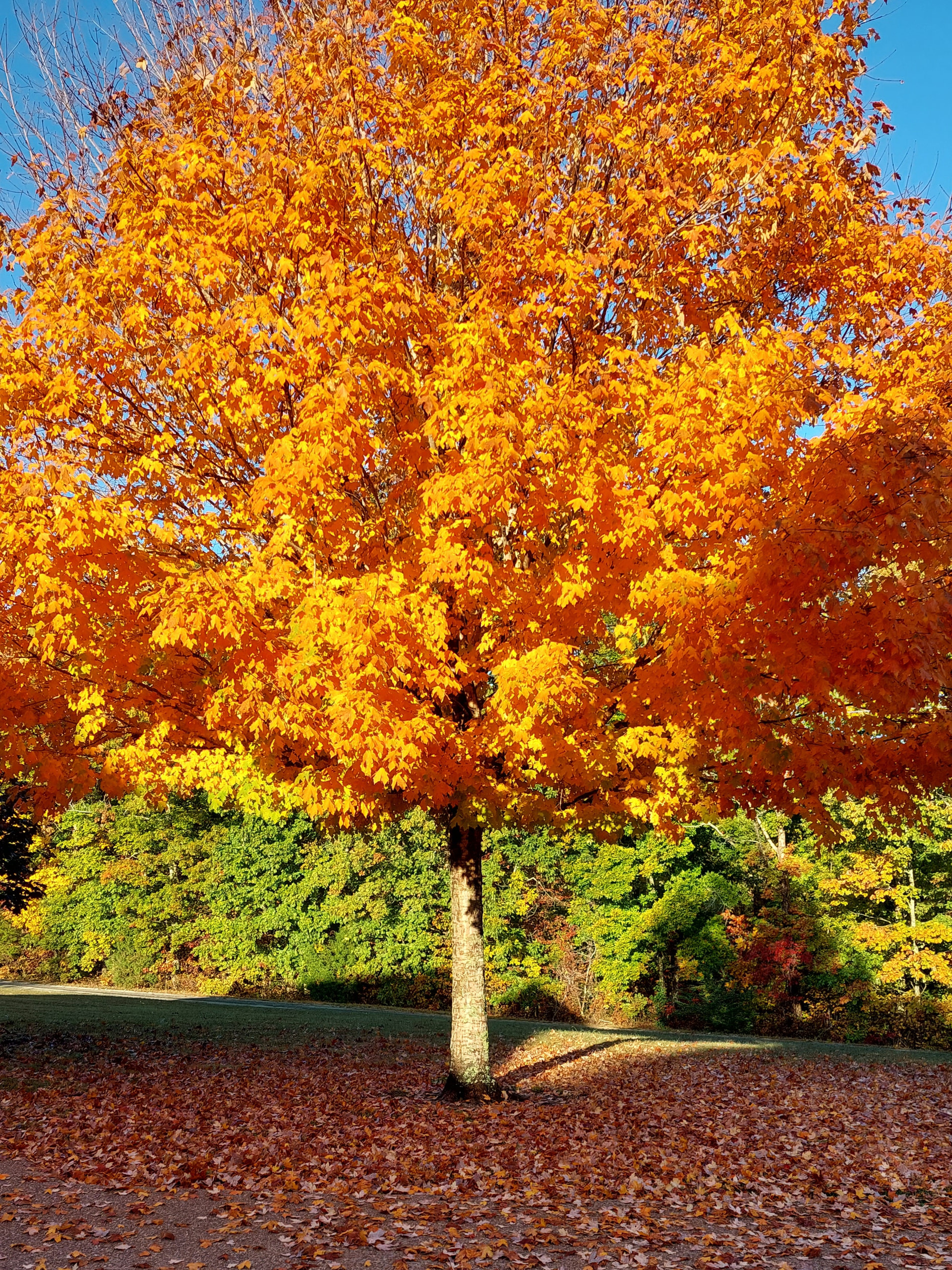
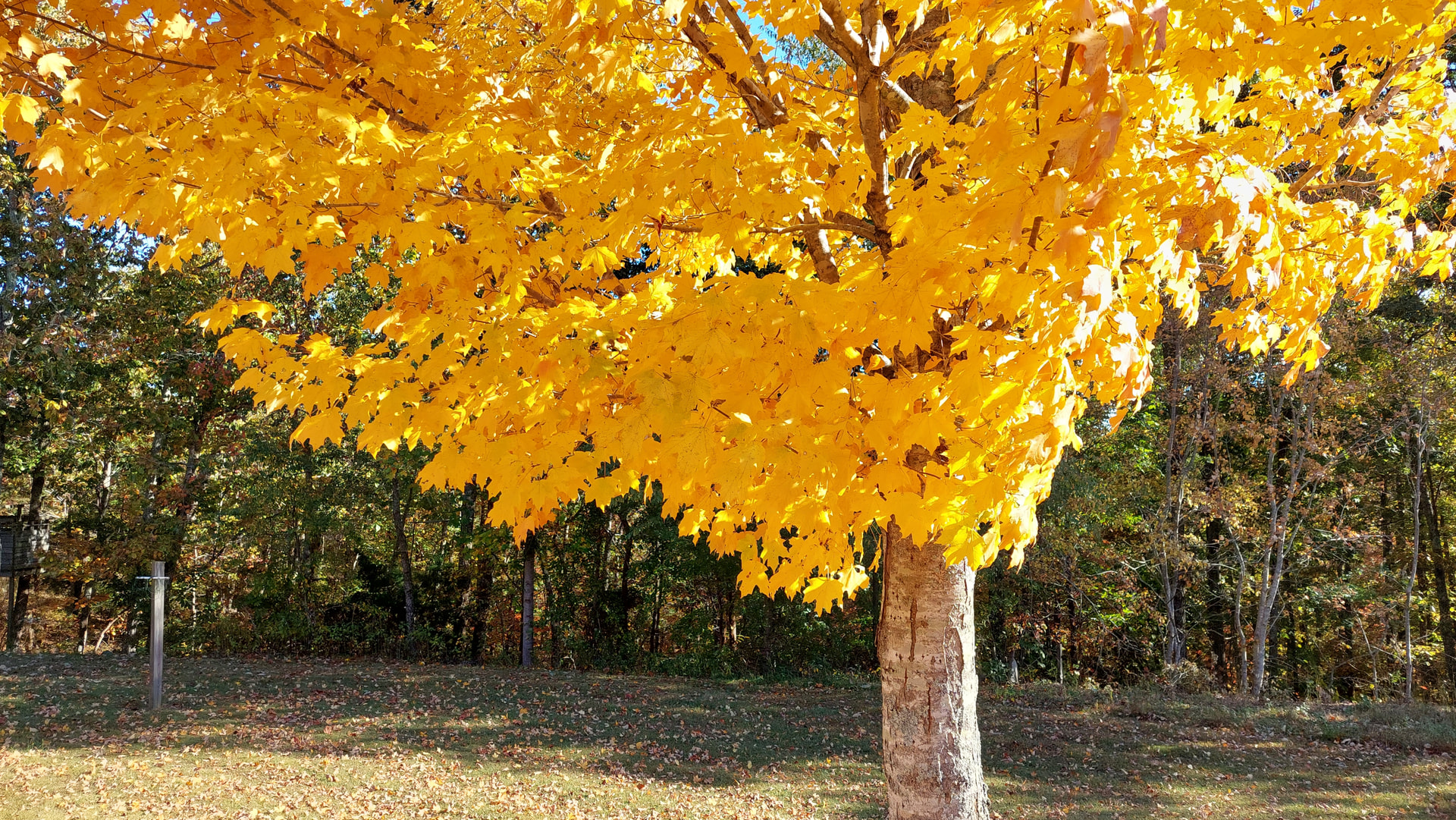
Awesome fall color.
I have made a bunch of compost with those leaves in the mix. They break down completely by spring with a few turnovers of the pile.
In the woods all kinds of plants (including ginseng) thrive under sugar maples.
There are lots of silver maples around here mostly yard trees. Don’t think they are native.. you don’t see them in the woods. Their leaves break down even faster than sugar maples do.
TNHunter
6 Likes
I have never seen one in person. Sugar maples have largely been wiped from my area. The only ones I know of around here were deliberately planted by a large landowner for their driveway, pictures of which IIRC are used by a nursery. They have an orange color like yours.
Usually the low spots around here are filled with sycamore, which are probably the oldest trees left in our area. I have seen a beech in a low area also at a park. Most maple around here is red maple. Silvers are planted in neighborhoods and they do try to naturalize in any open space.
Silver maple is a post-clearance species. The seeds cannot establish in shade and trees don’t often live past 80. That is why it is not found in closed canopy forests. Reds fill the maple role here in forests since they live a lot longer.
Silver syrup is very nice, and because the trees grow so fast you can start tapping from a new planting in 10-15 years. It is like maple syrup blended with vanilla and corn syrup. The maple flavor is more delicate than the typical sugar maple syrup you get in stores. But that could just be from tapping in January.
TN is too far south for Norways to really thrive, they prefer a long day length. Even here in PA/MD about half of them struggle. Ppl rag on silver maple for dying early but I actually think Norway Maple is worse at that where I live. The only silver I’ve seen with issues is a ~40 old one that was heavily pruned by arborists to have this funky half-eaten bunch of grapes like crown.
2 Likes
The half-decomposed stuff underneath is gold for moisture retention, especially on free-draining soil like yours. I use it as a top mulch around fruit trees and it breaks down into the soil over a season without matting up the way fresh leaves do. For root veg you might get better results layering it on top rather than mixing it in, gives the roots something looser to push through once it breaks down a bit more.
1 Like
The topic was initially about oak leaf mold, which is entirely different than leaves or even partially rotted maple leaves, which, in my experience, don’t by themselves create the spongy leaf mold that is truly unique in its properties. Here, I am only aware of two native species that often create deposits of leaf mold that can be “harvested” as a soil amendment or mulch. White pine is the other.
There was a live oak tree on the family property of my youth in the hills directly above Malibu. I never let its leaf mold remain under the tree because it was an important amendment in my gardening endeavors- I was the family gardener from the time I was 13. The tree was the most important one on the property because it had a rope attached to it that created an awesome swing my siblings and I spent endless hours playing on creating various games around it.
One year it came down in a rain storm and I’ve always wondered if it might have survived if I’d left its leaf mold there to help control erosion in the sandy soil. By the time it came down we were past the age of playing on the swing, but there was a lot of nostalgia tied to that swing and rope. Nevertheless, for the following 30 years harvesting leaf mold was a part of my gardening routine.
2 Likes