Lorrette summer pruning experiment

Hello all, I am putting some pictures here to document and explain some of the lorrette style pruning I am attempting this season.

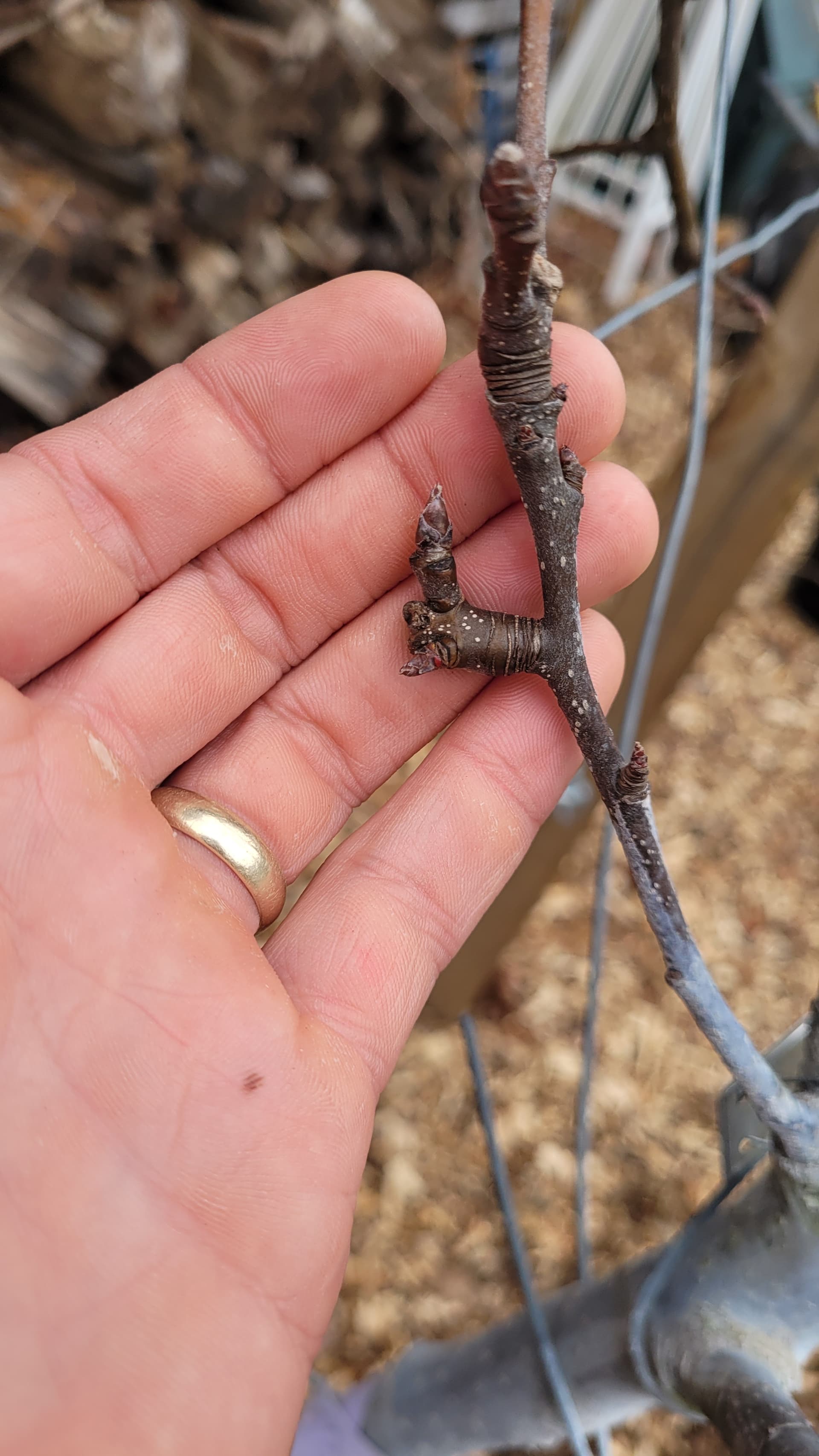
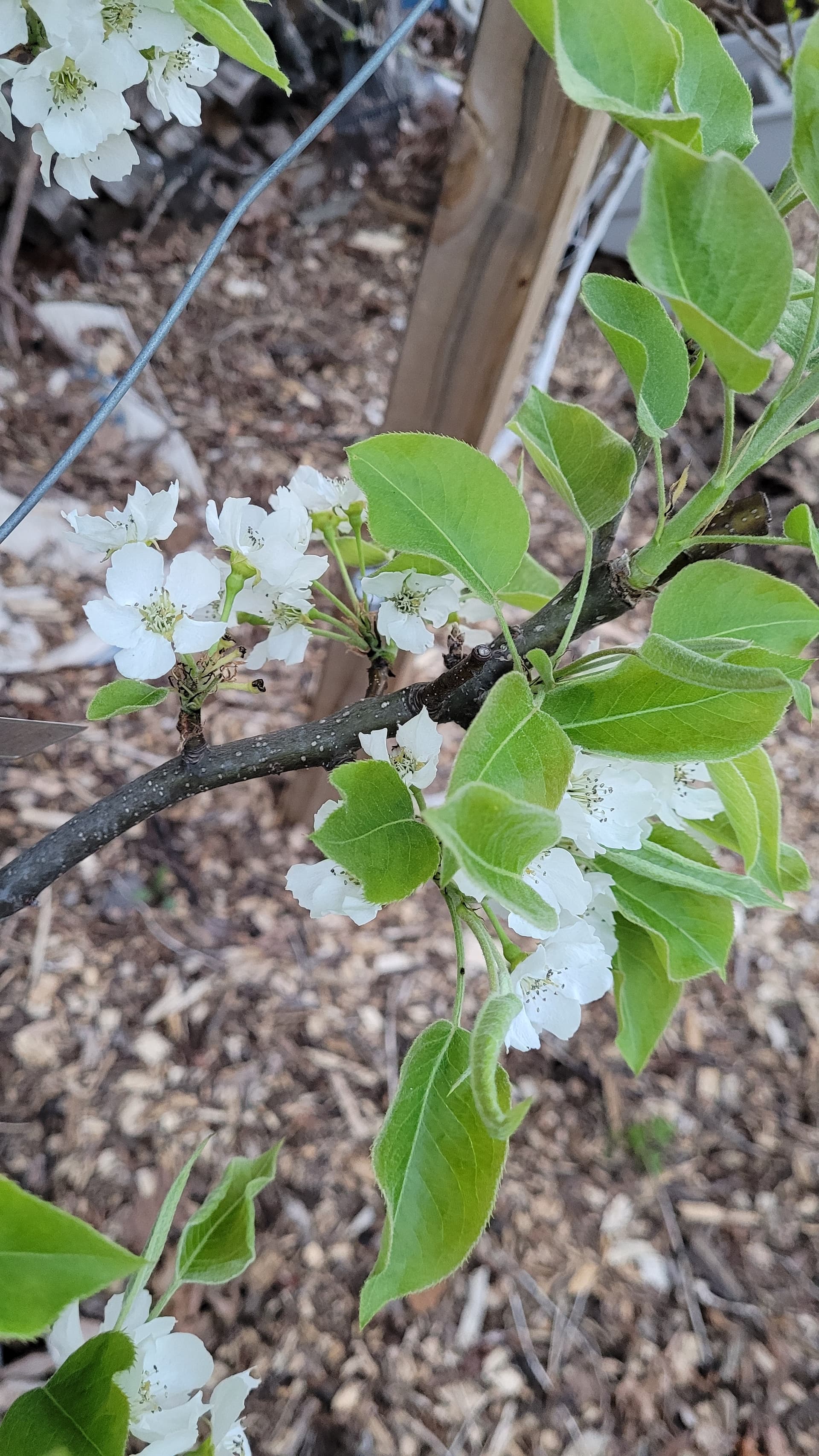
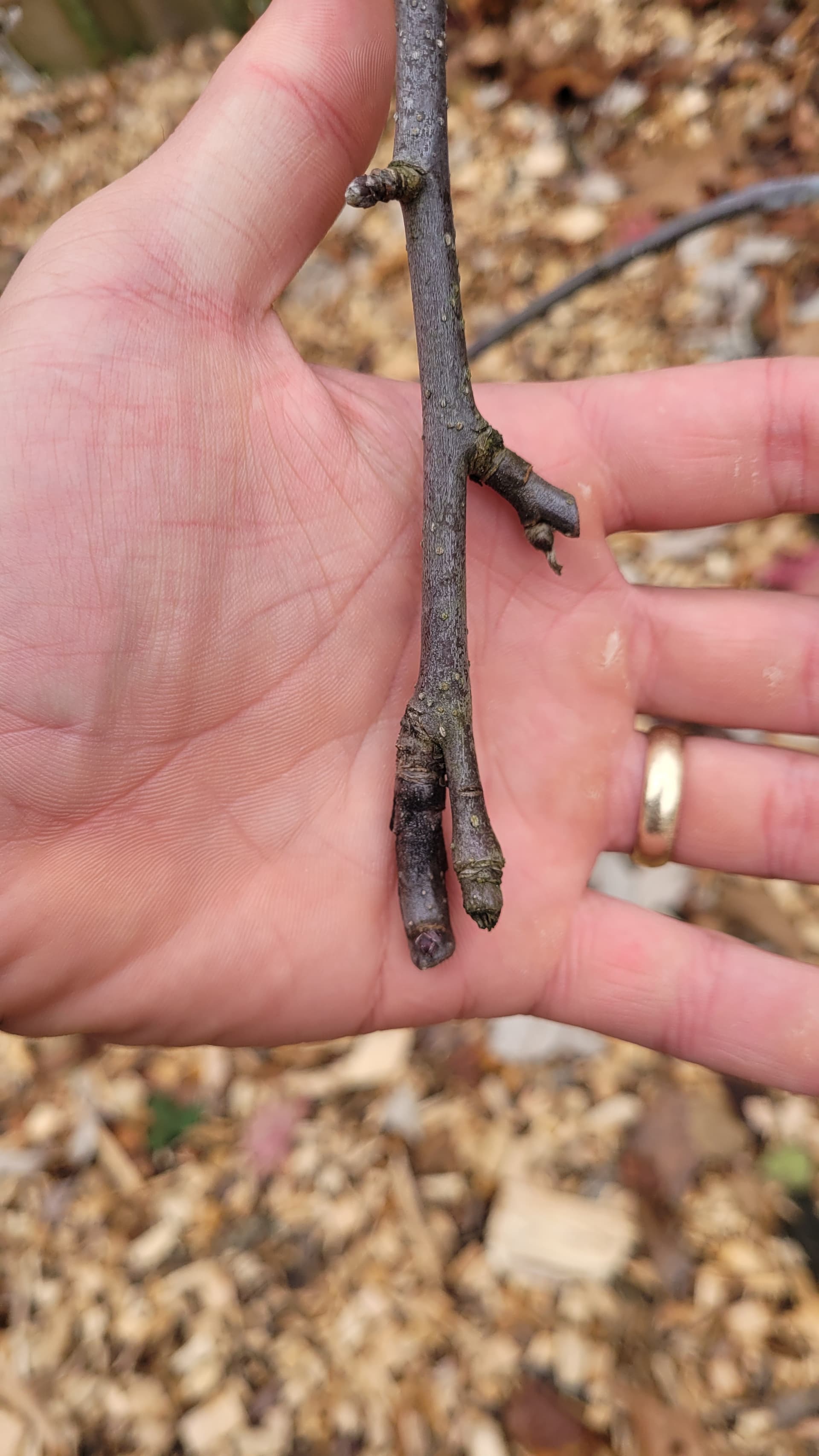
I have decided to lean into this style, because of my observations of last years summer pruning. Wherever I pruned last summer, the last few inches of the cut became covered in flower buds. Any growth afterwards also created flower buds. Unfortunately, my trees are still new and they did not blossom this year. The buds may be immature, or maybe the trees just didnt want to flower. I know they are flower buds though, because of the shape of the nodes and the pattern of the leaves as well as the minimal growth they experienced this year.

I am by no means an expert or have any real experience, but I have read enough to try and put some theory into practice. At worst, my trees will just remain smaller with the lateral shoots remaining flowerless nubs. At best, I will recreate the flowering that happened last year.

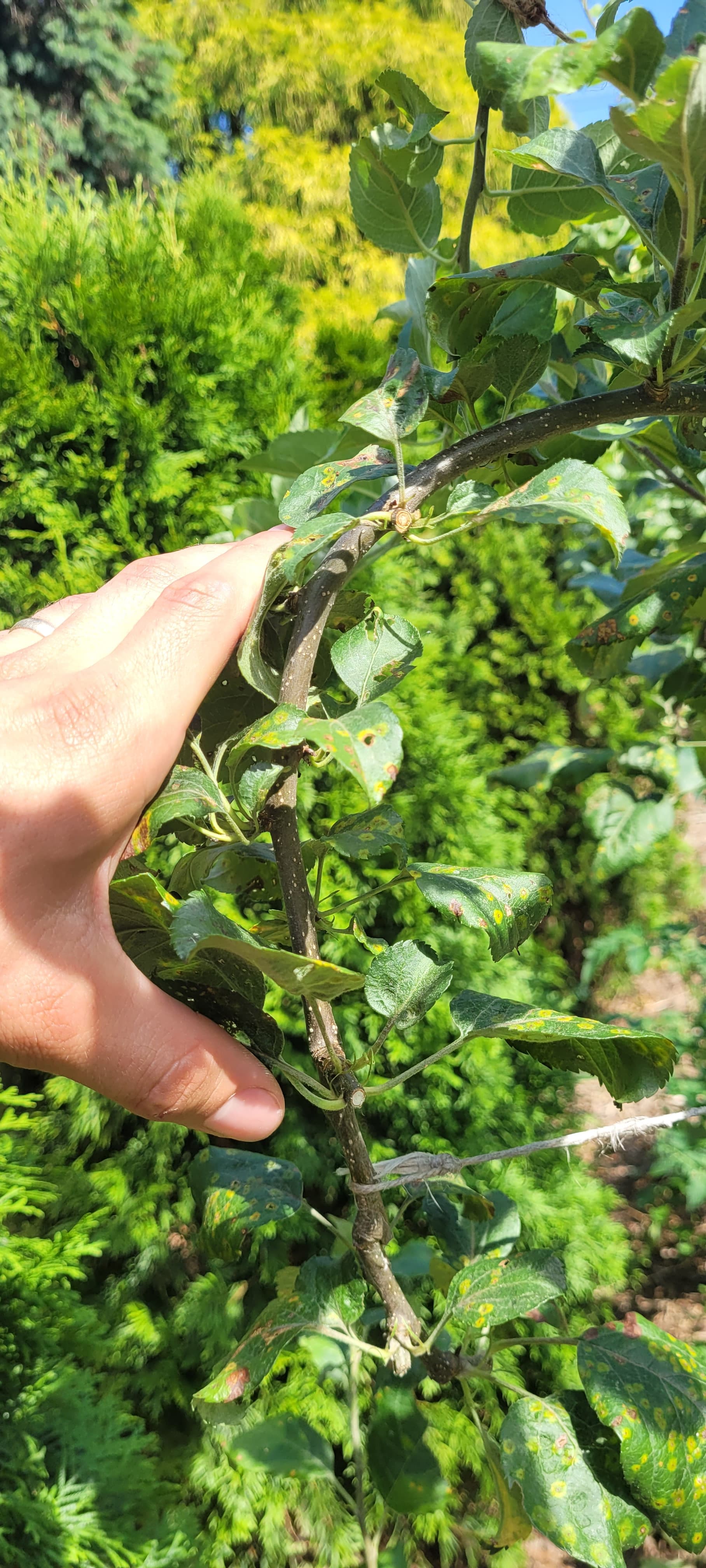
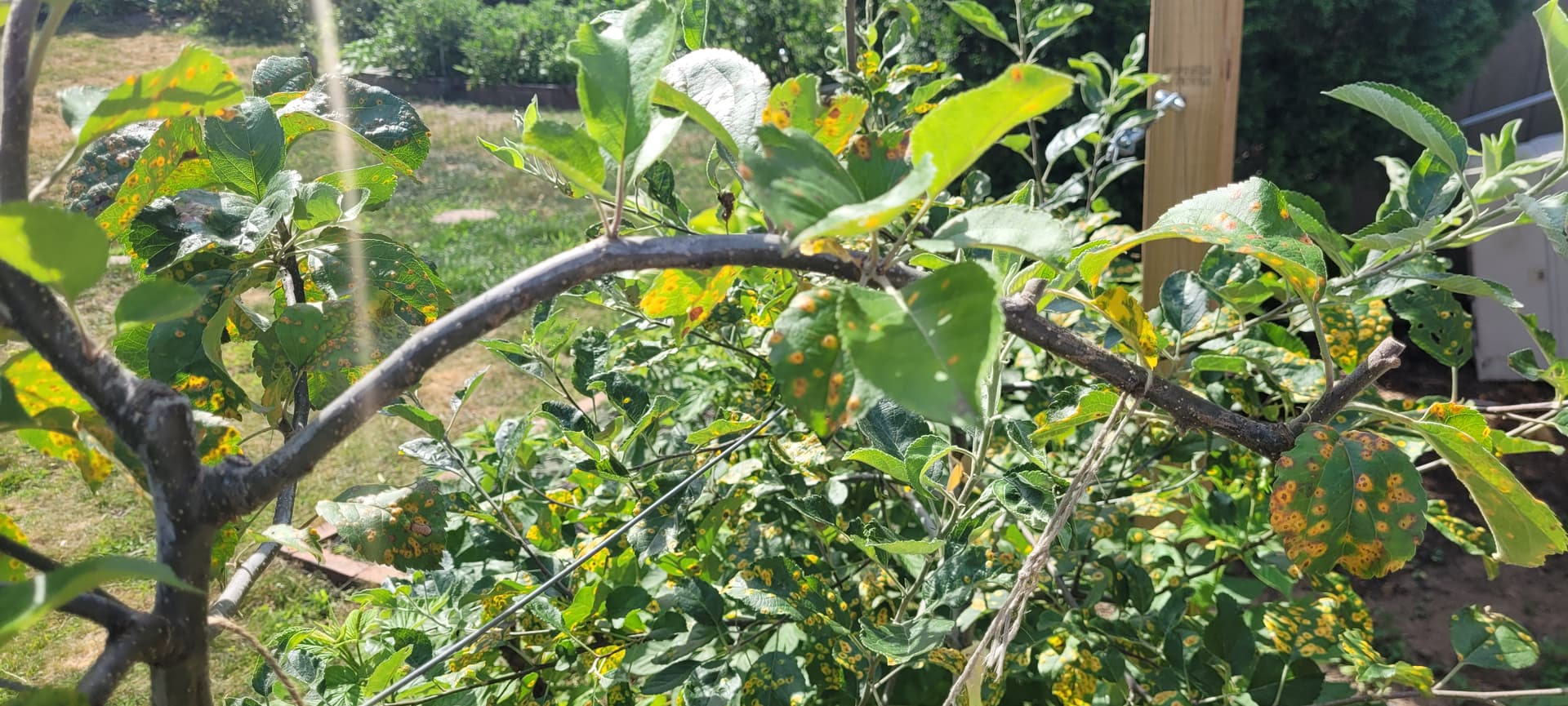
Keep in mind, I am modifying the system. I tie down branches and grow the trees in a tall spindle shape, modified to be of pedestrian height ( max 8 feet). The rootstocks are generally g11 and g41, but I do have one on a semidwarf stock, galarina. Yes, i know my trees are covered in rust. It is unavoidable around me because of the junipers and such, and most of my trees are " rust resistant".

My trellis wires are at 3.5 and 6ish feet. The bottom wire was hazardous to my dogs, who took the liberty of destroying it.

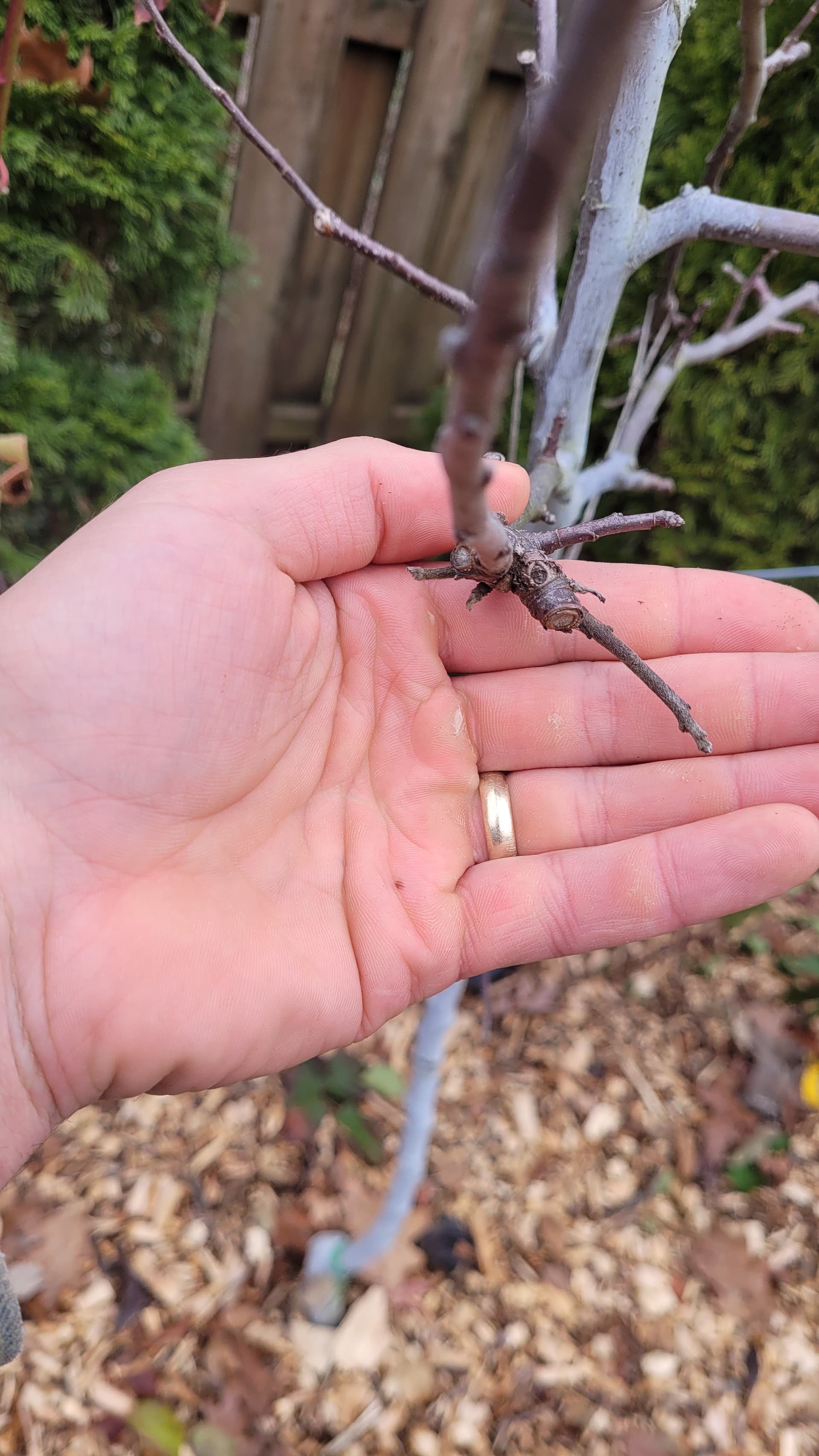
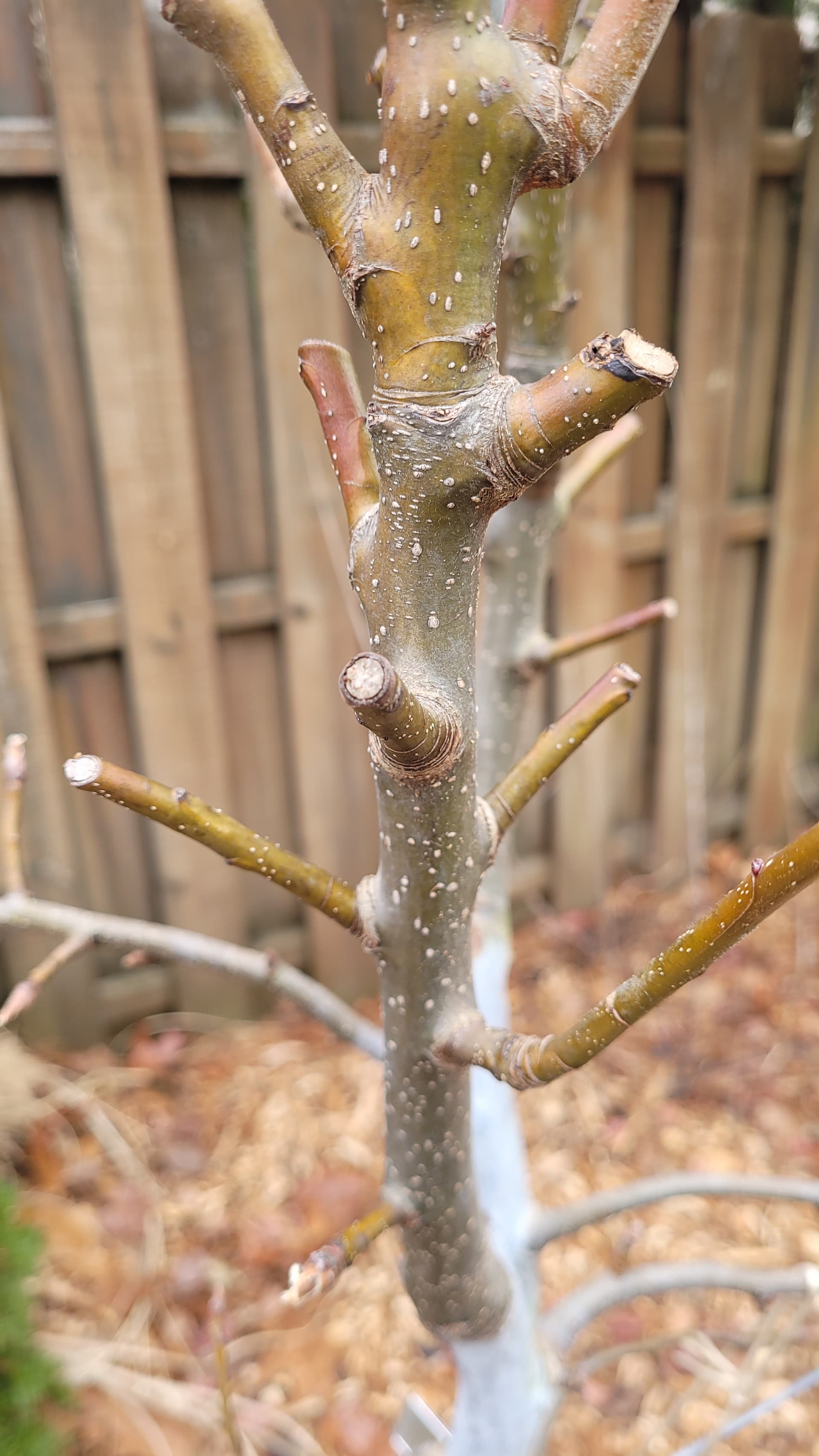
I have done some pruning in the modified lorret system, the 4 count method, but only on branches that I want to make into scaffolds. All other lateral branches i cut back to the 2 leaf stub, as suggested in the book.

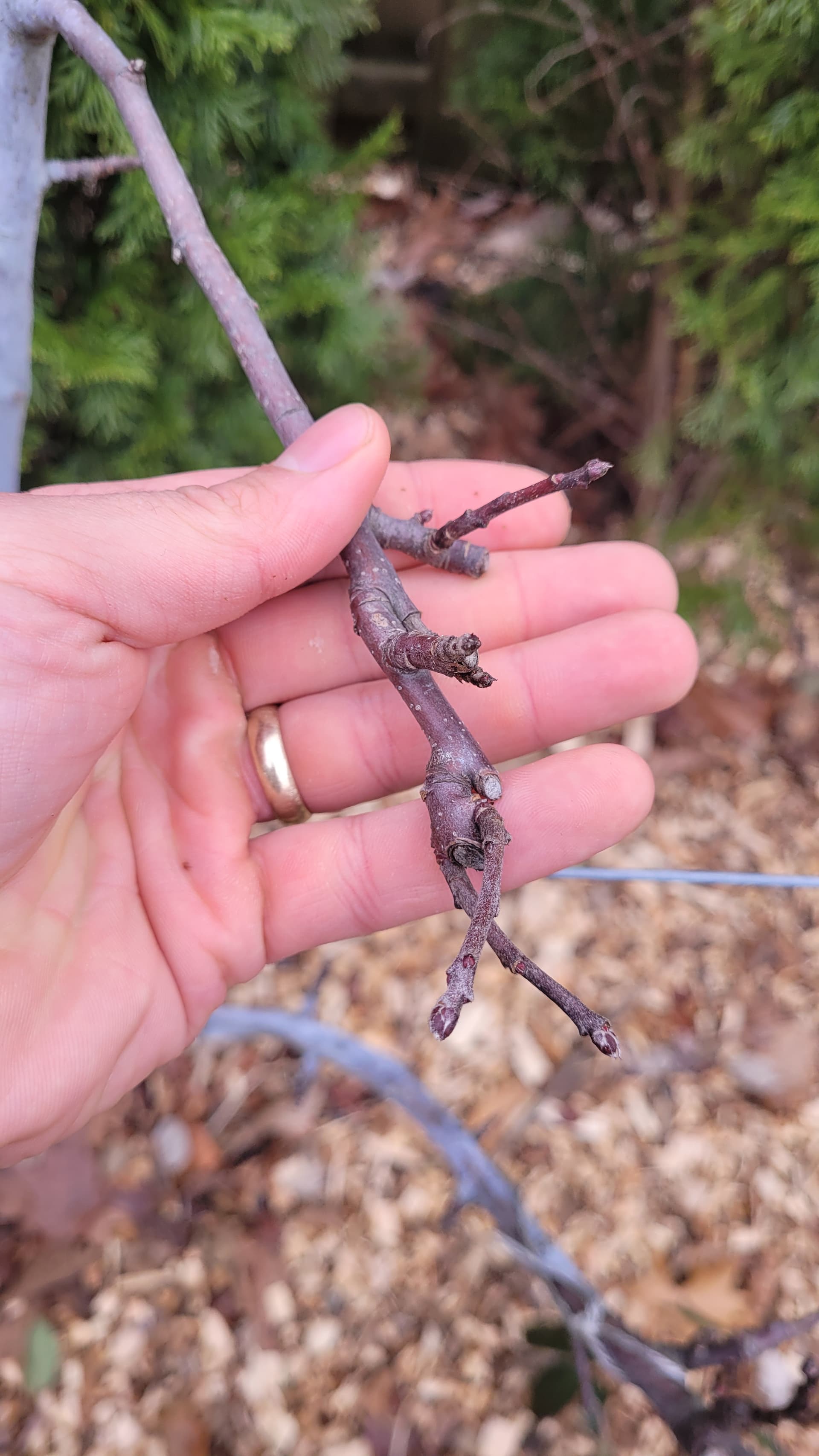
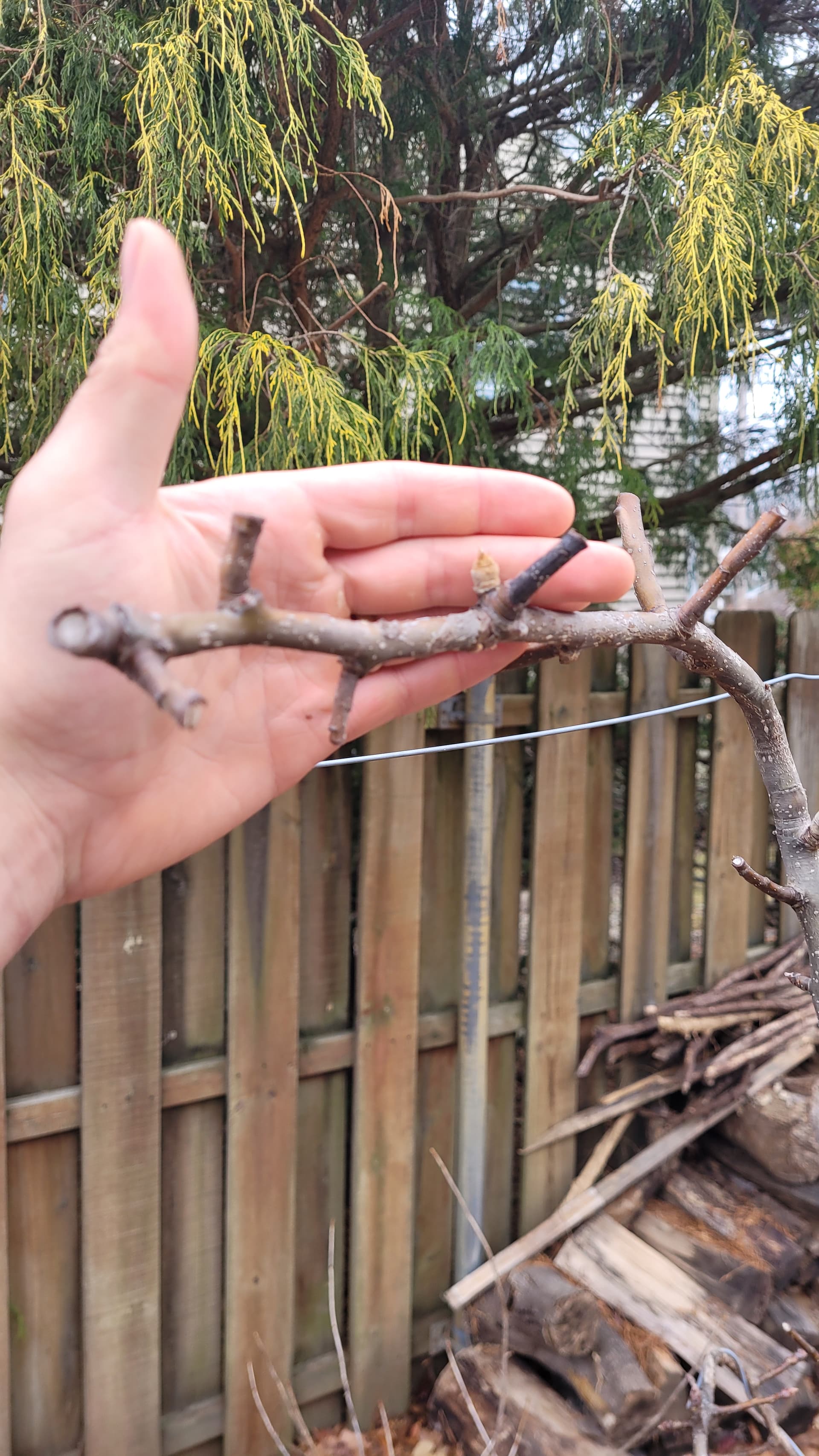
Here are some example pictures, which are really hard to find.

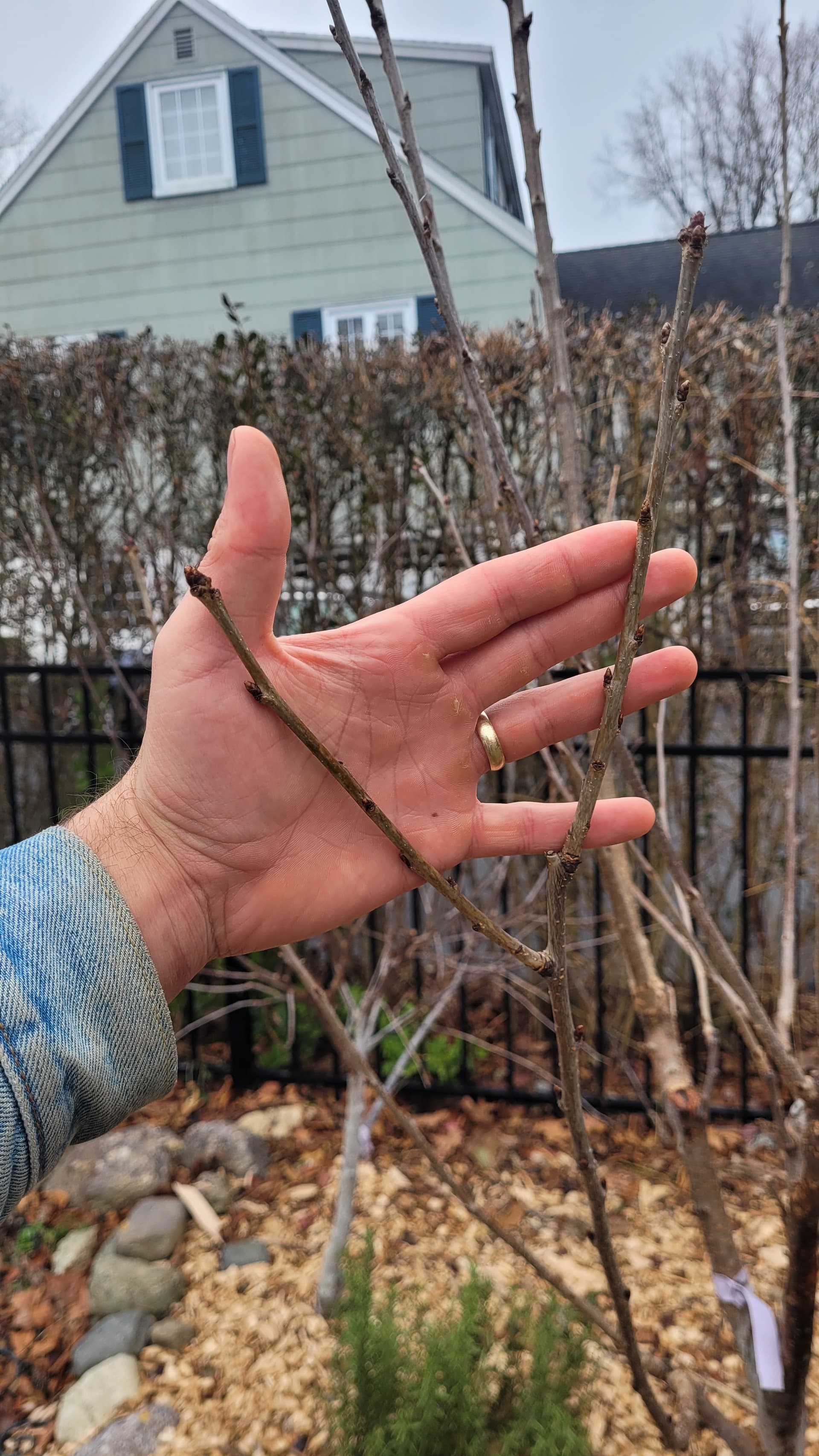
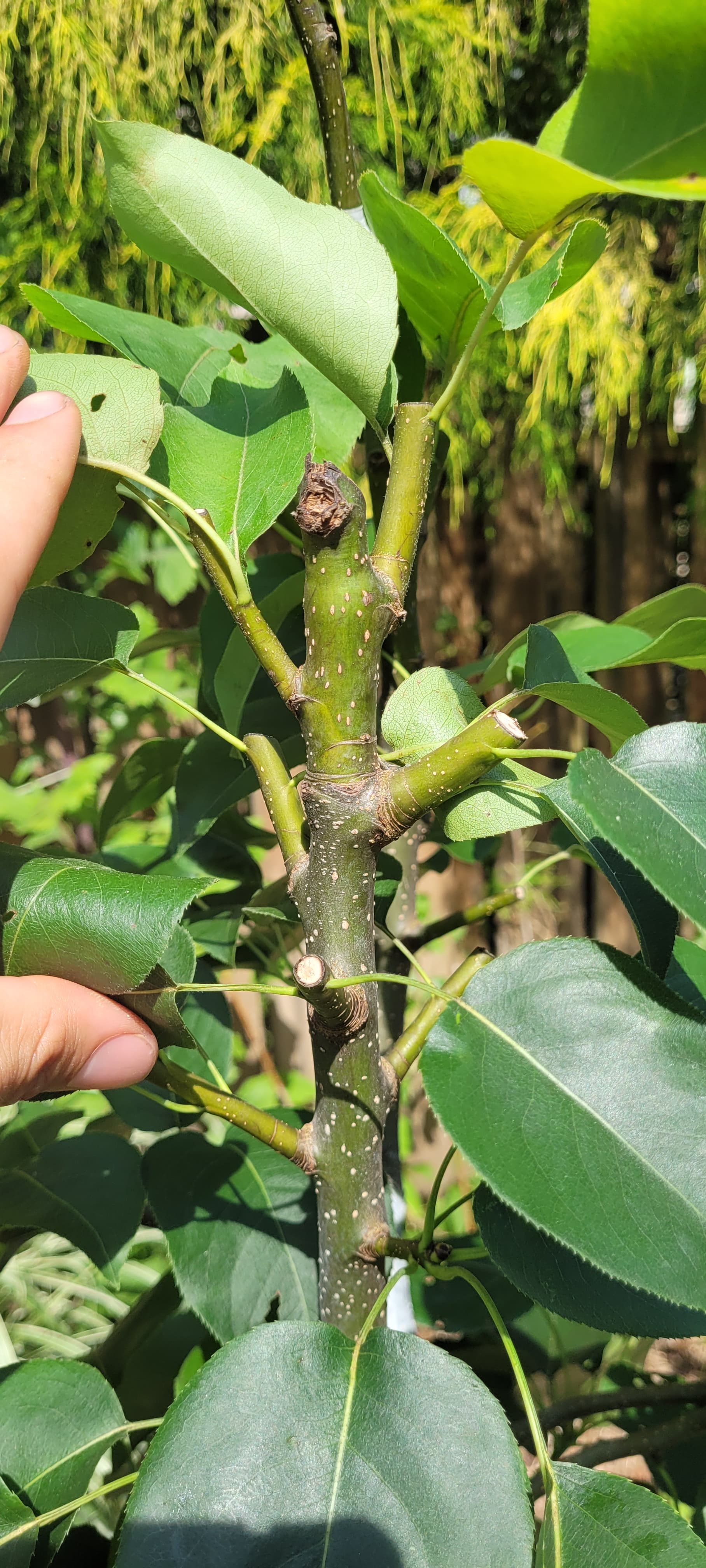
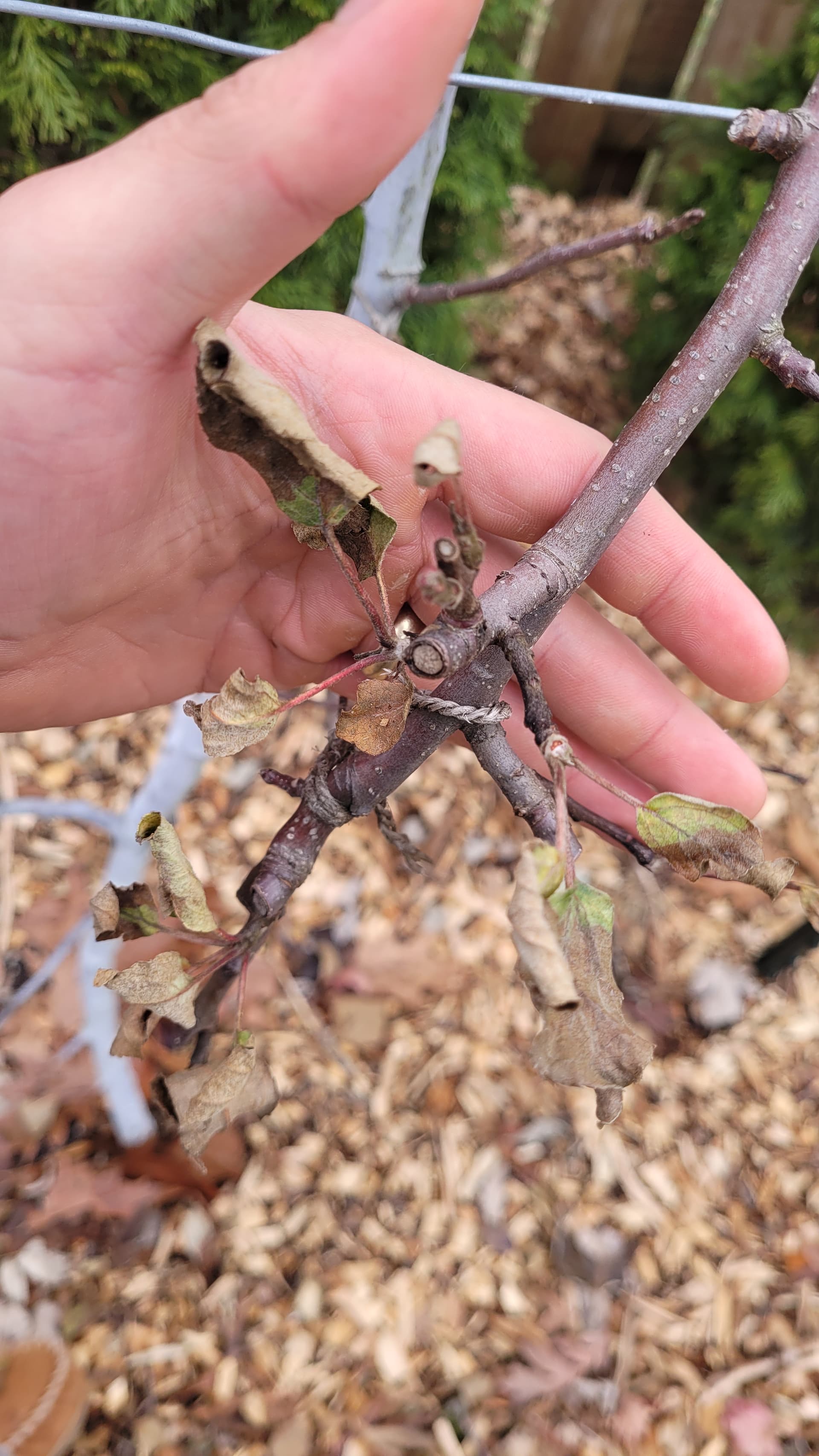
These are branches pruned
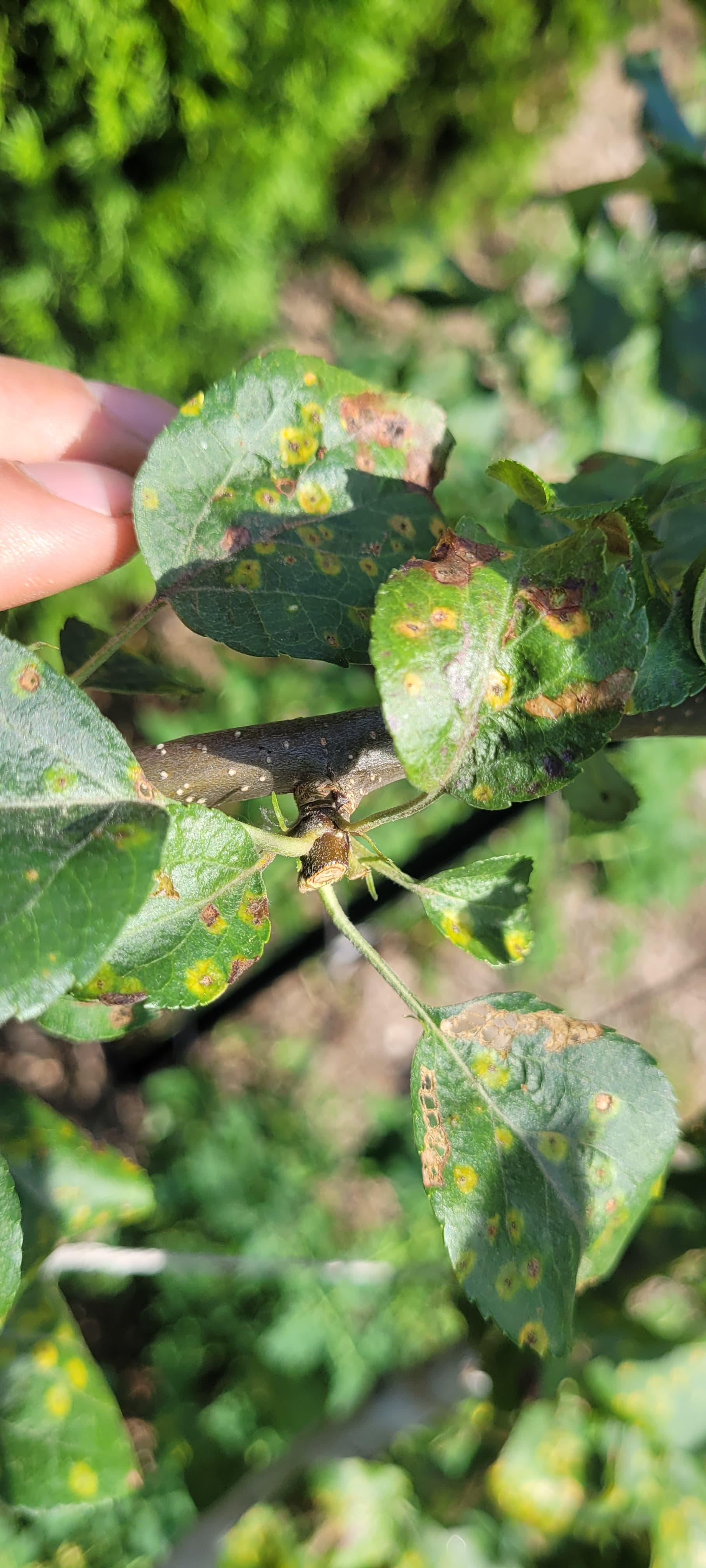


I pruned the growth that had terminal buds or were as thick as a pencil, lignified and woody.
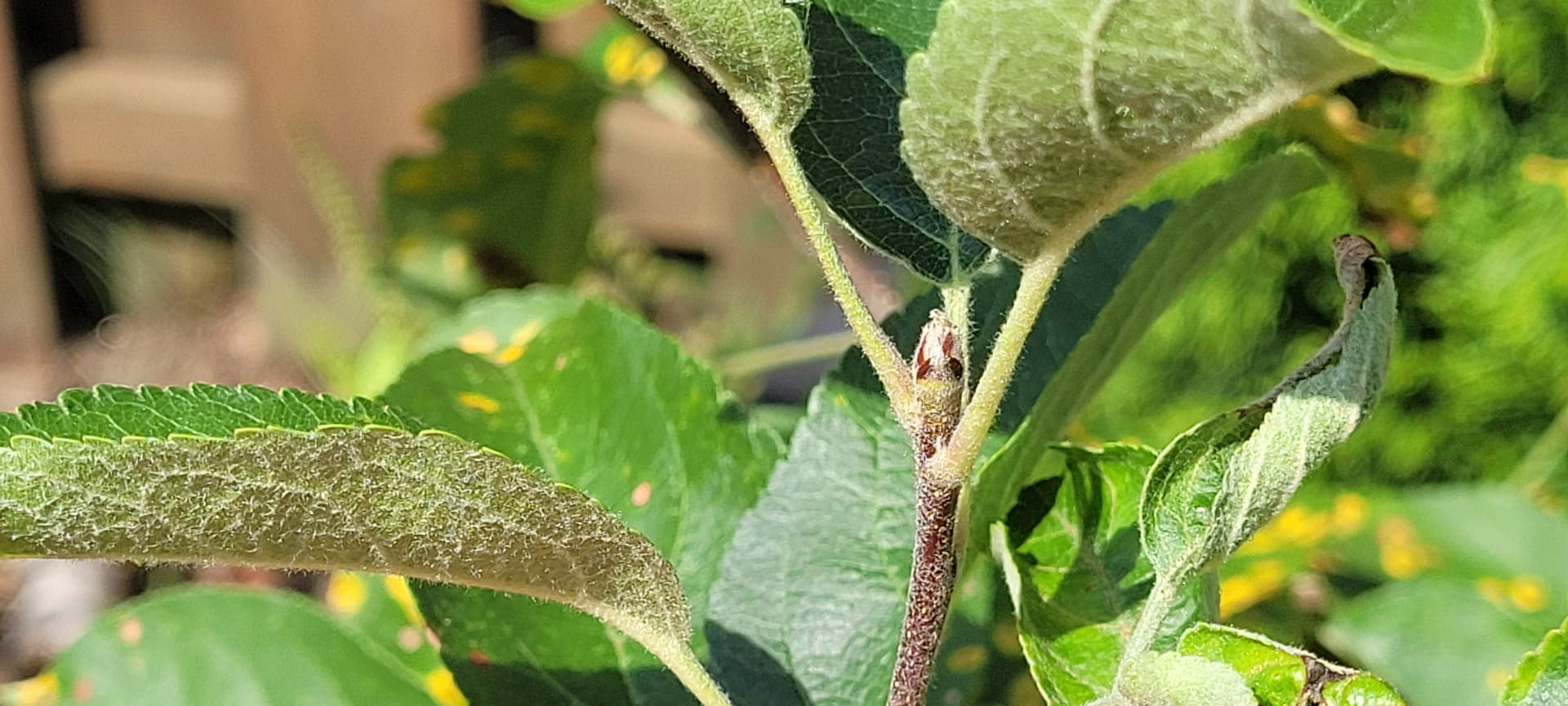
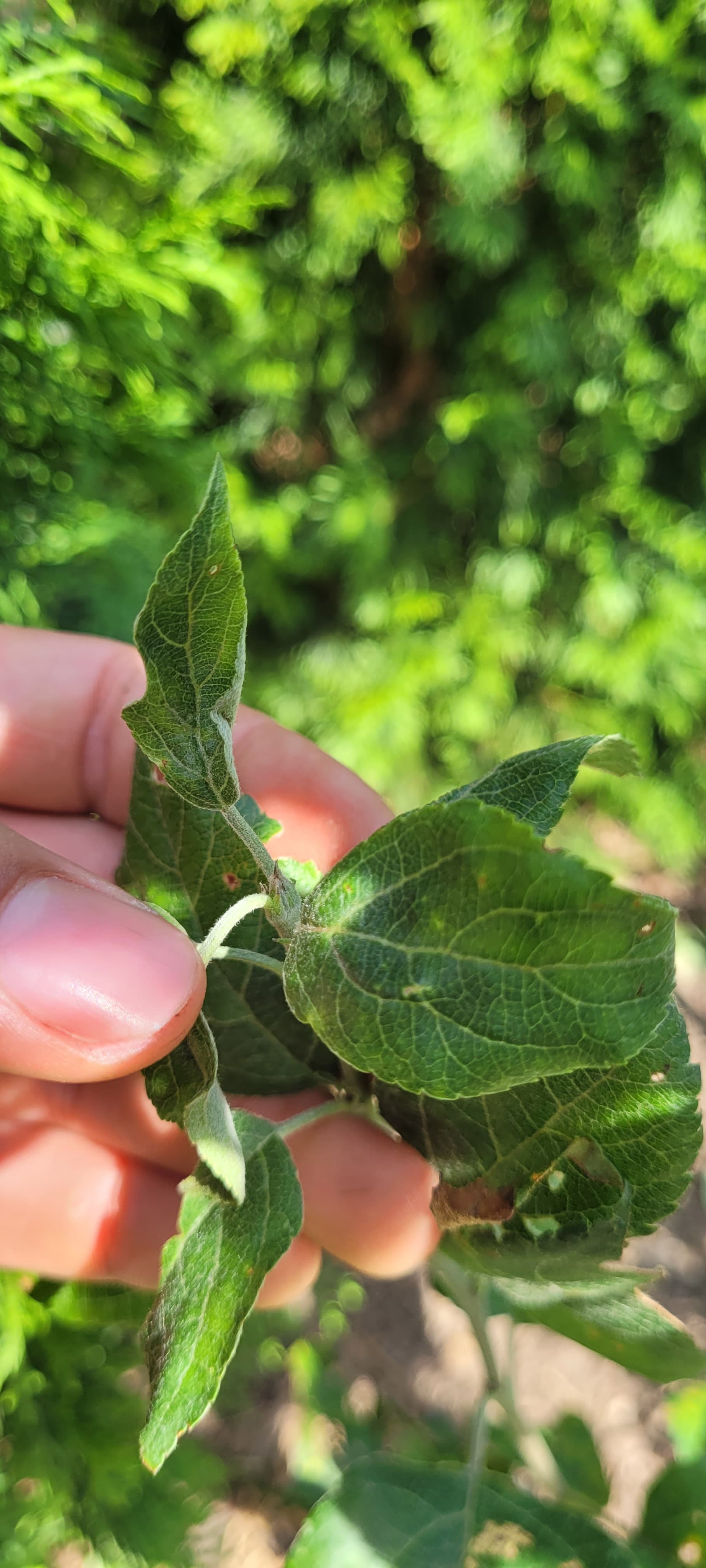
I let other growth stay if it was too thin, or if terminal buds were not seen

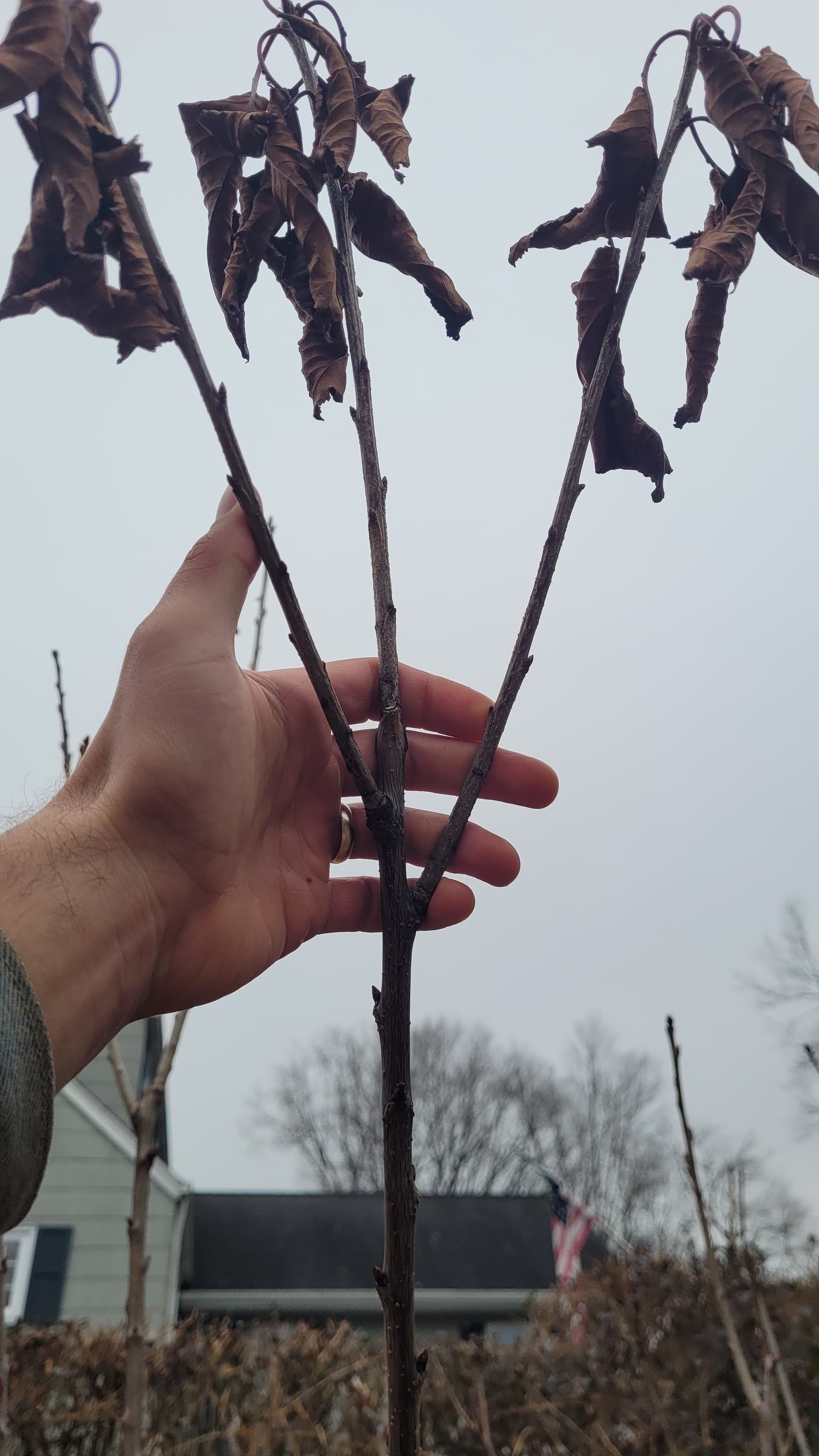
An interesting note is that my asian pears, chojuro and shinseki, both had almost all of their vegatative growth stopped with terminal buds by the end of june here in north jersey. I pruned them back hard as well.
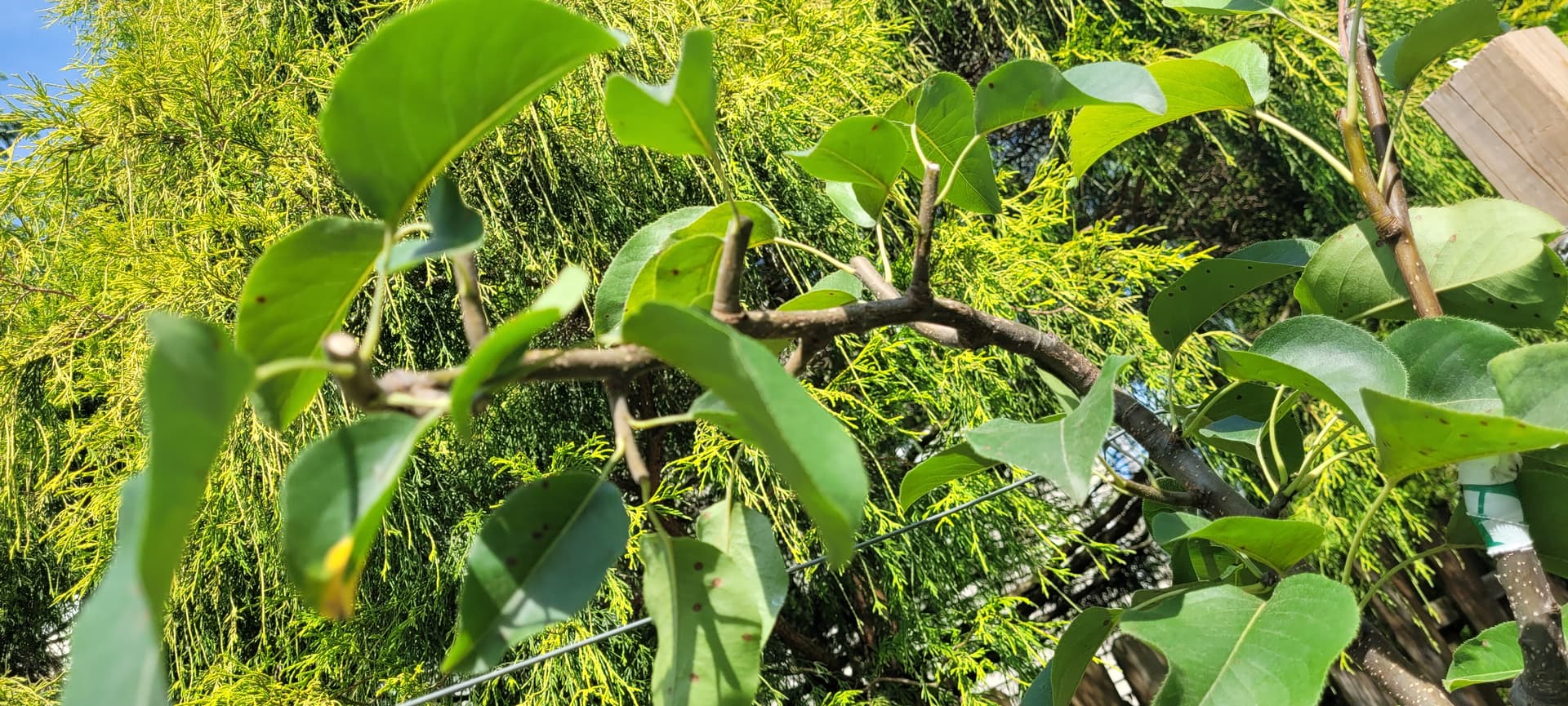
Some growth was nice and short, they did not really need pruning so I left them
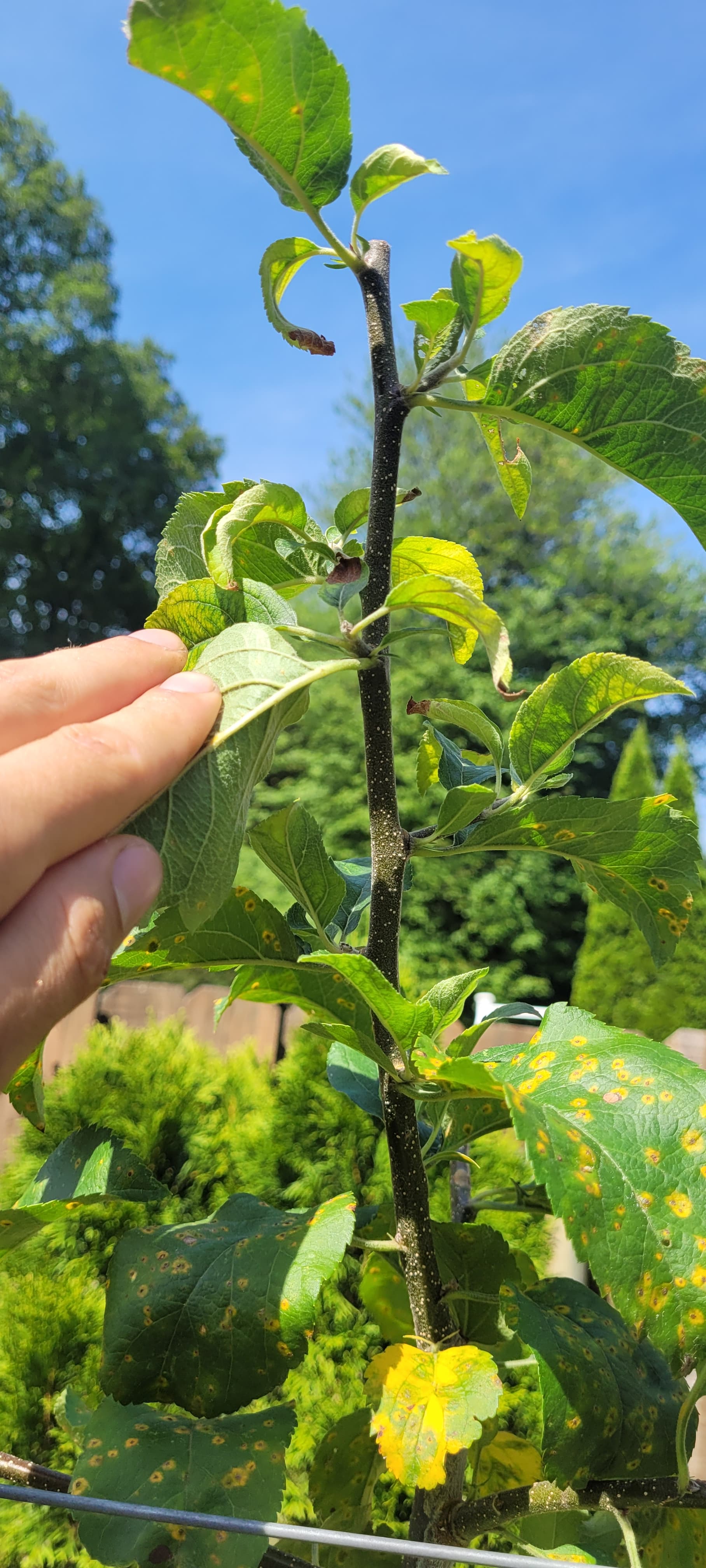
I am going to post updates in a few weeks in this post, to see what the results of the pruning are.

There are some great videos about this style if you search them in youtube, but I found the long formats hard to follow. Hoping this is a good resource for others who want to try and grow their trees more compact like I have to.
5 Likes

I’ve been trying much the same. I think what your doing works well with some varieties but not all.


Here are some results of this years pruning. I pruned about once a month when the branches got to pencil thickness or when they developed turminal buds. Most of the pruning cuts resulted in good bud formation, and all of them resulted in branch multiplication. I think the asian pears have a different response than apples or maybe I am missing something. They are a lot mor vigorous, and generally shrugged off the pruning. Then I did a pretty harsh prune the book suggests, and not all of the branches grew back. The pruned branches may need to be more horizontal it seems. Or maybe I need to give them more nodes to grow from


The branch multiplication is also seen in my cherries when I topped them to see what would happen. I usually cut the branches near the base, but when they are cut high they also mutliply


Overall, I think the pruning method is good for my purposes. I planted 3ft from center on G.11 and g.41. I want to keep my trees fruits close to their centers on the sides, but allow for the front facing scaffolds to be a bit longer since they can fit. By bending and pruning, I have set up my trees to have less blind wood and more dense fruiting branches. We will see if this pays off.

Important to note that my trees are by an east facing fence and do not recieve equal amounts of light in their canopy. The tops get around 12+ in the summer, but the bottoms get more around 6-8. The backs of the trees may only recieve 4-6 hours. This affects branching, fruiting and budding for sure. I hope my trees dont become top heavy. I cap the height at around 7-8 feet so far. I let a leader grow each year as tall as it wants, then I prune it back hard around late July/August.

2 Likes


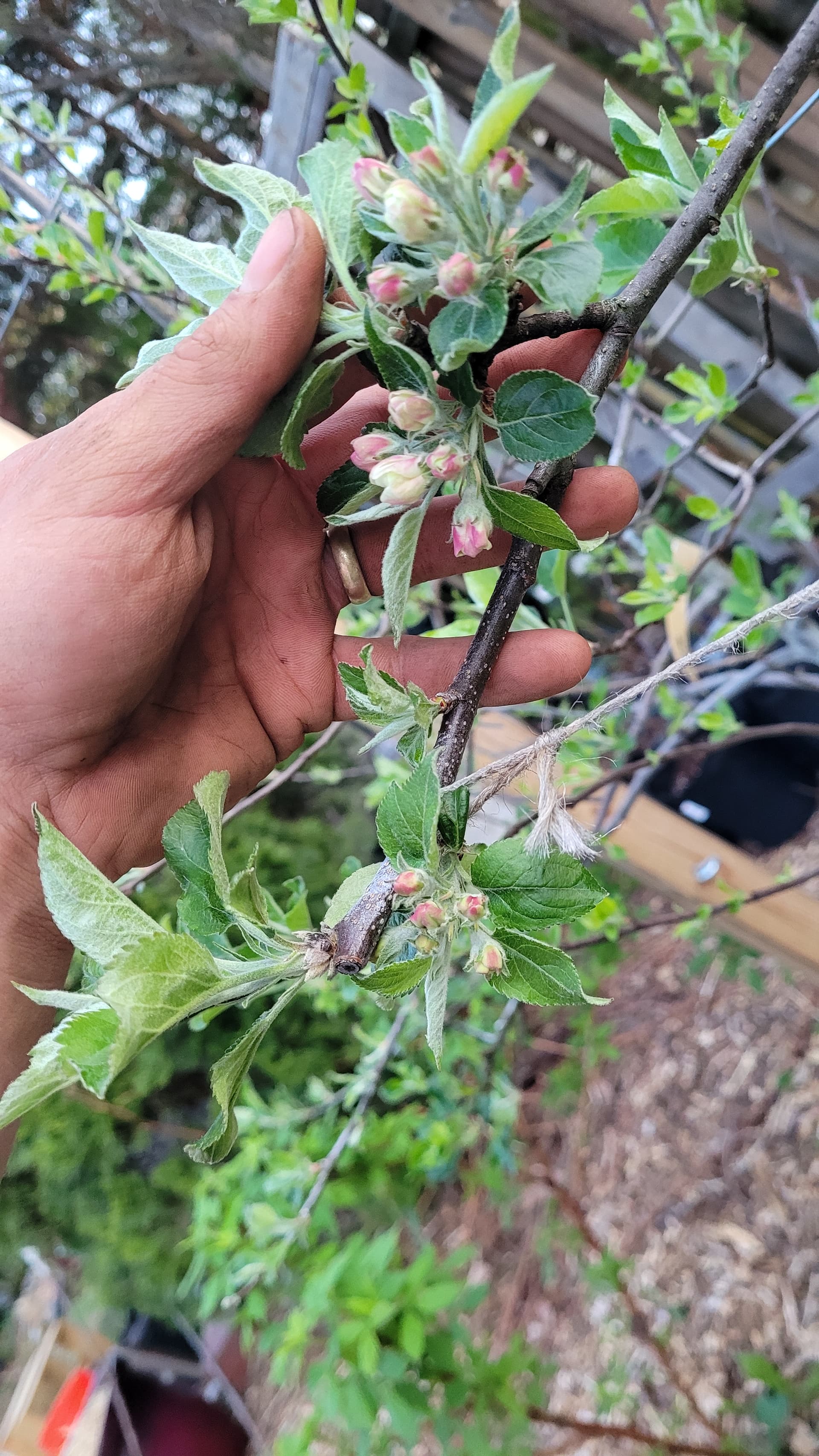
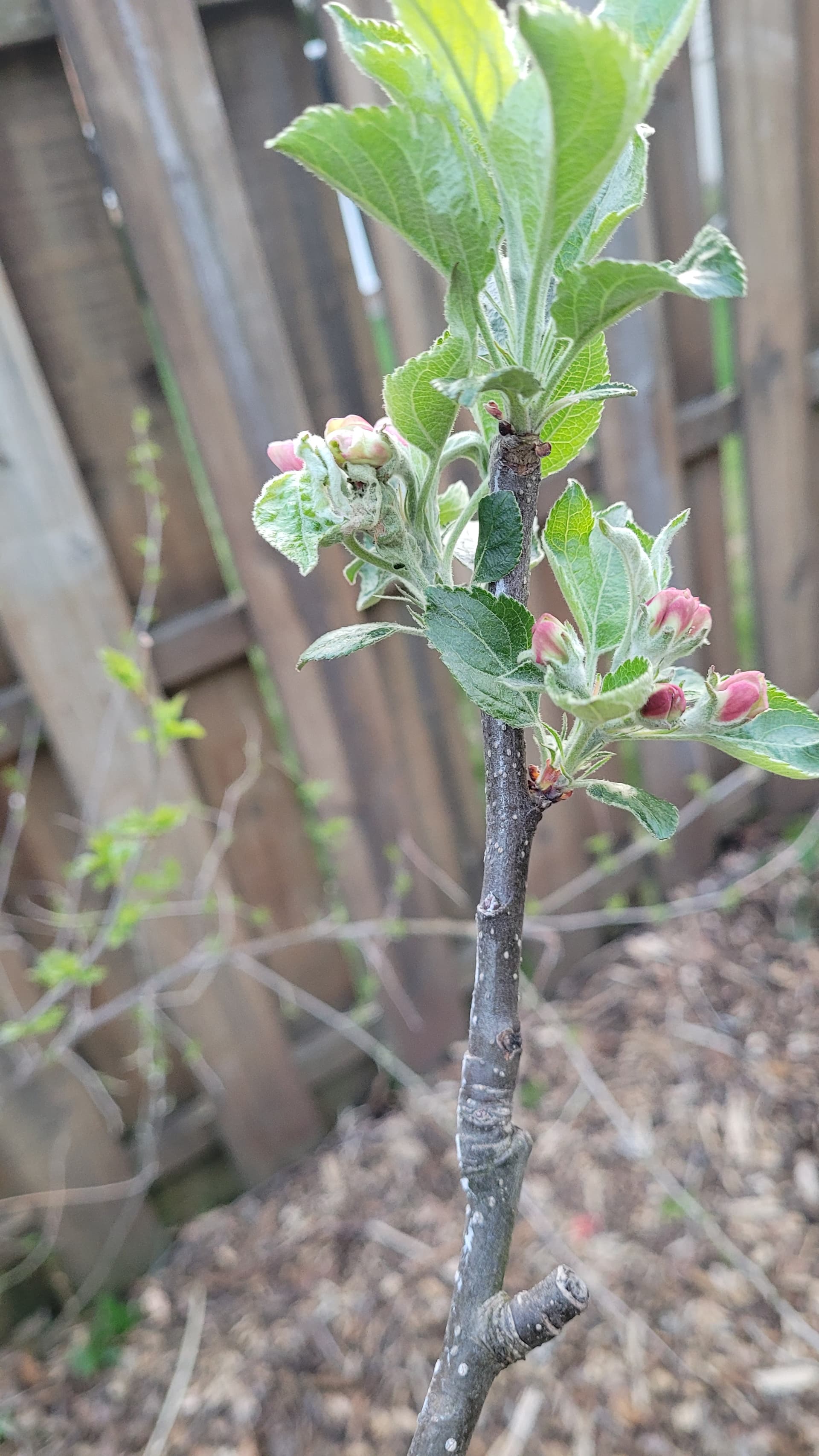
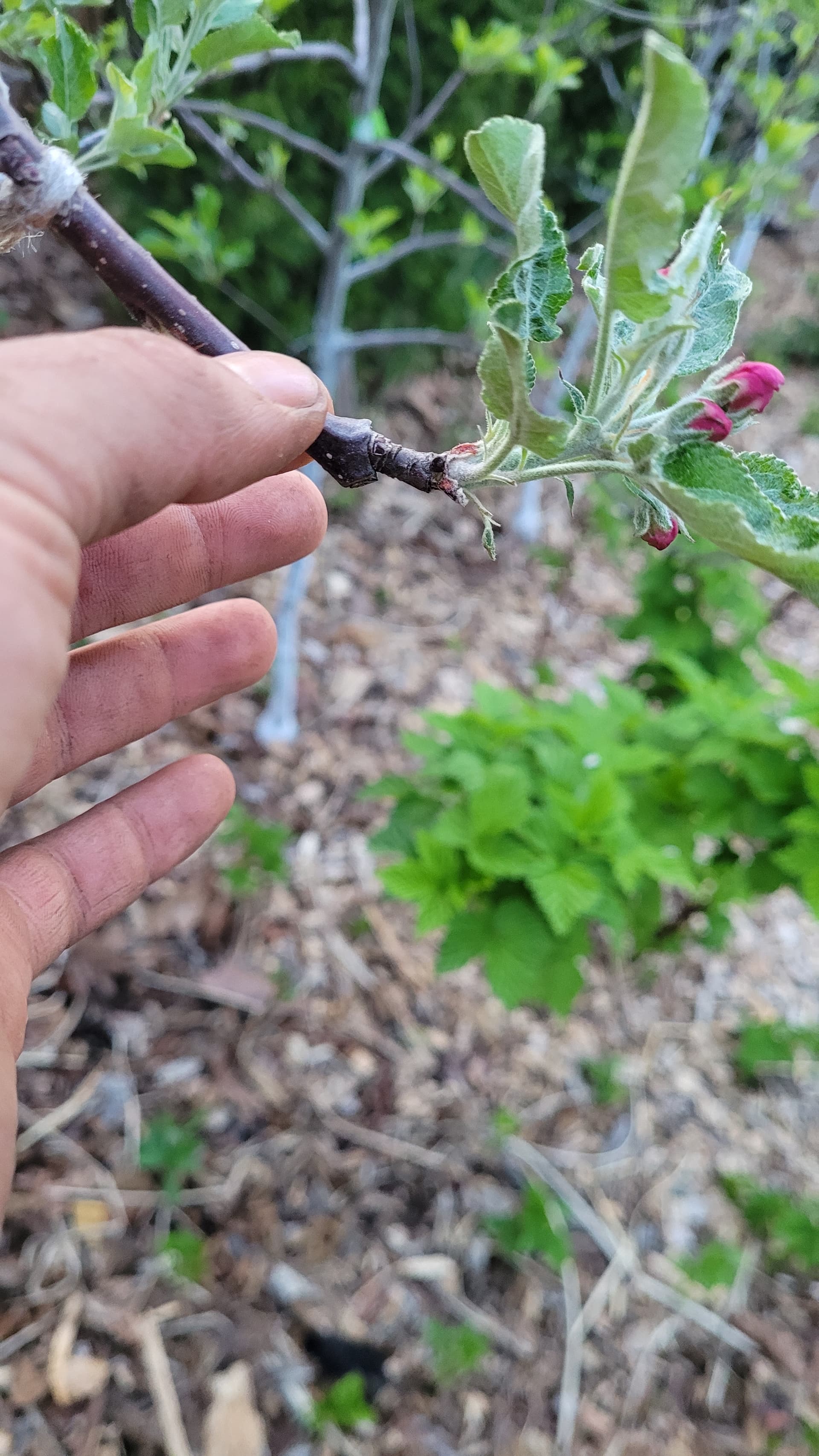
Here are some results from the more successful trees. Again, it seems that the asian pears I have are more receptive to this pruning style.

Only 4 of my 8 apples are flowering, so I don’t have as much data to compare as I would like. In the images here, you can see that the pruning did often result in terminal buds that formed flowers. You can also see the dense spacing of the spurs and the relatively short branches.

On the trees that didn’t flower, it may just be a maturity issue. They formed spurs, and those spurs did make leaf clusters that looked like they should have had flowers in them, but they had no flowers. I hope next year they have some since it did not seem to be dependent on rootstock or tree maturity. The varieties fruiting this year are Freedom, Zestar (with a NY 414 graft/ early macoun), black oxford, and Wine crisp.

I thought that sunlight may have affected the formation of flowers, but the black Oxford is on the other end of the row and receives a bit less light. Additionally, the size of the trees is not a factor either, since the black oxford is smaller than the others and my Sundance are the largest yet have no flowers.

3 Likes

Great job!

1 Like

I’m trying to figure it out too. Some varieties are much easier than others.