I read up a bit more on Universal and it sounds like it is probably the better choice if it is available to you. See this post here from Harbin:
https://growingfruit.org/t/hybrid-persimmons-future-look-great/2601/497
I read up a bit more on Universal and it sounds like it is probably the better choice if it is available to you. See this post here from Harbin:
https://growingfruit.org/t/hybrid-persimmons-future-look-great/2601/497
I am on the southern edge of middle TN… hundreds of miles south of the ohio river.
I have 30 acres and my orchard is in the middle of that… 4 neighbors that all own similar size tracts of land and none of them grow fruit trees.
I have several 60c southern males around. I have never seen a wild persimmon male or female that looked like a 90c northern. I spend much more time in the woods than most folks… ginseng… deer… squirrel…hunter.
I was expecting (hoping) that my 90c american grafts (Prok, Barbaras Blush, H63A, H118)… which were all done on 60c wild rootstock… would be seedless…
As Cliff says… south of the ohio… they will be seedless.
So far I have had fruit from H63A and Barbaras blush… and both had just a few seeds in them.
Way less than the 60c females have here… they normally have 5-7 seeds.
These grafted 90c females have had 1-3 mature seeds.
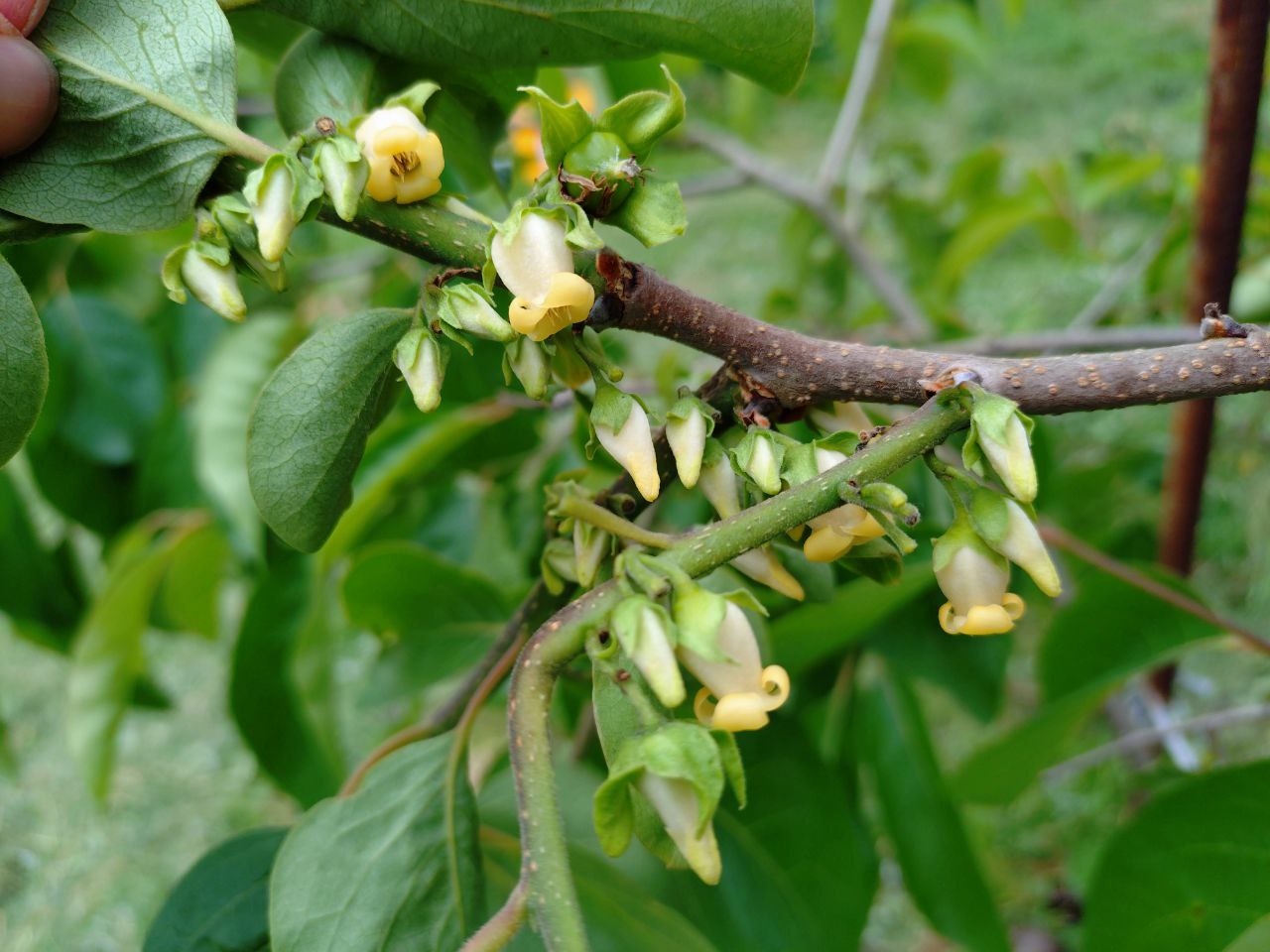
My JT02/Mikkusu… had no blossoms this year… i checked it several times. Pretty sure there were no male flowers on it.
My Kasandra had lots of blossoms and held onto 30+ fruit. I was not looking for male flowers on it… but will be checking them all next spring.
It seems to me that either 60c males can partially pollinate 90c americans… and possibly hybrids… or the male flowers were on one of my 90c americans or hybrids.
I picked 2 Kasandra fruit today… i will find out in a day or two if they have any seeds.
TNHunter
Yeah, but the reply from @Trav to Harbin’s post gave me a pause: Hybrid Persimmons Future Look Great - #1821 by Trav (In addition, I am not sure if anyone anyone in the US even has the Universal to share.)
I’m confident that universal is a good plant. a) Harbin is an experienced grower whom I very much trust and who I’ve met in Person. b) Universal is apparently from V Derevyanko so I doubt it is a bad cultivar c) if you dig into other sources such as this russian/ukrainian forum here https://forum.vinograd.info/showthread.php?t=14769
Universal also received good reviews.
d) the pictures of universal absolutely do not look like diospyrus lotus!
I definitely think Harbin is a source of great information, so I see no reason to doubt Universal being a virginiana/kaki hybrid. I’d be interested in getting some Universal wood for grafting at some point, but I’m not sure if it is in the US yet or, if it is, if anyone has had it long enough to confirm what is here is true.
In the meantime, I think Bohzy Dar is probably a good choice for many folks if merely having fruit be pollinated is the goal. It appears to be readily available.
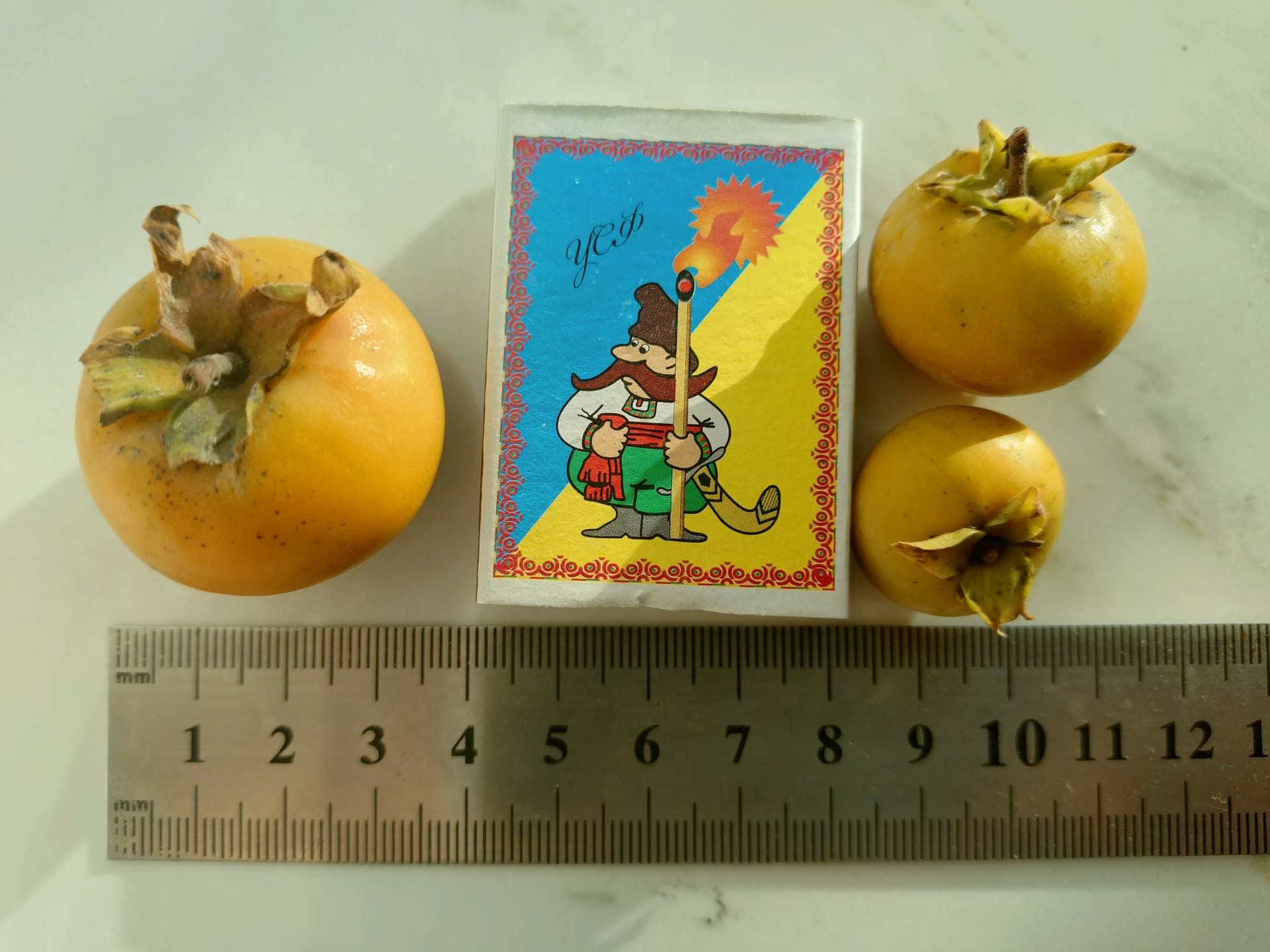
Persimmon ‘Universal’, a prolific pollinator. The variety is frost-resistant, has a short growing season and is not damaged by fungus.
Cross between ‘Nikits’ka bordova (Nikitas Gift) x D. virginiana’.
So any advantages to using some male flowers vs others for pollination (onto either a female virginia flower or female hybrid flower)?
Here are potential donors i see:
Early Golden family Female with male flowers: EarlyGolden/Garretson/Killen/Meader/Florence
Early Golden family Male with female flowers: Szuki’s
Pure Male: Thor (male selection by DEC), Buzz’s Male (a future cold hardy variety he says survived cold temps)
Hybrids females with male flowers: Bozhi Dar, Universal, Mt Goverla
Hybrid male?: Male Rosseyanka
Sure I’m missing a bunch that Cliff/others have: F-100 (fruiting male), 504 Male
I guess Early Golden male flowers you know has some larger fruit in its lineage?
Buzz’s future one has super cold-hardiness (but might have to wait for other to use as have to wait for him to have enough scion to give out).
Any advantage of the hybrids? Know you have super larger asian genes in there and cold-hardyness of Americans (if tested) and possible american flavors (if tested)?
I know American+Asians can’t pollinate without embryo rescue, but can hybrid male flowers be used on all 3 types of persimmon: American + Asian + Hybrids female flowers, correct?
Sounds like you know as much as everyone else
These are the ones that I am aware of:
‘Szukis’ is a polygamodioecious male, of Early Golden ancestry that’s been out there for a long time.
The late Lon Rombough opined that Jim Claypool’s ‘F-100’ was better than ‘Szukis’.
Clifford England introduced two open-pollenated male seedlings of ‘Rosseyanka’, bred by David Laverne. One of these has exhibited greater cold-hardiness than the other.
Jerry Lehman was using ‘400-5’, a male seedling of 'Nikita’s Gift’s (IIRC)
What’s best? I have no idea.
I have a persimmon slideshow/presentation in late February so just trying to see if any info i don’t have yet :). Might be asking more questions than I usually do over the next couple months on more obscure topics
I’d also try planting some бычье сердце Bull’s Heart persimmon seeds and hope you get lucky too. It’s a very cold hardy, and large fruited tree but the fruit ripens too late to call it a cold hardy persimmon, the males should pollinate anything Japanese, just fine, it is astringent, but ripens very nicely and has more jelly pockets than mush.
Goverla Is a pure female.
My last comments came before this year’s harvest, so this is an update.
This year both Kasandra and JT-02 were seeded, though the Kasandra fruit had many more seeds. Presumably the pollinator was a potted PVNA – I grew Coffee Cake and Chocolate nearby – though Taishu might also have played a role. My take-away is that a male-flowering Kaki will pollinate a female hybrid (or at least my female hybrids, Kasandra and JT-02).
One consequence of having these male-flowering PVNAs around is that other Kaki varieties had seeds. The PVNA Giboshi was heavily seeded. Paradoxically this seems undesirable as Giboshi is well-suited for Hoshigaki, which is better if unseeded. PCNAs such as Taisuhu and IKKJ also had a few seeds, which is not a huge problem but I think they’d be better without. Same for the PCAs Saijo and Sheng.
So why keep the males around? Last year, my Kasandra fruit were tastier than in prior years and seeded for the first time, so I had formed a tentative conclusion that Kasandra fruit were tastier when seeded. This year I’m not at all sure that the seeds were responsible. It may have been just the maturity of the tree. If seeds matter at all – I tested both seeded and unseeded fruit – the difference is very modest. Furthermore, Kasandra fruit is small and it’s preferable (IMO) to eat them without having to spit out 6 seeds each time.
Bottom line: Next year I’m going to place the potted male-flowering PVNAs far enough away from the other persimmons that pollination is minimal, except for each other.
Also, I have occasionally found a seed in my Americans. I suspect that the pollinator is a random root sucker from one of the (male) rootstocks. I prefer to eat the American fruit unseeded. So I do my best to remove any root suckers.
Bottom line: I think I’d prefer all of my persimmons except Coffee Cake and Chocolate to be unseeded. So if I see that any of my varieties (other than these PVNAs) require pollination, I simply won’t grow them.