I’d like to get some help from persimmon folks for the following question. I have two hybrid persimmons (Kassandra and Zima Khurma), of which Zima Khurma is a few years old (5-ish) but is producing only 1-2 dozen fruit each year. It blooms profusely and sets tiny fruitlets, which then all fall down (blanketing the ground underneath the tree). Kassandra was just recently grafted (on its second leaf this past summer) so I didn’t expect it to fruit anyway. Both trees grow very nicely, and my previous cultivar, Barbra’s blush did fruit very well (before I re-grafted it with Kassandra), which I think indicates that the conditions in my garden are probably OK. So, my hypothesis is that reason for my Zima Khurma to drop all the fruit is because it wants a pollinator (I heard individual trees can be like than even though in general persimmons are supposed to be self-fertile). Thus, I’d like to add a male persimmon to my garden, which brings me to my question: what kind of male persimmon should I get to pollinate my hybrids – 60-chromosome American, 90-chromosome American, or some sort of a hybrid male (do those even exist)? And then, could this male be grafted to the root sucker I have from my trees (I suspect from the rootstock that used to be under Barbra’s Blush since my suckers started appearing after I cut it down to re-graft with Kassandra). Thanks in advance for your help!
What zone are you in?
I have Maru, Zenji Maru, and Nishimura Wase as pollinators. I suspect they are helping but not sure.
I get near zero fruit drop.
I am in Zone 6A (NE Ohio, Cleveland’s eastern suburb)
You could try Bozhi Dar or Universal which are both hybrids that have male and female flowers. I think they should be z6 hardy
I can’t vouch for Zima Khurma but I’ve had Kasandra for 8 years. I can say for sure that Kasandra does not need a pollinator.
I planted Kasandra in 2017. Starting roughly in 2021 and continuing through 2023, it produced an abundant crop (500-1000 fruits) without pollination. Needless to say there had been minimal fruit drop. As fruiting is enhanced by vegetative growth in the prior year, naturally when the tree bore a huge crop (and vegetative growth was suppressed) one year, then the next year’s crop was somewhat smaller. But in ay case, my Kasandra produced tons of ripe fruit without a pollinator.
Last year I placed a potted Nishimura Wase nearby. Once again, Kasandra produced an abundant crop. But there was one evident change – It seemed to me that last year’s crop tasted better. Honestly I can’t tell whether this improvement in flavor was due to growing conditions last year, continued maturation of the tree, or the presence of seeds. Maybe others have a view. I’m anxiously awaiting the ripening of this year’s crop.
FWIW, I also grow the hybrid JT-02. I have both (a) branches grafted to a mature DV franken-tree and (b) a stand-alone single variety tree where I grafted a scion to seedling rootstock. Both the branches and the tree have fruited abundantly with and without pollination. Both have had material fruit drop with and without pollination. For example, this year – despite Nishimura Wase nearby – the grafted branches dropped almost all their fruit whereas the young stand alone tree is loaded. So the performance of JT-02 is erratic but pollination does not seem to be important.
Thanks, @jrd51, for the information. It’s good to know that at least Kasandra should produce fruit by itself. My understanding it’s not uncommon (and not just for persimmons) that even self-fertile plants produce tastier fruit when cross-pollinated. And I do hope that the male tree I will plant will not just help my Zima Khurma produce fruit (as it currently hardly produces any), but also improve the quality of Kasandra (even if Kasandra would have produce by itself).
Thanks, @Nicholas, for the pointers. Is this your personal observation about Bozhi Dar and Universal or you have a source for this information?
Keep in mind that if your trees are younger, they may need to get out of their ‘teenager stage’ to hold fruit. Persimmons self thin to what they can handle.
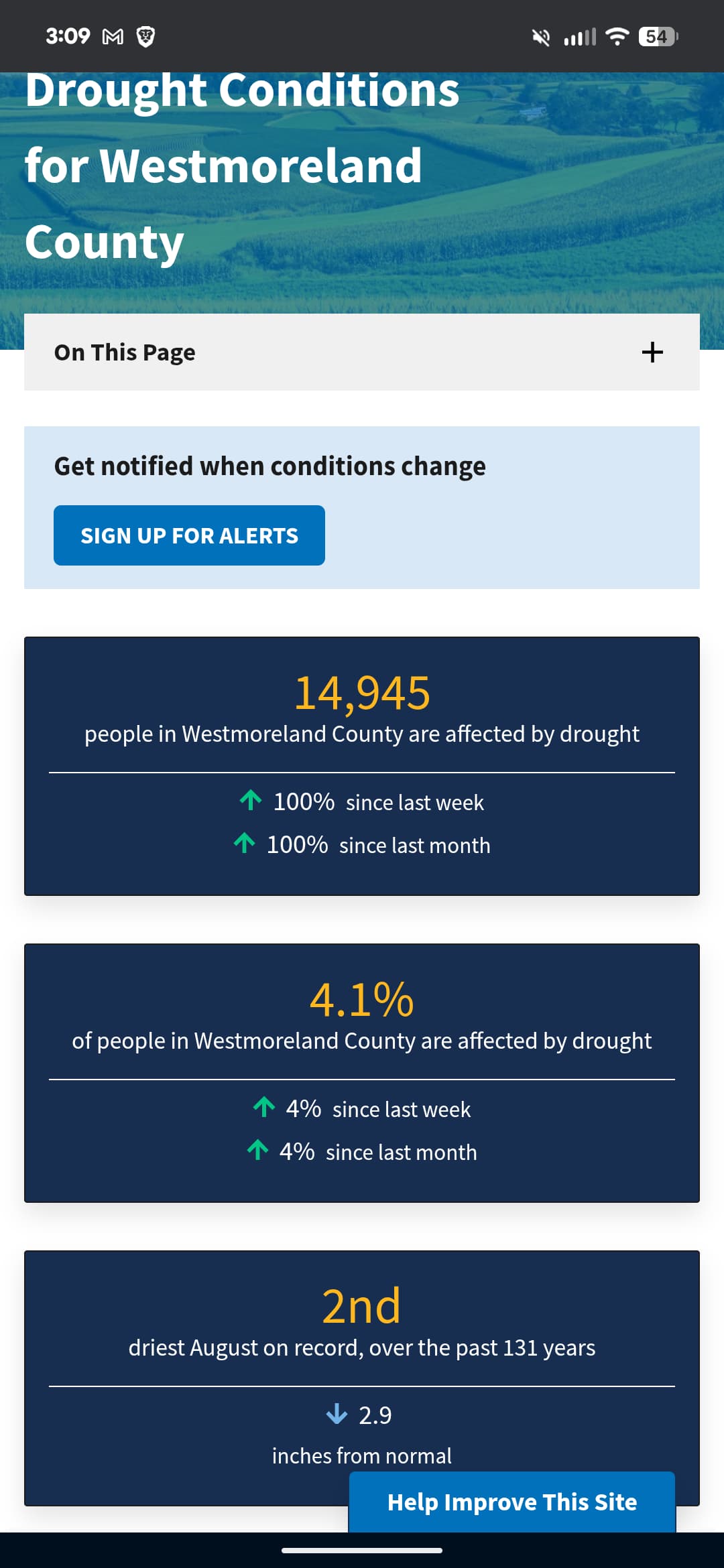
Also, we just had a massive drought that I understand also affected Ohio and West Virginia.
2nd worst since 1894 is a big stat, especially after a test winter down to - 9 F here.
When trees are stressed they might drop fruit to survive.
Interesting about the “teenage trees”. How long would you say it takes persimmons to get to their senses? As for the drought, from my observation, we’ve had exceptionally dry August and September, but Spring and the first half of the summer, when most of the fruit dropped, were not too dry. Moreover, similar fruit drop occurred in previous years. So I don’t think my Zima Khurma’s fruit drop can be explained by the drought.
My Nikita’s Gift went in ground in 2019 and is holding probably 25 to 30 out of hundreds. Fruit growing is not for the impatient…
Persimmons in particular have their own set of quirks to research, but I’ve put most of my eggs in that basket for now. If you can figure out persimmons, all the others are relatively easy, minus stone fruit which I’m trying to limit for the additional sprays required.
I have had a Bozhi Dar tree for several years and it definitely produces male flowers. It is also quite dwarfing.
As for Universal, it is another Ukrainian hybrid that was discussed here in these Forums - You should be able to find something about it using the search function. @Harbin may also be able to tell you more about it.
When my Kasandra was in year 2… it set a few fruit and then dropped them all by june/july.
This year in year 3… it set 30+ fruit and it kept every one of them.

I bet next year it will produce a nice load of fruit.
The only males I have around are 60c southern males. I dont think they would be able to pollinate with hybrids… arent hybrids crosses of 90c americans and aians ?
I will be glad when some of my kasandra get ripe. Looks like they are going to ripen mostly in October here.
TNHunter
I’m sure that you’re right. You will probably have to thin fruit and/or support branches to prevent damage. You might need to thin fruit to improve the quality (size, flavor) on what’s left.
FWIW, my Kasandra ripens only a small portion of the crop on the tree – late Oct through mid Nov. I have to finish most of them indoors. Last year I used the garage. As the fruit ripen from the bottom up, there was still some astringency at the top when picked. I put the fruit in a bin and sprayed the tops with ethanol. Problem solved. But in your location, they’ll probably all ripen on the tree.
@TNHunter - The late John Brittain, of Nolin River Nut Tree Nursery, sold a grafted 60-chromosome male, which he had named ‘Lover Boy’ - ostensibly to improve fruit set on the female 90-chromosome cultivars, without producing seed.
IDK if that’s really a thing or not.
I presume that 60-C persimmons predominate in my area - supposedly, the Ohio River is the natural ‘dividing line’ between the two races - but I get seeds in many of my 90-C females, and I’m fairly confident that no one within miles of me is planting or grafting persimmons… The possibility is more than just strong that there is a 90-C male somewhere on my property, as I have planted what is undoubtedly a mix of 90-C and 60-C seeds here and there for use as rootstocks, and some have probably reached blooming age without being grafted.
@Lucky_P … I was hoping that the 90c american females that I have grafted here and hybrids would all produce seedless fruit.
Prok, Barbaras blush, H63A, H118
JT02, Kasandra, Nakitas gift, Journey, Dar Sofiyivky.
Cliff actually says in a youtube vid… fruit from those trees south of the ohio will be seedlless…
Of all that I have … I have only had fruit to ripen so far in H63A and Barbaras blush… and they both had just a few seeds in them.
H63A had 1 large seed and a few tiny ones.
I doubt seriously that I have any 90c males here. I have never found a male here that did not look like 60c (very thin frail limb tip wood). I have never planted any 90c seeds here.
So far Cliffs words have not been exactly true for me.
The seeds are greatly reduced in my H63A and BB… but not eliminated.
For example it is not unusual for Rich Tooie persimmons (60c) to have 5-7 seeds.
So far the only seedless persimmon I have had is my IKKJiro (asian)… and it is totally seedless. Funny that even though there are no seeds developed… there are gell like seed sacks inside where the seeds should be. Those seem to be extra flavorful.
Just like on a wild american that is well ripened… the seed sacks are worth lingering on… for that extra flavor.
TNHunter
I planted a ‘Kasandra’ and a ‘Mikkusa’ when Cliff first offered them. Planted a city block away from each other and a year apart. Both had a few random seeds. Both had a nice fruit set around Halloween in eastern KS.
If you didn’t have 90C persimmons somewhere nearby you wouldn’t have seeds in your H63a and Barbaras Blush. Bees seem to be able to travel a fair distance with persimmon pollen, so it doesn’t have to be the ones on your property, but I can’t see how you could have seeds and not have at least some 90C trees in your area.
The good news is they won’t polliinate your IKKJ or any other pure kaki trees you plant.
@randyks Do you have wild persimmons in your area? I don’t think anyone has ever seen male flowers on Kasandra and Mikkusa, but perhaps they do and I’ve just never heard of it. Native persimmons will often give partial pollination to hybrids.
None in that wealthy enclave that I knew of. But Cliff and I talked about that, someone had reported few male flowers on their ‘Mikkusa’ and he believed it to be true. Both the trees I planted were mature, about 6’ tall when planted, Cliff had used both as a stock plant. Fruited the next year.
I do know native american’s are in the city so if bee’s are good at distance pollination that may be the case.
Ah, sounds like Bozhi Dar is a strong candidate for me then. It’s only (slight) disadvantage is that it’s listed to be tolerant to -13F, while Cleveland’s historic data shows a dip to -17. But in my 20 years in this area, we never dropped below minus single digits, so I am willing to gamble. I’ll try to find more info about Universal, but unless it’s more cold-tolerant, I think Bozhi Dar checks all the boxes. Thanks again, @Nicholas and everyone, for your quick help!