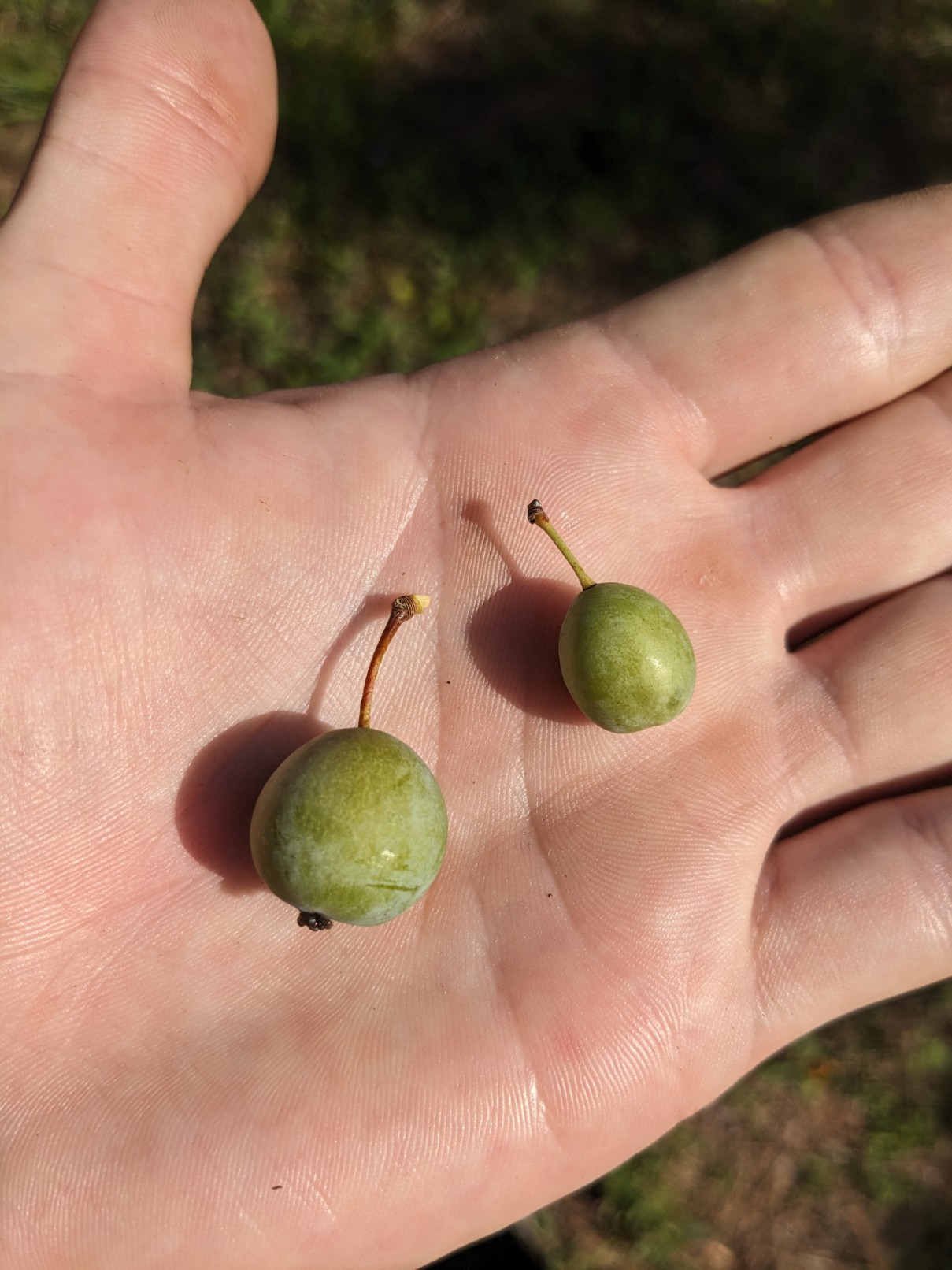
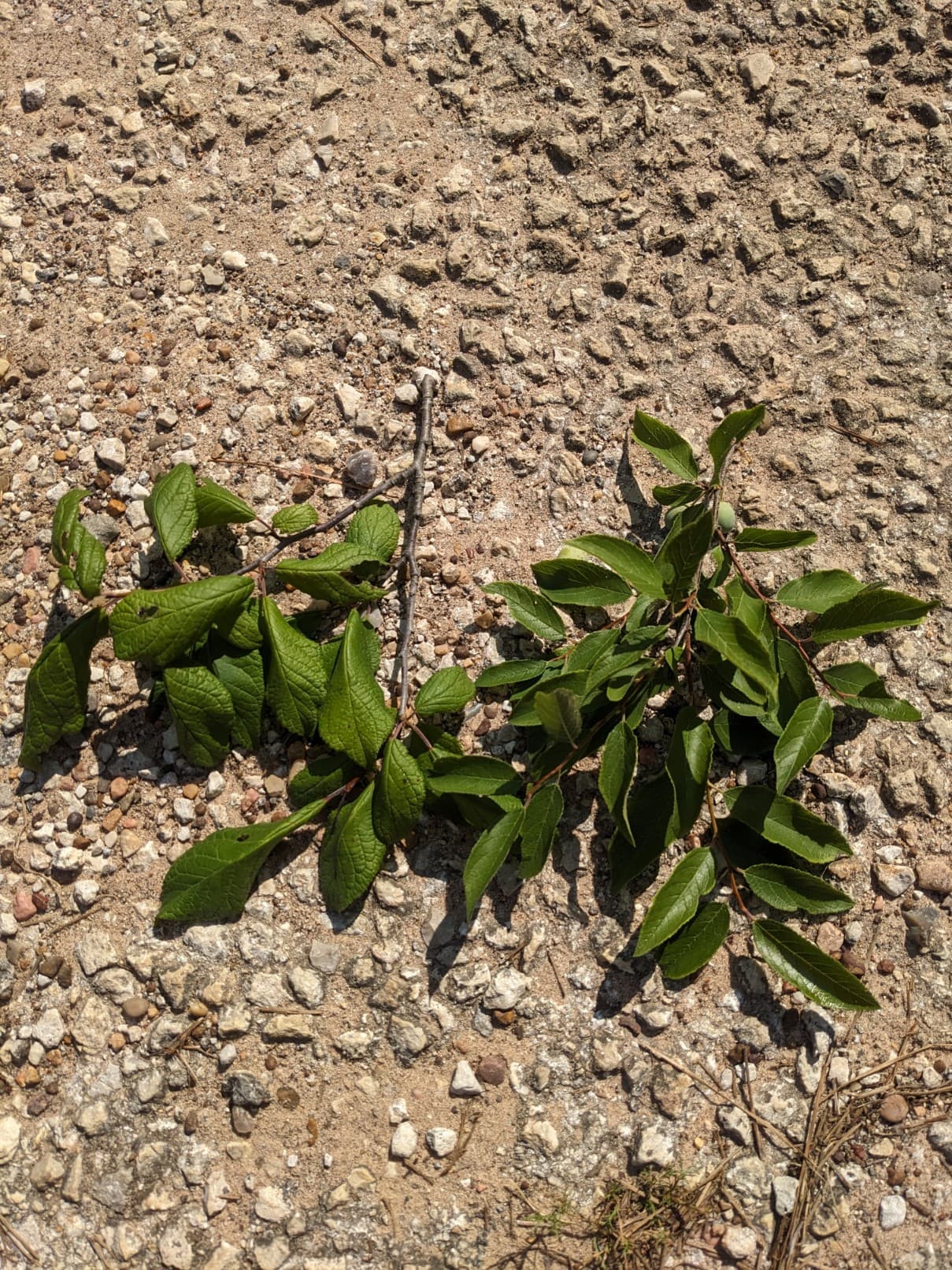
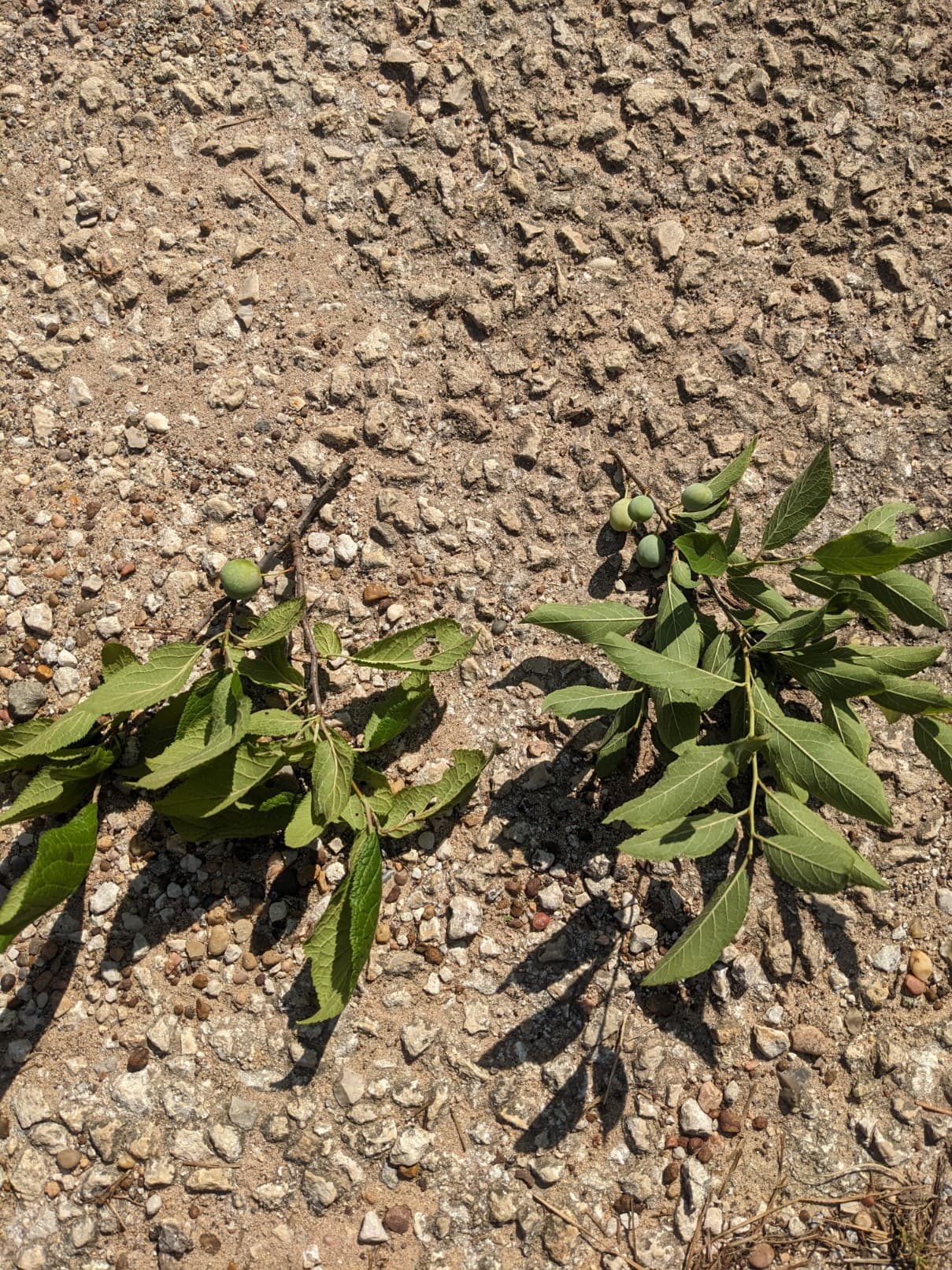
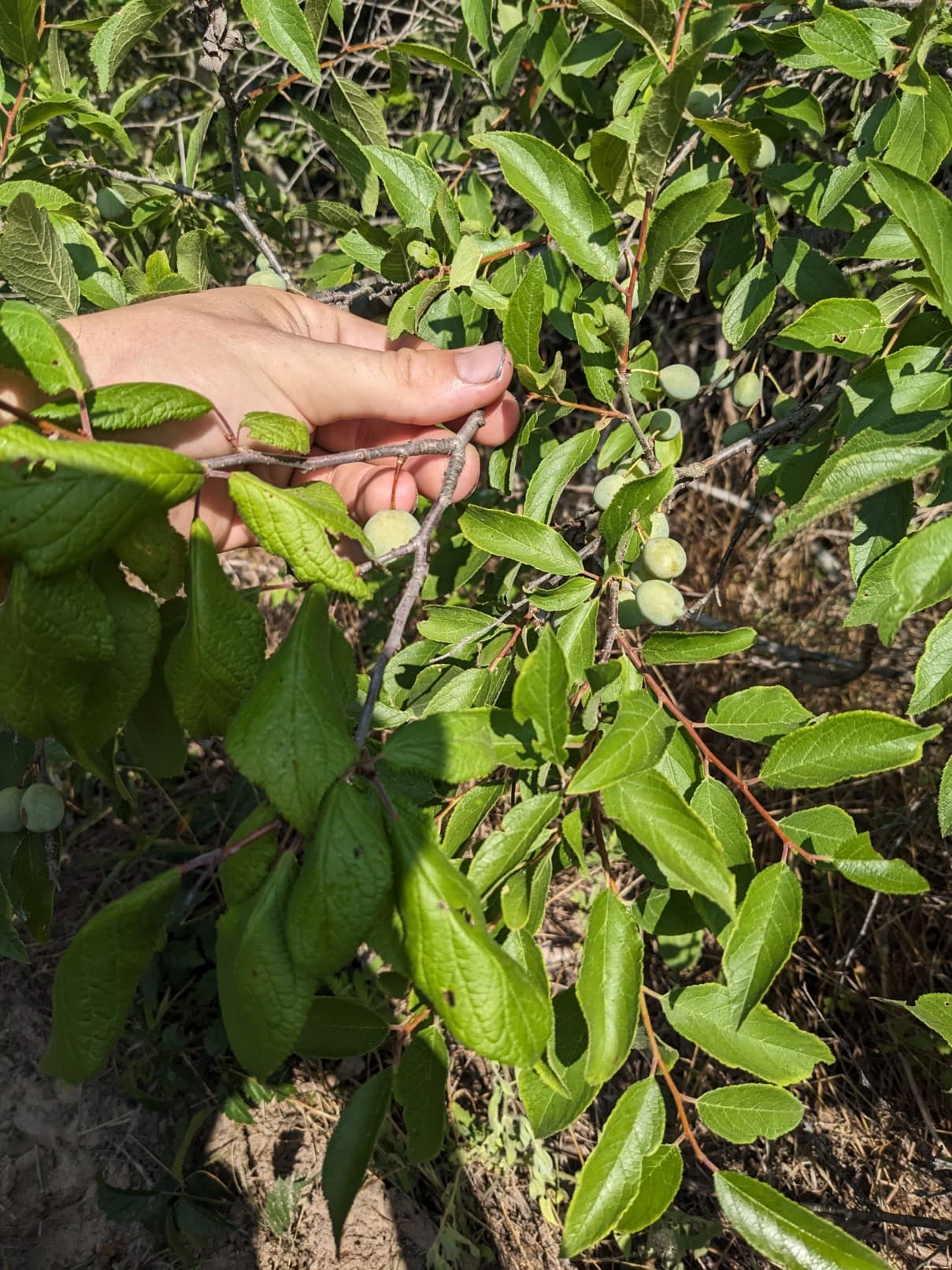
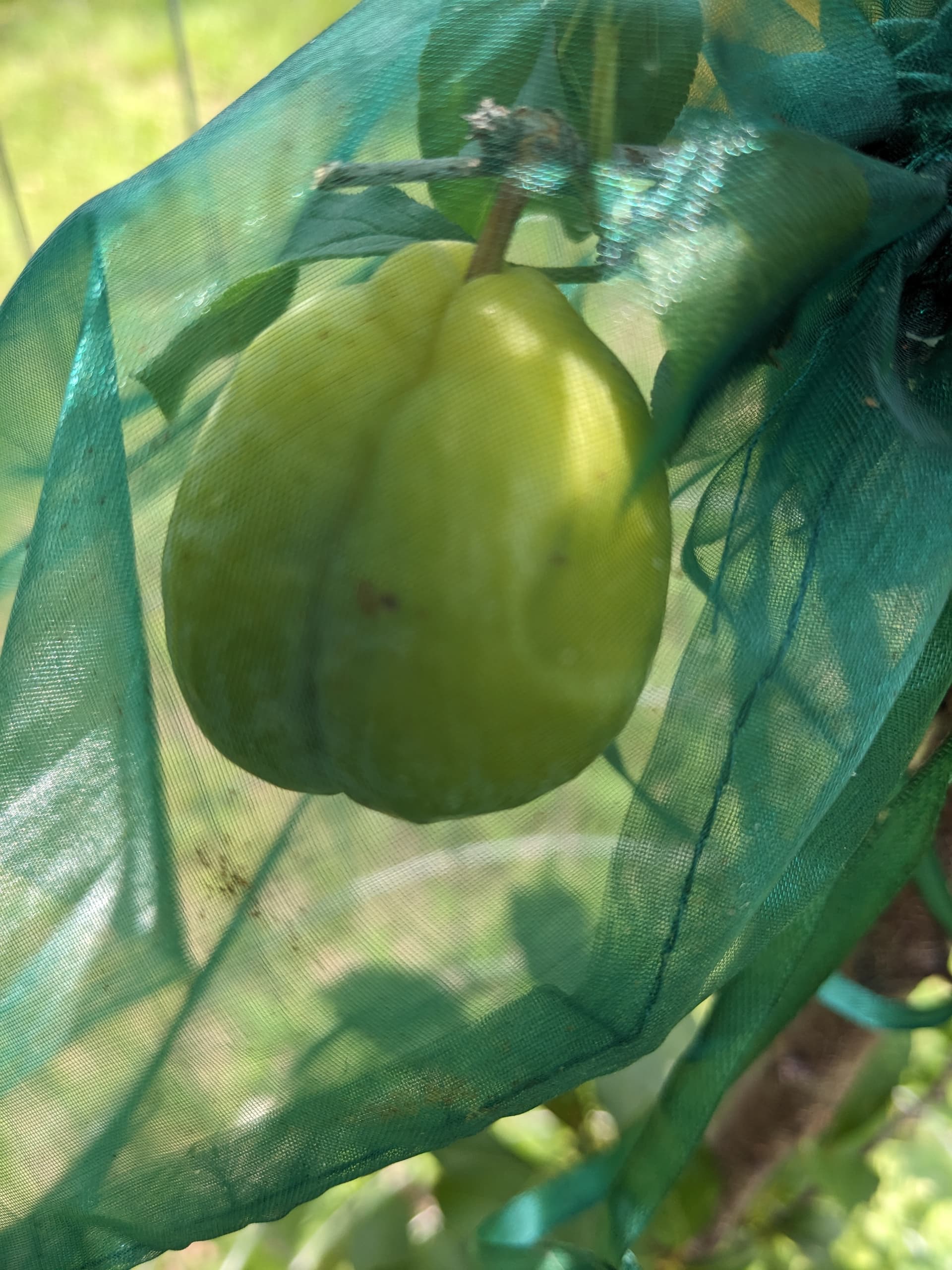
Prunus Mexicana,(Mexican plum) vs. prunus umbellata(flatwoods plum)
At least in my locality(easy Texas), they grow in many of the same areas, but do not appear to hybridize readily, although bloom often overlaps. Locals tend to call them all Mexican plum even though they are not all the same species. I have been unable to hybridize Mexican plum with Japanese plum in spite of a number of attempts using different cultivars of Japanese plum, and different individuals of Mexican plum. I am not yet prepared to say it will not hybridize with any Japanese plums, but it certainly won’t readily do so with many cultivars. Flatwoods plum on the other hand will hybridize readily with japanese plum provided flowering time overlaps, which it often does not. Mexican plum has consistently larger leaves and plums than flatwoods plum, and at least in my locality flatwoods plum fruit tends toward a teardrop shape while mexican plum fruit tends toward round or very slightly oval. both ripen relatively late, mid July to October for Mexican plum and generally a month or so earlier for flatwoods plum, depending on the individual plant and season. Both have a bitter taste until overripe, and even then it’s still there just greatly reduced. Both are susceptible to curculio with nearly every fruit being attacked, but both will have a lot of fruit that survives the attack. The curculio often dies in development and the hole it leaves heals over. Both can be used as a rootstocks with varying degrees of difficulty. Not all individuals accept grafts from cultivated varieties readily and different cultivated varieties vary in their graft compatibility as well. I believe these species do have value in breeding for the southeast, due to their climate and soil adaptations, and significantly later flowering times than Chickasaw or most Japanese plum strains.
5 Likes
I always find the posts on native plums interesting. Thank you for sharing your experience with these two types of plums. How have you been trying to hybridize the Mexican plum/flatwoods plum with Japanese plums? Also, which Japanese plum varieties have you been using? In your rootstock observations, which cultivated varieties have you tried to graft to the wild types and which ones did well?
I think that the curculio information is interesting. If the fruit is attacked but then survives the attack and is still useable then that seems like it is a valuable trait.
I’ve tried controlled pollinations of bagged flowers on the Japanese plums with pollen from a number of different Mexican plums, and also at a different location, a lone tree of Mariposa without another pollen partner was left to open pollinate next to a Mexican plum in a couple years where bloom was observed to overlap(it doesn’t every year). The Japanese plums have never set fruit under those conditions. I’ve used Mariposa & flavor king Japanese plums primarily. If enough different cultivars are tried something might work, as plums can be finicky.
1 Like
Thank you for the response! Mariposa & flavor king would definitely have been interesting ones to use in a breeding effort. Were those the same ones you were trying to graft?
I’ve grafted both of those cultivars on both species with success, along with the Chickasaw cultivar Sonny’s yellow. The Sonny’s yellow grafted well with every scion on every tree tried, the others had a lot of graft failures but a few takes. I also got one graft of the Chickasaw cultivar miss bessy to take on a flatwoods plum, but several more graft attempts on other trees failed.
1 Like
How does Sonny’s yellow do with your curculio pressure? Does it also survive the attacks?
Don’t know how Sony’s yellow will do. Haven’t grown it before & just grafted it this spring.
1 Like
There are several factors that determine compatibility of pollen in cross pollination. First: Are your Japanese varieties mature enough to bear fruit? Often an immature tree will blossom but not set or hold its fruit before aborting.
Burbank used native plums to create many of his popular varieties by cross pollination. Most of the popular hybrid plums we have today were results of native plums crossed with Asian plums. I think the pollen compatibility might depend on the direction of the cross. What I have observed is a great difference in the size of native pollen grains in comparison with domestic varieties when attempting to hand pollinate some of mine. Usually you have only 5-6 days of receptive stigmas so this window can make it challenging. Often online I read that natives are needed to pollinate hybrids, but natives are self fertile. Keep experimenting, at some point you will satisfy the goal! Look forward to you future posts. I have grafted a number of natives from Mexico to Canada and someday hope to see them crossed
Dennis
Kent, Wa
2 Likes
Yes. The Mariposa is about 12 years old and has fruited when Santa Rosa was the pollinator. The flavor king is younger but still large enough to set fruit. Those that were the latest blooms on the tree and had some overlap with the earliest flowers on the flatwoods plum set adequately with controlled pollination. Mexican plum pollen resulted in zero set, and I’ve tried it multiple years with a couple of different genotypes with the same results.
One of the flavor king plums that didn’t drop & was pollinated in a controlled cross with flatwoods plum.
1 Like
Did you bag the Flavor King blossom until it opened and you then cross pollinated?
Dennis
No, but there was nothing else in bloom at the same time nearby on the property where the flavor king was located, and I collected handful of early open flowers from a flatwoods plum a quarter mile or so away, and hand pollinated some branches on the flavor king a couple days in a row with that. Those branches that were hand pollinated with flatwoods plum flowers were the only branches to set fruit on the tree. Most ended up dropping as is common in plum, but a few fruits held on. I have bagged flowers prior to opening in other cases though. Even bagged whole trees with insect exclusion netting.
1 Like
Your story is pretty convincing that your cross breeding has worked. So how many plums have set on Favor King? By the way I have had Flavor King and Flavor Supreme growing here for several years without any fruit sets, so I am aware of how difficult it is to pollinate them. This year my Flavor Supreme has set several and Flavor King. Has set only 1 fruit. I have them among several Asian varieties so I am not sure of their pollen source. I’m surprised that they are fruiting after so many years of waiting.
Dennis
Kent, Wa
1 Like
The set was decent on the pollinated branches, probably 15-20 or so. Most aborted and fell off at a little less than dime size, it is a youngish tree, but four look like they made it to a stage they won’t abort. Hopefully I can protect them long enough to keep the birds, coons, squirrels, opossums etc. from stealing them. If nothing steals them while still green, I will probably harvest them a bit earlier than optimum for fruit quality just to keep the pests from running off with the seed.
3 Likes
I hope you can save those seeds to grow them out enough to see the results. Here I had to trap my squirrels and take them far away to release them, they were great at stealing our fruits just when they were ripening. Fortunately, I managed to catch most of them. So this year we should have more plums to appreciate. I look forward Seth to seeing your hybrid seeds grow out. Once they are large enough to cut scions, you should graft them onto your mature trees to accelerate their fruiting. Will be very interesting to see the results.
Dennis
Kent, Wa
1 Like
Sure. Will do. I honestly expect the F1s to have rather small unpleasant fruit however. That’s my experience with grape when making F1 crosses to wild types with poor fruit quality, and I imagine plum would be similar. With grape, you most often start to get stuff that’s interesting and has favorable trait combinations in a backcross to a cultivated type, or even more frequently, once you make one backcross to a wild type and then cross that 75% wild type back to a cultivated type. Plum has a very similar seed to seed generation time to grape, although grape is far less finicky about pollen partners and it is easier to produce large amounts of seed with a known pedigree with grape IMHO.
1 Like
This year my Wild Goose plum will be fruiting its first production. So I plan next spring to try some crosses with it. I have a number of hybrid varieties I want to cross with it so now I can begin those efforts next spring.
Dennis
1 Like