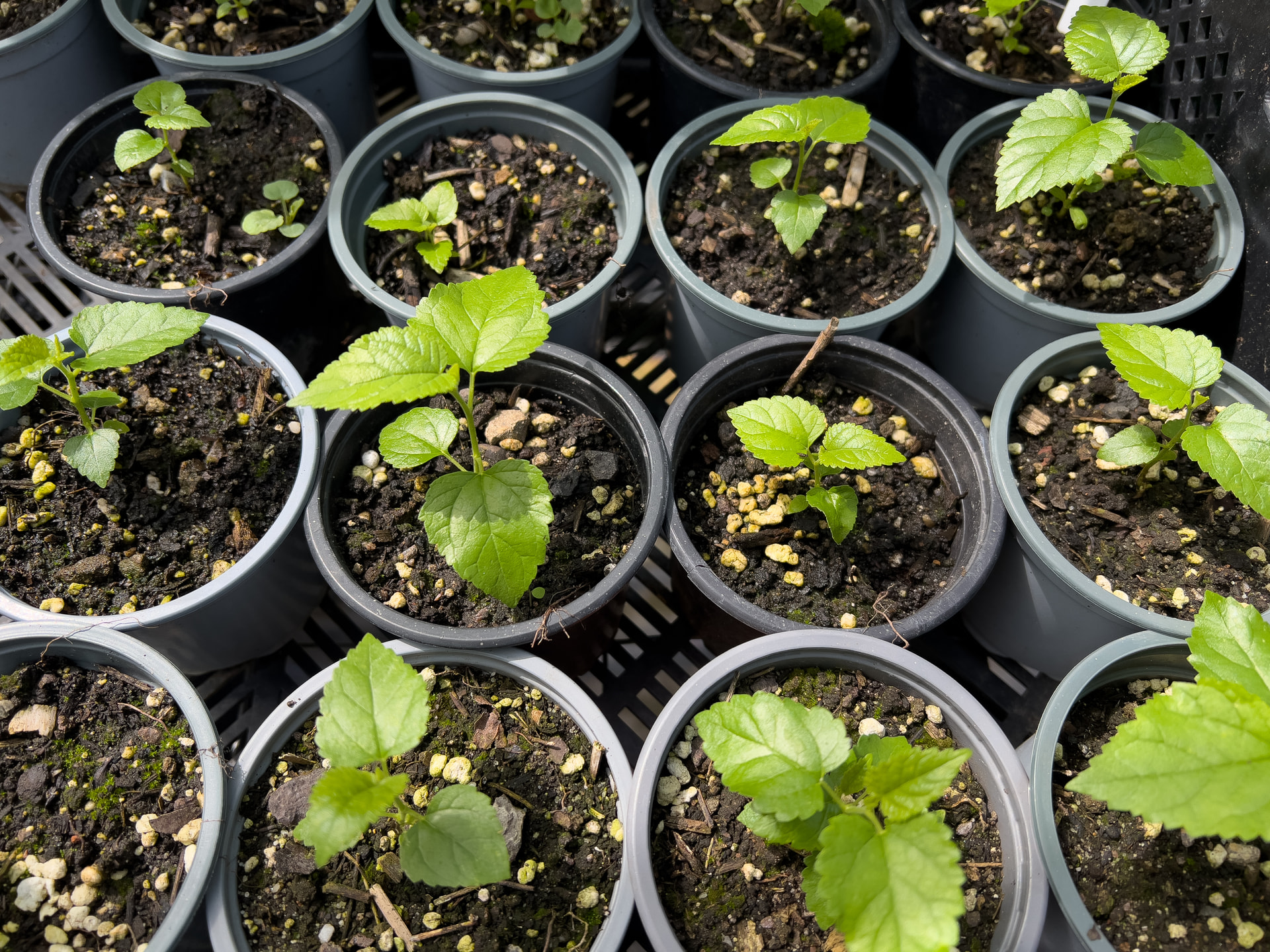
I grew these seedlings this year.
The process was relatively easy. Wash and clean the seeds from ripe fruit last summer, completely dry them, soak and sow them in late autumn.
They germinated surprisingly early, beginning of April.
One big mistake I did was sowing them into a larger air prune bed. Snails seem to LOVE them and destroyed about three quarters of my seedlings at the two leaf stage.
I am mainly growing them with the idea of obtaining rootstock to graft my varieties (I have 5 different ones)
Is this a good idea? Or are specific mulberry species suited especially well as rootstock? I think I read somewhere Morus tartarica…
These seedlings are all from Illinois everbearing, a rubra x alba hybrid. I sowed seeds from three different varieties, one was completely sterile and one was eaten by snails fully the moment they germinated (very interesting how they fully ate one variety before they started eating the other one)
How long can I expect to wait for mulberry seedlings to bear fruit so I can sample them?
Are mulberry seedlings rather similar to their parent or is the genetic spread very far?
Illinois Everbearing seedlings should be quite interesting. I see some big differences in the vigor of the different seedlings in your picture, something I’m seeing in my seedlings from hybrids. I think it is also a good possibility that Gerardi is a seedling of Ill Eve., so keep an eye out for any dwarf types with short internodes. I’m not sure how long they will take to bloom, but it could be anywhere from 3-7 years depending on growth conditions and genetics. Grafting to a large established rootstock may speed things up.
I have noticed that the few hybrids I have attempted to make crosses with seem to have low fertility. I suspect that rubra and alba are not as closely related as we assume.
Mulberry seeds can be germinated immediately without any stratification if they are sown without drying out. I have some Varaha and Gerardi seedlings growing now from this spring crossed to M. rubra.
Sadly at least 70% will never make fruit. I was told that mulberry seedlings are 70% male, perhaps female seedlings are more fragile or it’s an easier way for trees to survive to spreading their genetics or to back cross to the mother tree for more unique genes, I don’t know, but he was quite knowledgeable about mulberries, maybe there are that many fruitless females that they just look male.
The fruit will likely not be like the mother’s, they tend to be sweet but flavorless. My recommendation if you want to try the new seedlings is leave one branch facing south or Southwest and graft about that with a desired variety, then you can test the fruit off the lower branch if it bears, then you have 3 options: leave it that branch for the original fruit or as a male pollinator if that’s what it turns out to be, or graft over that branch too, or cut back the grafted top of the tree and let your new seedling variety take over entirely, if the fruit is actually that good, and congratulations, you’re the proud breeder of a new variety that you get to name.
Ok, that doesn’t sound very encouraging, in regards to letting them fruit and sampling them, luckily that wasn’t my original plan anyways.
Does anyone know if these seedlings will accept scions grafted from other mulberry species easily, or is it a safer bet to graft only from each mother tree to it‘s own seedlings?
The varieties i have are of different species, one pure M. alba, one M. rubra x alba, two M. australis cultivars and one M. alba var. pendula and I want to try my hand at grafting each of these, as I have had a very low success rate wlth cuttings
Is that right? I am not sure that’s the case for the ones in my area where alba with some ruba heritage seem to dominate, but I’m also tend to ignore the ones without fruit so my perception of the ratio might be very biased. But it feels like there’s a lot more fruit bearing mulberries. Maybe I’ll do a proper survey of the trees someday
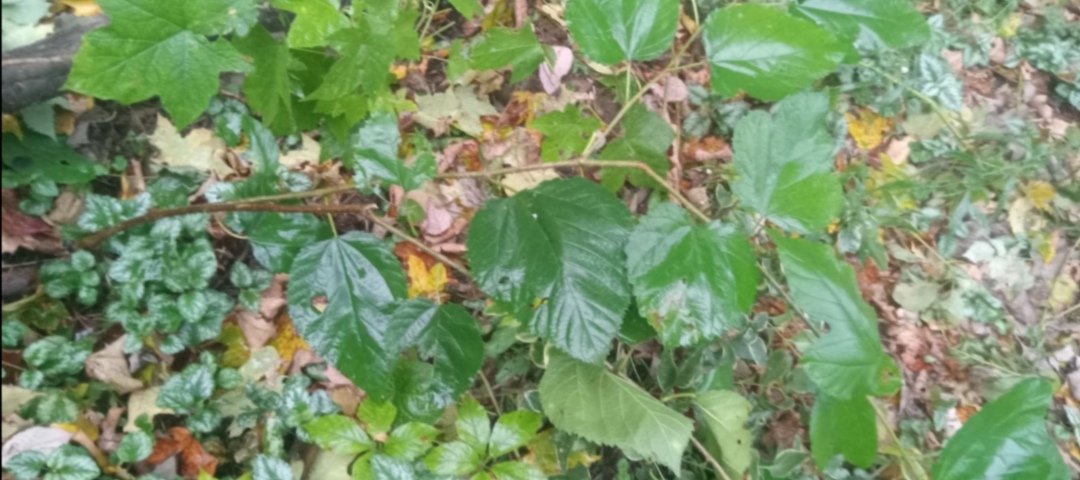
My sister doesn’t have mulberries and none are obvious in her area, but she’s in a suburb and birds can fly around with whatever seeds they can and she has lots of mulberries growing like weeds, I can’t tell you what kind they are other than send a few pictures of the leaves.
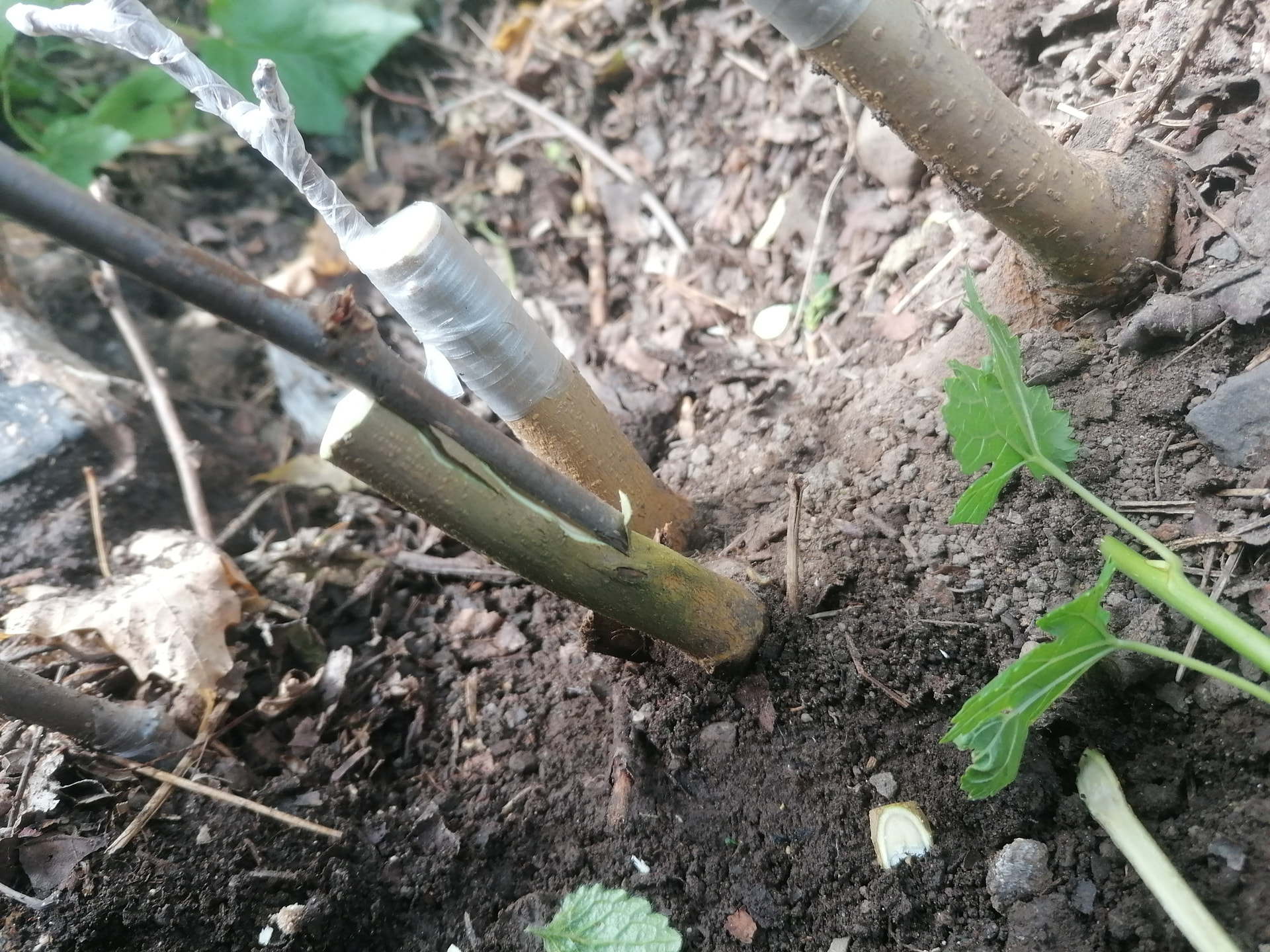
In any case I grafted onto them some worked some didn’t, but it was late in the season and I treated them badly so I’m happy that some worked.