I don’t measure but the lower wire is about 7" from the soil and the second one is about 7" higher.
3 Likes
Thanks! I may have to add a lower wire, I have them at 2 and 4 feet to keep the deer out. I thought something went up the trunk of my vine, because there was a circle of chewed up grapes on the ground around the trunk.
2 Likes
It seems that setup is in my future since I know I have raccoons and possums. Once my vines and fruit trees start producing in a year or two, I’ll install electric fencing. Thankfully I have no deer pressure.
2 Likes
Have you had to spray your Hall? Dr Connor says expect to spray bronze type muscadines.
2 Likes
No sprays needed yet, but it is only the third year for Hall.
1 Like
No sprays as of now for Hall. It is possible that the later ripening varieties need more spraying.
1 Like
Would tuna fish work as a bait for the squirrels?
@tennessean, I would suggest trying walnuts as a bait for squirrels.
1 Like
Has anyone tried RubyCrisp? Any thoughts on it?
1 Like
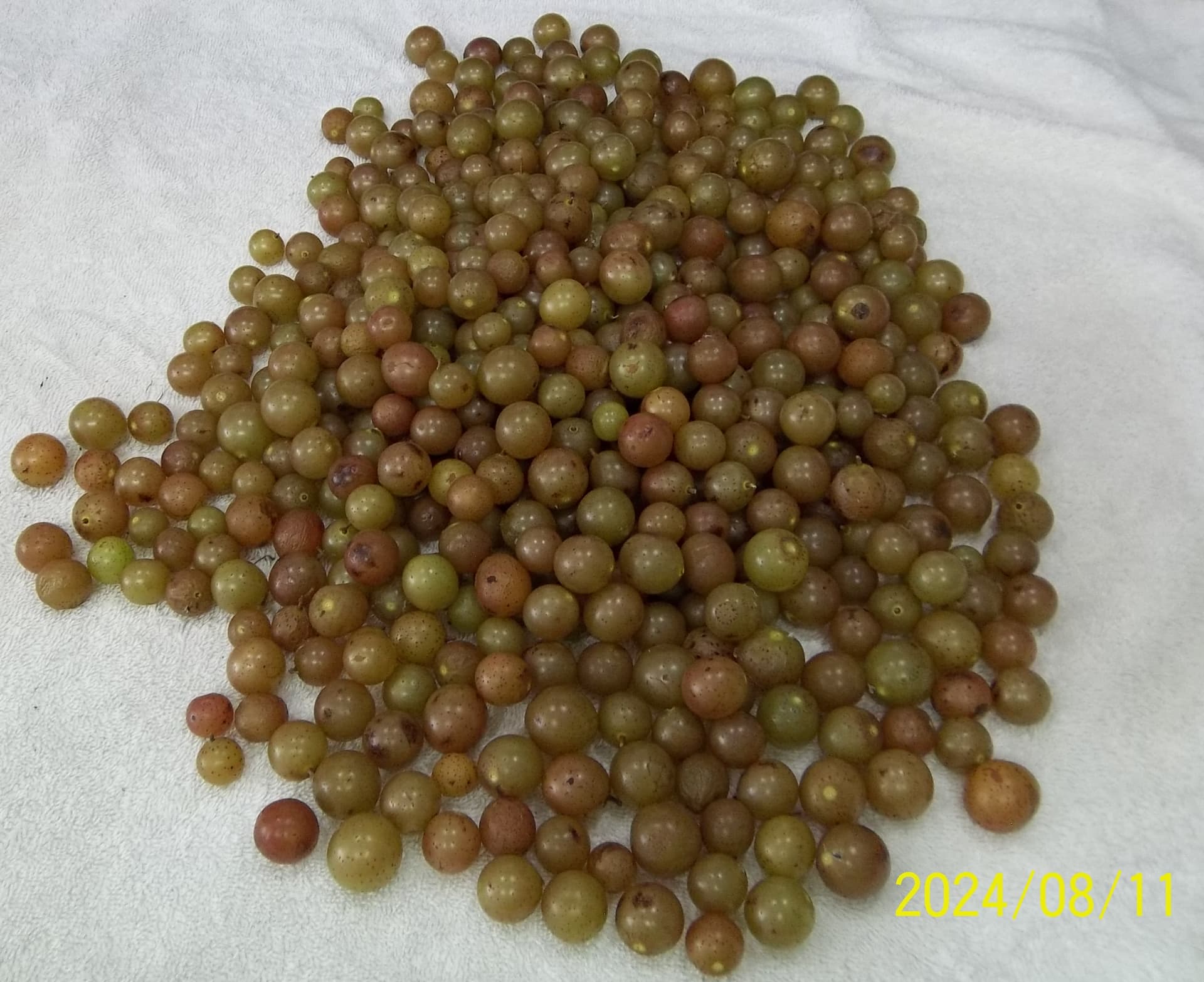
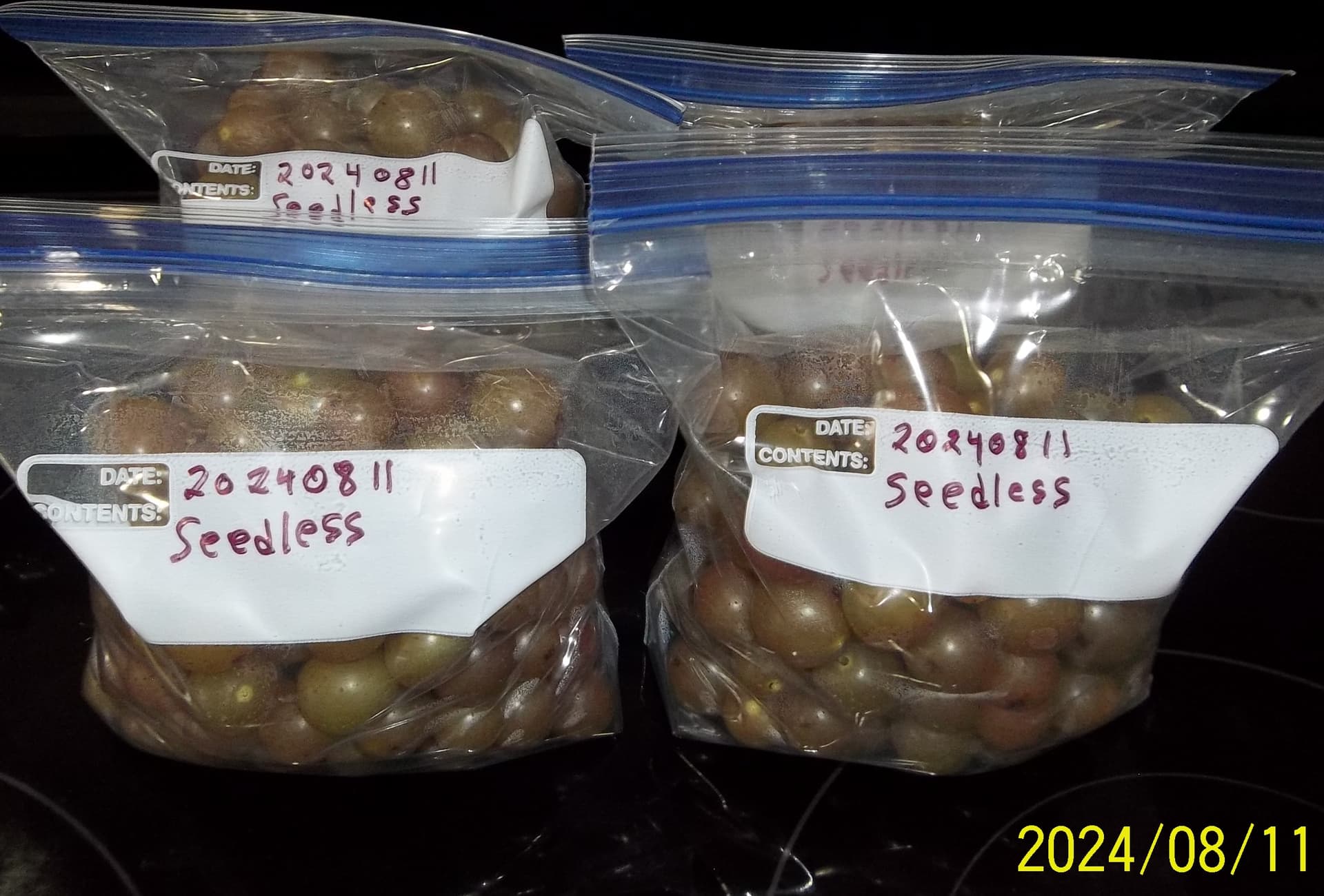
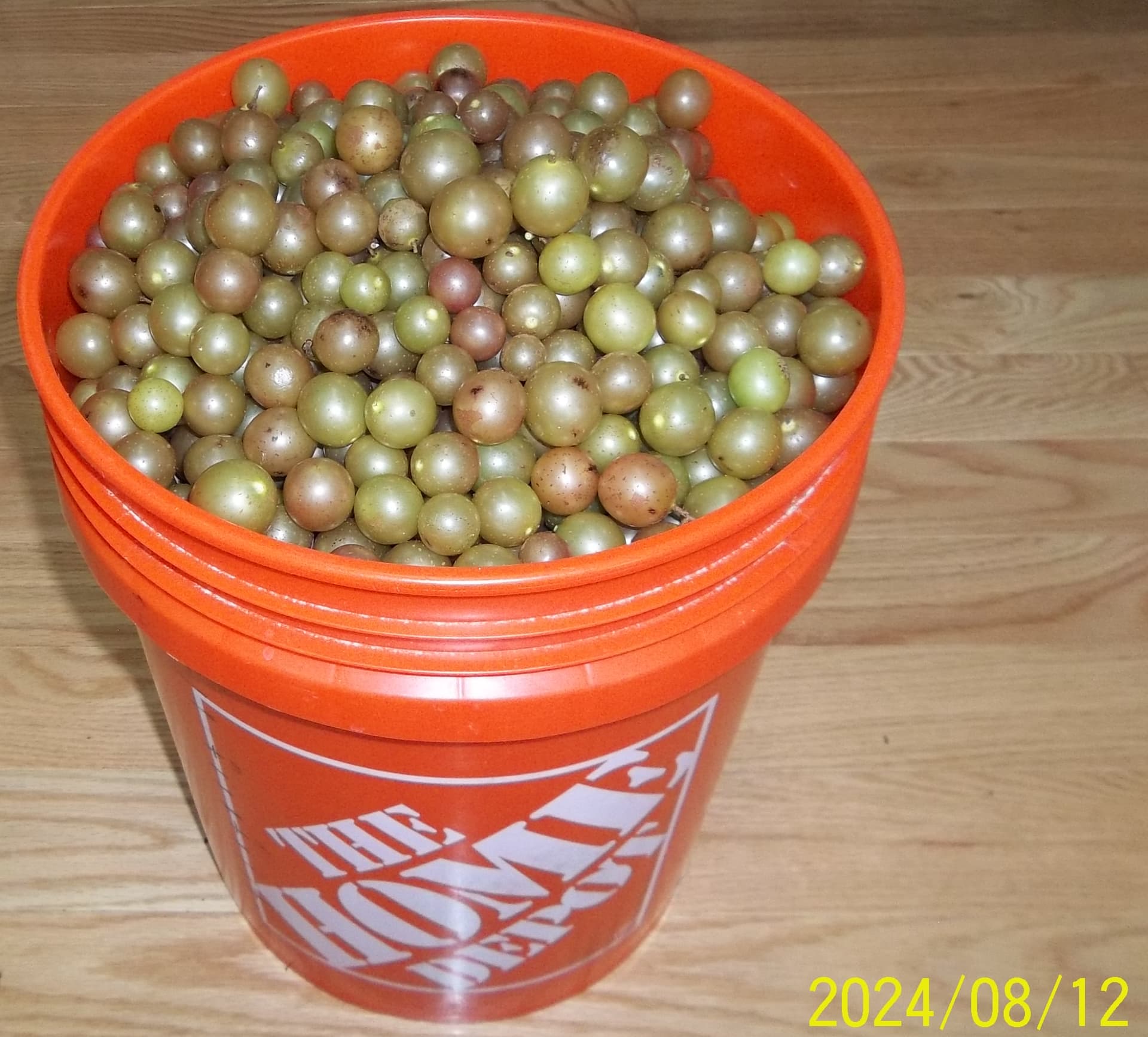
Do you have any information on Oh My parentage? I tried to look it up but was unsuccessful. With it bronze color I would suspect that Scuppernong is somewhere in its parentage.
I noticed that it is illegal to use Oh My in breeding. Is all patented muscadines like that?
1 Like
I don’t have any info on the Oh My parents. Yes it is patented against any type of reproduction.
1 Like
There is parent info in the patent, although they are mostly just numbered selections that don’t mean much. The pedigree predicts that Oh My is 23.1% V. vinifera.
2 Likes
Thanks
1 Like
You can speculate quite a bit based on the genetics. Species differences include number of chromosomes which is 40 iirc for muscadine and 38 for vinifera. Seedlessness is available in vinifera with Thompson Seedless being a well known example. Based on the pedigree, a cross was made between seedless vinifera and normal seeded muscadine which was backcrossed with muscadine to produce Oh My.
The seedless trait in grape is based on a mutation of a single gene controlling seed development. Selection in a segregating hybrid population should give a fairly high percentage of seedless offspring. One critical factor would be using a self-fertile muscadine as the female parent. Why? A seedless grape would still produce pollen therefore can be used to pollinate muscadine flowers. Resulting seed would probably require special handling and possibly embryo rescue.
Also, regarding the patent, from what I read, it protects the Oh My variety but will probably fail in protecting against others using it as a parent in future crosses. You simply can’t legally patent an existing gene and tie up the genetics to prevent further breeding. It has been tried several times over the last 50 years and when placed under scrutiny, courts deny the patent.
4 Likes
It is extremely rare for female muscadines to accept pollen from bunch grapes, so the cross nearly always has to be the other way. Bloodworth used a complex intermediate hybrid that was about 60% muscadine but would still accept seedless vinifera pollen. It still took him decades to get a proper seedless muscadine, something most grape breeders considered impossible, at least when using classic breeding methods. By the time anyone makes decent progress and tries to release new seedless hybrids using his material, the patent will have expired.
2 Likes
The only difference is in using an initial cross that did not have the seedless trait. It took a very dedicated breeder! We have Southern Home which is a backcrossed muscadine hybrid so perhaps a beginning point if someone wanted to bring another version of seedlessness into a muscadine background.
This video by Patrick Conner is the easiest to understand (to me) as to identifying flower types. The flower type illustration begins at the 6:49 mark.
1 Like