O wow that apple looks great… im going to check that out. I bookmarked a good thread on apple varieties and i need to go find it and share in case you havent seen already, or for others.
Wow that’s a great spreadsheet. I’ll save that for sure.
Can a single tree be trained to tall spindle? Or does it only work in high density systems?
I don’t have any first hand experience since I just now planted mine. However, I don’t see any reason you couldn’t train a single tree with the tall spindle method. The goals/requirements would be the same.
Dwarfing rootstock with tree support (some kind of permanent stake)
Pruning mainly consists of removing limbs when they become too large, usually with a dutch cut (you’ll have to look that up) to encourage a new shoot to form
Training branches/bending branches to be horizontal or below to devigorate them and encourage early fruiting
There are a lot of really good resources on some of the extension websites from Michigan State, Penn State, and Cornell. They are usually geared toward commercial growers, but the concepts would be the same for a home grower.
Someone more experienced than I can chime in if they feel differently or have anything to add!
The tight spacing helps with dwarfing and reducing vigor.
There is a book many have talked about “grow a little fruit tree” geared to home growers that talks about packing a bunch of trees into small spaces. (I haven’t read it so don’t know details)
A little update:
Trees have all woken up, some more than others. It looks like my notching worked, somewhat. Some of my trees broke bud all along the leader, while others more spread out.
My two ruby rush trees were much thicker caliper and did not break bud as much along the leader.
I went with straw for my mulch. It’s worked for my other trees and so I just used up what I had.
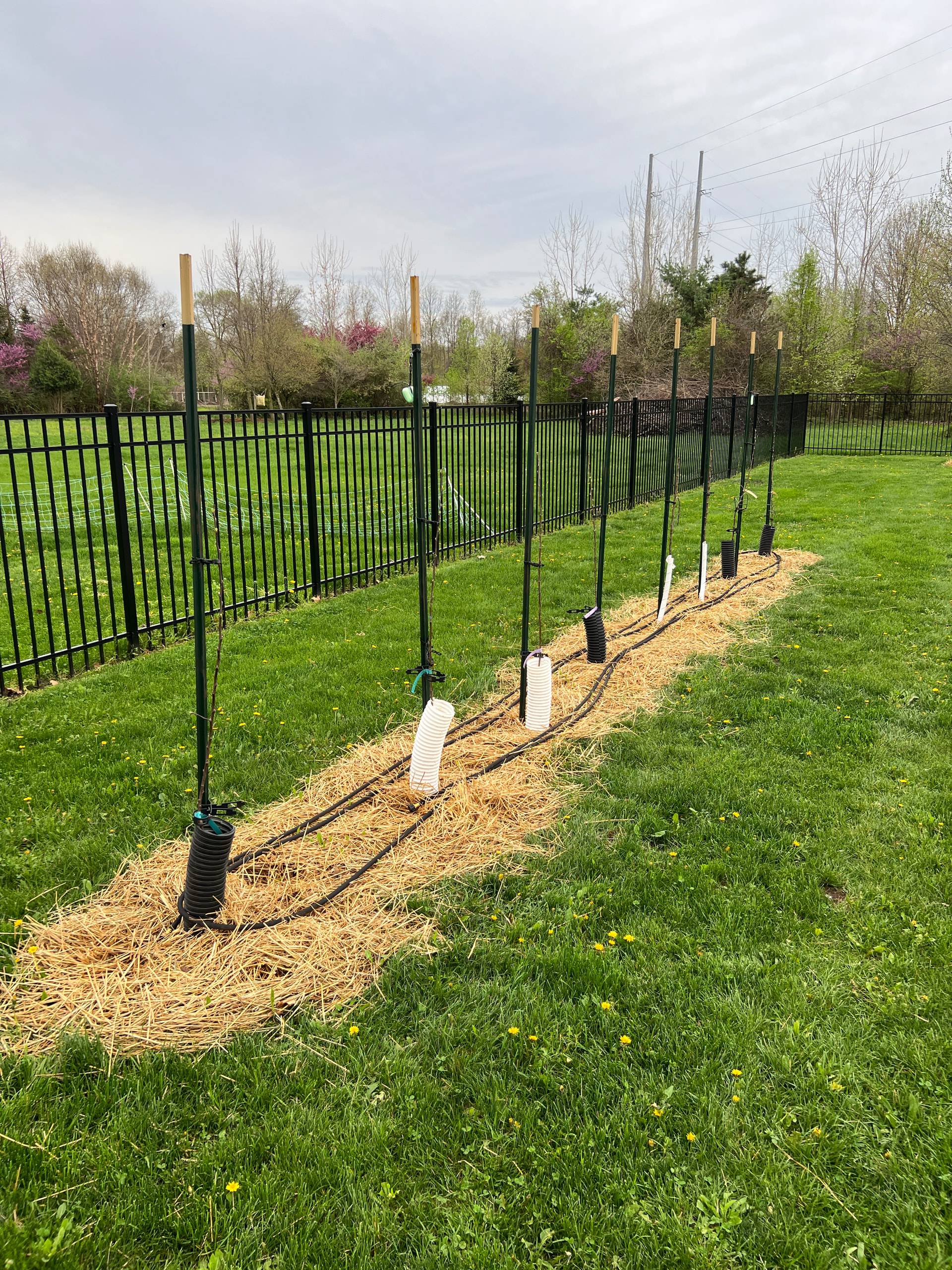
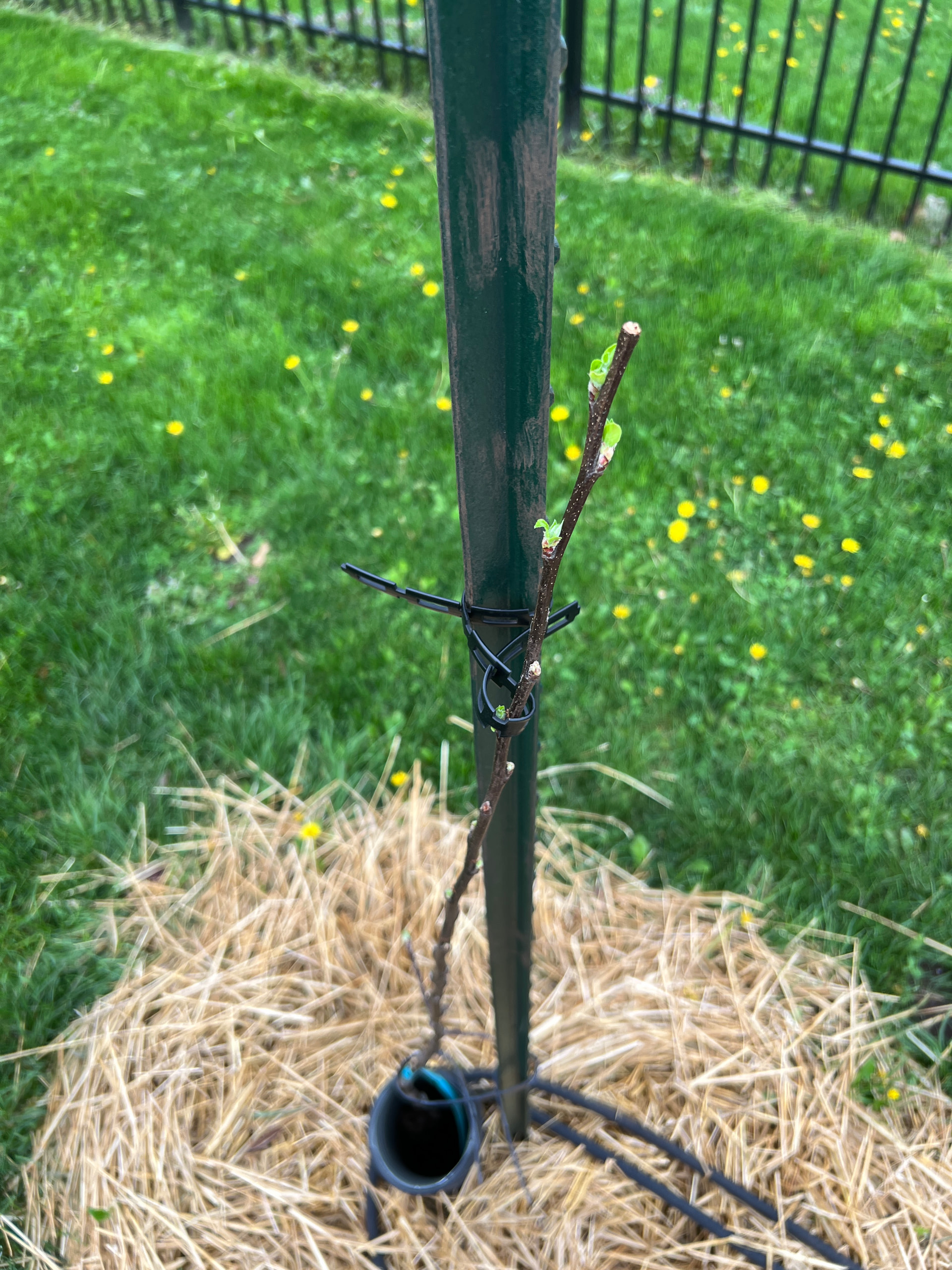
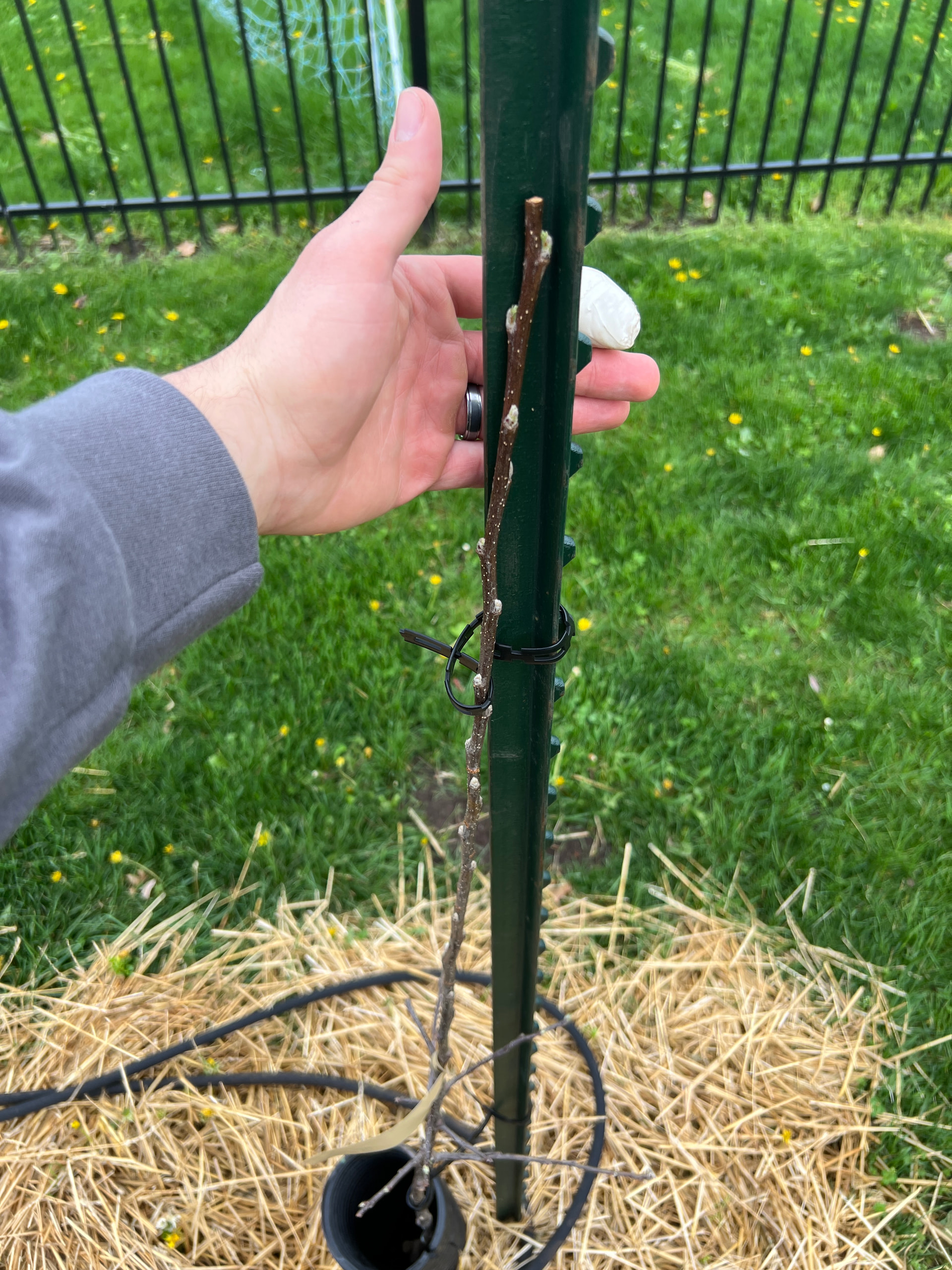
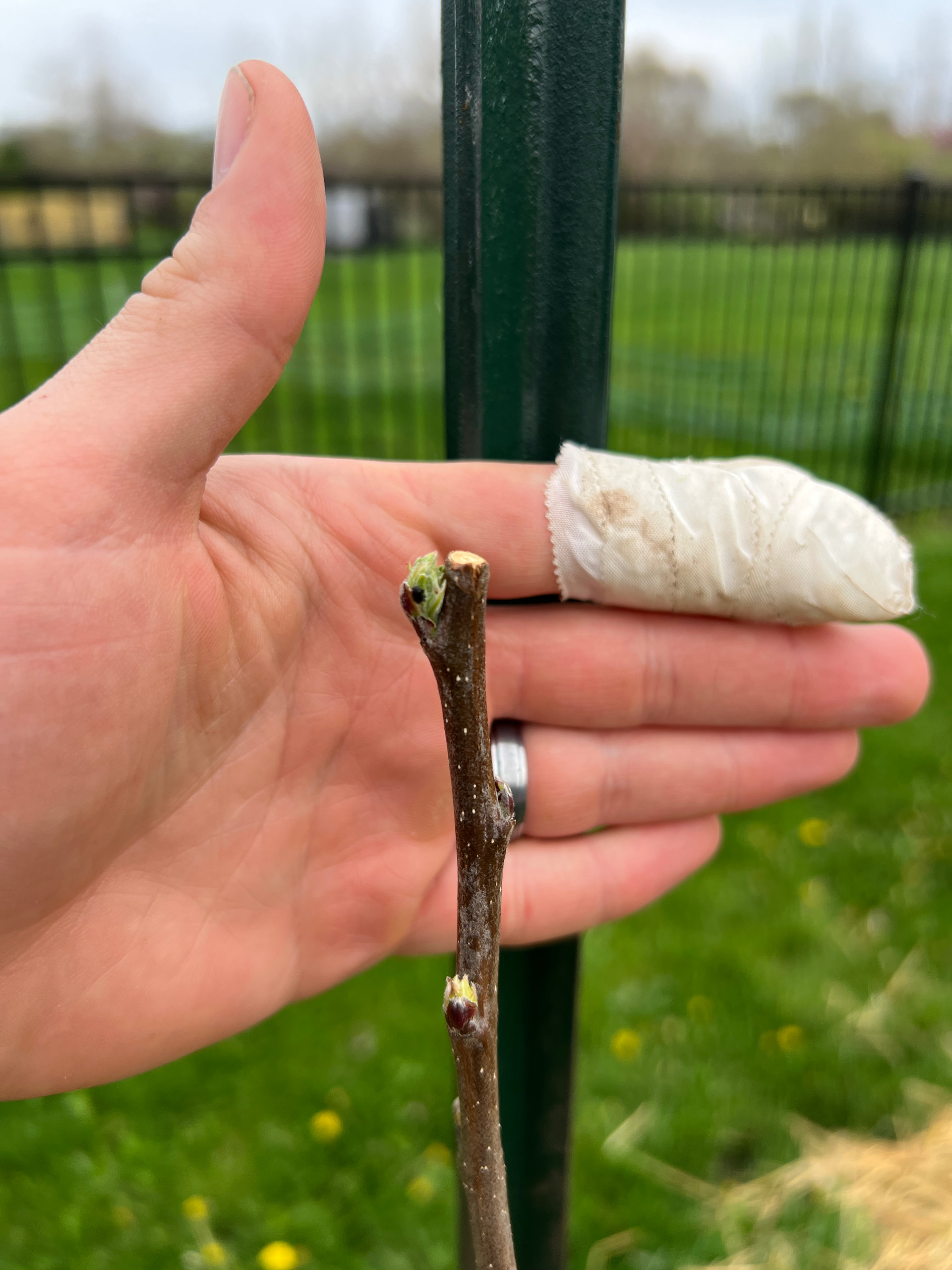
I did notice some of these guys eating the leaves. I’m thinking they’re apple fea weevils?

Thanks for following along everyone.
5 Likes
I think so. I have pairs of trees on Geneva 41 working out nicely on tall spindle training. A low vigor variety like goldrush should help keep them smaller too.
Nice setup! I’m always on the lookout for ‘front yard orchard’ setups, and I think you nailed a great compromise between production and aesthetics there!
@PlantingOaks appreciate that! I thought it was a great way to squeeze in a lot of varieties. Also great for kids to be able to pick them from the ground.
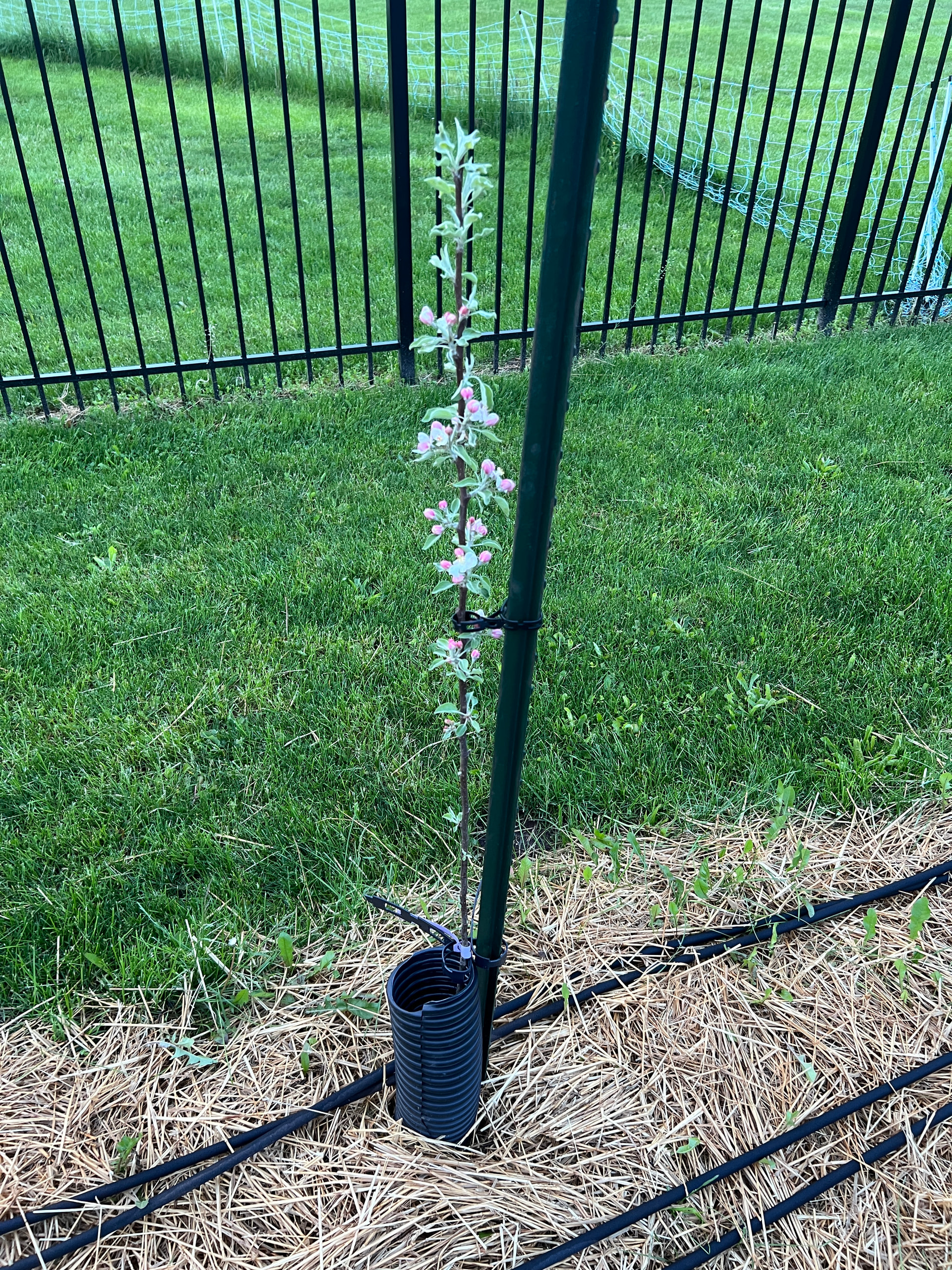
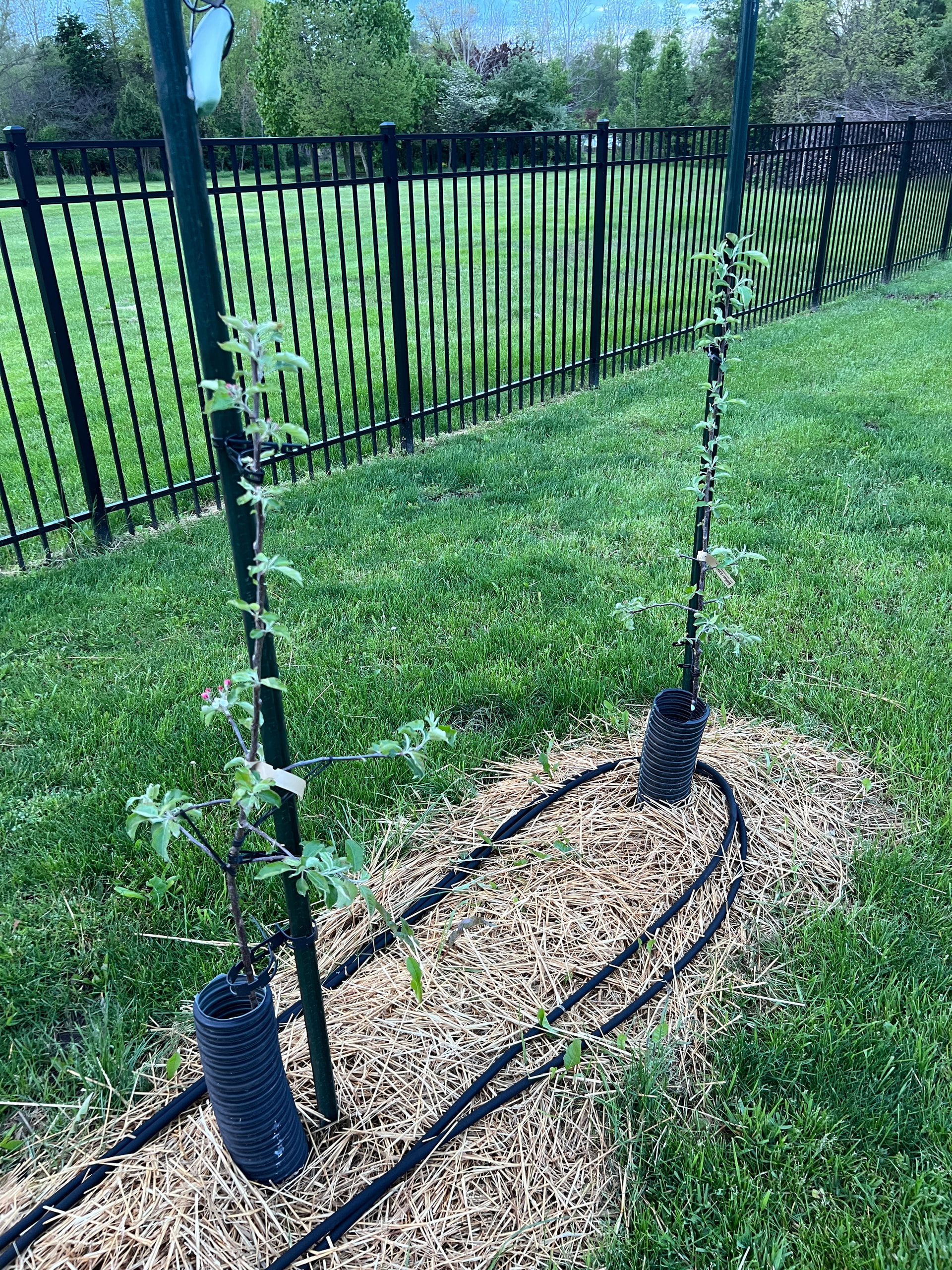
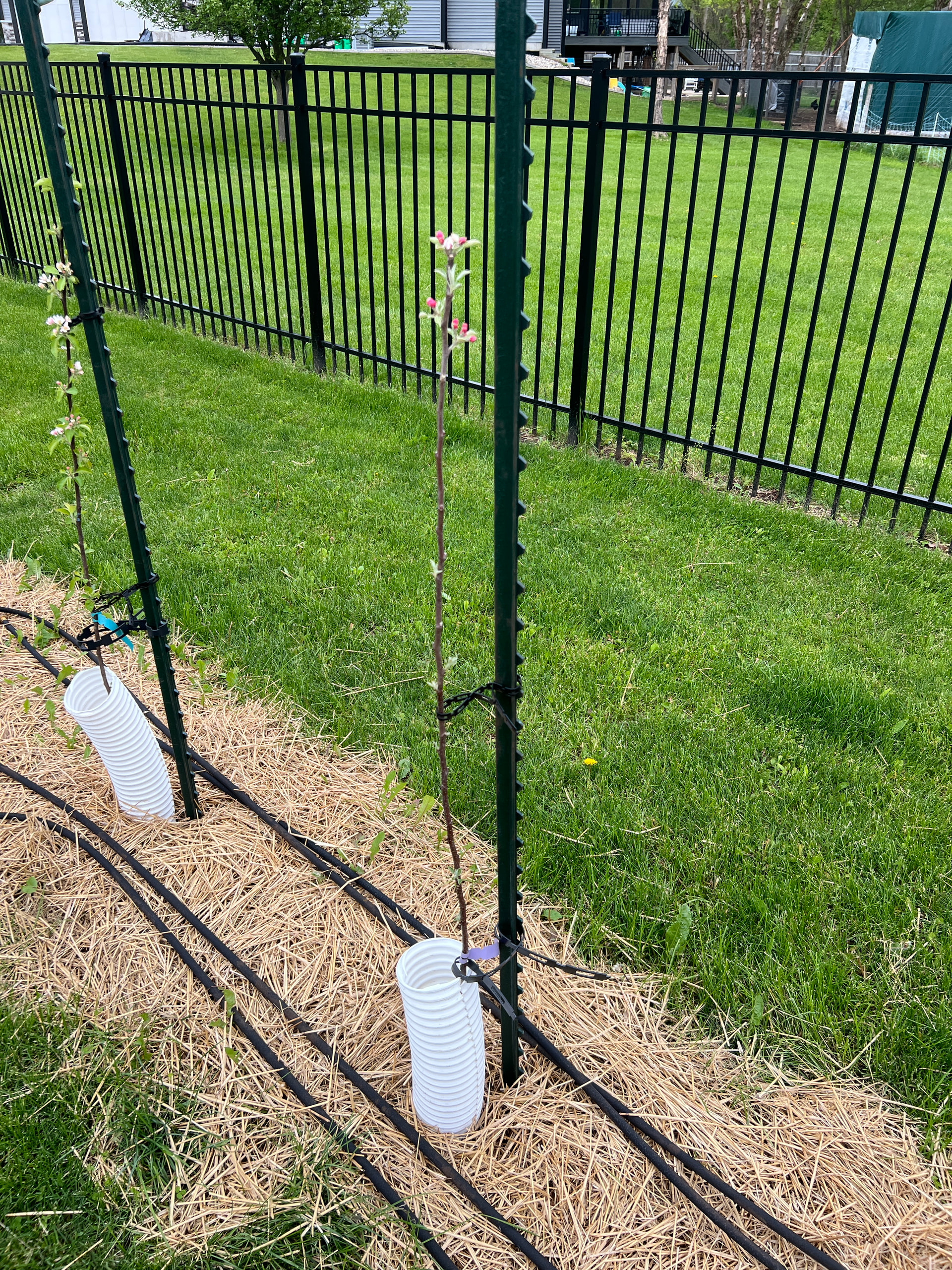
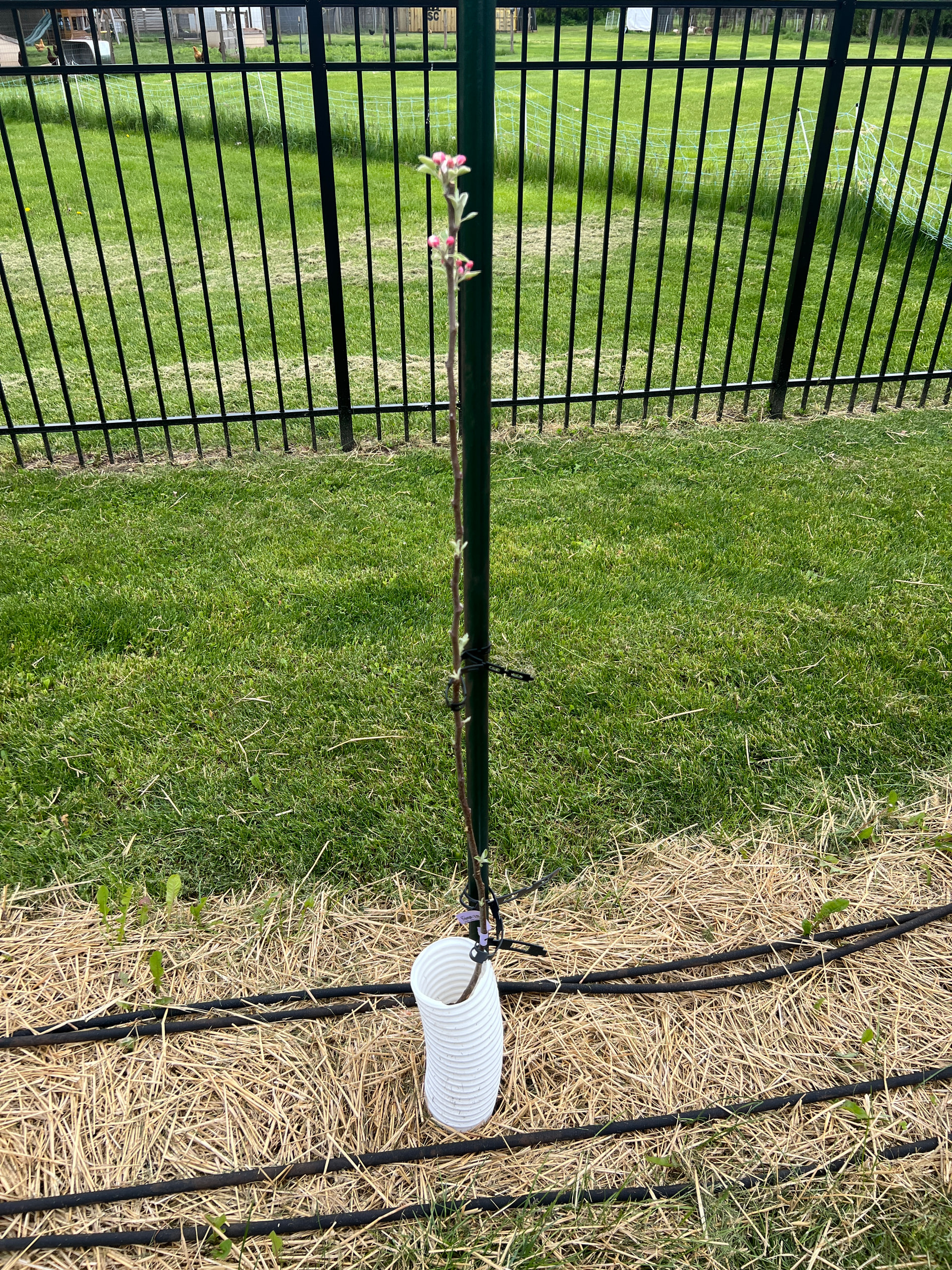
Well it’s been a few weeks and the trees are now leafed out and seem to be doing well. The preciousness of these trees on dwarfing rootstocks is certainly impressive. Every single one of these trees has produced several to many flowers the first year.
I am hoping they continue to grow well through the rest of the year with the hopes of an apple or two on my feathered trees next year.

4 Likes
nice! id pluck the flowers off for the first two seasons to promote root and vegetative growth. although maybe id let a few apples fully mature on the bigger rootstocks you were concerned about i think g.869 (i cant remember exact number) so hopefully it hurts their long term vigor and ultimate size. for sure id pluck the g.214 flowers this season and next. best of luck!
Thanks!
Certainly won’t leave any fruit this year. I have heard growers usually leave an apple or two in the second leaf to control vigor and keep the branches bent to/below horizontal. My two G935 trees were just whips when I planted them, so not sure that I’d leave anything next year that was planted on a whip. You think I should pull all of the fruit off of my feathered trees next year as well? That was something I thought about doing since I am not fertilizing these heavily as a commercial orchard probably would.
For me personally i think i may pluck off galarinas flowers on g.214 next year, and next year will be its 3rd season in ground. the wind has just been so intense lately im afraid to let galarina fruit next year, unless it REALLY thickens up, which i doubt but who knows. galarina was grade 1 feathered not a whip i should add.
i may let the enterprise on g210 fruit next year, but a small quantity of the enterprise apple isnt appealing to me when im trying to make preserves, so i may let the g.210 and g 214 trees go without fruit until year 4. immediate production isnt my main concern though. long term low maintaince is. established lower permanent scaffolding branches is my main concern with g214, but this is also my first time with dwarfing apple rootstocks. ive started to train the the lower branches out at good angles and i probably wont let them bare fruit until the branches can hold them up without help.
1 Like
For tall spindle you don’t want branches that can bear a load. And you don’t want permanent scaffolds. The point is that you have a bunch of really weak branches that fruit and then if they get too vigorous you replace them. You tie them so they don’t break off.
There are some pretty specific recommendations about how many fruit to let a tree produce. They are assuming dwarfing rootstock and well feathered trees planted so you might need to add a year (or two) to their numbers.
Here is a quote from “The Tall Spindle Apple Production System” Terence L. Robinson, Stephen A. Hoying, and Gabino H. Reginato:
“young apple trees can often overset in the second or third year, resulting in biennial bearing as early as the fourth year. This then results in increased vigor in the fourth year, just as the trees have filled their allotted space and reduced vigor is needed. Varieties differ in their biennial bearing tendency, and this must be incorporated into the croploads allowed on young trees. For annual cropping varieties like Gala, we recommend croploads of 15-20 apples/tree in the second year, 50-60 apples/tree in the third year, and 100 apples/tree in the fourth year. For slow growing and biennial bearing varieties like Honeycrisp, croploads should be half that used with Gala.”
3 Likes
I agree with Benthegirl.
The value/cost of tall spindle production is justified by apples being produced in years 2-3-4 at a level to be generating profits earlier than free standing trees. Thats the basis to the system regardless of how we use it.
There are no permanent branches on tall spindle trees… ever. After year 3 or 4 you remove 1 or 2 of the largest branches annually. According to Cornell. I personally look at each tree as a scaffold branch if you think about it.
Trees should remain calm and vigor needs to be within reason but not driven. The apples help calm them down. Tying down branches below horizontal and never cutting the leader all play a role in sending the messages needed to inducing fruiting as opposed to just vegetative growth.
You can grow them to meet your needs since we aren’t commercial growers and may have different desires out of our trees. Or to just enjoy something new.
Those are the principals of tall spindle as I understand them, and there are a lot of in-between methods that can be used to serve your needs and all are good.
I’m leaving 10-14 apples per tree on 2nd leaf trees. Lots of blooms in the second leaf. I use 2 year old liners to start and most are 8’ tall like a spindle after 1 year. Some are 6’ and some are 10’ , but almost all are heavily flowered and will need to be thinned if they all set fruit.
2 Likes
op knows what they want and has a game plan of how they are going to train, hes talked about the different training styles, i just rambled on in that previous comment about my own situation and why im holding off. regardless, im plucking this years flowers off the g.214 thats on its 2nd season. it can be done sure but its not worth the risk of growing 10 to 20 apples on this tree with all this wind. i want the tree to thicken up a little more and develope more roots.
You have trees that are 8-10’ tall going into their second leaf? Thats impressive. Obviously it’s still early, but it’s hard to imagine the trees I planted adding 3-5’ of growth. Do you push them hard with fertilizer? I sprinkled some Dr. Earth fertilizer around the base of each tree a couple weeks after planting, but that’s not a very potent fertilizer.
Most of the trees I planted were actually whips. So I plan on letting those grow this year and next. I think 3 or 4 of them were feathered, but only two of them had 5+ feathers. I planned on letting those carry a few apples next year as per the general recommendations.
1 Like
Appreciate the insight! I put in a G890 crimson crisp and a Dayton on G969 that I plan to train to more of a traditional central leader. I’ll be pulling flowers off of those trees for two seasons at least. I want those trees to have strong scaffold branches that can carry a crop.
I do think I probably have to balance what the “commercial recommendations” are and then what makes sense for my small setup. It’s difficult to imagine any of these little dwarf trees in my tall spindle carrying 10-15 apples next year.
I don’t push them too hard. I use some calcium nitrate 1/4 cup per tree in June that gave them a boost. I might have irrigated them too long for my area. I had some leader tip damage due to the winter.
My Ribston Pippen’s are tied to the 10’ wire and have side branches at 8’
2 year olds will give you more caliper and push if irrigated. Like Bogavich I ask for the 0 grade from Cummins. It’s all in what you want.
Your plan is sound, and you know your trees best and Bogovich has sound advice.
If I spread the 10 apples along the vertical axis and lower branches I think mine can support them. Obviously there are a few trees that were shipped as whips that I’ll treat differently.
3 Likes
Early Apple production really is interesting to me. I have a lot of factors that would make it to where it would not work for me. However, I would like to try an experiment but only with one tree could it be done with one tall spindle? If so, I’m really not in Apple production region. The only thing that I’ve been able to produce so far is a few Anna apples and EinShemmer extremely hot during the summer so I’m not even sure I could get an apple tree that would work. Any thoughts?