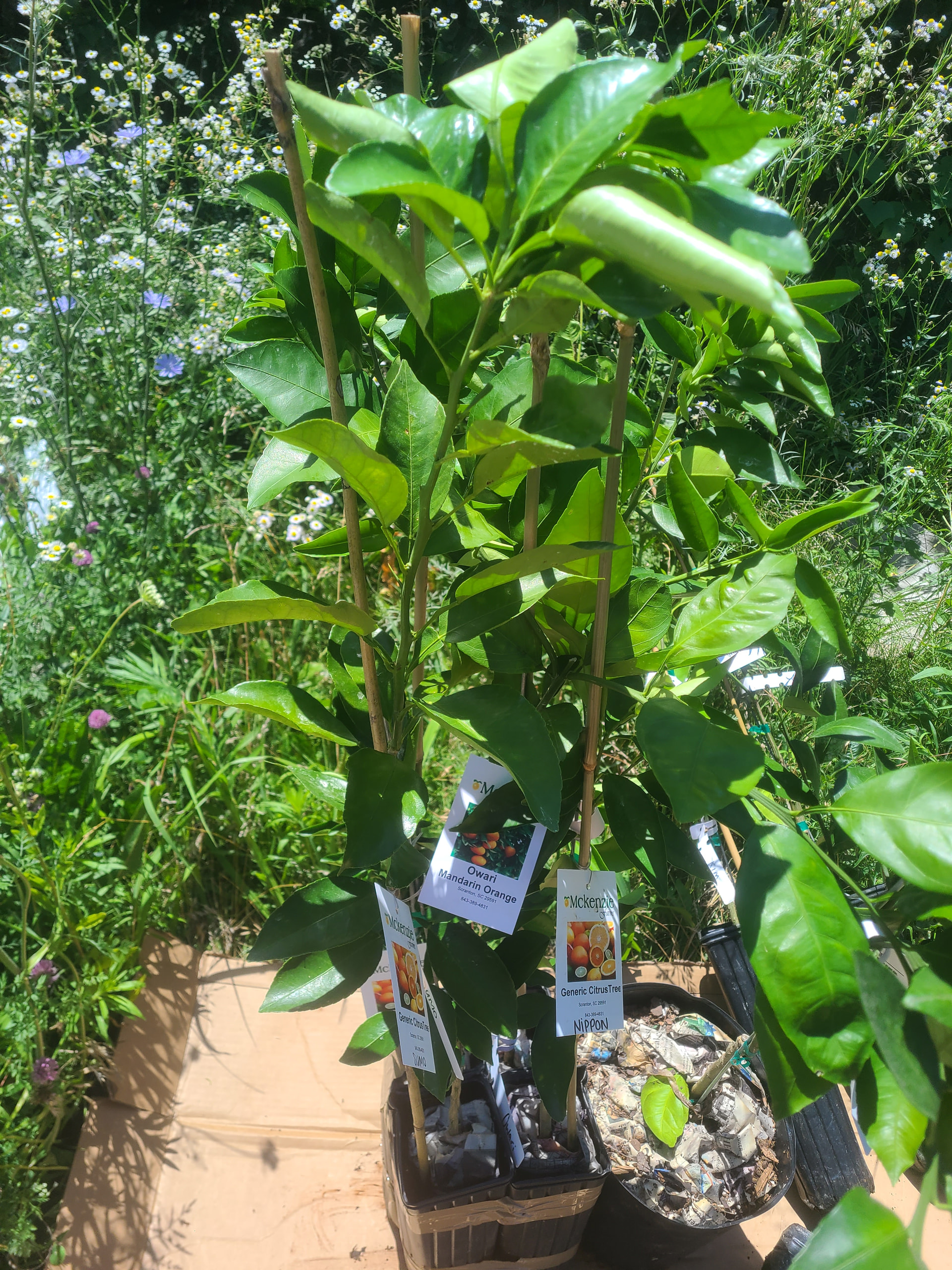
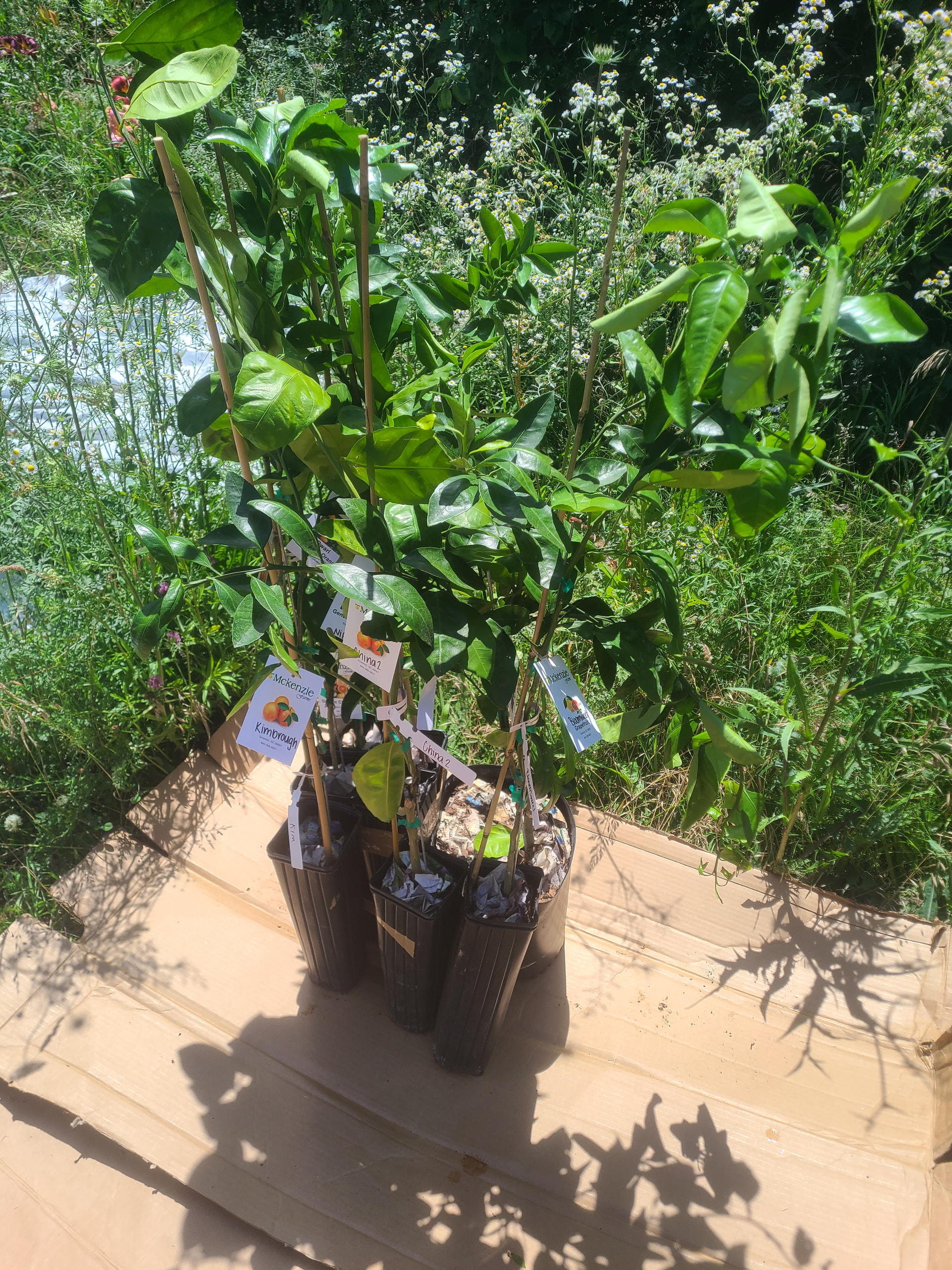
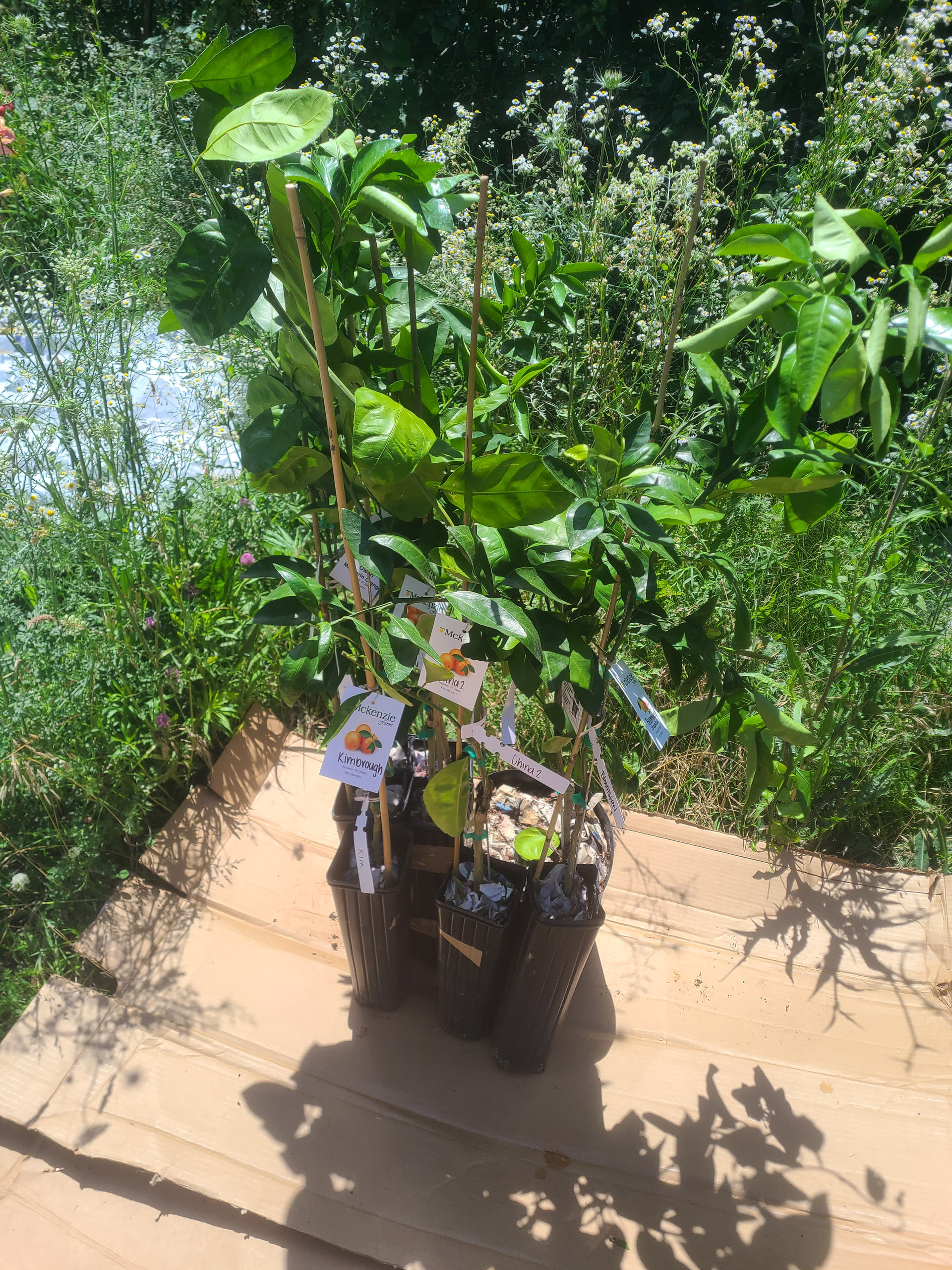
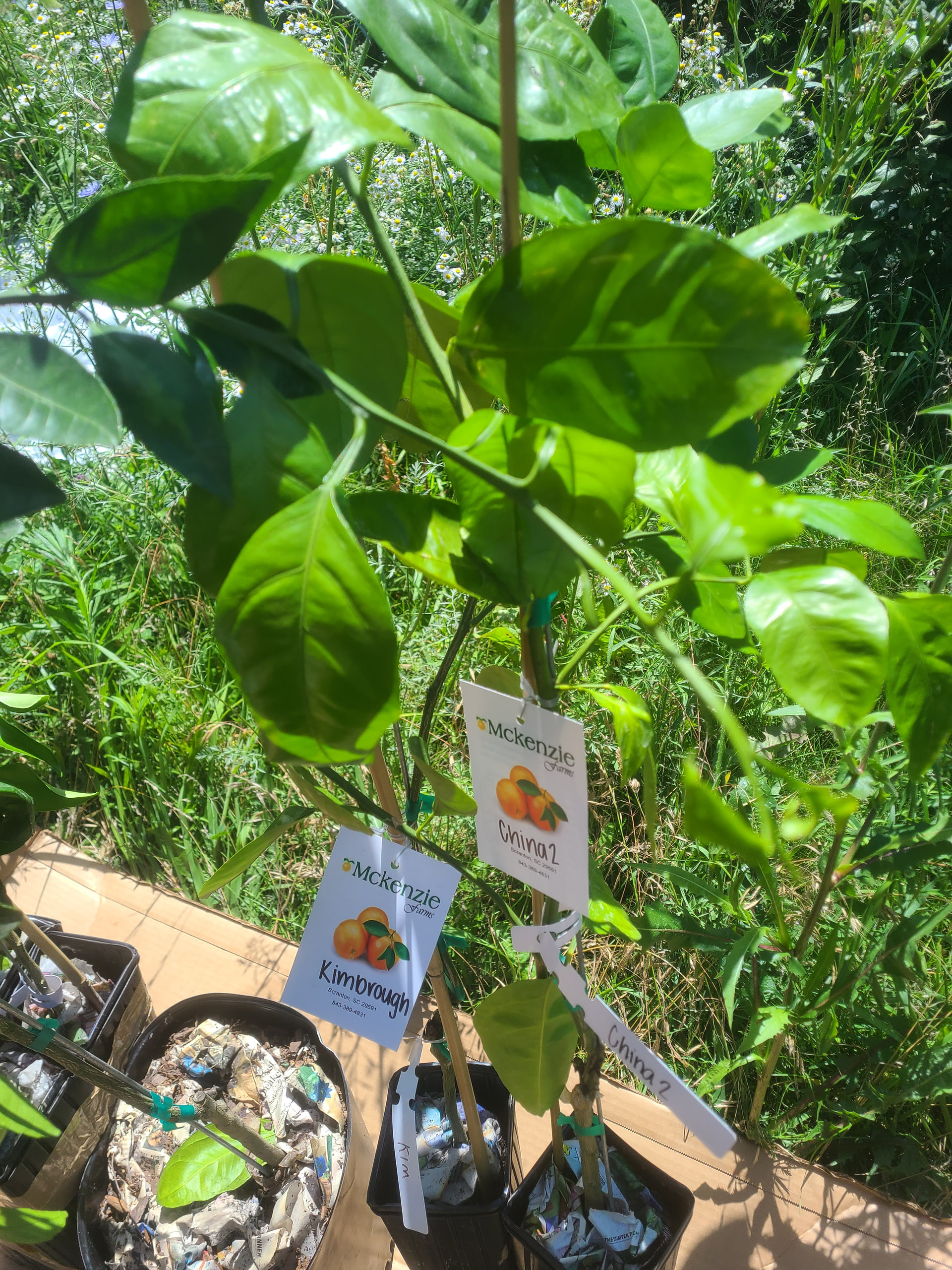
I do love fresh citrus. The last time I saw these I was in Florida or Texas. I expect I will see more citrus like it very soon! Maybe some banana too!

6 Likes
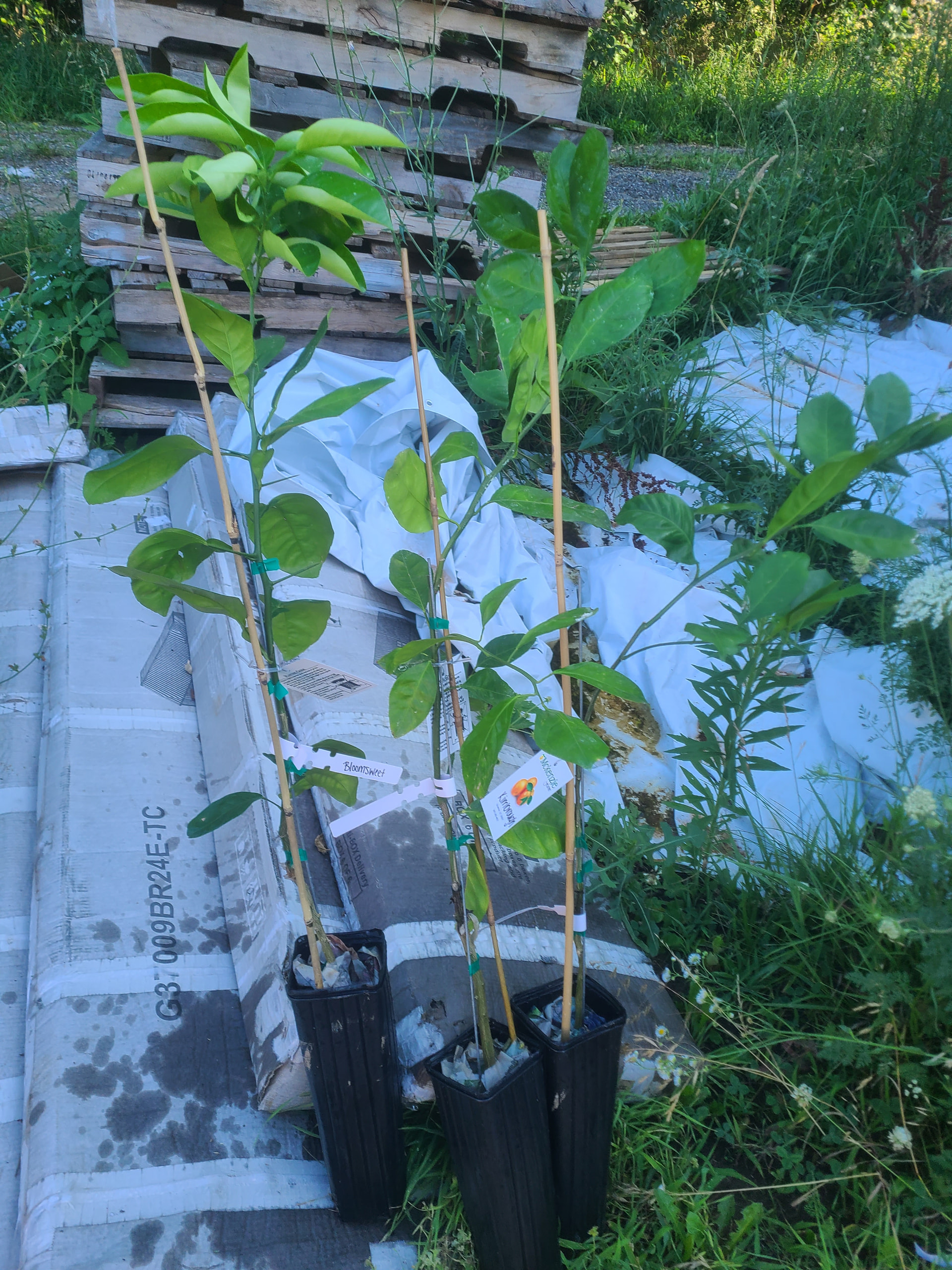
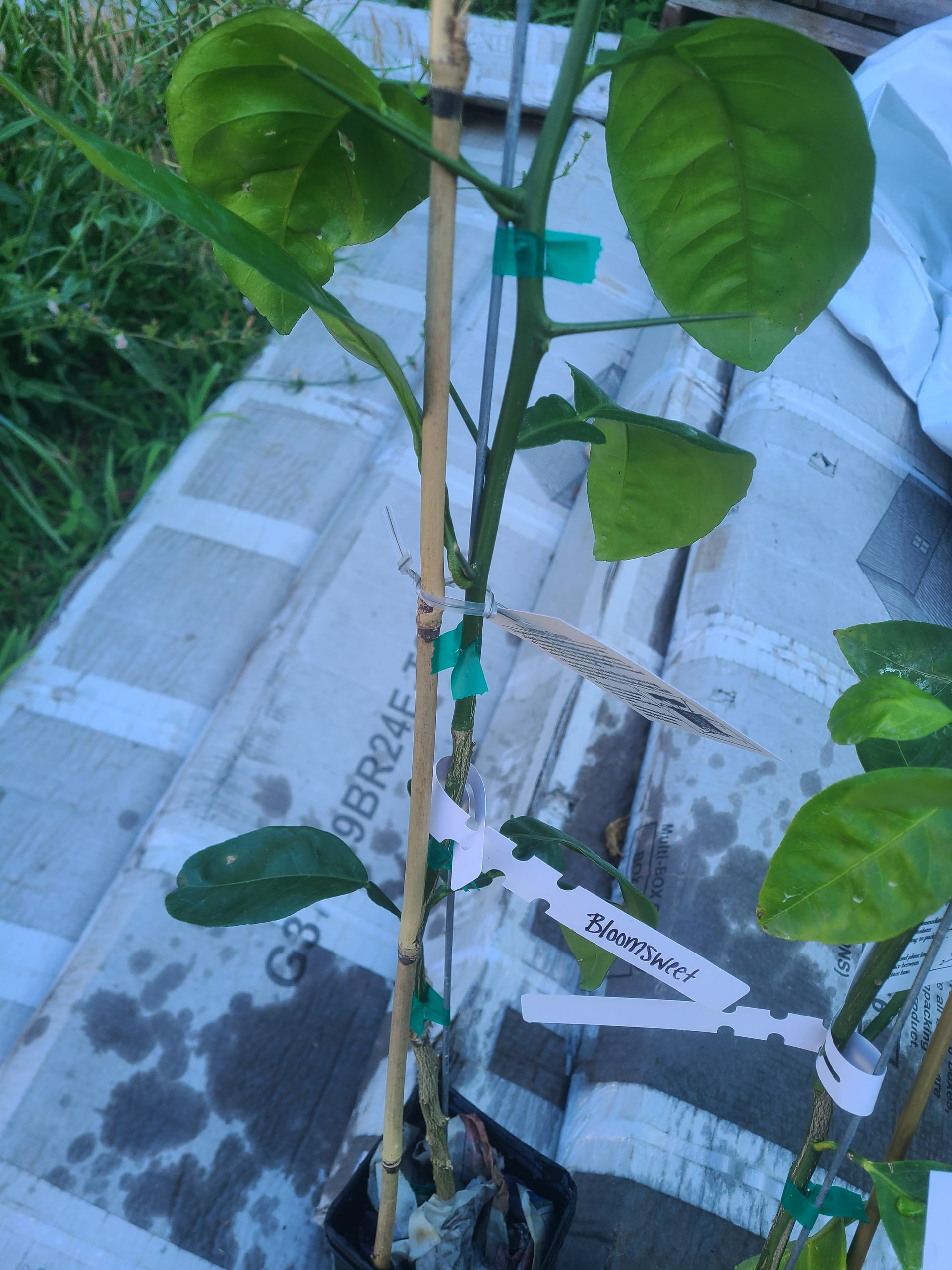
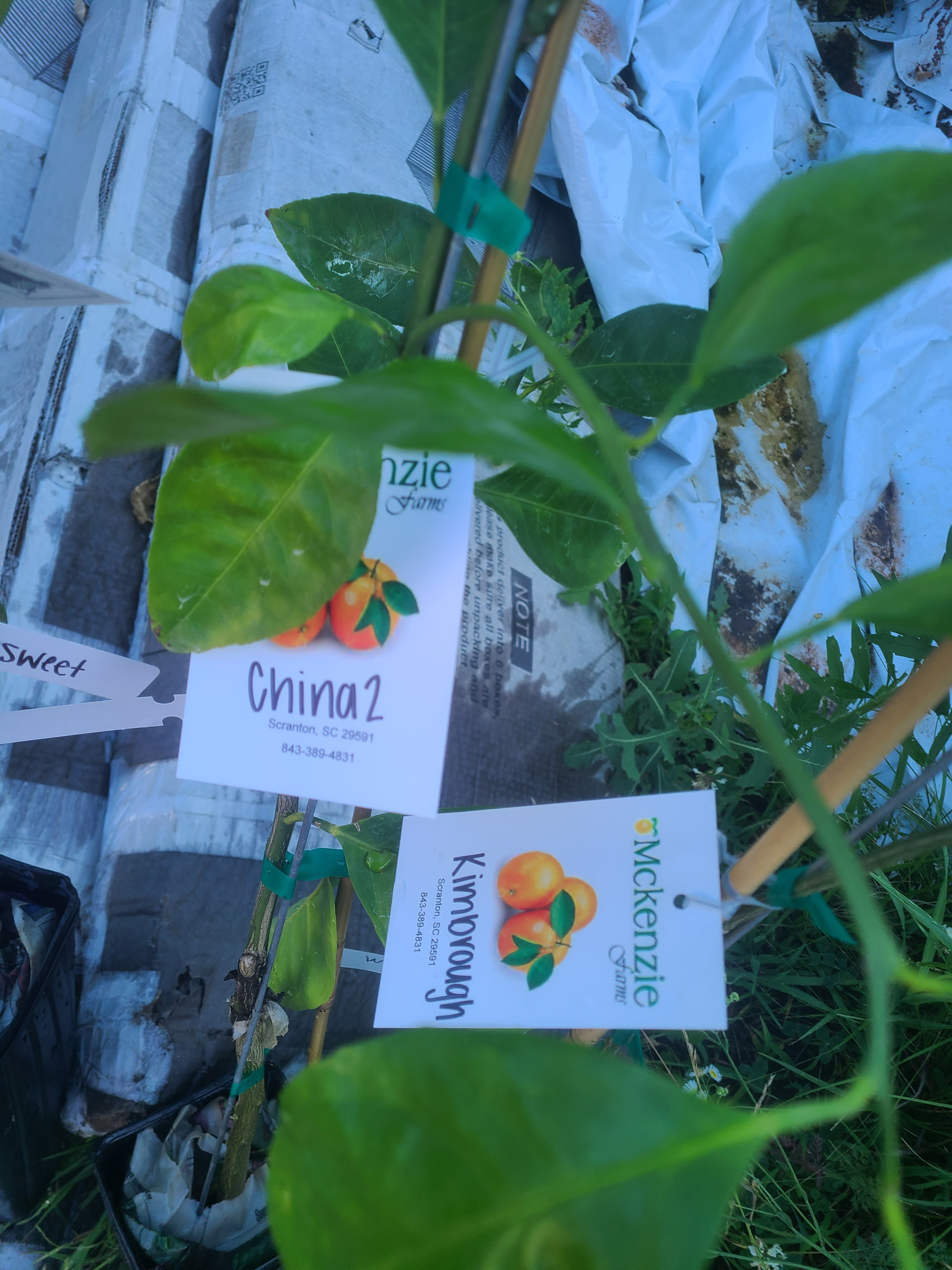
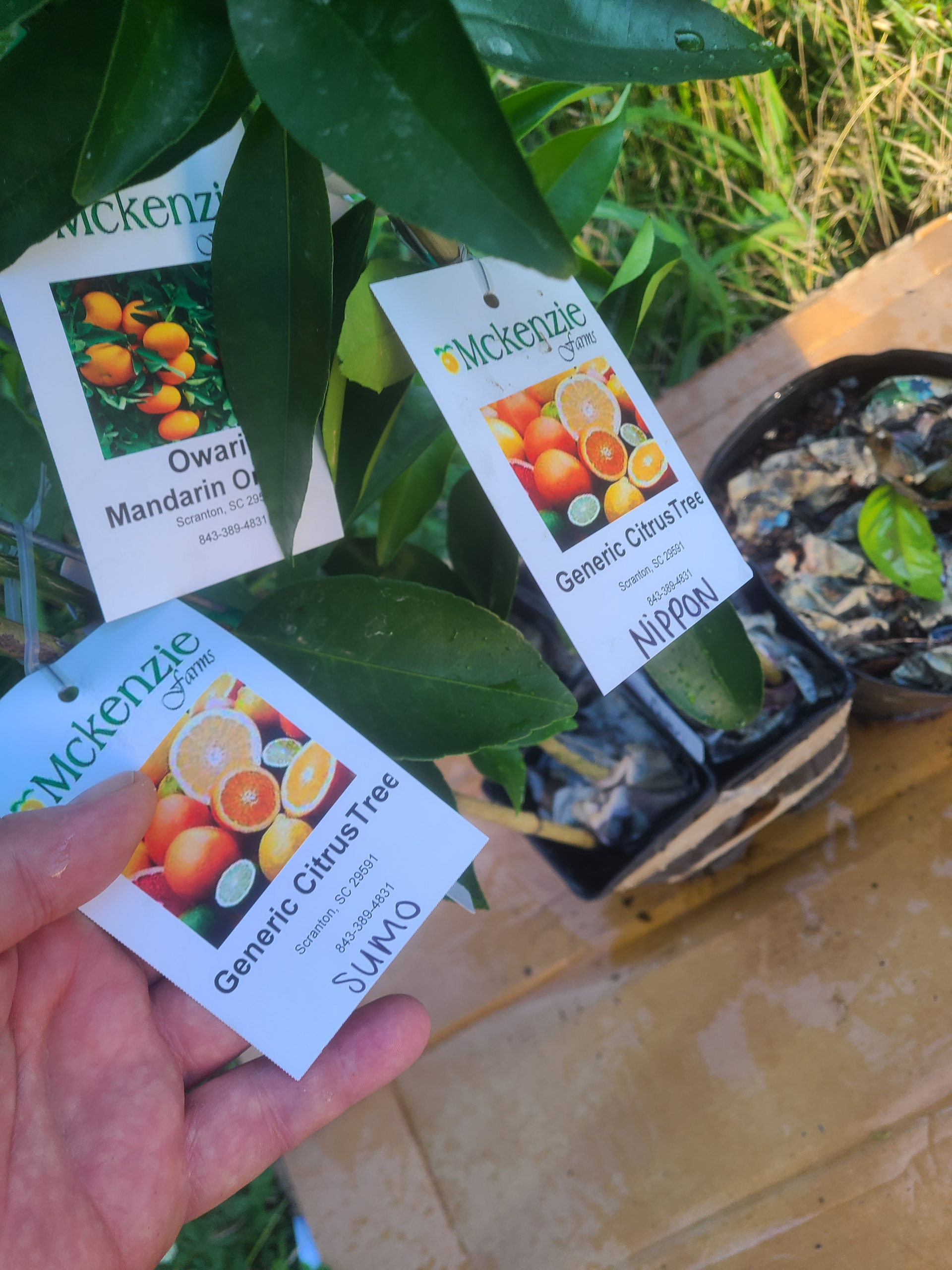
For those not familiar Citrumelo - Wikipedia
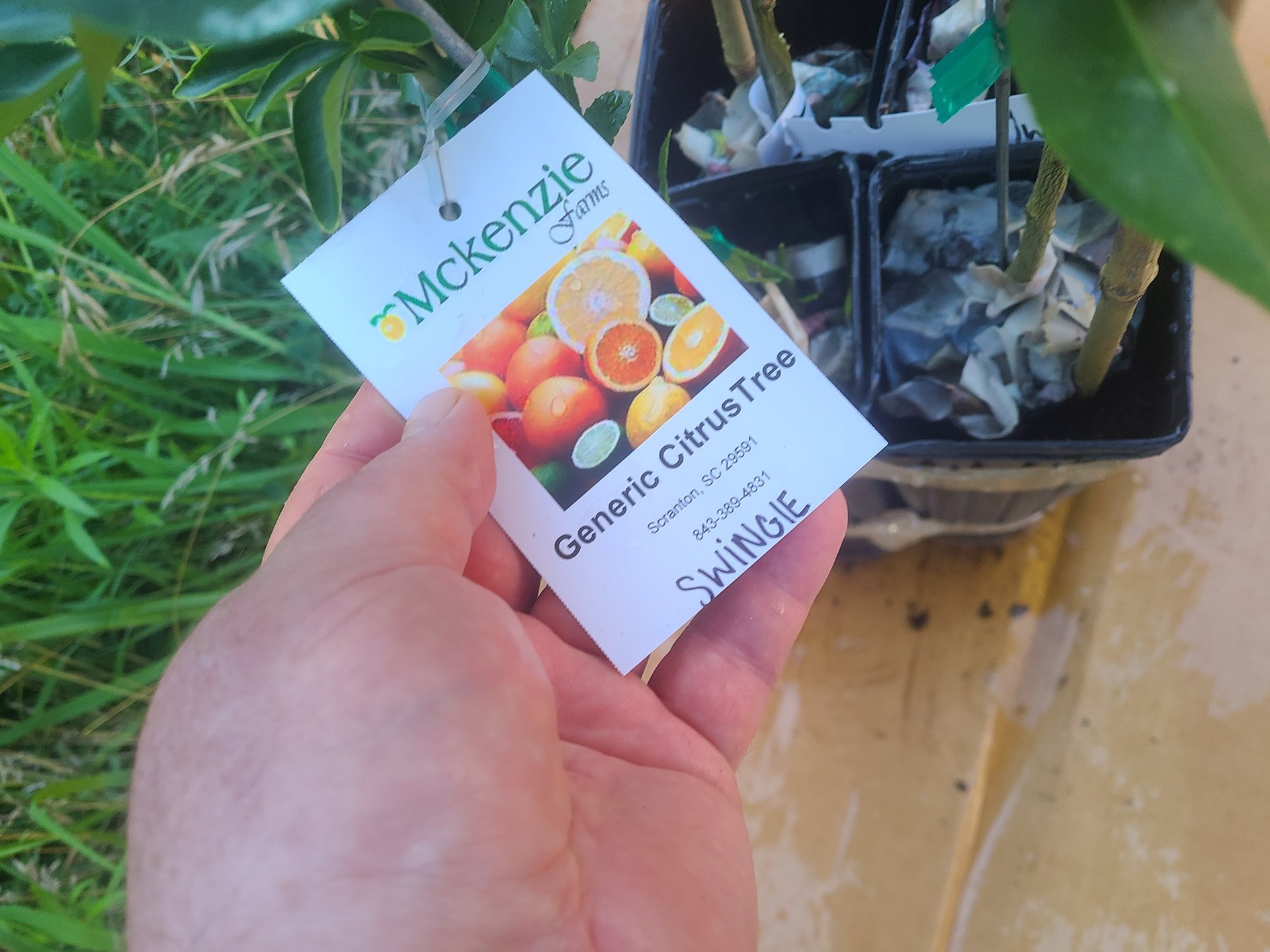
Citrumelo (× Citroncirus spp.) is also called Swingle citrumelo trifoliate hybrid, because it is cold hardy and is a hybrid between a ‘Duncan’ grapefruit and a trifoliate orange (Poncirus trifoliata (L.) Raf.), developed by Walter Tennyson Swingle.
Created in 1930 by the USDA, Nippon Orangequat represents a careful fusion of Japanese citrus heritage. Satsuma mandarins trace back centuries through China and Japan, while Meiwa kumquats carry deep roots in East Asian culinary and medicinal traditions.
By combining the two, breeders created a citrus both hardy and delicious — a fruit that quickly became popular among gardeners wanting bold flavor from a compact tree.
2 Likes
What, are you putting in a greenhouse? In about four months you are going to need one. 
4 Likes
@fruitnut It is not going to be a traditional green house it’s going to be a hole in the ground with a southern exposure
4 Likes
I may end up with a similar setup. Only mine, if I do it, would be a zone or two warmer than KS. I hope your setup works well for you. I’m sure you’ll keep us informed. I’d like to know how it works.
Maybe you could explain your plan for building an underground citrus shelter. I’d be interested in how you plan to do that. I’m sure others would be as well. How deep, any frame over it, how will it be covered, etc?
4 Likes
I will document it when I do it. The condensed version is I’m going to utilize ground temperatures at around 10 feet depth
|  |
|
|----|
Energy —Geothermal Heat Pumps
|
| Source: DOE | Pipes need only go down about 8 feet before the earth is at a relatively constant temperature. Pumping a fluid through the pipes allows for heat exchange and hence heating and cooling . ||
|----|----|----|----|
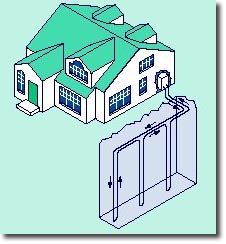
This is perhaps one of the very best methods of both heating and cooling your home or office (and you also get cheap hot water in the summer). It works because unlike the air temperature which can vary greatly, the temperature of the earth is relatively constant (once you get deep enough). Here I am not talking about going very deep, only a few meters; once you start getting deeper, then the temperature of the earth increases as you get closer to the hot core. But at a few meters down, the temperature will be a constant value. We make use of this feature in PA since we have some caves in the mountains where the thermal mass of the mountain is so large that the temperatures in the caves are constant— great for Yuengling - to cool their beer, or for the growing of mushrooms. It is called geothermal energy because it is energy from the ground, but it is actually mostly stored solar energy.
Not only can this stored solar energy be used to heat your home, it can also cool your home and in the summer provide hot water, too.
Heating
|
| Source: NREL | Pipes enter and exit this vertical hole in the ground. Most systems will be closed loop systems like this, although you could take the water out of the ground in an open loop system as the water temperature will be the same constant temperature. |
|----|----|----|----|
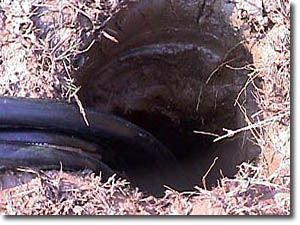
So, it is a cold winter day, the outside air temperature is 30 °F, but the temperature of the ground 10 feet down is a balmy 50 °F. By putting pipes in the ground, we can exchange the heat from the ground to the house. A fluid is pumped through a closed loop of piping into the earth where it warms up. See the GeothermalGenius animation (3 min.)
Note: the system isn’t 400% efficient as claimed, that is not possible. It does use electricity to take advantage of the heating and cooling available through “free” geothermal energy.
Cooling
|
| Source: NREL | Some large establishments will require lots of heat exchange like this one. Geothermal heaters are sized by the mass of the coolant fluid. |
|----|----|----|----|
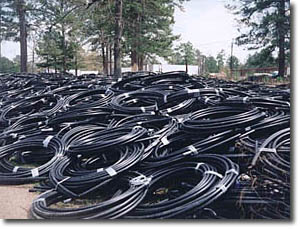
So, it is a balmy 90 °F outside, but the ground is a cool 50 °F. We can now move heat from the house into the ground. All we need to pay for is the electricity to circulate the cooling fluid. You can also produce hot water via this method, more cheaply than using electricity, to heat cold water to hot water for your showers or clothes washer.
Geothermal heat pumps are sold by the weight of the cooling fluid. Some of the facilities require lots of pipes to provide enough heating and cooling for large buildings. This is the barrier to using geothermal heat pump - the high initial cost (capital cost). After that, the cost of electricity is low and no fuel costs, thus producing cheap heating and cooling without air pollution (apart from the electricity needed to run the pumps).
How does it work?
Okay, the above is a tad simplistic. We could, if we wanted to, flow the heating/cooling fluid around the house, but we tend not to. How a cooling system works is by turning a liquid into a gas. This liquid to gas process requires energy, and so it cools its surrounds (we actually lower the pressure surrounding the liquid). We use a compressor to compress the gas and turn it into a hot gas. (We also need energy to pump the fluid.) This is how we would cool the house by expanding the liquid to a gas (absorbing heat) which cools the house. The gas is then compressed to produce a higher temperature gas (heat exchange here to get the hot water for the house) and then allow the hot gas to heat exchange with the earth, cooling the gas so it turns back into a liquid, so we can do the expansion again and cool the house.
To heat the house, we pump liquid into the pipes (which are in the ground). There, the liquid warms up and forms a gas. Unfortunately, the gas is not hot enough to directly warm the house, but if we increase the pressure, we can turn the gas into hotter gas (we can concentrate the heat). This process does require electrical energy. But, for a little energy, we are getting a great deal of free energy from the geothermal source —the earth. Now that the gas is much hotter than the air temperature, we have a heating cycle.
Cost
|
| Source: NREL | This nice looking house in Aurora, Colorado has a geothermal heat pump system that provides all the heating, cooling, and hot water needs. For a home of 1,500 square feet with a good building envelope and a geothermal heat pump, energy costs are about $1 a day. Much cheaper than the average energy cost. |
|----|----|----|----|
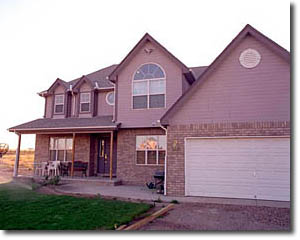
These are not cheap systems at about $7,500 for installation in a new house, but they only use a small amount of energy (electricity), and they both cool and heat the house (and provide hot water). Payback time for this investment is about 6 years, so it is worth doing. We will see that, in comparison to the other methods of heating and cooling the house, this will have a much lower environmental impact.
The cost is more expensive if the house does not already have the duct work in place for air handling. If you look back at the insulation page, you will see that the department of Energy thinks that geothermal heat pumps can be used in PA. I only know of a few houses, however, that have an in-ground heat pump.
In lesson 02, we will also discover that the energy from the ground can also be used to generate electricity. Don’t confuse the two types as it is a very common error:
Geothermal for home heating and cooling uses solar energy in relatively shallow sites.
Geothermal for electricity generation typically uses deep geothermal energy for electricity generation. (See this Department of Energy simple geothermal power plant animation.)
2 Likes
I’m thinking about getting a winter place in southern AZ at about 4600 ft elevation. That’s zone 8b/9a with 20F as average winter extreme low. So, I’m thinking dug in 2-3ft and bermed up 6-8ft above that with natural ventilation. The only electrical would be an inflator for double layer Palring 175 covering.
4 Likes
EG4 24k Hybrid Mini Split | Energy-Efficient Solar HVAC System Runs on either solar or grid AC without needing inverter.
2 Likes
Here are some of the supplies I’m laying up. I went with Twin-Wall Polycarbonate Sheets this time Amazon.com: Sinimaka 10 Pack Polycarbonate Greenhouse Panels, 8' x 4' x 0.24'' Twin-Wall Polycarbonate Sheets, All Weather Clear Roof Panels Greenhouse Replacement Panels : Patio, Lawn & Garden
I have a huge stock pile of wood and metal building supplies.
4 Likes
Clark, something I remember from 1980, a greenhouse owner put up a new house with those (Quaalex)? panels. He forgot to use metal duct tape across the open ends before installing. Light obscuring green algae was growing inside the channels within the year. 
4 Likes
Thanks i will remember what you said.
1 Like
STAN has the best ive seen . i have a few from him too and going to get more . are those gallon size ?
2 Likes
Yes gallon sized mostly though i luke 3 gallons also
| Welcome To Mckenzie-Farms!! |
|---|
Here are examples of some of the plants we grow here at the nurseryClick on the images to see
a larger picture. Note that some of the plants are maturespecimens. If you are looking for a plant not shown, please email us. We also have some 3gal size trees available in some items and these are 55.00 each plus shipping.
 This one is of YUZU or citrus junos… Yuzu is a cold hardy citrus from the highlands of Japan. Yuzu has been reported to survive temperatures into the low teens. Fruit has a complex flavor of lemon/lime/grapefruit and is useful as an ingredient in seafood, sherbets, cosmetics and more.
Trees are 29 for 1 gallon grafted trees
 Ten Degree Tangerine: The Ten Degree tangerine certainly lives up to its name. My tree has never been exposed to 10 F but has sailed thru a night of 13 F with flying colors. Tree is very thorny but produces good crops of tangerines with a somewhat sweet/tart flavor. The ten degree tangerine was developed in Texas and has Yuzu and some other mandarins in its bloodline.
Trees are 29 per gallon and are either grown from rooted cuttings or grafted.
 Owari Satsuma: McKenzie Amos, grandson of Stan McKenzie enjoys picking some owari satsumas from a tree at the McKenzie’s patio. Owaris are sweet, seedless and zipper skinned. Trees are very cold hardy down to around 12 F. Trees bear good crops of medium sized fruits beginning around the 3rd year from planting.
Price is 29 dollars per 1 gallon tree
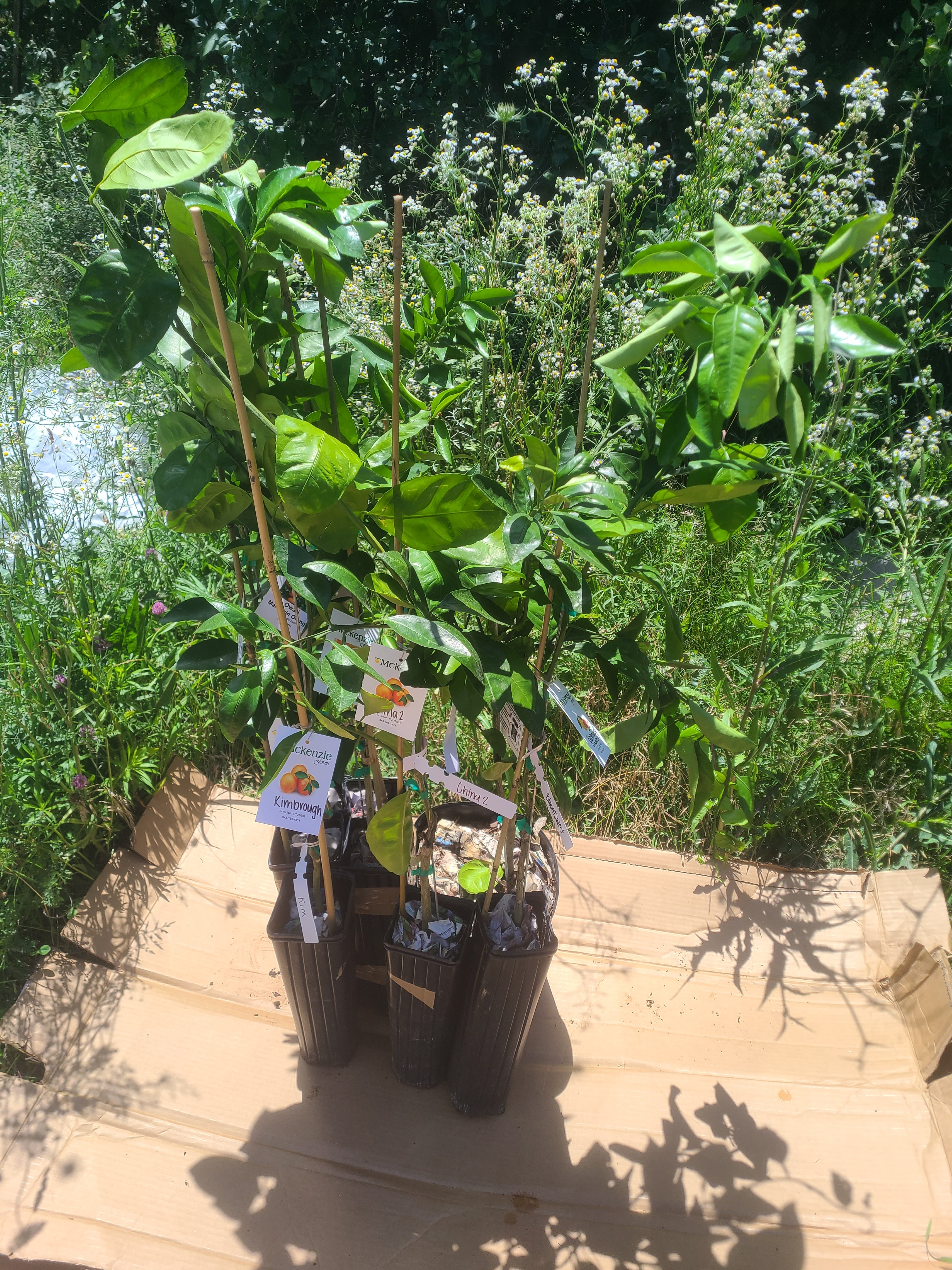
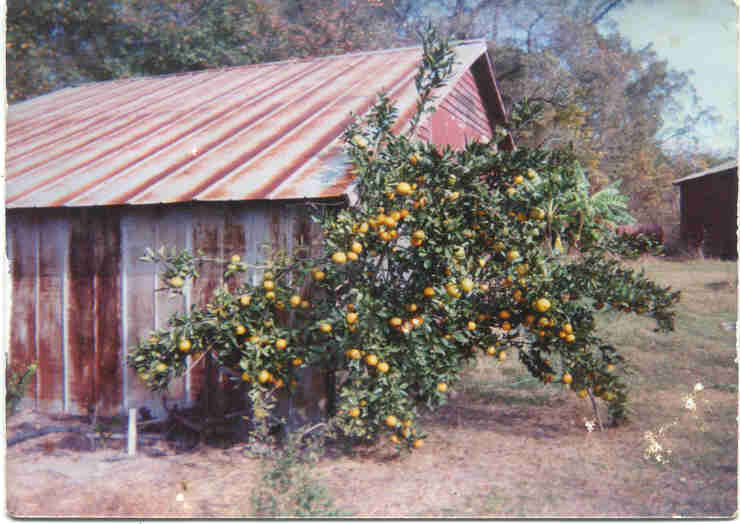 Kimbrough Satsuma: The kimbrough satsuma has its origins in Louisiana. It was discovered after a killer freeze that destroyed much of Louisianas satsuma crop back in the early 1900’s. The kimbrough is believed to be slightly more cold hardy than other satsuma varieties. The tree in this picture has survived single digits for brief periods of time. Hardy to around 12 F
Price is 29 dollars per 1 gallon tree
 Changsha Mandarin Plant (extra hardiness) Changsha: Changshas come from the foothills of China and are very cold hardy once they have grown to maturity. Fruits are small, bright orange and somewhat seedy. The flavor is very sweet and is very good as a juicer. Hardy to around 10 F
Price is 29 dollars per 1 gallon tree
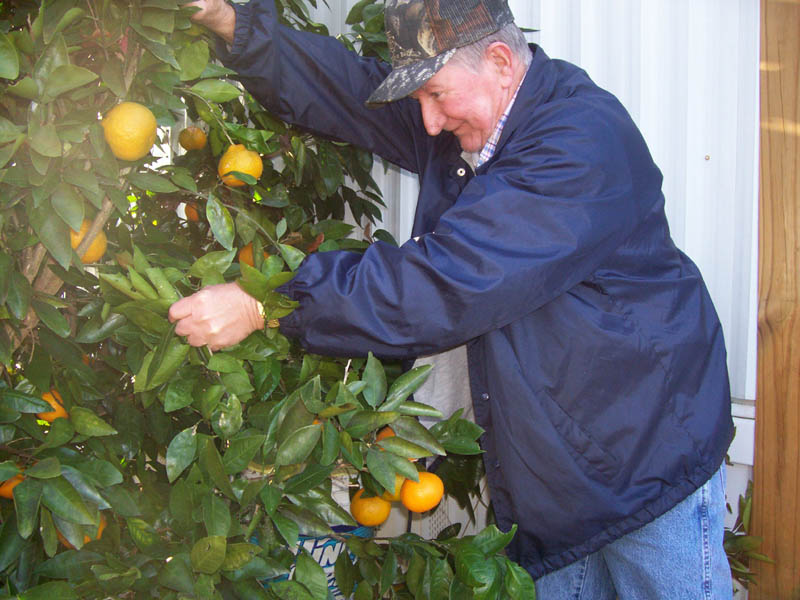 **Satsuma Mandarin Plants (hardy):**Toby Parker of Turbeville, SC admires another bumper crop of satsumas at his residence. Toby actually ships fruit to friends in Arkansas every year! Other types of satsumas available are miyagawa, dobashi beni, okitsu, Mr Mac,and a new release from China called China 9.
Price is 29 dollars per 1 gallon tree
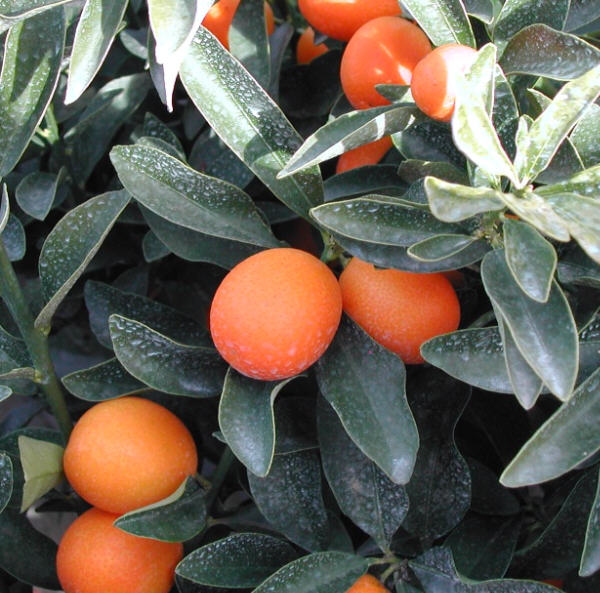 Meiwa & Nagami Kumquats: Kumquats make beautiful ornamental trees as well as producing the tasty fruits. Fruits are eaten whole with peel. Kumquat trees begin flowering in early summer and the fruits ripen in late fall. Once dormant, the trees withstand temps in the mid teens.
Price is 29 dollars per 1 gallon tree
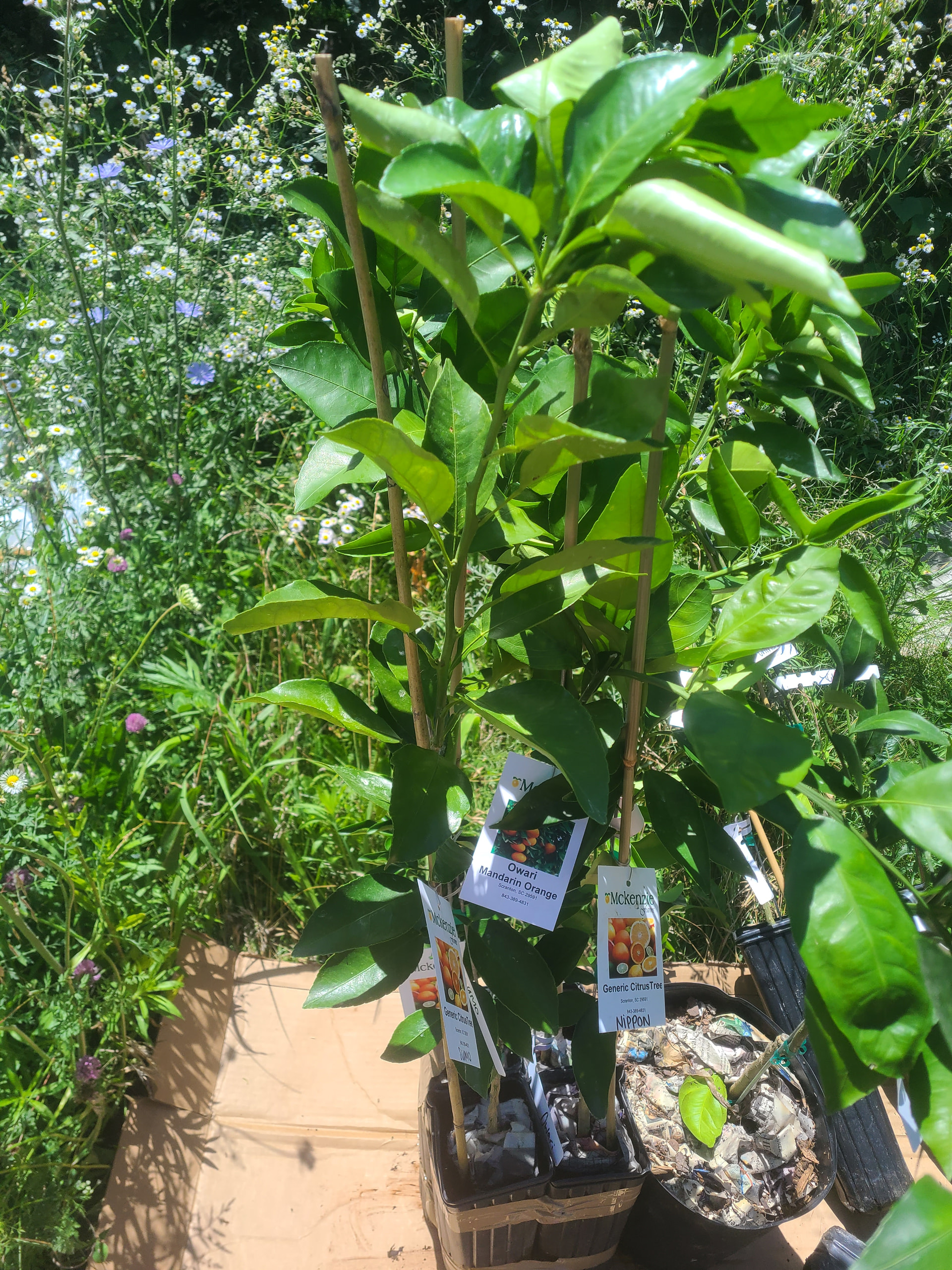
 Nippon Orangequat: Nippon orangequat is a hybrid of the satsuma mandarin orange and kumquat. Trees are very cold hardy and are prolific bearers. The fruits have a sweet orange taste and ripen in late fall. Hardy to around 10 F
Price is 29 dollars per 1 gallon tree
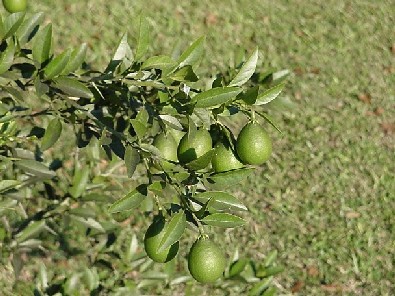 Thomasville Citrangequat: The Thomasville citrangequat is one of the early attempts by citrus researchers to produce a cold hardy citrus tree with good fruit. Trees can grow to 15 feet and are very cold hardy. Thomasvilles are very prolific bearers and the immature fruits make a great lime substitute. Fruit ripens in late fall and has a kumquat/orange flavor. The tree is named for Thomasville, Georgia where it first fruited. Hardy to around 5 F once established.
Price is 29 dollars per 1 gallon tree
 Tropical Lemon Plant: We offer the following lemon varieties: Meyer, Ponderosa, Eureka and Harvey. The Harvey lemon is reported to be somewhat cold resistant and was a suvivor of some of the deep freezes that struck Florida in the 60’s and 70’s
Price is 29 dollars per 1 gallon tree
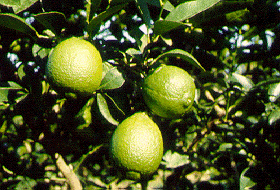 Tropical Lime Plant: Limes are the most cold sensitive of all citrus plants We offer key limes, persian limes as well as Australian finger limes and kaffir limes. Eustis limequats are also available and are much more cold hardy than regular limes.
Price is 29 dollars per 1 gallon tree
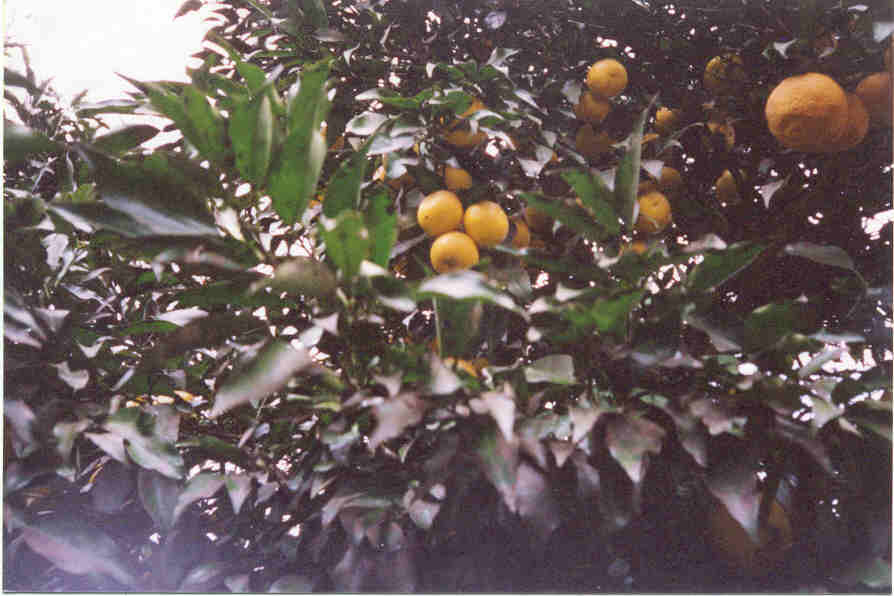 Taichang lemon: The Taichang is a cross between the Ichang lemon and the Taiwanica lemon… Both parents are extremely cold tolerant and the offspring is very cold hardy as well. The golf ball sized lemons sometimes grow in clusters on a medium sized tree. The taichang lemon tree has very long dark green leaves that reminds me of a kumquat tree. Fruit is a nice blend of sweet/tart flavors and the trees bear prolific crops. Hardy to around 15 F… Very limited supply of this one. Call or email for availability
Price is 29 dollars per 1 gallon tree
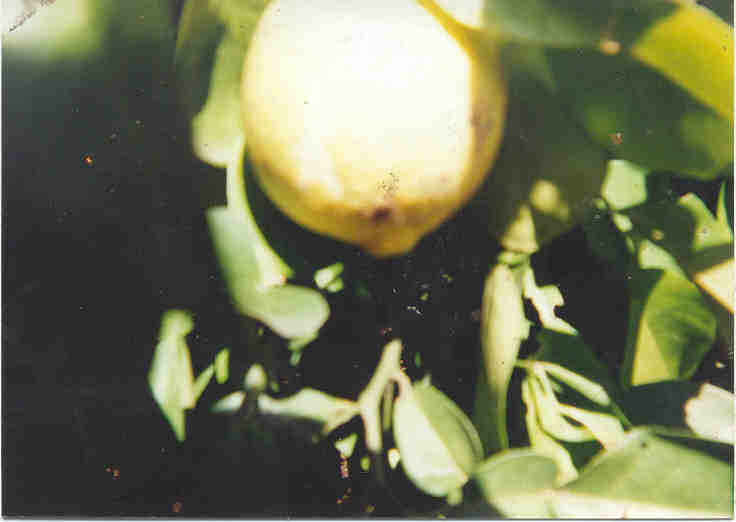 Ichang Lemon: The ichang lemon is a native of the foothills of China.. Trees bear good crops of large, almost grapefruit sized lemons. Trees are thorny and grow at a moderate rate. The fruits make delicious lemon pie and the trees are very ornamental. Hardy to around 20 F.
Price is 29 dollars per 1 gallon tree
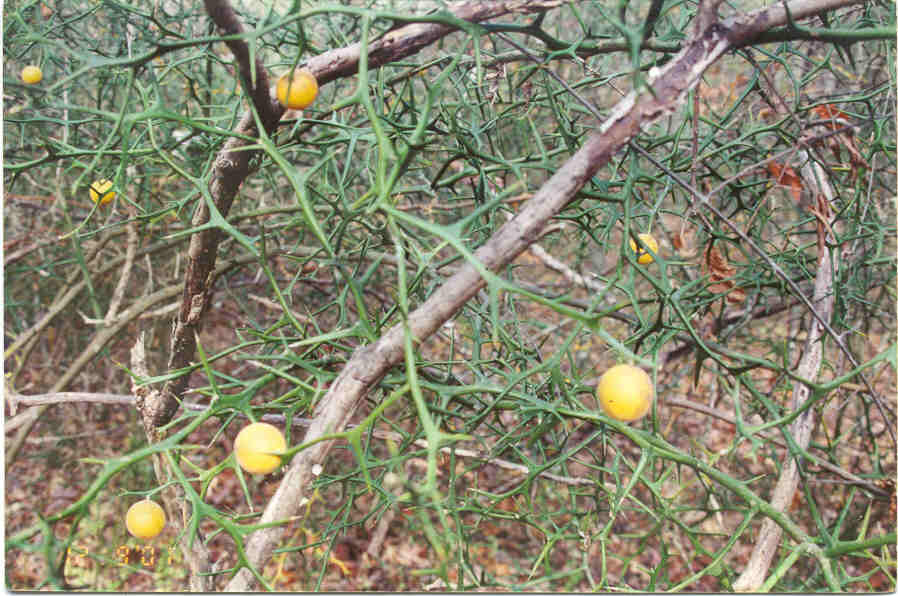 Bitter Lemon: also known as the trifoliate orangeand poncirrus . Anyone wanting to grow citrus north of zone 7 should give bitter lemon a try. Trees are native of Asia and are extremely cold hardy. It has been reported that the bitter lemon tree will survive as far north as New England. Fruits are golf ball sized and the trees are decidious. Hardy to around - 5F
Price is 29 dollars per 1 gallon tree
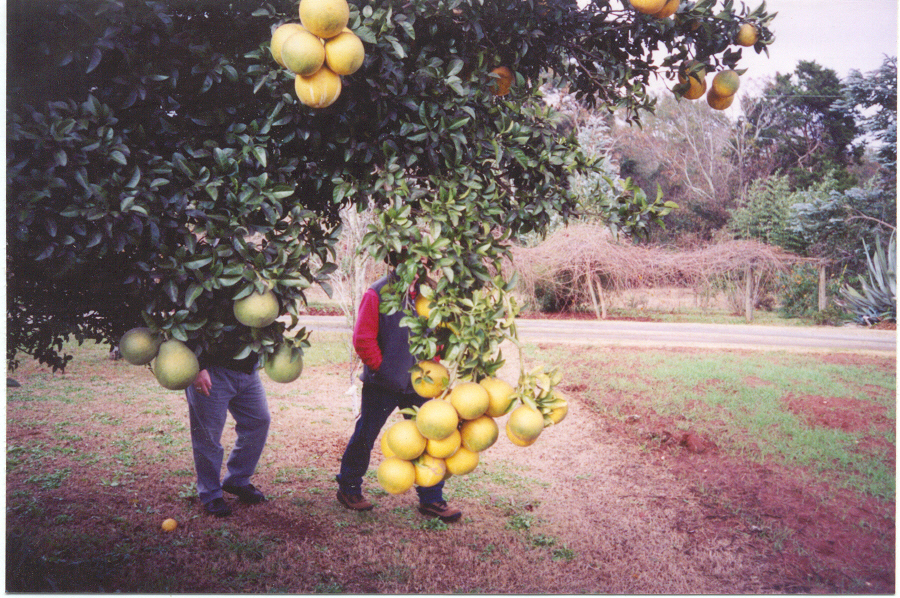 Bloomsweet Grapefruit: as you can see from this picture.. the bloomsweet produces bountiful crops of large delicious grapefruits. Trees are very hardy and withstand temps down to around 15 F. Bloomsweet comes to us from Japan is called Citrus Kinkoji.
Price is 29 dollars per 1 gallon tree
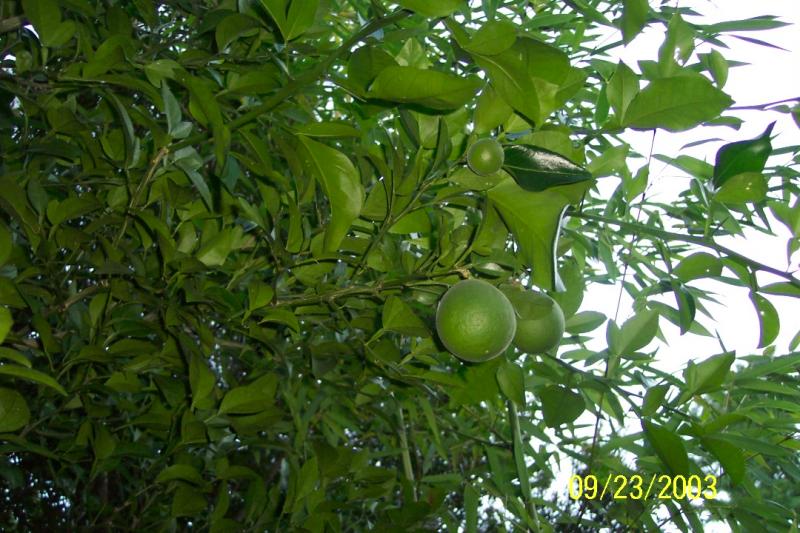 Citrumelo: Citrumelo is a hybrid of the trifoliate orange and grapefruit. Trees are very vigourous growers and the fruit is very similar to commercial grapefruits. Trees have been reported to produce fruit as far north as Tennesee.
Price is 29 dollars per 1 gallon tree/
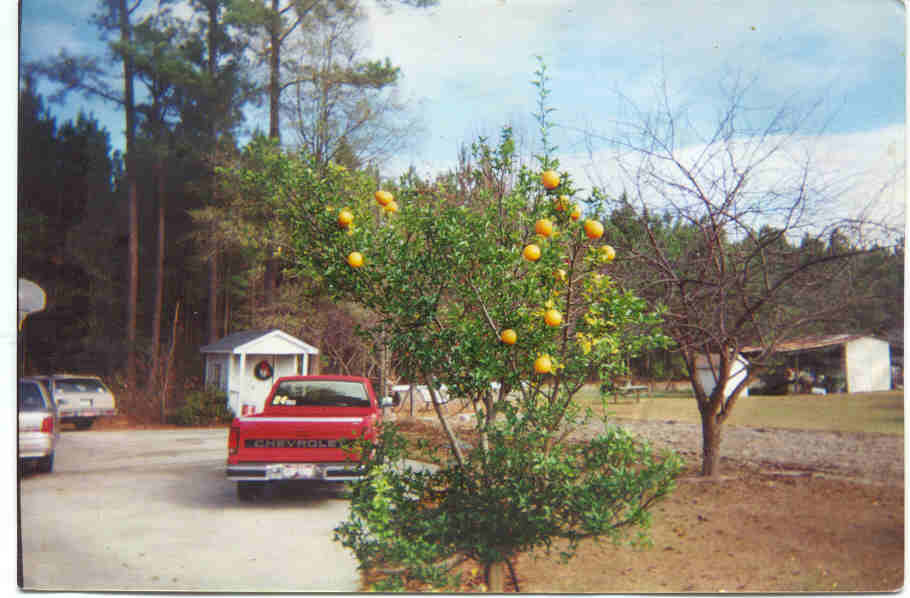 Citrange: We offer several species of citrange. Citrange is a hybrid between sweet oranges and trifoliate orange.. These are very cold hardy and will grow and produce fruit where other citrus trees fail. Hardy to 0 F. We offer Benton, Rusk and Morton citranges as well as Citrandarins… a mandarinXtrifoliate hybrid.
Price is 29 dollars per 1 gallon tree
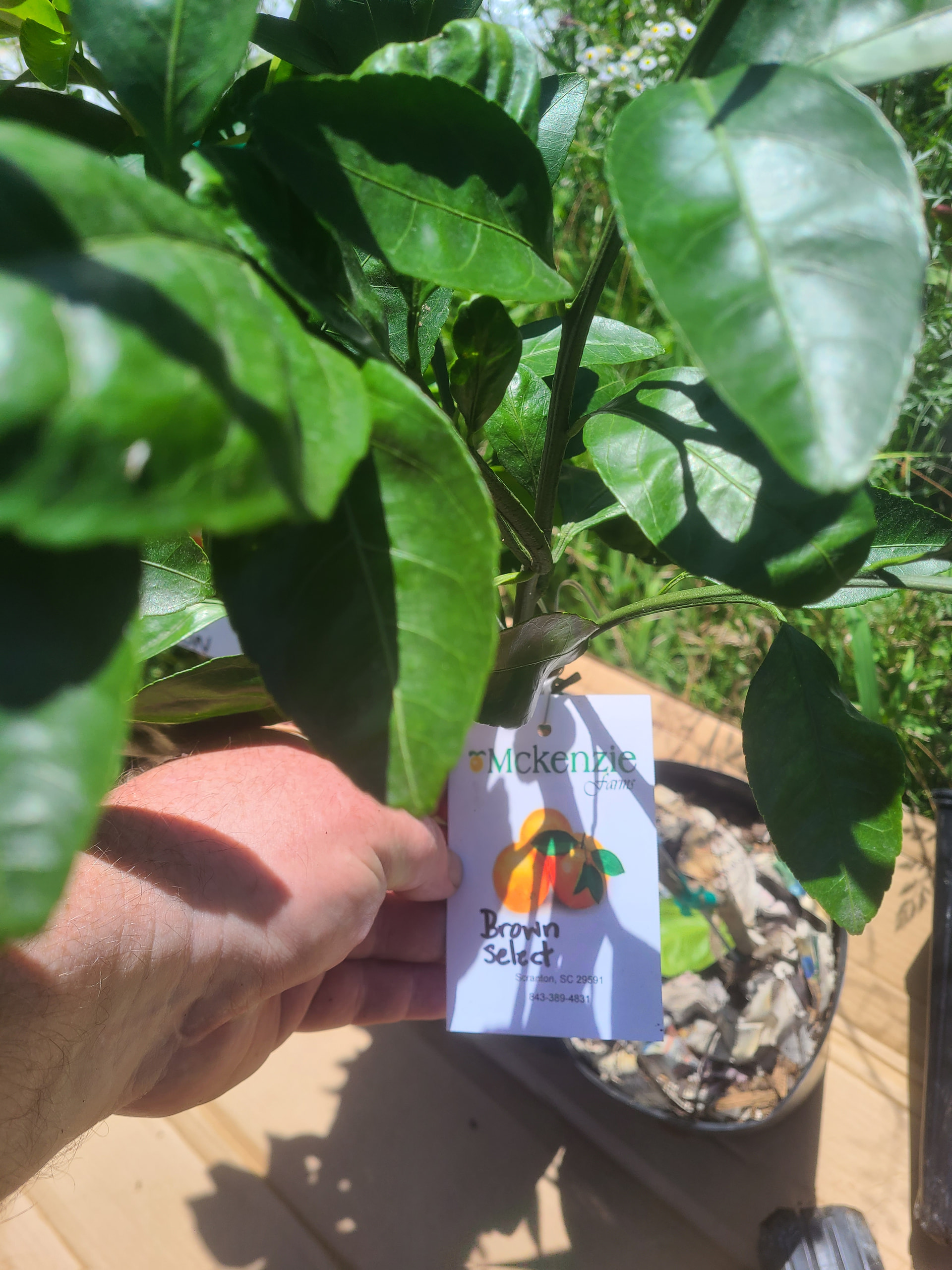
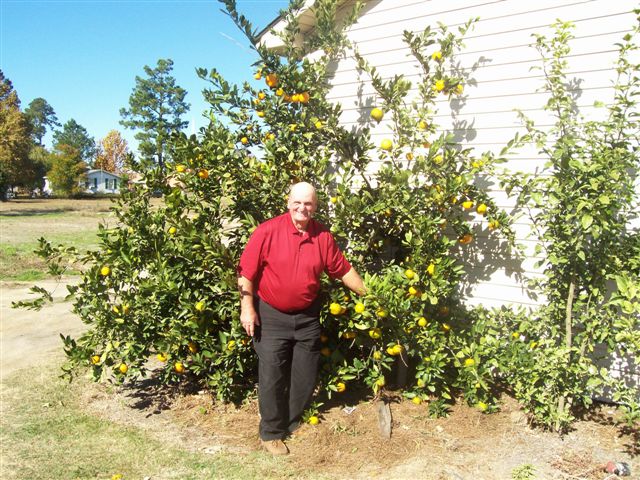 Browns Select Satsuma: Browns Select satsuma is probably my favorite of all the satsumas.. Flesh is melting and sweet. The trees bear great crops as is evidenced by this photo of one of my customers, " Hubcap Floyd" from Barrineau SC. The tree in the picture was planted around 5 years ago.
Thanks to Tom McClendon, Ned Rahn and Will Taylor for use of the Thomasville, Ten degree and Citrumelo photos .
Pineapple Guava: ( feijoa) This lush evergreen shrub has beautiful flowers in spring, followed by delicious fruit that ripens in the fall. Taste is similar to kiwi,strawberry & pineapple all rolled into one! The leaf undersides are a silver color and the shrub makes a perfect landscape plant.
Gallon size plants 15.00 plus shipping.
 Tropical fuzzy kiwi vines: I offer 2 of the fuzzy fruiting kiwi vines. This consist of 1 female and a male for pollination. These are the Vincent variety of kiwis and they bear the fuzzy, grocery store type kiwis. Hardy from zone 7 south.
Price: 25.00 for the two plus shipping.
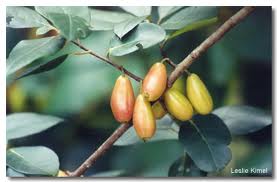 Ogeechee Lime: not a true lime but a member of the tupelo family. Fruit is sour and lime like changing in color from pale green to pink and vivid red. The flowers from this tree make great honey and is attractive to bees. Trees grow up to 40 ft and are very adaptable to dry or wet conditions. Fall leaf color is usually outstanding! Hardy to zone 7.
Price: 12.50 plus shipping.

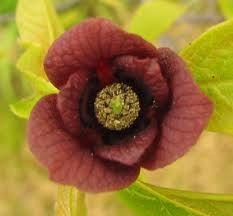 American Paw Paw trees: Unlike many nurseries that offer Paw paw trees, ours are healthy, live plants growing in gallon pots with an established root system. Many online nurseries sell Pawpaws as bare root sticks that seldom survive! Pawpaws prefer some shade while in their juvenile stage and will tolerate full sun once mature. Pawpaw fruit have a taste similar to banana custard and are hardy to zone 5.
Price: 15.00 plus shipping.
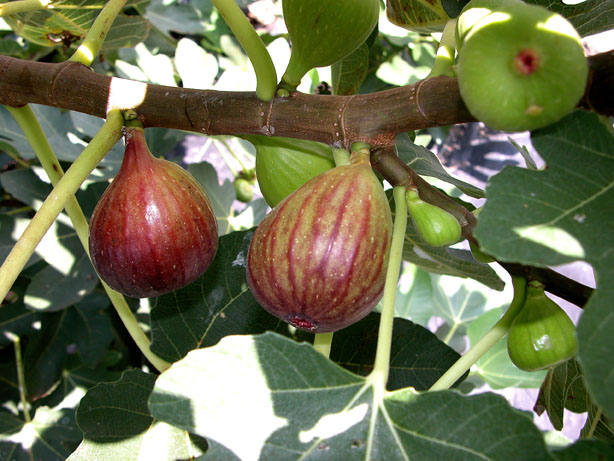 Brown Turkey Fig: Easy to grow fig that provides good crops of medium size fruits every season. Hardy zones 7-9 Zone 6 with protection
Price: 15.00 plus shipping 2 gal size plant.
 Russian Giant Pomegranate: This pomegranate from one of the former Russian provinces lives up to its name. Ive seen fruits as large as grapefruit from this variety. Somewhat cold hardy too! Zones 7-9 zone 6 with protection
Price: 25.00 plus shipping. Gallon size plant.
1 Like