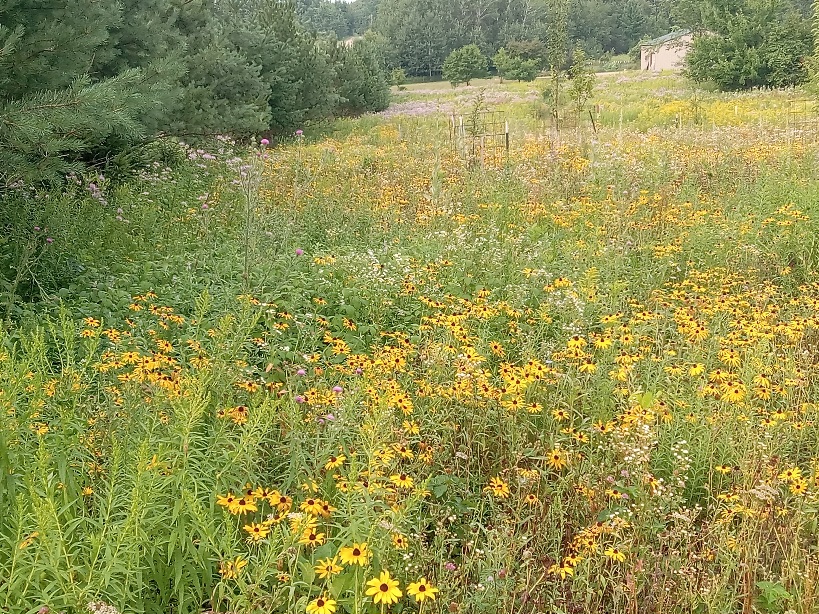
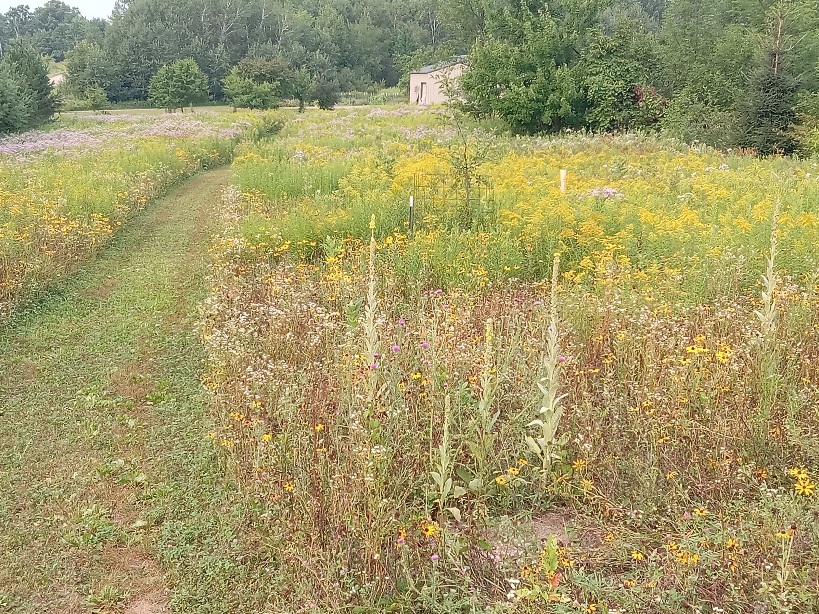
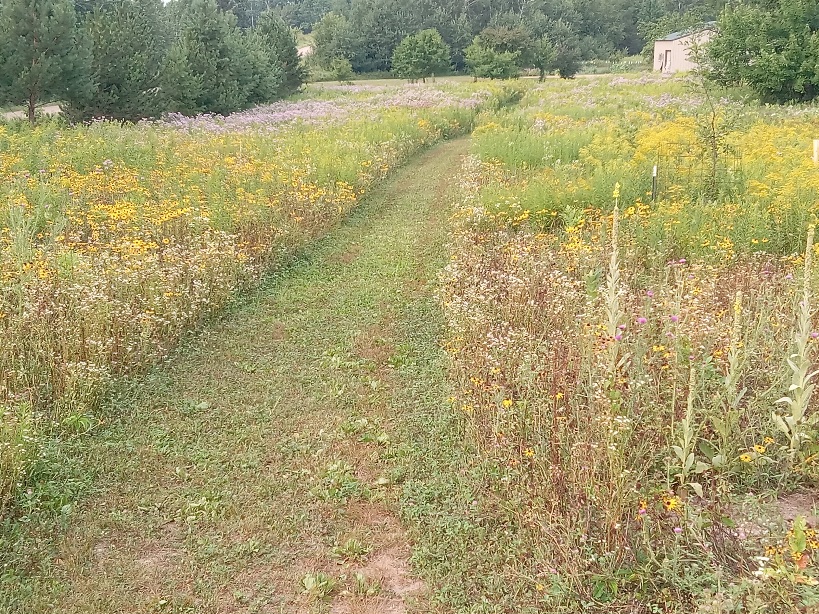
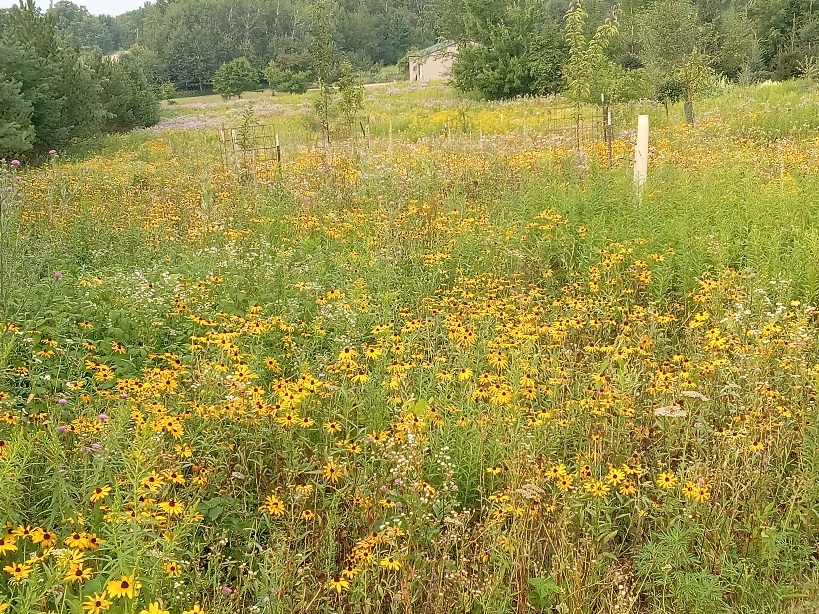
I don’t think those are all aggressive. Some are good spreaders, but not aggressive like physostegia. Although, maybe that goldenrod- I would have to look that one up. I only plant the well behaved ones, and that isn’t one I know, so I (personally) would be scared of it I had to removed a goldenrod 5 years ago because it was dominating and destroying a garden. Took 2 solid years as any tiny bit of root kept regrowing. You’ll know in 2 years what’s a bully
The Eragrostis and rudbeckia easily spread by seed in my yard, not rhizome. It’s the rhizome ones I’m scared of just in my space. I’m excited to see yours grow and hear how it does.
its a bit of an experiment, if theyre bad i’ll do what i can to beat them down but i wanted to put all the plants im too afraid to plant anywhere else in the thunderdome
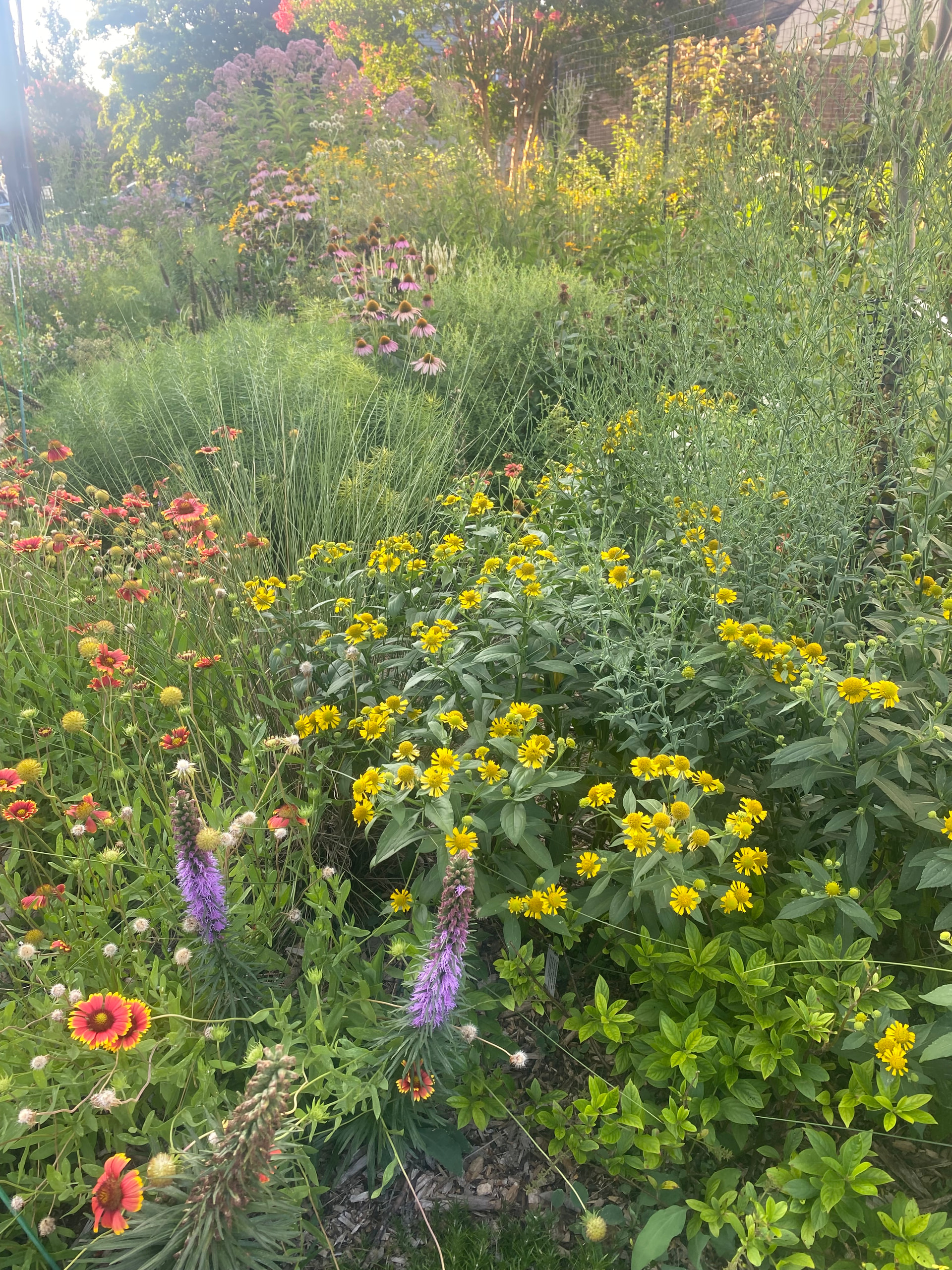
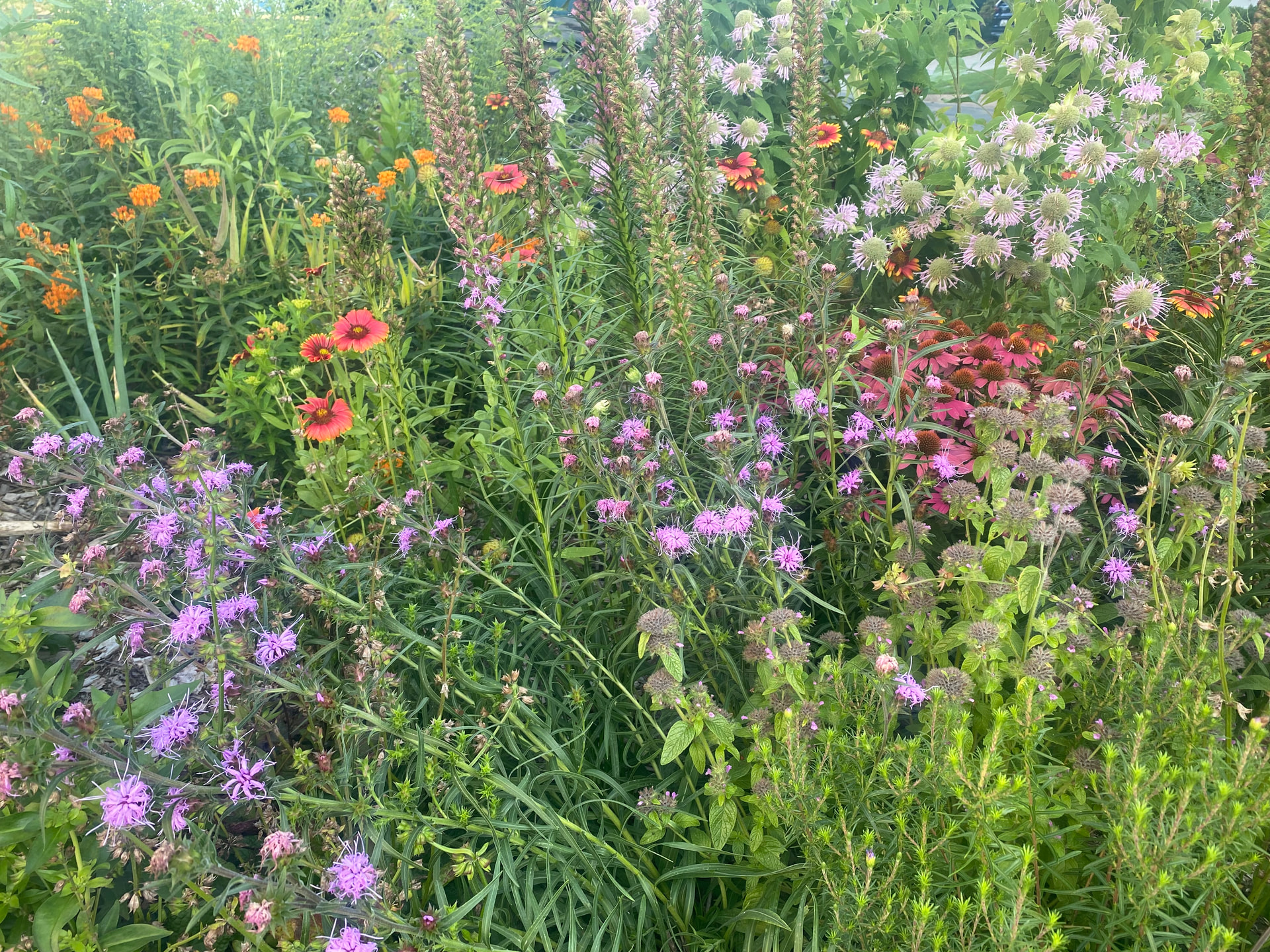
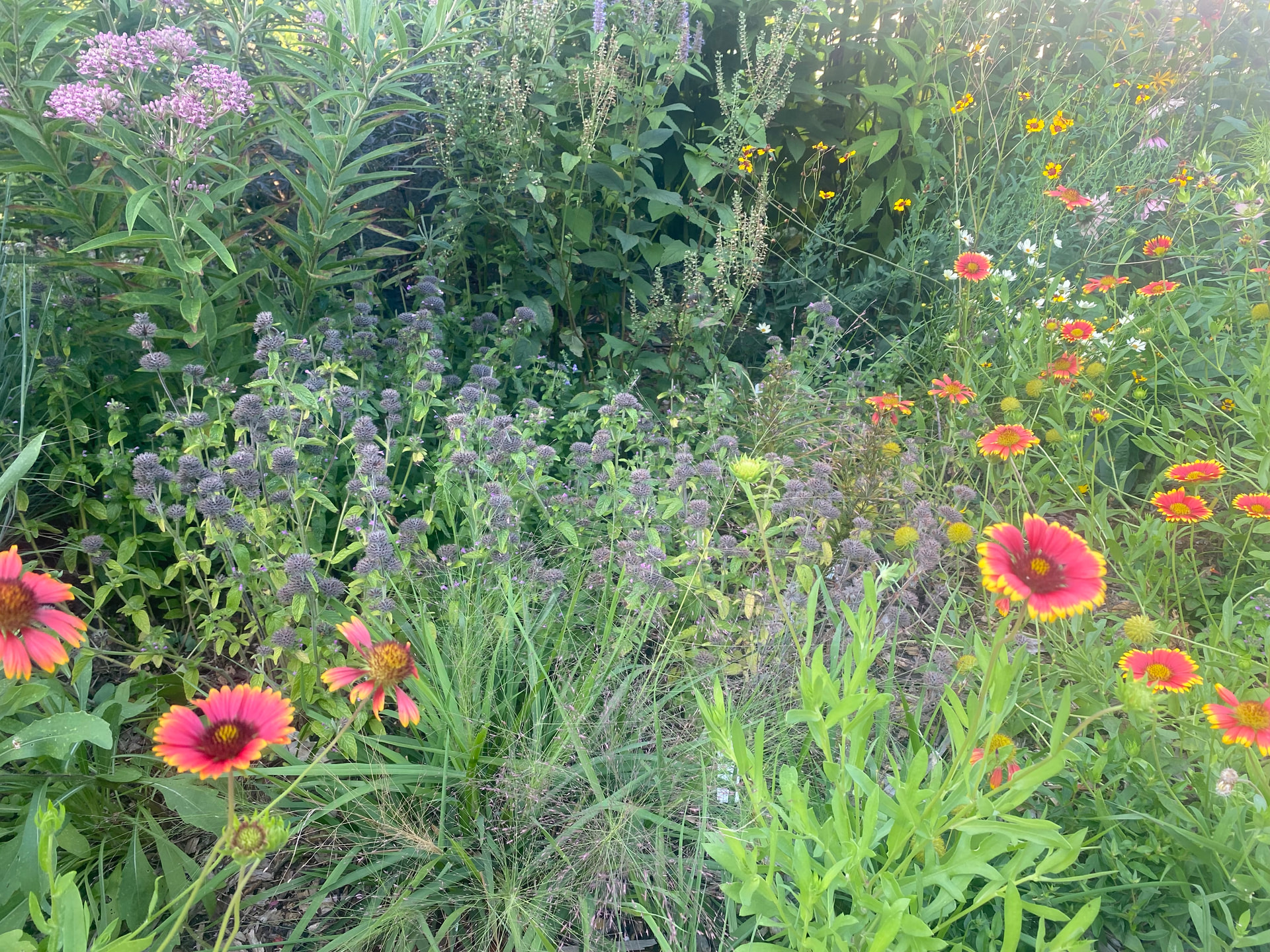
Helenium autumnale. Planted last fall, so first I’m seeing it bloom. I like it and I like how bushy it became with a june prune. then just some end of July street garden color pictures. The clinopodium vulgare seed heads have already turned purple and I think I’m ready for fall colors, bloomers and grasses turning.
Came across this list of “Top 20 Native Plants Every Gardener Should Grow” (link below if interested). Feel free to share your thoughts on any or all of this list
Excluding California poppy, those are the heavy hitters in my region for sun - part shade (a few shade), and off the top of my head, I think through the plains. But, there are certainly others that are great. I think as long as you generally match soil conditions, you’re fine. Ie don’t put a plant that needs moisture in a dry plains-like setting or things that need rocky dry in an area that gets water logged. And, don’t put the ones that hate nutrients in rich, backfilled soil (I’m looking at you Little bluestem, prairie dropseed, chrysopsis Mariana and more)…I find sun/shade tolerance goes beyond basic listing for all of those and more. At least, in the direction of putting full sun plants in say dappled or heavy part shade- most I’ve tried will be just fine. Echinacea purpurea is a great versatile example. That blooms beautifully with little sun. I listen when it’s a woodland/shade plant — don’t put those in intense sun.
On Joe Pyeweeds, I’ve been hearing they can take a lot of shade but hadn’t seen it until recently. The Baltimore Annapolis Trail has long woodland/wild edge areas densely planted with them and what looked like woodland sunflower and other native sunflowers I couldn’t quickly identify. Really gorgeous. For anyone local to this area, I highly recommend the trail for garden viewing (cycle so you can do it all). Really pretty native garden beds along with a ton of serviceberries and some dogwood and redbuds have been planted along most of it. There was a marsh area along one short section that was absolutely covered with the most hibiscus moscheutos I’ve seen in one area. All in bloom it was so gorgeous it alllllmost lured me off my bike. (skip the BWI loop - it’s horrid to ride and no gardens)
Forgive me if this is well-trod territory here, I’m new to this thread and only read the last couple of posts. But, I’m under the impression that if you’re planting milkweed for monarchs (which I suspect most are) that it’s borderline irresponsible to recommend species not native to specific regions as it disrupts the migration flow (not you, the original author)
In my region, that’s A. fascicularis and speciosa (narrowleaf and showy).
When I was in Oakland I planted some narrowleaf in my curb strip towards the end of the growing season because that’s when it becomes available in stores. Took that season and one more to get going, but then it cranked. My neighbor had a nice stand of showy and it attracted attention every year
Potted sticky monkey flower aka Diplacus aurantiacus blooming in near 100 degree weather, if not 100. One of my top 5 Bay Area natives
I suspect most of the standard recommendations don’t apply to container plants. I’ve had this plant in this container for 5 years and never let it go fully draught-dormant and gotten wonderful blooms all spring, summer, and in to fall. I even pruned it hard last fall in preparation for moving and it did … ok this year. Didn’t love it but got something.
Maybe this is in direct contradiction to my post above but I’m not actively advertising that half the country should do it more saying some of the ca native people don’t just try
They reclassified the species after I learned it and I have to look it up 100% of the time now
I like monkey flower but find it really temperamental about water; like I can never figure out exactly how much water it wants or when. It likes to pout a lot.
I won’t deny that it can be a pouter, but at least in-container I’ve settled on watering like 3x what I’d have thought. For a while this one would go summer pout mode by like May and stays that way until the rains really pick up in December until I settled on roughly every other day in the summer until it drained out the bottom, even in Oakland “heat”
I treat all my container natives that way and haven’t overwatered one yet. Except maybe this one Lupinus albifrons I’m on second or third generation of, but I wrote that off for them not liking nursery pots (prior gens were in-ground)
I’ve definitely overdone it, water wise, on this guy: Encelia californica
I haven’t watered it for months after learning my lesson the first time. I find that many of the bush daisy or similar species really don’t want a lot of water.
 I had to removed a goldenrod 5 years ago because it was dominating and destroying a garden. Took 2 solid years as any tiny bit of root kept regrowing. You’ll know in 2 years what’s a bully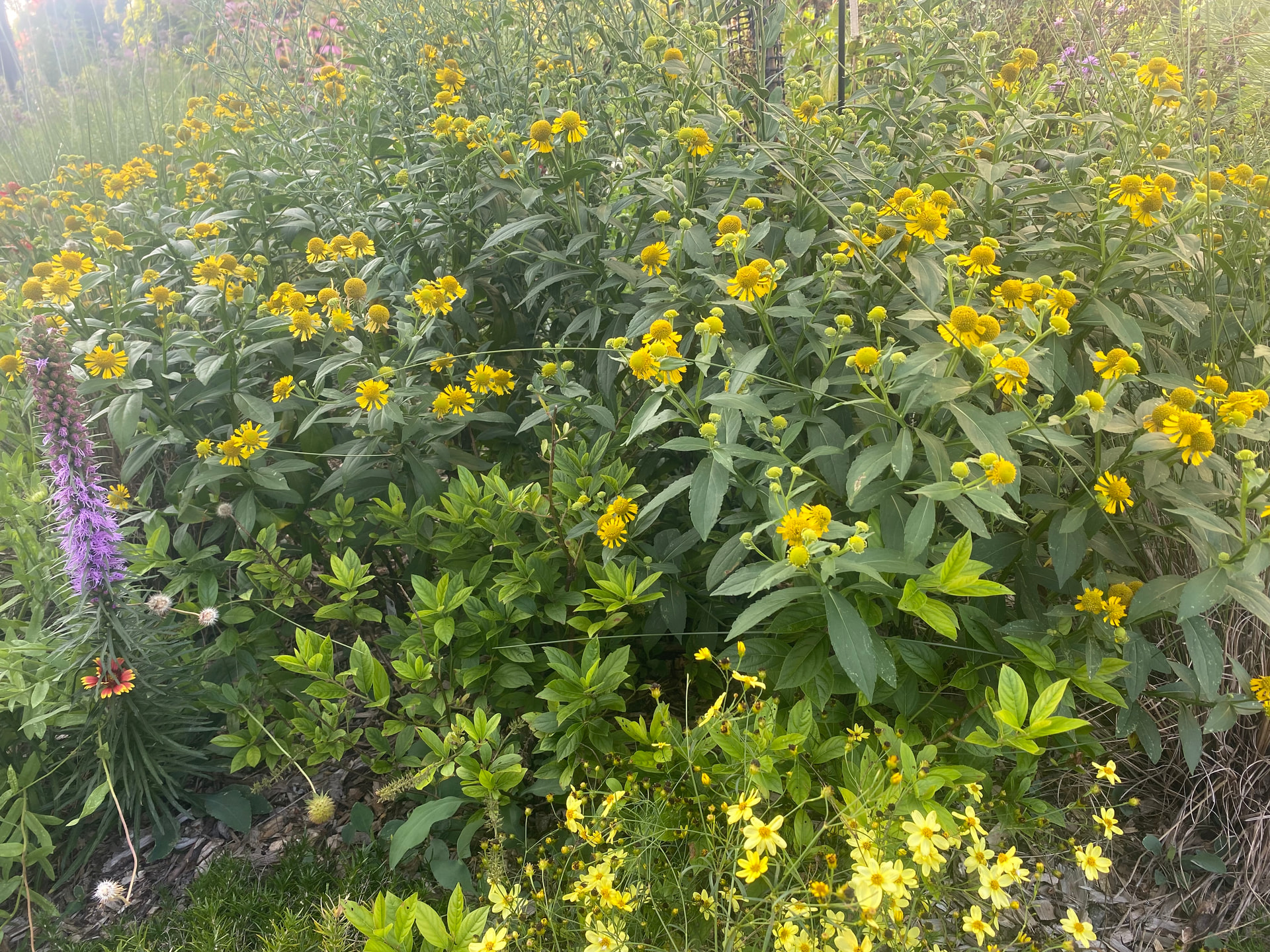


 I’m not actively advertising that half the country should do it more saying some of the ca native people don’t just try