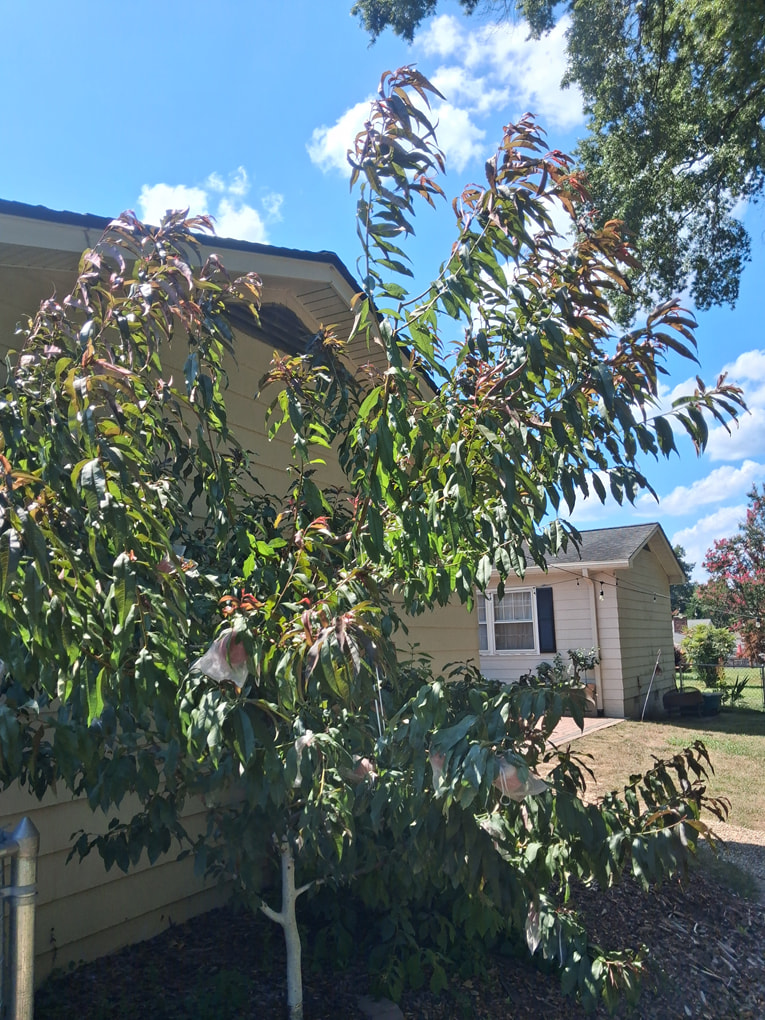
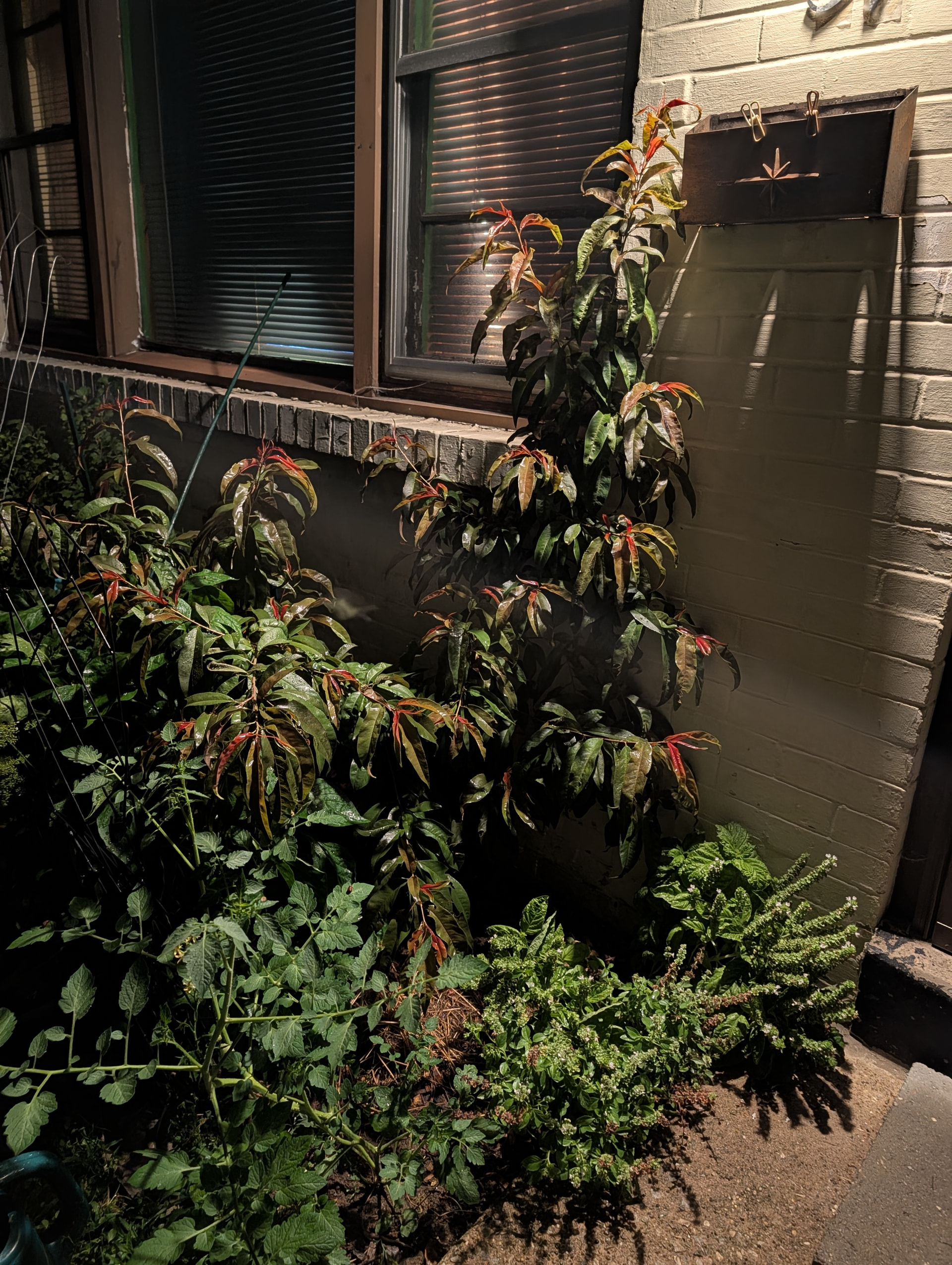
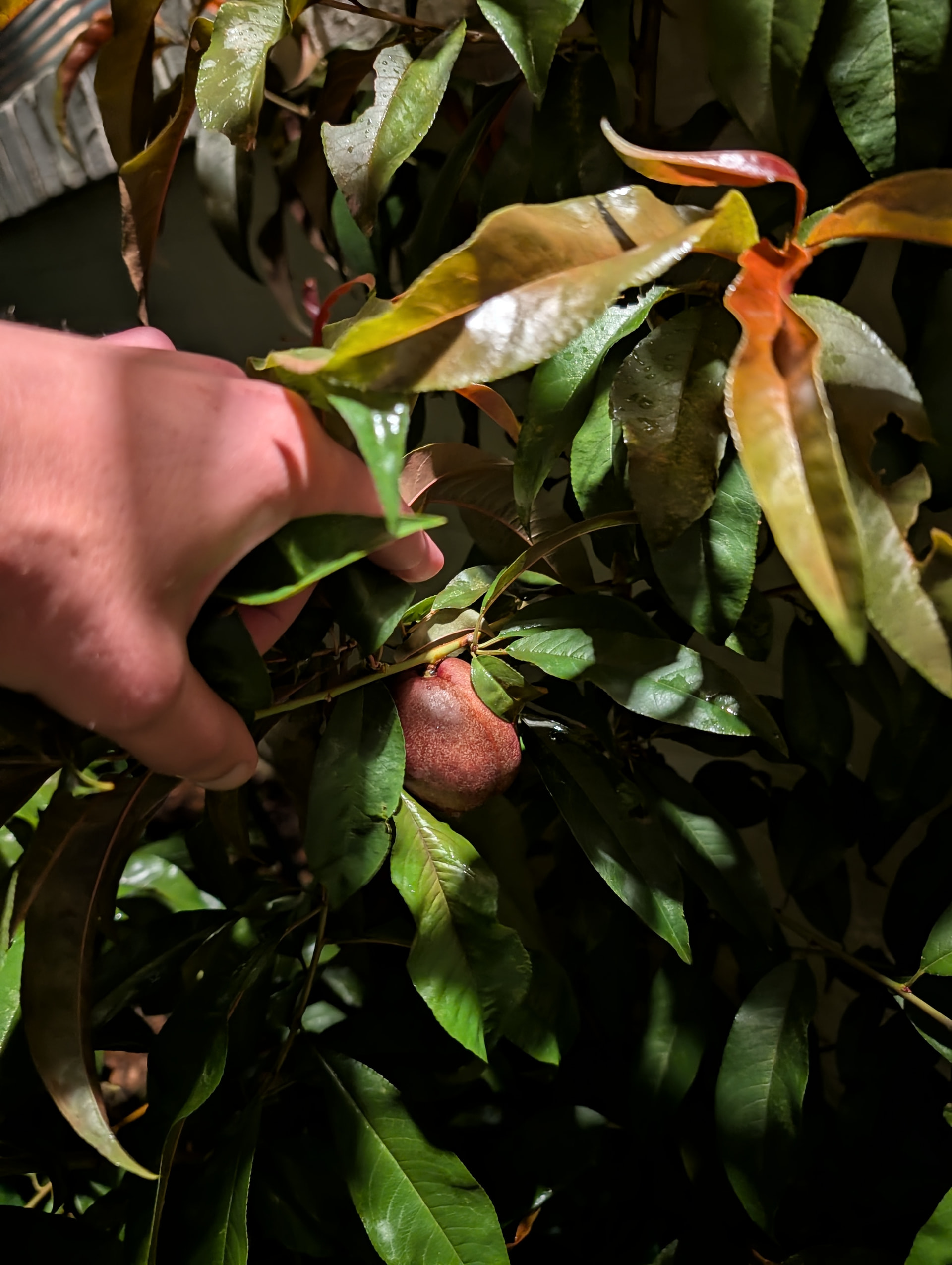
I’ve grown this tree for a few years and got a solid harvest this year for the first time. The Nectaplum is amazing in a few ways so wanted to share my experiences in case anyone else was considering it.
Tree
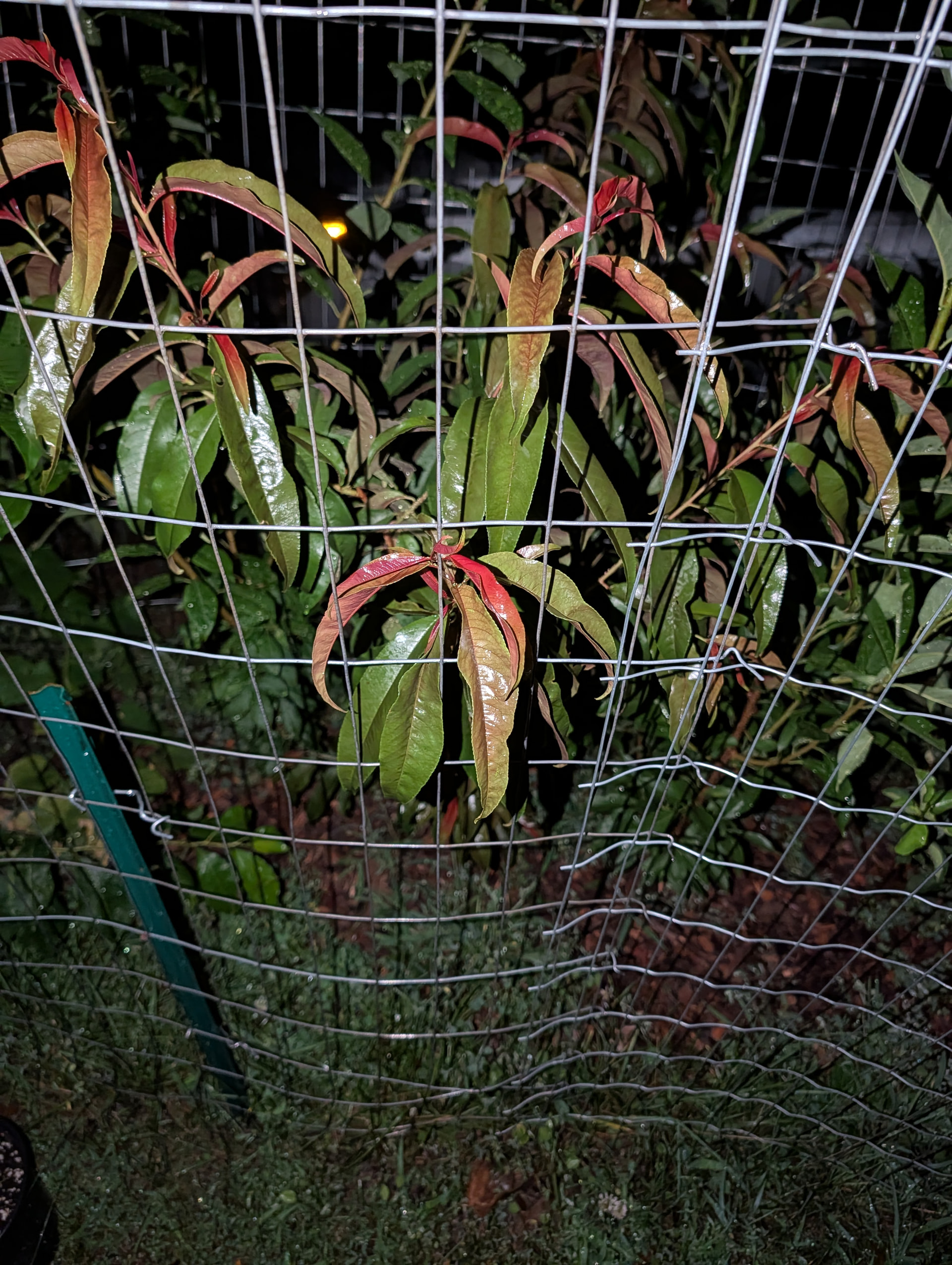
This has grown more vigorously than anything else in my orchard of 20 or so trees. Bought it from Ison’s bare root and planted 2.5 years ago. Not sure of the rootstock, but I planted it as a 2’ whip and after two growing seasons it was massive. Even pruning it regularly, it’s now about 12’ tall with a 2.5” caliper. I don’t know if it’s the perfect soil or location or what, whatever it is this thing grows rapidly. It’s also a beautiful tree. May not look like as much now during the recent hot drought weather and pruning, but in the spring it has the most amazing purple foliage that transitions to green during summer.
Fruit
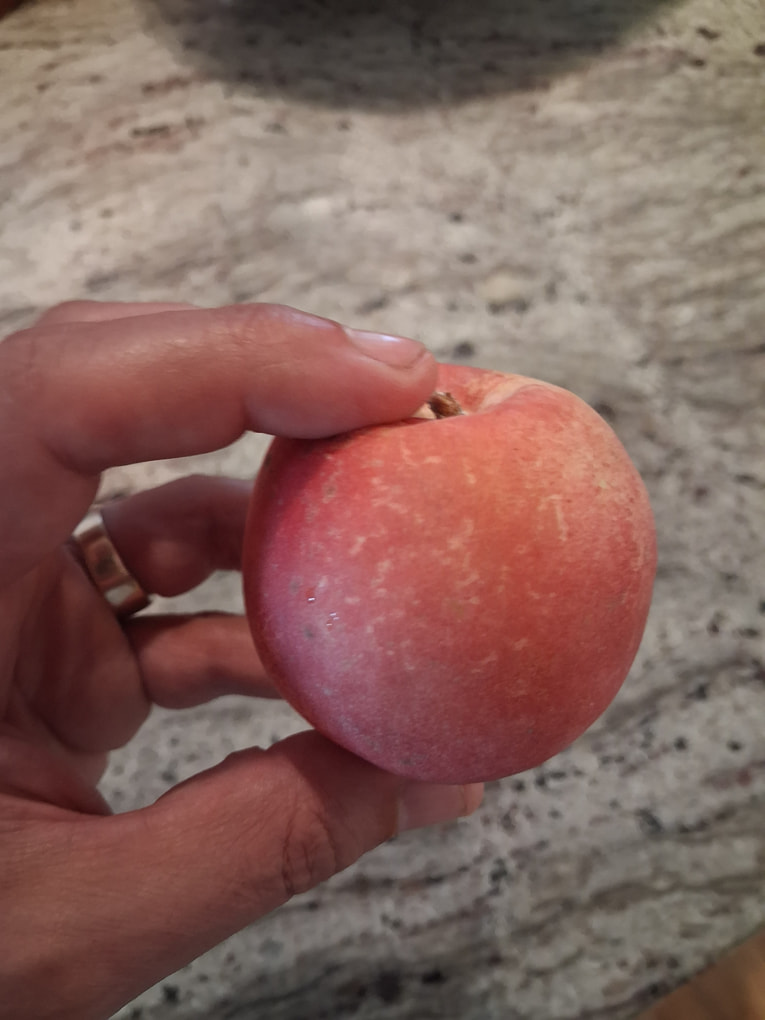
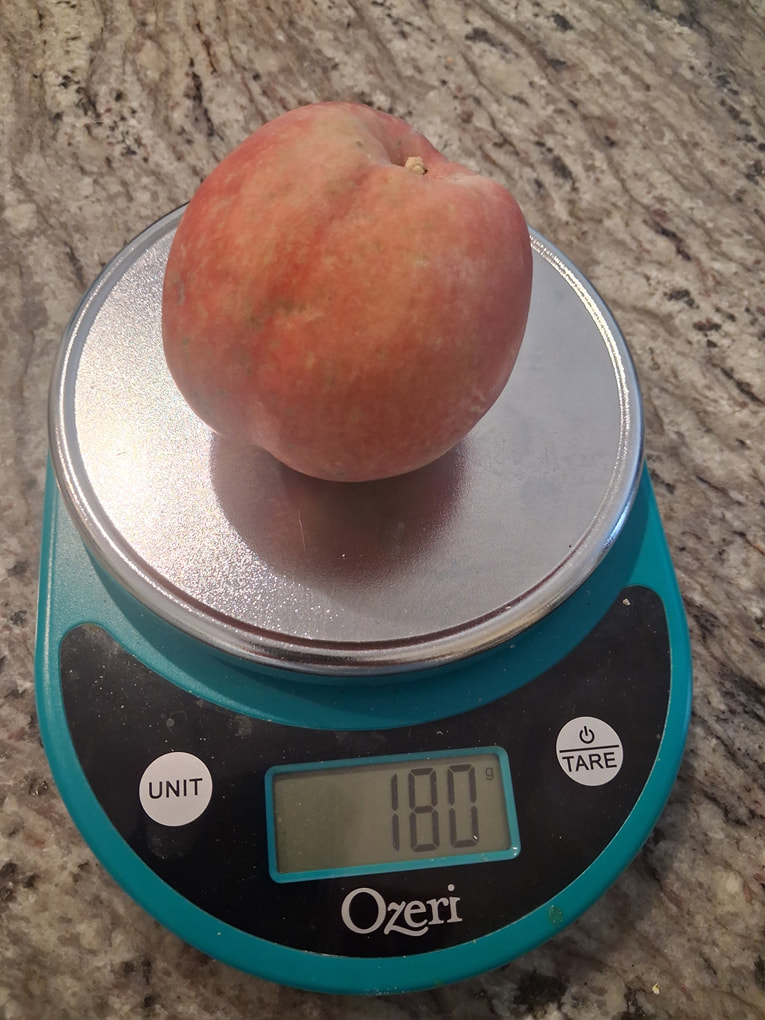
The quality is excellent. I don’t grow other stone fruit for comparison besides a Red Haven-like yellow peach, a Belle of Georgia-like white peach, and a mystery yellow nectarine, but I’d say a properly ripened Nectaplum is the best of the bunch. It takes a bit longer to ripen in a paper bag than my peaches and nectarines - more like 4-5 days than 2-3 - but differences in ripening plays a big role in the flavor. When tree or bag ripened until only slightly soft but still pretty firm it tastes more like a peach with some of that great tart flavor - kind of like my white peach but more concentrated and juicier. When left to ripen until softer it tastes more plum-like with greater sweetness - this is when they taste the best. I don’t have a refractometer for brix but they’re super sweet and among the best fruit I’ve grown. Additionally, I’ve noticed pretty big differences in sizes of ripe fruit. Some seem to get stunted but still ripen at about the size of a jumbo egg while others are almost baseball sized. Interior photo below is of the perfectly ripe small one; the 180g big boy needs a few days. One other thing is that they seem to ripen from the bottom-up kind of like figs. I’ve noticed more of a difference in taste between the top and bottom halves of the fruit compared to any of my other stones.
Problems
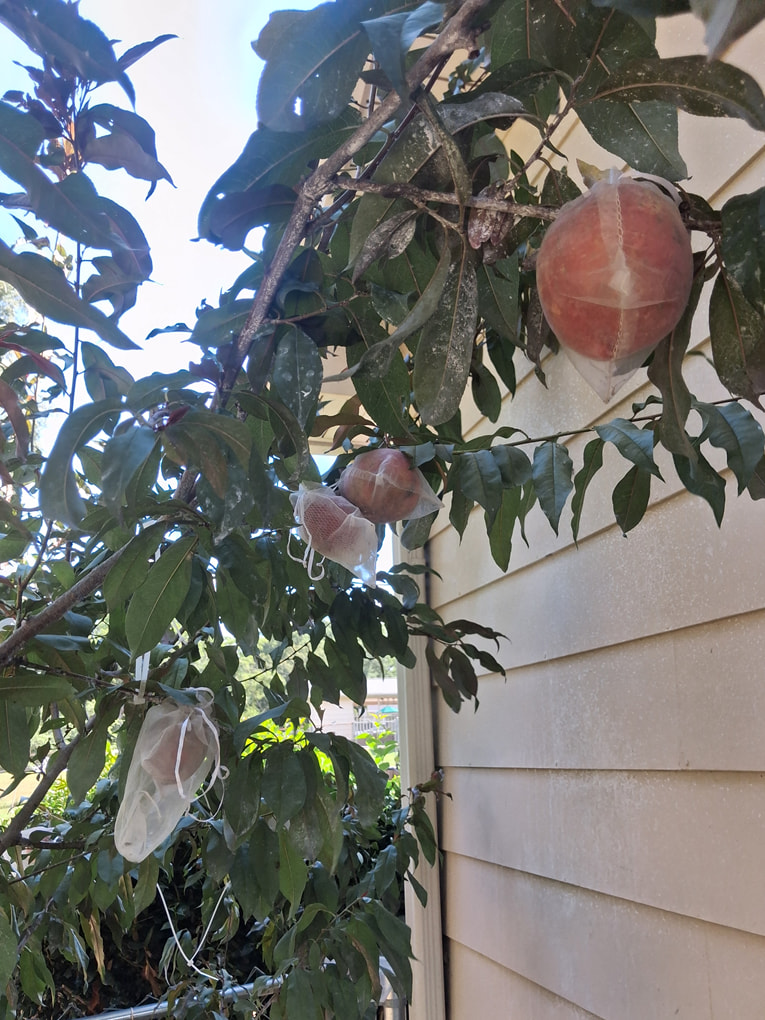
Here in South Carolina, I’ve come close to swearing off growing stone fruit. Then I taste them and change my mind about removing all my trees. Plum curculio is the worst pest I’ve ever dealt with in my orchard. Stink bugs also like these. I won’t go into it all since it’s a whole thing. Let’s just say that if you have PC then you’ll have to put in some serious effort for any stone fruit IMO. I’ve tried standard dormant and growing season sprays, organza bags, and Surround. In combination they seem to work pretty well - may only lose 1/3-1/2 of my crop. One issue with Nectaplums (and nectarines, plums, hybrids) is that I find it hard to get Surround to stick to the fruits given their fuzzless nature, even trying at different concentrations and application methods. I can get my peaches pretty close to properly caked, but the clay slurry largely drips off Nectaplums. But even when your fruit get messed up by various bugs, they hardly ruined - you just have to slice into them to make sure you’re not eating rotted bug tunnels.
This is probably my best fruit tree given the crazy vigor, production, and quality. They’re more work and less reliable than my figs, persimmons, and stuff like blueberries, but of my challenging trees I’d highly recommend Nectaplum. I don’t know what the hell Spice Zee means which is why I didn’t call it by its full name.
I’ve heard spice zee nectaplum really likes to wake up early. Anything true to that statement? Trying to add one to my backyard and may do potted just in case so I can move them inside so our classic late frosts to snipe all the flowers off
I’ve grown my Nectaplum here in Los Angeles for the past 3 years.
Mine develop a much darker red coloring compared to the original posters picture.
Over the past 3 years, it is consistently the 1st of my nectarines to “wake up” in late winter.
We do not get late winter or spring frosts in my area (has not snowed since 1987).
If your area suffers from late winter or even spring frosts, I would plant it in a more sheltered area. The more winter chill it gets, the more fruit I got last year and the year before (record winter chill for Los Angeles).
This was the hottest winter we have ever had and had no nectaplum fruit this year. Of my 30 stone fruits, only a Santa Barbara peach has developed any edible fruit…a harvest disaster.
Flavor wise, its got medium acidity and medium sugar. Nothing amazing…but it is consistently good and in past years, it is a proven producer…early on.
Its early red-purple leaves (from its plum ancestor) is a show stopper. I use the term early because as spring progresses and summer sets in, the leaf color changes to a melange of red & green.
Also, it grows vigorously. Planted it next to a Snow Queen white nectarine…and it requires more pruning and its trunk caliper is thicker even though I planted them at the same time.
It struggles with Peach leaf curl every year…but due to the lack of rain during the time before and during initial leafing, I observed NO peach leaf curl on this tree…or any of my peaches or nectarines. The curse of no disease…but due to a lack of winter chill…no fruit
A very good description of the plant. Leaves are less red here in milder zone 6 used to be zone 5. The strong sun turns them red. I also have grown Hollywood plum which is a very cool red leaf plum. Stays red too.
I have not noticed it waking up any earlier than my other stone fruit, if anything it’s slightly after my peaches. I live in a fringe 8A where the last two weeks of March and first week of April is the danger zone for late freezes. It usually only drops into the mid-to-high 20s for a couple hours which seems to only cause minimal damage to the buds.
Interesting. We get huge temperature swings in Colorado and like clock work always get a lot of snow first week of May after it’s been hitting 70s. Everyone had a warm winter this past winter, but lots of varieties aren’t recommended for area just due to the fake out of temperatures. Contender, Indian free, and others are recommend. Your experience gives me hope though
All the folks that live in slightly higher elevations and a zone or two lower near me say Contender is the main reliable option. I don’t believe it’s supposed to be amazing flavor wise compared to others, but a perfectly ripe peach should be delicious regardless IMO.
I grafted it to Krymsk 1 and a Nanking cherry from Tractor Supply last year. Have a single nectaplum growing on the Nanking cherry rootstock bush-tree.
The Krymsk 1 tree is getting pruned to a V and densely planted with a bunch of other stuff. I’ll bend a branch probably, it’s intent on growing everywhere except the right direction.
My method of dealing with this problem is to constantly be pinching off new growth on any branch I want to grow in a new direction. By pinching off new growth you will encourage new sprouts to grow. At first you will get 2 new growths, then more if you keep at it. If you keep pinching you can get up to half a dozen new growths sprouting from the tip of the branch. With a bunch of new growth the odds of getting the branch to grow in the direction you want increases dramatically. In my nursery area where I’m shaping my new trees I’m out pinching new growth every day to shape my trees to exactly how I want them. Pinching off new growth is also a good way to ensure you don’t get long wispy branches that can’t support the weight of a large crop.
If your surrounding slurry is not forming a cover around the fruit, but completely dripping off, I found that for the initial first and second sprays, if I use about a half teaspoon of dish soap as a surfactant per gallon of spray and then shake it up until it foams, once it’s sprayed on under good pressure, the foam tends to coat the fruit completely. Don’t overdo the soap or rains will easily wash it off. Once coated reduce your soap on following applications as the fruit grows and you should see better sticking and coating of the fruit.
On several apple varieties I have, the skins were water resistant so I had to use a surfactant to coat them.
Would you be willing to trade scions this winter? I could use a nectaplum to add to my stonefruit collection.
That’s great advice, I’ll be sure to try that next year. I’m also going to upgrade to an internal diaphragm sprayer instead of the cheap pump sprayer from Tractor Supply - I’ve had two of them break on me and I know the clay slurry did not aid in their longevity.
Can def send you some scions if you like. Please ping me in a few months as a reminder.
Hi Mark,
Welcome to growingfruit.org.There is a section called the Trading Post in the Categories area.
People use it mostly during late Winter into Spring,for dormant cuttings.But it can be a way to give or get stuff anytime.