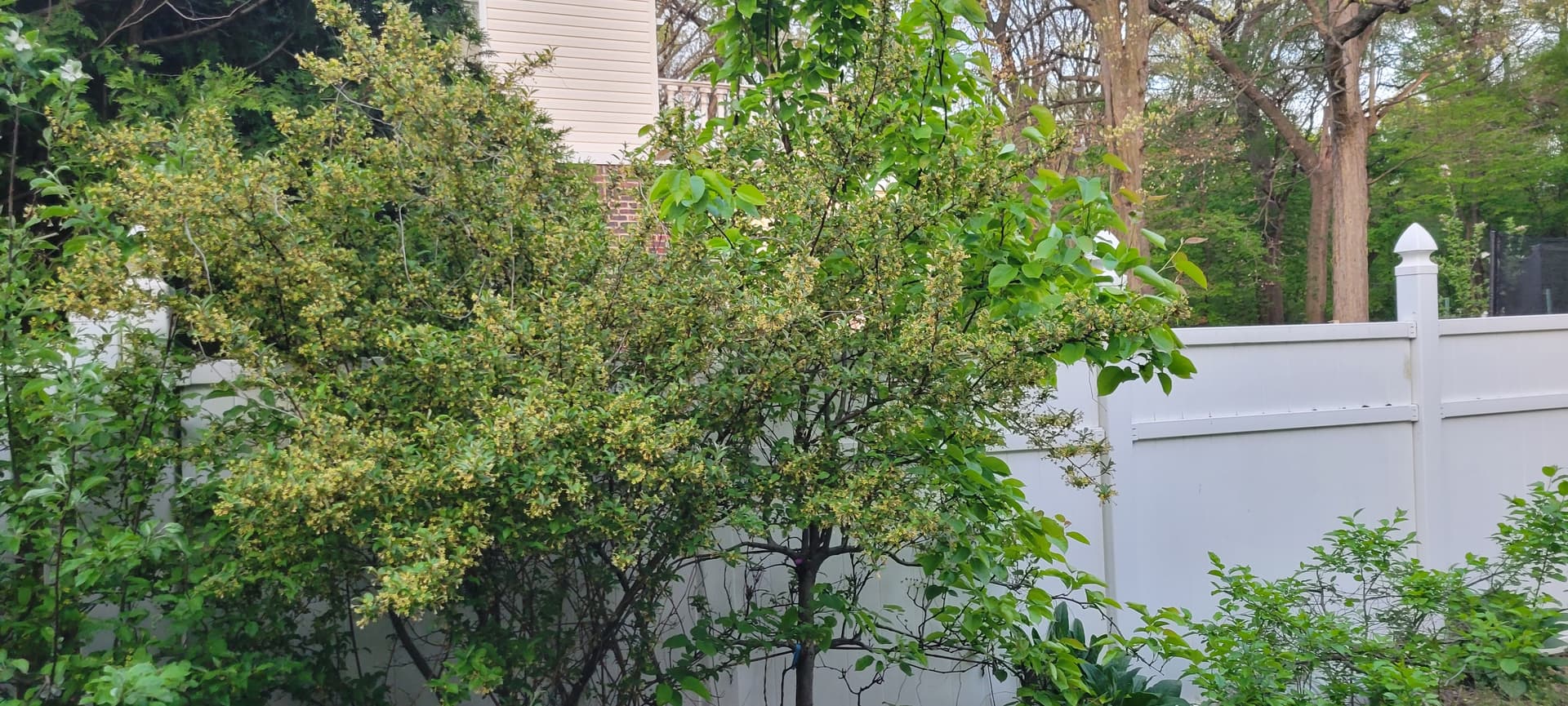
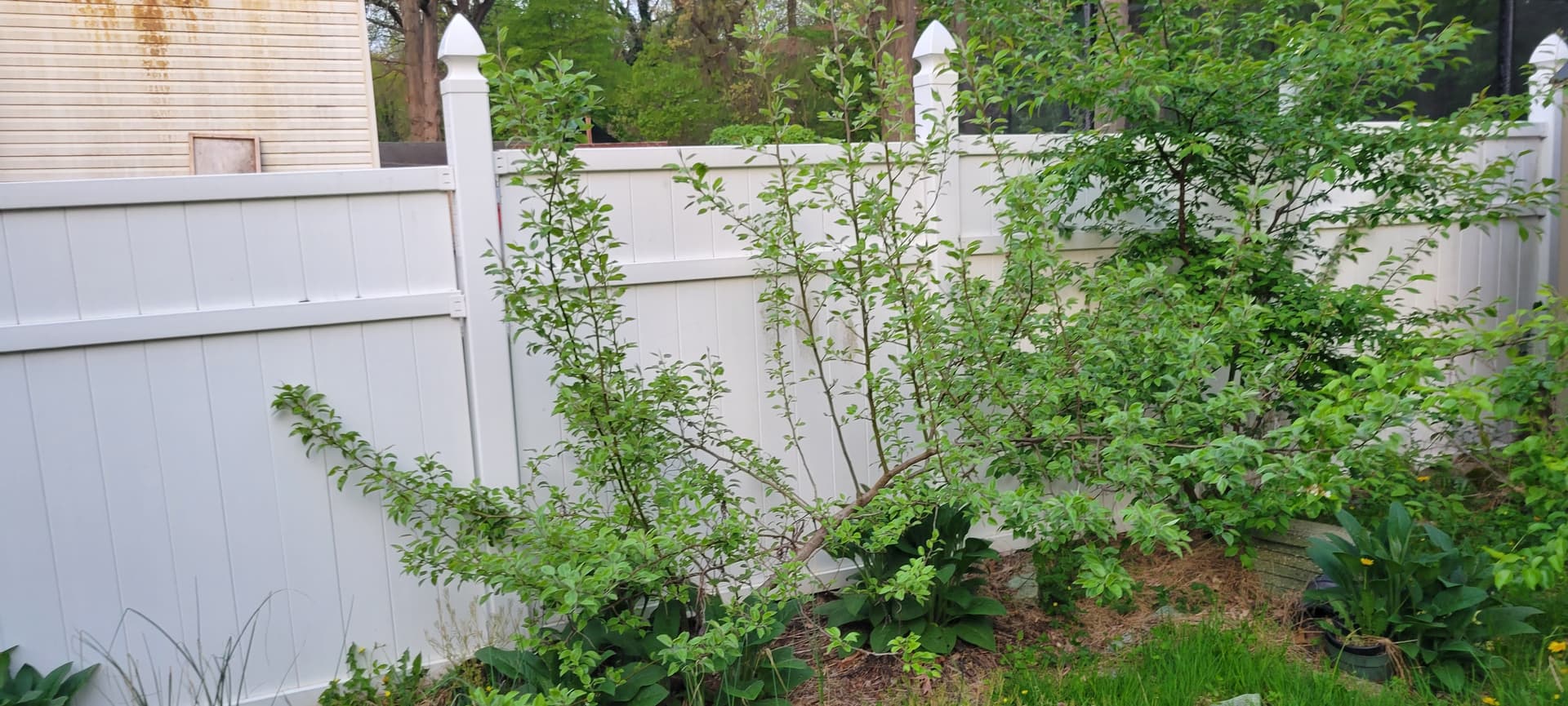
Has not worked out for me. While the Goumis usualy do fantastic. The Apple has bloomed for the first time this spring, and the pear while has bloomed a few times only gave me a half dozen fruit.
Clearly I need to reduce the goumi but it produces so much its hard.
Isn’t it just as possible that it isn’t a matter of sharing so much as not taking as much of the N from the soil as, say,. the grasses they replace? Many soils here contain adequate N to the point that no advantage is achieved by adding it once apple trees are established. I only know about apples, for sure- or almost for sure. A 2nd generation commercial apple grower told me this about his own orchard where only establishing trees received N and his bins per acre numbers were exceptionally high.
It could be due to getting too much nitrogen? Perhaps you could increase your phosphorus fertilization, because plants with excess nitrogen will use it to grow rather than flowering and fruit production. Just a thought, I may be off though
My daughter adores goumi’s and can’t get enough. She also eats cherry tomatoes like grapes so has a true love of lycopene. For some unknown reason, birds and squirles stoped plundering my two bushes.
I got a great deal of fully ripe berries all at the same time. I was going though my deep freezer and found 2 full gallon bags of berries. BTW they freeze very nice but I do not know how well they thaw.
One of my projects this year will be Goumi wine. I have good feelings about that being a winner. Goumi’s need a winning use case and I am sure that’s going to be wine.
Anyway my warning is for close plantings. I planted them between what is supposed to be an espalier fence. I let my pear over grow on purpose and it wants to tower over and escape the goumi.
I have no doubt that soil can be quite high in N, tho I’m referring to research articles I’ve read. I wish I had bookmarked them so I could share them now.
“The grain legumes in this study fixed a relatively large amount of their total N and therefore removed less soil N than barley. Returning the stover to the soil was beneficial in offsetting this loss. However, grain legumes do not appear to be have a major role in improving the N fertility of the soil.”
As I understand this, the results seem to indicate that planting nitrogen fixing plants like peas and lupins do not help companion plants in terms of nitrogen. This could be different for other plants, and it is definitely different if you use them as green manure, but I don’t think growing lupines next to fruit trees will provide copious nitrogen if any.
There have been more recent studies that show when INTER-planted this makes a big difference.
Nitrogen in soil is short lived compared to other nutrients so they need to be growing together in order for them to get the effects
Note that wasn’t what the study was studying. They were studying if innoculating with commercial rhizobia provided better yeilds than the native rhizobia in their soil (which it didn’t, yields were reported to be the same).
The major benefit to nitrogen fixers are: (1) they make their own nitrogen, so they don’t compete with your fruit trees; (2) since they made their own nitrogen, their decay and debris slowly adds nitrogen into the slow, since its nitrogen they have fixed from the air; (3) to gain the most out of them, you have to work them into the soil BEFORE they go to seed/fruit. Since the study was looking at the N after harvest but before working it back into the soil (in their conclusion), it would stand to reason that their would be no benefit.
Also:
“Quite large amounts of N (up to 72 kg N/ha) were removed in the legume stover at the end of the
Experiment. When incorporated into the soil this offset
The N losses resulting in a positive N balance for green
peas and lupins (Table 3).”
They reported their was an increase of nitrogen for green peas and lupins after reworking back into the soil, it was just a negible gain for the scale they were working with, which lead to the conclusion that “the role of grain legumes appears to be maintaining rather than increasing soil N.”
TLDR: I’m just saying that report had nothing to do with this. It was studying something different.
There are also synergistic effects created by having these different root zones because they create different highly localized soil chemistries immediately surrounding the roots.
These different chemical conditions allow for the easier absorption of various nutrients in different soil chemistries.
The nutrients are then actively shuttled to the plants that need them by the microbes/fungi in the soil
My good biogeochemist friend did a field study proving this exact thing by burying bags of minerals enriched in the major nutrients deficit in different soil types and then digging them back up and observing how the symbiotic microbes and fungi weathered them
Yeah, but we don’t have unlimited time. For me it is necessary to hone a system that provides most bang for the buck. Managing orchards and selling fruit trees I size up are my business, and profit margins allow only so much fluff. I start off by dong the minimum to get the most results. Don’t throw everything in the same pot and never know which ones are influencing the overall taste.
I wonder if you draw your entire living from what you grow. That does mean something in how you have to allot your time and resources and hone your methods. The ideal becomes highly influenced by what helps your business survive and what wastes time and money.
Hobbies are wonderful and tend to be “impractical” by nature. If the things you do make you feel good, it may be more important than how materially useful they are. Highest efficiency isn’t the goal. But trying to understand how things work and what works best can also be a part of a hobby. Personalities vary.
why i only throw several shovels full of manure around my trees for a few years, then only woodchips until the tree gets big enough to shade out the weeds. even that is more care than most folks give to their orchards but it works to establish them well and makes them able to handle extremes nature throws at them. i think any more than that would just produce excessive growth that could be a vector for disease. i have several species of fruit trees paired with a siberian pea shrub planted to the north about 5ft. away and so far i havent seen any differences in ones planted without them. they are still young and i didnt give them manure like like the others planted separetly. maybe as time goes on and the N nodules grow on the pea shrub, maybe the growth will then improve. although i read that the N fixing plant needs to die to give up its N but that was with annuals like clover , beans and peas. either way, ill post the results here.
The faster my nursery trees grow the quicker they get above the deer browse line and generally the faster they are ready to sell. For me, time is money, for others there may be impatience to realize meaningful crops from their fruit trees.
Vigorous growth and even the most vigorous growth possible is more prone to preventing harmful disease than causing it. Not as an absolute rule, of course, and bigger cells with thinner walls can be more vulnerable. Also, high protein content in tissue can make it more desirable for consumption- but my trees never suffer consequences I see from excess N and establish very quickly.
a change of perspective might help. a more diverse and well feed ecosystem above your tree roots may likely prevent the tree from having to fight for resources. or possibly think about it like planting to prevent erosion. when the roots of the nitrogen fixers die they release there nitrogen and there decaying matter feeds bacteria an fungi. Fungi mycillium structures the soil allowing more capture via physical changes and growth of the fungal body.
i have to be careful not to push too much growth early on as it makes the young trees more vulnerable to the cold up here. knock on wood, we dont have much deer around here.