“Nucellar embryony is a type of apomixis, where eventually nucellar embryos from the nucellus tissue of the ovule are formed, independent of meiosis and sexual reproduction.During the development of seeds in plants that possess this genetic trait, the nucellus tissue which surrounds the megagametophyte can produce nucellar cells, also termed initial cells. These additional embryos (polyembryony) are genetically identical to the parent plant, rendering them as clones. By contrast, zygotic seedlings are sexually produced and inherit genetic material from both parents. Most angiosperms reproduce sexually through double fertilization. Different from nucellar embryony, double fertilization occurs via the syngamy of sperm and egg cells, producing a triploid endosperm and a diploid zygotic embryo. In nucellar embryony, embryos are formed asexually from the nucellus tissue. Zygotic and nucellar embryos can occur in the same seed (monoembryony), and a zygotic embryo can divide to produce multiple embryos. The nucellar embryonic initial cells form, divide, and expand. Once the zygotic embryo becomes dominant, the initial cells stop dividing and expanding. Following this stage, the zygotic embryo continues to develop and the initial cells continue to develop as well, forming nucellar embryos. The nucellar embryos generally end up outcompeting the zygotic embryo, rending the zygotic embryo dormant. The polyembryonic seed is then formed by the many adventitious embryos within the ovule. The nucellar embryos produced via apomixis inherit its mother’s genetics, making them desirable for citrus propagation, research, and breeding.”
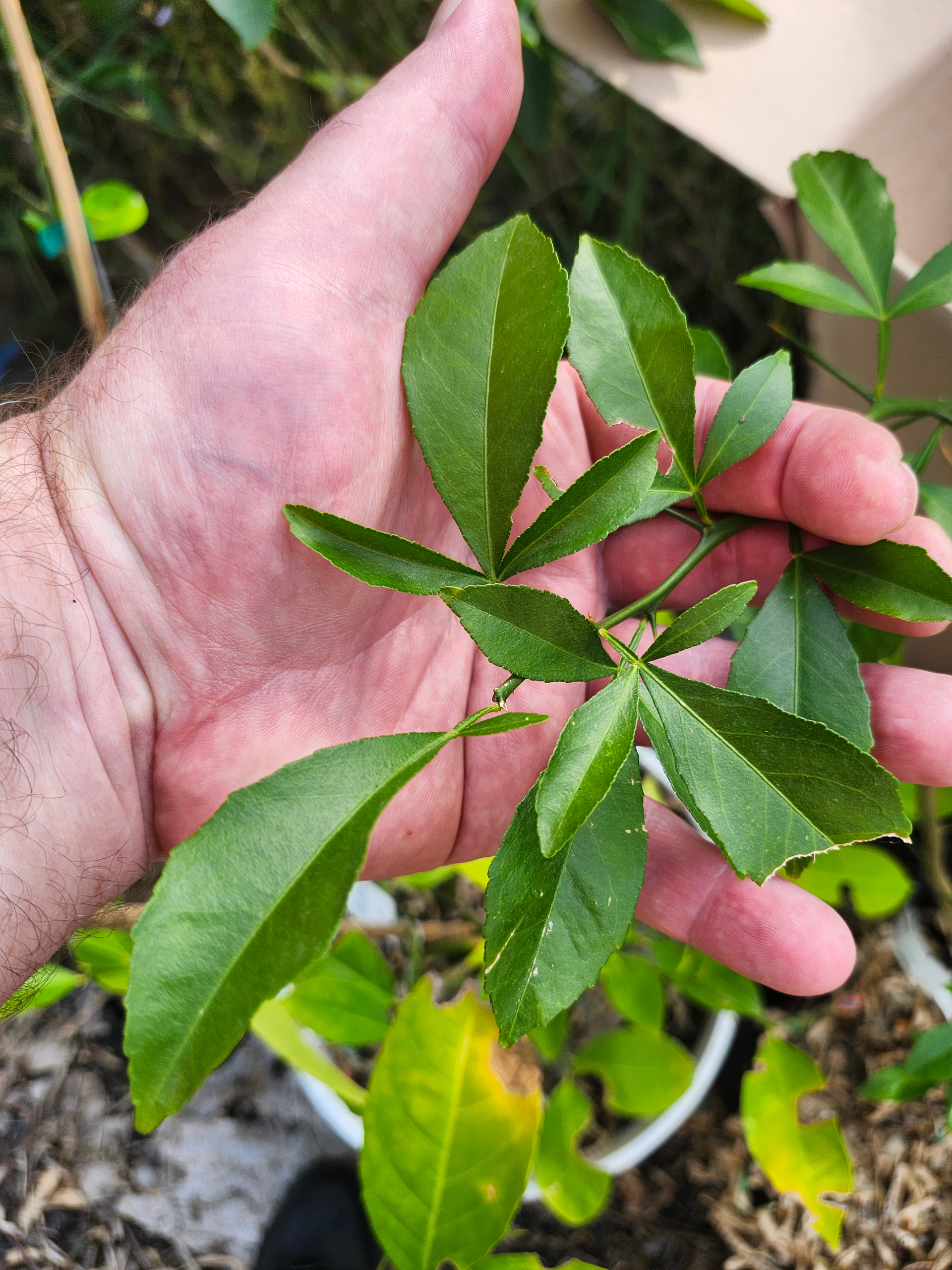
US-942 Sunki Mandarin x Trifoliate Flying Dragon is one example of a hybrid citrus rootstock that produces good flavored ping-pong-sized fruits. Us-942 is a rootstock known for its nucellar seed production, which results in genetic clones of Us-942 . See this old thread
Since nearly everyone asks about growing fruit from seeds you should know most is not true to type from seeds. Before you makes hybrids it’s best to know the expected results
“ Common Fruit Trees That Grow True from Seed
-
Apple Trees
Most apple seeds lead to trees that differ from their parent. However, some varieties, especially heirloom types, can grow true.Wolf river seedlings will look like their mother typically. -
Peach Trees
Peaches tend to produce seedlings similar to the parent, particularly when grown from a true peach seed. -
Plum Trees
Plum trees can grow true to type, especially if you select a variety known for seed propagation. -
Cherry Trees
Sweet cherry trees often do not grow true from seed, while sour cherry trees may yield more consistent results. -
Pawpaw Trees
Pawpaw seeds generally produce trees similar to the parent. This tree bears unique fruit, appealing to many gardeners.”
Back to citrus and let’s contrast it with other fruits and learn why it grows somewhat true to type in many cases.
“is fun to save seeds from our favorite plants and fruits. But you can only do so with certain plants, especially fruit trees, that are “true to type” (ie. producing the same fruits as the parents).
The fruit trees that are “true to type”, or will grow somewhat approximately identical to their parents, are self-pollinated. They include some heirloom apple species (e.g. Antonovka), apricot, avocado, citrus (orange, lemon, lime), nectarine, peach, papaya, pawpaw, peach, heirloom tomato, sour cherries.
In this article, we will go through 12 most common fruits that you can save seeds and how you can grow new trees from their seeds.
Table of Contents
What does “true to seed” mean?
“True to seed” or “true to type” are terms used to describe plant seeds that will grow into plants that are identical to their parents in terms of taste, texture, and appearance.
Whether a plant is true to seed depends on how the seed is fertilized or pollinated.
Plants with true-to-type seeds are inbred or self-pollinated with closed flowers where the plant’s pollen is transferred to its own stigma. This results in plants very similar to their parent because they contain two exact sets of genes.
Plants that can grow true to seed include most peas, beans, and heirloom tomatoes like “Brandywine” and “Black Cherry”.
On the other hand, plants that are not true-to-type need to be cross-pollinated or outbred. These plants, such as tomatoes, corn, squash, have separate male and female flowers requiring pollinators such as bees or wind to pass the pollen from one cultivar to the stigma of a different plant. Because of this, the seeds will have two different genes and produce a different plant from the parent.
Most trees, especially wild trees or non-domesticated trees, are not true to seed because of the high genetic diversity in them and that most trees must be cross-pollinated to bear fruit.
The only way for most fruit trees to yield an identical plant is by grafting, which involves taking a viable branch or bud from the desired tree and attaching it to another plant.
Nevertheless, the seeds from certain fruit trees have the tendency to produce fruits that are very similar (though not exactly the same) to the parent even after cross-pollination.
In the next section, we will check out examples of such trees.
True to seed fruit trees
Although almost no trees are true-to-seed, some do produce seeds that are very close to their parent plant. These fruit trees are typically self-pollinated.
The following is a list of trees that are approximately true to parent. Instructions are also provided on how to collect the seeds and germinate them.
1. Apple (Antonovka)
Most apples do not grow true to seed. Still, some heirloom species, particularly the Antonovka, will grow almost true to seed, producing plants that are very genetically similar to the parent plant.
Here’s how to grow Antonovka trees from seeds
-
Pre-soak seeds in water for 24 hours, then cold stratify the seeds for at least 70 days. Stratification involves keeping the seeds in the refrigerator between 35 to 40 Fahrenheit (1.5 to 4 Celcius).
-
Seeds may sprout before the 70-day cold stratification period is up. Such seeds should be taken out and planted.
-
Plant stratified seeds in pots of well-draining and moist soil.
-
Water once a day, so the soil is moist but not soggy.
-
The seeds do not need additional heat to germinate.
-
It takes about 11 to 15 days for seeds to germinate.
-
It can take up to 8 years for the plants to bear fruit.
2. Apricot
Apricot seeds will produce fruit that is closely similar in taste, appearance, and texture.
-
The seeds are contained in pits inside the fruit.
-
Place the pit on the flat side, and use a nutcracker or hammer to crack it open. Be careful not to use much pressure, so you do not damage the seed inside.
-
Take the seeds from the pits and wrap them in a moistened paper towel.
-
Put the seeds in a jar and seal the jar.
-
Store the seeds in the refrigerator between 35 to 45 F
-
Seeds will sprout in 4 to 6 weeks.
-
Fill a small pot with well-draining soil, and make a hole 2 inches deep. Plant the seeds, but be careful not to hurt the tender roots.
-
Place the seeds in a warm and bright location.
-
Water frequently, keeping the soil moist but not soggy.
3. Cherry
Virtually all sour cherries are self-pollinating.
Some sweet cherries like Black Gold, Stella, White Gold, and North Star are also self-pollinating. Any of these cherries will grow true to type since they’re self-pollinating, provided the pollen came from the same plant or another plant of the same variety.
-
Use warm water to wash off any fruit residue on the cherry pits.
-
Spread the pits out on a paper towel, and allow to dry for 4 to 5 days in a warm location
-
Put the seeds in a jar and refrigerate for ten weeks
-
Remove the seeds from the refrigerator and plant in a small container with potting soil.
-
Place the container in a warm sunny location and water regularly to keep the soil moist but not wet.
-
The seeds will germinate in a couple of weeks.
-
Transplant the seedlings outside when there’s no chance of frost
4. Oranges
5. Lemon
6. Lime
7. Tangerine
Most citrus fruits like sweet oranges, lemon, and lime, will grow approximately true to type since they can be self-pollinated.
Additionally, citrus seeds are frequently polyembryonic, where several seedlings grow from a single seed and thus producing exact clones of the parent plant.
One of the seedlings results from pollination, but the other seedlings will be clones of the mother plant. Not just approximately true to type, but exact clones. (Koltunow et al., 1996)
-
Remove seeds from the plant and put them into a bowl of clean water.
-
Discard seeds that float in the water
-
Discard any discolored seeds too
-
Transfer the seeds to another bowl of clean, room temperature water.
-
Let the seeds soak for 20 to 24 hours.
-
Plant the seeds in well-draining potting soil, one seed per half-inch deep hole.
-
Water the soil regularly to keep it moist.
-
Make sure the seeds get plenty of sunlight daily.
-
Keep the soil moist with frequent watering.
-
Seeds should sprout in 10 to 12 days.
-
Multiple stems growing from one seed means the seed is polyembryonic. And the bigger, more vibrant stem is likely the clone of the parent plant.
The exceptions to citrus plants growing true to seed are navel oranges because they are seedless. Clementines also do not grow true to type because they are hybrids. The only way to propagate navel oranges and clementines is by grafting.
5. Mango
As for mangoes, only the polyembryonic seeds produce true-to-type seeds of the parent.
Popular polyembryonic mango cultivars include Florigon, Kensington Pride, Atalfou, Manilla, Torbet, and Wester.
-
Get a polyembryonic mango seed and wash off the pulp.
-
Use a sharp knife or kitchen scissors to cut along the edge of the seed coat.
-
Crack the seed coat open to reveal the seeds inside. The seeds will be arranged in the shape of a bean, do not separate them.
-
Wrap the seeds in a damp paper towel, and place them in a plastic bag or jar.
-
Seal the jar, and place it in a warm location.
-
The roots should appear in 15 to 20 days.
-
Fill a container with some potting soil and make a 6-inch deep hole.
-
Place the seeds (still unseparated) into the hole.
-
Cover the seed and water the soil.
-
Water regularly so that the soil remains moist.
-
Multiple shoots will appear within the next two weeks.
-
When most of the shoots are up to 6 inches tall, press out the root ball from the container, and separate the individual plants.
-
All but one is a clone of the parent plant. It is usually the smallest one in the group. You can discard it and re-pot the others.
-
It can take anywhere from 5 to 10 years for mangoes grown from seeds to bear fruit.
9. Nectarine
Nectarines are self-pollinating, so the seeds will grow true, provided they’re pollinated by the same plant or another plant of the same variety.
-
Allow the pit to dry out in a warm location for 3 to 5 days.
-
Take a hammer or nutcracker and crack open the pit to remove the seeds.
-
Wrap in a moistened paper towel and put in a sealed jar.
-
Store the seeds in the refrigerator between 35 to 45 F
-
Roots should appear around the sixth week.
-
Fill a small pot with well-draining soil and make a 2-inch deep hole. Plant the seeds, but be careful not to hurt the tender roots.
-
Place the seeds in a warm and bright location.
-
Water regularly, but keep the soil moist, not soggy.
-
Transplant the seeds in early spring
-
It can take up to five years before you see the tree bear fruit.
10. Pawpaw (Asimina triloba)
Pawpaw trees frequently grow true to type, producing plants similar to the mother plant.
-
Rinse the seeds in clean water.
-
Wrap the seeds in a damp paper towel or moist sphagnum moss
-
Put the wrapped seeds in a jar or plastic bag. Then refrigerate for 70 to 100 days
-
Soak the chilled seeds in warm water for 24 hours to break the dormancy period
-
Plant the seeds 1-inch deep in light and well-drained soil.
-
Use a tall container (10 – 12 inches) to accommodate the taproot.
-
Seeds will germinate when the temperatures are warm, 2 – 3 weeks after they were sown
-
Seedlings sprout one month after germination
-
Keep the seedlings in a shaded location
-
It takes up to 8 years to bear fruit
11. Peach
Peaches are like nectarines and apricots. They’ll grow true to seed as long as the pollen came from the same tree.
You can grow the seeds the same way you’d grow nectarines. As the two are essentially the same plant (Gao, 2017).
12. Heirloom tomato
Tomatoes, especially heirloom varieties like Brandywine, Jubilee, Ida love, Ace 55, will grow true to type, provided that cross-pollination with other varieties is prevented.
-
Start tomato seeds indoors 5 to 6 weeks before the last frost date
-
Fill a container with a soilless seed starting mix.
-
Add some water to moisten the mix
-
Make shallow holes one-quarter inch deep,
-
Put seeds in the holes, and cover lightly with the seed mix.
-
Move the containers to a warm location around 70 to 80 °F (21 to 27 °C)
-
Seeds will germinate in 5 to 8 days. Move them to a sunny window or place them under grow lights when they do.
-
Water regularly to keep the soil moist but not wet
-
Plants can be transferred outside when they reach up to 6 inches, and there’s no danger of frost
-
Tomatoes produce between 40 to 50 days after planting
Not true to seed trees
Fruit trees that are not true to seeds require cross-pollination and are usually deciduous.
-
Apple
-
Banana
-
Blueberry: You cannot plant the seeds of a blueberry and expect it to be the same as its parents. Also it takes a long time to bear the first fruits.
-
Grapes
-
Guava
-
Kiwi
-
Pear
-
Persimmons: Persimmons, like most deciduous tree fruits, do not reproduce true to type from seed.
-
Pineapples (they’re not grown from seeds)
-
Strawberry
-
Hybrid fruits (hybrid varieties of plants do not grow true to seed. They’ll produce a plant like either of their parents or something totally different (University of Maryland, 2015)
Why are apples not true to seed?
The vast majority of apples aren’t self-pollinated, meaning that pollen from the same plant or a plant of the same variety won’t fertilize the tree to bear fruit.
The only way to produce fruit is to cross-pollinate the plant with a different cultivar. Unfortunately, the seeds from such fruits are hybrids of the two apples, and if the seeds are planted, they will produce fruits that wouldn’t grow true or be similar to either of the original varieties.
The only sure way to grow apples that are true to type is by grafting a branch of the desired plant onto a rootstock of another apple tree. The branch will grow to produce identical fruit like the tree it came from.
Conclusion
Most fruit trees don’t grow true to seed, as they have not been inbred enough for that to happen.
However, some plants like apricots, nectarines, peaches, and avocados do grow approximately true to type, producing fruit similar to that of the parent plant.
Additionally, some citruses and mangos are polyembryonic. This means that they produce seeds that are identical clones of the parents, and if these clones are planted, they will grow to be the same plant and produce the same fruit.”
@KS_razerback brought up “Prague Citrus, specifically the Prague Citsuma, is a cold-hardy citrus variety known for its extreme hardiness and dessert-quality fruit, and it is propagated through polyembryony, where multiple embryos develop from a single seed, producing genetically identical seedlings.”
“While in a hybrid all the cells are genetically identically the same, ‘a chimera is a plant composed of two or more genotypes in the layers that make up the shoot tip’ For Prague, based on taste and appearance, the fruit cells are Satsuma, and the stem tissue and part of the leaves are from Poncirus, possibly Dragon.”