Interesting pic. I saw one at Horne Creek and it had a considerable amount of green on it. Heck, that’s dark as a Red Rome.
Homesteaders generally started their orchards from seedling trees- As I recall from reading *Botany of Desire", Johnny “Appleseed” Chapman was a nurseryman- real-estate speculator who made his fortune by anticipating the flow of pioneers, claiming a good piece of orchard land and starting a nursery of seedling apple trees which he would sell to settlers as they arrived. Once things got too crowded he’d sell his land at a big profit and move on to his next spot, anticipating the next wave of settlers. He had a religious objection to grafting trees, he said (maybe he was just lazy) but many of his customers felt differently as well as other apple growers all over the country.
When a grower that lived within a community discovered a seedling variety of unusual merit he often not only would graft over many of his trees to it, but would share wood with others, and over time this sharing would lead to widespread use and fame for many new and useful varieties. This was happening when English and European growers were mostly sticking to tried and true varieties with a limited amount of chance seedlings sprouting up in hedgerows and other unmanaged areas. Occasionally an exceptional variety would emerge.
Most homesteaders had at least a small orchard so the discovery of new American varieties sky-rocketed. Maybe some same named varieties like Winesap are really several but similar apples that started from seed and not as sports. The science is only beginning to catch up and I doubt there is very much funding for it.
1 Like
I think I read that Winesap in particular grows fairly true from seed.
I believe that usually means it is self fertile.
And then I asked CHAT
Do winesap apples tend to grow trees with similar fruit and if so, is it because it is self-fertile.
ChatGPT said:
Short answer: No — Winesap seedlings are not usually similar to their parent, and this has nothing to do with self-fertility, because Winesap is not self-fertile in the first place.
Below is the detailed explanation.
 Do Winesap produce similar offspring?
Generally, no — Winesap seedlings vary widely.
Winesap is a very old American cultivar (probably 1700s), and like almost all antiquated apples, its seedlings segregate strongly. People planted millions of Winesap seeds historically, and they produced fruit ranging from excellent to nearly worthless. This variability is exactly why Winesap never served as a reliable breeding parent — it was more of a popular eating/cider apple than a breeder’s tool.
1 Like
I think that’s right. FWIW, I have a Winesap bought from Trees of Antiquity. Planted in 2017, it produces an abundant crop of tasty apples that coincidentally I am now pressing for cider.
For my purpose – cider – I’ve read that “original Winesap” is better. Luckily, that is the version I bought from TOA. Of course, it is likely only one of many older Winesap sub-varieties but I’m very happy with it. I’d agree that it is average tasting when eaten straight from the tree, but it improves with 2-4 weeks in storage. Not extremely sweet or acid, but very aromatic. As you can see (below) my variety is mostly red.
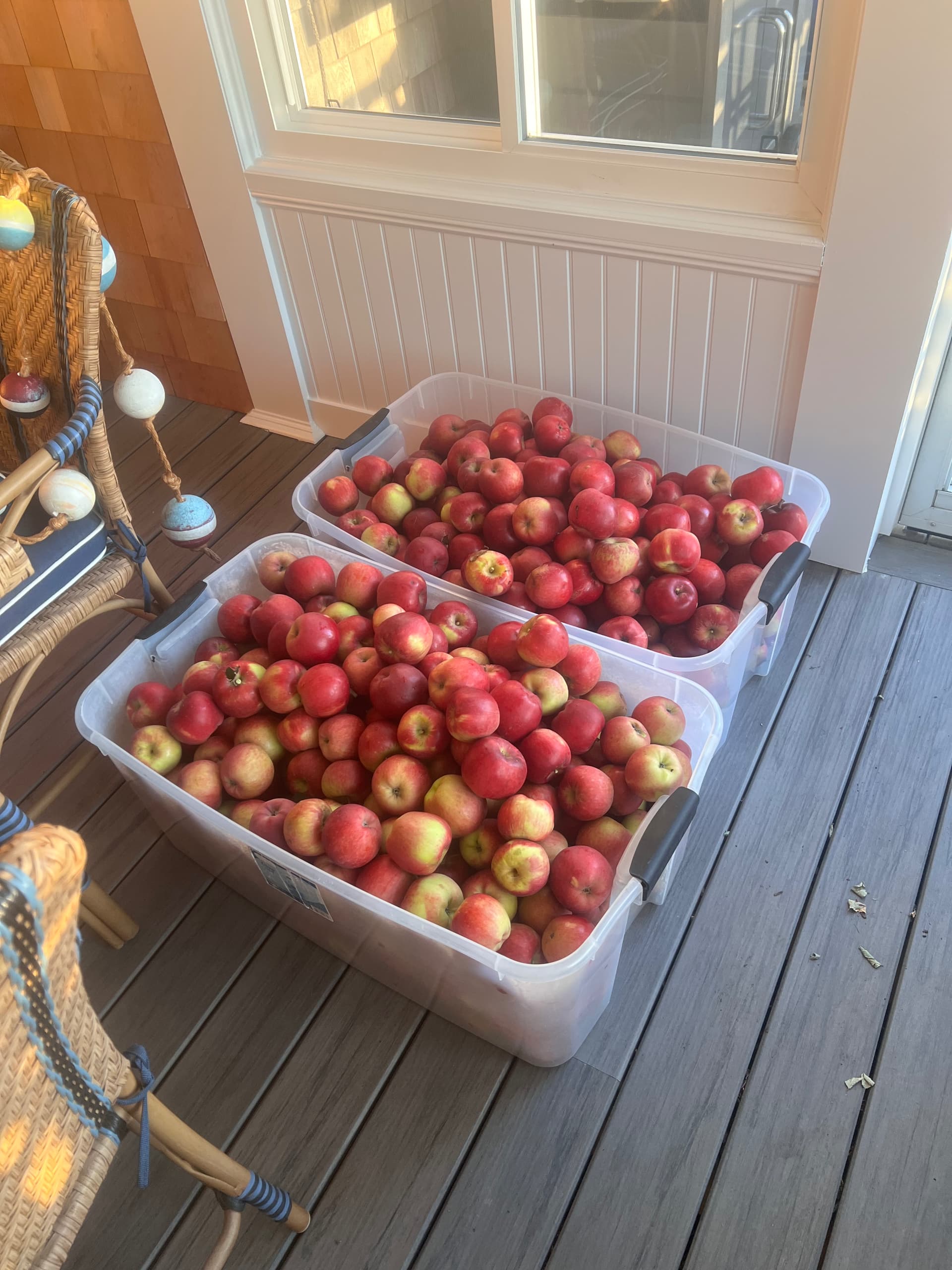
3 Likes
Google AI says there are up to 39 sports of Winesap. Before CA storage it was widely grow due its long storage life under regular refrigeration. So plenty of opportunities to find sports.
I have gotten Winesap apple from many of the Virginia orchards in recent years. None have surpassed the particular Winesap that Vintage Virginia Apples grow. They are very dark all over and picked later than other orchards in that area. Hopefully the young trees I bought from them will be of the same quality and flavor in my location. I have several other Winesaps including OFW, Red, Double Red, and Black to compare in a couple of years.
3 Likes