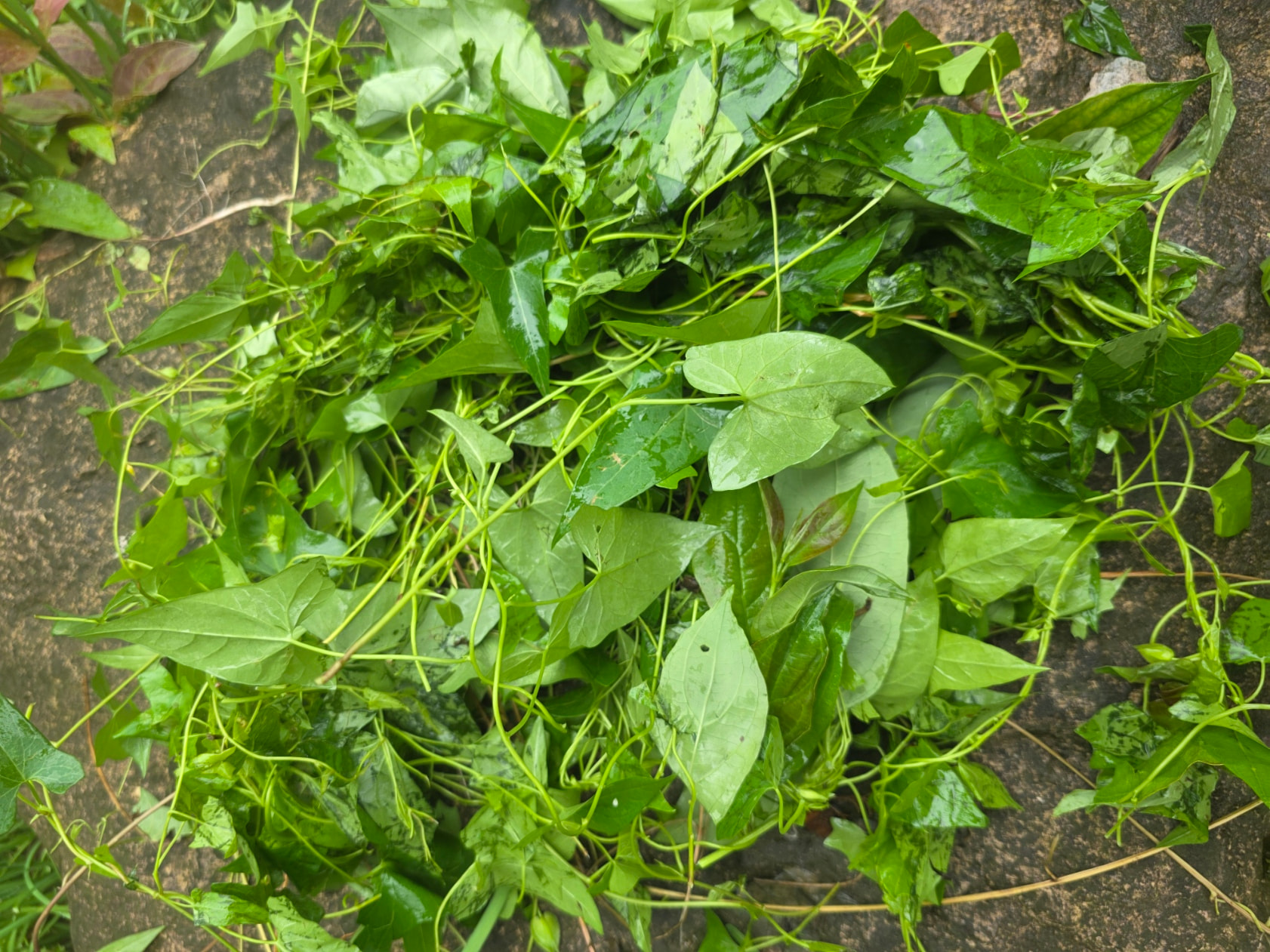
One enemy of my orchard and garden - Bindweed

A British researcher said the roots go thirty feet down. If a piece breaks off, it restarts a new plant.

The French call em Liserons, and they have a pail of herbicide and drape them over the pail and let em drink it. I hate them. They climb up my fruit trees.

6 Likes

I hate bindweed too. I use a ton of time managing it rather than focusing on other tasks I should be doing. Roundup hardly seems to faze it. Hand weeding seems to make it pop up in more locations. It’s a constant battle.

6 Likes

that looks like a slightly different species than the hybrid bindweed I’m familiar with.

3 Likes

Bindweed and morning glory!

2 Likes

That seems a bit excessive. The “roots” that bindweed regrows from are actually rhizomes which move below ground, but usually close-ish to the surface. I was able to eradicate them from one area by removing the top 1 foot of soil in the area they were and then kept an eye out for any bits I missed as they regrew. It worked.

Where I live there’s a native bindweed (Calystegia sepium) as well as the invasive one (C. silvatica & the hybrid between the two), but so far I’ve yet to find the native one. I wonder if that means it’s less aggressive… I’d like to try growing it to find out cause I always found bindweed beautiful prior to starting my gardening journey and finding out how hard they are to garden around.

5 Likes

Roundup only kills the parts it touches, which works fine on annuals, but perennials, 2-4d is the way to go. Field bindweed the rizomous one.

5 Likes

I was able to push bindweed back to a property line in another spot with the help of deep woodchip mulch. Not sheet mulching, just mulch. This created a loose layer that the rhizomes preferentially grew through instead of anchoring in the firmer soil below. Each time I pulled a bindweed vine, I was able to also lift long sections of attached rhizome out of the loose mulch. Obviously I couldn’t fully deal with it by the property line, but aside from one small spot where I still find an occasional little sprout, I was able to get the majority of that area bindweed free!

9 Likes

Thanks for putting a name to this plant that is also trying to take over my yard. I was hoping that keeping it mowed low would help control it, but it just keeps it from climbing my trees. Draping it into herbicide is an interesting idea.

3 Likes

I guess what is a nuance to one may be beneficial to someone else. My cattle love field bindweed, it’s like spaghetti dinner to them.

8 Likes

Similarly, it doesn’t seem to survive well where my sheep have access. :slight_smile:

4 Likes

Field bindweed is generally considered a safe and nutritious forage for cattle, containing high levels of protein (12–22%) that can support significant daily weight gain.

5 Likes

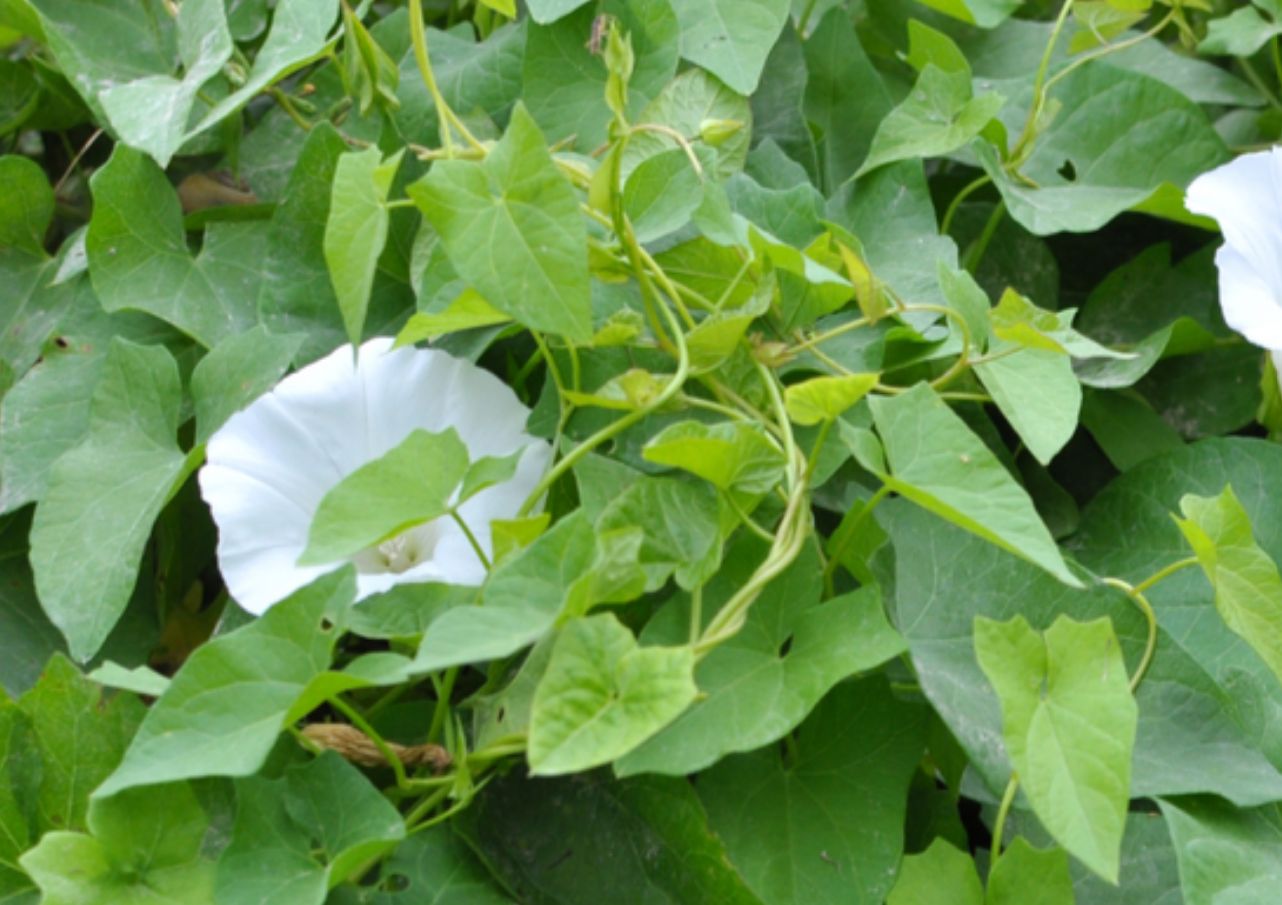
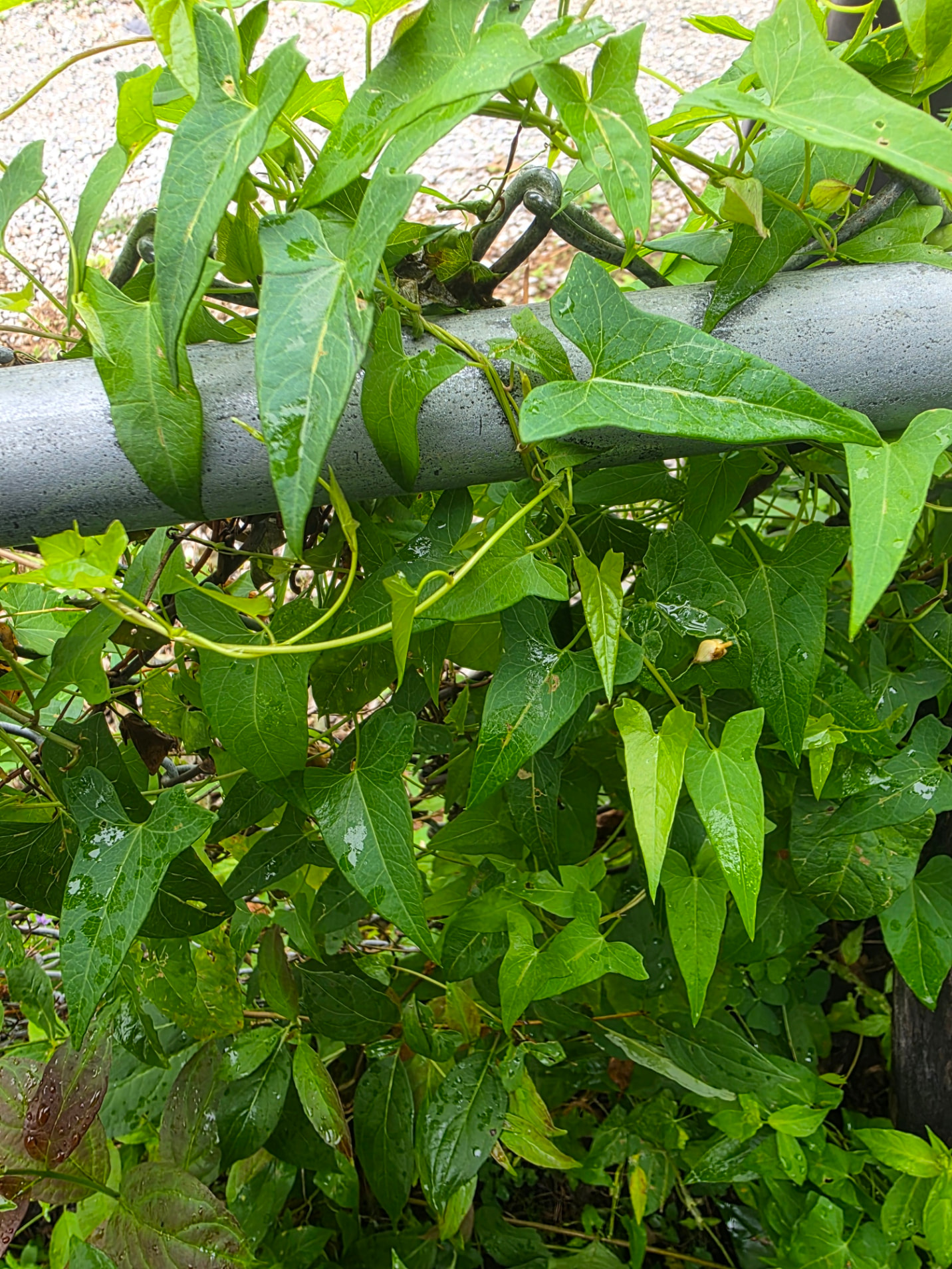
Nightmare plant. I’ve pulled the same root up dozens of times from the same spot and it just keeps coming back. My approach now is just stay on top of it around the base of the trees and accept it’ll never fully go away.
4 Likes

I have dealt with this plant for years, in my prior home in California, and now in Utah. I agree that it is relatively ineffective to try to dig out the roots, as my efforts to do that year after year in fruiting shrub beds had only temporary effect. It always comes back vigorously, and only dies back in winter, to re-emerge the following spring. The weed is capable of completely overwhelming a small plant in short time, wrapping itself around its branches and smothering it (hence the term “bindweed”).

Since moving to a new property in Utah, I have tried a new method in my growing beds (both large beds and smaller contained areas). Last year I began using an organic herbicide (Spruce) which you can buy with an efficient battery-powered dispenser. I simply apply this to the morning glory wherever it emerges, and with a neighbor’s permission, I also treat any morning glory which appears in the part of my neighbor’s property adjacent to my beds. I make the rounds every couple days and spray everything that has emerged, and pull other types of weeds while I am at it. The idea is not to kill the rhizomes, which is impossible without a systemic herbicide, but to weaken them by depriving them of any nourishment from my yard. I am in my second year now, and the method has reduced the weed burden to a small fraction of what it was, to where it is very manageable. Occasionally, in a location where the weed re-appears rapidly and repeatedly, I take a shovel to find the rhizome, which is generally superficial and easily removed. You have to be vigilant with this method, or the weeds will come back on you, but I have been surprised by how effective it has been. The morning glory appears to be completely eliminated from some areas where it was once common and problematic, and in other areas it is hardly a problem now.

This particular herbicide seems to work best if applied in the morning rather than evening. I doubt I will eliminate the weed permanently, but I am using much less herbicide this year than last (which is good, since it is a bit expensive). Since it is an organic product and contains no synthetic chemicals, I worry much less about giving the kids cancer or Parkinson’s disease.

4 Likes