Opinion:
I’m going to bring up a point that nobody wants to talk about.
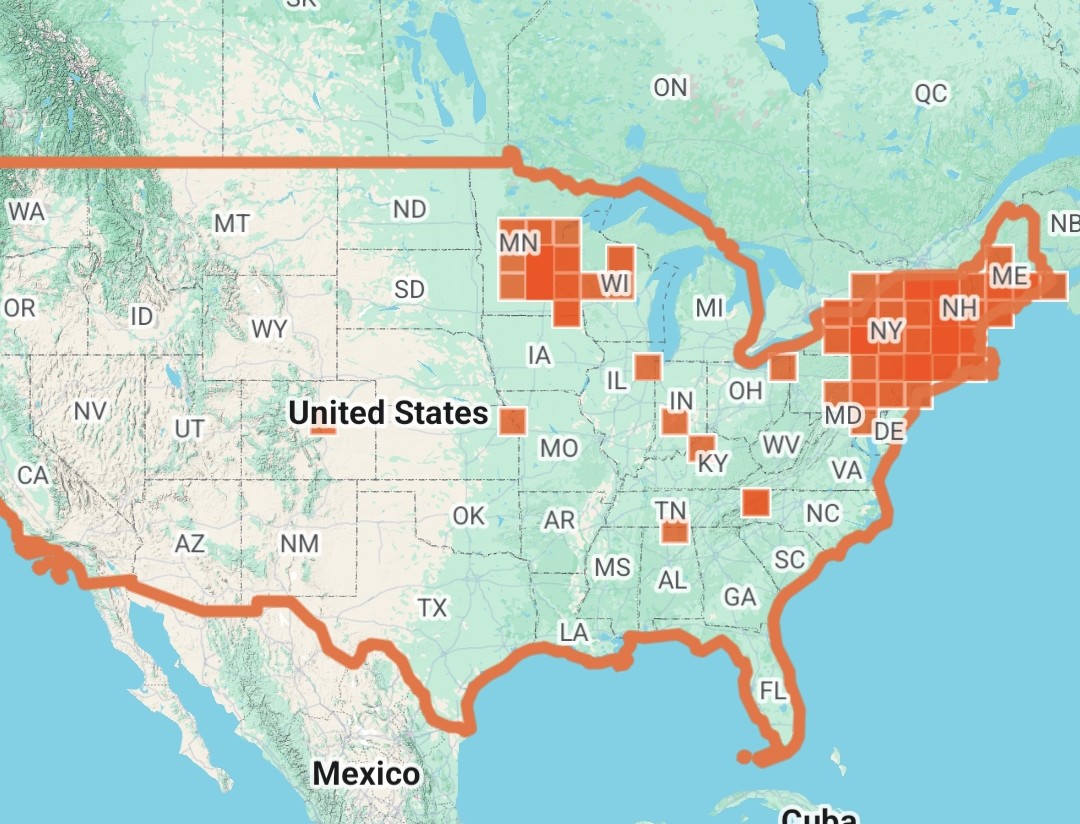
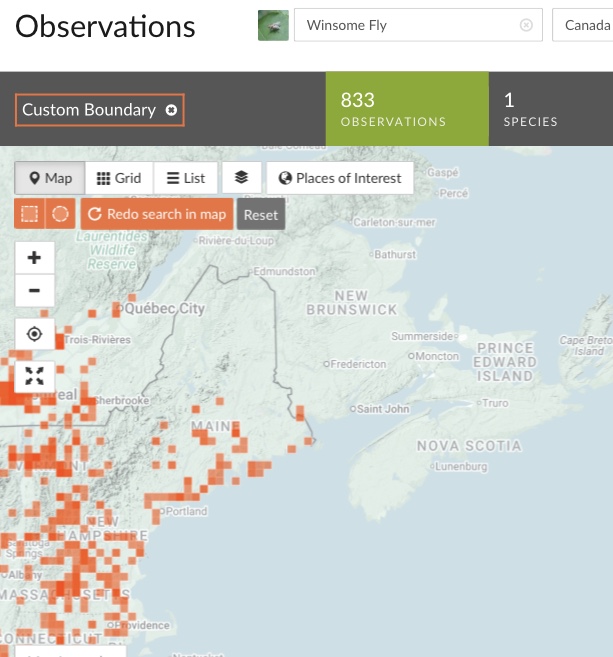
The way people use Japanese Beetle traps is wrong – at least for those who have some land that is allowed to be a little wild. Since the release of the species-specific parasite Winsome Fly in New Jersey in 1923, it has spread with Japanese beetles. A beetle that has been parasitized will have one or more white dots on its back thorax, the eggs of the Winsome fly. The eggs take about 7-10 days to kill the beetle. Then the larvae overwinters in the carcass of the fly, apparently surviving Zone 4 winter temperatures because my trap catches parasitized beetles here.
When someone puts out a Japanese beetle trap, it draws in both non-parasitized and parasitized Japanese Beetles. The beetles starve to death if you just leave the trap out for a few weeks in a shady location. If you dump those carcasses somewhere you won’t mow or walk, such as under an shrub-sized evergreen, the Winsome Fly larvae survive in your orchard to become more Winsome Flies next year. Thus using the trap you can farm the flies in your orchard to grow a population of them. Update: Trap placement in a shady location prevents overheating the larvae.
Most city dwellers believe they should empty their traps in the garbage, thus eliminating a Winsome Fly source from their environment.
On a recent counting, I found about 40% of beetles caught in my trap during the first half of July were parasitized. I empty my trap under bushes out-of-the-way. My number of beetles has been dropping in the past few years and I continue to use a trap. However a local gardener informs me the decrease is city-wide, so my observations are biased by regional effects.
I don’t use traps because I’ve read that they attract more beetles than doing nothing, but I’ve wondered about this exact thing.
I remove them by hand, drowning them in soapy water. I see birds catching them here and I’ve not seen winsome flies, but I did see a few large wasps going around from one beetle to another as if laying eggs on them. And occasionally I find husks of them. I’ve wondered if removing the beetles is just removing their natural predators’ food source. I don’t remove aphids unless I absolutely have to for the same reason.
But as far as trapping goes, would the flies survive and be able to feed on the beetles if they have been drowned in soapy water? Do the traps kill them without destroying the fly eggs / food quality of the beetles bodies? I don’t know how the traps work—do they just go into a container they can’t escape and suffocate, overheat or starve?
The traps use a pheromone to attract the beetles. Once in they lack the flying skill to escape. They will overheat if the trap is left in the sun, but if the trap is on the north side of the tree then they: starve, or reach the end of their lifecycle, and just rot and stink – but only stink within 1-2 feet of the bag. Of course emptying the bag regularly reduces the stink. My numbers are so small now I have no problem just crushing the ones that don’t have white dots. Generally the only ones that are still moving if the bag has been sitting 2 weeks are the ones without white dots. Those with white dots are already dead from the fly’s larvae.
Apparently the flies respect national and provincial borders too.
I hope an effective predator gets imported here. I see hundreds in my garden, but what really disturbs me are the ones in uncultivated areas. Without looking for them, I saw half a dozen beetles downtown in the city yesterday. At the bus stop, riding the bus, on the sidewalk outside a car dealership (I guess they’re progressing to driving now too), and flying through several shopping districts. There hasn’t been a day since they showed up a few weeks ago that I haven’t seen at least one in the wilderness. They’re worse than the viburnum leaf beetles this year.
Mine disappeared too. I saw a dozen or so fling around a peach tree for two days, then gone. Since then, I have seen maybe a dozen total in my whole orchard and garden. My three beetle traps only have an inch or two of dead beetles in them. The traps have been hanging since the last week of June. mid-Missouri
I tossed 2 eating my willow into soapy water about a week ago and haven’t noticed them since. It’s hard to say if the birds we attract by providing habitat are managing the beetle populations, or if the milky spore my neighbor sprayed a few years ago is still effective.
I’ve seen posts here you can search for where folks fabricated 5 gallon buckets for beetle capture.