Orange Pippin asian pear trees - everyone is in the new asian pear game

Though known for their wonderful pollination charts they have also jumped hard into the asian pear game as this fruit is jumping in popularity.

" Asian pear trees

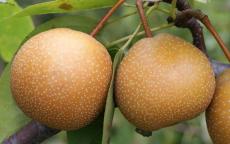
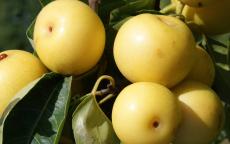
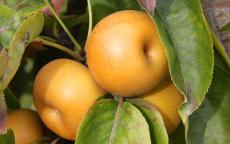
Asian pears are grown for their golden fruits, which have a crisp sweet juicy flesh.
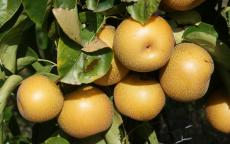
Hosui asian pear trees

Hosui has perhaps the best flavor of any Asian pear - it is very juicy and very sweet.

$38.95buy

  • Picking season: Early

  • Self-fertility: Not self-fertile

  • Korean Giant

Korean Giant (or O;ympic) has potentially the largest fruits of any Asian pear variety.

$38.95buy

  • Picking season: Late

  • Self-fertility: Not self-fertile

  • Niitaka

Niitaka asian pear trees

Niitaka is an Asian pear variety producing very large crisp russeted fruits.

$38.95buy

  • Picking season: Mid

  • Self-fertility: Not self-fertile

  • Shinko

A classic Asian pear, with large golden brown russeted fruits which have a crisp sweet flesh.

$38.95buy

  • Picking season: Late

  • Self-fertility: Not self-fertile

  • Shinseiki

Shinseiki asian pear trees

This popular early-season Asian pear variety produces crisp sweet-flavored pears, which can be kept for up to 3 months.

$38.95buy

  • Picking season: Early

  • Self-fertility: Partially self-fertile

  • Shinsui

Shinsui asian pear trees

A popular and productive early-season Asian pear with a glowing golden brown skin and a sweet flavor.

$38.95buy

  • Picking season: Early

  • Self-fertility: Not self-fertile

  • YoinashiTM

Yoinashi is a mid-season Asian pear, with large golden brown russeted fruits.

$38.95buy

  • Picking season: Mid
  • Self-fertility: Not self-fertile

How to choose Asian pear trees

Asian pears are highly prized for their crisp juicy flesh and sweet sugary flavors. The fruits are round, and usually a golden or golden green russet color.

Asian pear trees have many ornamental qualities too - as well as the delightful fruits, the spring blossom is also attractive, while the leaves often emerge with bronze tints, and may turn red or orange in the fall.

Asian pears are not particularly cold-hardy, but should be successful in sheltered locations in zone 5, and suitable for most situations in zone 6 and above. They are all susceptible to fireblight - but less susceptible than European pears. They tolerate warm southern climates fairly well.

Most Asian pears are not self-fertile, but different varieties will usually cross-pollinate since they all flower at around the same time. In addition they can be pollinated by many early or mid-bloom European pear varieties - Bartlett is usually a good choice.

Asian pears tend to be naturally precocious, come into bearing from an early age.

The picking season for Asian pears is similar to that of European pears - the first varieties are ready at about the same time as early European pears like Bartlett.

Although Asian pears are characterized by their sugary sweet flavors, they are also high in fiber and antioxidants."

3 Likes

Any experience with this seller? I’m looking to purchase a Korean Giant and Hosui for the spring.

1 Like

@md_noob

Orange pippin has a good reputation. Their prices are reasonable as well. If you dont find what you want here are a few more.

https://www.burntridgenursery.com

If you need more help finding trees you are after let us know.

1 Like

You forgot mehrabyannursery.com

I just got a bunch of things after seeing the photos from some of the members here.

Oh! And grandpasorchard.com

2 Likes

@Melon

Good nurseries to mention and there are others. Grandpa’s shipping is very expensive which is why I did not bring it up this time.

1 Like

I’m impressed with the number of nurseries offering more varieties of Asian Pear and particularly how many now offer Niitaka.

2 Likes

For those out of the loop, Orange Pippin’s trees come from Cummins. Though, I do not know if there’s more nurseries in the mix since this blurb’s noted 2010 date.

2 Likes

Exactly, Orange Pippin doesn’t produce anything, they just pass orders along to nurseries they have agreements with.

1 Like

@AndySmith

Exactly, they have a good reputation because Cummins is a good nursery. That is much the same way most nurseries do not produce their own trees. Most trees come from willamettenurseries or dave wilson or a similar nursery.

1 Like

$103 for 1 tree or 5 give or take. I ordered 5 trees to justify it… its crazy but you get massive roots and larger caliper trees usually.

Isons is one of the cheapest but they had to refund me on everything they sent me. Roots were all hacked to the nubs and freezer burnt to fit in the smallest packaging.

I have an order in with Orange Pippin… but i have had great luck and am happy with Burnt Ridge on their pricing and quality.

https://www.burntridgenursery.com/Asian-Pear-Trees/products/10/

2 Likes

I bought a chojuro from onegreenworld thats 2 years old. It was about a 2 ft twig but its about 8 foot tall and put a couple fruits out last year. I wasnt overly impressed with the fruits though pretty bland but it may get better as the tree gets bigger and stronger but im planning on grafting other varieties this spring.

2 Likes

Chojuro is the weird one because the fruit tastes different based on not only the soil but the weather, so as the roots grow the flavor will change, but it also will change with the weather each year.

Korean Giant (Olympic) is the most reliable one, naturally a skinny Christmas tree shaped tree just so you know for planning your orchard.

1 Like

I like him!

I was there for the nut growers meeting a few years ago, he’s a good man, gave me my order then and we talked about a lot of stuff in two languages. He sells good reliable trees and he cares about the quality. Sometimes he doesn’t have the best price or sells seedlings, but he’s honest and you get what you’re buying! I think everything I bought from him survived, I hope the second apricot also made it, I’m not sure on that one.

2 Likes

I’ve observed that their popularity as a commercially available fruit has been amazingly stagnant for the last 50 years. In my region they can be grown much more easily than Euro pears in commercial production but I see them less in grocery stores than I used to… only Asian markets tend to carry them. I see many more exotic types of fruit available, especially tropical exotics in high-end grocery stores, but rarely Asian pears.

Cornell has never really latched onto them as a viable commercial product, as far as I know.

I assume you were speaking of their popularity as a home orchard tree, but it reminded me of their lack of ascension as a presence in grocery produce sections, which is puzzling. There is a problem of most varieties reaching adequate brix in the northeast, but that shouldn’t stop shipping them in from the west, where most commercial fruit production occurs these days anyway.

In theory they should be an ideal commercial crop, particularly because of their general excellent shelf life and easy post harvest handling compared to Euro pears.

2 Likes

@alan

Exactly, home orchardists love them and they don’t exist in commercial agriculture. Maybe that’s a good thing that they are not gmo the Asian pears yet. Until consumers realize they are tasty they will remain a novelty.

1 Like

Asian pears come in russet and smooth skin varieties. Korean Golden is an example of a smooth skin type and Shinko is an example of russet. There are grainy textured varieties and smooth textured varieties. Two of the Asian pear species are cultivated out of the Pashia clade: Pyrus pyrifolia and Pyrus ussuriensis (only for canning). There are 9 species in the Pashia clade with several of them in process of splitting into subspecies. Examples are bretschneideri (pyrifolia), phaeocarpa (pashia), dimorphophylla (calleryana). Between inter-species hybridization and speciation, the entire clade is highly variable and represents huge breeding opportunities.

What opportunities are there in commercially growing Asian pears? This is debatable as they are highly successful in Asian countries. They are slowly going mainstream in European cultures. Barriers include the difference in flavor between European pears and Asian pears. Most European varieties have strong aromatics (they smell good) with a rich buttery texture and delicious flavors. Asian pears by comparison tend to be very sweet and juicy with a distinctive crunchy texture. Aroma and flavor of Asian pear varieties tends to be much less intense than European varieties. From a marketing perspective, this means people have to be enticed to try Asian pears and develop a taste for them.

Re GMO pears, I don’t see anything currently on the horizon that would suggest a need for them. There are several traits in apple that would be useful if moved into pears, but this can be done with conventional breeding. I could see some potential for moving a couple of traits from roses into pears, but the traits involved may already exist in pears, they just need to be found and concentrated. Examples include flower structure and color.

So what is the best Asian pear? I’m still trying to figure this out. My trees should produce about 5 or 6 varieties of Asian pears this year (2026). I’ve tried Shinko and find it to be one of the better Asian varieties because it is reasonably tolerant of fire blight, makes large juicy russet fruit, and the flavor is a good mix of crunchy and juicy/sweet. I’m reasonably certain Hosui and Raja are going to be strong contenders.

4 Likes

Niitaka is my least favorite Asian pear, of all I’ve grown.

I’m mostly a hands-off orchardist, and if not thinned (I never do), you’ll get branch-breaking loads of golfball size fruits from Niitaka.

1 Like