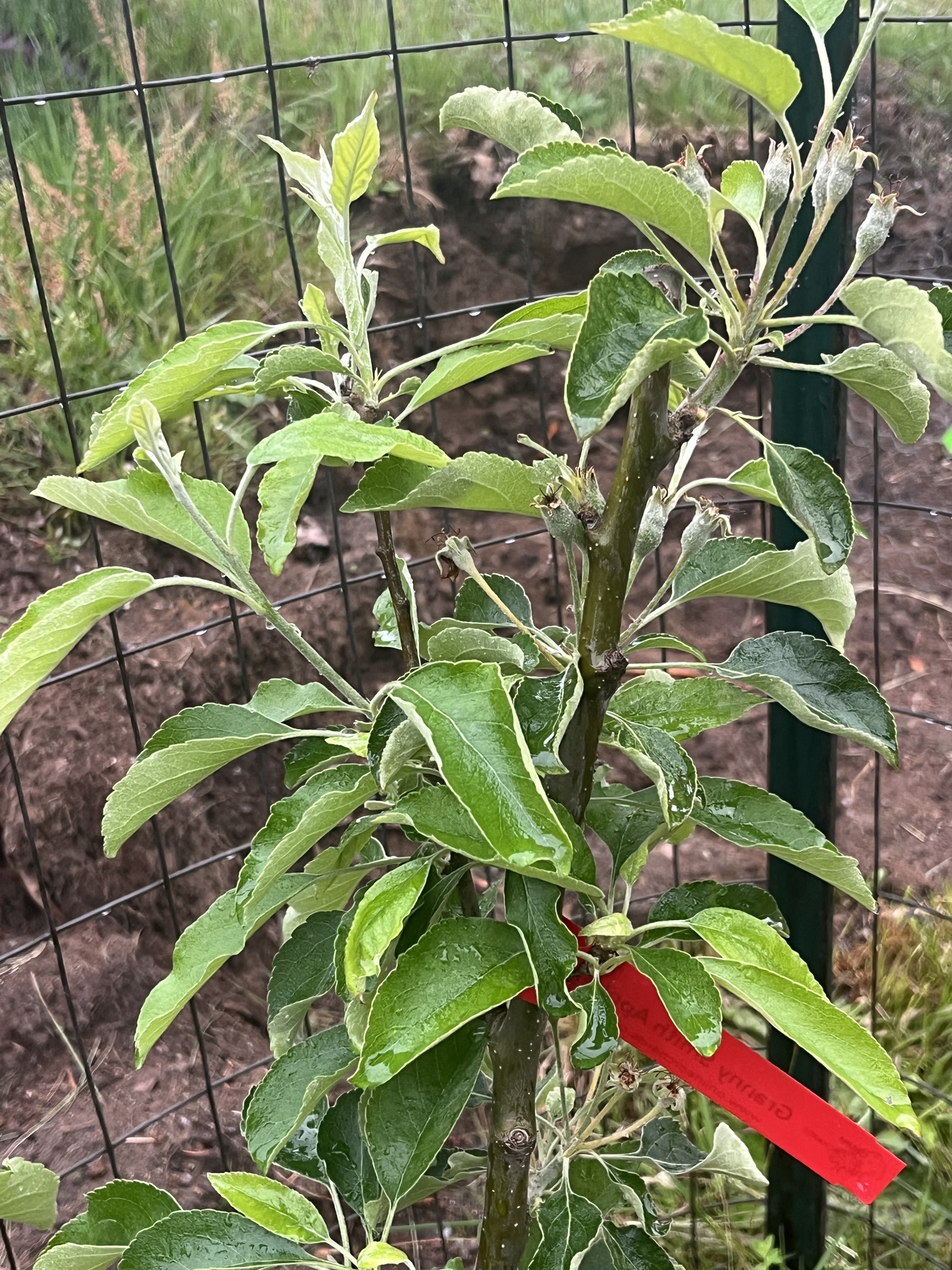
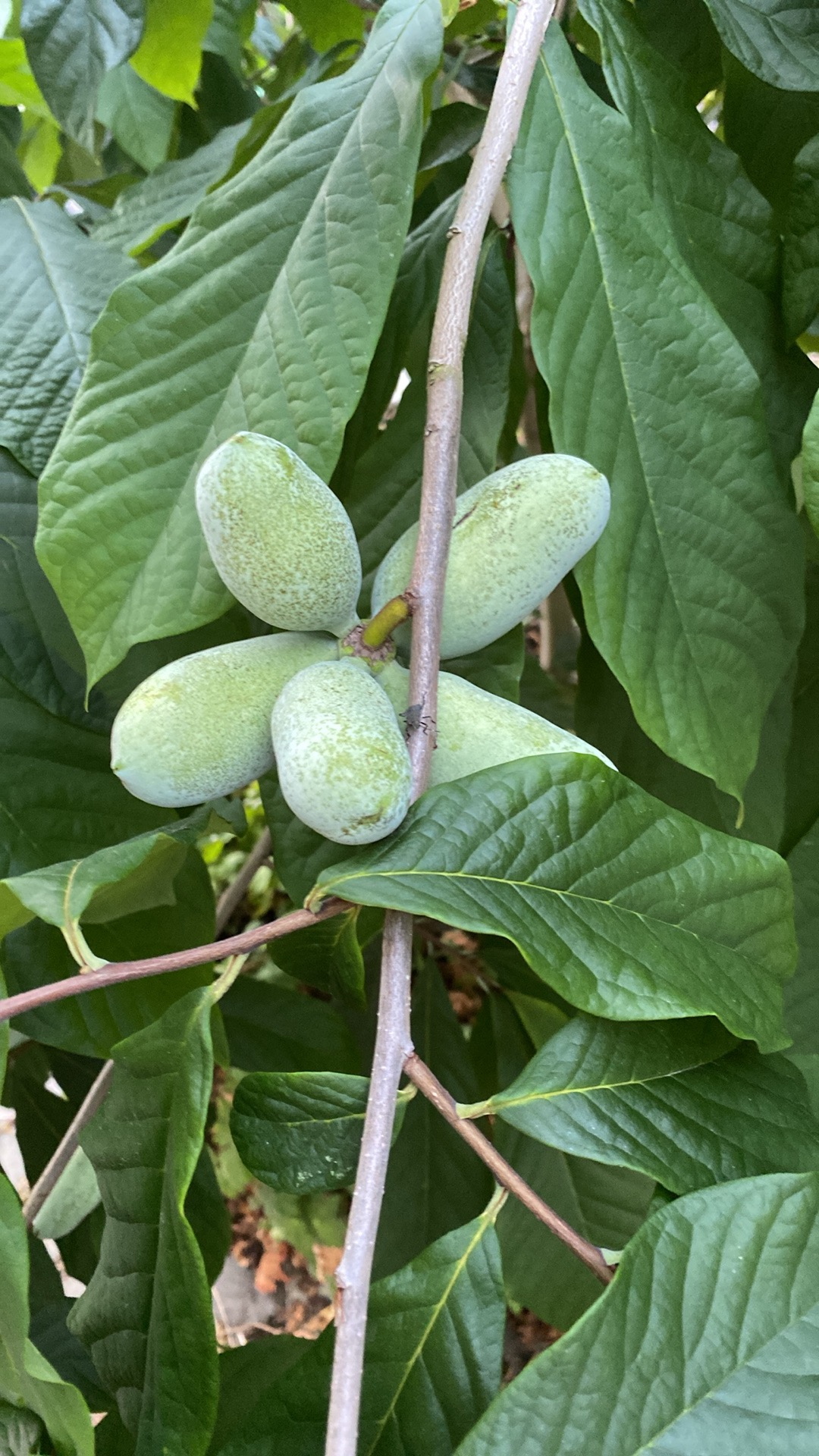
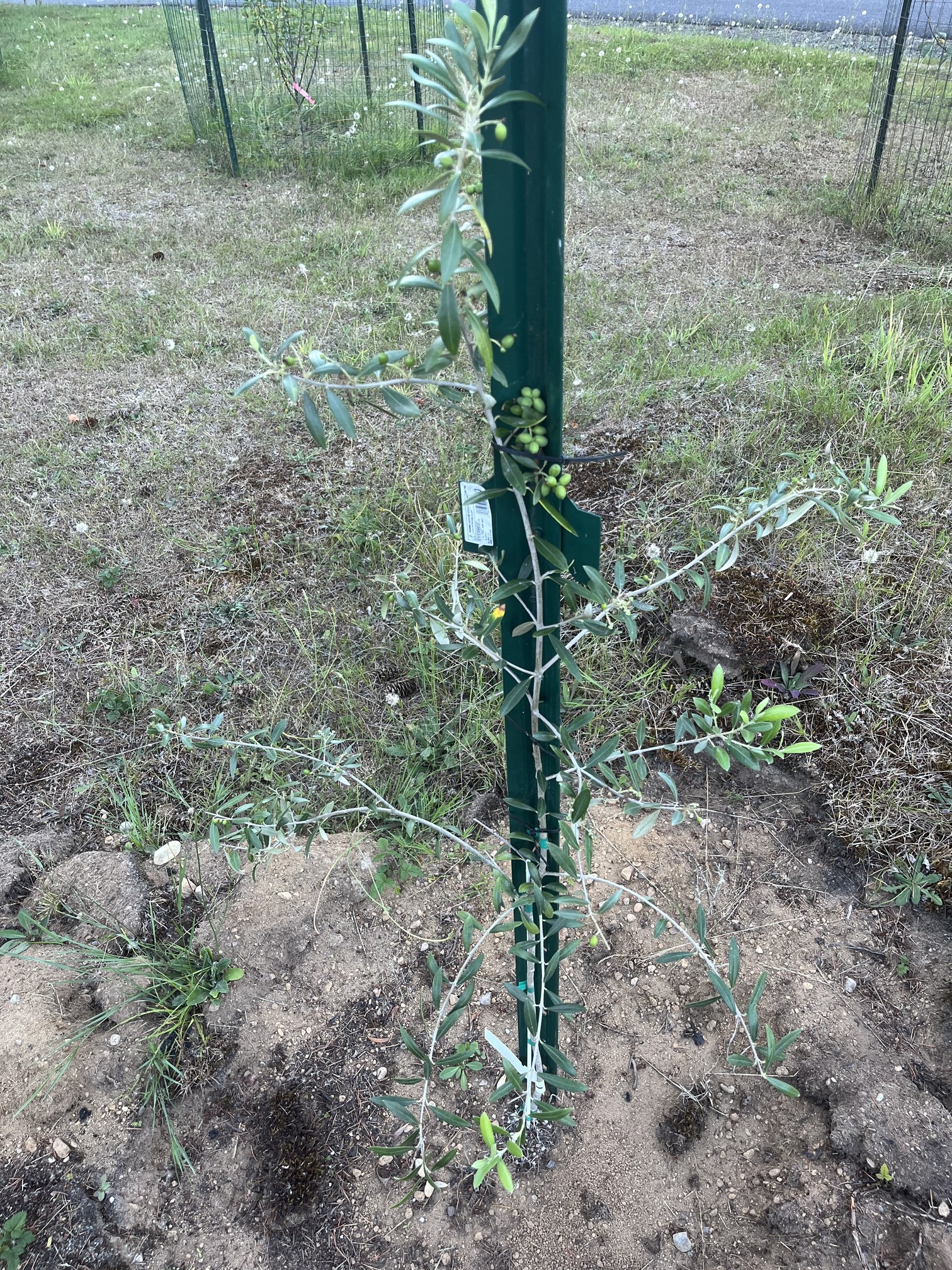
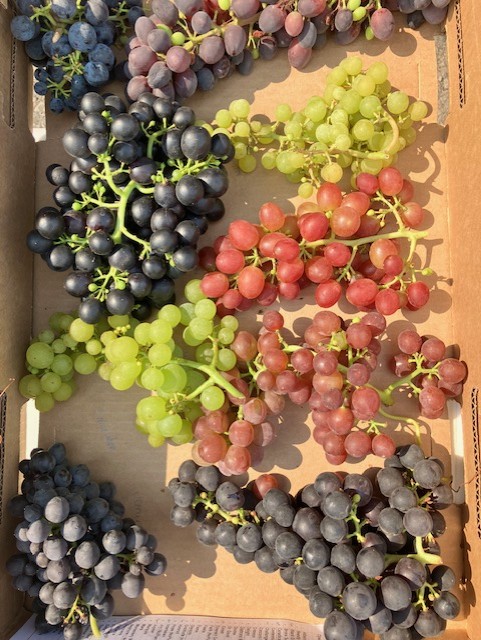
The Northwest Fruit Apple and Pear harvest is usually the first week of October. This is for tasting and picking - no sales of rootstock. The sale of scions and rootstock is usually around March 1st. Northwest Fruit publishes a list of scions and rootstocks prior to the event. Lots of people at both events.
If it were me, I’d let the olive flop. Keeping the growth closer to ground will help it get through the first couple winters. Once its roots are settled in and it’s ready to start pushing strong growth, it will send up a new shoot that will be much more upright, and will quickly outgrow the original trunk.
Sorry i didnt see your question sooner.
On thinning, sounds like you got a pretty good handle on it and as @Ciderlady says make sure to have a minimum distance between clusters. You can vary this with your own experience as there is wiggle room depending on variety, your own terror, extremes of weather you may be experiencing, etc.
To fertility, a good soil test is a great place to start, maybe you’ve already done that? The basics you get from a soil test like PH and CEC are going to tell you what you need to amend before adding any nutrients so that the nutrients will be available and taken in by the roots instead of just washed through the soil profile.
Regardless of what you end up doing a soil test is good info to have for a base line.
Many people will just amend their soil with compost and hope for the best. If you have sandy loam like i do then adding good compost can never be a bad thing.
Without knowing your soil texture lets just skip to nutrients. If your CEC is low you are always going to have a problem getting your applied fertilizers into the tree. Two ways to up your CEC are with clay or compost.
I purchase compost by the truckload, 18yds, cover it and it lasts me aprox 4 years. I use this in many places but one in particular is orchard replant. Most of my 6+ acres of orchard was planted at way too high of density. I started at 12 trees every 50’ and am now at 3 to 5 trees per 50’ depending on vigor and rootstock. Its been a long struggle with removing trees and problems of replant but using compost has worked best. After digging out the old tree i dig a hole and dump in about 3 cubic ft of compost. Along with this this i put 2 qts (dry meas) of Natures Intent 7 2 4 fertilizer. I rototill the heck out of this and give it 2 years.
Unless you start over from scratch, which you cant with established trees, building up your CEC is a long process.
I would be careful with just applying compost to the surface. You might try applying it heavily at the dripline and tilling it in.
Just found some barnacle scale insects on my flavicarpa passion fruit from mimosa nursery… apparently it’s now hot enough where I’m at for them to thrive.
Thanks to a heads-up from @z0r I visited Broadacres Grape Nursery on their opening weekend. Wow what a grape growers paradise!
With 43 grape varieties to sample and rooted cuttings of most to buy, it was a fun-filled hour of sampling and then chatting with the personable owner who knew all the ins and outs of growing. Love meeting seasoned growers who want to share their knowledge!
In order to beat the clock in my cool area, I was looking to check out some of their earliest ripening grapes. According to the owner, all of this year’s grapes were ripening about 1 month ahead of time. About 1/3 of the 43 varieties were already ripe and were forming raisins on the vine.
Hubbard Oregon is zone 8b with hot inland summers compared to my 8a maritime summers. So Broadacre’s grapes might take another month to ripen for me.
These were my 9 favorites. I ended up buying rooted cuttings of Thornton and Black Emerald.
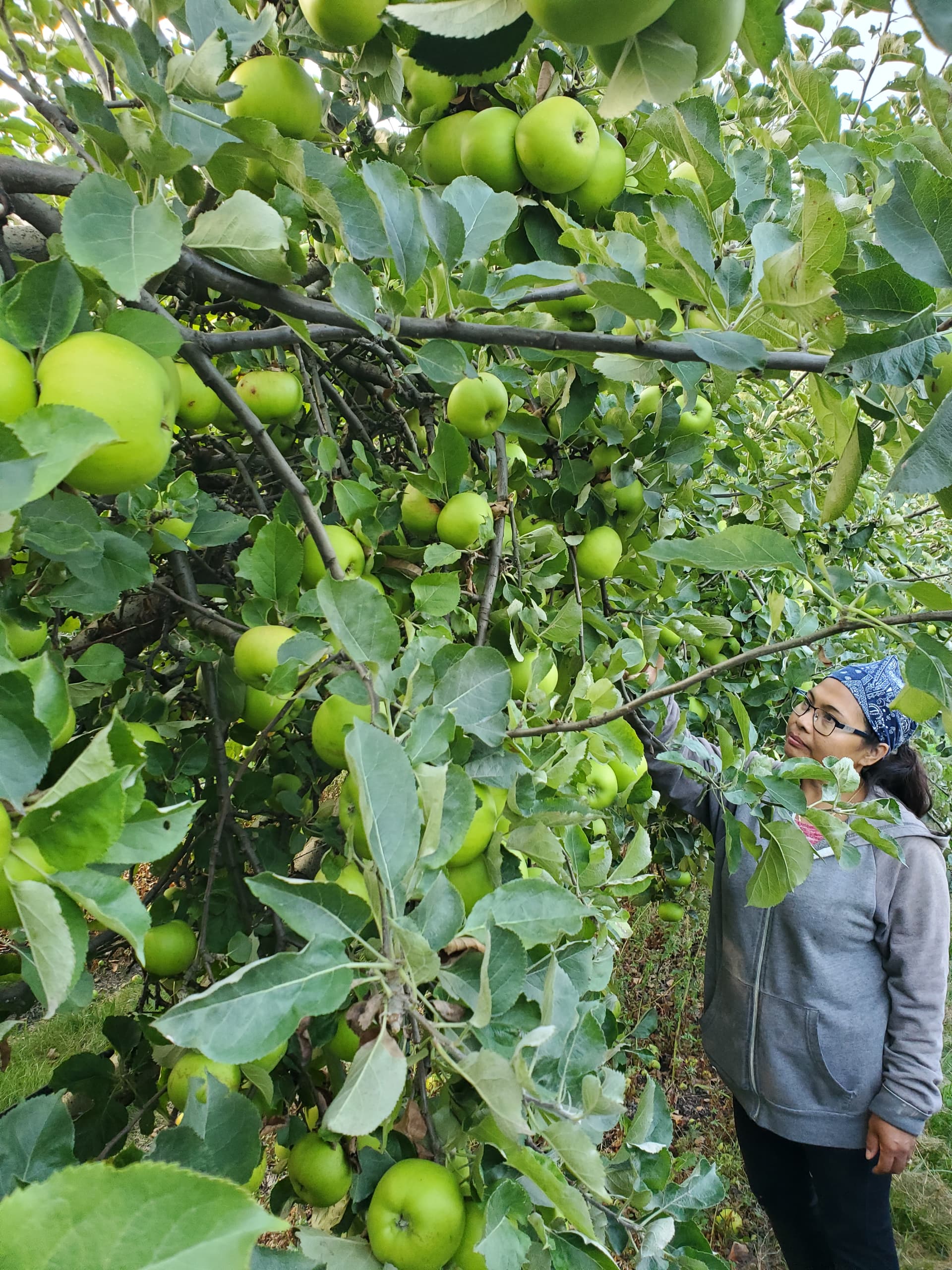
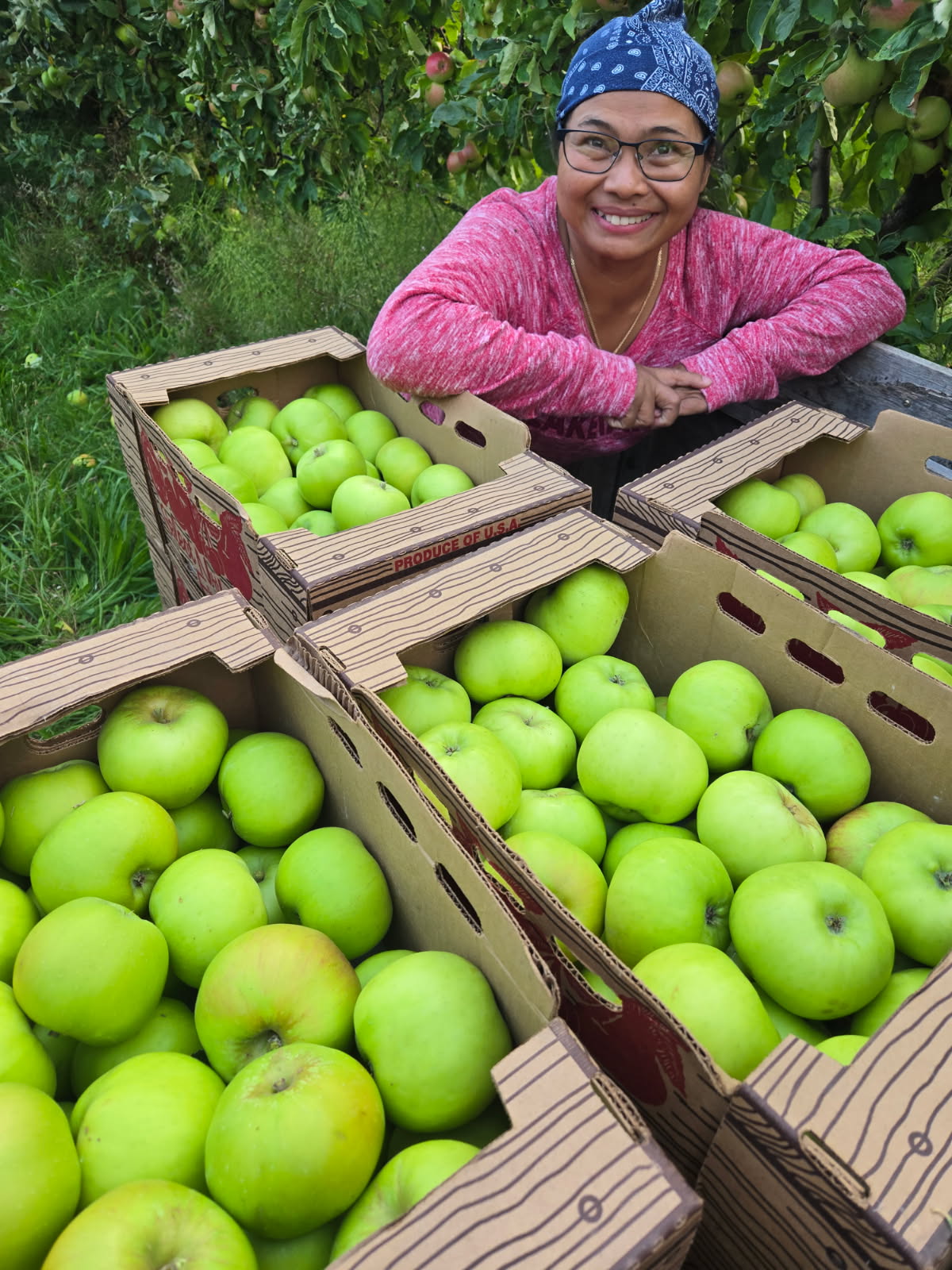
We were out picking Bramley’s Seeding yesterday eve. Several days early for a little cooler storage.
Last year we removed 10 trees leaving us with 30. I think another 10 will be coming out soon. Its been somewhat nice being the Bramley king for such a long time but that reputation hasn’t created enough demand here in the US. Every year it’s a huge scramble to unload several thousand lbs, just not worth the headache.
Thanks, yes shipping is always a problem. Fortunately apples are pretty durable at least compared to some things like stone fruit. We have been shipping 10 lb boxes to the east coast for years now. Sending them USPS flat rate and getting there in 3 days has worked well but anything larger incurres huge price increase.
I noticed recently that the Cloud Mountain nursery in Everson had recently closed permanently. I very much enjoyed going to the yearly tasting festivals. I was able to taste a delicious seaberry, a small pear like fruit (sorry name escapes me) and most importantly my first Karmijn de Sonnaville of which I was able to buy a bag of. Made such a delicious pie too. Best to Tom and Sheryl Thornton and thanks for running a great nursery.
Yes unfortunately Tom signed over his operation to a non profit, Sustainable Connections, many years ago and now, as is so often the case, the non profit has run it into the ground.
This reminds me of a similar instance only much larger in scope when King County decided to turn over their perfectly well running small farm help program, Puget Sound Fresh, to a non profit. This non profit, Cascade Harvest Coalition, immediately turned the program into a whos who club of who could afford to participate. The original mission of helping out start up farmers having been completely forgotten.
Non profits can have the best of intentions but most of the time they are guided by motives having nothing to do with the companies they gobble up or projects they screw up.