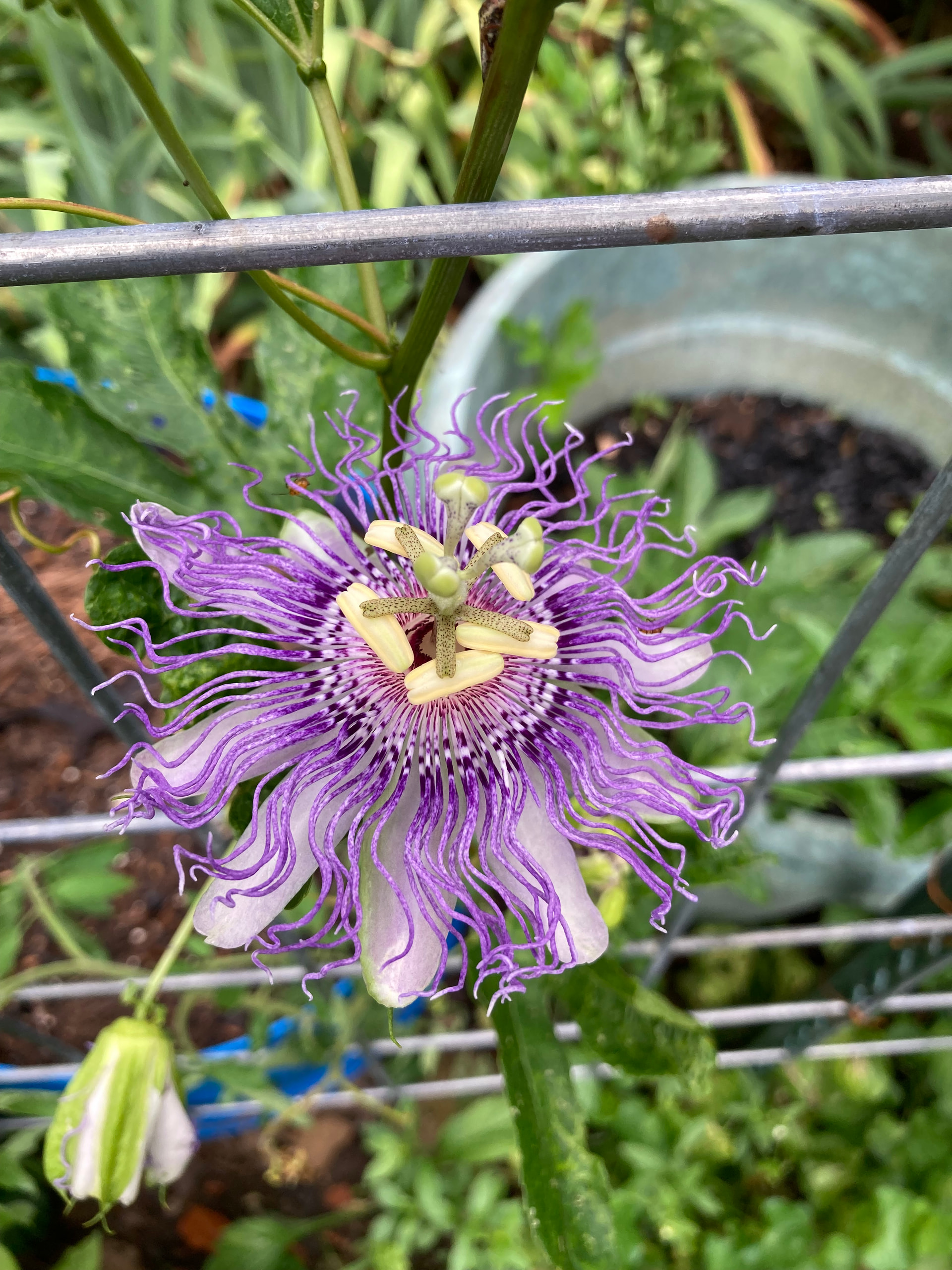
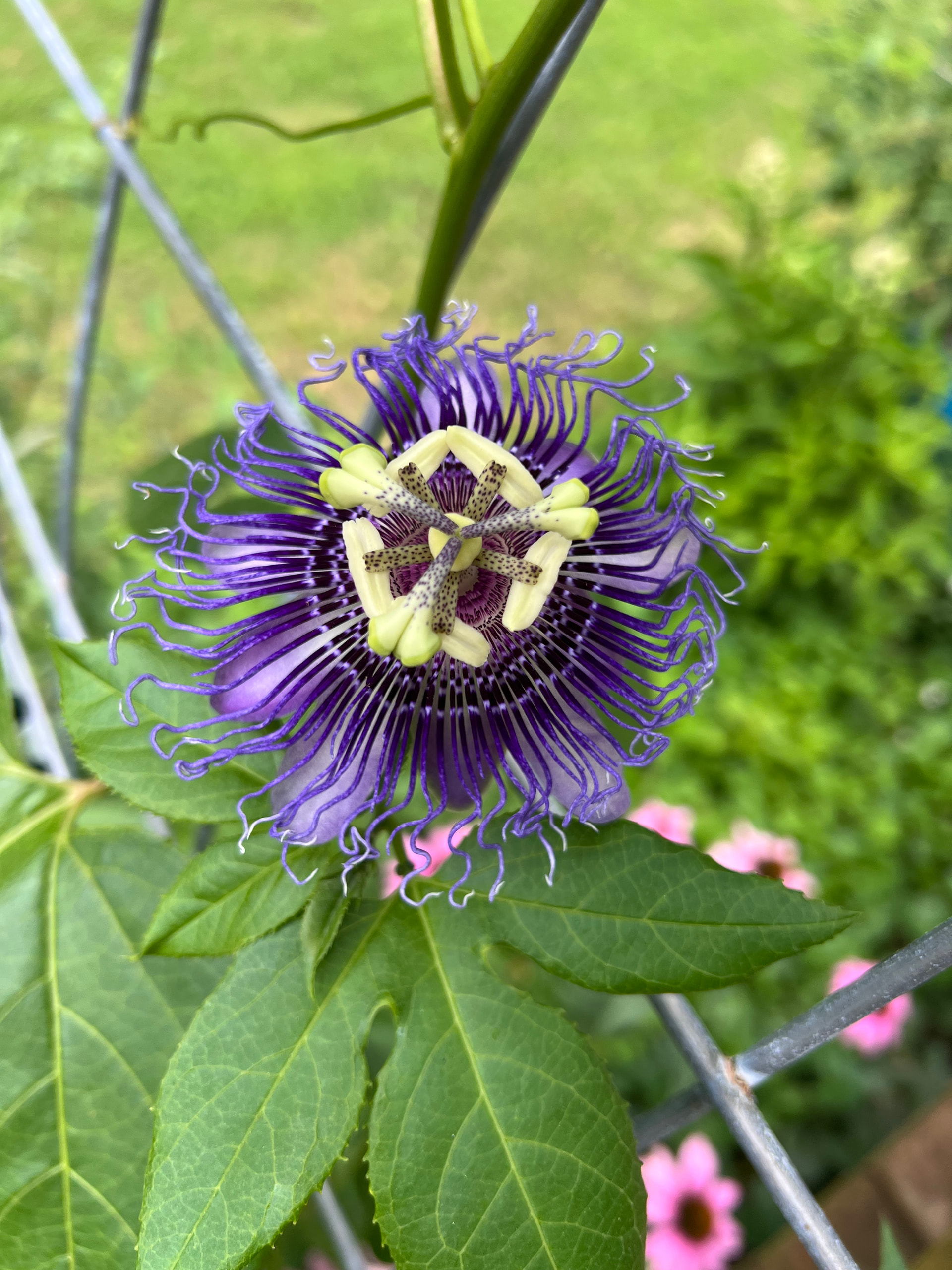
Other DKxBitop flower:
7 Likes
Stunning flower! I couldn’t get my one uncrushed seed to germinate. I would love to get a seed or two if you end up with fruit.
3 Likes
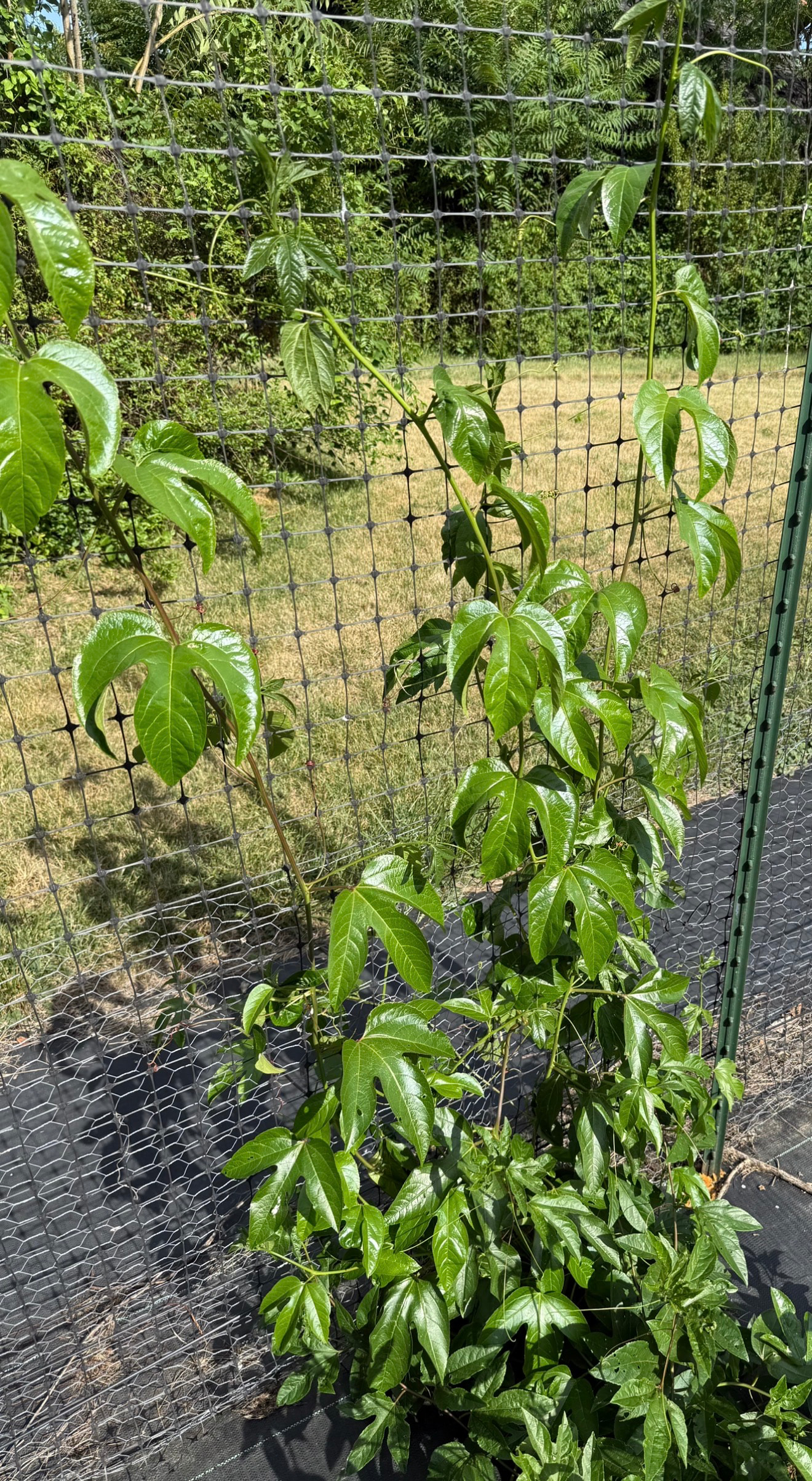
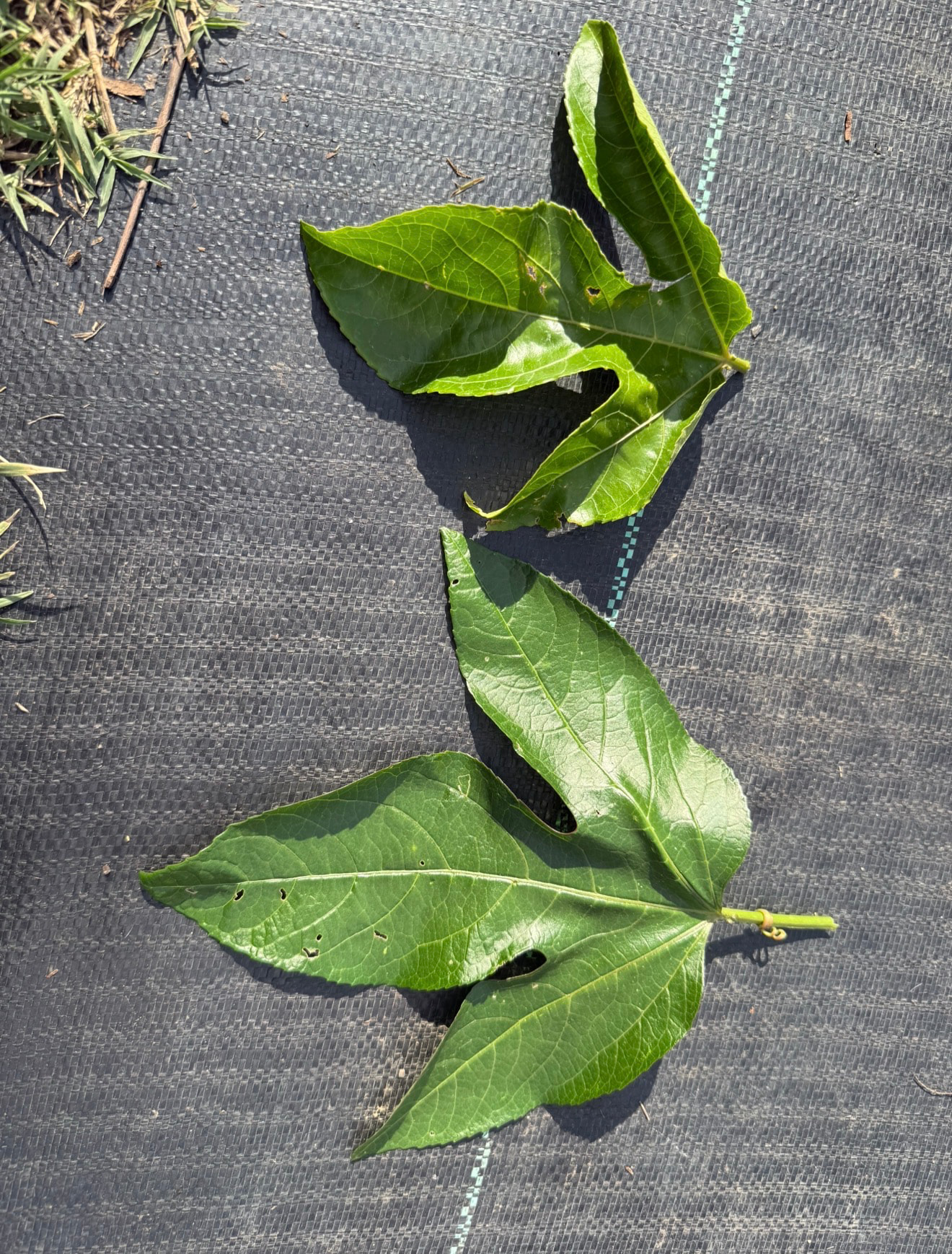
It’s really cool to see that people in the states are growing out Igor’s improved polyploid hardy passionfruit. Many of my lines descend from Igor’s diploid crosses, his intucu and flavinata crosses specifically. I have been focusing on working at the diploid level personally, what Igor calls the “long way”, but it hasn’t been that hard and I’ve found multi species diploids throw out a lot of really interesting recombinations (unusual unexpected phenotypes such as extra large arils). Lately with the addition of grape soda pop genetics, many of them are larger than polyploids and just as fertile. Here is one, you can see how robust they can be. The photo below compares a normal edulis/flavi cultivar with that vine. Some of these are self fertile so the next step is to stabilize that trait, and get it into other hybrids such as Elizabeth crosses that aren’t as fully fertile.
12 Likes
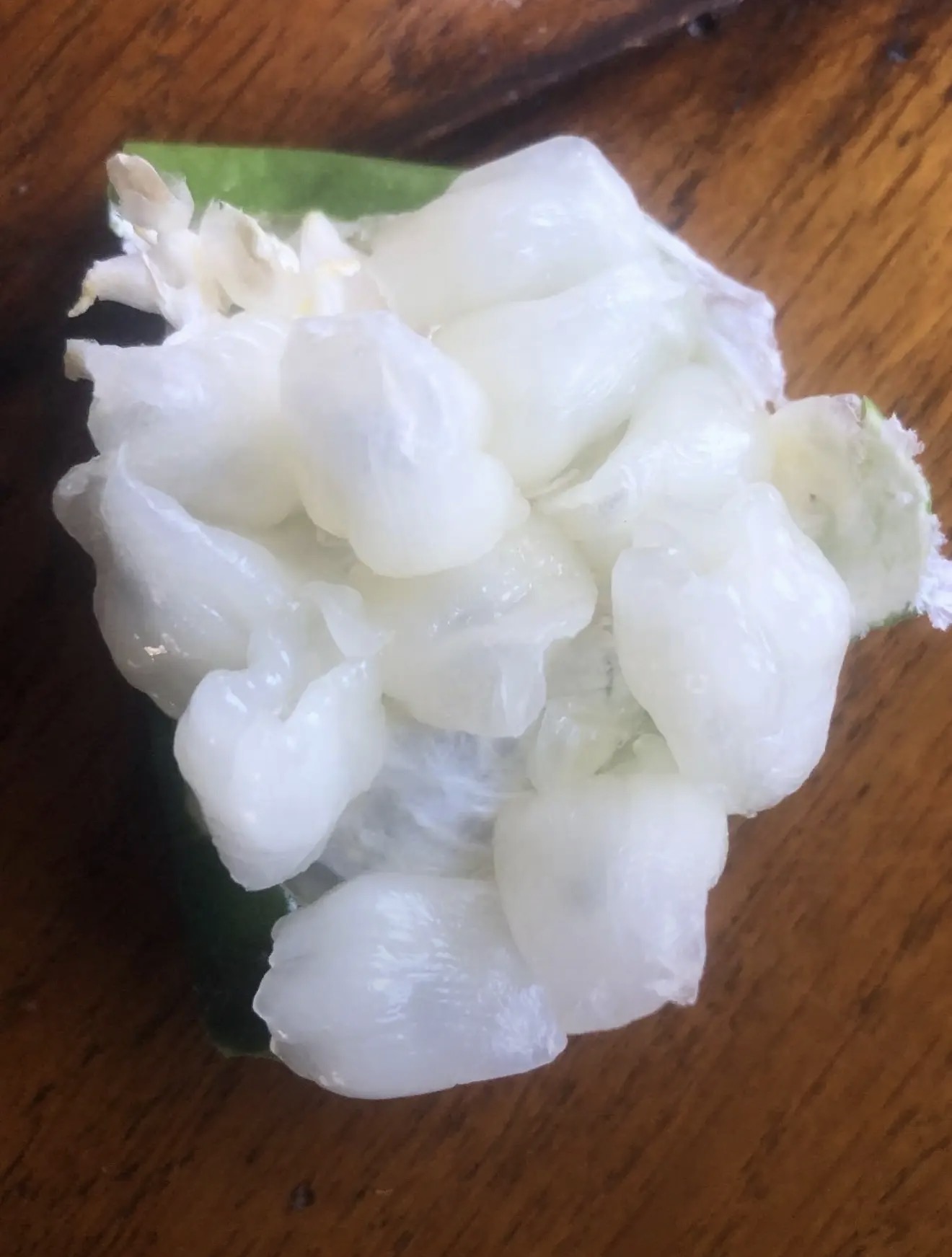
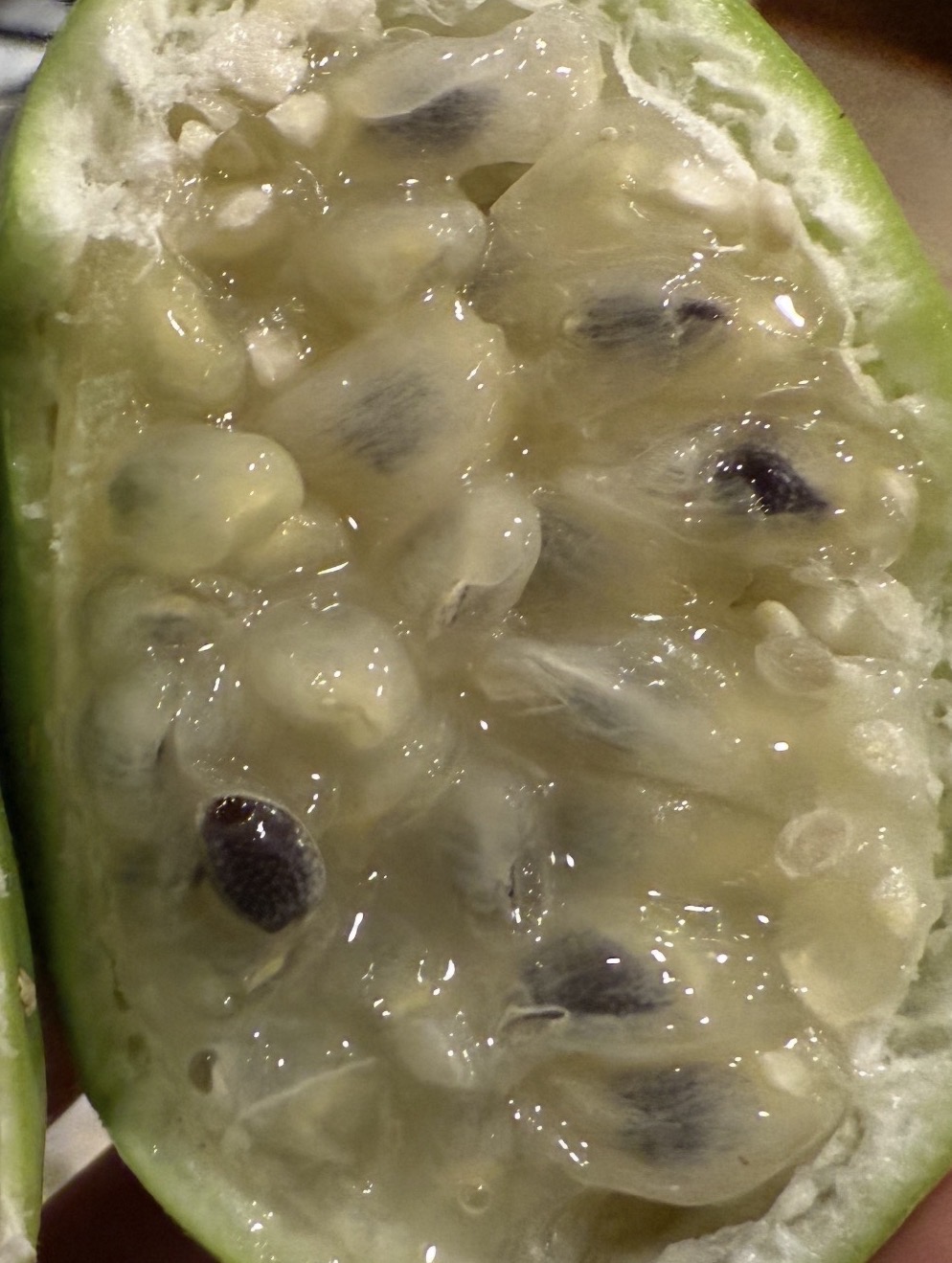
Here is one that I’ve been calling Toothsome, it shows double the aril size (normal seed size inside). I’ve also found seedlings with small seeds and super thin and easy to chew seeds, but not all three of these traits together yet unfortunately. Toothsome is a cross between incarnata, flavicarpa, and cincinnata. The flavors in this are sweet, low sour, and not really like any of the parent species.
9 Likes
Are they fully ripe when white like this?
1 Like
Yes , that one has the white arils from cincinnata, but it’s not sour. The photo is fully ripe. I find that the white color is pretty dominant. This one is actually descended from your flavinata x incarnata cross @kiwinut , which I then crossed with a Bucky x incarnata hybrid. Thanks a lot for those initial seeds by the way, the bulk of my hybrids came from one of those seedlings that had juicy orange arils and very low sour.
6 Likes
Out of curiosity, is there a reason you prefer to work with diploid hybrids?
1 Like
It’s not a hard and fast rule or preference by any means, although polyploids do take longer to ripen. The benefit of polyploids is fertility restoration in wide crosses, but personally I would rather have self fertility from edulis to achieve this, then I do not need to double any of the other parents I want to use.
For me, Passiflora crossing has been about learning and testing plant breeding concepts. One of these concepts that I learned about early on is called “nobilize at the diploid level”, which just means do all the breeding to get the kind of traits you want first, then make polyploids from those select “noble” diploids. I wanted to test this with multi species passiflora hybrids, intercross them down the generations, on the chance that they’ll throw unusual traits that won’t show up in polyploids. To me these passiflora crosses are an example of this, because traits such as giant arils or small soft seeds don’t seem to show up in incarnata polyploids. Or at least this is what I’ve heard. I’m not doing any polyploid selection in passiflora currently, but I’m not against it. This white one above does have a polyploid in its ancestry called Bucky, but the result of that cross happened to a be a fully fertile diploid, which I used as the male parent in my initial population. At some point I would love to try some of Igor’s polyploids.
6 Likes
Oh I’ve not heard of that term but it absolutely makes a lot of sense!
Not so much with passiflora but in my rubus breeding I have experienced something that’s basically the same principle but in reverse. There’s a lot of what I guess I could call “technical debt” in higher ploidy varieties, most of the hexaploid hybrids I use were bred a long time ago from varieties that lack superior traits which have been bred into many lower ploidy lines in years since. It’s a lot of work and time to get those traits worked in and expressed.
3 Likes
I’ll have to read more about your rubus crossing, sounds fascinating.
The other thing about the diploid wide crosses is that they generate a lot of polyploids anyway. Easily 15% or more of some of these lines spontaneously convert to polyploid. So I told you wrong earlier, I do have a few of these that I started last year.
here are a couple interesting diploids from last year. The top one is a super juicy full fruit with 5 lobed leaves. The leaves and fruit skin have a bit of a flavicarpa look.
The bottom one is a self fertile 4 species hybrid with thicker rind (it’s 1/4 edulis). The fruit is small and misshapen but the fertility and flavor is really good, it’s just like edulis every flower selfs and forms fruit. Some interesting combinations should come from these, good potential for large, juicy, self fertile, low acid and so forth.


8 Likes
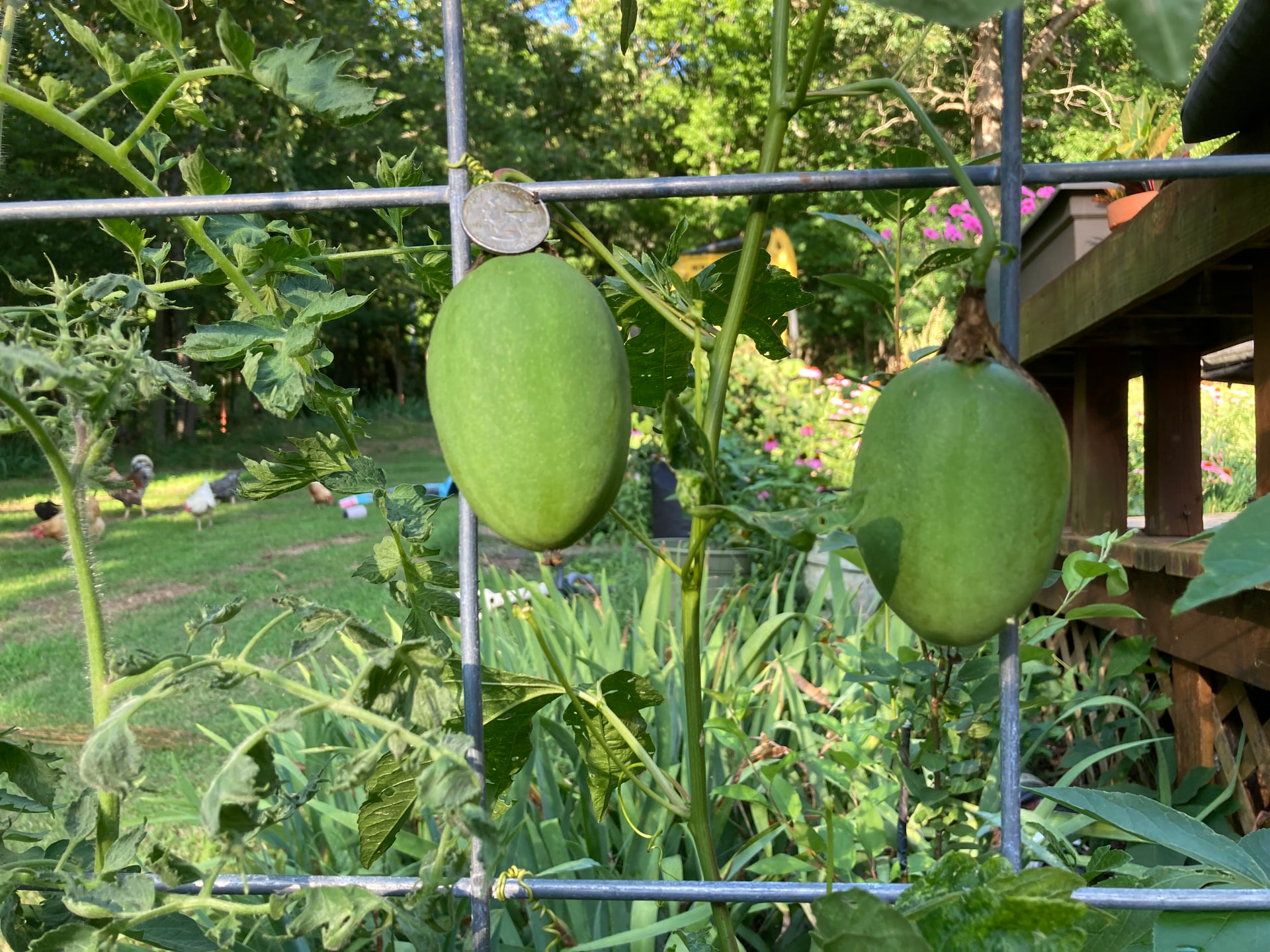
Update: one DKxBitop plant is making nice sized fruit! They do not appear to be self fertile, but thankfully they have each other. I’ve been hand pollinating to make sure, but a few flowers that did not open when their partner plant had one open did not set fruit. This is a little disappointing as I’m used to a self fertile incarnata that sets loads of fruit with no drama.
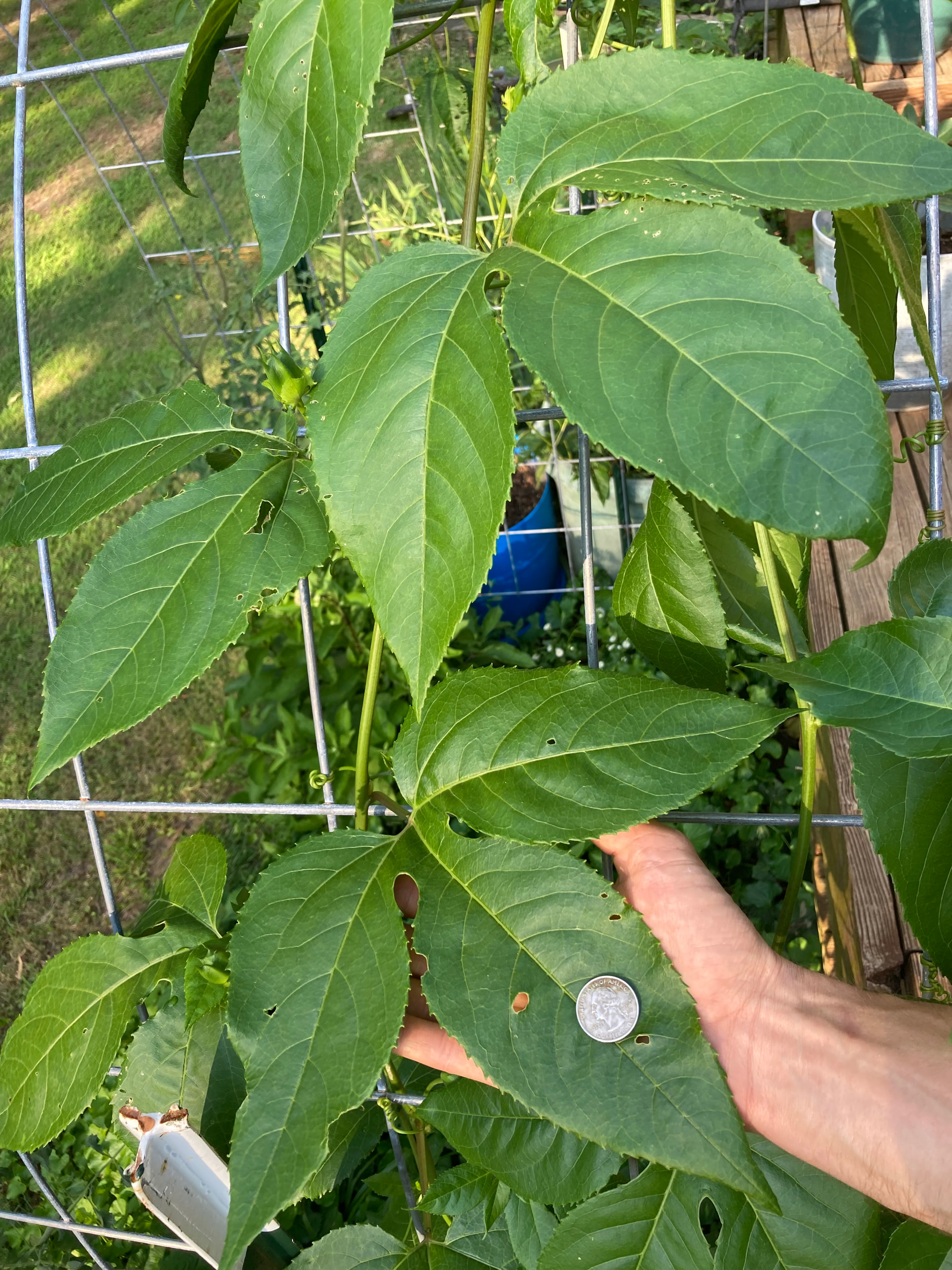
Timbo seedlings are looking really healthy and about to start flowering. (EDIT: Flower picture added)
Dumb question: when you all talk about whether your plants are diploid or polyploid, how do you know what you have?
10 Likes
How’s the flavor on that one? It looks fantastic!
1 Like
It’s good, full of juice, sweet and mild but also has a citric pop from cincinnata
2 Likes
The more serrated leaf edges and the bigger petiole glands are the key indicators.
Those look amazing! I’m a big fan of Igor’s work with those.
5 Likes
Unless you do flow cytometry analysis, you only know if one or more parents or grandparents were known to be polyploid. Most wild populations of Passiflora are diploid but there are occasional exceptions. Some naturally occurring tetraploid P. incarnata populations have been found in central Florida. I have never heard of any others being found in other areas. Synthetically induced polyploids usually display the “gigas effect” where most features are much larger than normal. The leaves are darker and the serrations tend to be very exaggerated. Petiole glands can also be disproportionally large.
6 Likes
How are the hybrids looking
1 Like
Between the hard winter and the spring drought, we’re off to a slow start this year.
I’ve got blooms now but not any fruit yet.
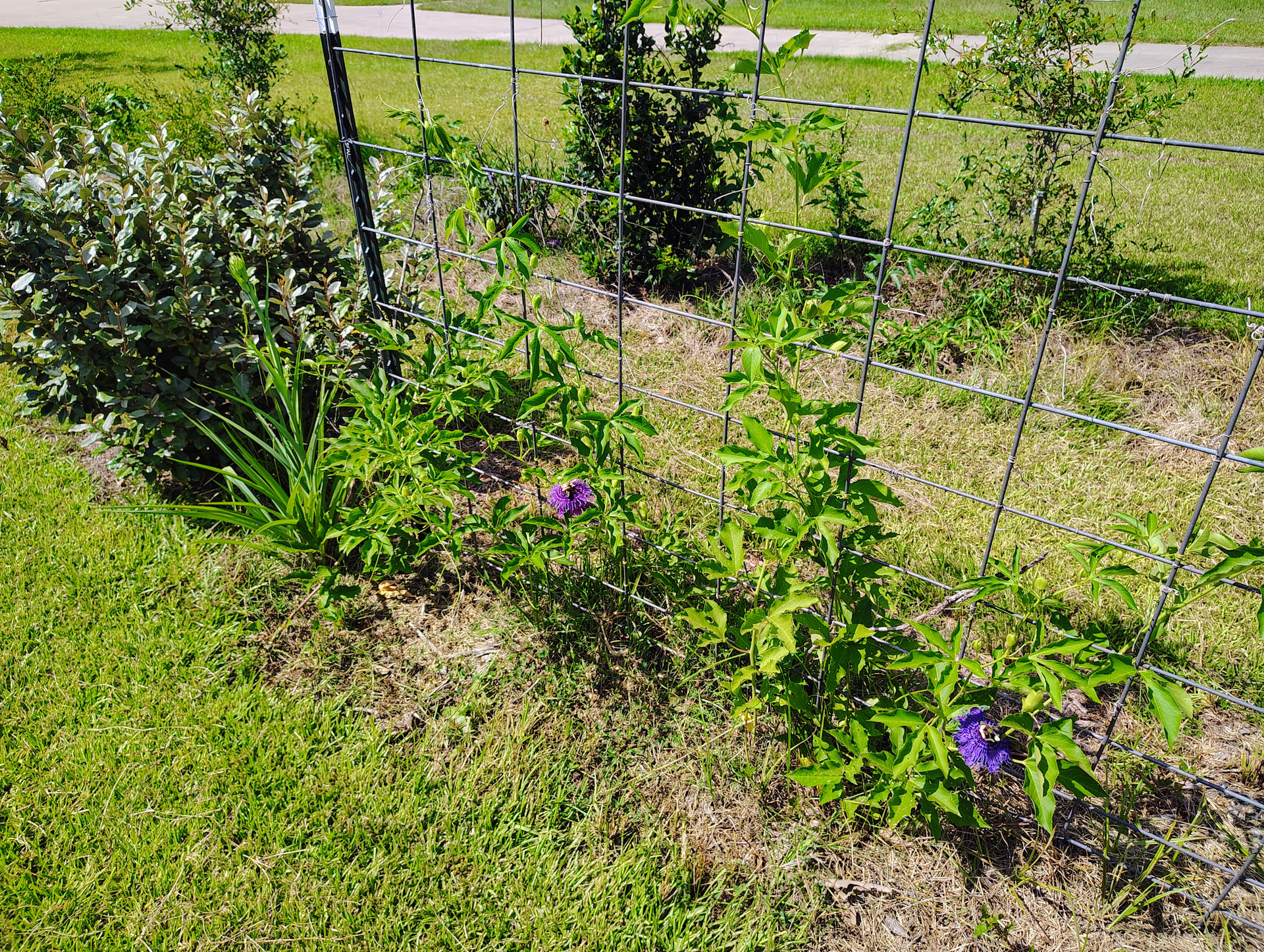
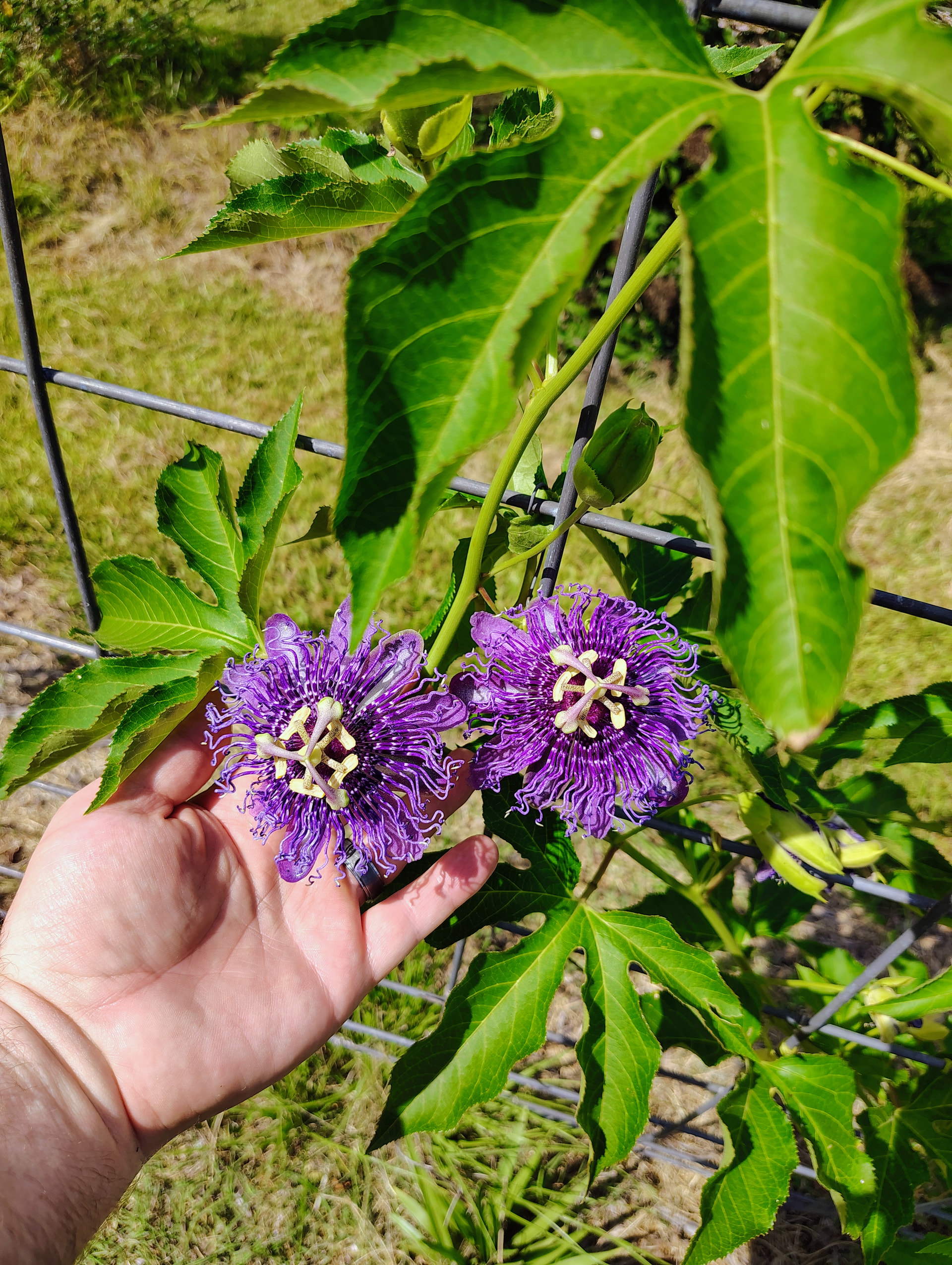
A more sheltered plant I gave someone is much further along though.
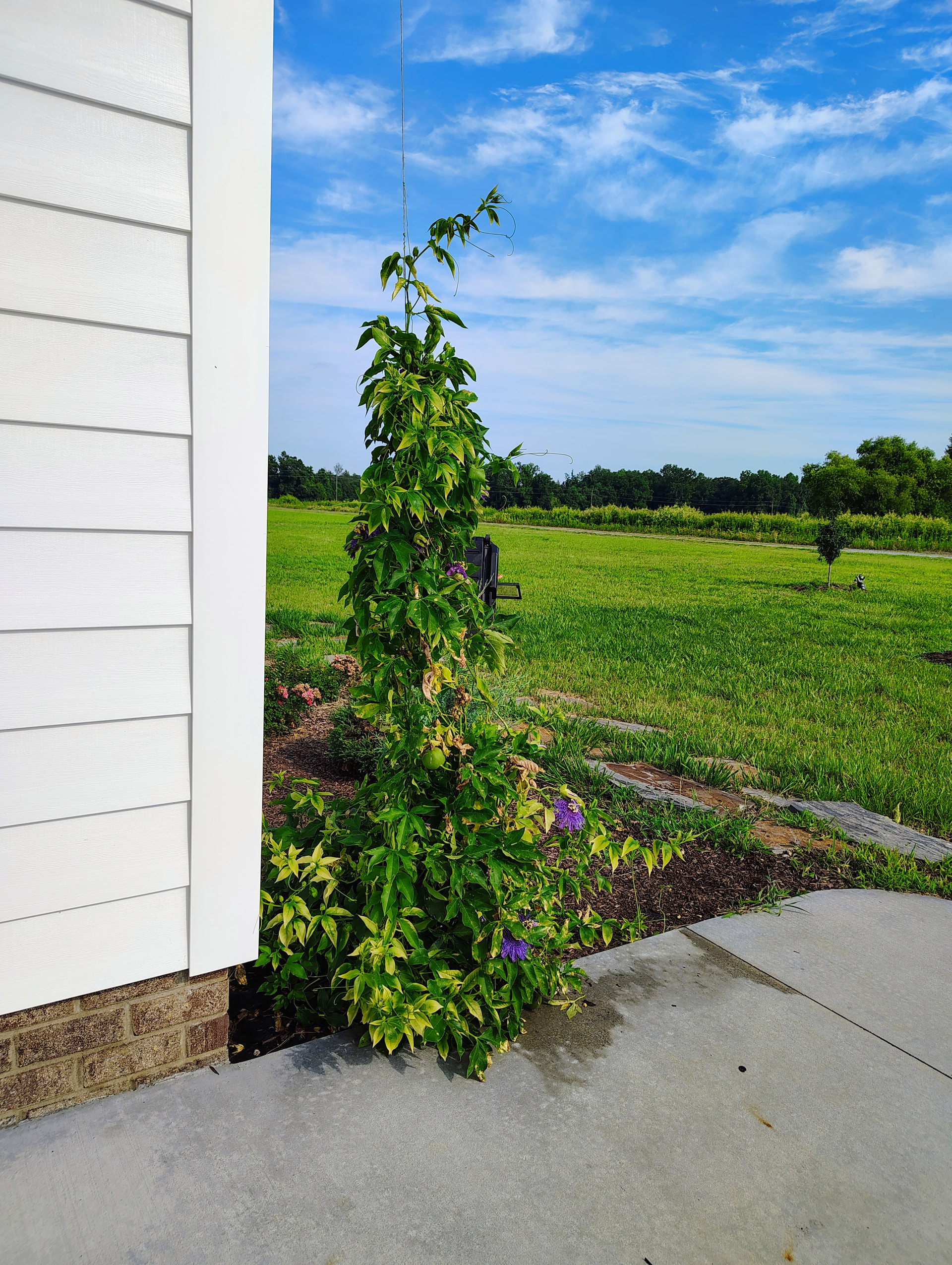
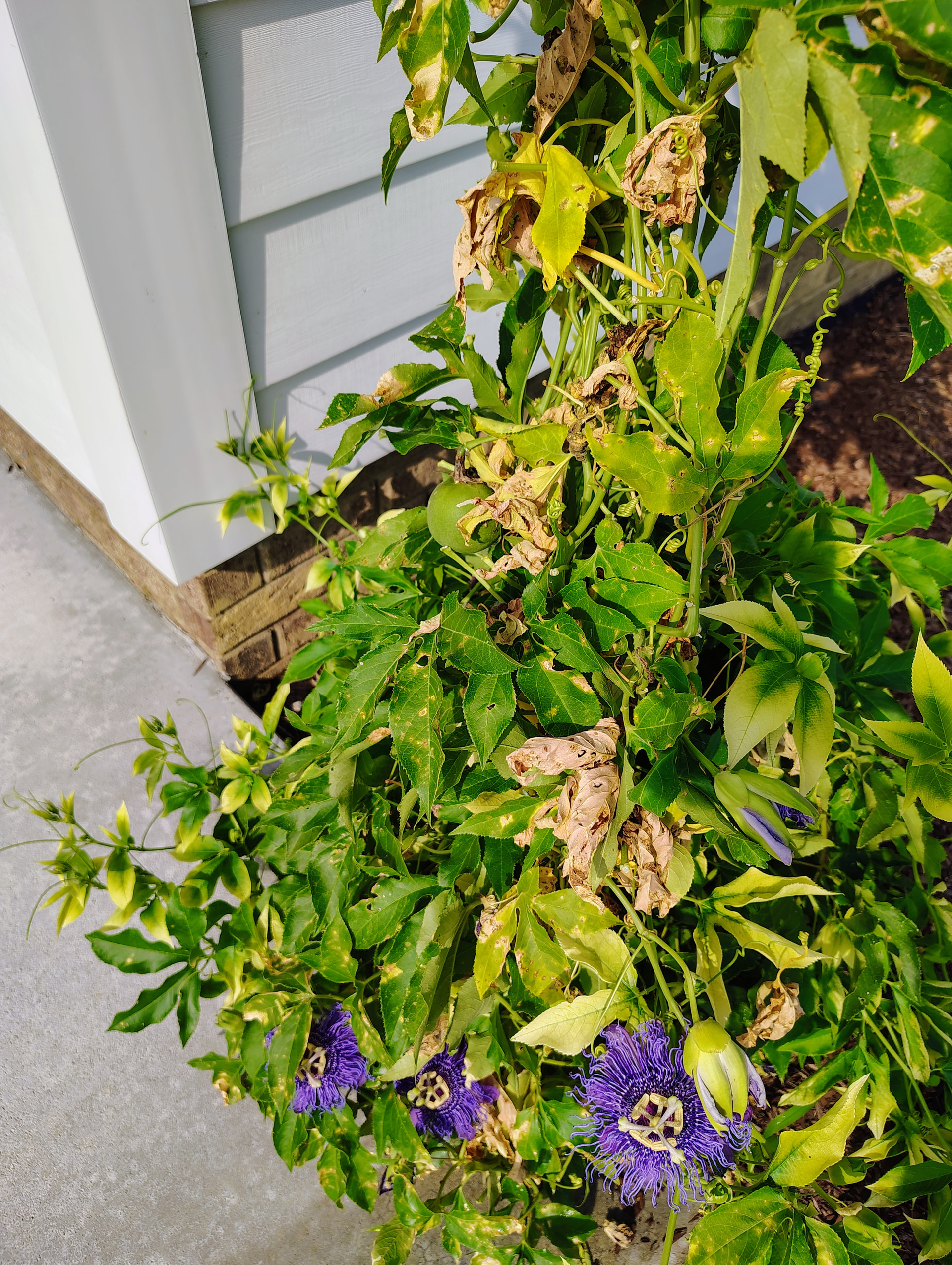
6 Likes
These are seedlings I’m growing in pots.
Any thoughts on the cause of this leaf curling, etc?
I’m wondering if it’s viral. I’ve seen before IIRC. I have a similar but more pronounced issue here on Lindera benzoin.
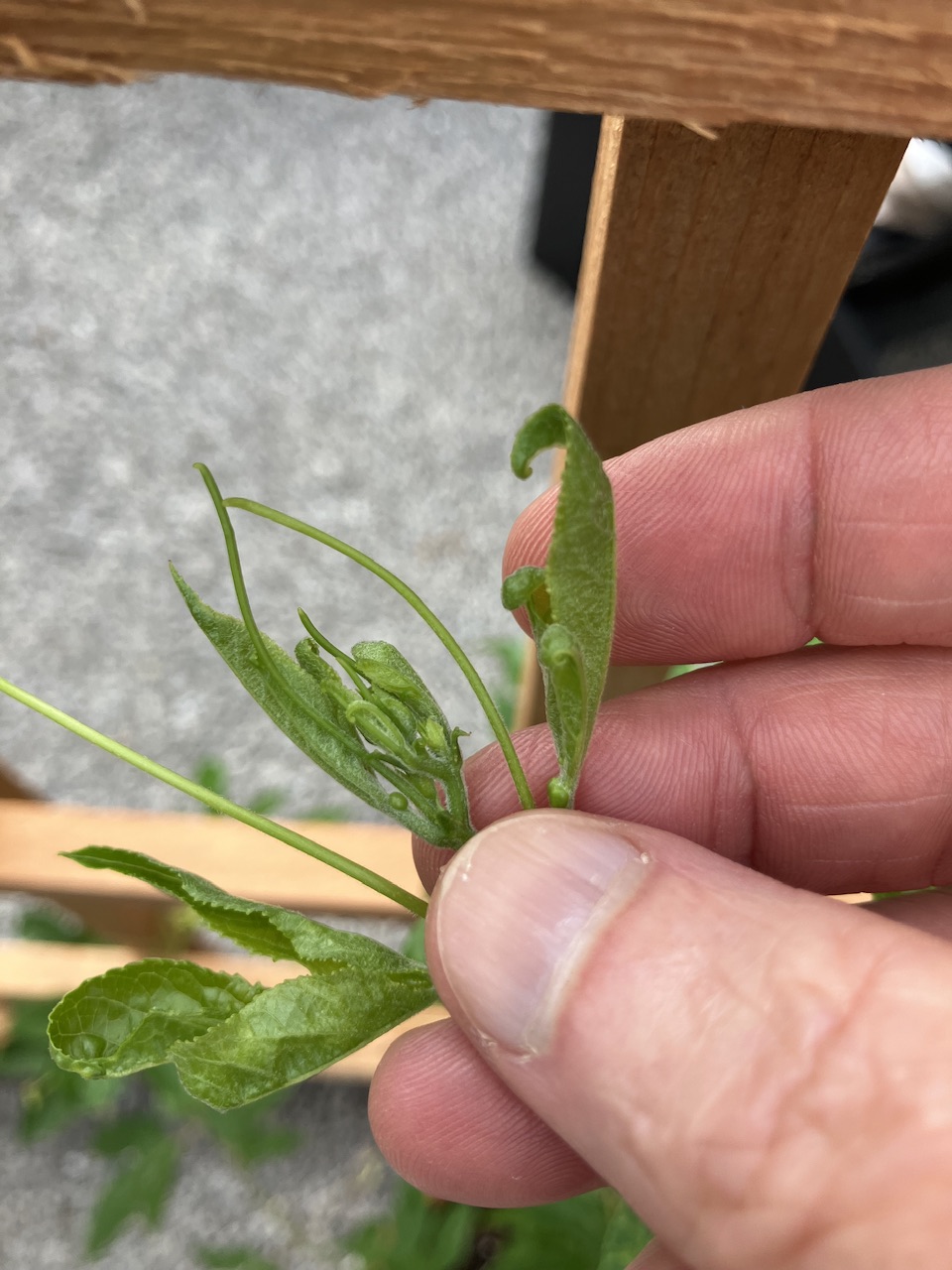
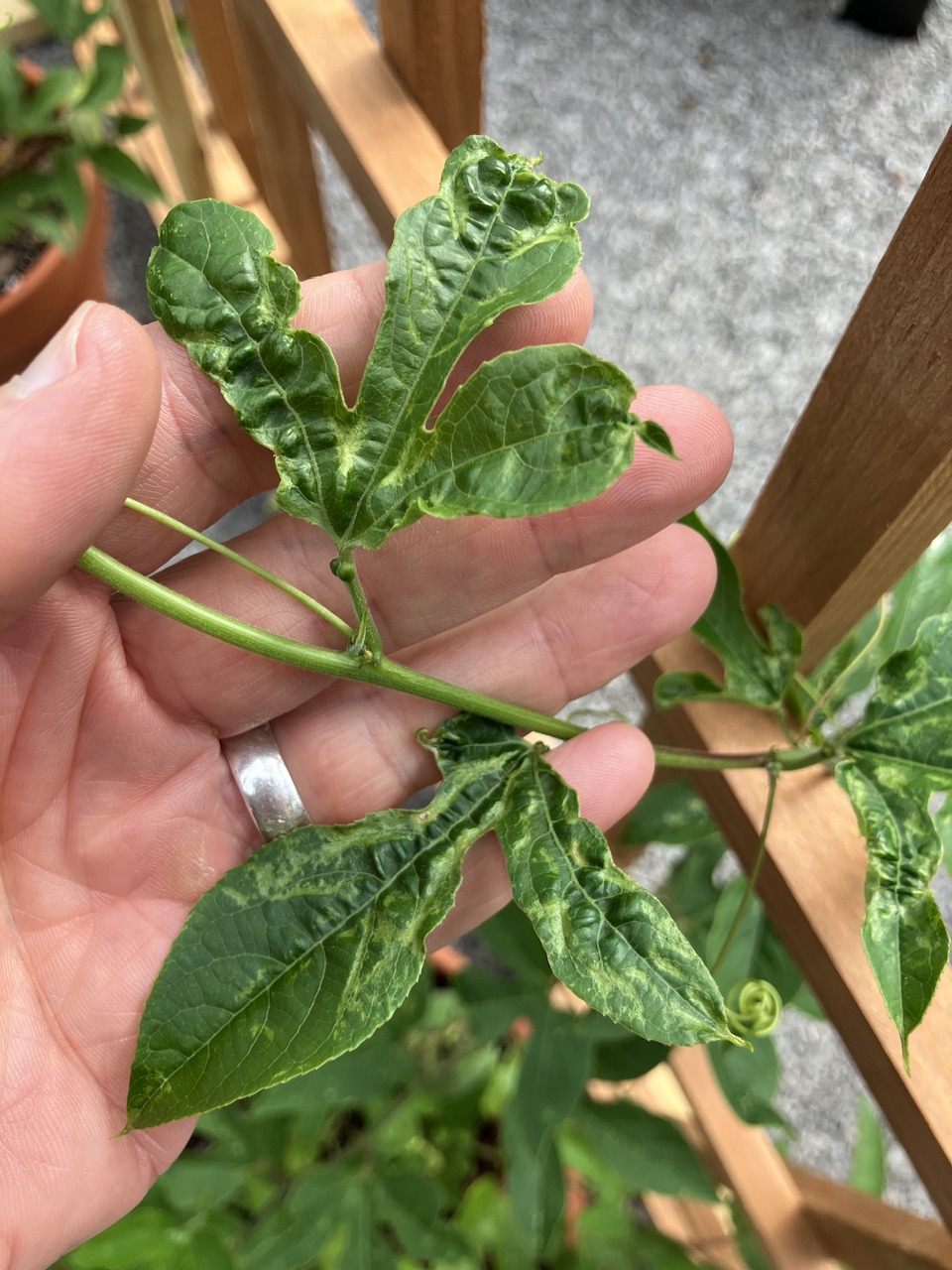
@kiwinut
3 Likes
I’ve seen something like this before but I really don’t know what causes it. Could be a virus or insect/mite or physiological condition. I have seen things like this go away or only show up under stressful conditions. I would watch it and see if it gets worse or improves.
4 Likes
@Faytowner you’re growing in containers, right? What size containers (per plant) and what kind of potting mix?