Think these were the only 2 other places (but soldout):
How to identify hybrids without waiting for flowers? I planted out seeds of edulis x incarnata from two of my genetically distinct vines that I crossed with the incarnata. The leaves all look like edulis to me
2 Likes
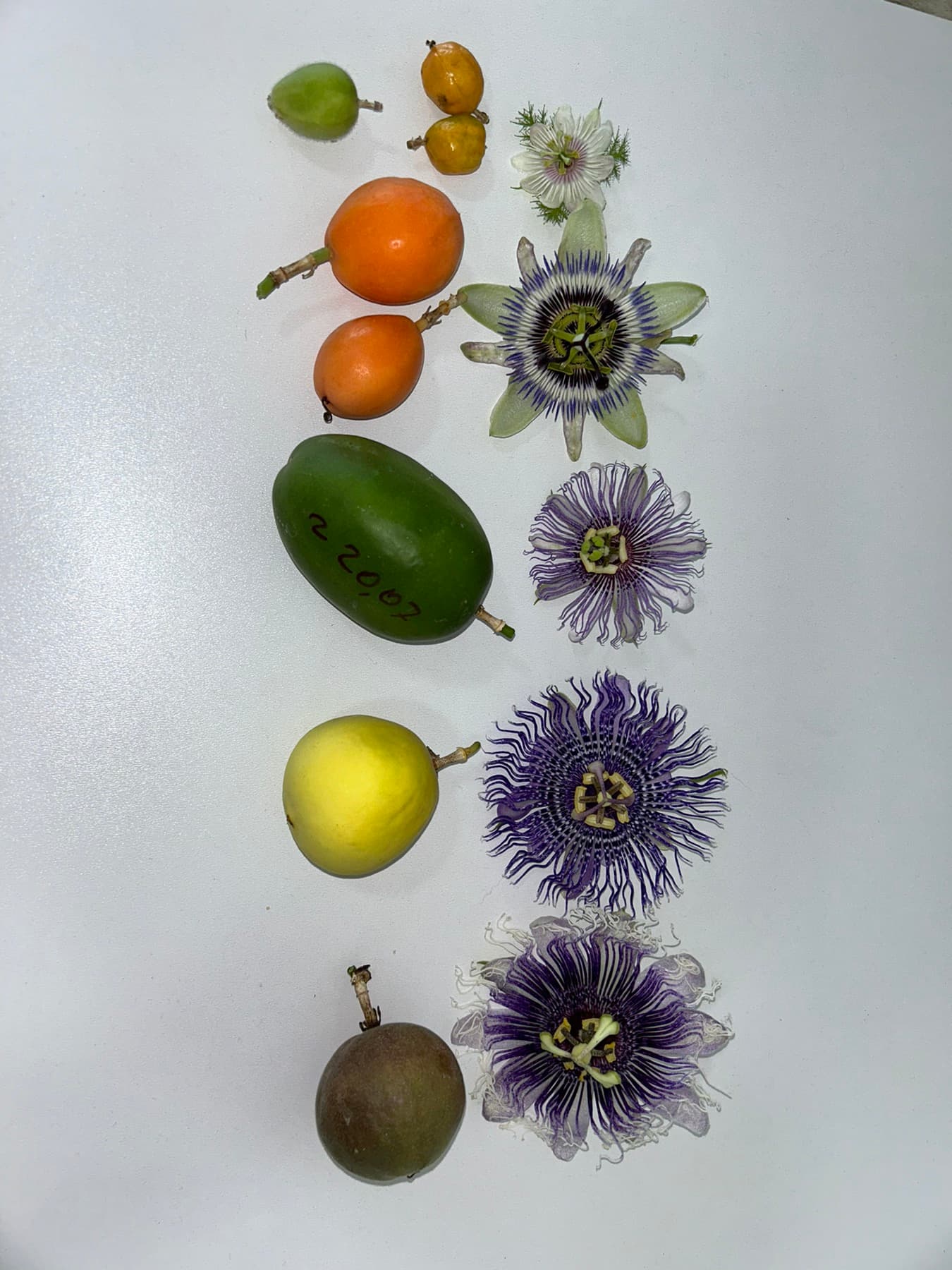
Greetings. I am from Ukraine. Zone 5b.
In Ukraine, we actively grow passionflower incarnate, tucumanensis, which can overwinter in the ground, and we also grow tropical passionflowers, especially various Edulis (with drift for wintering in a warm room).
In Ukraine, more than 10 varietal forms of incanrnata (working names not registered), including those crossed with eduls and other tropical passionflowers, have been bred. And also a number of polyploid hybrids between: tukumanensis-cincinnata-incarnata-edulis.
In 2024, my colleagues (Ihor lyany (“Ingvar Flaxen” on Facebook) and I received a beautiful polyploid hybrid between Edulis Flavvicarpa and incarnata, which has a weight of 145-157 grams and the highest sugar content of all passionflowers I know, with a similar taste to Edulis. It can bloom well in hot weather with insufficient humidity. Working name TJ-4 (“Timbo”).
There is our group “Passiflora in Ukraine” on Facebook.

24 Likes
How much is a photosanitary certificate  do you know anyone in the US that has that variety right now that we could bug
5 Likes
Welcome to the forum @Vitamin! We’re glad to have you here.
Those are some good looking Passiflora. How’s the fertility on them, pretty reliable with lots of fruit set?
3 Likes
Yes, thank you for sharing this work and welcome to the forum!
Cold hardy Passiflora with good tasting fruit is definitely a worthwhile pursuit. I think regardless of the species they have a pretty flower.
There is an account I follow on Instagram and that person does a ton of Passiflora breeding. Hundreds if not thousands of seedlings so far.
7 Likes
Wow! Those are beautiful! I wonder how we can get some here to the US?
1 Like
Do you know if a phytosanitary certificate is needed if we only got seeds? They wouldn’t be exact but surely some of the babies would be delightful.
1 Like
I think all plant material from overseas/out of country needs them but I’m not sure. I know fig cuttings from another country definitely needs them so I’m sure, but not certain, that seeds would need them too when crossing borders and such.
2 Likes
I want this “timbo!”
5 Likes
Same! Would love a good passion vine that tosses out fruit that’s worthwhile.
3 Likes
Well, I think that might depend on how legal you make it. The first fig cuttings that I ever ordered (from Etsy, I know) eventually showed up with postage from Albania under the alias, “Craft Sticks,” and arrived in perfect condition, barring that I got the incorrect variety. I was definitely scammed and such, but it proves that worse come to worse, even cutting sized postage can sometimes slip through undetected.
Whatever may be, I’m definitely hopping on this “Timbo” bandwagon. Let’s get a good passionfruit growing in the US!
3 Likes
Seeds do not necessarily need the certificate. Seeds can be imported to and inspected by our local USDA plant and animal inspection stations. If the seeds are available, I will happily assist by importing them using my permit, and can send them out to other folks on this forum from there.
One issue would be that the seeds will not be clones of the parent so there’s no guarantee it’ll have the same characteristics as the parent. However, I’m very interested! I’ll look into joining the Facebook group and request seeds. We can go the other route of getting the certificate and then shipping the plant materials, but I am not informed on how to do that.
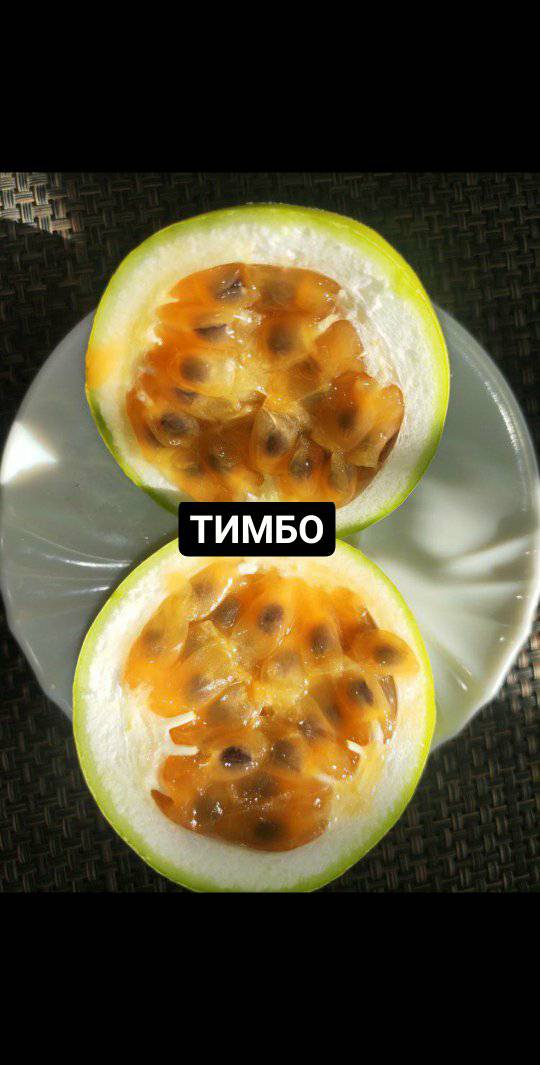
Not my image, but this I think is the inside of timbo. Per other threads, the more yellow orange color a passion fruit has, in general, the better the flavor. So this passion fruit probably indeed is as tasty as it’s more tropical cousins
(Why does it seem the Ukrainians have the best hardy passion fruits, hardy kiwis, AND cornelian cherries???)
13 Likes
Count me as interested if you import!
I grow incarnata on my garden trellis in my main raised bed. My kids can’t wait for the fruit to start falling each summer. But that was a mistake. It’s too hardy- sends roots 14” underground in all directions and takes over everything.
I’m thinking it may be better for me to grow edulis so I can overwinter inside and freeze off any survivors in my main bed to avoid the invasion. But seeds I ordered on Etsy were 0% germination. Open to suggestions.
5 Likes
This is probably the best route to take. Likely the fastest and easiest legal way to get them to the US.
Sounds like most of these hybrids are polyploid, so theoretically the seedlings are less likely to express recessive traits and might be a little bit more stable than similarly heterozygous diploids. But it’s probably a minor difference. Seedlings might be better in the end anyway, a bit of variance is nice to have.
Yes, the Cyrillic letters on the image say “Timbo.” I agree color is often a good indicator of flavor with passionfruits, so these deep color is a great sign. It’ll be good to get more information about these hybrids. The description for this one says it’s a polyploid cross of incarnata and edulis. From what I’ve seen, incarnata x edulis are usually not very hardy, usually zone 9 or 8. I don’t know if this one has been backcrossed at all, though I’d hazard a guess that is might have been backcrossed with edulis, which could explain the color but would also reduce the hardiness. Again, it’ll be really good to get these into the US to get more information on them and for people to test them out in ground (sounds like they’re being grown in pots and moved into a greenhouse from what Roman was saying?).
Ideally, we’d be able to cross these with some of the better European hybrids like Fato Confetto and some of the American ones like Byron Beauty and Ugly Betty. The vast majority of the breeding work that’s been done with passionfruit hybrids has been for ornamentals, so there aren’t many really good fruiting varieties. Most of the decent ones still have issues or drawbacks (hardiness and productivity being some of the most common problems) and I’d wager these Ukrainian varieties could probably bring some useful genetics to the table.
A combination of reasons. They have an incredible legacy to draw from, since historically the Ukraine (referring to the region) and the Kuban were the agricultural powerhouse of most of Eastern Europe and the massive Russian Empire facilitated the spread of peoples and their plants into the area where they could then be improved over generations. Hence why there are so many tomatoes, cornelian cherries and currants with Russian-sounding names. A similar thing happened with pomegranates in Crimea, southern Russia, and Central Asia, hence why most hardy pomegranate varieties in the US also have Russian-sounding names (though some of them are actually Tatar/Turkic-derived names like Salavatski). Crimea and Ukraine (referring in this case to the Soviet Republics) were where a lot of if not the majority of Soviet agricultural research took place, and plants tend to stay put once planted. Hence why there are hybrid persimmons in Crimea (bred by someone from modern-day Kazakhstan) and walnut-pecan hybrids in eastern Ukraine (bred by someone from modern-day Russia). After the end of the Soviet Union, Ukrainians and Russians have kept up the breeding work with those plants. On a related note, both the Russian Empire and the Soviets also founded several very important botanical gardens that to this day continue a lot of groundbreaking research like the Nikita Botanical garden in Yalta (established by a Swede and a Baltic German) and the Grishko or Hrishko Botanical Garden in Kiev (founded by a Ukrainian), the latter being where a lot of hardy kiwi hybrids have been bred in recent years in Ukraine (the country).
Basically, you have a single country that in addition to its own achievements, served as the repository and testing ground for most of the agricultural research of not one but two continent-sized empires. And it’s a legacy they’ve done a really good job of maintaining even after the fall of the Soviet Union and the generational economic collapse that caused in Ukraine. And a lot of the fruits of all the work that’s been done in that region have been pretty slow to get out and reach the US. A few hybrid persimmons from Crimea and Kherson, a mandarin chimera from Georgia or the Caucuses, etc. but there’s still a whole lot of stuff in that part of the world that really deserves to be in wider circulation–sounds like these passionfruit hybrids are among them.
18 Likes
Amazing breakdown there.
1 Like
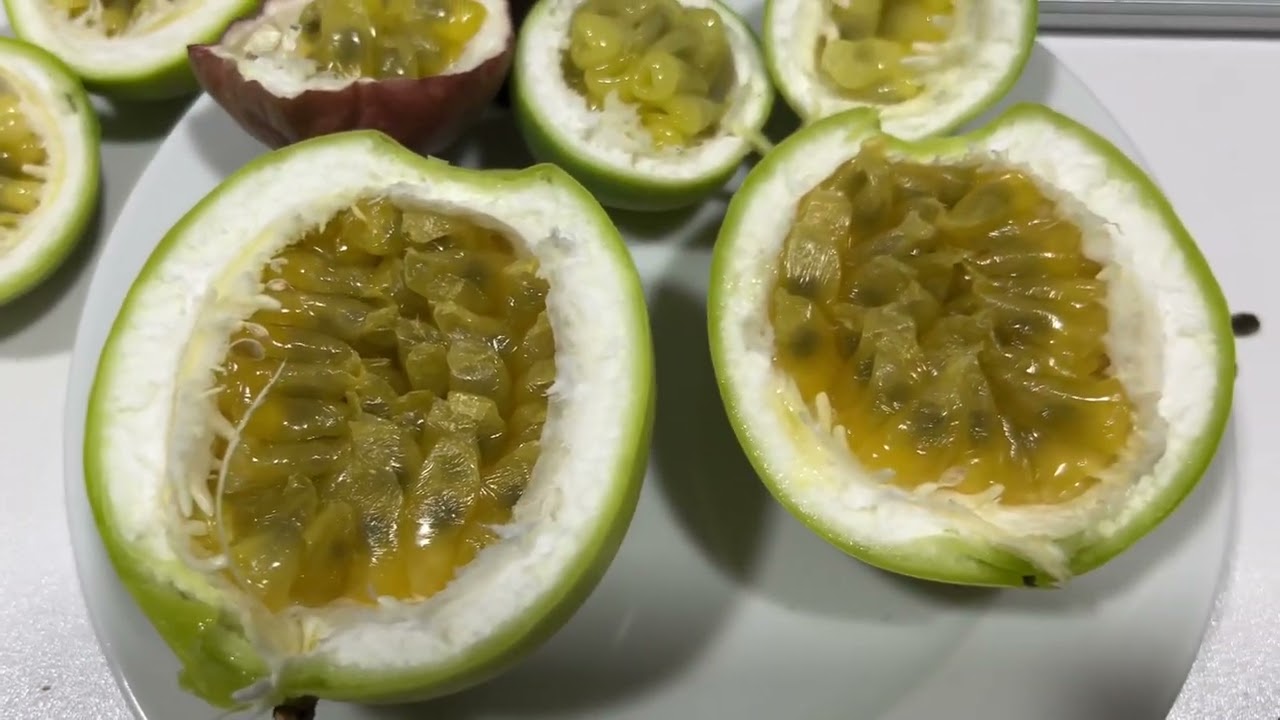
Here is my video with a description (you can include subtitles in any language there)
11 Likes
“Timbo” (TJ-4) = Tinalandia MAXI (poliploid) * Jumbo
Tinalandia = P. edulis f. flavicarpa x P. incarnata.
Jumbo = P. edulis f. flavicarpa “IAC-273” * incarnata “Mirabella”
I am not the author, I helped the author in testing and selecting this successful seedling.
The author of this hybrid is Ingvar Flaxen (Igol Lyannyi)
12 Likes
Thanks for the info Roman!
I looked over Ingvar’s posts, as best I can tell many of these varieties bloom and fruit in the first year, which is pretty incredible. Seems most of his varieties he’s bringing indoors during the winter. Seems he’s been doing breeding work for a few decades, very impressive!
7 Likes
thats great for us northern growers. we can grow them out then once they go dormant we can harvest some rhizomes to store in the fridge for next season. im going to do that with my maypops so i can grow them in pots. too chancey growing them in ground to have them spread everywhere. learned that the hard way with groundnut and schisandra berries.
3 Likes