schisandra spreads for you? Mine is quite restrained and I’m in a milder climate.
Interesting…
schisandra spreads for you? Mine is quite restrained and I’m in a milder climate.
Interesting…
anywhere the vine touches the ground, it roots and it constantly sends new vines from the base. its right next to my groundnut and also my kiwi trellis. the kiwi is easy to contain compared to the other 2. even after years of not fertilizing either, they still spread like crazy. best to plant them both in the woods and let them do thier thing there.
I know there are a lot of folks overwintering various kinds of passionfruit indoors. For those of you who have successfully done that, can grow bags work or do they yield too much water loss? I’m 6B/7A, but the areas of my yard I would move them too all all solid 7 with great sun exposure. I do have a room where I keep fishtanks, but I doubt the lighting in there would be good for anything unlikely to sit next to them and stay short during the growing stages.
I see a lot of 5 gallon buckets (drilled) and slightly larger cheap(er) pots online.
grow bags do dry out faster in my grow tent. maybe you can keep a pan under it so when you water the excess will stay in the pan and get wicked back up. as long as it’s not sitting in the water for too long you shouldn’t get root rot, you can adjust how much water you are giving it so that the pan doesnt get too full.
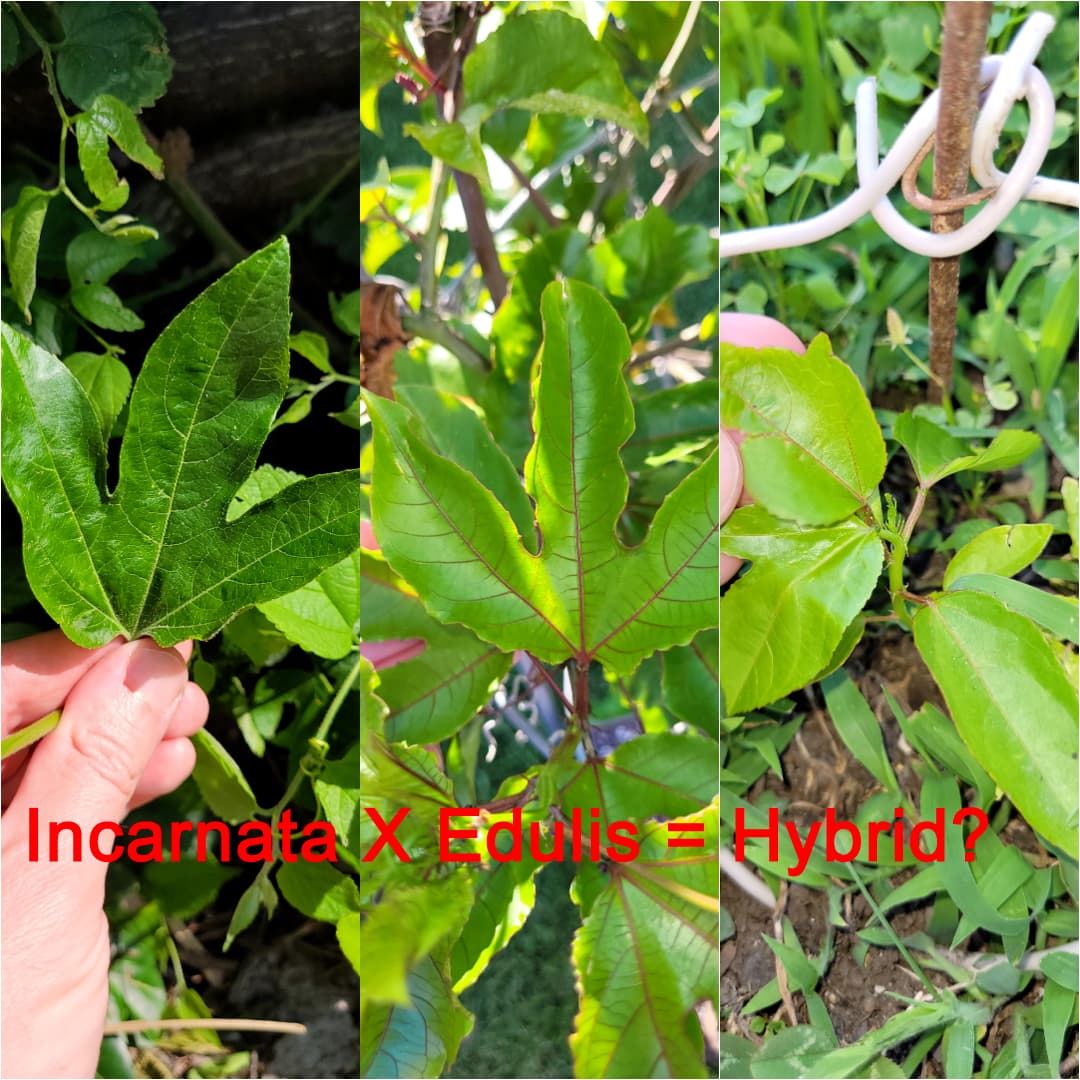
Btw these are the incarnata X edulis seedlings. the one with slight red veining matches the edulis parent I used
Any update?
How do you transfer pollen when cross pollinating? And do you net to prevent cross pollination by insects?
I’m not the one you asked but for passiflora it’s pretty straightforward. I pull an anther off the male parent and use it to apply copious amounts of pollen to the female parent. Since passiflora are usually self incompatible I don’t bother with neutering. Passiflora also tend not to have high fruit and bloom and are pollen receptive for a short time set so even if some pollen from non target parents gets on there because of insects or hummingbirds, I’m not too worried about it. I’m applying way more pollen and generally at a time of day the flowers are more likely to be receptive.
That’s just me though and I’m pretty new at it. If vnomonee does something different then ignore what I said.
pretty much what I do, except I cut off the anthers just in case as i wanted to be sure the edulis pollen was the source for the fruit. the incarnata i have does set fruit with its own pollen but not much. the vine would get huge and I only ever get about a dozen fruit so i know the edulis pollen worked because it set fruit on the only 3 flowers i pollinated.
I have used organza bags to keep the bees out. The bags also catch the ripe fruit when it drops. Another trick I used was to write the cross on the developing fruit with a ballpoint pen so the skin is bruised. It will form callus that is more permanent than any ink. Even years later, the writing on dried fruit will be completely legible.
i didnt realize that incarnata arent very self-fertile. is this the same of edulis and others?
P. edulis edulis, the purple passionfruit and many of it’s hybrids with flavicarpa are self-fertile. Most others including P. incarnata and P. edulis flavicarpa are usually self incompatible.
I’m gonna jump in here with only an anecdote- I planted what I thought was a single wild incarnata years ago. It has since taken over my garden and I pull hundreds of new shoots out every year. But it’s near 100% conversion from flower to fruit. I am sure there are other plants within a half mile, but I’m not sure closer than that.
My incarnata is definitely the only plant nearby. I used to have a second vine but have pulled everything due to the invasive nature. In the future I’ll find a way to contain the roots perhaps sinking a long planter into deep into the ground
they arent dying back to the ground for yall? not that that would stop them spreading but it would manage the above ground vines 
They do, and come back even stronger the next season popping up several feet away in a new spot. I’m going to dig out my hybrids because I doubt they are root hardy. I plan to backcross with incarnata which will probably restore root hardiness and then find a way to containerize in ground.
I do exactly this. It’s like a premade q-tip coated with pollen!
Here, you have to catch the “donor” flower pretty soon after opening or else the bees will rub off the pollen.
Seconded. They come up pretty far from the initial plant once its established. Deer are less interested in it that i would have expected.
They are moderately poisonous. The flowers and ripe fruit are safe to consume, but everything else will give you a case of the old cyanide poisoning.
Some members of the genus are more poisonous than others. Incarnata isn’t too bad, but it’s enough that most pests leave them alone.
It might be easier to root a cutting. Passion fruit roots go somewhat deep and really, really wide. The one time I removed one including the roots it was crazy how far they went.
Cuttings are easier to sanitize too so you have a lower chance of spider mites over the winter