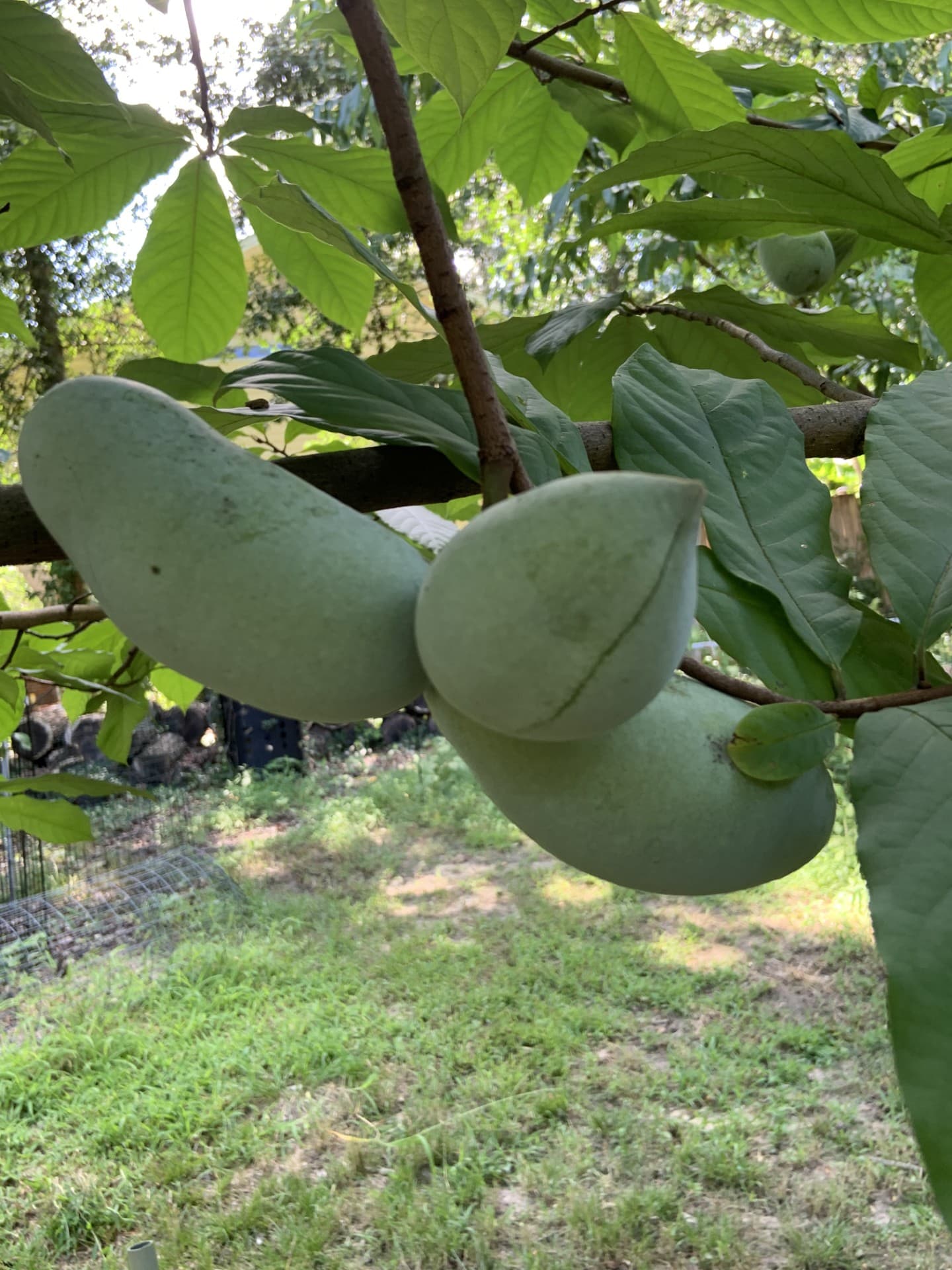
Pawpaw growers, what has your experience been growing pawpaws in upland settings? Almost nobody in my area intentionally plants pawpaw because there’s an old saying that they’ll never fruit unless they have “a toe in the water” Basically conventional wisdom is that unless a pawpaw is within roots reach of a stream, they won’t fruit. My anecdotal experience seems to validate this, I’ve never found a ripe fruit in an upland setting. I’ve seen flowers and immature fruit, but never ripe. That said, I’ve suspected pollination could be an issue, since there is also a very small stream on my parent’s land with an isolated stand of pawpaws stream side that I’ve also never seen hold fruit. The only places I’ve seen very productive pawpaws have been rivers and larger creeks. These usually fulfill “toe in the water” but also have larger, probably more genetically diverse populations. I don’t know which it more important.
One possible contributor could be soil. River bottoms and the floodplain of large creeks tend to have sandy soils rich in organics. Our upland areas tend to be heavy clay. For those familiar with the terms, Cecil, Georgeville, and Appling, and Herndon seem to be popular soil types here.
Final data point, we generally have several weeks of drought in either July, August, or both. Sometimes running into September. It could be that a region with more consistent rainfall may grow pawpaws on high ground.
My new property has a lot of pawpaw trees on a hillside near the house. I didn’t see any fruit last I checked, but they may have been small and hiding. My father says cut them down since they’ll never bear, I’m considering grafting some of them over to provide genetic diversity for pollination and see what happens.
What are y’all’s Experience? Do you get good fruit production on high ground? Do you have to irrigate to do so?
I am cutting down my pawpaw trees. But from my experience of growing it, the tree sitting in a wet spot is about 2-3 times size of a tree in a regular spot. The contrast is amazing and ridiculous. Pawpaw loves water.
Pawpaws do like regular water. They don’t need constantly wet soil, as some mistakenly assume.
Toe in the water is a good way to say it!
But my experience growing them in full sun in shallow, less-than-ideal soil, on a slope definitely leads me to say they need irrigation to be successful. Mulch too oxf course @disc4tw
Given enough sun (required for moderate to heavy crops), cross-pollination, and regular irrigation I’m sure you can grow pawpaws in just about any soil or topography.
Your trees could be lacking any or all of these elements.
We also get dry in late summer. Last year nearly the whole state was in severe drought and it was very hard on my pawpaws. I did a lot of manual watering.
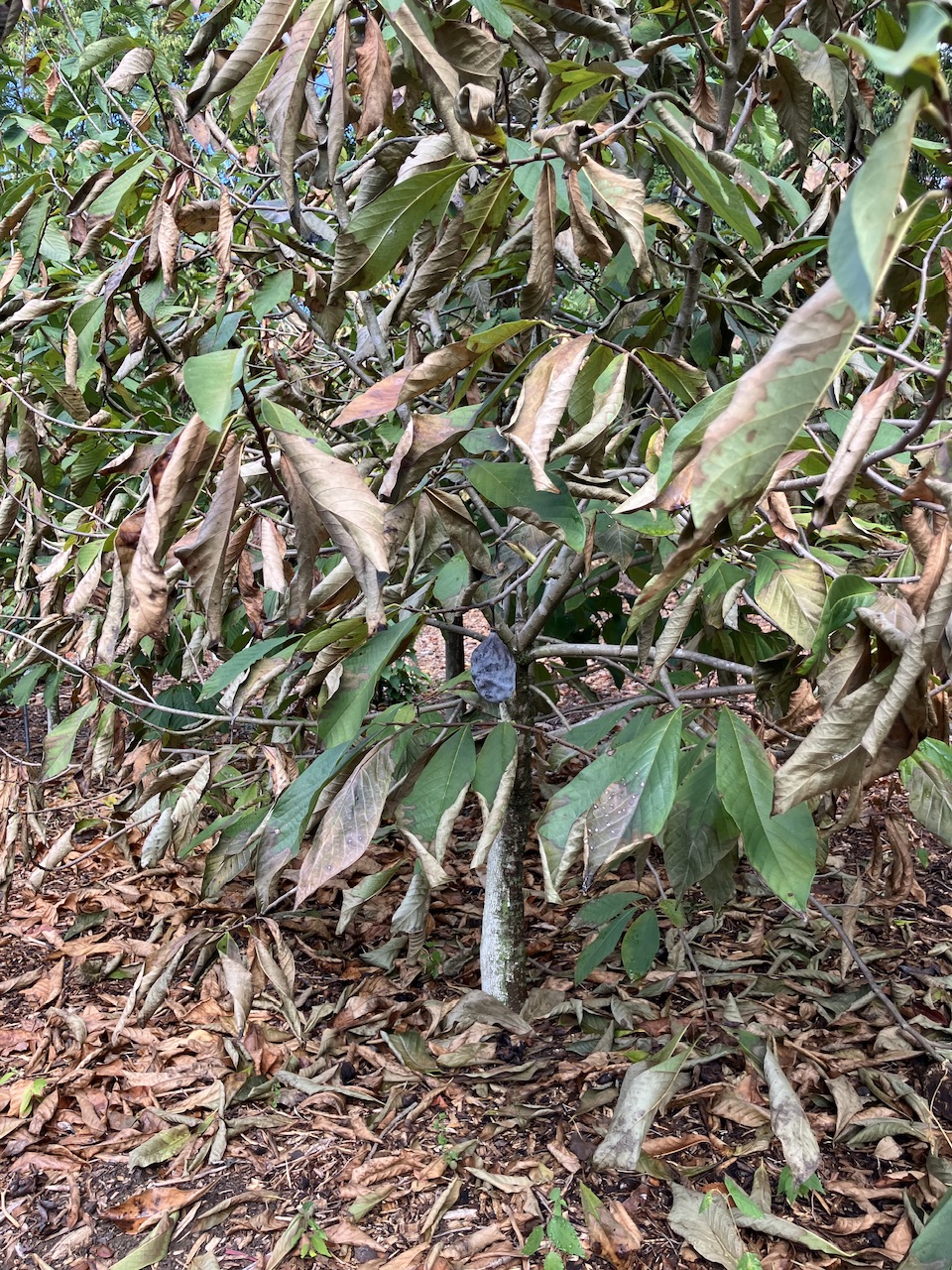
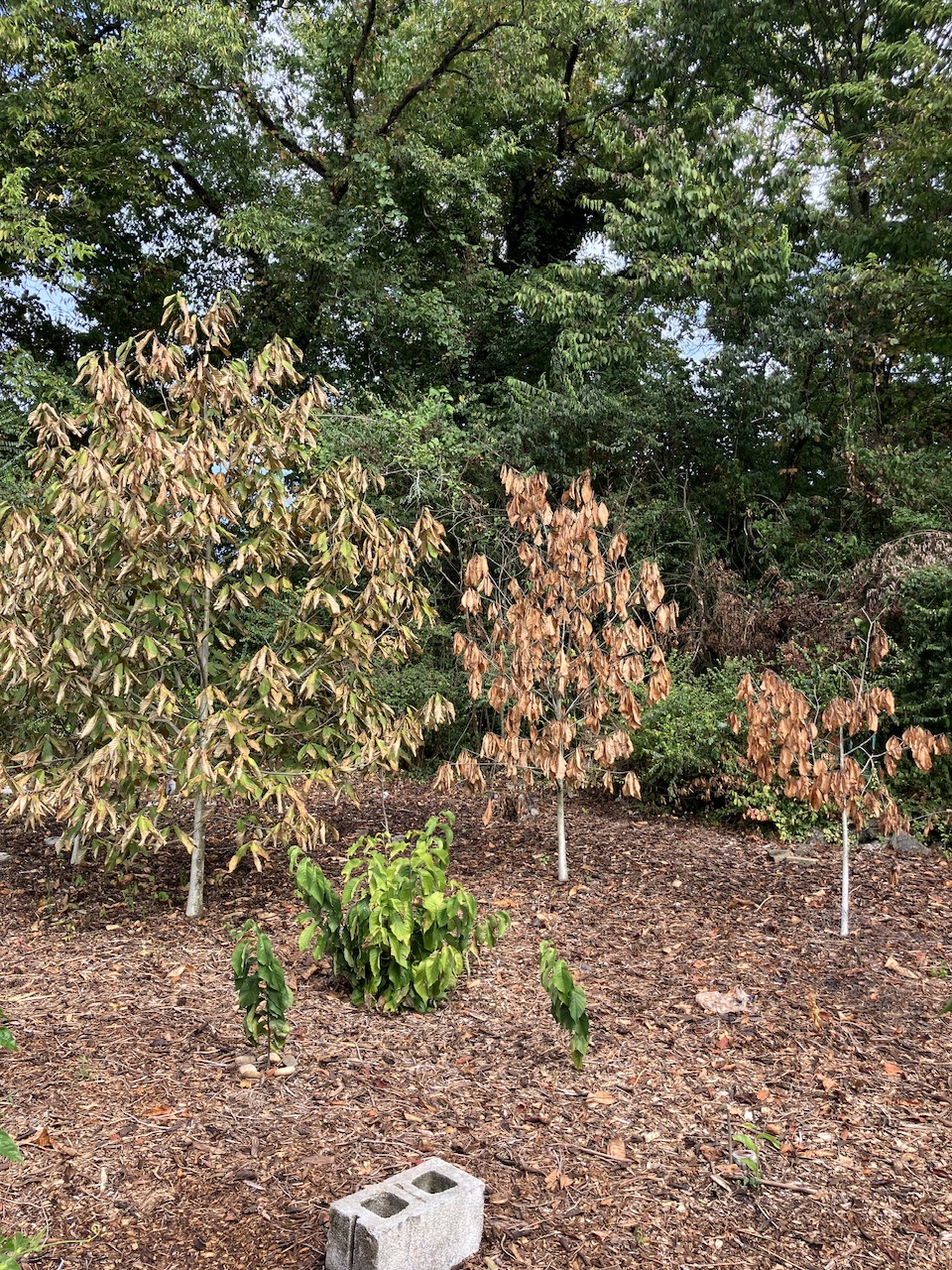
This year we had tons of rain all thru mid July, so I thought I would be golden. Well, the rain stopped for 4 weeks and the heat advisories started. I was shocked how quickly my established pawpaws started flagging. Must’ve been the stress from last year. I basically lost all my fruit, desiccating on the trees or dropping hard.
2-3 uphill trees have died (junky trees anyway and I did not irrigate).
So my takeaway is that if I want good fruit and healthy trees, I will have to set up an irrigation system and start watering in July.
I suspect you would need to do something similar.
Digging deep swales is something I’d consider too. wish I’d known/thought about this before planting 30+ trees.
Thanks. Last year was way drier and hotter.
Just seems to be the cumulative impact.
I could’ve watered them with a hose etc but don’t have the time anymore.
Any important/ good trees I have watered and are mostly ok.
Next year will cull more trees, set up drip irrigation, and electric fencing.
I’m wondering if these are the asimina triloba that I only see growing near water or the upland bush pawpaw asimina parviflora that I see growing well away from wet areas.
I wish that were the case, just looked up parviflora and it looks like it’d do better and stay more compact. Many if not most of the specimens near the house are taller than I am, several over 15’. Plus the leaves have a narrow base. Now I’m interested to try to find parviflora to plant though! I am actually close enough to their confirmed range that it wouldn’t have surprised me. My cousin and I found several reptile and amphibian specimens that changed the range maps when I was younger. We’re in an area that was settled by Europeans long ago, but remained rural and poorly studied since.
The trees here don’t look nearly that bad, but are also in part shade and on a slope that I suspect has an underground spring nearby. I think I’m going to try grafting them over and see what happens. We may end up with a “spare” well that can’t be used for drinking (hopefully not, but it looks like it) so irritation water may be plentiful.
I’m at the north side of Virginia. My pawpaw are loaded to the point of breaking branches. Va gets plenty of rain, so you don’t need to worry about water. Pollination is their weak point. If the wilds are not close it’s best to keep your trees close to help pollination. My named varieties spit out fruit every year with no aid from me, but I also live in an ocean of wild pawpaw.
Thanks for the encouragement! I’ll definitely give them a try anyway. If I graft only some of the wilds with something perhaps I’ll get pollination for both. I do think it’s likely droughts will be an occasional problem for me though. We are in what my dad calls the “Sahara of Virginia” most years we end up in a drought and seem to miss every storm that folks get on both sides of us. I don’t even attempt corn anymore. You can expect a good sweet corn crop a few times per decade here. That said, I already plan to water blackberries and blueberries as needed, so adding a few pawpaws shouldn’t be too bad…unless I just forget and lose everything. I’ve never lost a mature blackberry or blueberry plant, but I have absolutely lost a crop of blackberries to drought and not well established blueberries.
The biggest thing is I wanted to know if water may be a problem just during drought or if they actually required access to saturated soil continuously
All that said, the new house is 10 miles away from my old place and on the river, so perhaps I’ll get a few more storms now.
I have my pawpaw orchard on a hilltop with relatively thin and well-draining clay/shale soil. There is a thick layer of shale rock 1-1.5 ft down in most places, so I don’t have much topsoil to work with. My trees grow and fruit quite well for me. Growth is slower than it would be in more ideal soils, but keeping them fertilized, mulched, and watered helps a lot. I only water them during dry spells/ droughts and I do it by hand with a hose. If we don’t have a drought over the summer, then I don’t need to water them, but we have a long enough dry spell most years that I typically have to do it a few times.
I fully agree with TrilobaTracker that you can likely grow and fruit them in just about any soil if you are able to give them enough water, sun, nutrients, and cross-pollination. Like he mentioned, pawpaws really suffer in droughts, so it’s important to irrigate over summer when the soil gets dried out. On the other hand, if given ample and consistent water throughout the spring and summer, pawpaws can grow very well, even in less ideal soils. I got to experience that this year due to the amount of rain we had this spring through the first half of summer.
Great to hear your experience! Hopefully I can have some success. I really enjoy the fruit, but in my area it’s hard to get much when competing with bear, coons etc. down at the river. It’s much easier to beat them on my own turf.
We live up a hill about 600-700 feet from the Severn River in Maryland. We have six paw paw trees that produce maybe 12-15 paw paws each. I do not water them but they seem to grow well naturally. The ground is sandy, and we were told used to be the site of a sand pit. The hill is about 36 feet high. There is ONE aspect that may be important… our street drains down into our yard, so when it rains the ground gets mushy. That might be important.
On the Appalachian trail at Duncannon Pa on the east side of the Susquehanna river on the side of the mountain there is many Paw Paw trees and there isn’t any water that the roots can get in. Most years there are a lot of fruits so I guess wild Paw Paws don’t follow the rules.
Ironically the “rule” came from wild pawpaws folks have observed here Just goes to show nature is more difficult to pinpoint that we sometimes think. Based on what I read here, I’m beginning to think pollination is a large player, and in the rare cases where there is actually a population on high ground here, ill timed summer drought probably hurts fruit set/holding.

 I’ve never lost a mature blackberry or blueberry plant, but I have absolutely lost a crop of blackberries to drought and not well established blueberries.