When is your e book on nursery techniques available?
It looks like you should apply 10-10-10. The directions should be about the same as for pecan trees. The directions are in the first long paragraph at the bottom.
If your tree branches are growing well - for young, non bearing, paw paw I’d say approx 12-18” growth -and your leaves look healthy-then you’ve fertilized correctly. Do the same next year.
If your tree branches don’t grow much or the leaves don’t look healthy. Make sure the tree is getting enough water and sun/shade and it’s not getting troubled by pests. Then you should increase the fertilizer.
It also looks like you have low zinc which can cause leaves to look weird + poor growth. if you see that do the zinc treatment. You can also put a foliar spray for this.
Also the very pH you have can tie up nutrients so you might want to correct it. (I don’t know how because I have high pH) and/or start growing blueberries!!
1 Like
University/extension lab tests are reliable if you collect the soil correctly.
Of course the best indicator of whether the soil/nutrient levels are good for the plant will be how well the plant is growing, but if you have no idea then starting with a soil test would be a good plan.
The soil test can also help diagnose issues if you don’t know why your plants aren’t growing properly and help you decide what plants will be successful. It can also help you decide what fertilizer to use.
2 Likes
Discussion of thinning here is interesting to me.
I have opinions that may differ from others.
To the point above - IMO the tree doesn’t “tag” clusters or fruits in its memory banks as “marked for abortion” as soon as the cluster is formed. So, if you thin a lot, it’s not going to abort the last cluster, etc, because you chose the wrong clusters to manually thin. The tree knows how many fruits it’s holding and the calculus is more about how many total fruits it wants to support. If it drops the last cluster it’s because it didn’t want to grow any fruit this year.
I don’t wait until June drop to thin. I would rather choose the superior fruits based on size or position on the tree than have the tree jettison the ones it chooses. Sure, the tree would’ve shed some of the same inferior fruits I manually thin, but for me I want to prevent the tree from putting any energy into runty/deformed fruits.
4 Likes
It is a work in progress, most likely 2026. You can join the list at nurseryebook.com
2 Likes
That’s very debateable, although standard procedure for many industrial farmers. Michael Phillips dug into this topic closely and found widely different results for the exact same soil when sent to various labs. He goes into depth on this topic in his Holistic Orchard book.
Also, how useful are soil tests really when growing obscure crops like pawpaws? These tests are designed for monoculture plantings of industrial crops like corn and soybeans. Better is foliage nutrient testing, as this tells you the nutritional deficiencies in the plant itself.
The better option is to utilize good organic growing practices of soil care, mulch, increasing organic matter, utilizing micro nutrient supplements such as kelp, providing good organic NPK sources like fish or chicken manure, and monitoring the shoot length and size of leaves.
Pawpaws can be grown with chemical fertilizers, but best results for any fruit crop will always and forever be with natural organic nutrients, micro nutrient supplementation, and excellent soil management.
4 Likes
I don’t wait until June drop to thin. I would rather choose the superior fruits based on size or position on the tree than have the tree jettison the ones it chooses. Sure, the tree would’ve shed some of the same inferior fruits I manually thin, but for me I want to prevent the tree from putting any energy into runty/deformed fruits.
That’s how I was thinking of it as well. Given the herbicide damage situation, I thought it might be best to reduce the fruit to a bare minimum, rather than risk the tree over-extending itself (perhaps in fear of it’s life). I’d rather these pawpaws conserve their energy and try to survive.
At the same time, given that I’m growing these things without ever having tasted a pawpaw, I’d also reeeally like to taste one, to make sure this is all worthwhile. I got a fig plant several years back, only to discover I don’t really like figs…
5 Likes
I couldn’t agree more. I thin before June drop in order to distribute fruit weight around the tree, limit the weight on any one branch, get rid of misshapen or small fruitlets, and limit clusters to 1-3 fruits each. I can thin pretty aggressively and then don’t see much or any fruits drop in June like they normally would. I find it pretty advantageous to do this.
6 Likes
I got 4 grafts done today on potted seedlings…Garage West, Big Ben, Susquehanna, and Regulus. I still have Tropical Treat, Central, and IXL in the fridge.
8 Likes
Hi Blake. You write that it is useful to use kelp extract. Can you tell me more about it? What kind of product is it, what brand? Is it fermented algae, or dry algae powder, or an alcohol solution?
Among the internationally known brands, the Italian brand “Valagro” (Syngenta) is available to me, they have products “MC Cream” (“Maxicrop Сream”) and “Benefit” based on algae.
But they do not use laminaria, but “Ascophyllum nodosum”.
Here is the description:
Is this preparation similar to the kelp preparations that you use?
Do you use kelp extract for spraying leaves or for watering under the root?
3 Likes
Thank you for the help! I’ve learned quite a lot in the last year and would probably do things differently and with more help if I had it over again. That’s why I just wanted to ask if I was set up for failure and should just get potted paw-paw or if I can keep these alive and their time in the ground would overcome the disadvantage of starting again.
I don’t have true shade cloth so I just put up an old sheet. I’ve also paid a bit more attention and realized that I probably do need to water them regularly for now as they aren’t getting that much from the lawn irrigation.
Here’s a closer view. If they haven’t fried yet from the heat, full sun, and lack of water I think they’re probably in the clear. They’ll have a bit more shade and water going forward thanks to your help.
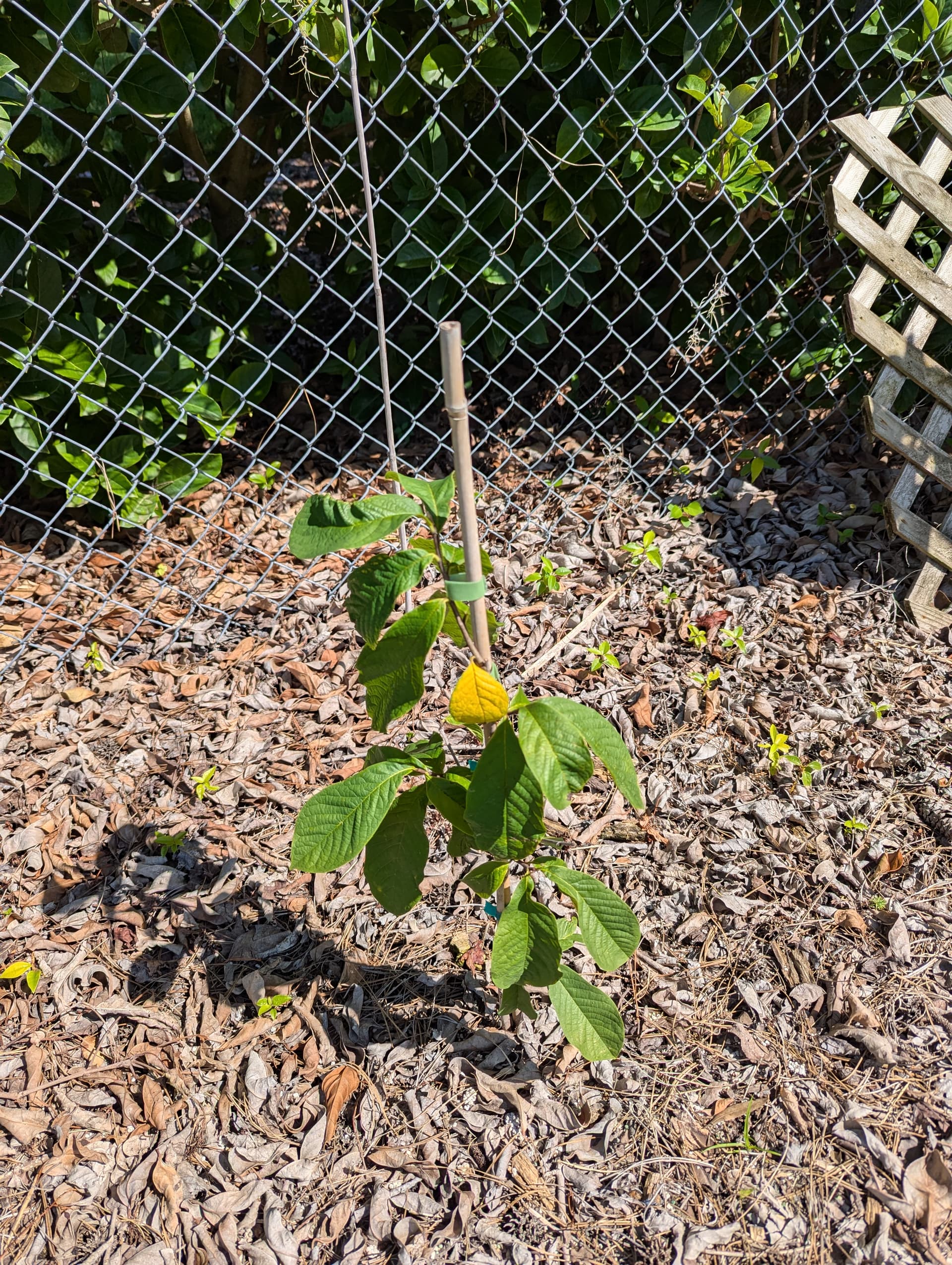
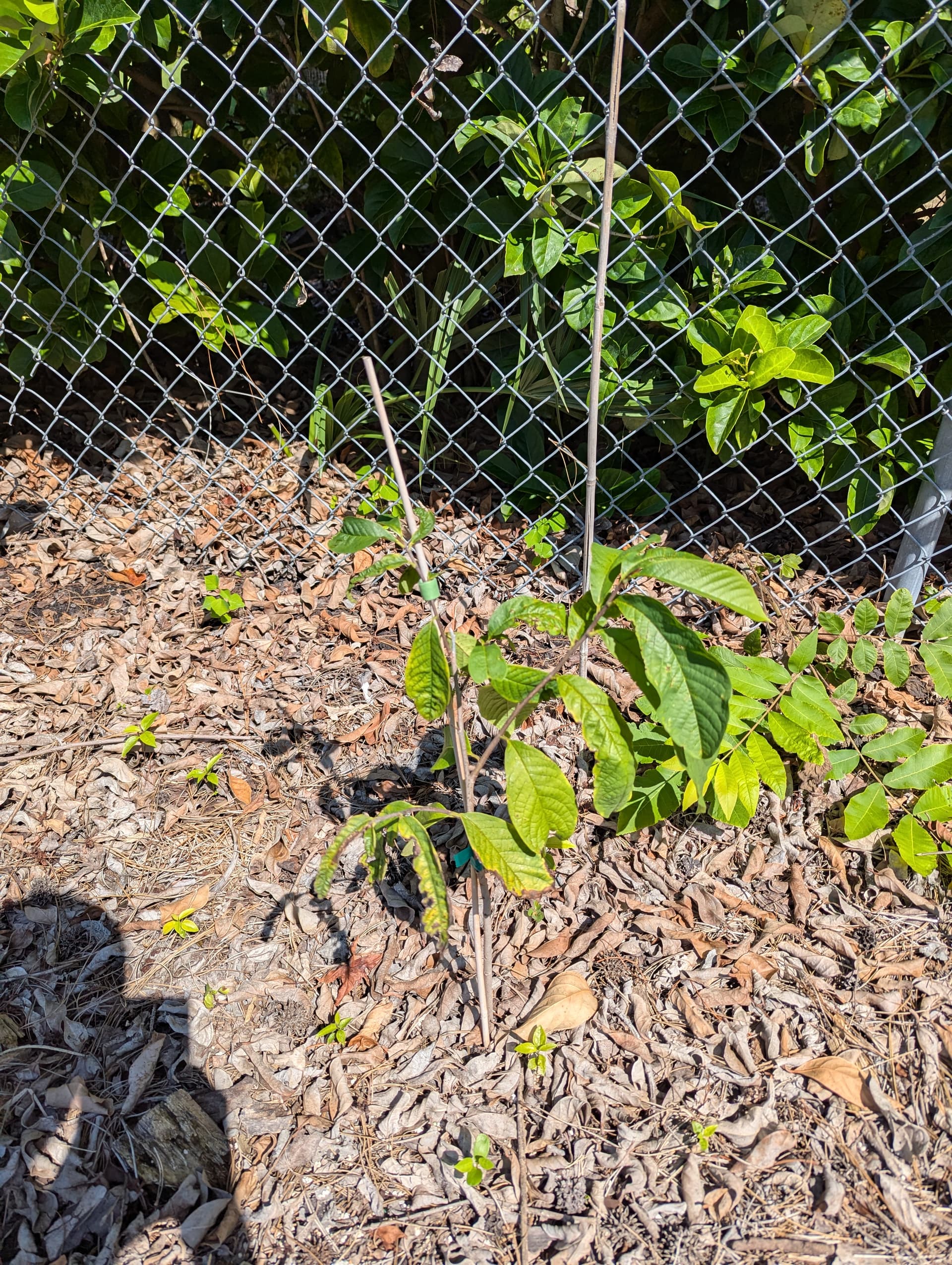
3 Likes
So I did a trop treat graft last night. No big deal.
But I was going through some old material in the fridge and found a scion of an “unreleased” variety that still looked fresh and had vibrant green cambium so I said what the hell, let’s graft it. So we’ll find out if a pawpaw scion can be grafted after being in dormant cold storage for over 15 months. 
12 Likes
Anyone planning on attending the KSU conference this year?
Not a free event but I’m excited to taste some new potential selections and hear some new research.

9 Likes
Will be out of the country or else I would be there. Last one in 2016 was excellent. KSU really does a phenomenal job with their events.
7 Likes
One of my new trees has a pretty sharp branch angle. Should I do anything to remedy it or just leave it be?
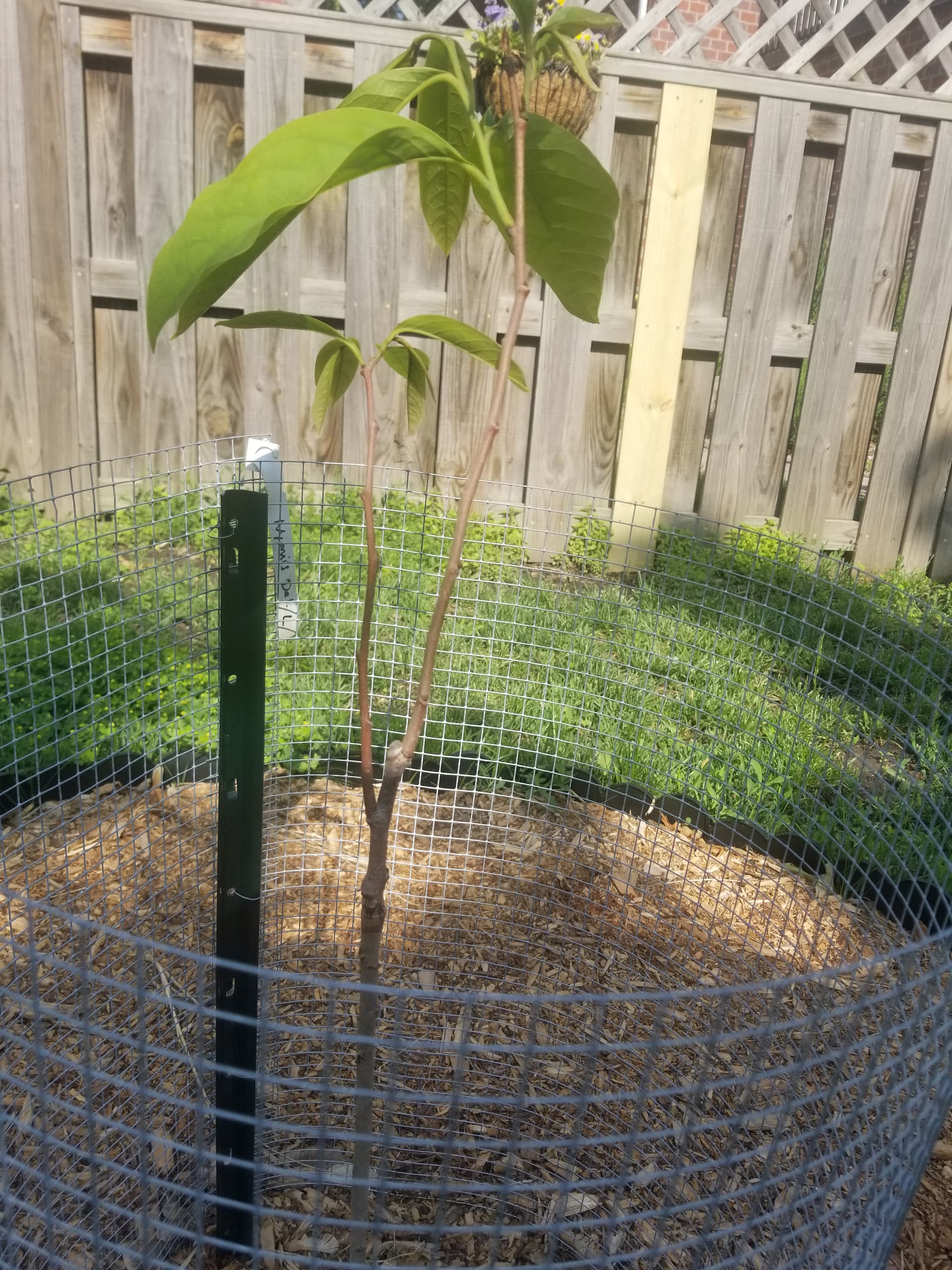
1 Like
id leave it alone for this year to establish itself then remove the small one next winter.
4 Likes
I wouldn’t do anything but you could put a limb spreader on it. To guide them apart a bit; I do it sometimes, to variable rates of success. But they haven’t caused damage before, just sometimes they don’t move the limb much.
6 Likes
I wouldn’t want 2 leaders that close together. I’d plan for the larger one and prune the smaller. I probably wouldn’t have the patience to wait and would do it now…it’s not like you have to worry about fireblight or other easy to catch diseases other fruit can get.
5 Likes
Agree - cut asap.
2 Likes
Very impressed with the resilience of @Blake’s plants, 2/3 of which have appear to survived my extremely suboptimal transplanting timeline (due to life circumstances), while other grafts from another grower, and which weren’t in such bad transplant conditions/timeline, all appear to have died…
4 Likes