Interesting, people sell the scion like Blake or Englands orchard. I assume I am paying the royalty when I buy that material but I guess not?
2 Likes
No - you are. You’re totally fine to graft that. They have arrangements with KSU. Sharing such as from forum members here, on the other hand, is technically not allowed since no licensing/royalties are paid.
I guess cloning a tree you purchased would fall in the same category technically (?) I don’t think many people really adhere to any of this though.
But yeah there are no restrictions on the fruit itself or the seeds.
11 Likes
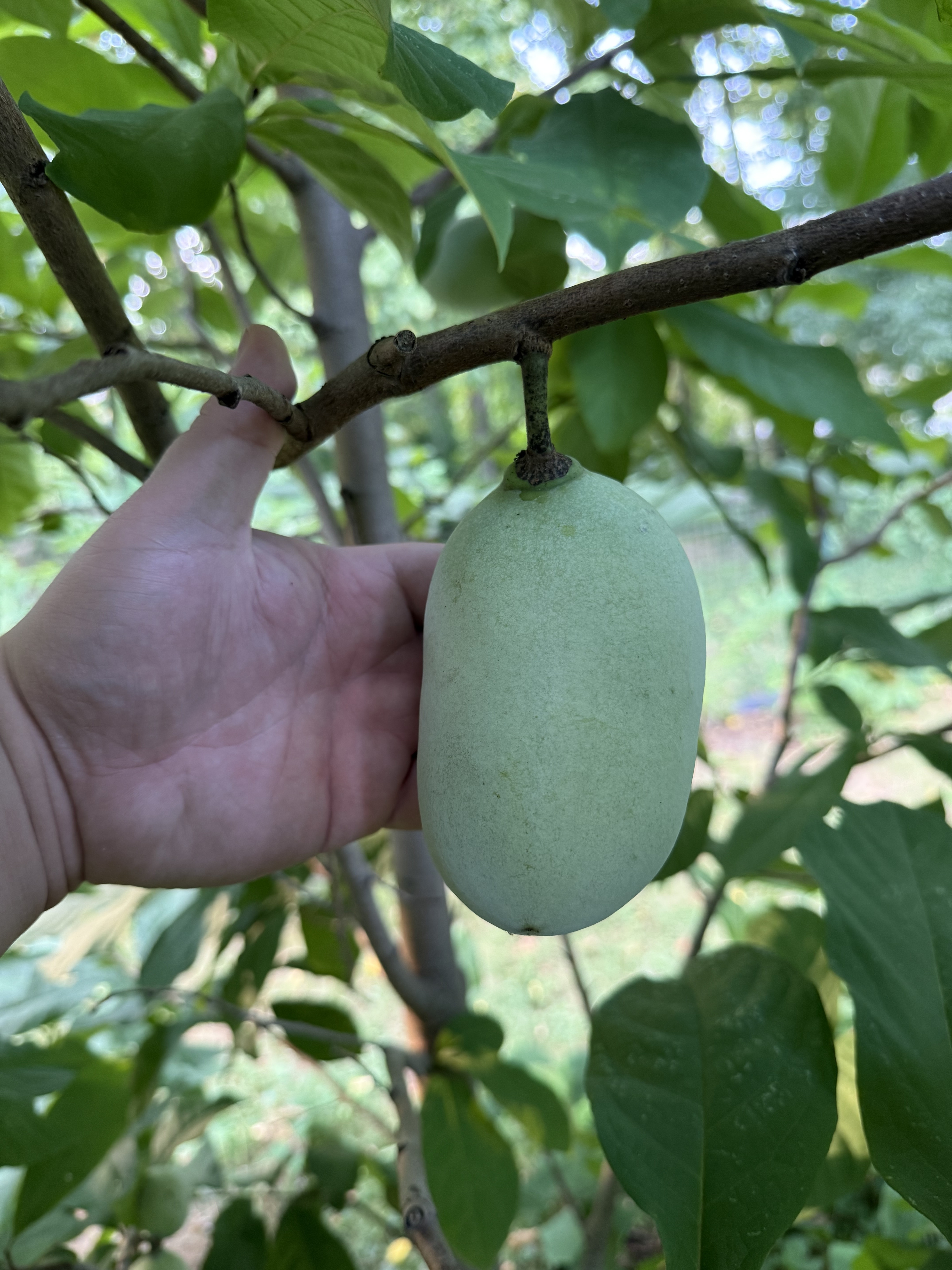
Nyomi’s Delicious
Seeing a lot less fruit this year, probably due to a hailstorm we had this spring. Most of the trees did push a second wave of flowers and fruited anyway.
15 Likes
i do the lake isnt right there but i am near the Dunes and my yard is Sand. I planted the tree with Rabbit manure only and very little dirt. rabbit manure will harden a little but keep moisture in i like it because it doesnt sink in like when i put dump truck loads of garden soil and the next yr dig down 3 inches to find nothing but sand again
1 Like
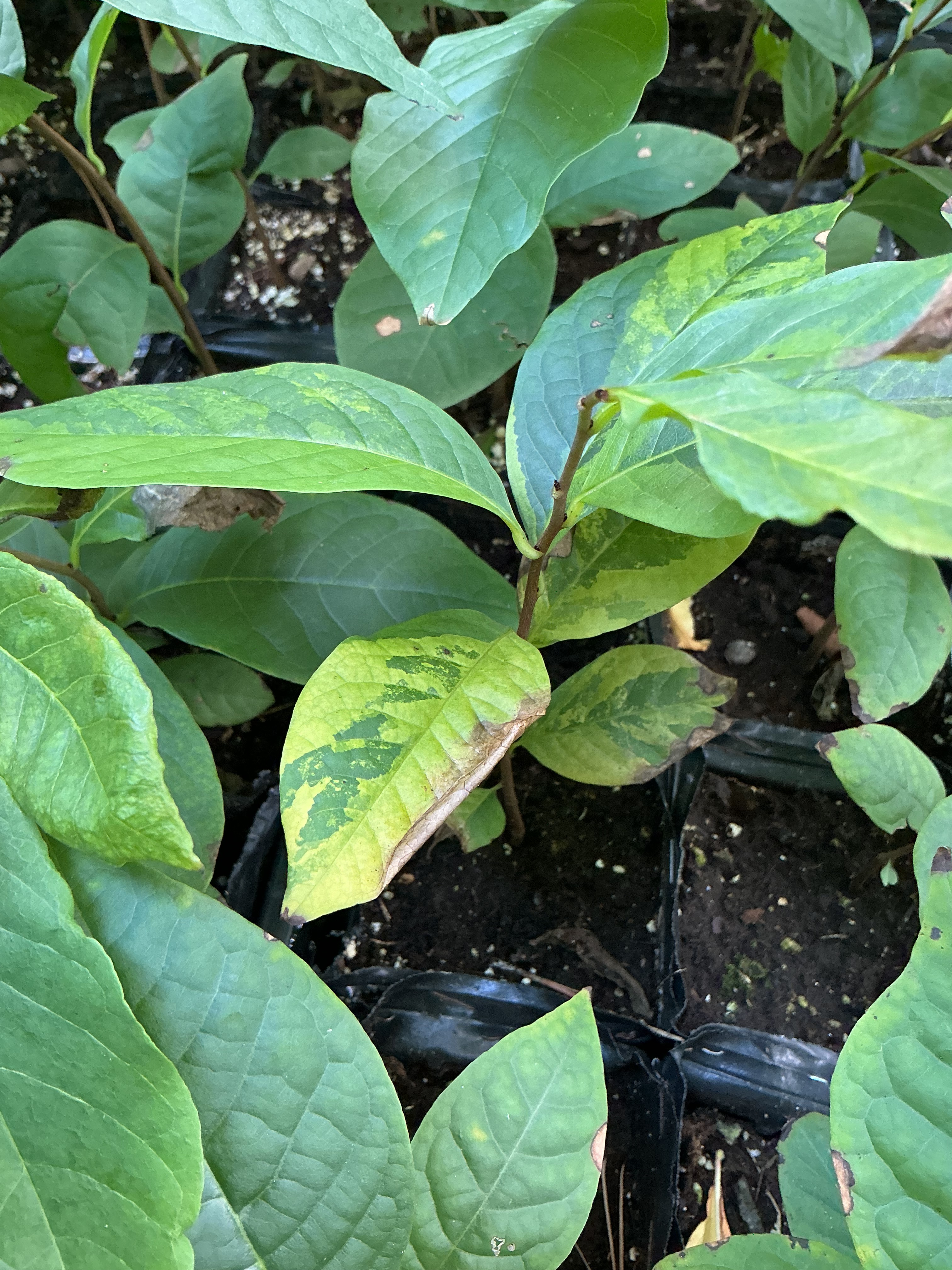
Variegated/mottled pawpaw?
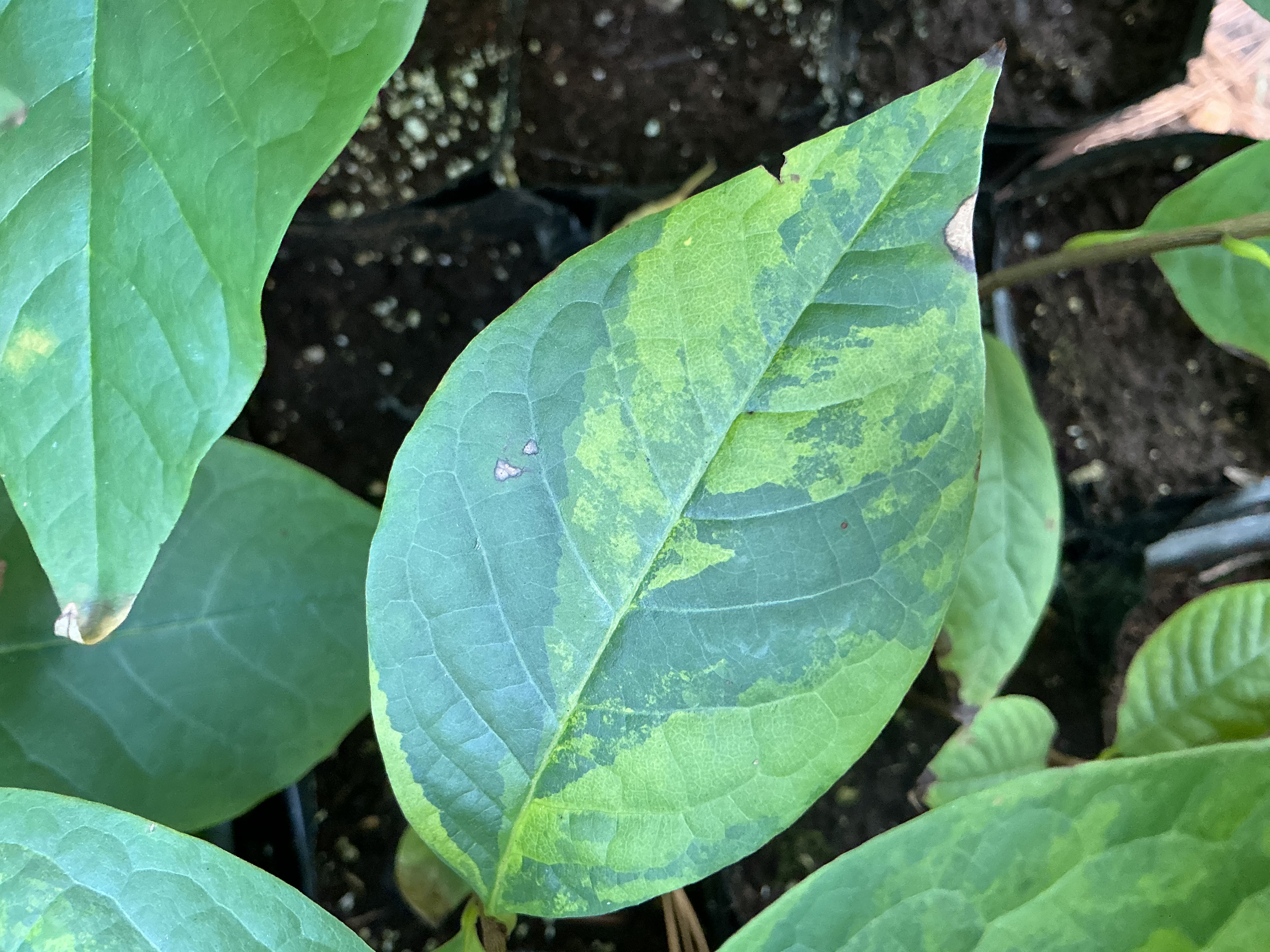
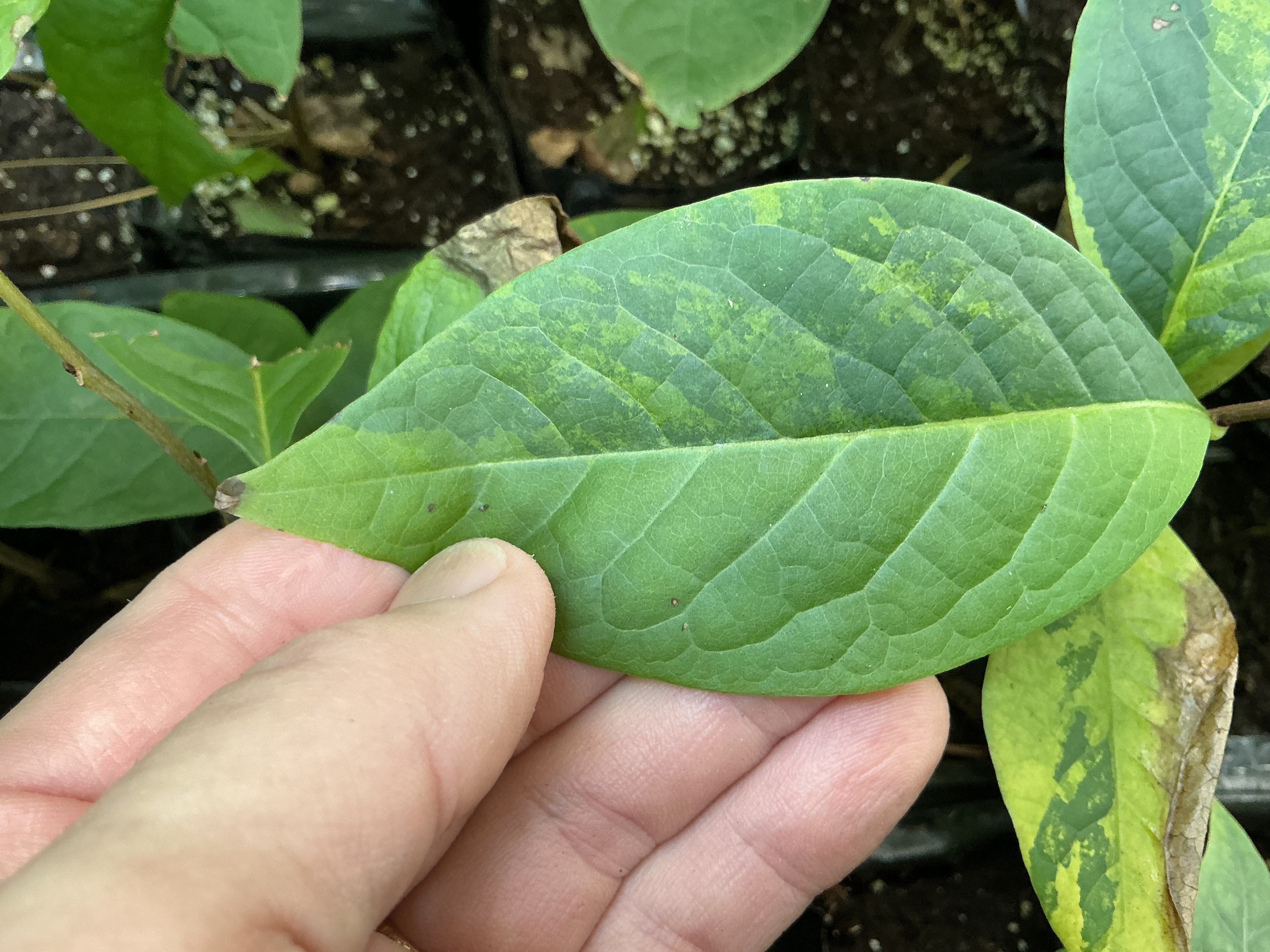
This spring I germinated about 150 pawpaw seedlings (zone 9a near Houston, TX), primarily from wild-collected western Missouri seeds, intending to use them for grafting rootstock. One of the seedlings appears to have variegated or mottled leaves. I don’t think this is being caused by either a viral/viroid infection, or the minor Phyllosticta asiminae lesions on a few leaves. Does anyone recall seeing this variegation phenomenon in Asimina triloba previously? I will earmark this one to not be grafted, and grow it out next year to make sure the variegation persists. Here is the odd seedling:
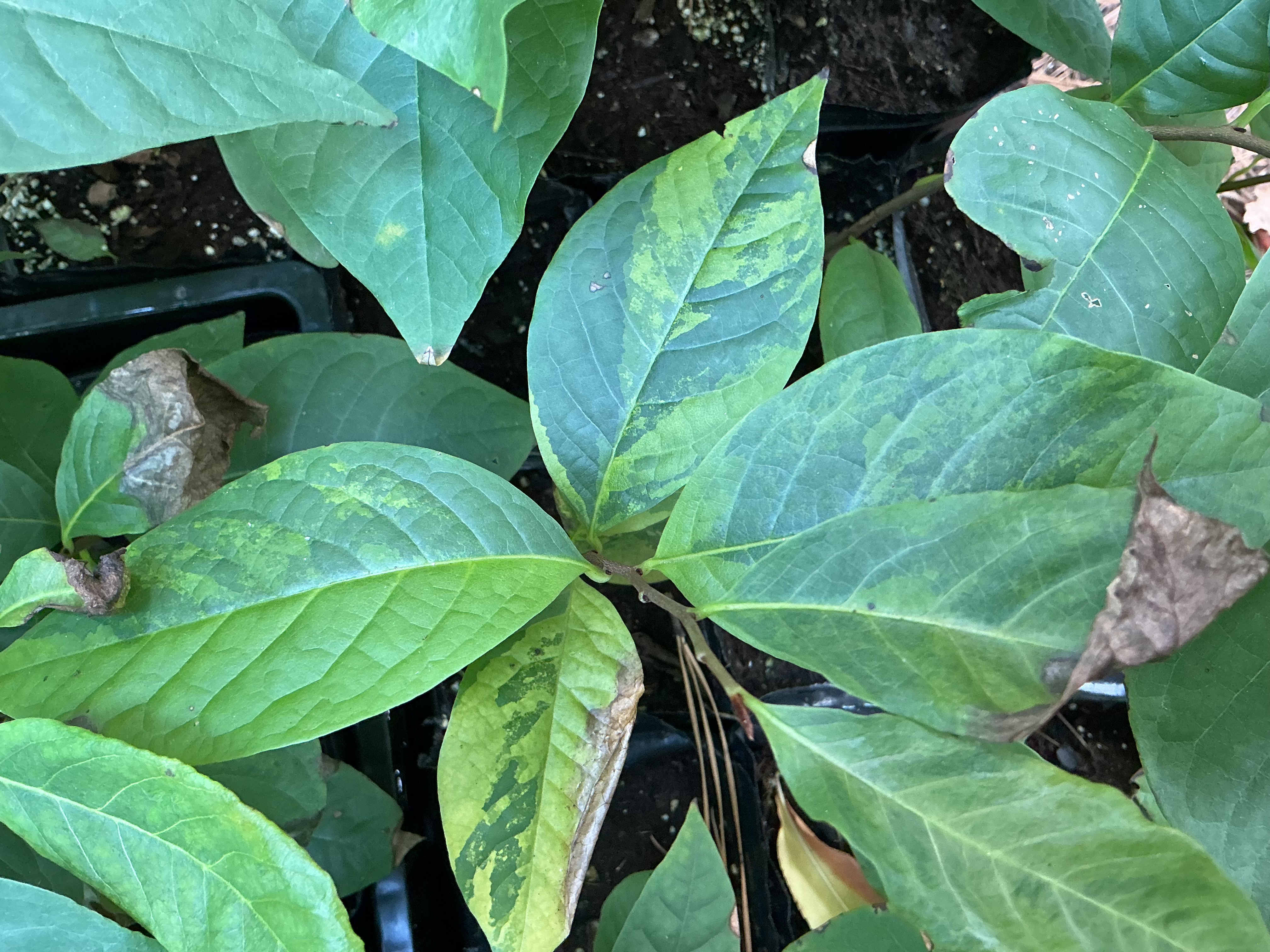
Here is close-up of a single leaf:
And another leaf:
And the entire plant:
7 Likes
Dannaher Nursery has the more common Spilt Milk, but another one they described to me that sounds similar to yours (I didn’t see a pic). They call it “cream corn”.
6 Likes
Excellent thread, all around. I’m looking forward to finally making some fruit selections for seed from the wild groves this year. Many have come off watery and not the best, but I have run in to more than a few with a smooth, creamy base and great fruity flavor over the years.
A few months ago I had some year+ old seed pop up as I was remixing soil, it has been fun to watch them sprout up outdoors.
7 Likes
Yes, many folks have observed this in seedlings and as weatherandtrees mentioned, some varieties are being propagated.
However, some experts believe this is in fact a virus.
6 Likes
Thanks to both of you. I will grow this one out. I don’t think it’s viral. Will be curious to see the fruit (in about 5 years)!
2 Likes
Ate my only Tallahatchie fruit, small but definetly better than Prima.
5 Likes
Has anyone grafted onto some of the more dwarf species of pawpaw?
are you going to be doing any pruning to your pawpaws this summer to thicken them up? wondering if i should do it to some of mine.
3 Likes
No but I like thinning clusters to singles if possible. Pruning wise I like pruning back to one or two leaf buds, or all the way back to flower buds. That happens in late winter though.
I MIGHT feel adventurous this year and try some fall chip buds just for fun. In that case I need to grab bud wood soon.
4 Likes
I have done a ton of reading in the past couple of weeks.
A few notes on my previous questions.
paw paws like Tallahatchie that set large clusters are problematic because the fruits tear openings in the rest of the cluster as they fall off or are picked. During a seminar, KSU showed that yields are NOT reduced on trees that are thinned, even to one fruit per cluster, meaning that the larger fruit size makes up for the lesser amount of fruit.
Susquehanna fruits had been studied and found to be not only among the best flavored in several tasting trials, but also the most attractive, the best textured and higher brix than other cultivars with the lowest seed percentage.
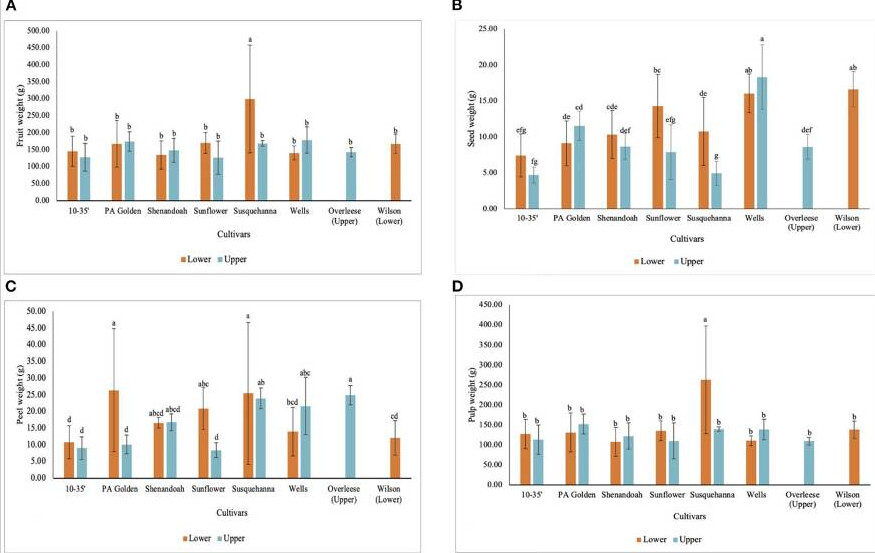
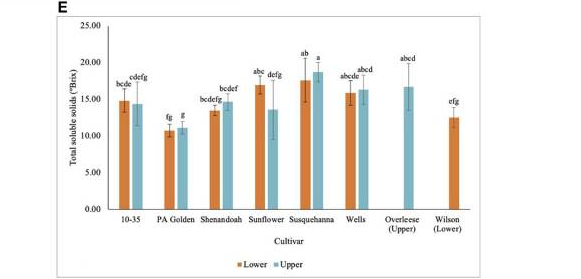
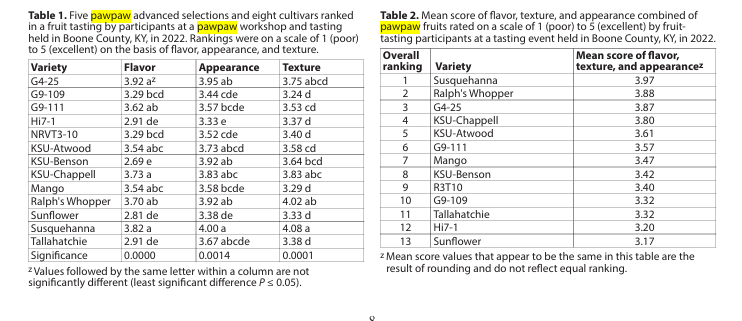
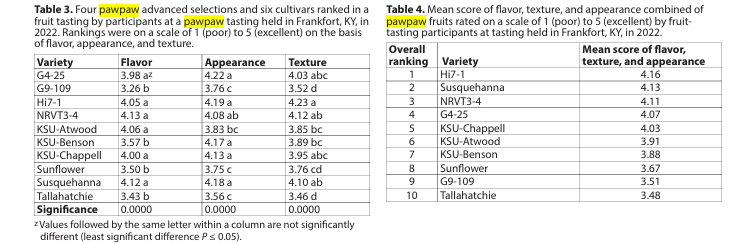
As a bonus, the tree also sets less fruit per cluster and has consistently larger fruits compared to other cultivars. This seems like an ideal orchard variety, despite its slightly lower yields and lesser comparative vigor. Bonus, bonus, the trees are much easier to purchase, and I think the patent expired. The downsides are that the tree seems to have higher mortality when transplanting, but this could be because of other factors like root development and relative vigor/ transpiration abilities.
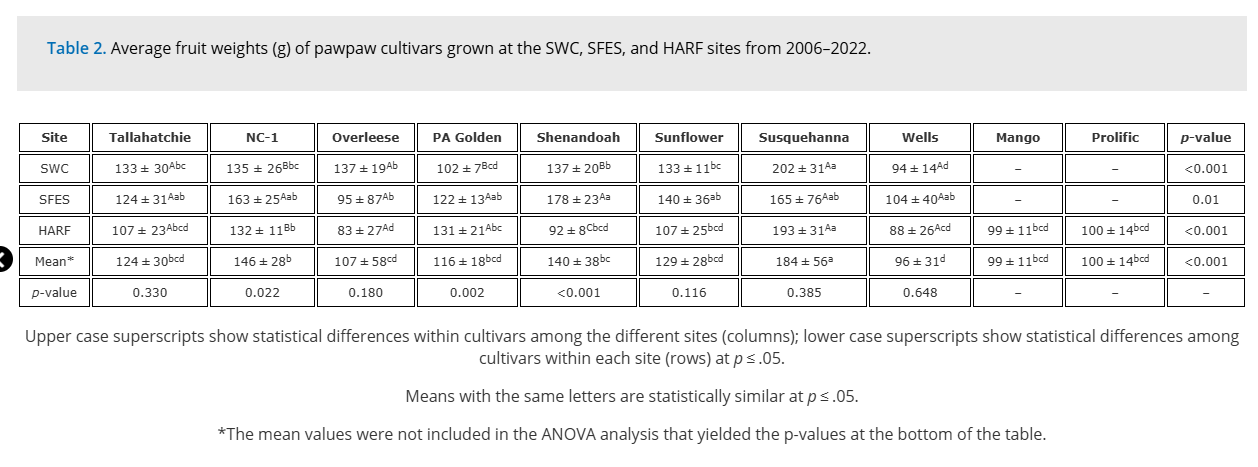
I have not been able to see any of the studies about the 3 KSU cultivars on yield, which makes me cautious about their claims like Atwood’s “150 fruits per tree at 138 grams” which would yield 45lbs of fruit. That is double the highest in this study NACAA and double the average in this study

on the high end for half of these trees, it can get past the 150 mark, but the averages are much lower. it is also easier to see that Susquehanna does not yield as much compared to other varieties in terms of fruit per tree, but the fruits are much larger on average
On top of that, in this graph, you can see that its cumulative yields are on par with other cultivars, despite setting much less fruit
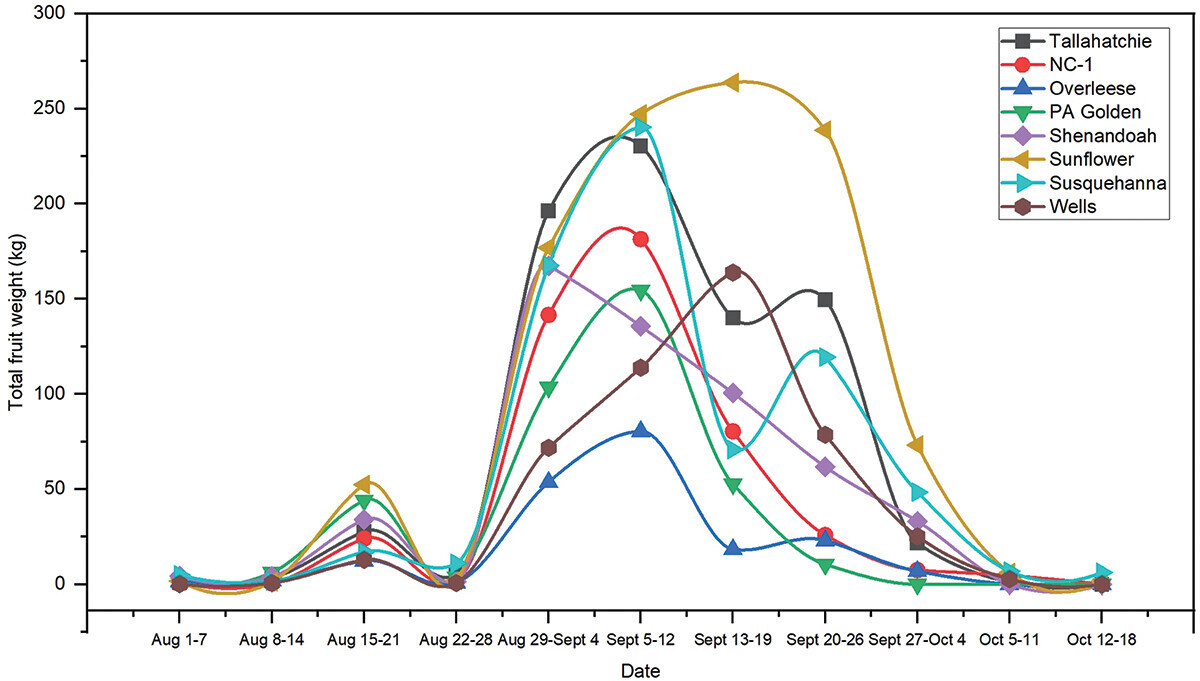
" The figure shows that “Susquehanna” fruits weighed more than “PA-Golden” and “Tallahatchie” fruits even though more fruits of the “PA-Golden” and “Tallahatchie” cultivars were harvested as shown in Figure 3 and Table 2. Previous studies also showed that “Susquehanna” fruits were heavier than “PA-Golden,” “Tallahatchie,” and “Sunflower” fruits (Adainoo et al. Citation2022). However, from Figure 4, it can be seen that over the years, the total cumulative weight of the “Sunflower” fruits produced was higher than the total weight of “Susquehanna” fruits."
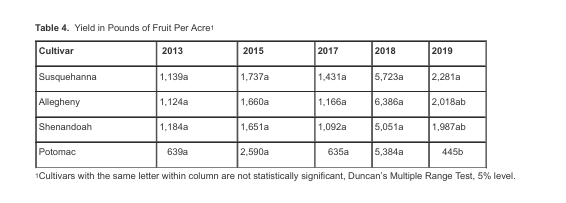
So it really has me wondering, how do the newer varieties truly stack up against something like Susquehanna, especially since they might have been seedlings on it. I have no doubt that they are great cultivars, but does anyone have access to the data? They have to have the figures somewhere.
sources for your own reading.
https://www.tandfonline.com/doi/full/10.1080/15538362.2024.2384391#abstract
https://publications.ca.uky.edu/sites/publications.ca.uky.edu/files/PR832.pdf
https://pmc.ncbi.nlm.nih.gov/articles/PMC9622945/
https://www.nacaa.com/journal/bba6a701-ede1-4eda-b557-c047c282b412
9 Likes
Thats a really good breakdown. Having tasted a decent amount of cultivars and grown a handful of them….Susquehanna is great BUT is susceptable to phyllosticta and overal too strongly flavored for me. Chappell is like a tastier version of Susquehanna, but has a more creamy texture vs super firm(also phyllosticta susceptable). KSU HI 1-4(probably going to be released this fall) has the firmer texture and very delicious. I am not 100% sure but I have good reason to believe that the first 5 KSU selections are probably Sunflower x Susquehanna seedlings.
Just looking at productivity Prima probably beats susquehanna, but flavor leaves much to be desired.
Theres still a lot of unknowns when it comes to growing pawpaws commercially, and success comes down to how youre able to market and sell your product. Buy some fruit this fall or make some arrangements to try some. Buying fruit is my favorite way to buy seed.
10 Likes
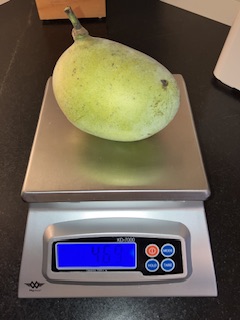
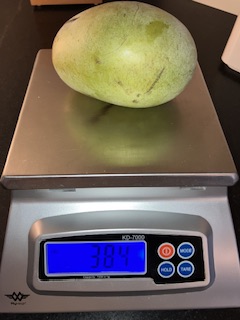
A couple of the final fruits of the season. “Big Ben.”
Don’t want to give the impression they’re all 468g 
That stem is maybe 5g? The smaller fruit had some hail damage or something and has a wound but I think will be fine.
13 Likes
Dogs aren’t supposed to eat avocados. The number of things we gave our dogs when we were kids that we had no idea were bad for dogs!
John S
PDX OR
5 Likes
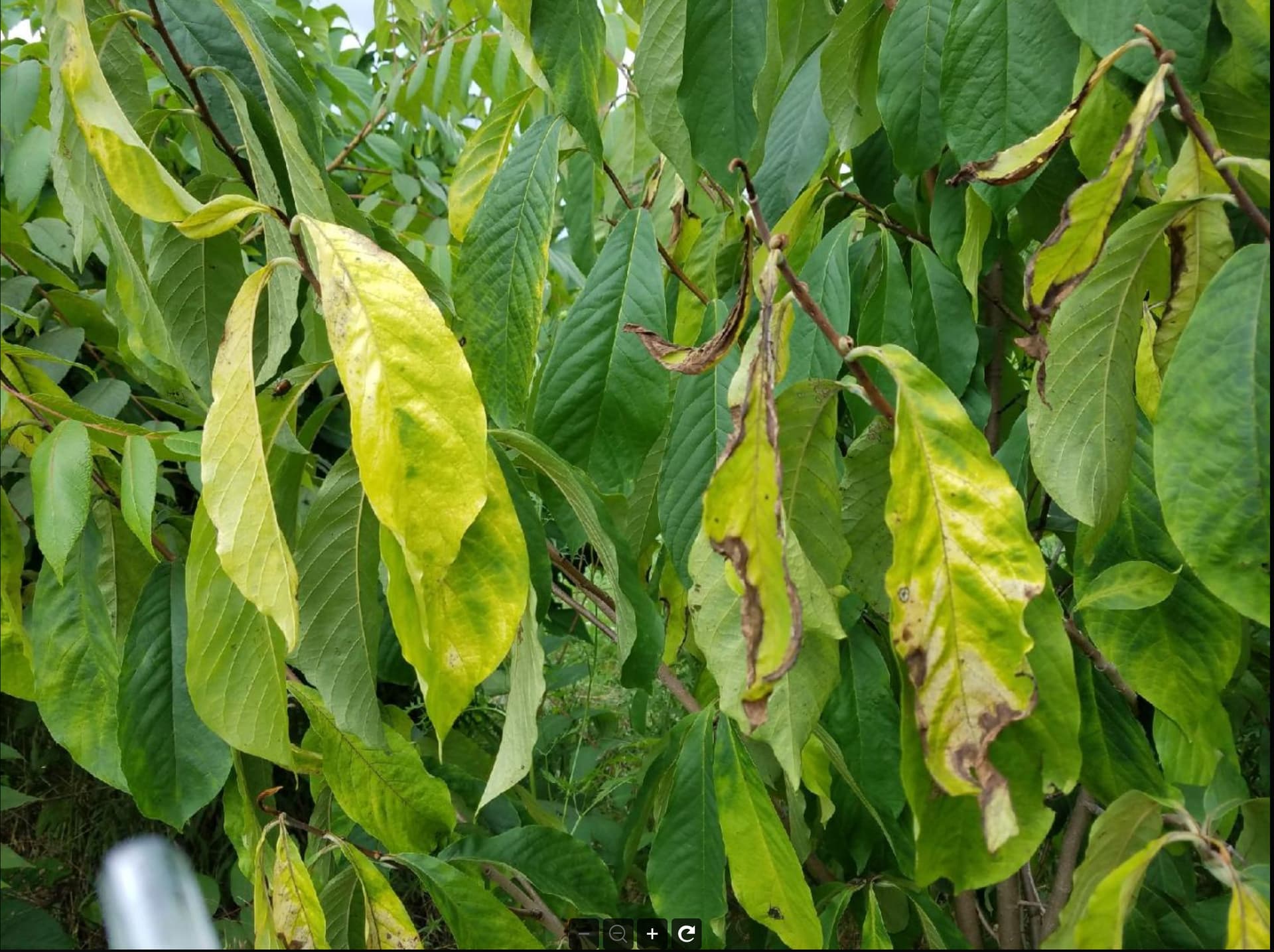
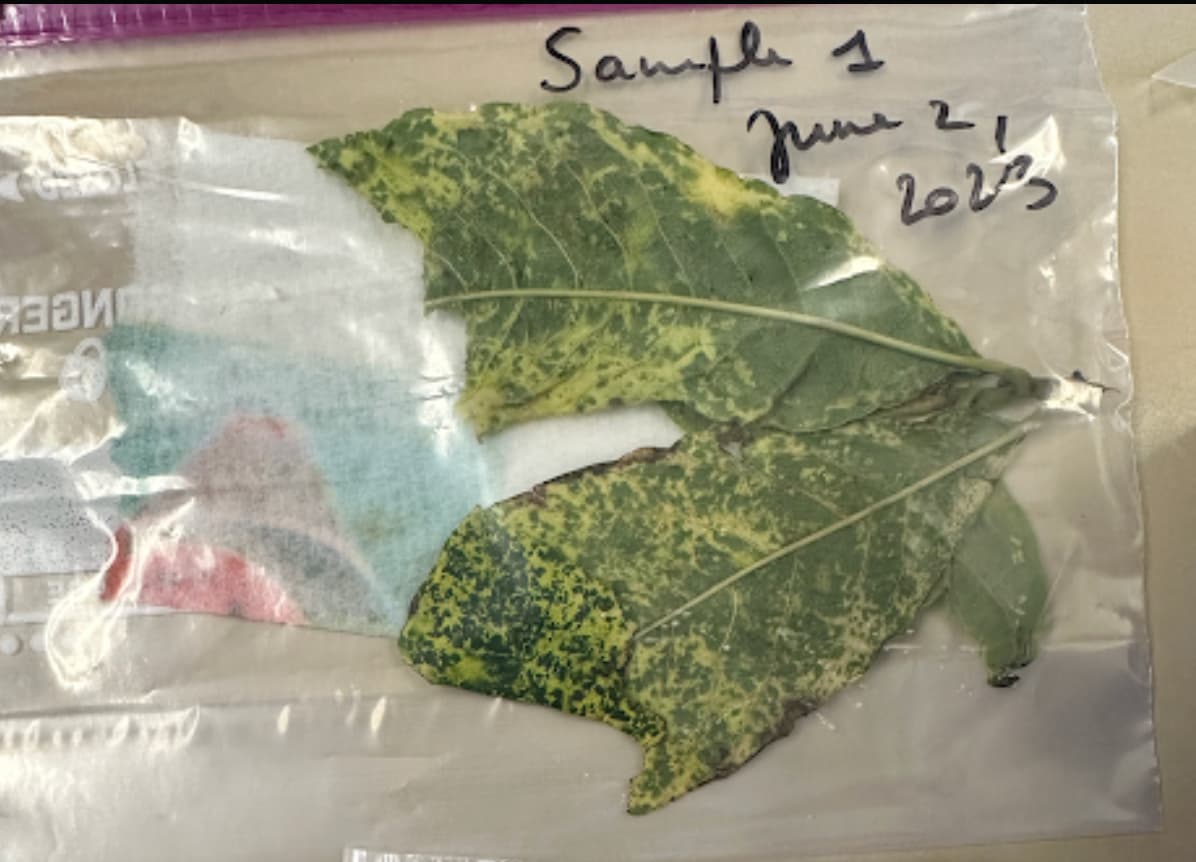
I refuse to grow or propagate any variegated pawpaws. If it’s viral that nonsense could spread via aphids, grafting knife, etc. Seems risky to me.
I do see about one per year in my seedlings grow outs. They always seem to lack vigor and I cull them.
Here’s a pawpaw infected with Tobacco Mosaic virus. Neal Peterson emailed me these:
14 Likes
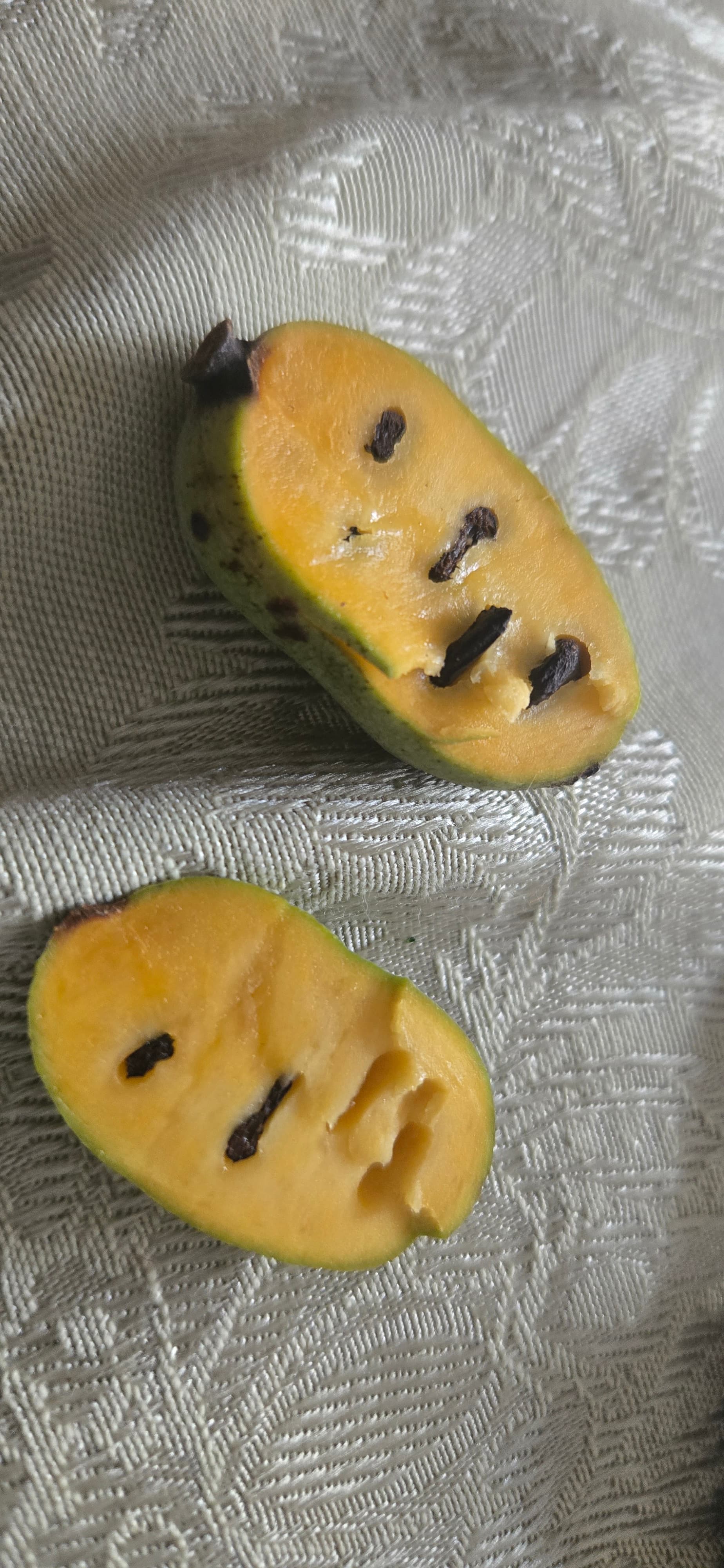
First pawpaws: Rappahannock. This one is an aborted fruit but the fruit had a good “buttery pawpaw flavor” not exotic tastic. I’m excited for when they get more mature next year! From Charles west, planted in fall of 2020
13 Likes
I wonder if it’s due to evolution of a new TMV strain or some semi-lethal mutation within genes responsible for immunological system in this tree.
1 Like