Thanks kinghat. Great video.
John S
PDX OR
1 Like
Blake: I agree that plants with any evidence of a virus/viroid should be destroyed. I get nervous when my figs push abnormal leaves (I have about 35 varieties). Anyway, I shared these same photos with a plant pathologist, Alex Yu, and here are his comments:
“It doesn’t look viral to me, rather, it looks chimeral. Although it is sectoral, I think it should persist. The variegated tissues look pretty well distributed. Anyhow, if the variegated portion were to take over, it looks as though it still has some (although perhaps reduced) photosynthetic capability, so it may still have good ornamental value.
I know there is ‘Spilt Milk’ (which honestly, to me, the variegation suggests an origin that is not simply genetic, perhaps viral, looking at the patterns and leaf deformities), and I have seen a handful posts online, especially on reddit, with chimeral variegation similar to this, but most are not as well-distributed.
Most of those I have seen have variegated portions which completely lack chlorophyll, leaving sections either bright white or yellow, but not lime like this. So, in my opinion, the variegation here is likely from the absence of an accessory pigment that gives a normal Asiminia triloba the darker shade of green, or perhaps one of the chlorophylls, but not both. So if it were to fully take on the sported color, perhaps it could still be grown, like the Golden Falls Cercis canadensis. So cool…”
6 Likes
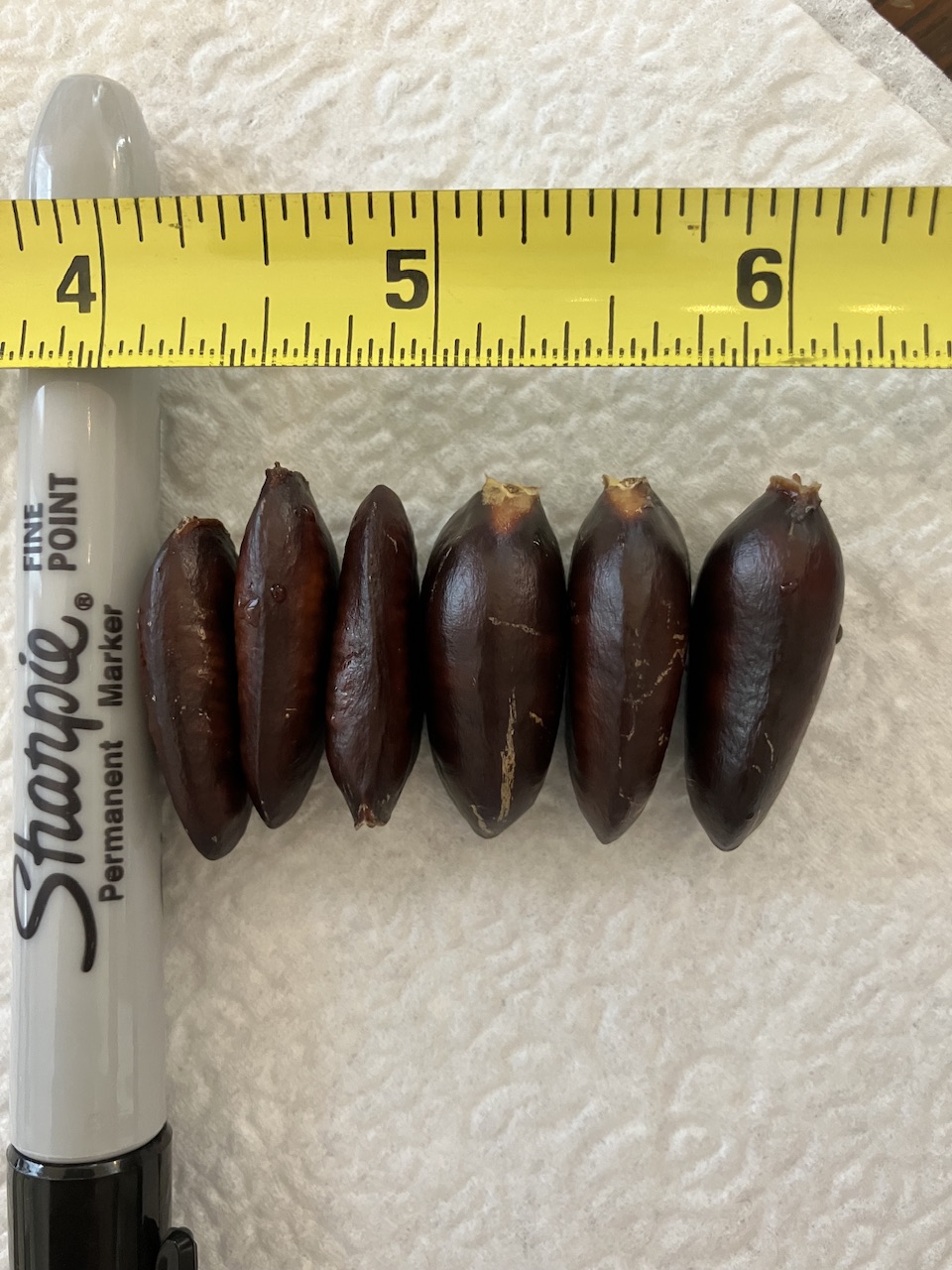
The seeds are “short” but very fat. I’ve personally not seen this in other varieties- maybe Benson is the closest.
Three seeds on left are from 4-25, the others Big Ben.
12 Likes
Thats really interesting, Prima has really fat seeds too. From what I understand Prima came from a batch of seeds from Corwin Davis. Think Maria’s Joy came from Corwin Davis germplasm too right?
4 Likes
Yep, according to Andy Moore.
4 Likes
looks similar to what i have going on with one of my trees. might be sw injury but mine faces directly east  tree seems fine though:
3 Likes
My Sunflower was stunted for its whole life, 12 years?
Then this year, it shriveled up, but a new plant came out of the rootstock.
Also, a seedling pawpaw I ran over and thought I killed has come back to life. Film at 11.
John S
PDX OR
5 Likes
I have found that stunted trees are best restarted with their new stem. Idk what it is exactly, but for some reason they just need to do it. That new stem will outgrow the old one in most cases much faster than it ever grew before. You won’t loose any time by discarding the weak/stunted stem.
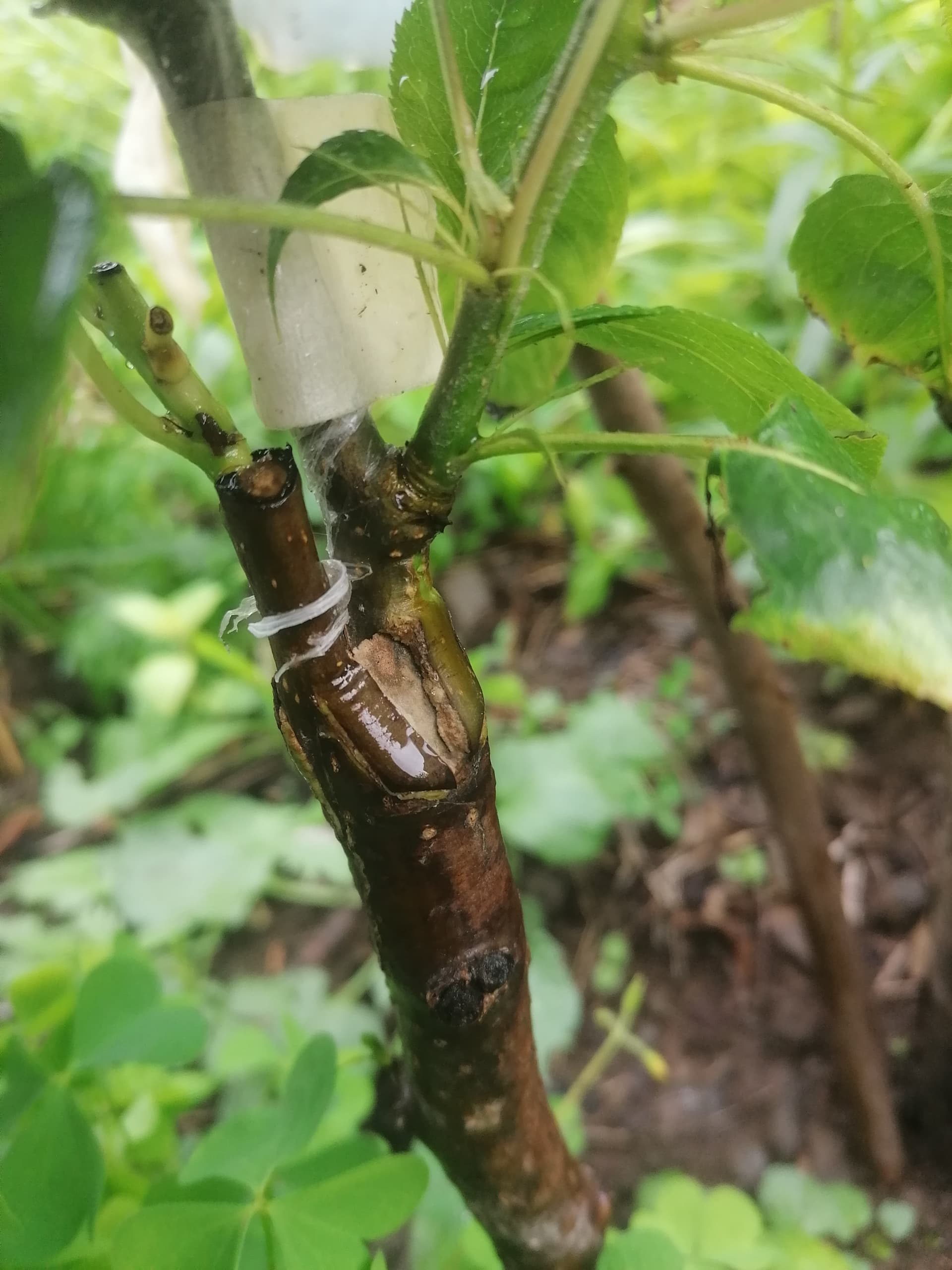
Graft update on
X-42 from last year

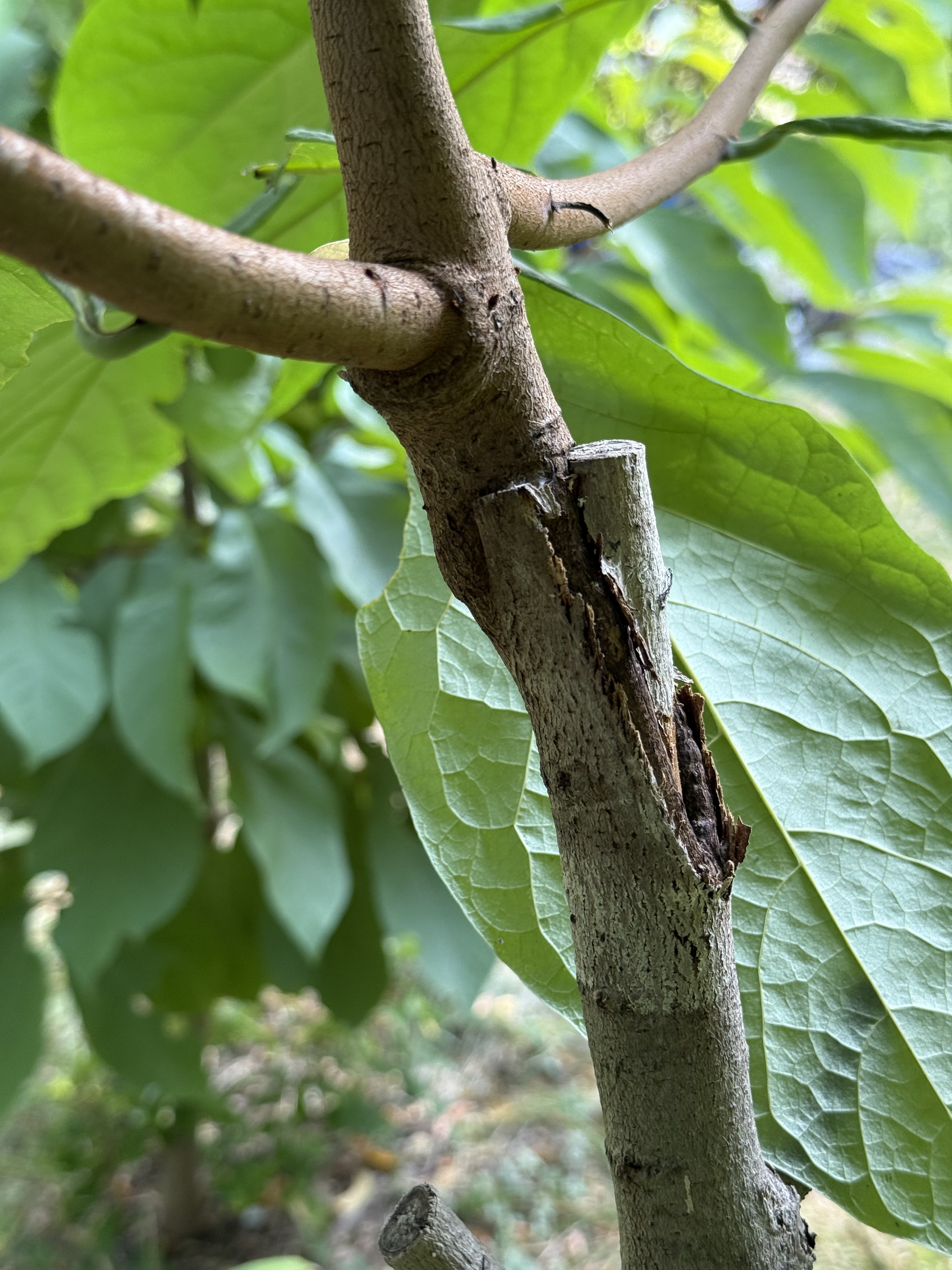
Not super thrilled about how much dead wood there is on the bark graft, but ill leave it for now.
Benson graft from this spring on an established 250-30 seedling.

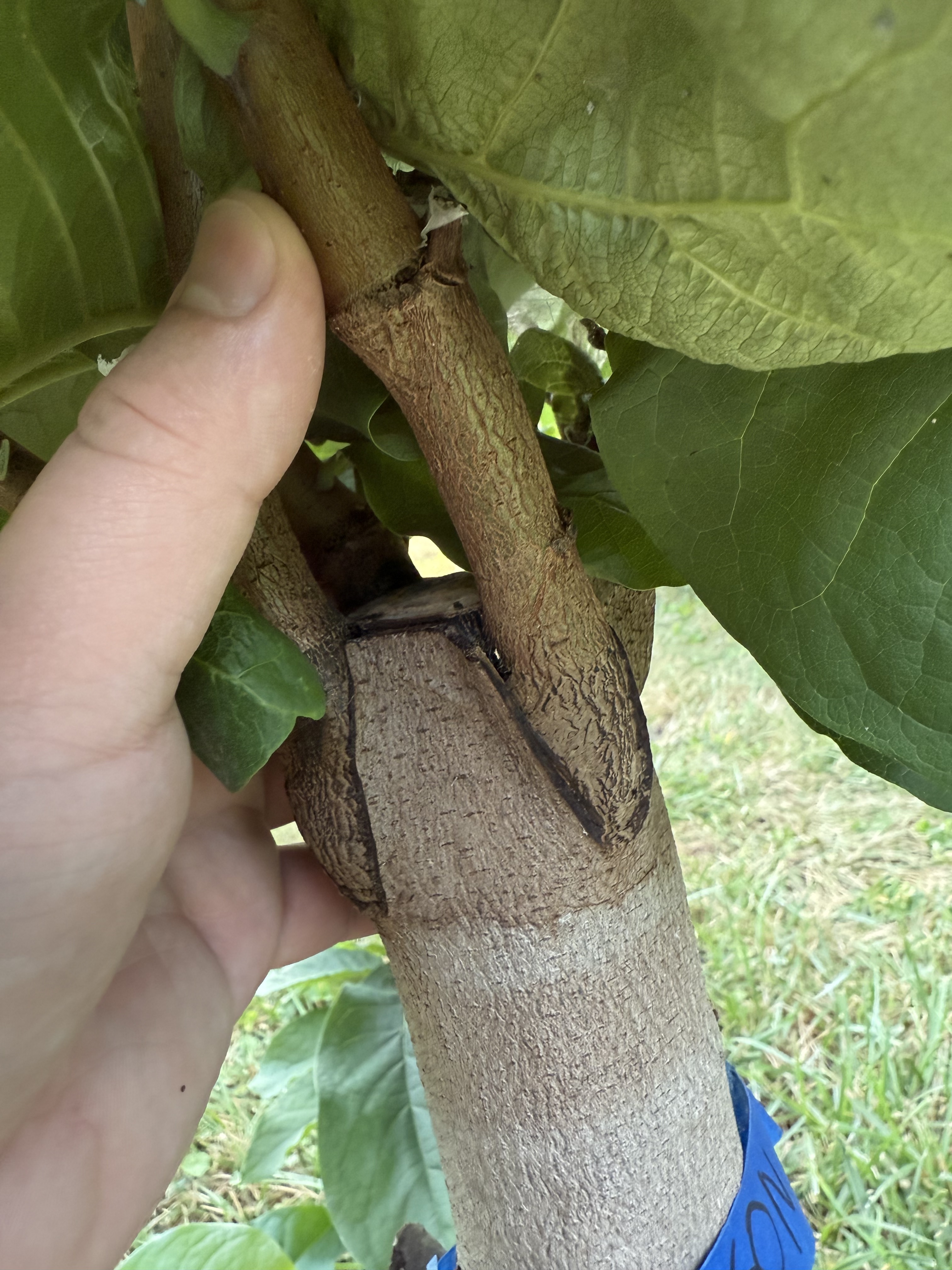
The idea is that having grafts all the way around itll close the wound faster and I can just prune out what I don’t want.
Wabash on a seedling next to it

13 Likes
Charcoal!
Charcoal is the only fertilizer that lasts thousands of years!
It should be 5-10% of the back full to your hole when planting trees. Make sure you use some natural fertilizer with it, I’ll sure any manure is fine, but hot composted manure is better because the seeds are all dead, but I’ve even planted them with charcoal and fresh manure deeper with good success.
6 Likes
Wow that benson looks awesome!
2 Likes
I think sometimes rootstocks can have compatibility issues with the grafted cultivar. I had grafted NC-1 to a rootstock that had fairly good vigor several years ago and it acted stunted afterwards and kept putting out weak branches that would break off. (I had grafted NC-1 to another tree that same year and it has grown well for me ever since, so the scion source wasn’t the issue.) After a few years of this, I decided to cut it down below the graft this year and grafted Big Ben to it. It seems much happier with that variety and is more vigorous again.
10 Likes
Good anecdote. Might help somebody. Maybe even me.
John S
PDX OR
4 Likes
my two best little guys are doing good again. i been on top of it with misting during hot days and i think that humidity was what they really wanted- not so much more watering but not to get so much dry air on them. they’ve perked up

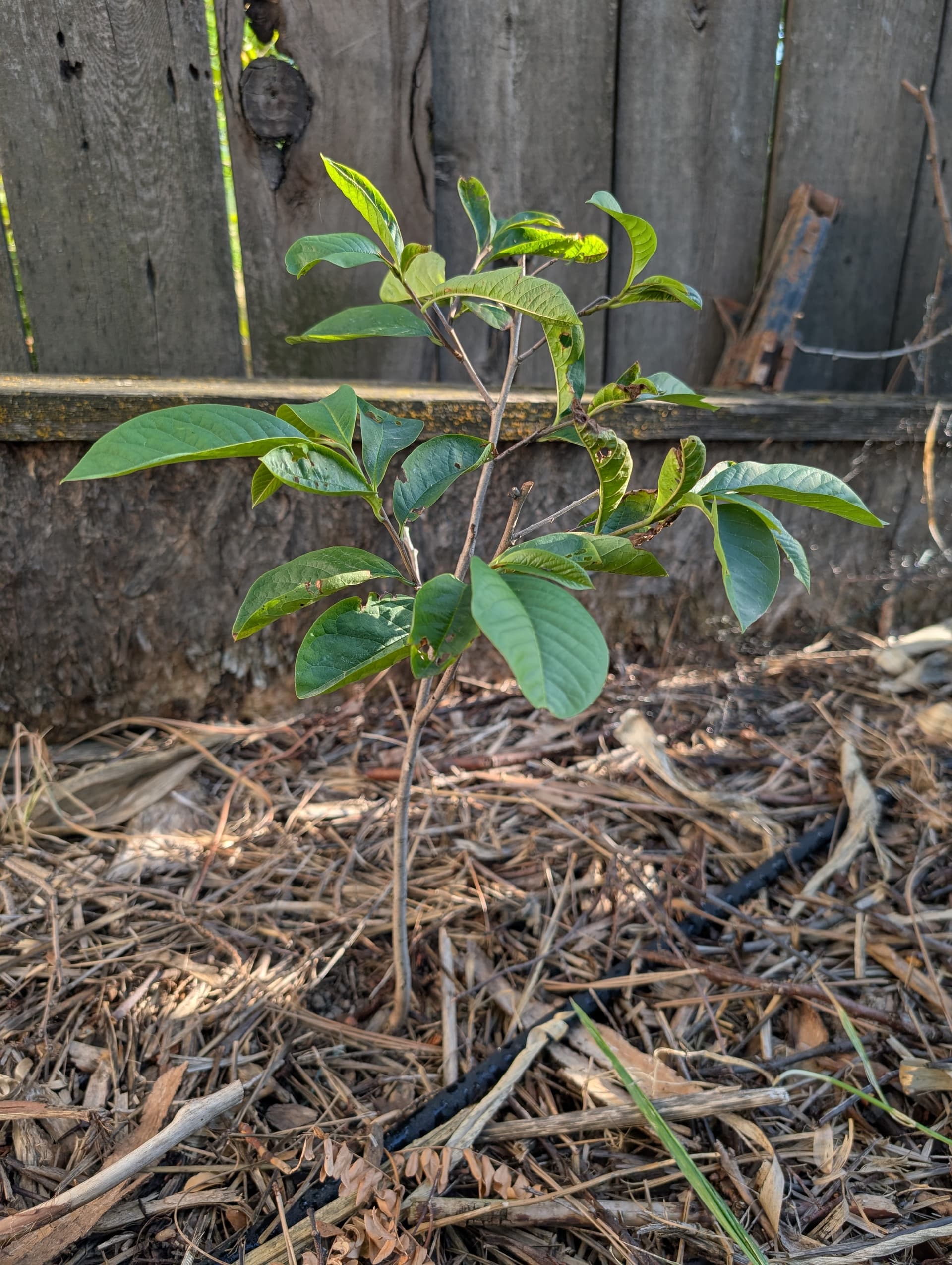

yeah it’s a big asparagus in there with em. you can see the leaves that were suffering and the newer leaves looking ok.
the smaller one has only gotten a little height on it this year. hoping to see them both get taller next year over summer. I’m really wishing it’s just that they’re putting root down first.
i also have two little twig sized in there, and one in a tree pot about 6 inches tall that came up finally. plus the fridge seeds to start next whenever I’m ready for those.
10 Likes
That might be the issue with your attempts with persimmons too, which has always confused me
Anywhere pawpaws can grow American persimmons should be able to
5 Likes
I like your thinking with multiple grafts, what I’ve been doing is cutting the vertical growth off of all grafts but one, and using those as scions to graft usually.
But that way my best one is growing up and I get multiple branches at the height of the graft, and hopefully they will attach to the best vertical as they grow.
Also I’ve had ideas about tying scions together while they’re green to fuse them together and increase their strength by triangulation.
Also bending green shoots over the cutoff trunk is an interesting idea to close it up sooner, I want to test that too.
Oh and @treefrogtim I’ve had good success cutting off the dead wood, painting it with normal interior latex paint low VOC (all interior paint is low VOC now, at least in the US), and shading it from the sun if the leaves don’t do a good job at that already. The bark should close over something like that pretty easily, damaging, ideally shaving, the edges of the good bark seems to stimulate growth and cause it to start covering the wound faster.
Also if there’s a sucker growing under that, you could do an in arch graft to your upper graft that could do it too.

5 Likes
I also have NC-1 but it’s an Almond seedling (I was just made aware there is also a pawpaw of the same name, so sorry for my diverting the topic), two of them if I count the one that I planted for my sister.
NC-1 Almond is a specific cross, and they sell the seedlings, so two scions could be completely different trees, I’m not sure if there’s an original grafted almond tree NC-1 that has the same name, that would be confusing.
Unfortunately all of my NC-1 Almond grafts failed, but I put them on difficult candidates like Prunus Serotina, Virginiana, and Padus.
3 Likes
@Trav You are making me wonder if you are aware that this thread/topic is about pawpaws. Not that I wouldn’t admire your tenacity for trying to graft pawpaws to cherries, I’m guessing you are talking about a different NC-1 cultivar in the Prunus genus, rather than the pawpaw cultivar.
I do greatly admire your experimental grafting work with Prunus, by the way, especially when it comes to working with Prunus serotina and virginiana.
4 Likes
I’m thinking it might be. I’m planning to try persimmon where the pawpaw are now so they benefit from the humidity I’m making there in the dry hot days- I’ve got to move a lilac to make space where light will get in though.
3 Likes


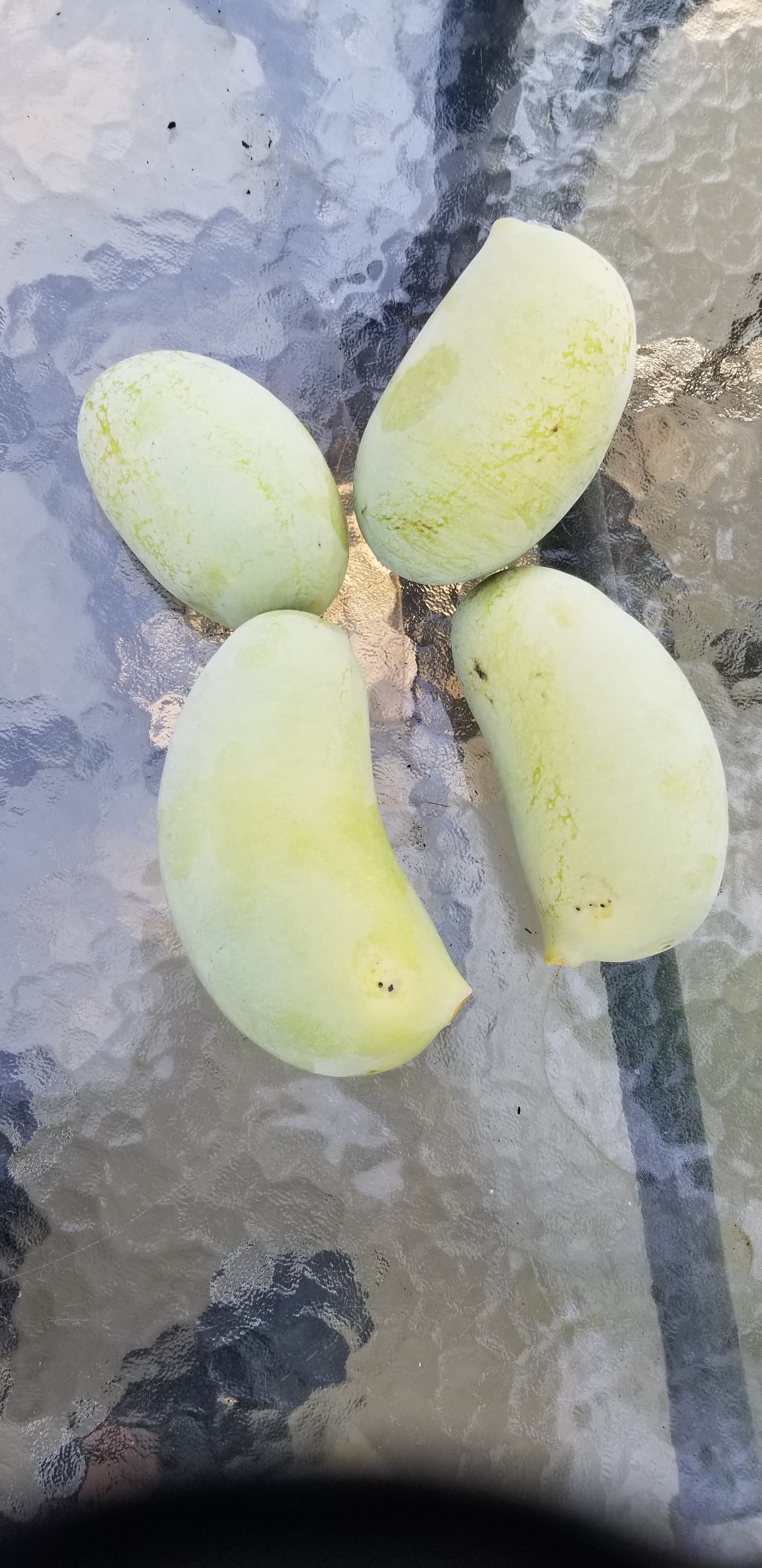
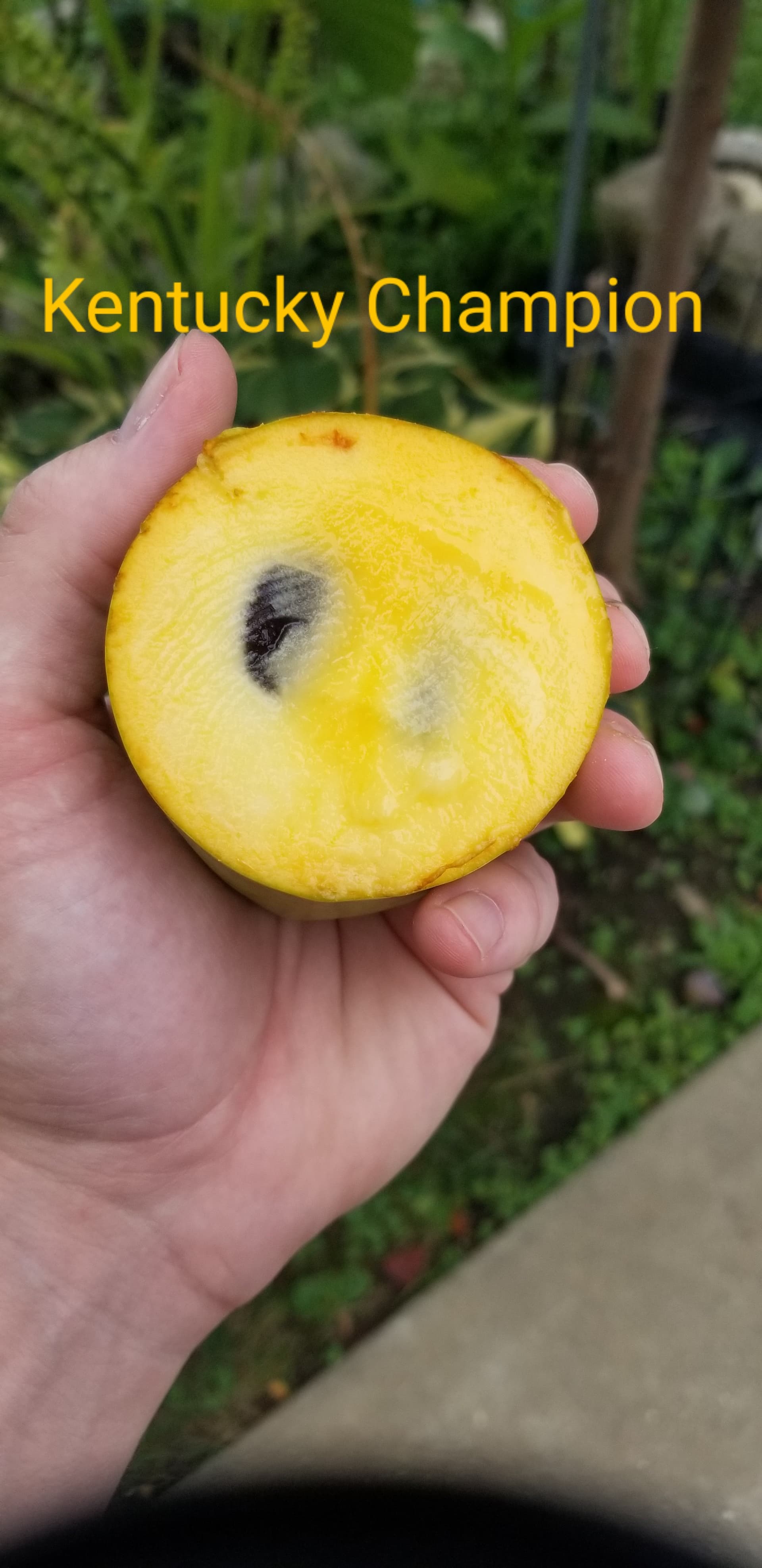
Awesome! Do you think Florence white is dropping any yet?
1 Like