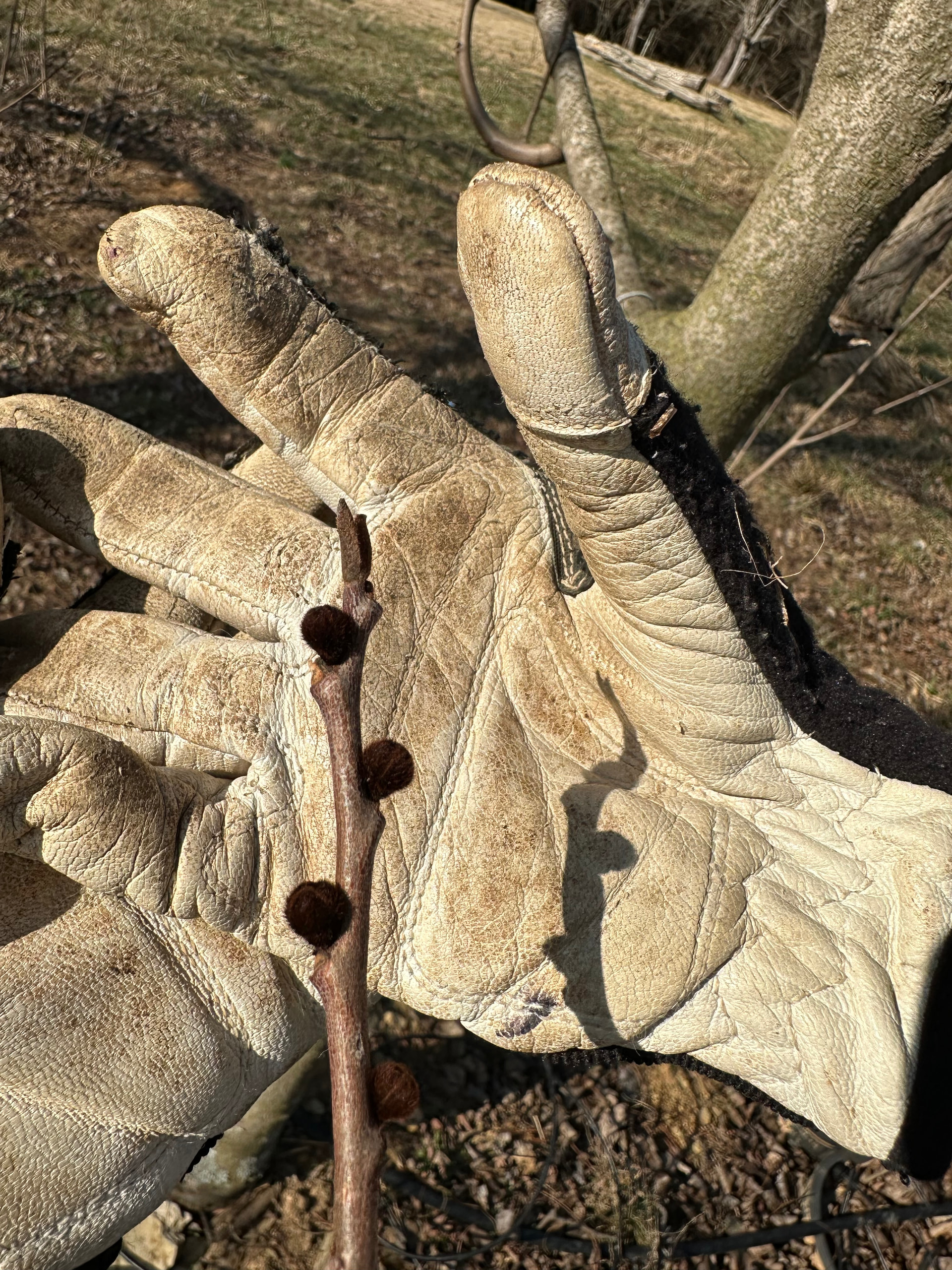
I’m not @Blake but I’m outside looking at my pawpaw! Here is a pic of my swollen flower buds
This is pretty bad since normally they swell early April and bloom throughout april for me.
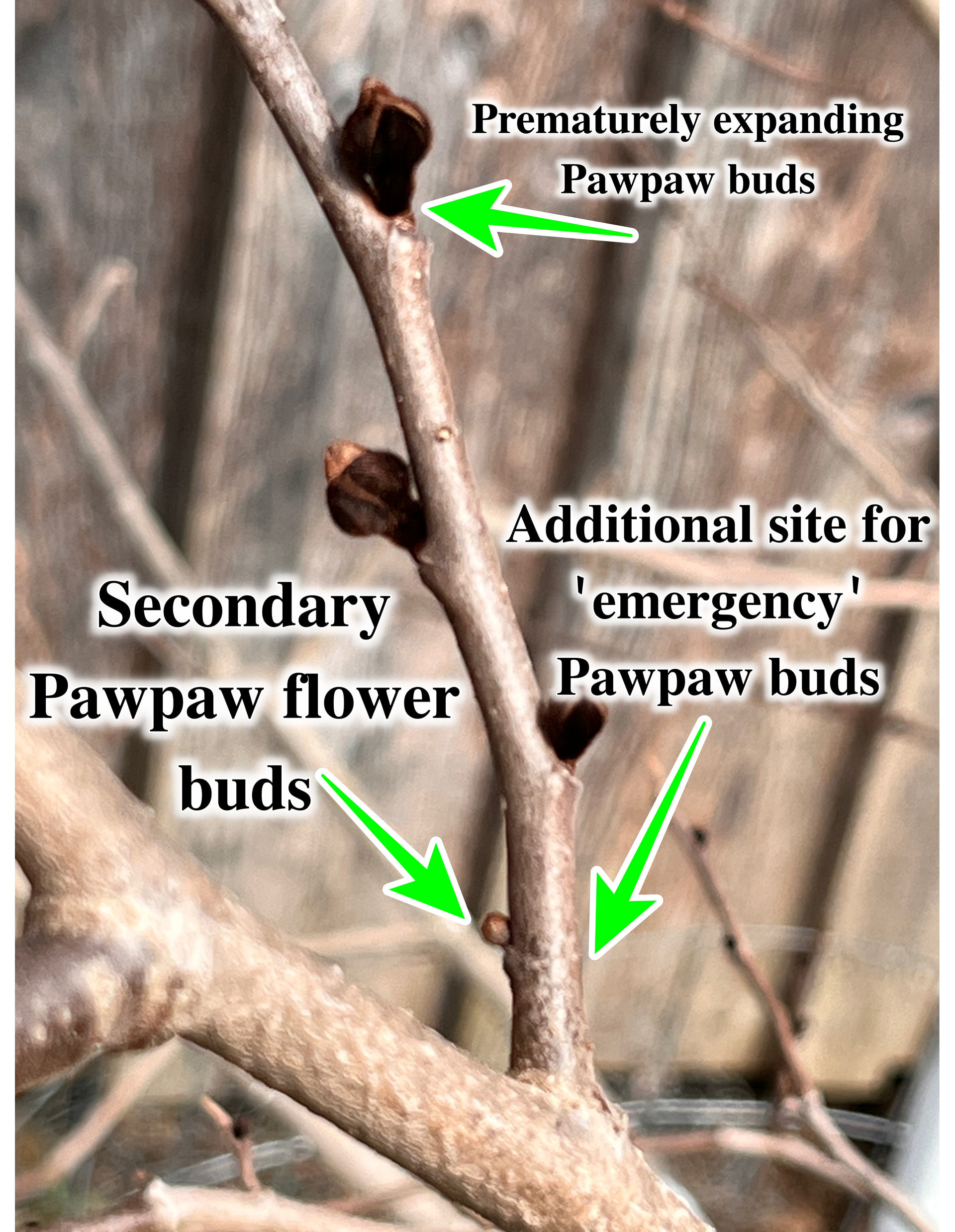
Every year, there are some early blooms that end up frozen but pawpaw seems to have a long blooming period or perhaps it is actually a second flush - I suppose that’s what Blake meant by secondary buds.
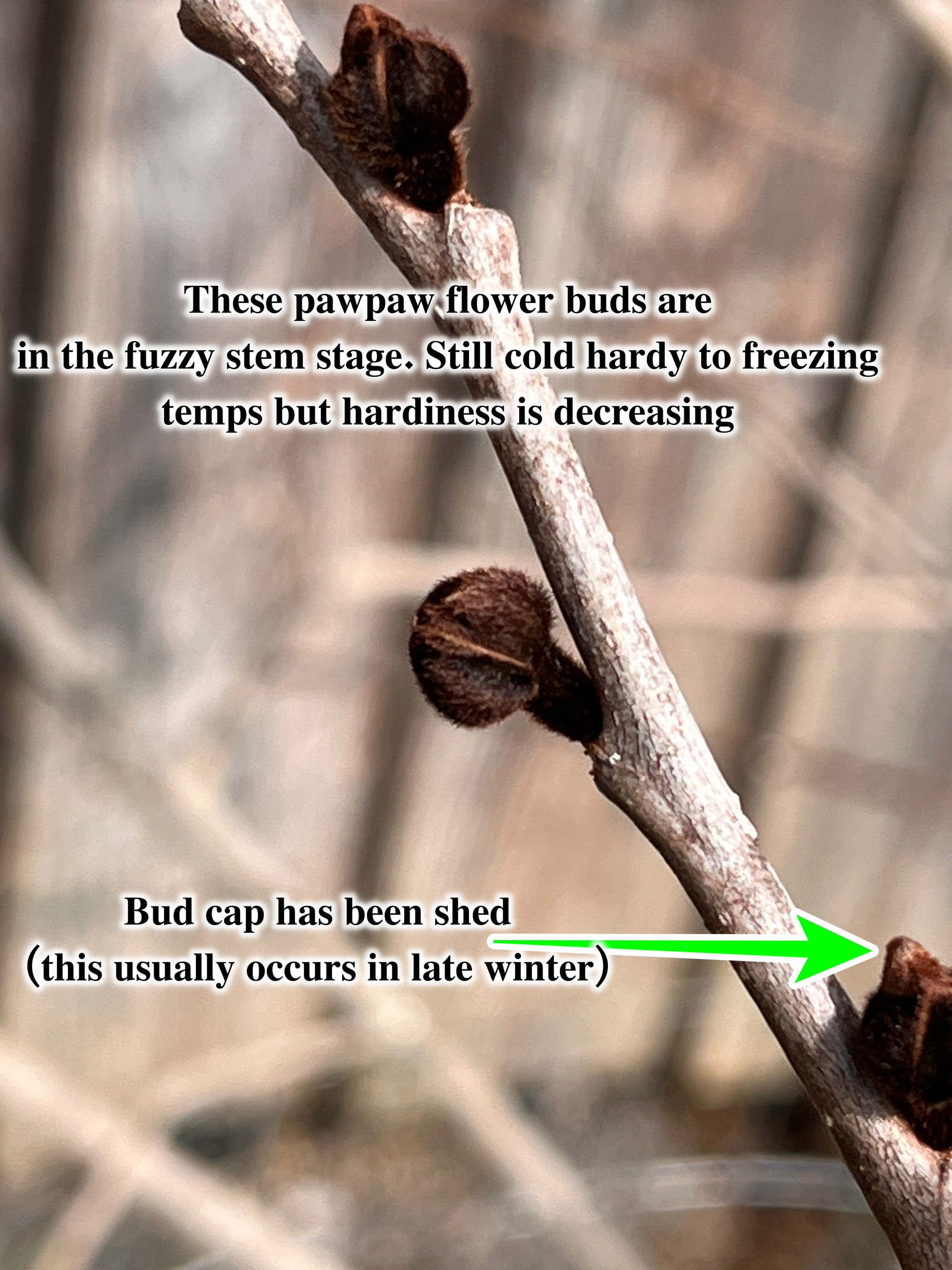
In Pawpaws: The Complete Growing and Marketing Guide I created a designation for each stage of pawpaw bloom, similar to the designations for apple bloom used by orchardists (bud swell, pink, etc).
I call the stage they are at the fuzzy stem stage, as the buds have expanded and grown to the point of having a tiny fuzzy stem.
The tiny buds at the base of the one year old stems are the secondary buds that will bloom as needed, substantially later. There are also tiny latent buds unseen in the tightly packed nodes. These are the true heroes of the late bloom, as they can allow the pawpaw to substantially re-bloom if needed after frosts destroy the main flower crop. They can produce full sized fruits and around a 25-50% harvest in an unfavorable blooming season (2026).
The entire flowering cycle for pawpaws lasts about 6 weeks, which is quite long, and longer if the first wave of blooms is destroyed and the tree must then rebloom from the tiny dormant secondary buds.
I think I was more suggesting that we (the growing fruit pawpaw community) or you (the resident super pawpaw expert) should start doing some routine testing and see what gets depleted and what a healthy pawpaw leaf analysis looks like.
I agree that the labs aren’t going to be able to make a recommendation. But if year over year we’re seeing patterns in what makes for healthy pawpaw trees or what is being depleted from the soil around the trees, we would then know.
LOL! It’s not like that - but maybe I should find someone interested to actually do the research and write a grant. Not sure who is funding pawpaw research these days but it’s an American fruit so shouldn’t be too controversial.
It’s mostly done through KSU, although a few other universities have small pawpaw research happening. KSU has their students do research trials and reports on pawpaw growing. For instance recently a student did a study on the germination rates for hand cleaned seeds, versus machine cleaned seed. Spoiler: the seed cleaning machine did not lower germination rates. I had expressed to KSU years ago this should be analyzed as I had concerns the machine cleaner was too rough. Turns out pawpaw seeds like it rough.
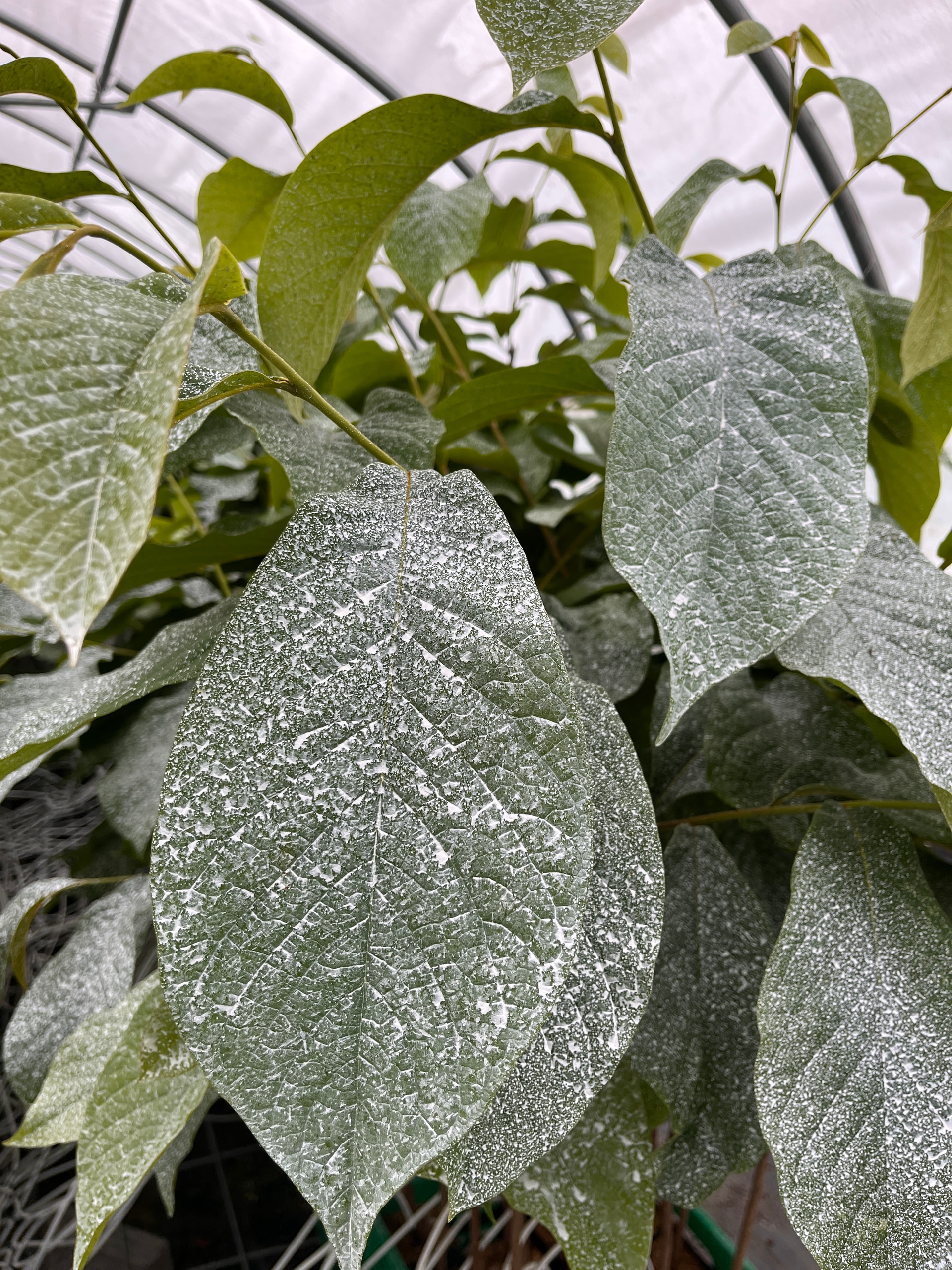
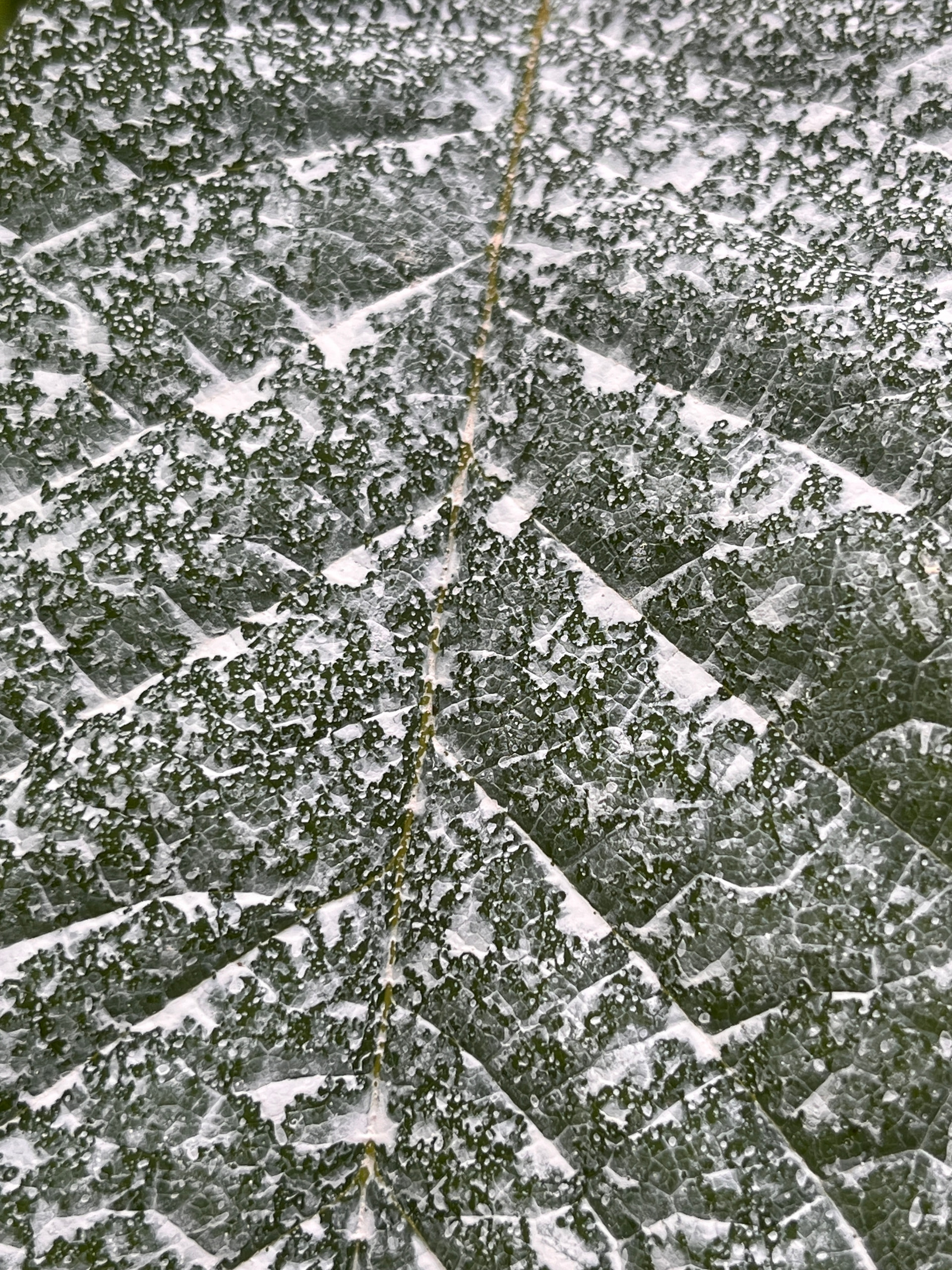
I also have been suggesting to KSU to trial using Surround (kaolin clay) for foliage disease control. I think it has a lot of potential:
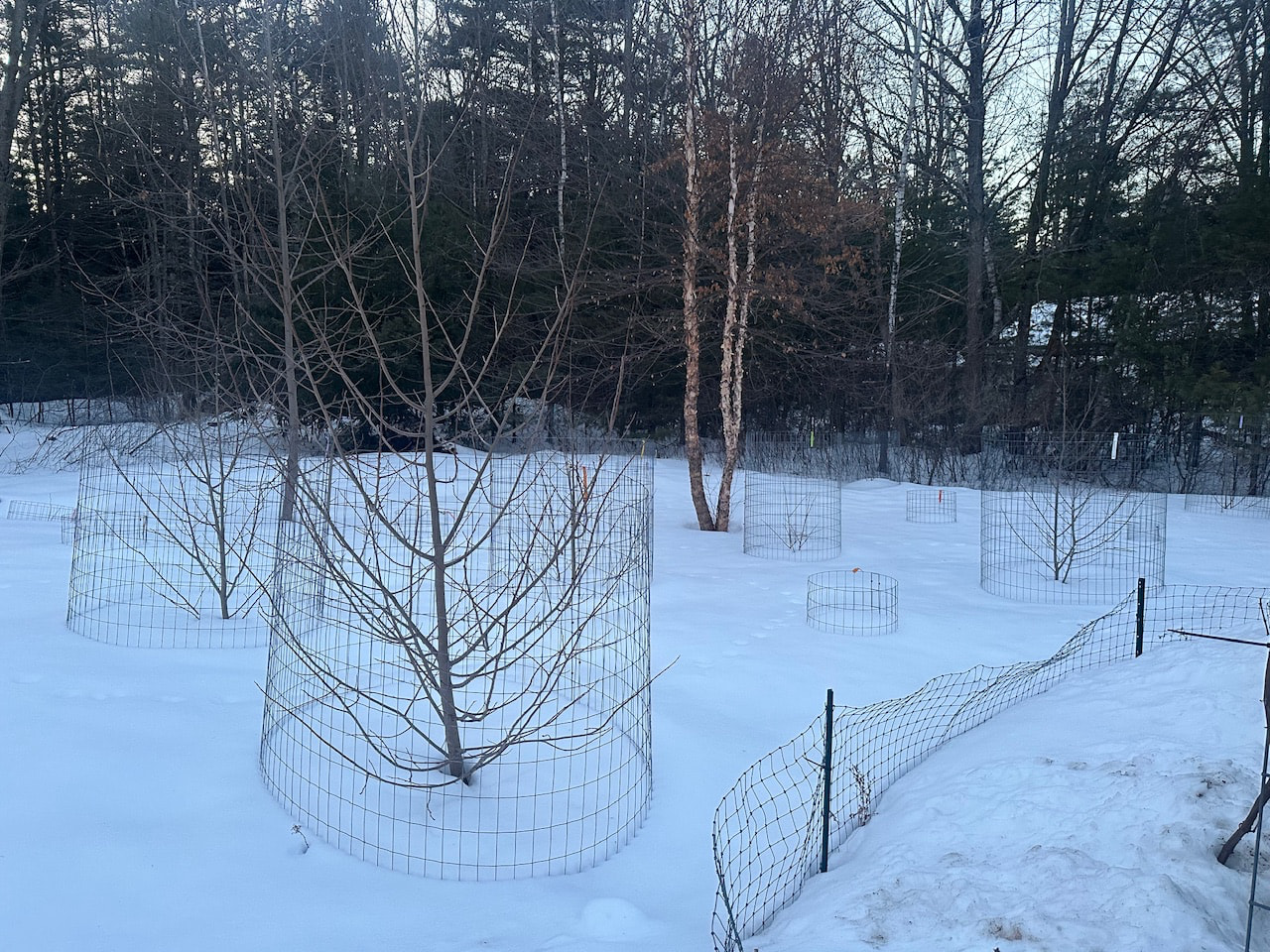
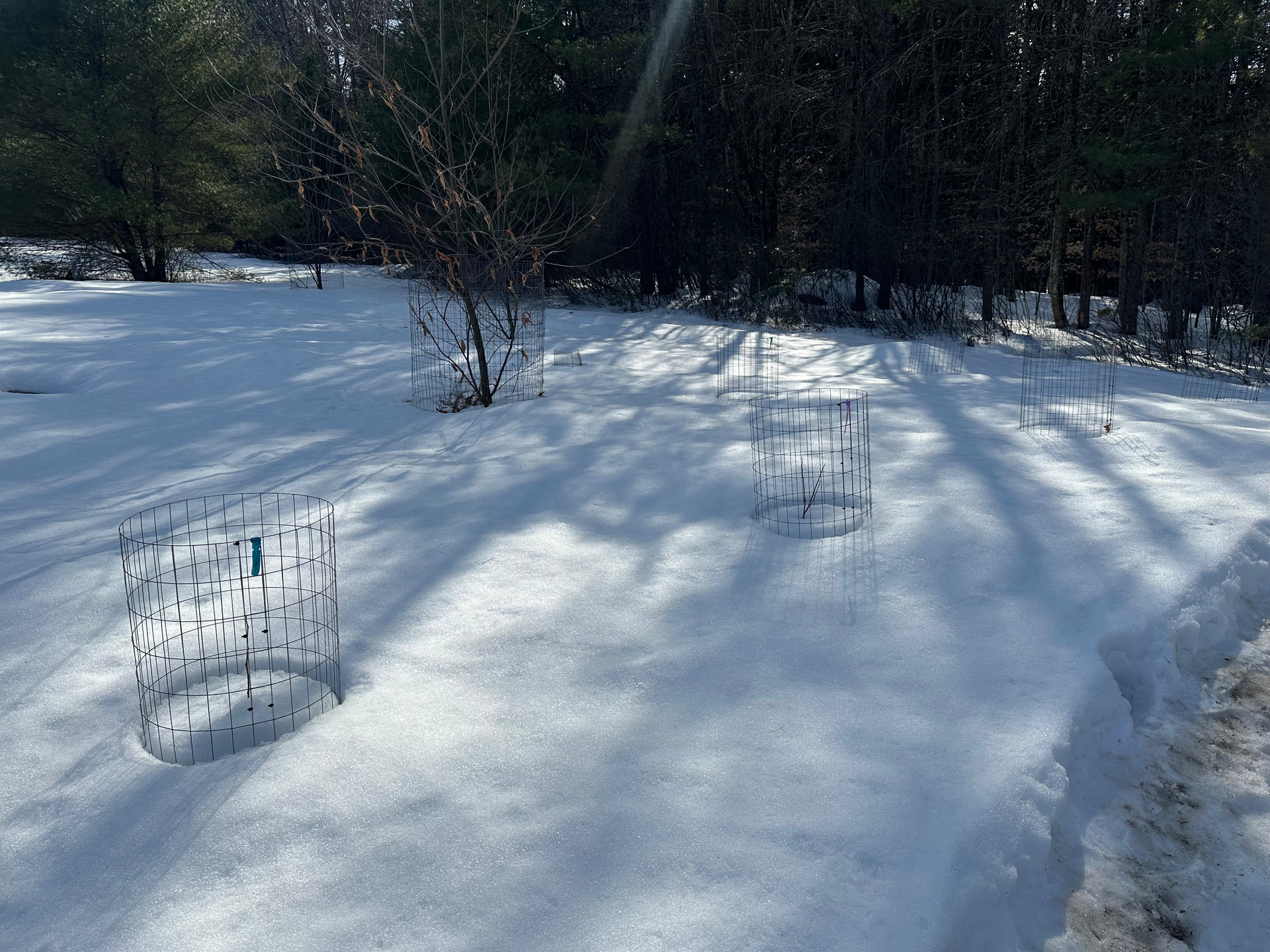
I have an order of 50 pawpaw bare root seedlings coming in a few weeks from the Kentucky forestry department. They are 1-2 years old, 12-24" tall, and supposedly from ‘improved’ cultivars. I’m located in the mountain west. My plan is to plant in tree tubes, layer of compost, cardboard, then wood chips. I’m using drip irrigation and my soil is clay heavy.
Any tips or ways you would change my plan?
Don’t add anything to the soil, only top dress on top (I think this is what you were describing). Bare-root field-grown pawpaws are very transplant shocked and so this first year you will see very very little in the way of top growth. They will take 1-2 years to recover from the shock, and some will not recover ever and require replacement. If you do it carefully many will survive but they will grow slowly. Do not over water but keep from drying out.
I would make sure the tree tubes are double walled, vented, and come with bird net to go over the top of the tube to keep, for example, bluebirds out of there looking for a nesting cavity
Shade, humidity, and increasing your organic matter over time with compost/mulch. Mountain west is very different from what those trees are used to. Itll be interesting to see which ones end up doing best if you do a few different establishment techniques. Might not be a bad idea to reserve some of the smaller ones in a nursery type setting as potential replacement trees
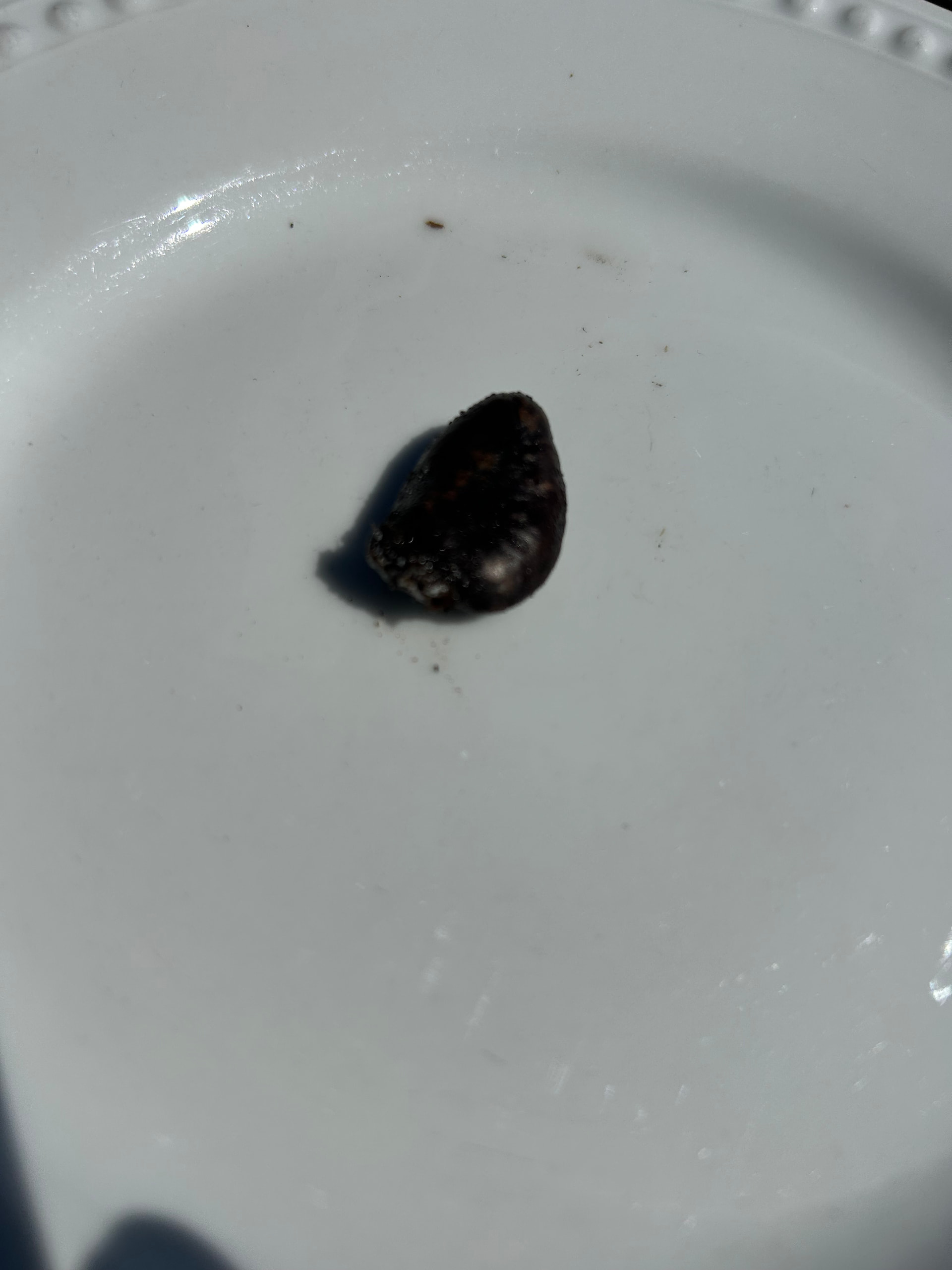
Planted about 40 pawpaw seeds outside yesterday in random places. I’m posting this to operate as a record for me. Seeds seemed to be starting to swell.
Thanks everyone for your responses and advice. Any tree tube recommendations? How about GPH emitter for this size in a desert with about 21” of precipitation per year?