I only ever use organic fertilizers and inputs.
2 Likes
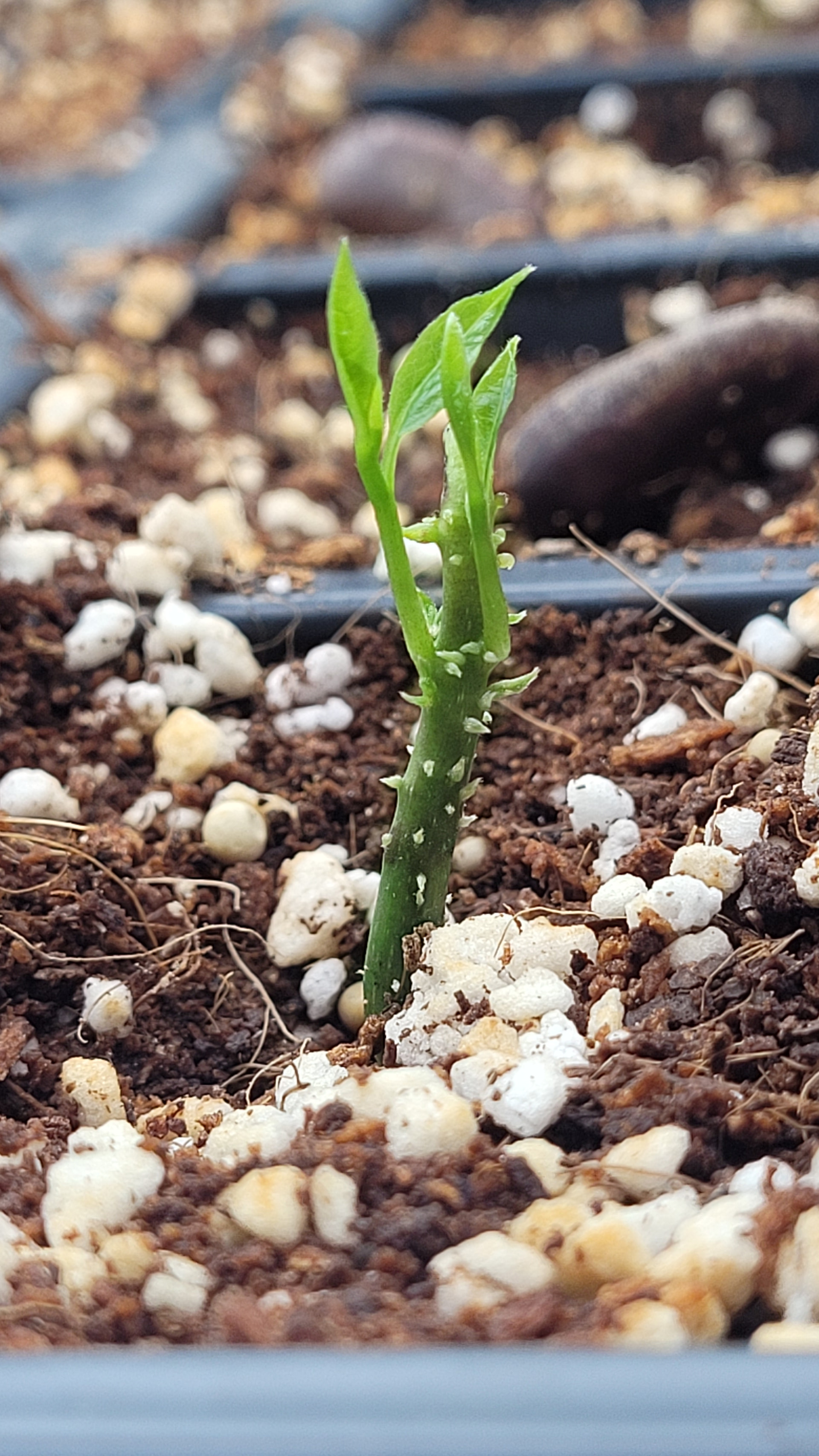
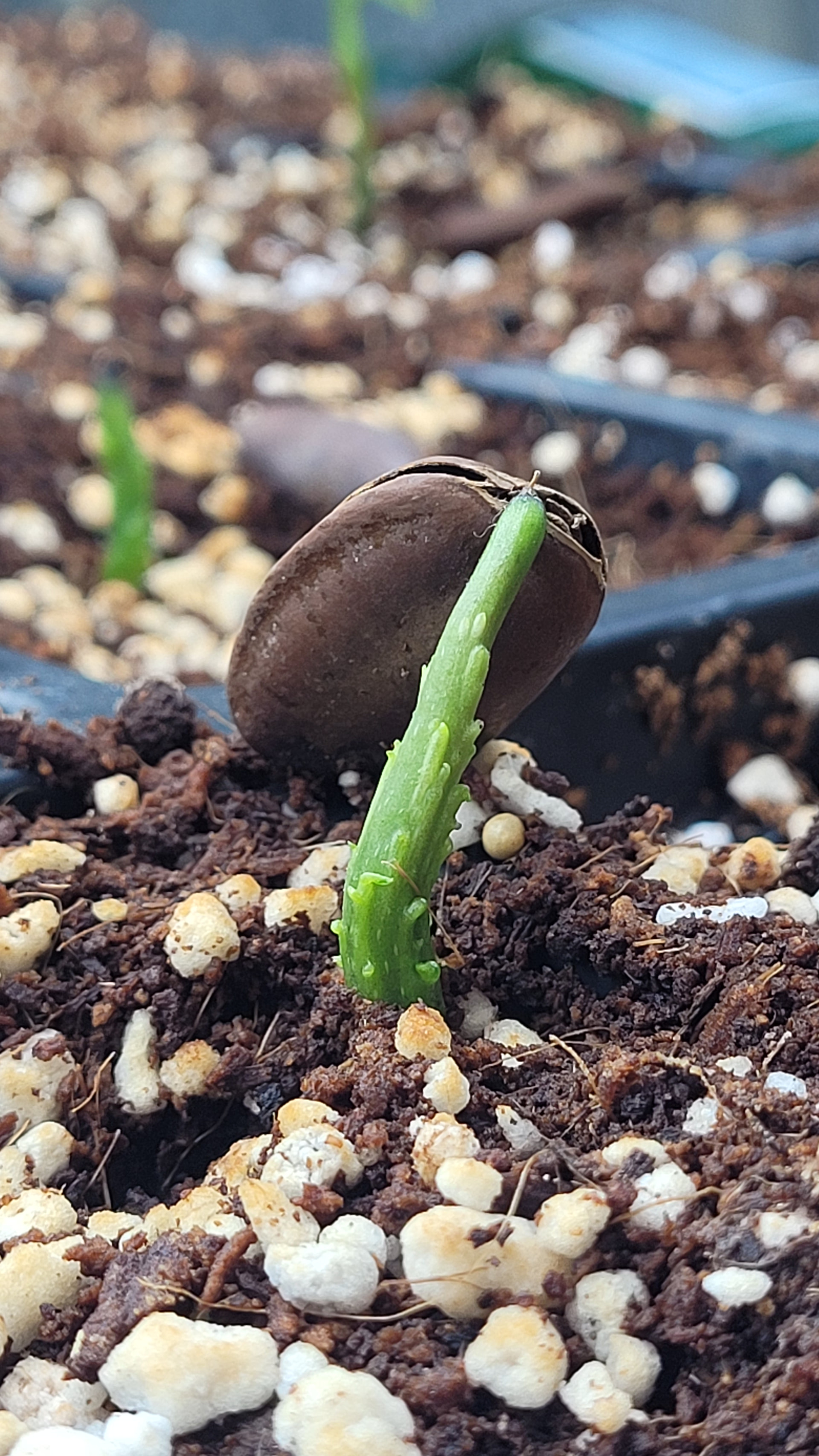
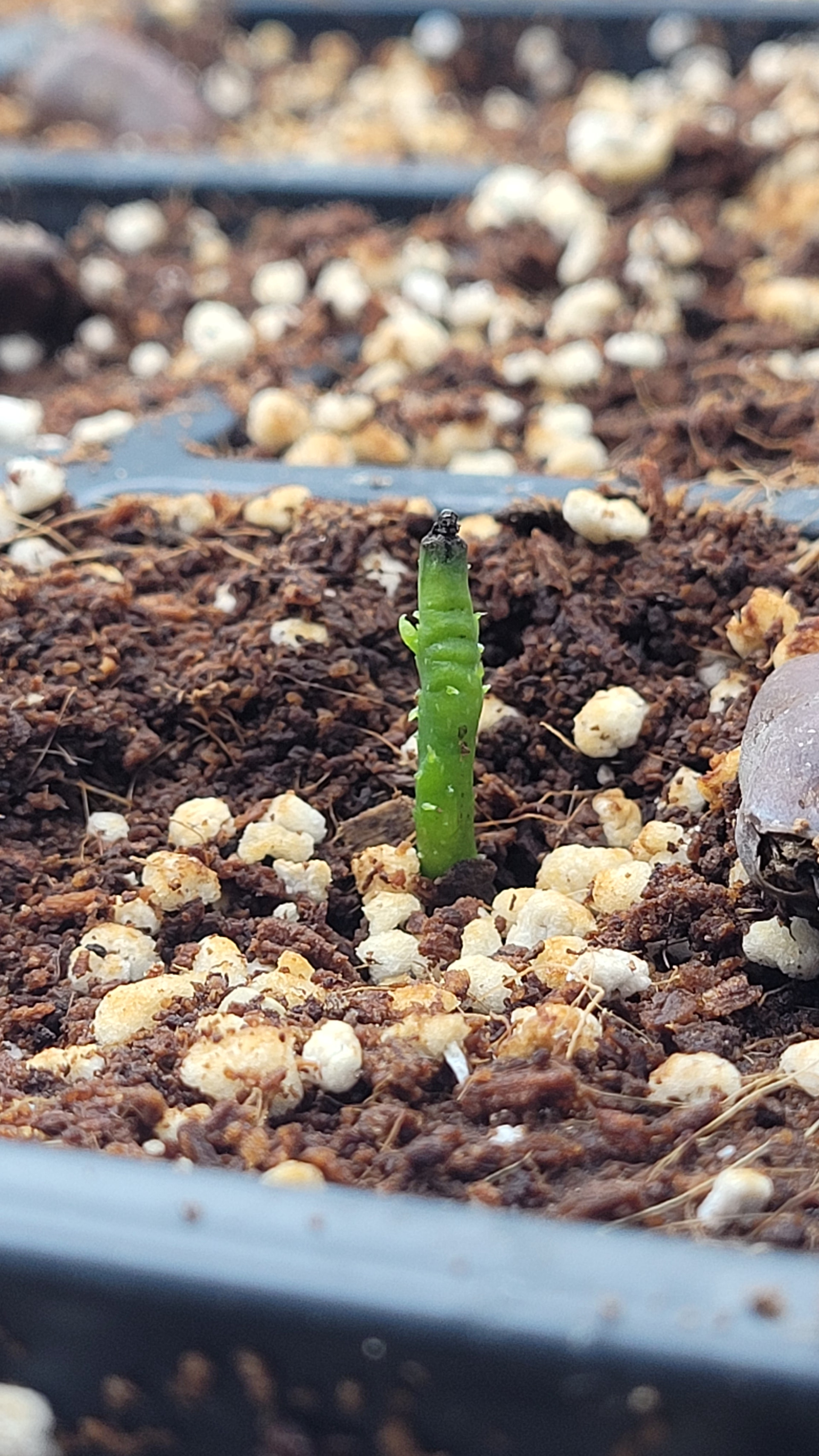
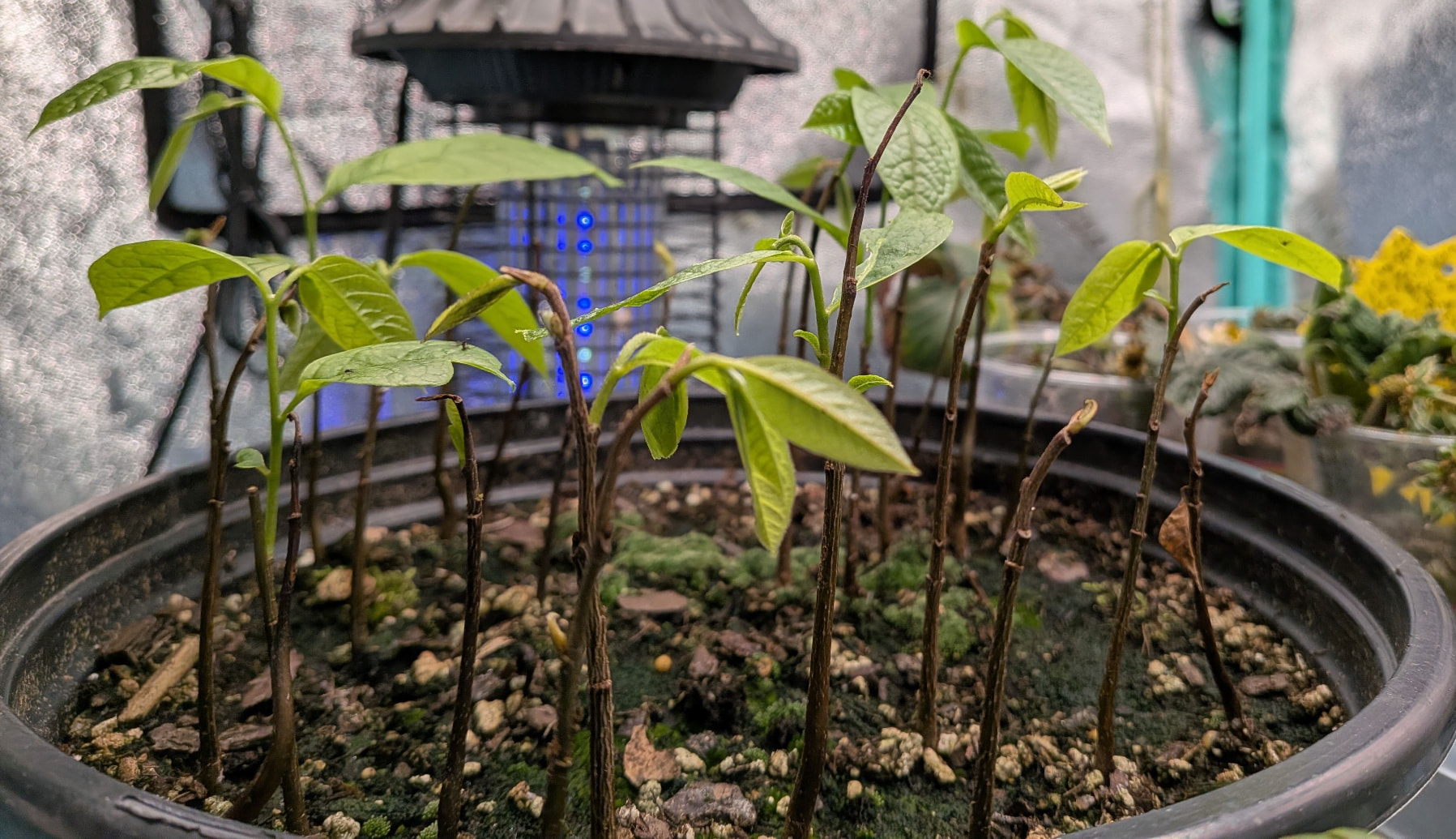
If your pawpaw seedlings have the tops pinched off by the seed, they will eventually throw new leaves out of these squiggly growths.
8 Likes
Do pawpaws wake up slower than other plants? We have had alot of warm temps, but haven’t seen any movement yet.
not sure, mine havent leafed out yet. but then again, only honeyberry has, next closest is my serviceberry is at silver tip
2 Likes
They’re one of the last to wake up here…neck and neck with my catalpas.
3 Likes
Yes they are after peach and pear for me. They have a longer blooming period in my experience - looks like most of April last year. The smaller trees are later and may not bloom and only have leaves.
2 Likes
Yeah, I expect no flowers. They are less than 1 year old seedlings.
.…might be tough to get underside coverage especially the way some pawpaws hang their leaves……plus undersides will stay wet longer and make it easier for infection…..still, frontside coverage is better than none and I understand it is not expensive….so for possible heavy Phyllosticta infestation, I think the clay coating preventative is worth a shot……KSU certainly has the means to test it out……so far, I’ve been lucky here with regard to Phyllosticta ….I’m thinking of trying it as a preventative for mildews on my sweet cherries…not so lucky there….Beemster
………………………………………………………………………..
from Gemini
To give you an idea of the cost for Surround WP (kaolin clay), a standard 25 lb bag generally ranges from $50 to $95, depending on the retailer and shipping costs.
Because it is a physical barrier that must be reapplied after rain or significant plant growth, your total cost for the season will depend on the frequency of application.
Price Options for Surround WP
The Surround WP Crop Protectant - 25 lb Bag is often the most cost-effective choice for orchard use, priced around $51.00. It is the standard OMRI-listed option used for organic pest and disease suppression.

Surround WP Crop Protectant - 25 lb Bag from Seven Springs Farm Supply
For smaller growers or those who prefer specific retailers, Surround WP from Johnny’s Selected Seeds is available for approximately $92.00. This option is highly rated by growers for its effectiveness on fruit trees and grapes.
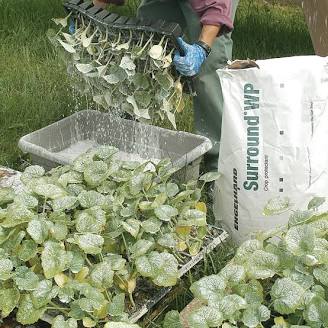
Surround WP – 25 Lb. | White | Pest and Disease Controls | Johnny’s Selected Seeds
Cost Breakdown per Application
-
Per Gallon: For small-scale use (backpack sprayers), you typically mix 1/2 lb per gallon of water. This breaks down to roughly $1.00 – $1.85 per gallon.
-
Per Acre: For larger trials or commercial use, one bag typically covers 1/2 to 1 acre per application, depending on the tree size and density.
-
Total Season Cost: In a typical Kansas season, you might apply it 4–8 times to maintain coverage against Phyllosticta or mildew, especially if there is heavy spring rain.
Long-term Savings
While the upfront cost of the clay is a factor, it often pays for itself by:
-
Reducing Sunburn: It can significantly reduce fruit loss from heat and UV damage.
-
Broad Protection: It acts as an insecticide (for pests like Japanese beetles and Plum Curculio) and a fungicide suppressant simultaneously, reducing the need for multiple different products.
If you are planning to use this for the KSU trial, would you like me to find spreader-sticker additives that can help the clay stay on the leaves longer during rainy periods to save on reapplication costs?
Yes, most of your little squiggly growth’s will sprout leaves and be just fine.
1 Like
From there you should select the strongest shoot to be the central leader and pinch off all the other shoots.
1 Like
Is it too late to cut scion? This warm weather snuck up on me and I’ve already got flowers on several varieties. Located near Nashville, TN.
Not too late but it will be too late soon. Swollen leaf buds are detrimental to scion wood viability, big flower buds not so much.
1 Like
Is there a way you could do fence circles with shade cloth similar to above? I’m sure tree tubes would be easier but once they outgrow the tube I think they’ll still need protection. That high desert sun is pretty brutal. I lived in Wyoming (in one of the wetter parts) and that was still very dry in the summer.
I think you are really going to have to baby these to get them to live- like watering on a timer 2x a day with drip for a while. Even when they’re bigger, they get these huge leaves and I could just imagine them desiccating in the dry air.
My pawpaw (in Virginia) are in clayish soil and it’s alkaline and on a hill not near any stream or anything- which are all things that should make them unhappy - but they do really well. However, we have humid summers and the soil they’re in is pretty moist most of the time and they’re shaded in the hottest part of summer by some big trees.
If you have clay soil, and alkalinity, and dry soil, and dry air, and no shade I feel like it’s going to be really tough. Where in the high desert are you?
3 Likes
I have a pawpaw tree problem I posted in another thread- maybe you can help!
We are in southern West Virginia- Landgraff, which is between Eckman & Kimball. We now have one big pawpaw tree that flowers in mid-April- last year it was in full bloom April 14- see photo below. The other pawpaw tree we had got cut to the ground by accident, and last year we had NO pawpaws at all. (I put out meat in trays to try to bring in the flies, but that didn’t work). I have been trying to buy a pawpaw tree that will flower this spring to no avail, and now it’s March! (I don’t have a vehicle at this time, which is another problem…)
From what I understand, I need either a flowering pawpaw tree of another variety OR some flowerng pawpaw branches I could put in a bucket of water next to the tree, OR some pollen from another variety that I could hand-pollinate our tree’s flower with, using a small brush… (I have successfully done that with citrus trees).
If there is any way you could help- or know someone who can- I would be DEEPLY grateful!  I will pay- I am not looking for a freebie!
  Thank you!!!
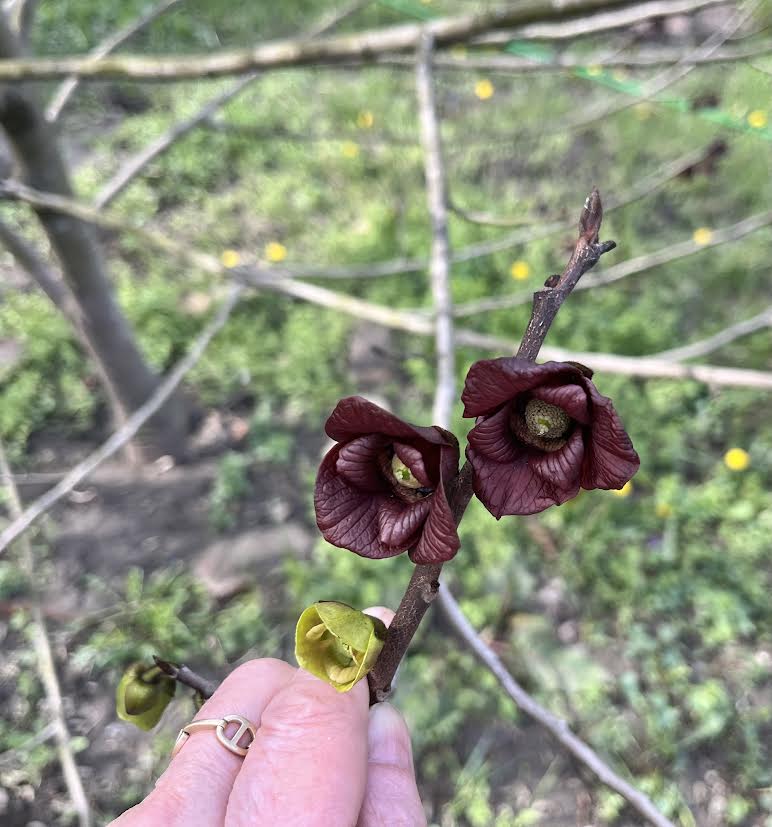
4 Likes
Your strategy is correct - you need pollen from a genetically different tree to pollinate those ripe flowers on your trees in order for fruit set. Anybody on here have ripe flowers or dried pollen they could ship this gal? You might also check on pawpaw fanatics on facebook.
4 Likes
People think of pawpaw breeding almost entirely in terms of increasing fruit size, flavor, flesh ratio, etc. But one of the most overlooked strategic characteristics that should be developed is LATE BLOOMING. While many of you out there enjoy non-hectic spring weather conditions, many, many growers in the Midwest, Mid Atlantic and Southeast USA experience early warm ups and then devastating cold snaps that fry pawpaw blossoms and lower (or eliminate) fruit yield. This would be a great time for us to start GATHERING DATA.
Pay attention to your trees. Are there some that seem to bloom later? Maybe even a week later? Does one variety bloom earlier than all the others? TAKE NOTES! I will be compiling data on this soon for future breeding efforts. We need to be breeding pawpaws for late blooming as much as for high fruit quality.
10 Likes
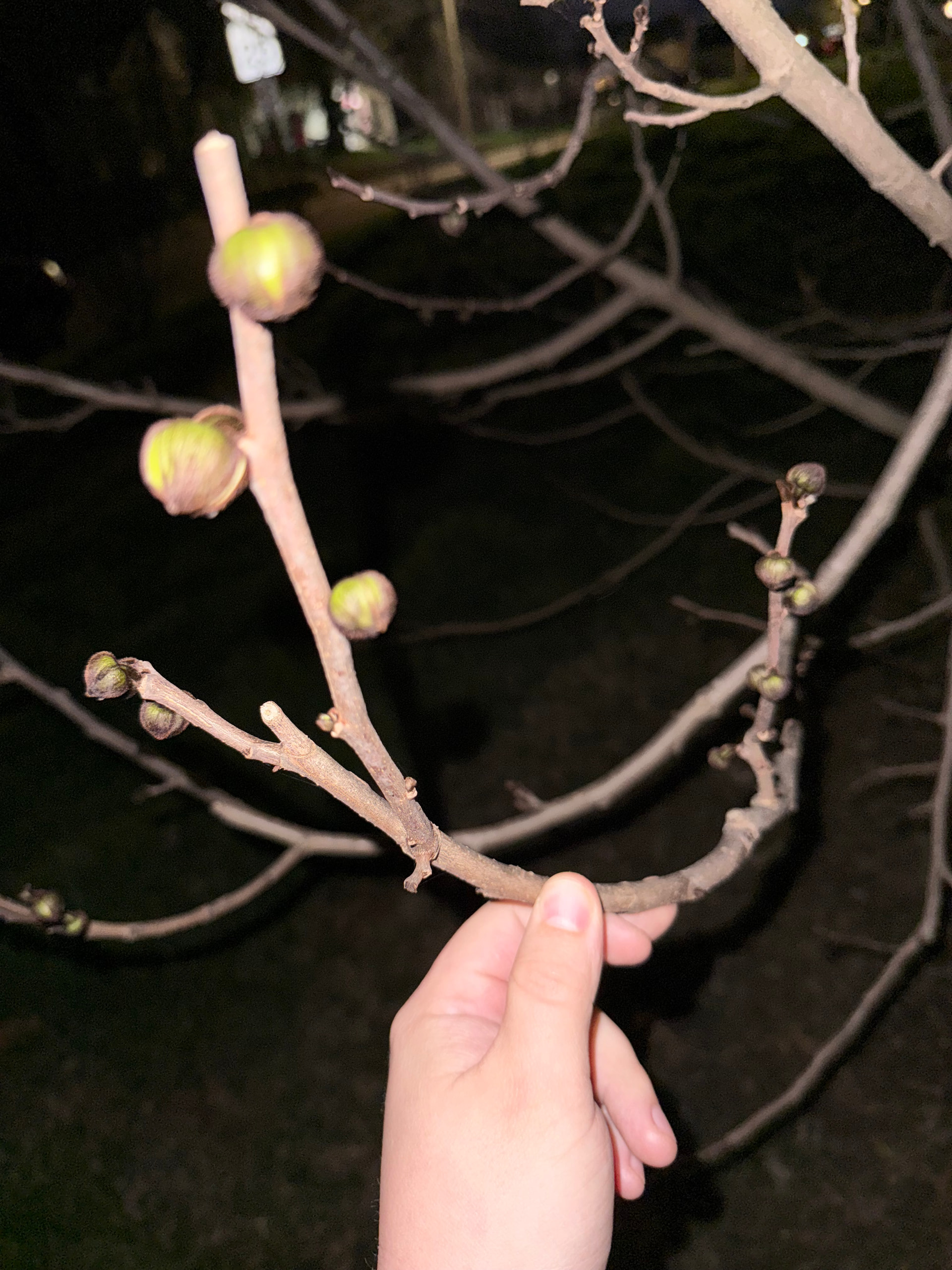
19 degrees is the forcasted low on Tuesday, and I completely expect to loose a ton of flowers. I think there are enough flower buds still in reserve. Late blooming is a good idea, but thats only one potential mechanism to ensure a good harvest. I think growers are still leaving a lot on the table when it comes to harvest quality/quantity just from cultural practices. Genetics are not lacking for pawpaw, and the industry best practices are still being refined. I’m confident that if this tree had been shaded in late winter it would have significantly delayed bloom enough to avoid frost/freezes. It’s no coincedence that my earliest bloomer is the tree that gets the most winter sun. I worry that our unpredictable winters will become more and more frequent. There is probably a way to induce a secondary bloom artificially.
I think more blooms is really the trait to look for. The issue becomes overproduction, quality loss, and heavy fertility requirements. I usually want less fruit out of my trees not more. Ill take 25 perfect 1+ lb pawpaws over 300 4 oz seedbags.
I think for the southern half of the range its going to make more sense for hybrid germplasm to tolerate tougher growing conditions, longer hotter growing seasons, and retain triloba hardiness. Complex hybrids might also have improved flowering capabilities.
6 Likes
I can confirm that I’ve had small 2 and 3 year old seedlings freeze solid for several days in their pots and survive just fine. This was in a polytunnel and probably the minimal temp was around -5 to -8 celsius (so no extra windchill etc. and a bit higher humidity)
4 Likes
The concept is to breed for pawpaws that do not require special and impractical means to delay bloom, such as trying to shade an entire tree. In this era of increased erratic spring conditions, with no reason to believe it will suddenly go away or get better, breeding for later bloom seems to be the only viable option. I suppose another option could be breeding for heavy and reliable secondary blooms. Pawpaw tend to do this already, with no effort on our part.
More blooms would not necessarily increase fruiting likelihood if they all bloom within a short amount of time, and that time is too early in the season. Increasing duration of blooming could be useful.
The path to later blooming would likely be increased amounts of winter chill requirements. Likely breeding from norther strains that require more chill hours.
There is no silver bullet solution for all pawpaw growers everywhere, but in my experience and observations, the early blooming tendency of pawpaw is a major roadblock to reliable production that no one seems to address or consider. Even KSU gets periodically hit with late frosts and major crop loss, including last year and now in 2026, but does not seem to be pursuing any strategic intervention.
4 Likes