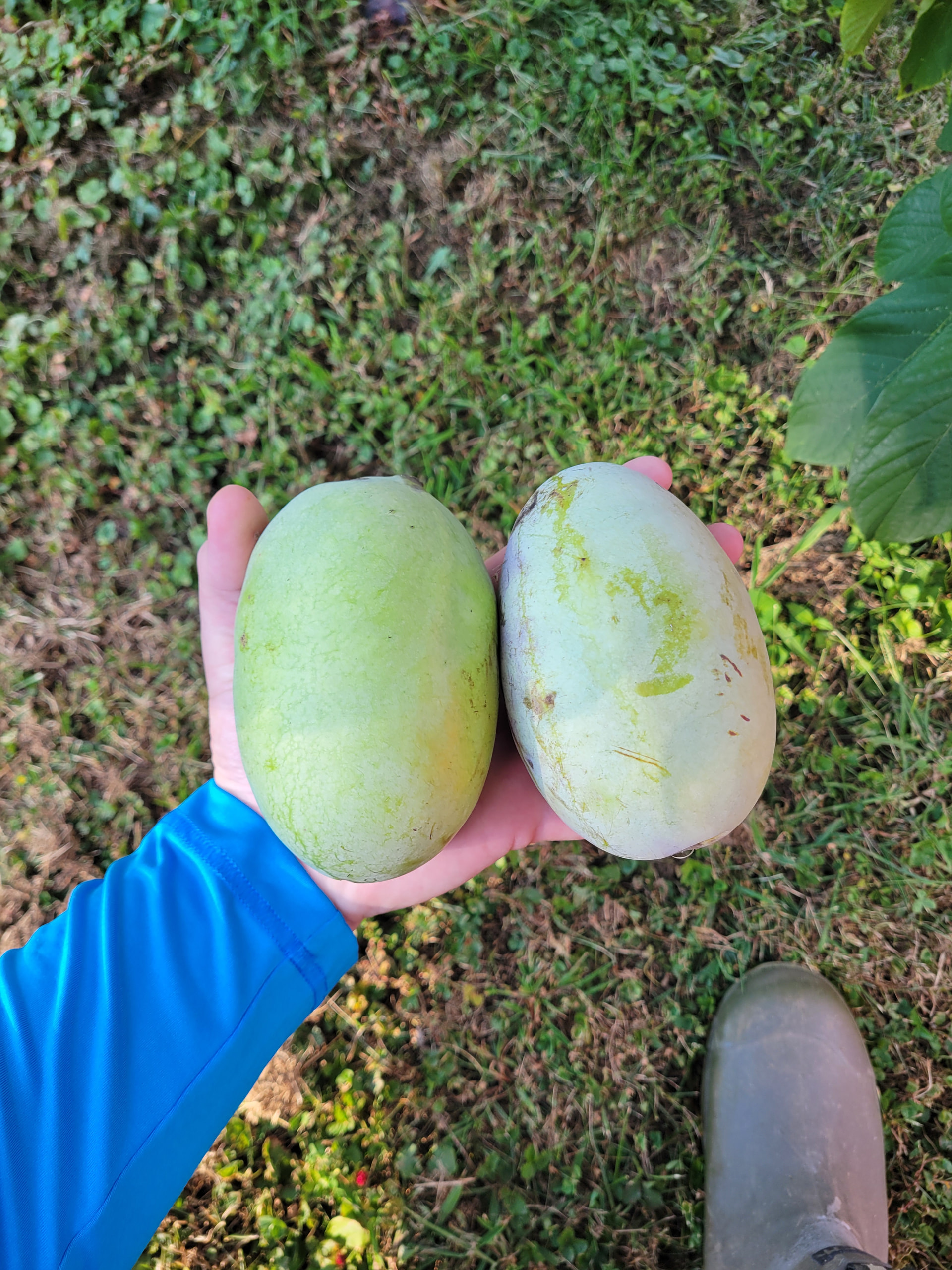
Greetings, brand new-bie here to grafting. I have small flower Pawpaw growing naturally in my woods and planted a couple of select triloba seedlings a number of years ago. Those are busily sprouting babies.
My fruit has an unpleasant aftertaste and I would like something better. The box turtles are pretty happy already
The range of Pawpaw varieties is overwhelming. I live in eastern NC. Kinston area. Zone 8a.
Suggestions would be greatly appreciated!
PS I also have Black Walnut, Mockernut Hickory, Persimmon and mulberry growing wild. I can see a lot of grafting practice in my future.
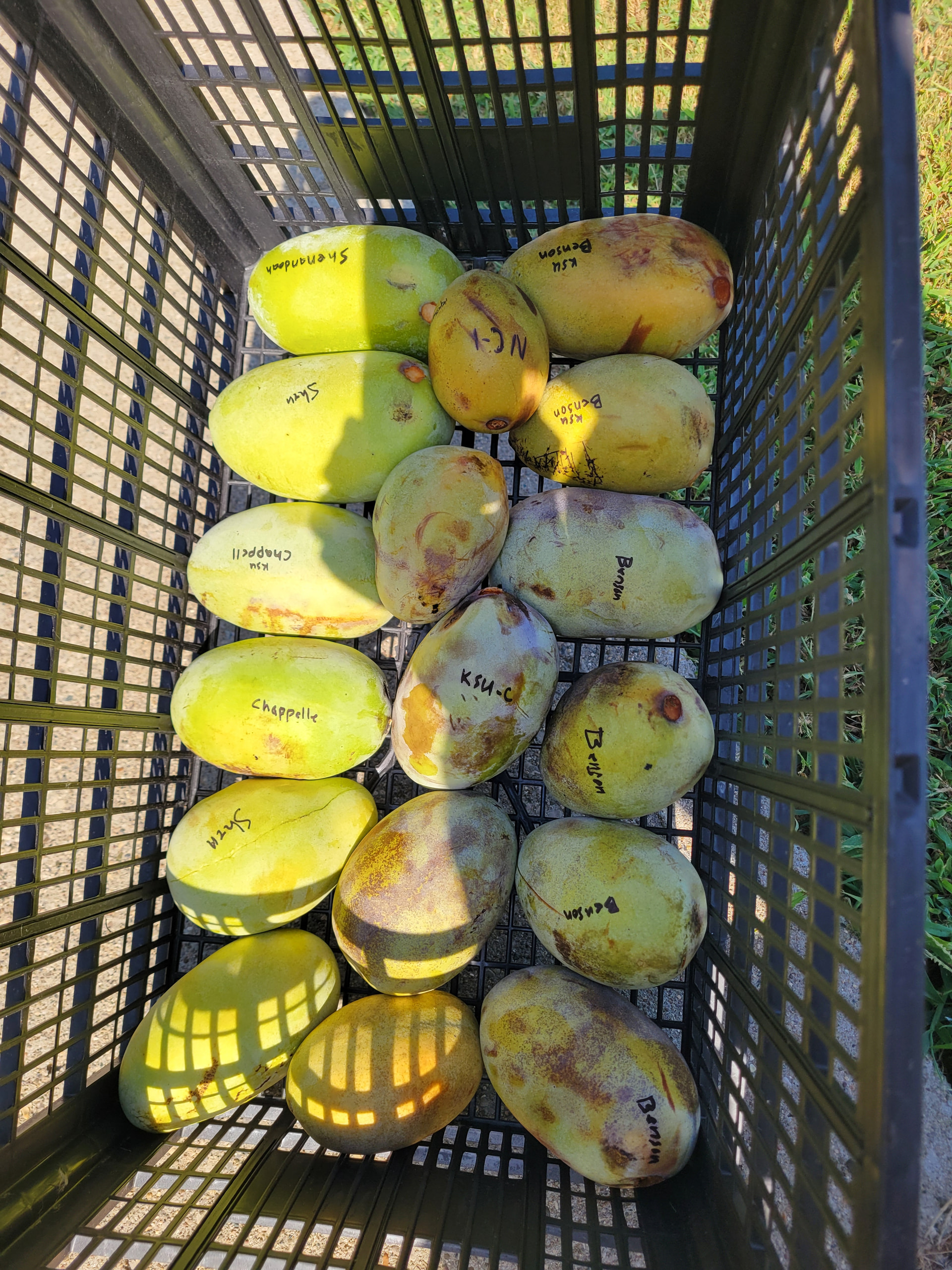
I’m not up to speed on the latest and greatest, but can’t go wrong with Shenandoah and KSU Chappelle for starters. I’d add three “oldies:”Sunflower, Overleese, flies under the radar, and Mango. Atwood here continues to “ripen” with some white unripe sections. Susquehanna has produced almost nothing here- very slow to bear, slow grower, seemingly hard to pollinate even by hand, a bust here.
Dutchess County NY Z6A…I’ll just copy my list of varieties I either have or am considering…it is a good mix of Peterson and KSU selections and other premium varieties…I ultimately hope to squeeze 15 into my patch…fate willing…so many choices…good luck…Beemster
Allegheny
Susquehanna
Shenandoah
Potomac
Wabash
Tallahatchie
Chappell
Atwood
Pomper’s Choice
Dunnigan
Mammoth X
Nyomi’s Delicious
Maria’s Joy
Prima 1216
Florence White
Al Horn
Jerry’s Big Girl
Regulus
Green River Belle
October Moon
Kentucky Champion
Halvin
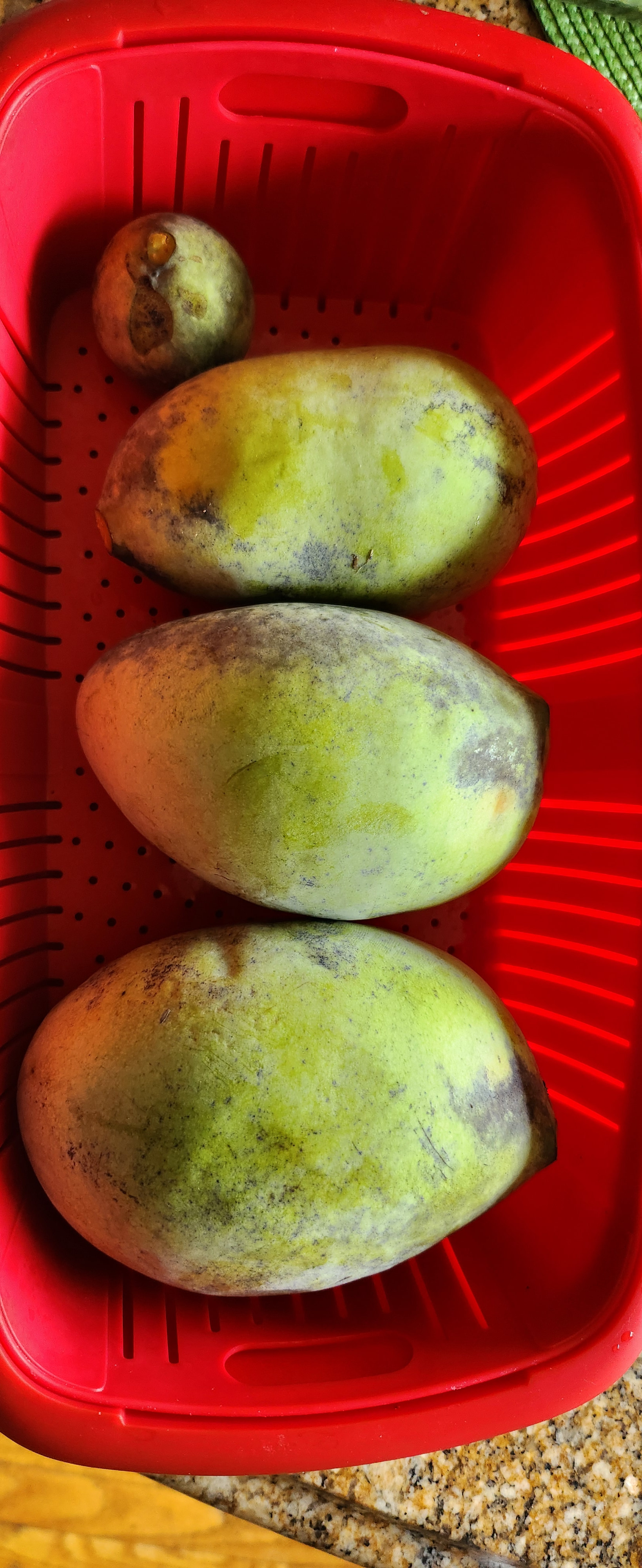
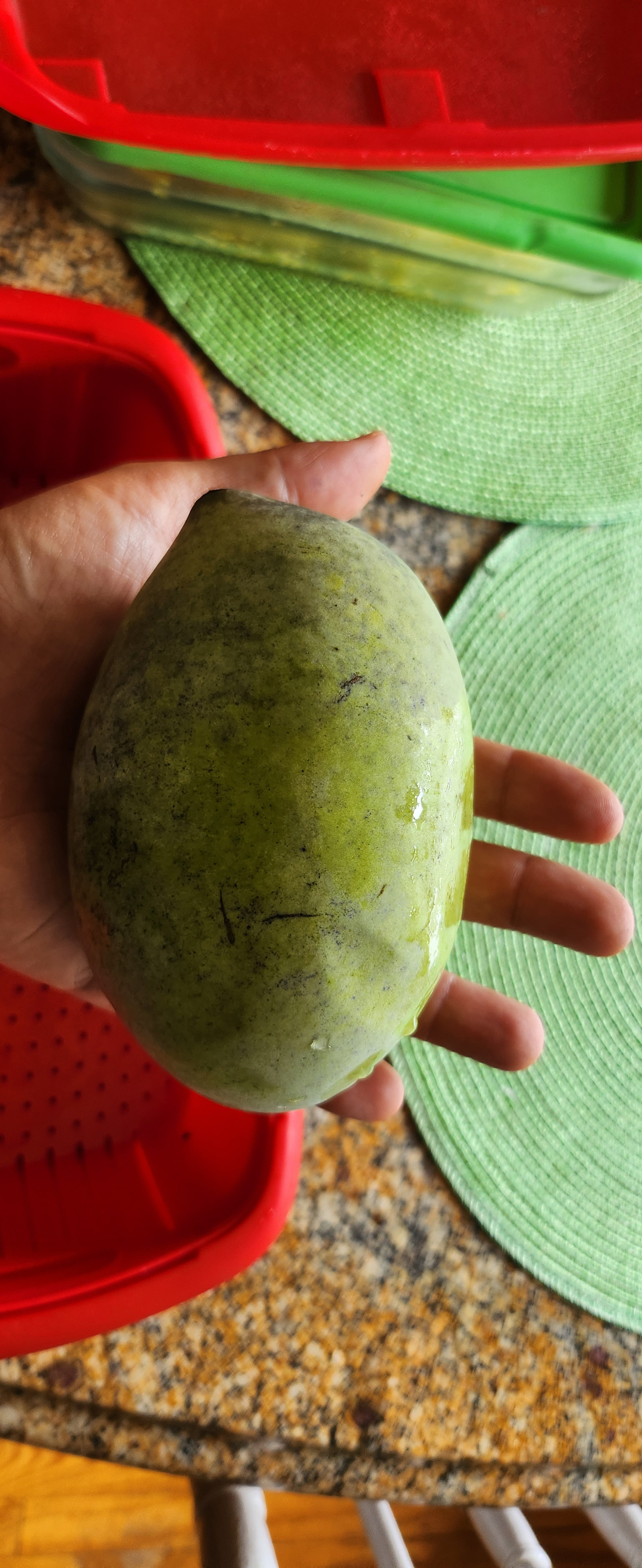
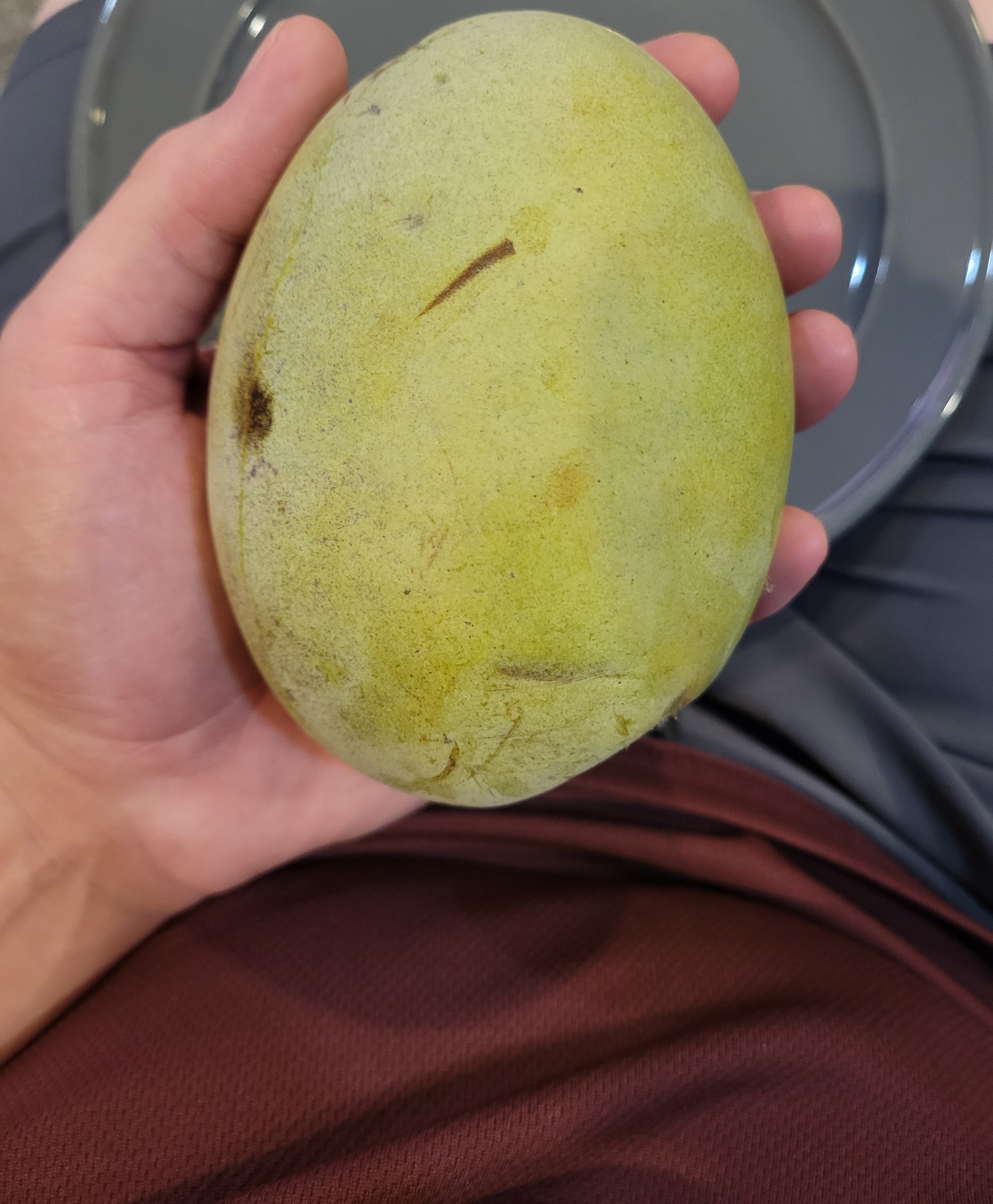
First pawpaw of the year in the Philadelphia suburbs, Mango variety… This is why I don’t really thin clusters.. I assume the animals we will get a lot of them or have a lot of June drop. And you get some times three or four in a cluster that are all pretty decent sized.
It dropped around the same day last year I think September 1st.
Will report back on the flavor and take a picture of the inside in a day or two. Just keeping it cool in the fridge for now.
370g, 270g, 190grams are the sizes of the three bigger ones.
Not sure if this matters for ripening order, but it was the first branch very low to the ground (where the fruit is basically on the ground).
I messaged him the other day and he said most of the pawpaw and persimmon flowers/fruit was destroyed this year from the April frost.
Wonder how many varieties he’ll have to taste as it sounds he doesn’t have any to sell.
Years from now if I’m lucky enough to get pawpaws that large, I wonder if I’ll have it in me to eat a large one in a sitting. Those are some darn large fruits! Pawpaws are the one fruit I can’t gorge myself on but I am eager to try stuff like pawpaw ice cream in the future if/when I get excess.
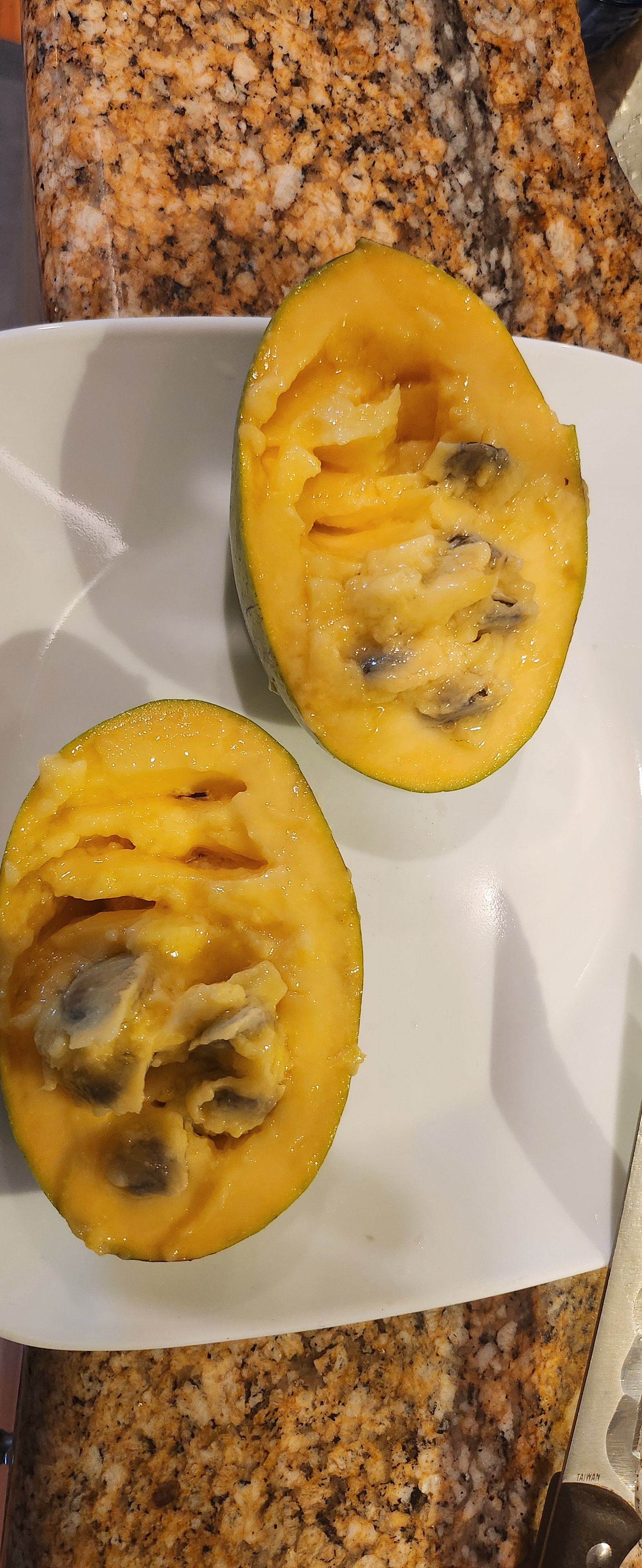
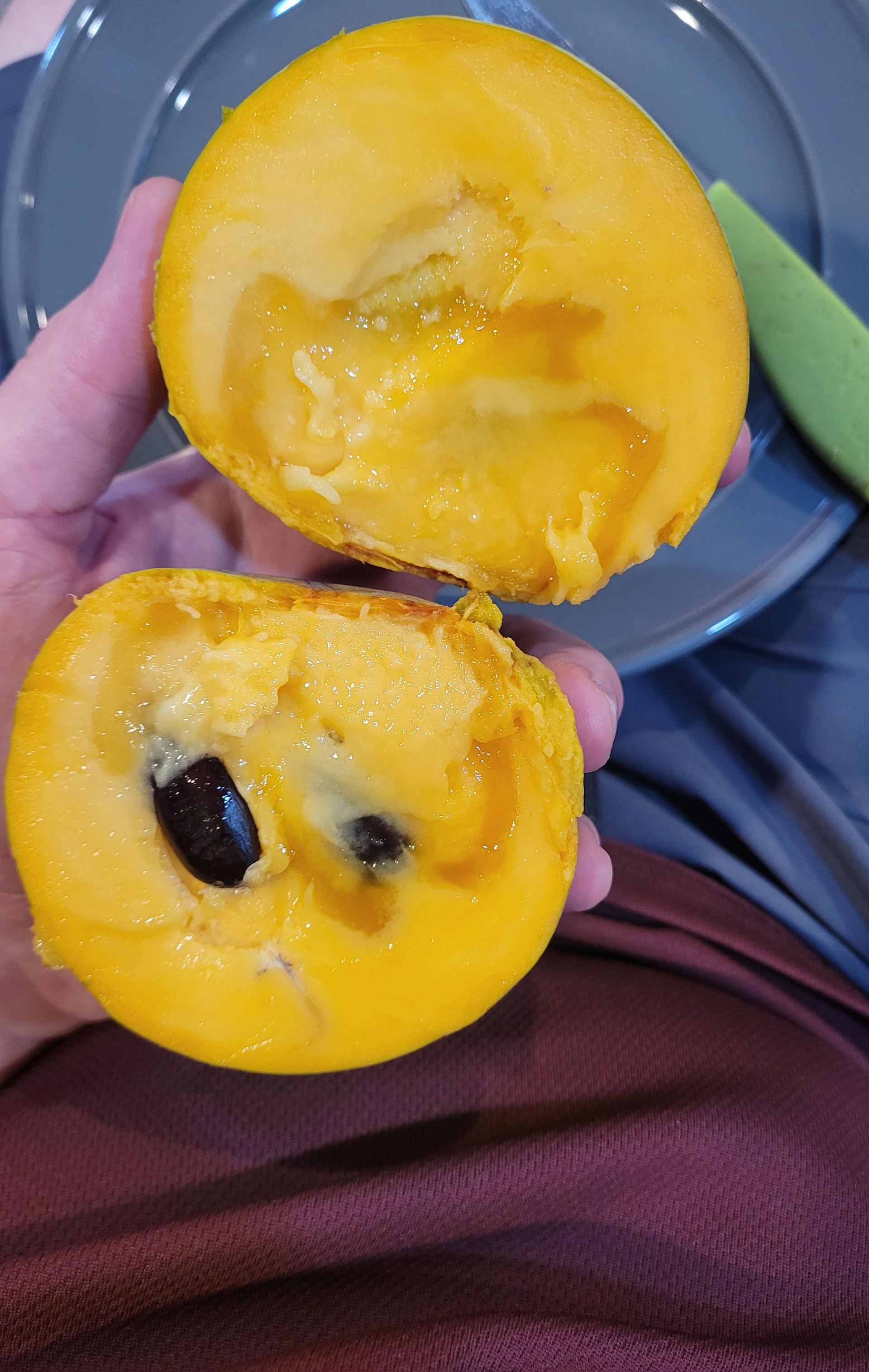
Mango…
I don’t usually cut it vertically like this it’s hard to separate the seed sack when you’re twisting it open hehe. Usually cut into 1" or so horizontal cuts then cut left and right to separate a slice with a single seed on each side (I do also like the cup technique where you cut it in half and use the fruit like a cup, and scoop out with a spoon each side). It was a tasty one.
Has anyone gotten seedlings from Kentucky state conservation sales and if so how has survival been? I got some last year and only had 20% survival and of those half came up from the roots around mid summer after never leafing out up top. None are really growing well. The roots seemed very soft and a bit rotted, so I think they weren’t in good shape when they arrived. I believe I just got a dud bunch and they are usually pretty good, but wanted to check before trying to order again this year.
For comparison, when I got seedlings from Missouri I had 95% or so survival.
Its hard for me to describe the difference. The same variety tends to have a very different flavor depending on how ripe the fruit is. For example some develope a butterscotch tone as they get really ripe and some dont. There are differences but yeah im just not good a describing the difference between them.
…from Grok LLM
.
. Grafted pawpaw (Asimina triloba) trees and scion wood are available from specialized nurseries, as seedlings don’t come true-to-type and grafted named cultivars give more reliable fruit quality and earlier production (often 3–5 years vs. longer for seedlings). You need at least two genetically different varieties for cross-pollination.
Strong sources for grafted trees (many ship in the US)
A solid current directory is PawpawMap (pawpawmap.com/where-to-buy-pawpaw-trees), which tracks dozens of verified nurseries, stock status, and cultivars as of late 2026. Highlights include:
Peaceful Heritage Nursery (Kentucky) — Flagship pawpaw specialist, KSU-licensed propagator (Atwood, Benson, Chappell, and others). They graft their own trees on-site, offer Jerry Lehman and England varieties plus their own releases (e.g., Golden Moon), and also sell scion wood. High reputation for quality genetics.
Perry Permaculture (Michigan) — Focuses on grafted trees; one of the licensed sellers of Peterson cultivars (Shenandoah, Potomac, etc.). Fall shipping typical.
Beautiful Beginnings Nursery (Kentucky) — Mail-order specialist with many named varieties (including KSU-licensed).
One Green World (Oregon) — Ships to all 50 states; carries a good selection of named pawpaws (stock often announced by email).
Madison Citrus Nursery — Offers grafted named varieties (e.g., KSU-Chappell, Marshmallow, Sunflower, Lehman’s Choice) in pots; ships widely (restrictions to CA/HI for some items).
Burnt Ridge Nursery (Washington) — Frequently recommended for named cultivars and rootstock; order early as they sell out.
Others worth checking: Bob Wells Nursery (Texas), Trees of Joy (Pennsylvania), Fruitwood Nursery / Planting Justice (California options), Edible Landscaping, and Deer Orchard.
Popular reliable cultivars include the Peterson series (Shenandoah, Potomac, Susquehanna, Allegheny, etc.) and KSU releases (Atwood, Benson, Chappell). Stock fluctuates and sells out quickly—check current availability and order for spring or fall shipping windows.
Green Mammoth Nursery (Kentucky) and some others (e.g., England’s Orchard) also list scion seasonally; local pickup or limited shipping is common.
Whip-and-tongue is the highest-success method on seedling rootstock; chip budding and certain bark grafts also work well when done properly in spring after bud break.
Tips: Confirm shipping restrictions, hardiness (generally zones 5–8/9), and pollination needs. Grafted trees are more expensive than seedlings but far more consistent. For the latest stock, start with PawpawMap’s directory or contact the nurseries directly, as availability changes rapidly.