I have three nectarine trees grafted to K86 and they are doing great, if anything, they are slightly more vigorous than my other nectarines on Lovell and Guardian.
3 Likes
I’ve never grown it. It’s a sport of Elberta discovered by Summer Gleason and marketed by Starks. Supposedly it’s supposed to be more frost tolerant than Elberta, and also ripens two weeks earlier.
Also more resistant to bac. spot, so may be worth trying. I had really good luck this year with Intrepid, after a pretty brutal winter and spring, which is in the same harvest window.
Starks has a reputation as being a poor nursery anymore. So be aware you may not get the cultivar you paid for.
Here is some info on Early Elberta:
2 Likes
Seedling peach rootstocks don’t sucker super well. When they do sucker they mostly sucker just at the base of the trunk, so it would be difficult (though probably not impossible) to divide them. Unlike seedling peach rootstocks, plum roostocks send out suckers everywhere, so they are very conducive to stool bedding and dividing up the suckers.
1 Like
I have some trees that have been in the ground for about 5 years. They came from Bailey Nursery. A couple throw suckers everywhere. In the grass rows, down the row, a lot of suckers.
Do I have something wrong going on here? I even put some circular weed mat arounf the base to slow it down at the base of the tree, they just keep coming up further out.
I had two Bailey Hardy peaches die after 10 years and they never really suckered that much. I think they may have died from drought stress and too many leaf issues. Im on top of my younger trees now.
Do you know what rootstock they came on? Sounds like they may have come on a rootstock with some plum parentage.
I do not on these particular trees. But I have also noticed that some other plums I have Toka and Black Ice have suckers similiar in appearance. Ill have to look more closely at them. Thanks.
2 Likes
How was the frost tolerance and fruit quality on Bailey Hardy? I’ve seen mentions of it around, but never any reports from someone who has actually grown it (nor any retailers who sell individual trees or scions).
It did ok for a few years, maybe 5 and then declined. I wasn’t taking as good of care of of them as I do now. I was still working.
I think it was a combo of drought stress from surrounding trees and foliage issues. The one peach I got was stupendous. Im in central ohio and it never seemed phase by the cold. I bought them and sold them wholesale as potted trees for years to garden centers. They always seemed to do pretty well.
I dont think I gave it a fair chance in my orchard. I’ll check and see if they are still growing them at my former work place.
1 Like
Looked at and suckered all the peaches today. The trees in question suckers definitely look like plums. Not peach. All of my 2020 peach trees had a lot more suckers than the other year plantings. They are also not anchored well and all had some form of support.
My suspect is they ran short on under stock and used something different that works. Kind of an issue I’m finding with some nurseries is that they say semi dwarf, or dwarf, but you dont know the true root stock. Didnt matter to me earlier, but now it does.
The suckers pulled out of the ground easily. Most didnt need to be cut.
I have one tree I know on Citation and one on St Julian and neither had suckers.
Last years planting, 9 trees were on Nemagaurd and had just a few light suckers. Just a note for anybody interested.
1 Like
Thank you, @Olpea
Citation is alright perhaps not for areas that suffers from drought, I have an Indian free and spice zee on citation which are doing great. My most vigorous tree is Fantasia Nectarine on Nemaguard I have planted it on a mound and it’s already 7ft x 5ft in its second growing year.
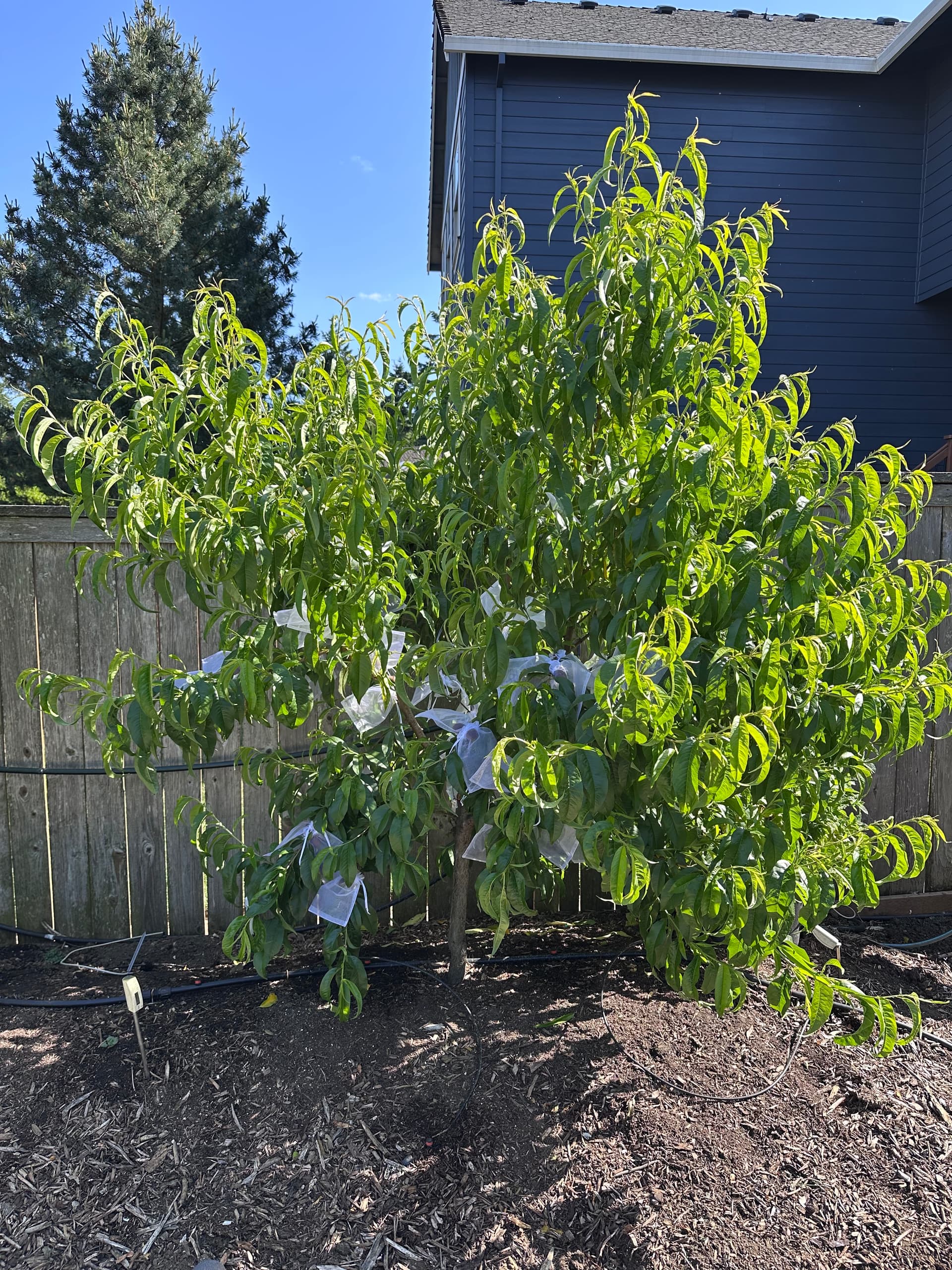
If you’re looking for Lovell root stocks, you can use the stooling method to get some more Lovell root stocks. Cut the Lovell down to the ground, mound with sawdust, wood chips, then harvest root stocks from suckers next year. Lovell is basically a peach root stock, the fruits small and flavorless. If you grow the Lovell for the seeds then use seeds for seedling root stocks then it would take much longer time until you can harvest the seeds. But then you can have more seeds to grow seedling root stocks. Perhaps you can buy Lovell seeds online. That would also be a short cut.
1 Like
i was under the impression that lovell, or peach in general, doesnt sucker much so isnt suited for stooling.
The reason lovell got used so much was because it was a canning peach and the pits that they used to grow the rootstock were a side product.
I started copying Olpea and planting random pits and grafting to those. In the NC-140 trials peach seedling performed well. It seems like if you have a well growing seedling you might as well just graft to that.
2 Likes
It doesn’t sucker much if at all, and even if it does, it isn’t suited for stooling. No idea where they got that information from.
There is a reason air layering peaches and rooting peach cuttings isn’t a really thing (I have no idea how those etsy listings remain up and people continue to make those attempts).
Any peach rootstock that is suckering prolifically or even marginally isn’t going to be lovell. It’s going to be something else like citation or maybe K86.
@Olpea maybe you want to chime in as well.
I have some controller 5 rootstock plantings. Don’t really see much if any dwarfing or precociousness in them. I’m east of the Mississippi. I heard the same results were found in the PA uni (I think its PA, i forgot which study coordinator I was conversing with a months back). It doesn’t sucker either. I really dislike nemaguard for my area simply because I find it much more fickle with hardiness.
2 Likes
I agree, I wouldn’t try to stool a peach seedling rootstock like Lovell. Sometimes I’ve transplanted peaches on seedling roostocks and planted them really deep in my raised plantings. Then dug some of them up again. Invariably, they don’t throw out any new roots higher on the trunk than the original roots at the time of transplanting.
I’m not saying they can’t be stooled, just that they aren’t very conducive to it. Much easier to plant peach seed pits and just graft to those.
Exactly right. Canneries sell peach pits by the ton, so they are super cheap for large nurseries to buy high volumes of peach pits for peach rootstocks. Lovell probably germinated well (not all peach pits do) and produced consistent results, so became popular as a rootstock.
I really think through the years Lovell rootstock isn’t the same as the original. That’s because there have been many reports that the fruit from the current Lovell rootstock is pretty non-edible. Since it originated as a canning peach, it’s likely what nurseries are calling Lovell, really isn’t Lovell.
It’s probably seeds of seeds of seeds of Lovell, planted as Lovell, then those trees are allowed to grow and produce seeds, which are then sold as Lovell seeds. My guess is this has happened over and over in the last 100+ years, so that there is been enough genetic drift to make the “Lovell” sold nowadays completely unrecognizable from the original Lovell marketed a hundred years ago.
I know this has happened with a few other named cultivars, which are sold for fruit, but much less genetic drift. I can only imagine how much more likely this might be the case when people were selling peach rootstocks where it would be practically impossible to tell the difference between a Lovell rootstock and an offspring of a Lovell rootstock, before genetic testing was available.
I recall reading (maybe 15 years ago) even one of the clonal apple rootstocks (it was either a Bud or Geneva rootstock) was mislabeled and widely disseminated in the U.S. until one very sharp apple grower noticed a subtle difference in growth pattern and caught the mistake.
2 Likes